

#129: Wide-Angle Listening: How Nature’s Soundtrack Completes Your Connection to the Wild – Nature's Archive
Summary
Have you ever noticed how certain sounds, voices, or songs can instantaneously transport you to another world? Whether it’s a track from high school or the specific creak of a childhood porch, audio has a unique “backdoor” into our deepest memories and emotions.
In this episode, we explore how to tap into that same principle to radically deepen our connection to nature. While we are biologically biased to navigate the world through a visual “spotlight,” we often miss the 360-degree sanctuary that sound provides. By shifting our focus from looking to listening, we move beyond simple identification and start experiencing nature as a floodlight—an immersive, restorative flood of information that lowers our stress and pulls us directly into the present moment.
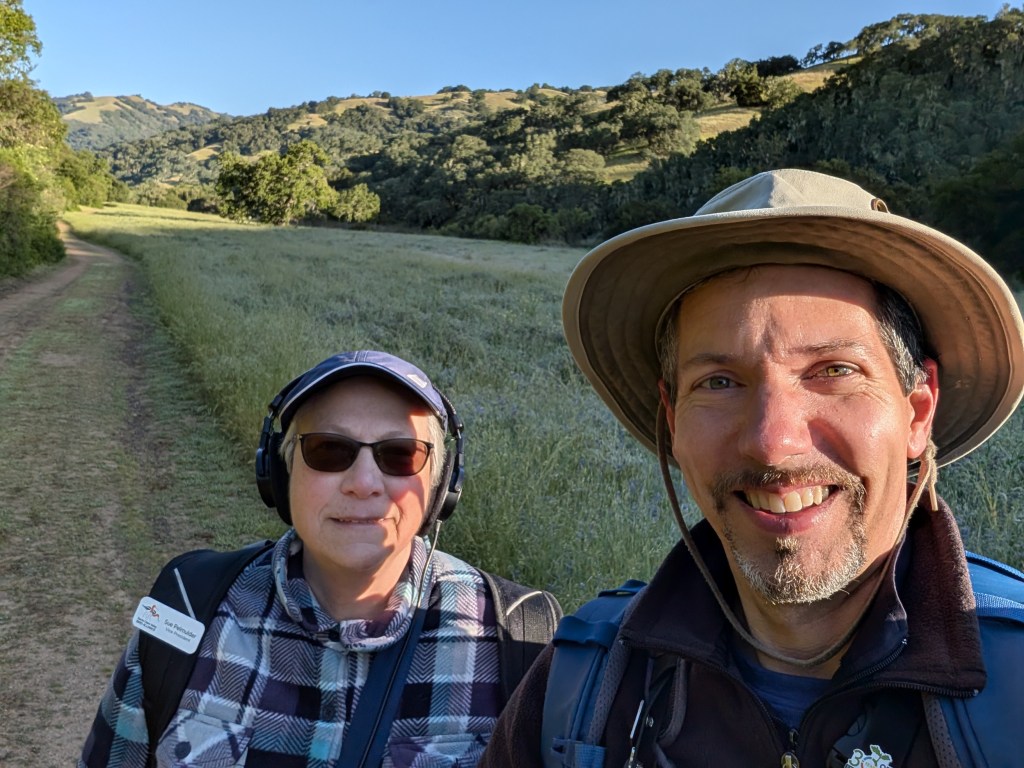
To explore this invisible landscape, I’m joined by my friend Sue Pelmulder, a birder and audio engineer who learned how to combine these skills and reveal a new connection to nature. Together, we set out on a 5:00 AM “field trip” for the Santa Clara Valley Bird Alliance’s annual Birdathon. Using high-end recording gear, including an 18-inch parabolic dish that acts as a “zoom lens for the ears,” we captured the hidden details of the California’s Diablo Range. From the haunting, prehistoric calls of the Pied-billed Grebe to the singular “water glump” of a diving Western Grebe, this episode is an immersive look at how listening can reveal a world that our eyes alone would have entirely overlooked.
Ultimately, this journey isn’t just about professional gear or rare species; it’s about the “treasure hunt” and connection to nature available right outside your front door. We discuss how you can get to know your individual neighborhood birds, and why tools like Merlin are leveling the playing field for new observers. Whether you are an experienced birder or someone looking for a “universal reset button” for a tired mind, this conversation with Sue Pelmulder will challenge you to close your eyes, open your ears, and discover nature in a new way.
Birds Appearing in this episode: California Quail, White-throated Swift, Pied-billed Grebe, House Wren, Great-horned Owl, Western Grebe, Violet-Green Swallow, and more!
Did you have a question that I didn’t ask? Let me know at podcast@jumpstartnature.com, and I’ll try to get an answer!
And did you know Nature’s Archive has a monthly newsletter? I share the latest news from the world of Nature’s Archive, as well as pointers to new naturalist finds that have crossed my radar, like podcasts, books, websites, and more. No spam, and you can unsubscribe at any time.
While you are welcome to listen to my show using the above link, you can help me grow my reach by listening through one of the podcast services (Apple, Spotify, Overcast, etc). And while you’re there, will you please consider subscribing?
Links To Topics Discussed
People and Organizations
Santa Clara Valley Bird Alliance
Sue’s Recording Gear
Telinga Modular Parabolic Collector
Warm Audio WA-84 mono microphone with omnidirectional capsule
Recording on a Zoom H6 Handy Recorder at 48KHz linear PCM
Sony MDR-7506 headphones
Other Recording Gear (lower budget)
You can purchase “shotgun” microphones that provide some directionality (not as good as a parabola), but they are much more portable and much cheaper. Michael uses a Rode VideoMic Pro. Usually, the longer the shotgun mic, the more directional it is.
Zoom also makes smaller and less expensive recorders than the H6 Sue uses. Michael uses an H4N, but Zoom makes other less expensive recorders. Just make sure the connector types match your microphone.
For an ultra-portable (and inexpensive!) solution, Michael uses his smartphone and connects the Rode VideoMic Pro using a cable that converts the 1/8″ output to a USB-C.
Photos
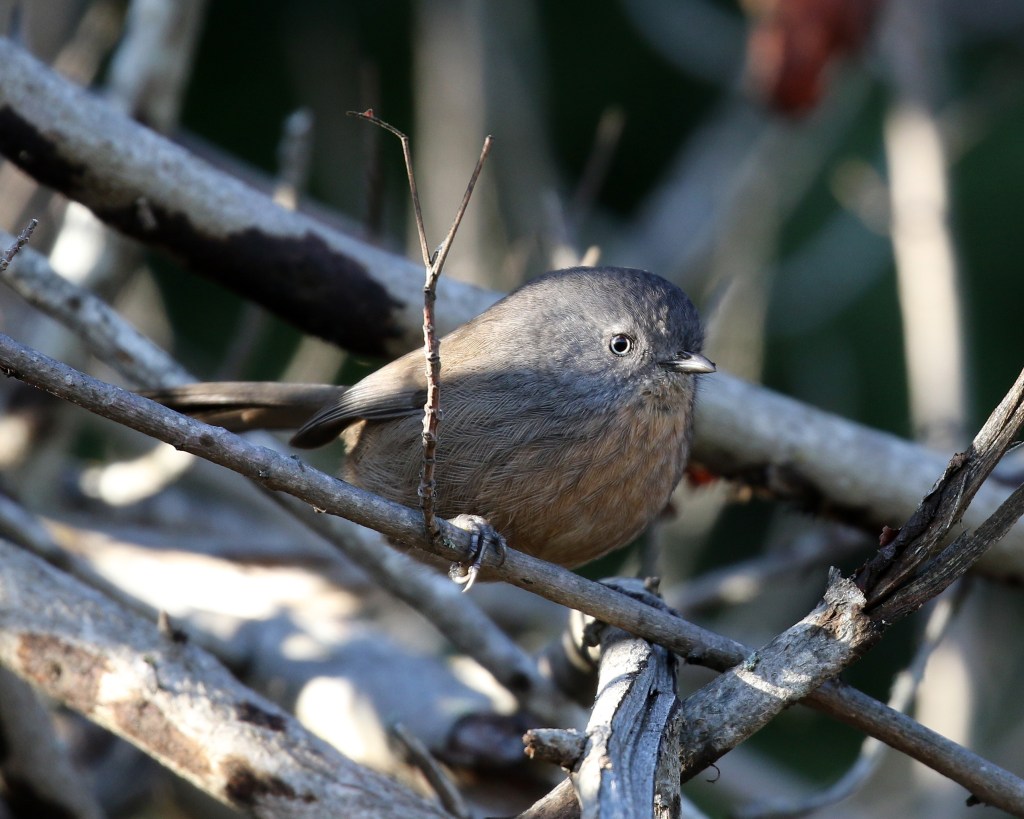
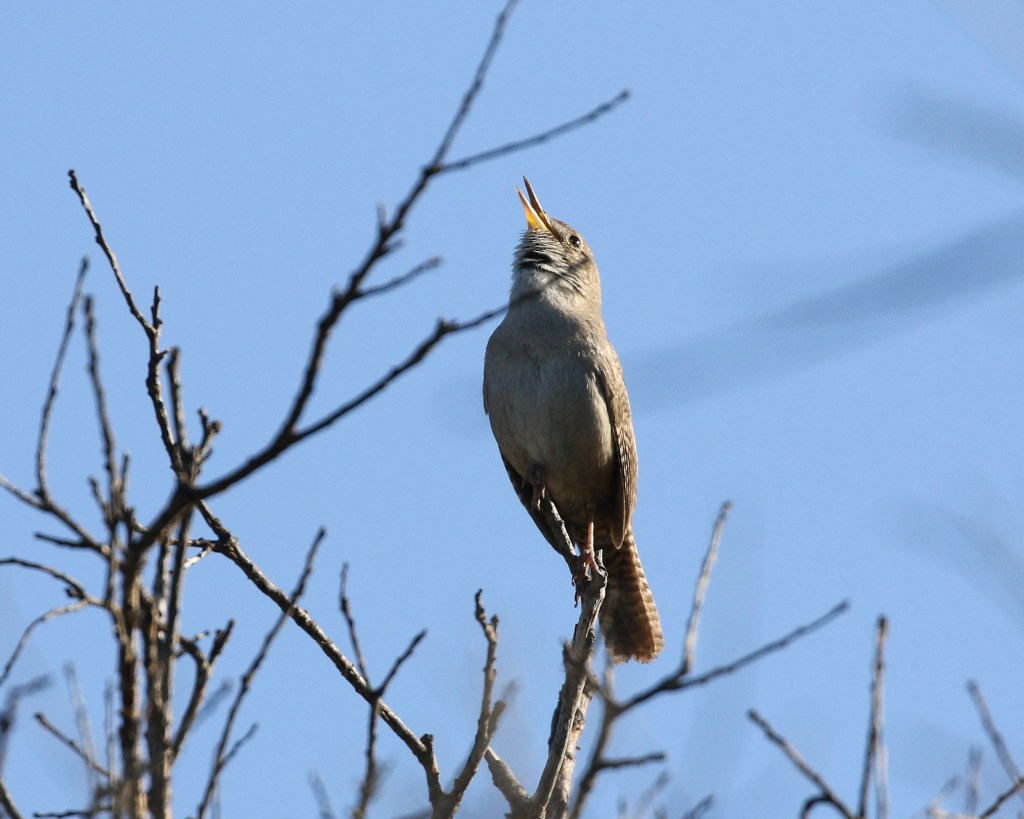
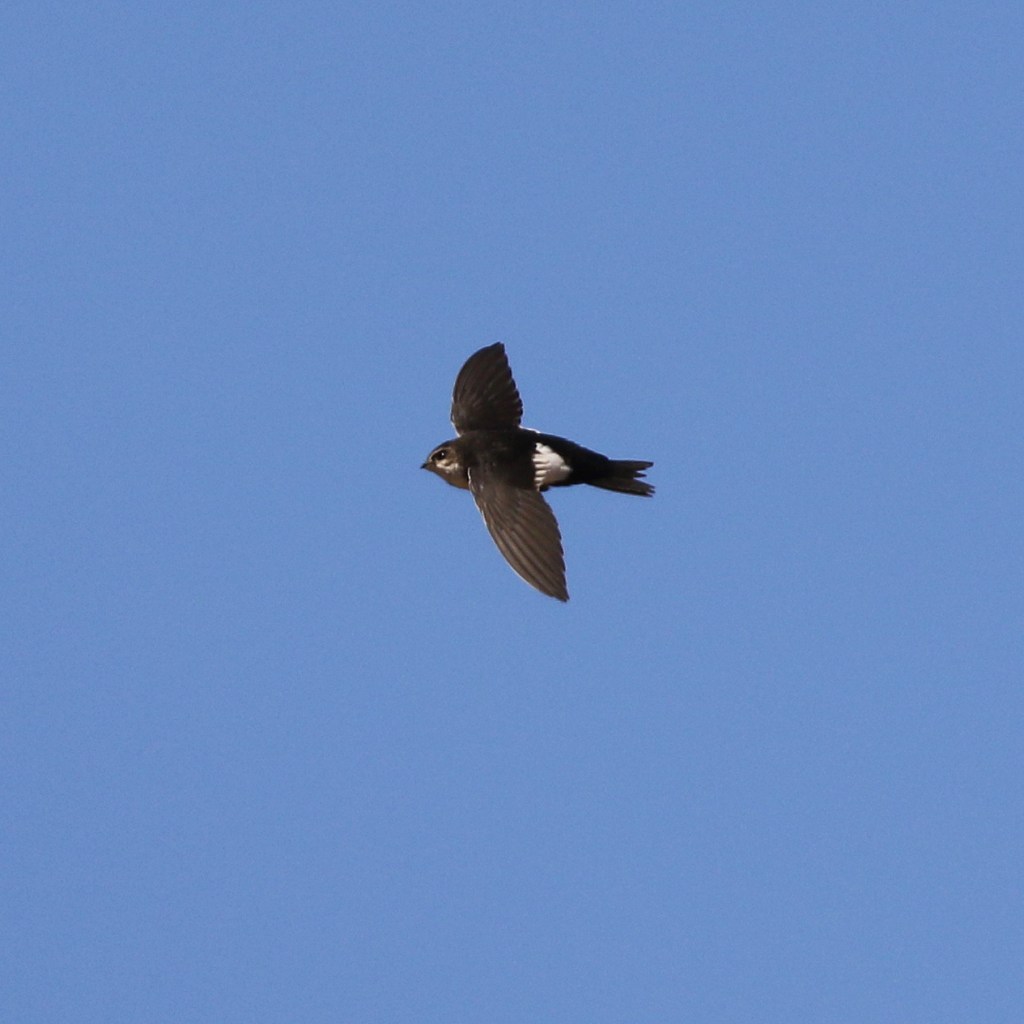
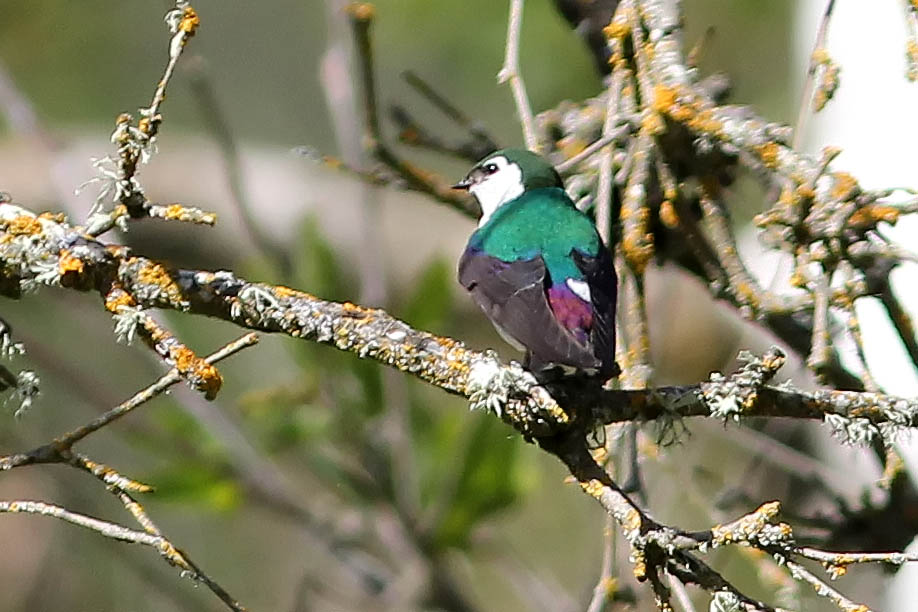
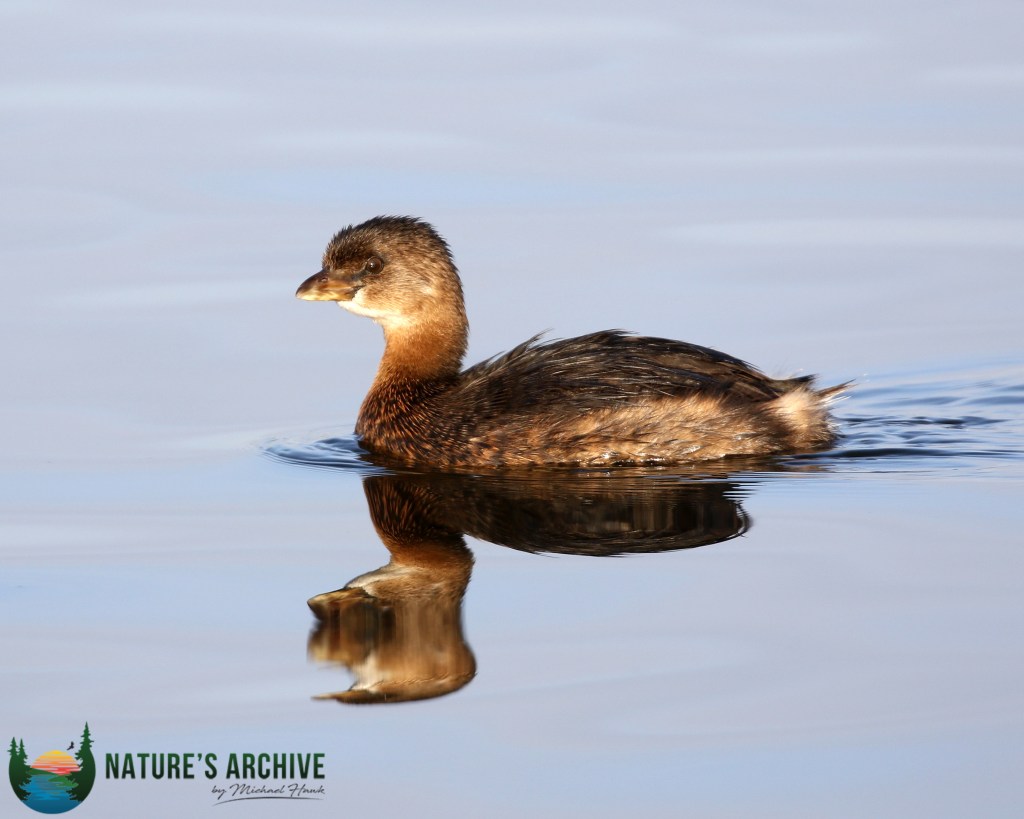
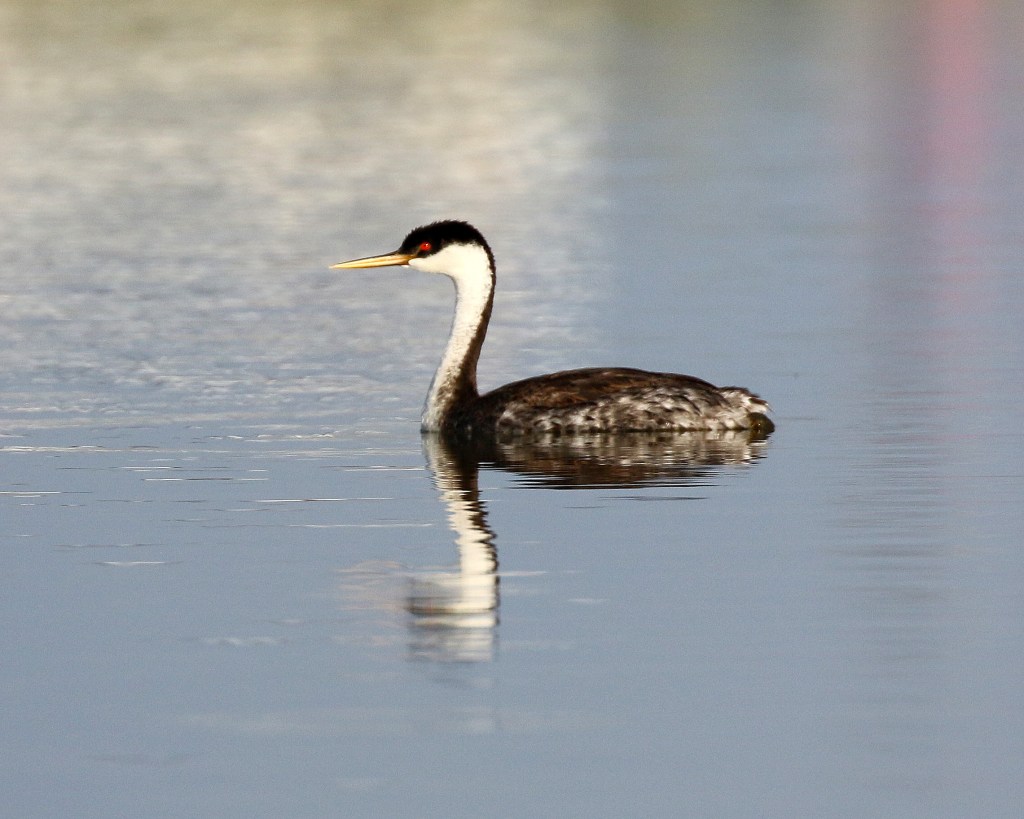
Here are some photos of the birds appearing in this episode. All photos by Michael Hawk.
Credits
The following music was used for this media project:
Music: Spellbound by Brian Holtz Music
License (CC BY 4.0): https://filmmusic.io/standard-license
Artist website: https://brianholtzmusic.com
Transcript (click to view)
Michael Hawk owns copyright in and to all content in transcripts.
You are welcome to share the below transcript (up to 500 words but not more) in media articles (e.g., The New York Times, LA Times, The Guardian), on your personal website, in a non-commercial article or blog post (e.g., Medium), and/or on a personal social media account for non-commercial purposes, provided that you include attribution to “Nature’s Archive Podcast” and link back to the naturesarchive.com URL.
Transcript creation is automated and subject to errors. No warranty of accuracy is implied or provided.
[00:00:00] [sounds of the morning chorus of birds]
[00:00:08] Michael Hawk: People are visual creatures. Nearly 30% of our cortex is dedicated to processing visual information. Compare that to only 3% for hearing. What’s more, since our eyes provide so much information, our brains often mute other senses to save cognitive energy.
[00:00:26] Evolutionarily, this made sense. But in our modern screen-heavy world, the visual dominance has intensified into sort of a sensory tunnel vision.
[00:00:35] However, when we step into nature with our only spotlight turned on, our vision, we miss a massive portion of the world around us.
[00:00:55] Unlike the focused spotlight of vision, sound, on the other hand, is more like a floodlight. It provides a three hundred and sixty degree awareness that vision often cannot match. You don’t need to be looking at a bird, a cricket, or a rustling canopy to experience it.
[00:01:11] Sound surrounds you, pulling you directly into the present moment Immersing yourself in the sounds of the natural world is one of the fastest, most effective ways to slow down, reduce stress, and truly observe. Recently, I had the pleasure of heading out into nature with the express purpose of listening to and recording birdsong.
[00:01:31] Alongside a friend, we decided a 5:00 AM start made the most sense so we could get to our destination by 6:00, a few minutes before sunrise, so we could listen to the dawn chorus. That’s the brief moment of time when birds of many different species wake up, get active, and stake their claims to their territories.
[00:01:59] do you consider yourself a birder?
[00:02:01] Sue Pelmulder: I don’t keep a list. So, in a way, yeah, I’m a birder in that I go with my binoculars and try to find birds. But I’m more of a bird watcher. I like to watch what they’re doing. They can be a plain old bird, a generic bird, but I’m interested in what it’s doing with its neighbor and which plant it does, and whether it jumps around or whether it just sits around or…
[00:02:30] that’s more my interest.
[00:02:32] Michael Hawk: That was Sue Pelmulder, my partner for the day. Every year, we head out with the same goal in mind, record bird song. And while we both find it to be great fun, we had another purpose. This is part of the Santa Clara Valley Bird Alliance’s annual Birdathon fundraiser. Members of the Bird Alliance of all skill levels head out over the span of a few weeks, inviting others to join them or to donate to their cause.
[00:02:56] This specific fundraiser supports the Bird Alliance’s educational efforts, such as their school programs. In addition to being a bird watcher, Sue is also an audio professional.
[00:03:07] Sue Pelmulder: I started, mixing, live music at traditional music festivals a few decades ago. And just is another way to participate in the festival. I had a, a good ear. Uh, I’m better engineer than I am a musician, and so I did a better job of making other people sound good than producing my own music that you’d actually wanna hear on a stage.
[00:03:35] that’s how I got interested in audio. I went from there, after about 10 years, of being an engineer, a proper engineer you might say, civil and mechanical. UCs, at Davis and Berkeley, and I went to a, a recording studio, and I just started as an unpaid intern like everybody else, and that’s where I really learned audio.
[00:03:59] Michael Hawk: How did, bird watching and audio come together for you? Was there a point where you realized you could bring these two things together?
[00:04:07] Sue Pelmulder: I guess it just, It just seemed the obvious thing to do would be to record them.
[00:04:22] Michael Hawk: And how did we get recordings like that wrentit and those California quails that you just heard?
[00:04:27] Sue Pelmulder: So I use a, uh, parabola to, really focus so my parabola is about 18 inches across. And, it focuses the sound from a long way away into a center spot where you put the head of the mic in focusing that, it excludes sound from all the other directions.
[00:04:53] So we can be standing next to a creek or next to a river. If I point away from that creek or river, you do not hear the river. So as long as there’s a bird on the other side of you from the river, it doesn’t matter how much background noise there is. You could still pick out that bird, and from a long way away.
[00:05:15] So I use the parabola and a condenser mic, and then a, uh, a Zoom recorder. Mine happens to be six-channel, but I only use one channel of it. It has XLR inputs, so you can stick a nice professional mic into it, and that’s it.
[00:05:33] Michael Hawk: And you’re monitoring with headphones. Yeah. So you’re only hearing what you’re pointed at.
[00:05:39] Sue Pelmulder: Well, it, it, that’s true to an extent, right? So, uh, these are Sony V6 headphones. and I’m only listening, uh, I o- because I’m listening to one channel, and it’s not a stereo, headphone output. It’s stereo headphone output, but one channel one side, another channel another side. So my left ear is hearing what’s in the recording. Because these are not closed ear- headphones. I actually, even with the headphone on my right ear, I actually still hear what’s going on around. But I hear very clearly in the left ear- Mm … whatever I’m pointing at. So if I’m looking for a sound, I can rotate the parabola and point different directions.
[00:06:23] Michael Hawk: If you haven’t seen one of these before, a parabolic microphone is like a dish. It’s parabolic shaped so that sound hitting anywhere on the front surface reflects back to the same center point, sort of like a more precise way of cupping your hands over your ears to hear better. The sensitive microphone is placed at that center point, collecting all of those sounds while blocking the sounds that come from the side or the back.
[00:06:47] It narrows your focus and brings out details from a distance.
[00:06:51] Sue Pelmulder: So when you’ve got a good microphone and a parabola like that, and you’re listening, it’s like having a zoom lens or having binoculars.
[00:07:01] What you can hear going on is in so much more detail than what you can just hear with your ears. it’s really fun just to walk through whether you’re actually re- whether I am actually recording or whether I’m just listening through the mic, to what’s around. And even things like the, you know, the, when the fly goes across the face of the parabola is fun, ’cause you hear it, zrew.
[00:07:33] Michael Hawk: Let me tell you a bit about my journey with bird song and bird identification. When I was first getting interested in birds, I think like most people, I focused on color and size
[00:07:42] But I soon realized that most experienced birders were finding many more birds than me, even when we were on the very same hike. Why was this? Limiting myself to sight was, well, limiting. Eyes can play tricks on you. Size can be hard to judge without good references. Birds might be backlit and only look like a silhouette, and many species look almost identical even through binoculars
[00:08:07] When I first started paying attention to vocalizations, it really seemed overwhelming, but just paying attention was the key. Learning a few common bird songs allowed me to notice when something was different or a little bit off,
[00:08:19] And over time, I added more and more songs to my mental vocabulary, like this white-throated swift.
[00:08:30] A few years later, I had another realization. Hearing a bird I was familiar with felt just like seeing that bird. Just the sound of the bird would trigger recall in my head, re-experiencing past encounters. In fact, hearing is also deeply tied to our deepest memories and emotions.
[00:08:48] Just as a song you first heard in high school can instantly transport you back in time, nature’s soundtrack carries its own emotion. Hearing the familiar song of a bird can unearth fantastic feelings of your first encounter with that species or other memories of that day.
[00:09:03] A babbling brook might bring back memories of camping or fishing trips of yesteryear, while the steady rhythm of ocean waves or wind through pine trees can feel like a universal reset button for a tired mind
[00:09:15] And today we created many new memories.
[00:09:19] Sue Pelmulder: And we had the, the house wren singing loud and singing close.
[00:09:26] Michael Hawk: And then it flew at you.
[00:09:27] Sue Pelmulder: And then it flew at me- … and passed about six inches from my ear. So, uh, that’s fun. I enjoy getting wing flaps, if you really hear that.
[00:09:53] and later when we’re at the lake, or at the reservoir, and I was recording a western grebe.
[00:10:02] And it was making its vocalizations, which I had never heard before, and then it dove. And I got the sound of it diving, the little water glump. it’s one of those sounds that you know exactly what happened when you listen to it later. You’ll hear the chatter, chatter, chatter, glump, and you know that bird just dove.
[00:10:23]
[00:10:37] Michael Hawk: And I think my highlight was the haunting sounds of the pied-billed grebe. The pied-billed grebe is a small, unassuming water bird. It likes lakes and ponds and often dives for food. I think it looks cute, almost cartoonish. Despite having literally seen hundreds over the years, I never heard this sound before
[00:11:12] While it’s not quite the same, that sound transported me back to a trip to the Canadian Rockies when I heard loons echo across the lake
[00:11:20] These are connections with nature. Not just bird IDing, but placing birds with habitats and with their actions and behaviors.
[00:11:29] The glump that Sue mentioned of the western grebe tells you exactly what happened without seeing a single ripple in the water.
[00:11:36] While we drove 45 minutes from my home to make these recordings, the magic of the sound of nature is that it’s everywhere. Wind whistling through trees or even between buildings downtown, a clap of thunder, a babbling brook or ocean waves. even the most urban areas are likely to have pigeons, starlings, house sparrows, crows, and probably a lot of other species too, each with their own repertoire of sounds.
[00:12:00] Sue Pelmulder: I like the Bewick’s wren ’cause it’s always the three p- three parts, and each Bewick’s wren in the neighborhood has their own three parts.
[00:12:09] it’s still a Bewick’s wren, but really distinct three parts, and each one will choose a different song. There’s usually the buzz-
[00:12:19] Michael Hawk: Mm-hmm …
[00:12:20] Sue Pelmulder: or trill in some part of it, a lot of times the last part, but the first two parts may be different.
[00:12:27] Michael Hawk: That’s really interesting. I hadn’t picked up on that. I’ve noticed the variation between Bewick’s wrens, but I hadn’t really realized that each one retains their own, their own specialization.
[00:12:39] Sue Pelmulder: Yeah, I have more than one in the neighborhood and I’m out, sweeping the porch or gardening or whatever, I’ll listen to ’em and I’ll get to know, you know, the two or three I can hear from my yard.
[00:12:51] Michael Hawk: One of my personal favorite backyard birds is the northern mockingbird. I love trying to pick out what birds it’s trying to imitate. I can hear it mimic an acorn woodpecker, an ash-throated flycatcher, and sometimes even my neighbor’s squeaky sliding door.
[00:13:06] And I’m an early riser, but one of my favorite parts of springtime is getting up early and hearing the violet-green swallows excitedly chattering away, hunting for insects.
[00:13:17]
[00:13:20] Michael Hawk: So for someone who maybe isn’t a nature person in the traditional sense, do you think that sound is a, an easier way to maybe get a foot in the nature world?
[00:13:32] Sue Pelmulder: Well, it is for birds because it is so much easier to hear them than see them. Uh, and so that’s kind of exciting, right? It’s a, it’s like a treasure hunt. find a new sound,
[00:13:44] Michael Hawk: And with apps like Merlin, it- That’s right … really evens the playing field.
[00:13:49] Sue Pelmulder: Yeah. Merlin will give you a good guess. but you know, it is the same thing as the birds already knowing their names.
[00:13:55] They don’t care. You don’t have to know the name of the bird to enjoy, “Oh, this is a different song. Oh, this is a … That’s a different squawk. A- and eventually you s- you want the acorn woodpeckers to shut up or the crows to shut up ’cause you’re trying to listen to some warbler or whatever. But still, it’s, it’s kind of a, like, a little, little hunt for a new sound.
[00:14:17] Michael Hawk: Bird names or not, I love Merlin because I’ve seen it open so many people’s eyes to the diversity that’s all around. I had a coworker tell me once that he started playing with Merlin, he had thought that maybe there were only three or four bird species in his yard, but came away with nearly 15 species over a few hours doing yard work.
[00:14:35] It caused him to purchase a bird ID app as well.
[00:14:39] There’s so much more I’d love to say about Nature’s Soundtrack. It’s a free service that lets you slow down, disconnect, and wash away the internal chatter. When you trade the noise of your to-do list with the sound of the morning chorus, you aren’t just listening to birds, you’re letting the natural world hold your attention for a while, giving your mind that rare permission to simply be.
[00:15:02] And before we go, thanks so much to Sue Pelmulder for sharing her story and audio recordings. I’ve included a list of the gear that Sue uses in the show notes. Now, Sue’s gear is pretty high-end, so I’ve also included some links to some other ideas if you’re not looking to spend so much money. And don’t forget, you can use your smartphone too with Merlin.
[00:15:22] I’ve also included a few photos of the birds we heard in the show notes. And if you’re interested in supporting the Santa Clara Valley Bird Alliance, check out scvbirdalliance.org and click the Donate button. Thanks for listening.

