

#130: Burning Questions: Understanding Fire Management with Lenya Quinn-Davidson – Nature's Archive
Summary
It’s summertime, and around the globe record heat is dominating, from Europe to the midwest, and across the oceans as well.
As you know, heat is a key driver to wildfires. In fact, it is one of the three key ingredients, along with fuel and oxygen.
Global oxygen levels, at least within our lifetimes, aren’t going to change much. But heat and fuel can and will change. Obviously, heat is increasing, so one variable is driving more fire potential. And in many areas, fuel is also increasing. Whether it be from invasive species like cheat grass in the high deserts, or excessive understory growth due to both invasive species and decades of fire suppression.
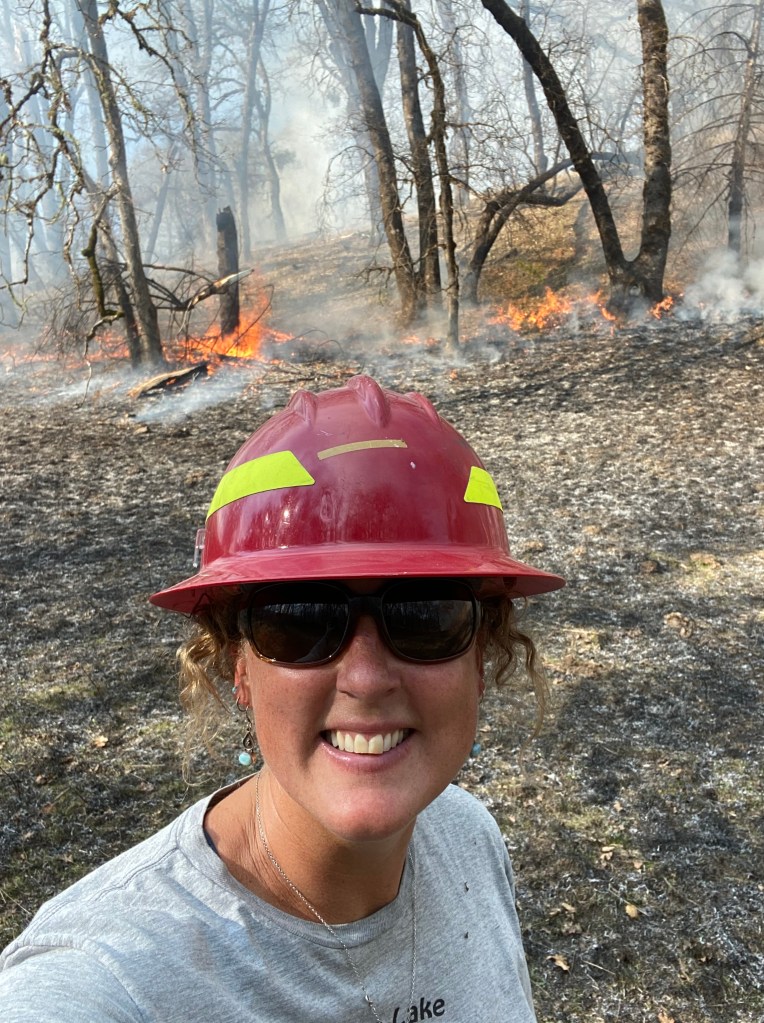
Sometimes fuel is indirectly created by heat, which causes die-off of many trees and shrubs. And more complex still is the die-off caused by pine beetles, which are actually native. But they can turn destructive when excessive heat weakens tree defenses, and due to the forest service treating so many forests as dense monoculture crops.
I’d like to share this interview with Lenya Quinn-Davidson, discussing fire management. This interview was recorded 2 years ago, but is more relevant than ever.
Case in point, we’re barely into the traditional fire season and 2026 has already had record breaking wildfires in Nebraska, and Oklahoma and Kansas had a nearly 300,000 acre wildfire in February, along with a 35000 acre fire in Florida.
Wildfire is complex, often misunderstood, and turned into political fodder. So please take a few minutes and enjoy this episode from the archive.
Original Intro:
Many of you might recall the dramatic 2020 fire season in the western USA. In California alone, close to 4 million acres burned. Cities were clouded with smoke and unhealthy air for many weeks. I had ash fall at my home in San Jose, CA on several occasions.
But did you know that based on pre-colonial historical estimates, 4 million acres burned would be considered “below average”. How can that be? Does that mean that every summer in the 1700’s had smoke filled air and devastating fires? Spoiler alert: the answer is no.
In today’s episode, we reconcile how it was possible for more acres of land to burn every year, but with less dramatic impact. In fact, that historical fire was largely beneficial to the land.
Our guest today, who helps us decipher historical fire and how we can add more beneficial fire back to the landscape is Lenya Quinn-Davidson.
And when you have a guest who’s first name literally means “firewood” in Spanish (alternative spelling), you know you’ve found the right person to discuss wildfire management.
But Lenya Quinn-Davidson’s qualifications extend well beyond her name. She’s the Director of the FIRE network for the University of California’s Agriculture and Natural Resources organization. She focuses on the various ways humans connect with fire, including the use of prescribed fire for habitat restoration, invasive species control, and ecosystem and community resiliency. She’s actively engaged in local and national prescribed fire communities, and is an advocate for increasing diversity in the world of wildfire.
A quick aside before we get into the interview. Obviously, climate change is a huge component for why we see bigger fires. Heat has a disproportionate impact on fire intensity. So while we don’t talk about climate change much today, it is absolutely an amplifying factor in wildfire intensity and frequency.
You can find Lenya at LenyaQD on twitter.
Did you have a question that I didn’t ask? Let me know at naturesarchivepodcast@gmail.com, and I’ll try to get an answer!
And did you know Nature’s Archive has a monthly newsletter? I share the latest news from the world of Nature’s Archive, as well as pointers to new naturalist finds that have crossed my radar, like podcasts, books, websites, and more. No spam, and you can unsubscribe at any time.
While you are welcome to listen to my show using the above link, you can help me grow my reach by listening through one of the podcast services (Apple, Google, Spotify, Overcast, etc). And while you’re there, will you please consider subscribing?
Links To Topics Discussed
California Prescribed Burn Associations
Dixie Fire
Scott Stephens – wildfire reconstructions from UC Berkeley
UCANR Fire Advisors
WTREX – Women-in-Fire Prescribed Fire Training Exchanges
Recommended for You
Credits
Thanks to Kat Hill for editing help in this episode.
The following music was used for this media project:
Music: Spellbound by Brian Holtz Music
Free download: https://filmmusic.io/song/9616-spellbound
License (CC BY 4.0): https://filmmusic.io/standard-license
Artist website: https://brianholtzmusic.com
Transcript (click to view)
Michael Hawk owns copyright in and to all content in transcripts.
You are welcome to share the below transcript (up to 500 words but not more) in media articles (e.g., The New York Times, LA Times, The Guardian), on your personal website, in a non-commercial article or blog post (e.g., Medium), and/or on a personal social media account for non-commercial purposes, provided that you include attribution to “Nature’s Archive Podcast” and link back to the naturesarchive.com URL.
Transcript creation is automated and subject to errors. No warranty of accuracy is implied or provided.
[00:00:00] Michael Hawk: Many of you might recall the dramatic 2020 fire season in the Western United States in California alone, close to 4 million acres burned cities were clouded with smoke and there was unhealthy air for many, many weeks. I even had Ashfall on my home in San Jose on several different occasions. But did he know that based on precolonial, historical estimates, 4 million acres burned would have been considered below average. Now, how can that be?
[00:00:26] Does that mean that every summer in the 17 hundreds smoke filled the air and there were devastating fires? Well, spoiler alert, the answer is no. So in today’s episode, we reconcile how it’s possible for more acres of land to burn every year. But with less dramatic impact.
[00:00:42] In fact that amount of historical fire was actually largely beneficial to the land. So our guest today who helps us decipher historical fire and how we can add more beneficial fire back to the landscape. Is Lenya Quinn-Davidson. And when you have a guest whose first name literally means firewood in Spanish with an alternative spelling. You know that you found the right person to discuss wildfire management. But Lenya Quinn-Davidson’s qualifications extend well beyond her name.
[00:01:08] She’s the director of the FIRE network for the university of California’s agriculture and natural resources organization. She focuses on the various ways. Humans connect with fire, including the use of prescribed fire for habitat restoration, invasive species control and ecosystem and community resilience. She’s actively engaged in local and national prescribed fire communities. And is an advocate for increasing diversity in the world of wildfire. So a quick aside. Before we get into the interview.
[00:01:34] Obviously climate change is a huge component of why we see bigger fires today. Heat has a disproportionately large impact on fire intensity. So while we don’t talk much about climate change today, it’s absolutely an amplifying factor in wildfire, intensity and frequency. So I just wanted to get that out of the way.
[00:01:52] So you know that we aren’t ignoring it. So without additional delay. Lenya Quinn-Davidson.
[00:01:58] Lenya, thank you for joining me today.
[00:02:01] Lenya Quinn-Davidson: Yeah. Thanks for having me.
[00:02:02] Michael Hawk: As we were just chatting about here, topic of wildfire, it’s something that has been of interest to me for a long time, and I’m sure listeners who’ve heard more than a few episodes have heard me talk about that interest before. So I won’t bore them with that, but it’s also very complex and nuanced and challenging to just have a broad wildfire discussion.
[00:02:24] So I’m really looking forward to today because I think what we’re going to end up doing is talking a little bit about how, we relate to wildfire and also prescribed burning in particular. So if that sounds to you, we’ll jump right in.
[00:02:36] Lenya Quinn-Davidson: Yeah, let’s do it.
[00:02:37] Michael Hawk: maybe just starting off you’re now in this professional role heavily involved in wildfire in California, but you didn’t just wake up one day in this role. You had to work to get there. So I’m interested how did you get there? Have you always been interested in nature
[00:02:53] Lenya Quinn-Davidson: Yeah, I grew up in a really rural part of Northern California in a place called Trinity County in a small town called Hayfork, which had a population when I was a kid of about 2, 500 people. And My parents had moved there. My dad grew up in the Bay Area and my mom grew up in Los Angeles area and they moved there to raise a family and to buck the typical lifestyle. I mean,
[00:03:18] They were kind of in this category of back to the landers who wanted to raise their kids in a small town and really get back in touch with nature, if you will. So that’s where I was born at home, and grew up there with my sister, who’s a little older, and just surrounded by national forest. I mean, the county where I grew up is about 80 percent public land. So as you can imagine, It was a very nature based childhood and spent a lot of time outdoors.
[00:03:46] Michael Hawk: And spending that time outdoors where you were at, did you have an affinity or curiosity about wildfire or did that just come naturally?
[00:03:59] Lenya Quinn-Davidson: I will say I had a curiosity and even more than that, a fear of wildfire. The area where I grew up is very fire prone. I mean, California is in general, but my county in particular, because of its, coverage of public lands and forest and a lot of lightning ignitions in the summer and so I grew up as a kid being pretty fearful of wildfire, worrying that our house was going to burn down, having nightmares. I would have recurring nightmares about wildfire. And then my mom was also a caterer who worked on major wildfires, so she was on a cooking team that would provide meals for firefighters, so we would go visit her on these major events and it was kind of a big deal for me, actually, just having this stressful, this stress about wildfire as a kid.
[00:04:48] Michael Hawk: Growing up in that area then, I’m picturing it. You’re a little bit inland, I think up there.
[00:04:55] Lenya Quinn-Davidson: It’s a few hours inland from the coast where I live now. I live on the north coast, and yeah, it’s just a, it’s about two and a half hours inland in kind of a dry, mixed conifer forest. And the Hayfork Valley, where I grew up, is the second biggest valley in the Klamath Mountains. So it’s kind of a big, wide, open valley, and my family grew up right next to it. You know, our house was right next to a creek and surrounded by a lot of wild lands.
[00:05:22] Michael Hawk: I know several folks that like to go backpacking up in that area. And it’s a beautiful area, but I could definitely see with all of the acres and acres of forest why you would be concerned. So wildfire was a annual thing. I heard you on a, webinar actually talking about how smoky summers were normal for you.
[00:05:41] And it made me realize that down here where I live in San Jose and the Bay area, smoky summers seem more like a new thing, for us down here. So maybe just jumping a little bit deeper into the topic. Do you have a sense for what our expectations should be when it comes to like smoky summers, just like that kind of visceral observation that we have? should we expect to have smoky summers say in the urban population centers of the West?
[00:06:09] Lenya Quinn-Davidson: I think that’s a really important question, and it is something that we all should be thinking about, is what is the baseline here in a place like California or in the Western U. S.? These are questions we’re asking nationally and internationally, right? But it’s important to understand that in California, this is such a fire prone landscape and the levels of fire activity that we see now and that we’ve seen in the last hundred years in California are really outside of the historical norm and much less than we would naturally have you know, if we had let lightning ignitions be active and if we had people using fire like they did for millennia in California.
[00:06:50] There’s some interesting research that has come out of UC Berkeley. A professor there named Scott Stevens has done some really nice reconstructions, historical reconstructions, of how many acres burned historically in California pre pre European settlement. And he showed that typically in any given year in California, there might have been 4 to 11 million acres that would have burned.
[00:07:13] Just to give you a little perspective on that, if you remember the 2020 fire season here in California, with the August complex we had that widespread lightning event that set off a bunch of wildfires. We had 4. 2 million acres burn that year, and people were beside themselves with it.
[00:07:32] That was this unprecedented amount of fire, and all the smoke, and how crazy this was, and really that was on the low end of what we would have expected historically. Now I think the important caveat to that is it’s not the acres, but it’s really how they burn, right? We’re seeing that fires are burning at much higher severity now, and the smoke can be a lot different when you’re talking about the full canopy of the forest burning, rather than just a creeping understory burn. The actual content of the smoke is different, and the amount of smoke is different. there’s some nuance there. But I do think people need to get used to smoke. And as we think about restoring fire, as we think about becoming more fire resilient and really bringing fire back as a process in California, it’s going to be smokier So, yeah.
[00:08:20] I
[00:08:21] Michael Hawk: I want to zero in a little bit on that, on the severity and intensity aspect maybe for a moment. You read my mind a little bit there because growing up, I’d see on the news reports about wildfires and when they started getting above like 10, 000 acres or 20, 000 acres, it started to become really newsworthy. know 50,000 acres was like unheard of, at least when I was growing up. You just mentioned that one of the big differences is the severity of the fires today. I’m sorry, was it Scott Stevens?
[00:08:48] Lenya Quinn-Davidson: Yeah. Scott Stevens.
[00:08:50] Michael Hawk: So in his analysis, was he able to get a sense for the severity? And is there a metric, first of all, for like how to measure severity of a fire?
[00:08:58] Lenya Quinn-Davidson: And so just one important note is that, you know, a lot of people use the terms fire severity and fire intensity interchangeably, and those are different things in the sense of fire behavior and fire effects. So fire intensity is the amount of energy and heat that’s coming out of an individual unit of fire.
[00:09:16] And then fire severity is the impact that it has on the landscape. So there are a couple different ways of looking at fire severity. You can look at vegetation fire severity. So how is it affecting, the actual vegetation on the ground? And then there’s also soil burn severity. So how is it affecting the soil in addition to the vegetation?
[00:09:34] When we in the fire world talk about fire severity, We’re really talking about how it’s impacted the vegetation community, and if you’re in a forested setting, what’s left afterward? Does it kill all the trees or is it just burning under the trees and the trees remain? So we talk about it in the sense of low, moderate, or high severity.
[00:09:58] And in a place like California, which has a ton of different habitat types and ecosystems. I mean, California is one of the more diverse places in the world, really. And there are different fire regimes and all the different ecosystems in California, but a lot of California had adapted and evolved with a frequent fire regime.
[00:10:19] So frequent fires that burned at low to moderate severity. And, we have a lot of research to show that and to help us understand what that historical landscape looked like. And of course that was shaped by both lightning and human ignitions. People like Scott Stevens and others many, many others, have done these historical reconstructions to understand those patterns of severity and how that’s changing over time.
[00:10:47] And what we’re seeing currently in places like California and in a lot of other places too, is that we’re getting increasing scale of high severity burn patches. So there were always patches of fire in California that burned at high severity and killed mature trees, and that would create heterogeneity and promote biodiversity.
[00:11:08] It’s really that diversity and heterogeneity is a really important part of fire in general. But what we’re seeing now is that we’re getting patches of high severity fire that are significantly bigger than anything we’ve ever seen in the past. So If you look at something like the Dixie Fire, which burned in 2021 in the Lassen area of Northern California.
[00:11:31] That fire was almost a million acres as an individual fire event, and more than half of it was high severity, meaning it killed all of the mature vegetation, all of the trees, and that creates some real challenges and impacts uh, not only on the forest, but on regeneration of trees, on future fire behavior and future burn severity, and of course on the communities that are in those places.
[00:11:59] Michael Hawk: So we mentioned the Dixie fire a couple of times today, and I wanted to give a little more context about what that was. So in 2021, this fire started on July 13th and it burned until it was a hundred percent contained on October 25th, 20, 20 wise. So that’s a couple of months of nonstop burning and. As when you said it was almost a million acres. And it ended up being the largest single source wildfire in recorded California history.
[00:12:27] So there’ve been other wildfires that have burned more, but they’ve had multiple ignition sources. So this was quite a fire. It was record breaking in many different ways. And I’ll include a link in the show notes with more information.
[00:12:40] Gotcha. So that’s a good clarification between severity and intensity and okay, there’s a million acres, half of that was high severity. I think that paints an interesting picture. When Scott Stevens was doing this research and reconstructing the historical fire regimes did he have any tools at his disposal to assess?
[00:12:59] the, say, percentage of high severity fire coverage in a given year.
[00:13:05] Lenya Quinn-Davidson: Yeah, and I’ll say on this reconstructing historical fire regimes, so Scott’s one of many people who have done it. There’s a whole big group of researchers and scientists who work on reconstructing historical patterns of fire. And a lot of that is done using dendrochronology tools.
[00:13:24] So actually coring trees, looking at burn scars in trees, because trees act as recording devices for fire, assuming that they actually survived the fire. So we have long lived trees in California and across the West where we can actually reconstruct and map out spatially where and when fires were happening over time.
[00:13:46] And it does become more of a challenge when you have these really huge patches of high severity because you can’t record that on a tree. But there are some other tools that people can use too, like lake cores. So actually doing sediment cores in lakes and looking at pollen deposition and being able to reconstruct some of the vegetation composition from those kinds of tools as well.
[00:14:09] Michael Hawk: That’s really interesting. I just realized too, the late core topic has come up in the past and I just interviewed a dendrochronologist and I think that episode will have aired before this one airs. Tying those two topics together if you’re looking at pollen composition, some of that could also be driven based on the weather of that year too.
[00:14:29] You may if conditions were favorable, you could have more pollen. So I could see really interesting science occurring where you decouple the different variables and assess okay, this was a long lived event. So it was probably because of a high intensity fire suppressing the amount of pollen which may not match, say, the, Growth rate of the tree is also measurable in dendrochronology.
[00:14:51] So it’s interesting.
[00:14:52] Lenya Quinn-Davidson: I shouldn’t speak too much to some of these tools. This is not an aspect of fire that I’ve personally worked on, but certainly something that informs a lot of the work I do. And, when we think about the area that I grew up, I, it might be useful to paint a picture of that place.
[00:15:08] The Trinity County is this really forested area with these big valleys and meadows, and lots of interesting river systems. But there’s been a lot of research, actually. When I went to college, and this is how I got into fire ecology and fire science, I started taking classes from people like Scott, actually, and reading some of the literature on this topic and realized that the area where I grew up had actually been an epicenter of not only fire science research and some of these historical fire regime reconstructions, but also of some cool community based forestry work because I was in an area that was affected by the Northwest Forest Plan and was in a timber town and our mill shut down because of the Northwest Forest Plan.
[00:15:50] There are just a lot of interesting dynamics there. But one of the things that I’ve been revisiting lately is a paper by Alan Taylor and Carl Skinner, who are two kind of geographers and fire ecologists who looked at the Hayfork area, right in the area where I grew up, and did a fire regime reconstruction for a couple watersheds in that area.
[00:16:10] They showed through their work that area was seeing fire about every two years, for the last several hundred years before yeah, before the fire suppression era started in the 1900s. So if you close your eyes and think about these forested areas that we know and love in the Western U. S. and what they would look like if they were burning every two years. Imagine it, I think of it like, you know, if you, what we’ve done with fire suppression and fire exclusion, where we’ve actually taken fire out of these systems, it would almost be like stopping vacuuming your home or something where, just imagine all the buildup and it’s less open and you can’t walk through it because you’re tripping over stuff and the forests around the area where I grew up and across much of California were so open , they describe in their paper that the things that would stop fire, the fire was much smaller scale patchy, small scale, things like deer trails and small streams were limiting fire spread. So you might have an ignition that would burn right up into a deer trail and then it would go out. Because it was a fuel limited system, there wasn’t a lot of debris on the ground. It was clean and open and and of course the local indigenous folks were burning too and keeping it that way for a variety of reasons. So I just think that what we see now when we drive up to Yosemite or if we’re in these places that we know and love we’re not seeing the forest that evolved in this place. We’re not seeing the frequent fire forest that California should have. We’re seeing mess that’s been left over from years of poor management but that’s what we’re used to, so it’s hard for us to reframe the way we look at and think about the natural world around us.
[00:17:57] Michael Hawk: I think imagining that deer trail stopping a fire is a really good way to reset how we think of it because it’s hard to imagine that today, to your point, that something as narrow as a deer trail could actually halt a fire.
[00:18:12] Lenya Quinn-Davidson: Just to riff on that for a second, if you think about the Dixie Fire, which again, I think is just such an interesting example, because it was a single fire event that burned almost a million acres. If you compare that with the kinds of fires that would stop at a deer trail and think that those are in similar forests that’s not that far away from each other. Where I grew up in Hayfork is only a couple hours from where the Dixie Fire burned. We’ve chosen the Dixie Fire model. That’s the kind of fire that we’ve chosen because of the decisions that we’ve made to exclude and suppress fire and to harvest all the big trees out of our forests and to change the way that we know and, and live with fire. So we can choose a different kind of fire. And I think it’s really important that people understand that these are choices that we’re making as society, as land managers, as people and we can make different decisions and there’s a lot of agency in that.
[00:19:09] Michael Hawk: So I think that’s maybe a good topic to delve into a little bit more, and maybe starting with a slightly more superficial angle to that. You mentioned at the beginning that the number of acres burned is not really a good way to assess a fire. That there are some other variables at play here. What should we ask of or demand from, say, the media or public information officers that are reporting on the fire?
[00:19:36] Lenya Quinn-Davidson: One of the things that we can do is, depending on wherever you live, just try to understand what the relationship is of your landscape with fire. I liken fire to rain, snow, sunlight. It’s a natural process. It’s something that’s always been present on the landscape, especially in the Western U. S. and especially in California at a high frequency. And so when you are thinking about what’s natural, what you want on your landscape, what are the things you care about, do you love the big oak woodlands? Do you love the giant sequoias? How do you feel when you drive through a big open ponderosa pine forest? How do you feel when you’re walking along coastal in those nice coastal grasslands? Those are all fire places with fire stories. And it’s on us as people who live in this place to understand what that means and to understand our role in that and how we’re managing those places.
[00:20:36] So that’s one thing I would say. Another thing is that when you’re listening to media coverage, or if you are someone who’s providing media coverage of fire related events, try not to always depict it as really devastating or damaging. there’s a lot of good that comes out of fire. Even the big wildfires that seem scary and put a lot of smoke in the air, oftentimes they’re doing a lot of good work.
[00:21:02] Again, if we look at the Dixie Fire as an example, more than half of it was high severity fire, but that means that the other half of it was low to moderate severity fire. And that was actually a treatment on the landscape. That’s something we can build on. It’s something we can go back to and do further management.
[00:21:18] It’s something that probably provided better grass and forage for deer and elk probably created fields of wildflowers that we’re going to enjoy. I think we need to stop thinking about fire in this really monolithic way, that it’s just this bad dark thing and really start seeing it in a more nuanced way and think what is it we want, what is it we care about, and how can fire help us get there.
[00:21:41] Michael Hawk: Yeah. I’m thinking, for me, again, since I only have my lens, really, I can try to put myself, in other people’s positions but, what I grew up with was this vision that fire would destroy everything. And and it’s hard to overcome that when say I had 20 years of that or 25 years of that mantra or, those are the images that we were seeing. just, it’s making me realize how immense, the problem is not just from a landscape level, but from a, say a social science or social relationship standpoint.
[00:22:14] Lenya Quinn-Davidson: Absolutely. And I think that’s such an important point that most of the fire problems that we have in California, I would say are people problems. There are management problems, management decisions we’ve made, there are misperceptions about the way things work and how we got to where we are.
[00:22:31] There’s also a beauty in that, right? If they’re people problems, then I think they’re solvable problems. And so we shouldn’t let ourselves feel overwhelmed. These are just, it’s just nature’s coming for us or something. It’s absolutely not that. It’s that we as humans have really gotten out of balance with fire in this place.
[00:22:48] And we had thousands and thousands of years of people in balance with fire in these places. And so how can we get back to that? How can we learn from that? And how can we continue to see ourselves as part of the landscape and agents of positive change? And fire is our best tool for that.
[00:23:05] I want to ask you about some of the impacts of suppression. And I was thinking back to your lack of vacuuming analogy and I have to say the first thought that came to my mind was, sometimes it feels like it’d be easier just to burn my house down and start over.
[00:23:18] But, that’s probably not the message that you want coming out of the show t oday, or that’s not the message I want coming out of this show. But as far as the impacts of too much suppression, you mentioned briefly about the biodiversity impact. Can you tell me more about that?
[00:23:32] Again, I think there are some important semantics here. The way I like to think about it, I like to use the term fire exclusion as really the philosophical foundation of the way we’ve been managing fire for the last hundred, 150 years, which is that we actually wanted to take fire out of these forests. We wanted to exclude fire from these places. And then there’s fire suppression, which is the actual act of putting the fires out. I find it interesting there are impacts from both, there are impacts of the actual exclusion of the fire. and then as we do more and more fire suppression, especially on these bigger wildfires, we’re seeing some pretty severe impacts from the act of suppression, too. So I want to talk about all of that actually, and I think we could start with the impacts of fire suppression because I find it pretty interesting, and I think it’s something we need to think about.
[00:24:24] In restoration work in general in California and across the United States many of the activities that we want to do, whether they’re thinning projects or prescribed fire projects or putting log structures in creeks, whatever it is we’re doing, we have a lot of environmental compliance that we have to do you know, we have to comply with the National Environmental Protection Act, NEPA, or in California, the California Environmental Quality Act.
[00:24:47] There are a lot of hoops you have to jump through to do good work. It can take years and years, and sometimes the projects never happen, and it can be costly, and it’s a real challenge. It’s one of the biggest hurdles, I’d say, for people like me who are trying to do restoration work. Now, when fires happen, and these huge teams come out, and all the helicopters, and the bulldozers, they don’t have to comply with any of that.
[00:25:09] There, it’s an emergency situation, so there’s no or requirement that goes into the actual act of fire suppression. And That enables a whole host of problems including, I mean, one of them that’s gotten a lot of attention in recent years is the use of fire retardant which they drop from airplanes to help dampen fire behavior and, put fires out.
[00:25:29] I’ve been doing some work on some fisheries and fire related stuff, and I’ve been looking at this retardant issue because there was actually a lawsuit against the Forest Service over it. And the Forest Service, I read, has dropped 100 million gallons of fire retardant in the last decade.
[00:25:44] And that’s nationally. So 100 million gallons of basically, it’s like a fertilizer, right? It’s a nitrogen rich liquid that gets dumped on the ground. Cal fire in the last decade has dropped more than 100 million gallons just in California. And so you think of all that a lot of it accidentally gets dropped into waterways and there are a lot of other issues.
[00:26:05] So that’s one example of these really impactful things we’re doing just to put fires out, not to mention building hundreds of thousands of acres of bulldozer line and that goes through creeks and doing all kinds of things that are really questionable if we were doing them as part of a restoration project, or as part of just general land management. So that whole fire suppression piece, I think, needs more attention and focus that it’s actually a whole set of practices that are pretty problematic and that we should be thinking of ways to do less of that. On the fire exclusion part, of course, it’s a lot more complicated.
[00:26:36] These are like, really complex, ecological. And I likened fire to rain or snow or sunshine, and I think that is a really helpful analogy, because what if we said, you know what, we’re just going to cut rain out of the system. We don’t think, we don’t want it anymore. We’re going to take it out and let’s see what happens after a hundred years with no rain.
[00:26:58] You can imagine what that would look like. And, that would favor some species over others. That would, cause major ecological change on a scale that’s hard to imagine. I would argue that taking fire out of the system has done something similar, in the sense of throwing things completely out of balance, favoring some species over others.
[00:27:17] And creating a major challenge in the landscapes that are left and what we have to deal with that are pretty far departed from what they were a couple hundred years ago. One of those is biodiversity loss, as you mentioned. So fire is a process that creates a lot of heterogeneity. It creates openings in some places and really resilient, older forests in other places and promotes woodlands and meadows and prairies.
[00:27:44] There’s just so much complexity with fire and the way that it. develops on the landscape in the way that it creates structure. And biodiversity is a natural product of that. When we take fire out of the system, things become a lot more homogenous and a lot more vulnerable to things like climate change, drought, and fire.
[00:28:03] We lose those meadows that we care about that are like little pockets of biodiversity. And up here on the North coast, we’re losing our oak woodlands, due to a lack of fire, because they’re encroached by other trees and outcompeted. with that, then we lose a lot of our megafauna, right? If you don’t have openings and meadows and woodlands and acorns deer and elk and other wildlife have a really hard time surviving because there’s no food resource for them.
[00:28:30] Then of course people in these places have a hard time surviving too because they don’t have all of those food resources and cultural resources that they did historically. So there’s just so much going on there. And fire is such a powerful tool for creating diversity and promoting biodiversity and really building a lot of heterogeneity into the system.
[00:28:52] Michael Hawk: And as you were describing that, I was envisioning this more homogenous landscape that forms, and also thinking that probably allows for certain invasive species to spread more easily, and it creates a self reinforcing system where I think if you had the kind of more heterogeneity within the landscape, that in and of itself, if a deer trail could have stopped a fire in the past, having that meadow or some different, plant community might help slow or change the fire behavior as well.
[00:29:22] Is that roughly accurate?
[00:29:23] Lenya Quinn-Davidson: Exactly.
[00:29:24] Heterogeneity is important because if you have that diverse structure, the landscape is patchy and it burns through one area but can’t burn through the next area and maybe it burns into an area that burned two years ago and it goes out There’s just so much more structural diversity, that it makes the system more self limiting, whereas when things become homogenous, and you have one type of tree that’s all the same age for hundreds of thousands of acres, and there’s no structural disconnection in that, there are no patches, there’s no meadows, there are no oak woodlands mixed in there, yeah suddenly you’re much more vulnerable to the impacts of, like I said, wildfire, but also drought insect damage, in some places, invasive species yeah, vulnerability is a product of that homogenous structure.
[00:30:12] Michael Hawk: Good point. It’s not just the invasive species. It could be native species that now have hundreds of thousands of acres of their preferred food that they can just go to town on, without the natural, predator prey relationships that would have existed in the maybe more natural system. wanted to ask you, I saw that you we re working on, I don’t know what the right characterization is, a project or a study that had been labeled as silent straws and about water flow impacts in areas where fire has been excluded or suppressed for a long period of time. Can you tell me a little bit more about that?
[00:30:46] Lenya Quinn-Davidson: This is a topic that I’m really passionate about and I think is, really understudied or underrecognized, is this connection between fire and vegetation and water. so if you think about it, one of the things that comes up in the north coast where I live is that a lot of landowners who I work with as an extension person talk about, over time, how their springs have dried up and how there’s not as much water in the creek and how the rivers are drier than they used to be and is this a climate impact?
[00:31:15] Is it because of, the pot growers in the hills who are pumping water directly out of the creek in the late summer? What’s driving this? And if you start to think about intact fire regimes of the historical condition of these landscapes where you might have had big, widely spaced trees growing on the landscape, whereas now you have these dense thickets of small trees that have grown up in the absence of fire.
[00:31:39] We’ve taken fire out of the system, so basically anything that can grow can just grow at will, and what’s that doing to water availability across the landscape? So that’s a question that I and some of my colleagues have had, and so we have this research project here in the north coast of California called Silent Straws, which is really getting at what is all that added tree growth?
[00:32:02] We have so many more trees per acre than we ever had historically. What’s that doing to the water availability in the system and ultimately to stream flow in the creeks? That’s a project that’s still in progress and we’re just starting to analyze the results and seeing a signal there that, yeah, if you remove trees, you have more water availability in the system.
[00:32:21] But we can see that there have been some other interesting studies, in particular a paper that was published by a guy named Park Williams from UCLA last year that really caught my attention where he looked at watersheds that had burned and compared those with watersheds that hadn’t burned and looked at the USGS gauging stations on the rivers in those watersheds to see what happened after fire.
[00:32:44] And what he showed is that in burned watersheds, so in areas basically where vegetation was removed to some extent by fire, that there was a 30 percent increase in stream flow. For a seven year period after the fire. So fire was actually increasing water availability in rivers and streams. And this makes a lot of sense to me.
[00:33:06] It’s really intuitive that the more vegetation you have, that’s all sucking water out of the ground. In a place that has really intact fire regime with frequent fire, that’s limiting all of that growth of vegetation, that you’re going to have more water available. I think the implications of this kind of thing are really obvious, and especially in time of drought and climate change and increased demand for water by people.
[00:33:29] Why are we not thinking of fire as a tool for giving us more water? And we really should be thinking about if we restore fire, we might also be restoring water
[00:33:39] Michael Hawk: Are there other maybe less obvious impacts of exclusion and suppression along the lines of what we’ve been talking about here that are maybe not on the forefront of people’s minds.
[00:33:52] Lenya Quinn-Davidson: Well, I mean, I think there are some pretty specific ecosystem impacts that people may or may not be aware of. One of the ones that I work on a lot, you keep hearing me mention oak woodlands, but that’s something I’m pretty passionate about is our deciduous oak woodlands in the Pacific Northwest. Oregon White Oak, California Black Oak that have really strong cultural connections for tribes and for ranchers and, for people who know and love these places. We’re really losing them on a grand scale because of a lack of fire. And this is because of a process that we call conifer encroachment where shade tolerant trees like Douglas fir that, that may be native, but in the absence of fire, they become, they actually, we call them a native invasive because they’re able to of take over when they don’t have that natural disturbance check.
[00:34:38] And so we’re seeing that across the Pacific Northwest and even, into places like British Columbia and that the deciduous oak woodlands are really at risk because of competition by conifers. I just really, I love to help people when they’re driving through these places and when they’re out enjoying the places that they love to start seeing the forest for the fire and think about what are the processes that you’re seeing. If you’re in, the Pacific Northwest and you’re walking in a deciduous oak woodland that has conifer trees that have overtopped the oaks, those oaks are not long for this world, and we have to actively manage those places to keep the things that we care about.
[00:35:24] The same can be true for prairies and meadows and coastal grasslands. And, you know, those areas are being encroached by shrubs and by trees in the absence of fire. And Native people for so long managed those places and kept them open with fire. So the landscapes all around us, they’re human landscapes.
[00:35:44] Humans have always been making decisions about these places and choosing the things we care about. And that’s a responsibility that we have
[00:35:50] Michael Hawk: So I think this is a good transition point to talk a little bit about prescribed fire and cultural burning and related topics . You talked about for thousands of years, we had, Native peoples that were managing the land through fire and I, I can imagine that they had learned that if they didn’t manage it, it would, it maybe was a similar situation to what we’re encountering now,
[00:36:14] Lenya Quinn-Davidson: I don’t know if I should speak to that. I’m not a cultural practitioner and I’m not Indigenous Californian, but I do think that the Native people in these places were managing the landscape in really intricate and fascinating ways and that, the health of the landscape was directly correlated and still is directly correlated to the health of the people in these places.
[00:36:41] I think that fire was the critical tool for making landscape scale management. And taking that away and severing that relationship between people and fire was actually in essence, severing our relationship with the landscape and making it so our health and wellbeing was not as direct, we couldn’t see that connection.
[00:37:06] Of course, we’re starting to see now that yeah, it is still totally tied to it and our unhealthy relationship with land and with fire is what’s created the situation that we’re in, which is really catastrophic in some ways. So, I think that it would be true to say that people were really managing with fire on a massive scale and creating all of the good things that they needed to live and be healthy here.
[00:37:32] Michael Hawk: Perhaps we’ll come back to cultural burning maybe a little bit, but let’s fast forward maybe to the way that we’ve used prescribed fire absent of. the Indigenous voices. Can you tell me a little bit about what that has looked like, say, over the last couple of decades and how it is evolving?
[00:37:53] Lenya Quinn-Davidson: So prescribed fire, and I’m guessing the listeners of this podcast would know what that is. But just in case we’re talking about the use of fire as a beneficial tool. And with prescribed fire, we’re talking about in the sense that you have a plan in place ahead of time for how you want the fire to burn so that it can achieve certain objectives.
[00:38:11] So it’s all very thoughtful and the prescribed part of it is actually referring to the prescription. You’re actually coming up with a weather prescription, under which you’ll be able to meet the objectives that you’ve already identified and described in some way. So this is something I’ve been working on for about 15 years, and really is a passion of mine, is like, how can we get fire back in the landscape?
[00:38:35] And how can we have people play a really active role in landscape management with fire? In the early 1900s was when this era of fire suppression started and fire exclusion, right? Where we decided we didn’t, we wanted to take fire out of the forest and stop killing trees because we’re worried about timber production and things like that. At that time, we really took fire out of the hands of Indigenous folks who had been using it forever, in these places and that, that’s a whole, we could have a whole long conversation about that.
[00:39:07] Another group that was using prescribed fire in California, was the ranching community. They were using it again, to keep their rangelands open, to promote the grass and the plants that they needed to raise cattle and sheep on these landscapes. The ranching community actually alongside the native community, Those are the two big originators of the use of fire on these landscapes.
[00:39:31] In the 1900s, we slowly shut all of that down in the western U. S. and pretty much took that tool away from people. It was in the 60s and 70s that the National Park Service started looking at bringing prescribed fire back as a tool. And they were noticing in the giant sequoia groves in the southern Sierra that they weren’t seeing a lot of regeneration of those trees.
[00:39:54] They had these big, enormous, beautiful trees, but they weren’t seeing any baby trees coming up. Some of the folks who worked in those places started to realize that those trees actually needed bare mineral soil in order to regenerate, so they started using prescribed fire to burn off these areas so that those seeds could germinate and regenerate, and they started having some major success with that. That National Park Service use of fire opened the door for prescribed fire in California to come back, and for many decades it was mostly an agency tool Agencies like the National Park Service, like CAL FIRE, the Forest Service, the U. S. Fish and Wildlife Service, were really the primary users of prescribed fire, and it had this highly professionalized mindset, which is that only people who know how to put out fires should be the ones who are using fire as a tool.
[00:40:48] Now, I’d say in about the last five to ten years, we’ve really shaken that up and started to realize how flawed that is and, really how paradoxical it is, right? Only the people who have been putting out the fires and creating this mess that we’re in, are the ones who should have the authority to, to use prescribed fire.
[00:41:09] No! F ire should be in the hands of Indigenous folks, ranchers, landowners, forest landowners. and so a lot of the work that I do is really about reclaiming fire as a tool, breaking down those barriers, and bringing fire back to people. And, we’ve had a huge amount of success, mostly because a lot of the work that we’ve been doing on this front has been happening in parallel to some of the worst fire seasons we’ve ever had Um, and to a Fire problem that’s increasingly bad . So there’s been a lot of social license for this work and a lot of interest and a lot of people wanting to be involved and really I’d say in the last five years we have completely changed the fire conversation around prescribed fire in, California and in the Western U. S. and we really have brought fire back to people.
[00:41:56] Michael Hawk: You’ve brought fire back to the people, and changed from this paradigm of the only people who could use it are those who know how to extinguish it. I Think a question that would come to a lot of people would be, how can, in that model, you ensure that the prescribed fire remains under control?
[00:42:15] And I know you mentioned a little bit about the fact that it’s prescribed in the first place, there are, there’s a lot of regulation and certain weather conditions and things like that come into play. What else comes into play for those who are wary of any fire? What are the other conditions by which this is allowed?
[00:42:34] Lenya Quinn-Davidson: Of course there’s a lot of thought that goes into it, a lot of planning, and then a big part of it is, for one training, so a big part of the work that I do is in providing training so that people can do this work safely and skillfully, and then another big part of it is partnership, and so partnering with the fire agencies, partnering with local volunteer fire departments so that when we go to do this work, everyone’s there working together, and we have the people who are really versed in the art and science of prescribed fire, and the ecology of it, and the community desires around it.
[00:43:09] Then we also have the people who, if something goes wrong, they know how to put it out. And so that partnership is really key, and that training is really key. For so long, it just wasn’t available. No one could really participate in this, and that partnership wasn’t there. And the people who lived in those places weren’t allowed to engage in this work.
[00:43:28] We’ve really just broken open the black box. And it’s not that people are off doing this willy nilly all over the place, it’s more that we’re increasing the capacity and the interest and the knowledge and the cultural practice and just really unleashing a level of interest that we haven’t seen in recent history
[00:43:48] Michael Hawk: So it’s, you’re increasing the capacity. I’m glad you used that word because I was struggling to find the right word. One aspect of the capacity has been increased through these training programs and awareness and the things that you just outlined. Where are the current bottlenecks when it comes to being able to use more prescribed fire?
[00:44:06] Are there still capacity concerns or is it regulatory or what else is out there that impedes this progress?
[00:44:12] Lenya Quinn-Davidson: We have made huge strides here in California in recent years on some of the kind of legal barriers because there were really a lot of barriers as far as things like liability and insurance. We have been able to do some pretty major policy change in California over the last couple years to change those things and that’s been great because I think now the bottlenecks are starting to shift, at one point that was a major bottleneck.
[00:44:39] Now the bottlenecks are really like, how do we get as many people involved and trained
[00:44:43] and funded to do this work so that we can do it at scale. And then I’d say there are two different demographics of folk, or, I mean there are more than two, but there are two main groups of people who are working on this issue.
[00:44:59] One is this community-based work that includes the cultural practitioners and perscribed burn associations and, local people who are trying to manage their lands and their communities and then there are the agency folks the U. S. Forest Service and Cal Fire and all the other federal agencies that are trying to use prescribed fire. I’d say we have seen monumental capacity change and increases in opportunity in that local and community based sphere, but our agency partners are struggling to keep up and there are some major problems within, for example, the Forest Service that keep them from being able to scale up in the ways that they need to and a lot of that is it’s something I think we need to spend more time thinking about and there has been a lot of attention on that in recent years.
[00:45:50] In fact the Biden administration actually commissioned a group of wildfire experts nationally to work on the Biden commission report or the wildfire commission report that actually was just released two weeks ago in the end of September. And that group of experts was charged with identifying policy opportunities and places where change needs to happen to enable good work around for all different aspects of fire, but perscribed fire being one of them. So there’s some attention there, but I do think that the agency culture is really a culture of fire suppression, and they’re really struggling to reintegrate good fire and figure out how to really effectively use fire as a beneficial tool.
[00:46:32] Michael Hawk: Yeah, I have an impression that a lot of government organizations are going to be very risk averse just by nature, because of all the politics that are inherent to government.
[00:46:43] So that’s certainly a challenge
[00:46:45] Lenya Quinn-Davidson: Yeah, well,
[00:46:45] I’ll just add one more thing on that. I can be critical of the agencies. I will say that, the people who work for those agencies who are on the ground, who work on a national forest, or they live in those places too, and they understand the issues, and they really, I’d say, for the most part, really want to do the right thing.
[00:47:04] They want to use more prescribed fire. I mean, There’s a huge amount of passion around this work and people wanting to do more of it and really feeling hamstrung by thier higher ups, and especially within the Forest Service, it’s such a massive agency. They’re managing so much land, and it’s so political.
[00:47:21] When you get up into that Washington office level, where, there’s so much about optics, and it’s really disconnected from the people who work on the ground. And I think that’s one of the big challenges, is the people want to do the good things, and they just can’t seem to quite get there given the leadership that they have and all the political challenges. So that’s something we need to address as a society for sure.
[00:47:44] Michael Hawk: I think risk management is really hard in general. Then you add the political layer and the optics, as you said, that makes it even more difficult. Because the incentive structure doesn’t match the risk management structure. and When risk management is also so hard to understand, I want to tie it back to something you said at the beginning about how we can get some agency back by managing fire directly in this way, as opposed to living in fear of these massive, high severity, high intensity fires that, will just steamroll right through any, defenses that we can put up. I know I’m being a little hyperbolic, but that’s the spectrum spectrum.
[00:48:23] Lenya Quinn-Davidson: you’re actually, you’re actually not. I think that, and when I said earlier that we’re choosing the kinds of fires that we’re having right now, we’re actually selecting for those fires. We’re selecting for the big, high severity, catastrophic fires because they’re the only ones that we can’t put out.
[00:48:41] I have a friend who says, every time we put out a small fire that’s doing good work, we owe a debt to that landscape. If we’re not going back in and repaying that debt, then we’re setting ourselves up for a worse fire next time. And that’s the pattern we’ve been in for so long, is that we’ve been kicking the can down the road and not repaying that debt.
[00:49:02] And guess what? The Dixie Fire is us repaying our debt. in a way that we don’t want to. So we really need to be thinking about it that way. Every time we suppress a little wilderness fire, what’s our plan? What’s our plan for repaying that debt?
[00:49:17] Michael Hawk: Yeah, that’s such a good way to position it. So with kind of a baseline of 4 million acres from this reconstruction that you were talking about how, this is probably an unanswerable question, so I apologize, but if you had, if you could snap your fingers and have just the magic balance that would be ideal, whatever that, that is, how much of that do you think would need to be?
[00:49:42] prescribed fire or cultural burning to, to fill in that gap and get things back on course.
[00:49:49] Lenya Quinn-Davidson: Well, I mean, I think we need to be realistic about the fact that most of the landscape, at least in California, is going to be treated with wildfire before we ever treat it in any other way. And so how can we use things like prescribed fire and other fuels treatments that we have available to us to set ourselves up for the most success and to keep our communities most safe and to protect the things that we most care about. Um, it’s kind of a triage situation, right? We should be using prescribed fire, in the most important places that can maybe affect future fire spread and create some heterogeneity and allow wildfires to really do good work. I think that’s the way we need to think about, not in terms really of acres, but in terms of like spatial layout.
[00:50:37] And, if you have a certain stand of trees that you really care about, or if you have a meadow on your property that you really care about, you have an oak woodland patch that you don’t want to see go away. We need to be focusing our prescribed fire resources and our cultural burning in those places that we really care about.
[00:50:54] But ultimately, we really want to have a future where wildfire can start to play a role on the broader landscape and have good beneficial effects. In California, there’s a target of 500, 000 acres a year of treatments, that was set forth by the state and in partnership with the federal agencies and that number is completely arbitrary, 500, 000 acres, it’s not, or a million, you know, there’s like the million acre strategy, it’s 500, 000 on the state side and 500, 000 on the federal side, but it’s pretty arbitrary and It’s really just a target for us to work toward because we’re so far below that right now.
[00:51:33] But it’s not, again, like we keep talking about, it’s not about acres. It’s really about thoughtful, well placed work that people can feel good about and that can create opportunities for fire to do good work.
[00:51:44] Michael Hawk: From the cultural burning standpoint, we’ve talked a little bit about. making, fire more accessible to people. Is there progress in getting fire back into the hands, of some of the indigenous people in California?
[00:51:57] Lenya Quinn-Davidson: So there has been a lot of progress. know, I talked about that kind of community based prescribed fire that’s happening and the cultural burning aspect has been right alongside of that and a lot of the policy work we’ve done in California has opened doors both for community based burning and for cultural burning.
[00:52:18] And there’s been a lot of thought that’s gone into that. A lot of the policy work that I do in conjunction and in partnership with folks from, the Indigenous burning community. So I work a lot with folks from the Karuk tribe, and, with others around the state on trying to figure out what are the best policy moves we can do of open those doors and not create more bureaucratic hurdles for cultural practitioners who are trying to revitalize their burning practices?
[00:52:43] I talked about some of the liability law changes that we’ve affected in California. We also created, what we call a Prescribed Fire Claims Fund, which like a state backed insurance fund for prescribed fire. Both of those things are totally available to cultural practitioners in the same way that they are to federally qualified and state certified burn bosses. So that’s a pretty big deal. We were able to put cultural practitioners on the same plane with these other folks and make sure that all those opportunities were open in the same ways. We were really worried about creating policy language that would layer on additional barriers or hurdles for Indigenous folks who are trying to use fire.
[00:53:27] There’s still a long way to go, in particular on a couple specific items. I think one of the things, that’s top of mind for those of us who work on this is permitting and tribal sovereignty and how can those things fit together. So, Currently, if you’re a tribal person who wants to practice cultural burning practices on your own property, and maybe you own private property, maybe it’s on, um, your ancestral territory that’s now being managed by the Forest Service.
[00:53:57] Indigenous people don’t have a lot of authority to use fire. So if you look at the Karuk tribe, for example, they’re up here in Northern California. They’re one of the biggest tribes in California, but they don’t have a land base.
[00:54:11] Their entire ancestral territory is managed by the Forest Service. It’s on ground, right? So if you’re a Karuk basket weaver, and you want to manage the place that your ancestors have managed for basket weaving material since time immemorial. and you want to do that with fire, which is what they’ve always done.
[00:54:30] You actually don’t have the ability to go to those places and put fire on the ground to manage those resources in the way that you need to. Or if you do you have to ask permission of the Forest Service, which would likely be denied. And so there, if you can, you imagine the pain and heartbreak and just practical implications of feeling like you have no authority and no management capacity on the lands.
[00:54:58] That you are from. Likewise if you’re an indigenous person that owns property in California and you want to burn on your own property for cultural reasons, you have to get a permit from Cal Fire in order to do that. And Cal Fire might come out and say, who are you? You’re not allowed to burn. You don’t have all these qualifications that we’re looking for and we’re not going to give you a permit to do that kind of burning on your property.
[00:55:22] And so again, that idea of tribal sovereignty. That this is their place. This is the place where they’ve always been and this is a practice that they’ve always used. That idea butts up against this notion of government and permitting. This year there was actually a bill that moved through the legislature, Senate Bill 310, that tried to get at some of that and tried to work out some of those inherent challenges when it comes to the use of fire and tribal sovereignty and, that bill was not able to move fully through. It got sidelined and delayed until next year and it was a real disappointment because, we’re seeing a lot of ostensible commitment to things like tribal sovereignty and cultural burning and people wanting to support this and the government saying they support it.
[00:56:09] But then when the rubber hits the road on some of these really more sensitive issues like permitting, it’s just too uncomfortable for, CAL FIRE and other state agencies to, to let that go. That’s a struggle and something that’s causing frustration and tension, but we’re still working on it and we’ll see where we can get.
[00:56:30] Michael Hawk: Yeah, there’s a entire foundation that’s missing in some aspects that, we’re talking about getting fire back in the hands of indigenous people. And if they don’t even have clarity in their land rights in the first place, like that’s, a huge hurdle.
[00:56:44] Lenya Quinn-Davidson: There’s that, and then it’s, let’s give them back that ability to burn, but we want them to do it the way that we know how to it. We need to really think about that and and try to challenge ourselves a little bit on how we approach these things.
[00:56:58] Michael Hawk: All right. So we’ve been talking a lot about prescribed fire specific to California but I’m curious, do you have any perspective as to how California compares to other states or vice versa when it comes to any of these different aspects of prescribed fire.
[00:57:15] Lenya Quinn-Davidson:
[00:57:15] There’s definitely a lot of movement around prescribed fire, not only here in the western U. S., but also all over the country. There’s been a lot of attention on it as our fire problems have gotten worse and, the kind of social and public interest in prescribed fire has grown. And there are some really interesting regional differences in the United States around prescribed fire.
[00:57:37] And I think for many of us, we look to the southeastern U. S. as a real example of a place that has a ton of burning and really an active kind of culture of prescribed fire. So places like Florida, Alabama, Georgia, where they burn so much. Florida is well known for burning about 2 million acres a year with prescribed fire.
[00:58:01] If you look at California, we’re maybe doing a hundred thousand acres a year if we’re lucky. I think I and I know in my work I’ve really looked to the southeastern U. S. to understand how they’re doing that and what the history is that led to them having that intact culture of fire. The Great Plains is also a really interesting area to look at. Places like Oklahoma and Nebraska, they have really active prescribed fire programs. That prescribed fire is mostly led by landowners, ranchers, local prescribed burn associations, which are like community co ops, which we’ve actually brought here to California that were completely inspired by the Great Plains. That, model is a little different, and I think it’s really helpful to see these different models for how prescribed fire can play out, whether it’s agency led or private foresters who are doing it, or ranchers who are doing it. And in California, we’ve been able to take all of that and blend it .
[00:59:01] We have several prescribed fire councils, which are regional bodies that work on policy and training, things like that. That was really inspired by Florida and the southeast. Then we brought prescribed burn associations here, which were really inspired by the Great Plains.
[00:59:13] Then of course we have all of these things that are unique to California, like the cultural burning and all of the diverse partners and people and landscapes and ecosystems that are so unique to California. There’s just a lot of movement going on and I think other western states are really looking to California for examples of how we can address these problems.
[00:59:33] So some of the policy change that we’ve made here in California in the last few years is now being picked up by places like Washington, New Mexico, Oregon, and they’re starting to come up with their own versions of those same types of policies.
[00:59:48] Michael Hawk: So it’s interesting to hear the different approaches that we can draw from, at least here. And that, leads me to think back to this idea of, building capacity to do more prescribed burning, which I think maybe ties in a little bit to some of the work you’re doing to bring, uh, more diversity into the fire space.
[01:00:09] Can you tell me what it is that you’re working on there?
[01:00:12] Lenya Quinn-Davidson: Yeah, that’s a great question and I really do think the whole gist of all the work I do really is in opening up opportunity for different kinds of people to be involved in fire management, whether it is local communities and ranchers or, people from different kinds of backgrounds. And one of the programs that I lead is a national slash international program focused on women and other underrepresented groups.
[01:00:36] And how can we bring more people from different backgrounds and with different expertise into the fire management system. Fire for so long has been pretty, homogenous and, mostly male. It’s a lot like the military. It’s mostly men and it’s mostly white. And I think we’re at a point where the problems in fire are so complex that we really need to elevate all the best talent and best perspectives and bring as many people into this work as possible. And so that program that I lead is called WTREX, Women in Fire, Prescribed Fire Training Exchanges. They’re two week events where we bring people from all over the world and all over the country together to burn, to learn, to share, to build mentoring relationships and support networks, really with the goal of, keeping women and other types of people in fire so they don’t leave. It’s very typical for young women to enter a fire career, spend one or two seasons, and realize that it’s just inhospitable at best and maybe toxic and, unhealthy at worst. We’re really trying to create a space where people can stay in fire and they can bring their talent and really help shift the paradigm to something that’s more accepting, but also more effective.
[01:01:54] So we’ve done a lot of interesting events, this year we had events in South Africa and in Banff National Park in Canada, and then also here in the U. S. in North Carolina. And we’ve partnered with tribes to host indigenous women’s training exchanges so that we can start to elevate cultural practitioners and cultural burning and there’s just a lot of opportunity in this space.
[01:02:20] The way I like to think about it is, as we talk about the landscape, we think about fire building biodiversity. We’re doing some of that same, building within the social sphere. And the more diversity we have in the social element of fire, the more resilient we’ll be.
[01:02:37] Michael Hawk: This program, is it geared towards people who maybe are teetering on, deciding whether they want to get into fire or not, or are these people who’ve already committed and you’re helping, helping them progress along that path?
[01:02:47] Lenya Quinn-Davidson: It’s actually all of the above. So we take people who have never done anything with fire. You know, They’re just interested, but they’ve never been out on the fire line. And then we have people who are, at the end of their career who are highly qualified. and they come in as mentors and then we have everything in between. The whole idea is that people can show up and build their skills and qualifications and build their confidence. And they can go away with a whole network of support and mentors who can, keep them motivated, keep them inspired and, and keep them in fire.
[01:03:22] Michael Hawk: How can people find out more? Is there a website?
[01:03:24] Lenya Quinn-Davidson: There is a website, and again, the program is called WTREX, and there’s a whole page for WTREX on firenetworks. org.
[01:03:34] , I’ll link to it as well to make it easy to find. Yeah. And one other thing I wanted to ask you about too is, you’re in a, as I understand it, a somewhat new role, in, the UC ANR extension, but you’re building out capacity there as well. So can you tell me a little bit about your current role and what it is you’re looking to do?
[01:03:53] Lenya Quinn-Davidson: Yeah, so I work for the University of California Agriculture and Natural Resources, which is a whole division of the University of California, and I’m sure many of your listeners are familiar with Cooperative Extension. And programs like 4 H or Master Gardeners. Those are all programs that come out of our division of UC.
[01:04:12] So we do a combination of research and education and outreach and, working with communities, but also working with policy makers and with academics on campus. It’s a real powerful, blended approach to science delivery and research. And, I’ve worked for Cooperative Extension and UC for about 12 years.
[01:04:33] But this year I took on a new role to build a fire program within UC a statewide fire program. For a long time I was the only fire advisor with UC, in the whole state. Believe it or not, it’s hard to imagine given that California is so fire prone. But this year we decided to build a bigger program, hire more advisors who can work on fire so I think it’s a really useful resource and, for your listeners who are in California, look us up, Google UC ANR fire and find out where our other advisors are and reach out. We just have an incredible wealth of expertise and resources and support and can help on things related to home hardening, defensible space, but also prescribed fire, policy, research ideas, all of that. I’m pretty excited to be in this new director role and be building this program.
[01:05:28] Michael Hawk: It sounds great. It’s hard to imagine, as you said, just one person, working in a role like this in California. I often like to ask my guests a couple of standard ish questions.
[01:05:40] So one of them is If you could magically impart one ecological concept, or maybe it’s fire concept, whatever direction you want to take that in, , one concept to help the general public see the world like you see it, what would that be?
[01:05:54] Lenya Quinn-Davidson: I think, one thing that comes up for me in all the work I do and, just thinking about environmental issues in general and the way people live in these places is that I think, people need to understand that we are part of nature and that the landscapes around us are subjective landscapes that are the result of human management over millennia and that humans can have an active and really positive role in tending and stewarding the landscape. So that notion that we’re separate from nature is, the whole idea of nature really is fraught. And the notion of wilderness is flawed and false and we’re part of these places. And so I, I just think that that’s a, powerful message and something I wish people owned a little more.
[01:06:45] Michael Hawk: Yeah, absolutely. That’s, you cannot remove the coupling of people and the environment and nature for sure. and so you spent so much time and you’ve been like, I’ve written down lots of notes as we’ve been talking, specifically about some of the ways that you frame some of these challenging topics and help to make the incomprehensible understandable.
[01:07:11] so I think this question here probably is right up your alley and that’s, what have you found to be most effective in moving people up a rung in the environmental awareness space?
[01:07:22] Lenya Quinn-Davidson: In the work that I do around fire, the most effective thing is to get people out on the ground and have them experience fire, because it’s not what you think. If you’ve never been out, if you’ve never worked with fire, if you’ve never put it on the landscape, then you can’t understand for one, how innate it is to being human.
[01:07:45] I think there’s something just. very natural and you’ll, and I see that all the time when I bring someone out for the first time on a prescribed burn, they’re, it’s just something clicks and I’ve never had anyone not enjoy it and not feel like they want to do it again immediately. So there’s something very powerful about that.
[01:08:03] I think for so long, we just didn’t give people access to that opportunity. They couldn’t understand it. And, all of my work on, community based fire and perscribed burn associations and these trainings that I host is really about reconnecting people with fire.
[01:08:18] Michael Hawk: So I’ve had this concept in mind when you’ve talked about some of these trainings that like, people who are attending, they’re the ones that would be doing the work, but in reconnecting people to fire, are there opportunities, say, for suburbanites or people in urban centers to come and experience this?
[01:08:37] Lenya Quinn-Davidson: Absolutely. And that’s been a big gist of this movement around prescribed burn associations. These are community based groups that are open to anyone, super welcoming. One of the underlying philosophies of the work that we do is that it should be fun, and it should be centered on community building.
[01:08:56] And so, everyone is welcome, and it’s really, that’s a core piece of this work. I recommend that if you’re in California, look up the website CalPBA. org and you can link to the groups that are in your areas. We now have 24 different prescribed burn associations in California and some of them are pretty near urban centers.
[01:09:16] There’s a PBA in the North Bay Area. if you’re, if you live in the Bay Area, you can go out and become part of this group and go check out some burning. It doesn’t mean you have to, hike through Poison Oak or do anything crazy, but you could go check it out and just build some comfort. And there are groups all over the State that are doing this and more every day. there’s just so much momentum and Interest.
[01:09:38] Michael Hawk: So just to be clear, these groups will welcome people who just want to see it and experience it, not necessarily sign up to, to participate in the future I mean. I
[01:09:48] Lenya Quinn-Davidson: Absolutely. Yeah. Yep. So all of these groups are very open to people just coming out and getting more familiar and, learning how that it’s not as scary as, people might think. And it’s actually very inspirational and powerful and fun.
[01:10:04] Michael Hawk: That’s really good to hear because that’s the first step, right? Like some of those people who maybe just want to see it and understand it. Maybe they become more active in the future as well. that’s, this all sounds amazing and I’ll link to everything I can in the show notes. Do you have any other upcoming projects or anything that you’d like to highlight for listeners?
[01:10:23] Lenya Quinn-Davidson: I think mainly the things I’ve mentioned. I am currently planning one of those WTREX events out in Nebraska for next April. so that’ll be on a Nature Conservancy preserve called Niobrara out in the tall grass prairie. So that’ll be opening up soon for applications.
[01:10:41] And then, yeah, just really tying into those, prescribed burn associations. And some of those are forming in other states as well, like Oregon has a PBA in Southern Oregon, and Washington’s starting to move in that direction. There’s a lot of opportunity for people to get engaged and to learn more.
[01:10:59] Michael Hawk: Sounds good. And, if people want to keep up with all of your activities, where can they go to follow your work? Are you on social media?
[01:11:09] Lenya Quinn-Davidson: I am on social media, so you can find me at LenyaQD, on X, on Twitter. or On other venues as well. yeah, feel free to reach out and find me there and follow my work.
[01:11:25] Michael Hawk: I wonder if, we’re ever going to stop chuckling in calling Twitter, X. Like it’s always
[01:11:30] it seems
[01:11:30] like it’s always going to be Twitter, but yeah. All right. thank you so much. It’s really been a lot of fun. And as I said, I’ve written down a lot of notes here. I’m looking forward to going through the audio when we’re done and learning more as to how to communicate these things and passing them along to the listenership.
[01:11:48] So thank you again. I really appreciate you.
[01:11:50] Lenya Quinn-Davidson: Thanks so much for having me.
[01:11:51] Michael Hawk: And before closing out, thanks to our volunteer Kat Hill for editing help this week.

