

#132: Rails in the Reeds: Life in the Shadows, with Dr. Auriel Fournier – Nature's Archive
Summary
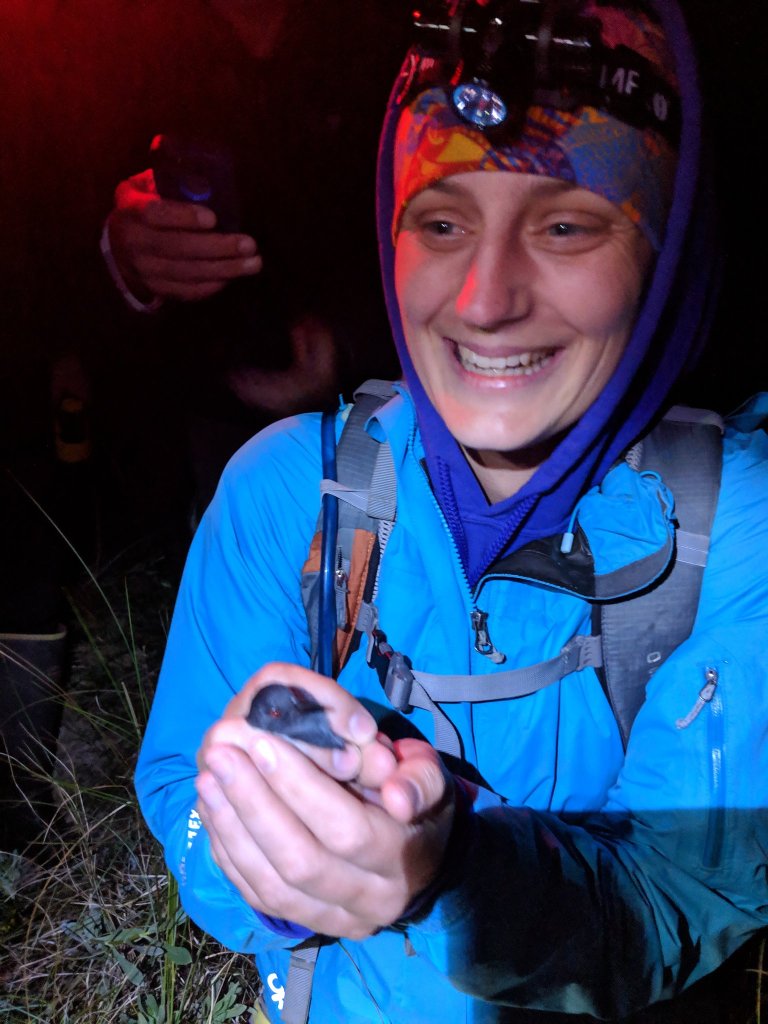
Today the podcast is going off the rails. That’s right, we’re discussing rails – you know, those absurdly sneaky, pancake-thin wetland birds you’re ten times more likely to hear shouting from the cattails than actually see.
These fascinating birds are full of many secrets. Despite their atypical size, shape, and short wings, many migrate great distances. Their reclusive behavior makes them particularly hard to study, but thankfully we have Dr. Auriel Fournier, a leading rail researcher and director of the Forbes Biological Station on the podcast today.
Dr. Fournier shares the wonder and breadth of rail life, the unique methods used to track rail movements, the challenges faced in managing wetlands for rails, and she even offers a few tips on how to see them. I even learned where the phrase “skinny as a rail” comes from!
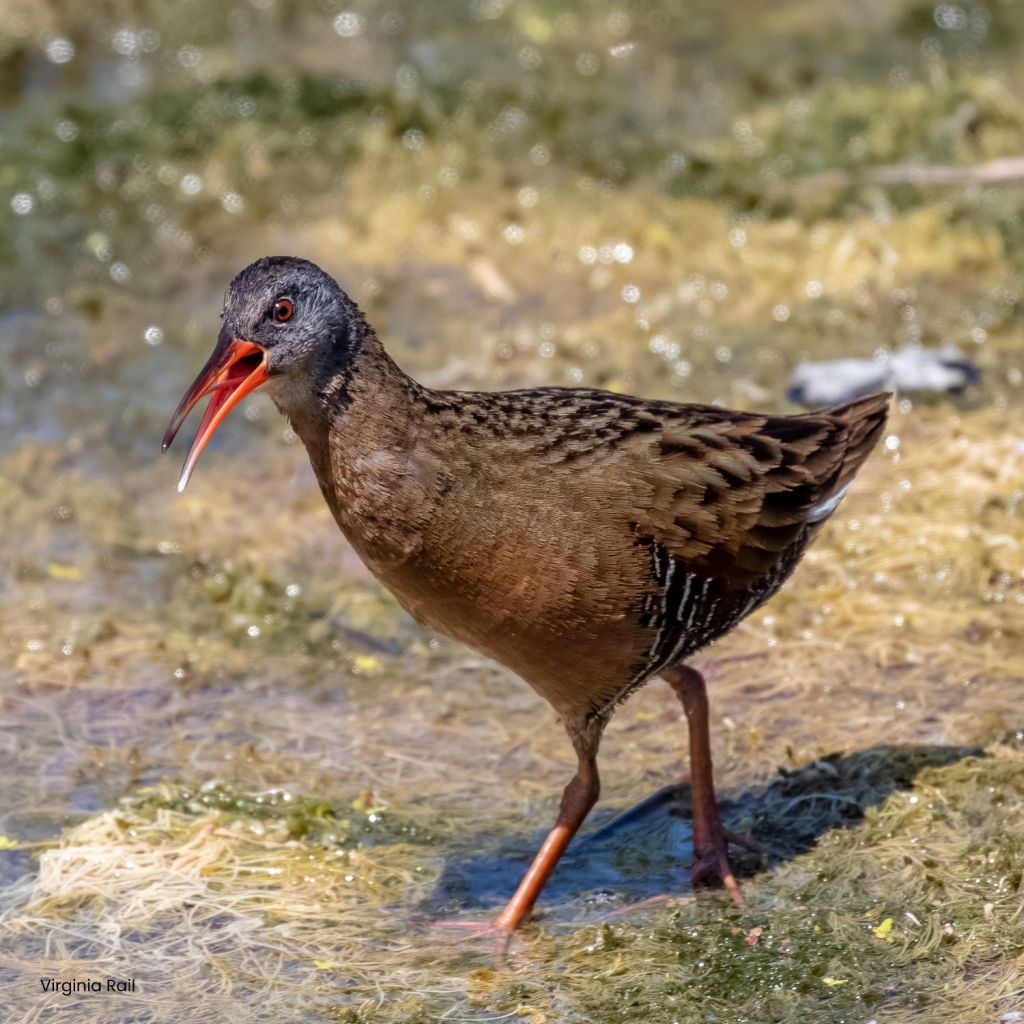
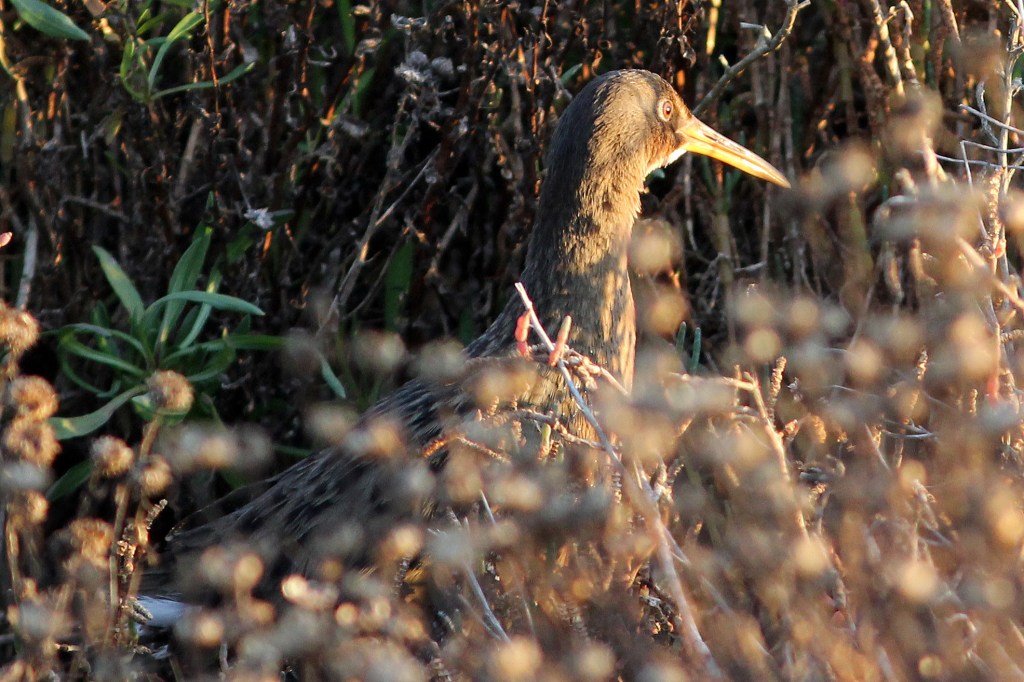
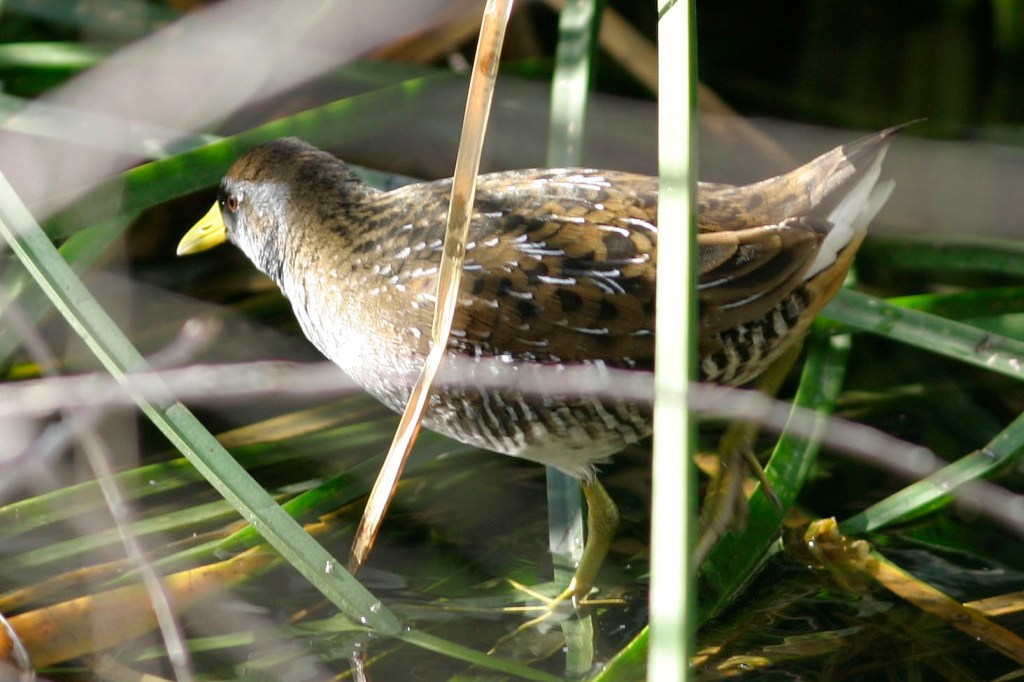
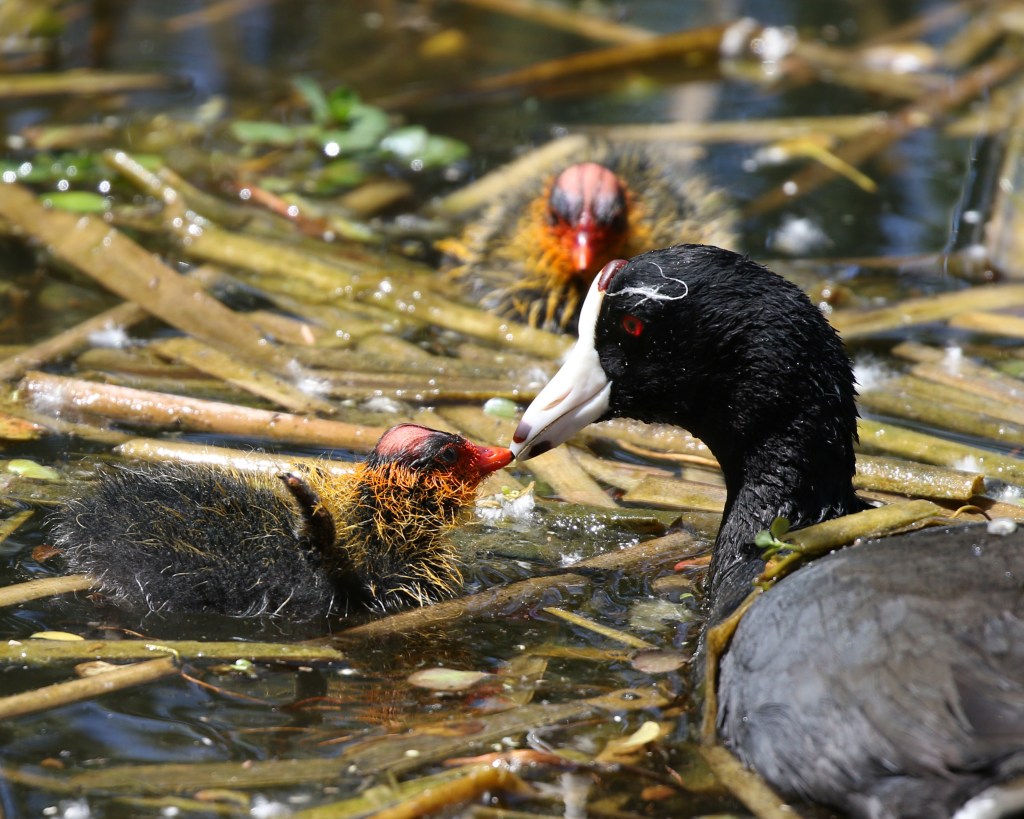
Be sure to check the show notes on naturesarchive.com for some rail-y great photos of some of the birds that were discussed.
So come be a third rail with me today for this episode. It’s a sora-sly good discussion. Sorry – don’t rail against me for these rail-y great rail puns.
Did you have a question that I didn’t ask? Let me know at podcast@jumpstartnature.com, and I’ll try to get an answer!
And did you know Nature’s Archive has a monthly newsletter? I share the latest news from the world of Nature’s Archive, as well as pointers to new naturalist finds that have crossed my radar, like podcasts, books, websites, and more. No spam, and you can unsubscribe at any time.
While you are welcome to listen to my show using the above link, you can help me grow my reach by listening through one of the podcast services (Apple, Spotify, Overcast, etc). And while you’re there, will you please consider subscribing?
Links To Topics Discussed
Forbes Biological Research Station
Illinois Natural History Survey
MOTUS tracking
Firebird Project
Nature’s Archive Episode #33: Bird Migrations with Dr. Andrew Farnsworth
Nature’s Archive Episode #71: Wetlands with Tom Biebighauser
Photos
Credits
Guest sourcing and booking by Amelia Heintz-Botz.
The following music was used for this media project:
Music: Spellbound by Brian Holtz Music
License (CC BY 4.0): https://filmmusic.io/standard-license
Artist website: https://brianholtzmusic.com
Transcript (click to view)
Michael Hawk owns copyright in and to all content in transcripts.
You are welcome to share the below transcript (up to 500 words but not more) in media articles (e.g., The New York Times, LA Times, The Guardian), on your personal website, in a non-commercial article or blog post (e.g., Medium), and/or on a personal social media account for non-commercial purposes, provided that you include attribution to “Nature’s Archive Podcast” and link back to the naturesarchive.com URL.
Transcript creation is automated and subject to errors. No warranty of accuracy is implied or provided.
[00:00:00] Michael Hawk: Hey, Michael here. Today, the podcast is going off the rails. That’s right. We’re discussing rails. You know, those absurdly sneaky, pancake-thin wetland birds that you’re 10 times more likely to hear shouting from the cattails than actually see. These fascinating birds are full of many secrets. Despite their atypical size, shape, and short wings, they actually migrate great distances.
[00:00:26] Their reclusive behavior makes them particularly hard to study. But thankfully, we have Dr. Auriel Fournier a leading rail researcher and director of the Forbes Biological Station on the podcast today. Dr. Fournier shares the wonder and breadth of rail life, the unique methods used to track rail movements, the challenges faced in managing wetlands for rails, and she even offers a few tips on how to see them.
[00:00:50] I also learned where the phrase “skinny as a rail” comes from. Be sure to check out the show notes on naturesarchive.com for some rail-y great, photos of some of the birds that we discussed. So come on and be a third rail with me today for this episode.
[00:01:04] It’s a soras-ly good discussion. All right, sorry. Don’t rail against me for all these rail-y great puns
[00:01:11] Okay, for real this time, without further delay, Dr. Auriel Fournier.
[00:01:17] All right. Auriel, thank you so much for joining me today
[00:01:20] Auriel Fournier: Yeah, great to be here. Looking forward to it
[00:01:21] Michael Hawk: And we were just chatting. I see you have an office assistant behind you
[00:01:25] Auriel Fournier: Yep, yep. I’ve got Coco here with me. He keeps me, keeps me in line, so
[00:01:30] Michael Hawk: What kind of dog is Coco?
[00:01:31] Auriel Fournier: a chocolate lab heavy on the mix with something else. He’s got, like, bright blue eyes, so we… And he points sometimes, so we think he might be a pointer mix. I don’t know.
[00:01:42] Michael Hawk: I saw those eyes. Yeah, I couldn’t resist asking a little bit about him because I did see those eyes there in the background, but, very handsome dog.
[00:01:49] Auriel Fournier: He’s a good one
[00:01:51] Michael Hawk: So, uh, we’re not here to talk about your dog though. we’re here to talk about some interesting, migratory birds and wetland ecology and, and different things like that.
[00:02:01] So, can you just tell me a little bit about yourself, what you do today, and how you got into this world of, of, I’ll just generally say, bird ecology, if that’s accurate enough?
[00:02:13] Auriel Fournier: Sure. So I currently work for, an organization called the Illinois Natural History Survey, which is a research institute with it at the University of Illinois Urbana-Champaign, and I run, one of their field stations, Forbes Biological Station. So I’m the director there. And my job, is basically as a research scientist.
[00:02:32] So I lead a team of staff and students doing research on migratory birds, mostly wetland birds, so ducks and geese and, rails and other marsh birds. and so we kinda work up and down the central part of the country trying to answer questions about their natural history and migration ecology, as well as how we can better manage, public and private lands to support their needs throughout the annual cycle
[00:02:56] Michael Hawk: So I’m hoping then your field station has some wetland habitat there on site
[00:03:01] Auriel Fournier: we’re on the National Wildlife Refuge, so I look out onto one of the big wetlands on Chautauqua National Wildlife Refuge from my office. It’s pretty great.
[00:03:08] Michael Hawk: Perfect. So one of the reasons why I’m excited for this conversation today is I think, when a lot of people think of migratory birds, they think of like the neotropical passerines. And, you know, I, I’ve seen some of your research and, I, I heard– I think I actually heard you on a podcast once, a, a few years ago.
[00:03:25]
[00:03:25] Auriel Fournier: It’s quite possible, yeah.
[00:03:27] Michael Hawk: , Talking about rails in particular. So that’s what I’m really hoping to dive into today.
[00:03:34] Can you tell me what is a rail?
[00:03:36] Auriel Fournier: so rails are members of the family Rallidae. , technically all the rails includes like birds that have rail in their name, like a king rail or a Virginia rail here in the United States. It also includes the coots and the gallinules. it includes birds like sora.
[00:03:53] and so generally speaking, these are birds that spend the vast majority of their lives in wetlands. there are some rails globally that are more forest associated, but here in North America, they’re mostly in wetlands or in wet prairies. and they’re, they tend to be very secretive. The, the exceptions to that are things like American coot, which some people think are ducks, but they’re actually rails.
[00:04:15] and so they spend a lot of time on the ground and in the water in dense vegetation, so a lot of people have never seen them, even if they’ve spent time out in wetlands. if folks know, like are familiar with shorebirds or maybe know what a killdeer looks like, that’s often what I kind of refer to.
[00:04:30] They, they have a body shape that’s kind of similar to a shorebird. they’re what’s called laterally compressed, so they’re like compressed in a little bit from the sides, so that they can kind of like wriggle through the vegetation more easily. And depending on who you talk to, that’s where the phrase skinny as a rail comes from.
[00:04:48] so yeah, so they’re, they’re a really neat group of birds. many of them are not doing particularly well at the moment, largely, you know, due to, due a lot of things like wetland loss. some of them on the flip side are also hunted species here in the US and Canada.
[00:05:02] pretty secretive, but they’re really beautiful and yeah, they’re kind of a puzzle to get to study, which is one of the things that I really enjoy.
[00:05:08] Michael Hawk: Yeah, I know several of them, from a birding perspective, from those who like to go out and, and list and, you know, find as many different species as they can, that a lot of the rails are some of the hardest ones to, to locate. so I can only imagine from a researcher standpoint that, that they’re probably a little challenging there as well.
[00:05:29] Auriel Fournier: they definitely can be. there’s been a lot of work done kind of especially over the past 30 years or so on, like, developing and improving methods to be able to detect them ’cause a lot of the techniques that we would use to study, you know, songbirds or things like that don’t work particularly well.
[00:05:47] these birds do vocalize, but they don’t vocalize as frequently as, say, like a warbler would in the spring, where you can stand at a point and listen for birds for a set amount of time, and that’s your, your survey method. and so kind of starting in, in the ’90s, there was a lot of work on developing this call broadcast protocol where we actually play a call to try to get the bird to respond back to it, and that really helps to increase detection rates.
[00:06:11] the hard part in, in a lot of wildlife ecology, but especially when studying rails, is differentiating between not hearing a bird because it’s not there and not hearing a bird because it didn’t call while you were there. and those are actually really different and can be a little bit difficult to tease apart sometimes.
[00:06:28] And so the call broadcast where you bring a small speaker out and play, like that’s been used a lot and is still widely used, and now we’re also working on using things like automated recording units, which are like these little computers with microphones that we put out into the wetland to record the audio, and then we can process that later.
[00:06:46] Those have a lot of possibility as well, and as the tracking technology has gotten smaller, we’ve been able to start putting different kinds of tags on the birds too to study their migration. but yeah, it always requires a little bit, of an adaptation to how we’re working compared to how you might catch a goose or a warbler or something like that.
[00:07:02] They’re their own, their own little puzzle, so
[00:07:05] Michael Hawk: I’m thinking about like for a lot of birds, A big chunk of research is by putting out mist nets to catch the birds, get them in hand, measure them, observe them, maybe tag them. Does such a thing exist for rails?
[00:07:18] Auriel Fournier: you can use mist nets to catch rails, but it’s not a passive method. So typically when you use mist nets with songbirds, you put it up in an area and you just wait for birds to fly through and get caught, right? With rails, you’ll typically set up a mist net and then, either have, people walk through the wetland and kind of like flush the birds into the net or, there’s been some folks, down in Louisiana that have actually set up the nets around the edges of rice fields as they’re being harvested, and as the combines move through the fields, the birds are flushed and they’ll fly into the nets.
[00:07:49] So you can catch them with mist nets, but it’s pretty, um, context specific. yeah. We, we also use, walk-in traps that have an audio lure. So it’s like this big, big box with kind of a series of little tunnels they have to walk through. And during the spring, they’re fairly territorial even while they’re still migrating, and so if you broadcast the call, they’ll come into the trap.
[00:08:10]
[00:08:10] Michael Hawk: So you started to answer one of the questions I had. Like, these conversations are always challenging because you say one thing and I think of, like, three paths I can go,
[00:08:17] Auriel Fournier: Sure
[00:08:18] Michael Hawk: things I’d like to get answered. And one is like with passerines, you know, you talked about, call back and, and maybe, maybe the bird doesn’t respond.
[00:08:26] And of course, in springtime, birds are staking territory. they’re, they’re much more vocal. at least I, I said birds, but like the, the passerines. is it similar with rails when they first arrive on site or they’re on their way to their summer home? Are they more vocal at that point?
[00:08:44] Auriel Fournier: they’re certainly more vocal than they are other times of the year. but they’re not vocalizing, you know, a lot of passerines will vocalize, like, fairly constantly, at least in the early part of the morning. and that’s not necessarily the case with the marsh birds. so there are certainly times of year where it is easier to detect them that way.
[00:09:02] Michael Hawk: And I would like to back up and maybe set the picture a little bit more about the life history of rails. Now realizing that there is a pretty broad spectrum of rails, like you mentioned coots are pretty visible. They’ll walk across golf courses and public parks and that sort of thing. whereas like a black rail, probably not gonna see that.
[00:09:22] when they’re in their marsh habitat, what are they eating? are they active day or night? You know, how long do they live? Like some of those sort of basic parameters, I guess, for their life history.
[00:09:34] Auriel Fournier: it varies and it can even vary within the same species across their range. So a good example of this is black rail. I work on black rail down on the Gulf Coast, and I’ve also been able to work with them in Colorado. and they’re vocalizing at different times of the day across that geography, and we’ve been working with some folks on the Atlantic Coast to show that e- that is even a little bit different.
[00:09:59] Like in Colorado, they’re largely vocalizing in the middle of the night, which doesn’t seem to be the case in other parts of their geography, and we don’t really have a great answer for why that is. but it is very interesting. my very soon to graduate PhD student, Lauren Monopoli, also often calls them picky generalists because, like, if you look across their whole range, they use such a wide variety of things, but when you’re in a particular state, they’re very picky about what they want in that state.
[00:10:29] what they pick in Colorado is very particular, but it’s very different than what they pick in Texas, for instance. their vocalization can vary a whole lot. their migratory life history I think is also really interesting. So, like, black rail, clapper rail, and king rail all have, individuals that are migratory and individuals that aren’t.
[00:10:48] and then some of the other rails, like if you look at like coots or, sora, Virginia rail, yellow rail, those are all, all just migratory. and so that creates some interesting, , scientific questions, but also management questions too in terms of, like, how do we sustain these populations if some of them are, say, like, fully resident along the Gulf Coast, whereas others are along the Gulf Coast in the winter and then migrating north into the plains or into the Midwest or something, during the breeding season.
[00:11:14] Otherwise, rails are generally thought to be on the, the shorter end, in terms of lifespan, but we don’t have a really a lot of data to give us fine estimates of how long they’ve lived. We don’t have, super large numbers of banded individuals like we do in some other species of birds.
[00:11:32] they tend to breed in their second year so that, you know, they, they’re a hatch year bird their first year, and once they’re into their second year, they, they tend to be reproductively mature and able to reproduce. and they tend to have fairly large broods. It can vary, but you know, you can, you can see a bird with 10 plus eggs in a, in a clutch.
[00:11:51] they’re kind of a bird that sits in that part of the food chain where kind of part of their role in the ecosystem is to help feed the rest of the ecosystem. So not all those chicks are gonna make it to adulthood, right? They’re gonna get munched on by snakes and turtles and other birds and things along the way.
[00:12:07] but we see that with a lot of birds, especially around kind of that size where they have these fairly large clutches because they’re not all gonna make it to adulthood, right?
[00:12:15] Michael Hawk: And apologies if you said this, so are they generally herbivores, omnivores?
[00:12:20] Auriel Fournier: generally speaking, they’re more on the, like, insect crustacean side of things, , and this is another thing where we need to, fully understand things, but we think their diet changes a little bit seasonally, with them probably eating more seeds, and things of that nature in the fall and through the winter.
[00:12:36] but yeah. Chris Butler, who’s at Texas A&M, he’s doing some really neat, metabarcoding work on the diets of black rails and some of the other rails, and so we’re hoping to learn more about that soon.
[00:12:46] Michael Hawk: It’s clear that there are many challenges in this research, because you’re talking about secretive birds and difficult to track, you know, like crustaceans or, or, you know, I’m guessing largely aquatic insects
[00:12:58] Auriel Fournier: Yeah, mostly aquatic insects. Yeah, and like king rails and clapper rails eat a lot of like crayfish or crawfish or however you pronounce that regionally. things that they’re finding in the wetlands, you know, either on the surface or maybe a little bit underneath the, either the dirt or the mud or the water’s surface,
[00:13:13] Michael Hawk: So you set a bit of a baseline that some rails, migrate, others don’t, sort of depending on their geography and, and species. those that do migrate, do they show a site affinity? Do they return to the same wintering grounds year after year, the same summer location year after year?
[00:13:34] Auriel Fournier: They,
[00:13:39] they have very low, like, site fidelity or return rates, yeah, which is frustrating from a research perspective because if a bird comes back to the same place every year, it opens up some new technologies that you can use to study that bird. but I have some colleagues who have, you know, tried to band enough birds to establish whether or not they’re, they’re coming back, and for the most part, they’re not.
[00:13:58] So rails, for the most part, use non-wooded wetlands, right? So at least wetlands that aren’t dominated by woody vegetation, and those kind of wetlands are really dynamic. they’re often experiencing different forms of disturbance, be that from fire or flooding or, you know, if we’re talk- you know, if you’re talking, like, along the coast from hurricanes or storm surge.
[00:14:18] And so if we think about it, like, evolutionarily, it doesn’t necessarily make sense if you rely on that kind of habitat to be super tied to come back to the exact same place because it– just because it was good last year doesn’t necessarily mean it’s gonna be good next year, And so versus when we think about, you know, some of the warblers that will come back and, like, nest in, like, the exact same bush or the exact same tree, those habitats tend to follow more of a linear progression.
[00:14:45] And so we don’t see the same amount of site fidelity, which is really interesting but also challenging ’cause that means you can make a really beautiful wetland, and it might not get used all the time.
[00:14:54] Michael Hawk: Yeah, that does make a lot of sense evolutionarily, and I’m also thinking that that probably means there’s more genetic mixing going on. You know, they may be showing up at different places, finding different partners every year.
[00:15:06] Auriel Fournier: Yeah, we’re just starting to dig into those kind of questions and by we, I mean the larger scientific community . but yeah, that’s the kind of stuff we would love to really understand more, and I think will be increasingly important, especially for some of our declining rail species, to understand how much of that mixing is occurring or how much we need to be thinking about that in terms of conservation actions.
[00:15:26] if we look at rails globally, we know that they’re really good at dispersing and getting to places. Like, I have this really thick book over on the shelf called Rails of the World, and if you look through it, almost every island in the South Pacific at some point has had a rail on it. and a lot of them have gone extinct for a wide variety of reasons, but rails are pretty good at getting places, and we even see this now, like, weird rails from Europe or from South America will end up in the US and excite a lot of birders that they get to come and see, you know?
[00:15:59] And, and a lot of times these are juveniles, we think, that are making these, , dispersal movements and just end up in the wrong place. so yeah. So they, they don’t necessarily have a lot of site fidelity, and there might be certain life stages where they’re more likely to make a risky move and, and see what’s out there.
[00:16:14] They’re very capable of, of crossing big landscapes, even though if you’ve ever seen one in the field, when they first take off, they don’t really look like they can fly that well . they, they fly at least initially with their, their legs hanging down, and so it looks kinda awkward. But once they get up in the air, they can fly several hundred miles in a night,
[00:16:32] Michael Hawk: that’s amazing because y- as you say, when you see a lot of the rails, and I, and I have not seen all that many species because they are so secretive, but, based on photos anyway, their proportions don’t look really optimized for long distance flying. Like they, they look a little chunky and a little like short-winged and
[00:16:52] Auriel Fournier: relatively speaking, they do not have, like, very big wings relative to their body size. And if you think about how they spend the vast majority of their year, it makes a lot of sense. They’re mostly running around on the ground. in my experience working with them, they seem to prefer to run versus fly if they can get away with it.
[00:17:10] and that makes a lot of sense, too. Like, the, the habitats they’re spending time in are very dense, like grasses and cattails and things like that. And so if you are able to, you know, shimmy through that vegetation quickly, you’re probably gonna be able to get away from a predator on the ground pretty readily, and that all that cover above you helps protect you from aerial predators as well.
[00:17:32] it might… I, I don’t know that anybody has done work with them, like in the, Wind tunnels. people have taken birds and put them in wind tunnels to, like, study how aerodynamic they are, and my guess is if we did that with rails, we’d find out that they are not, like, winning any prizes in aerodynamics.
[00:17:47] but they are definitely capable of migrating, similar distances to, to a lot of our other land birds,
[00:17:52] Michael Hawk: So if I were to narrow the focus to some of the more common North American rails that migrate, do you then see some that go, say, to South America every year and come back? Or is it more like Gulf Coast or Mexico or somewhere a little nearer?
[00:18:08] Auriel Fournier: Yeah. We, we certainly have rails that go all the way to South America. I would say even for our more abundant rails, like say like a sora or something like that, we don’t currently have a great understanding of like what proportion of the population, like winters in the US versus in Mexico versus farther south.
[00:18:26] based on the records of those species kind of through Central and South America, my sense is that most of them are probably overwintering in Mexico and in the US, but we don’t know that for sure, especially ’cause in a lot of cases, work is just now starting in many places to specifically go look for them.
[00:18:43] And we know in a lot of instances, if people aren’t specifically looking for rails, they’re probably not going to find them . so lots more to learn there. but yeah, they’re not known as like a super long distance migrant, not like some of the shorebirds that nest in the Arctic and then go all the way down to the southern tip of South America or something like that, like a, a red knot or something.
[00:19:01] Michael Hawk: So maybe take a couple of steps back, big picture. Why do birds migrate anyway?
[00:19:10] Auriel Fournier: what I had kind of been taught throughout my career is this idea that as you move away from the equator, so, you know, as here in North America, as you move further north, you get this, like, pulse of, , seasonally available resources, right?
[00:19:24] as spring happens, like, everything blooms and all the insects come out, , at the same time. And so these migratory birds are coming up and are, like, taking advantage of that, and it’s, , worth the risk of migrating, right? ‘Cause, like, navigating across a continent is a fairly risky endeavor, and so there’s, , a trade-off there.
[00:19:43] but there’s also some evidence now that that may not completely check out. Like, it’s a nice story, but it might not fully explain things. some of it may have to do with, retreating glaciers and how birds’ movement patterns kind of adapted in response to glacial changes. so yeah, lots still to learn.
[00:20:01] especially in the face of how climate is changing a lot of the things these birds are experiencing. we know that we have a lot of birds that do migrate, and some of them, at least in the past, were timing their migration so that they arrived on the breeding grounds synced up with some local condition, right?
[00:20:18] Whether that be, you know, a, a nectar-producing flower or an insect or something like that. And as climate change kind of pulls those things out of sync, it can be, be really troublesome. we don’t have any, information on that specifically for rails yet. but I could, I could see it being a challenge.
[00:20:37] they tend to be a little bit earlier migrant in the spring compared to, like, a, a warbler or another songbird. and spring, like, in kind of the mid-latitude part of the US is becoming an increasingly volatile time of year in terms of weather. And so it, it could end up that that earlier migration, in some years it might benefit them if we have a mild spring, but if we have one of these years where we get an ice storm in March, it could be really damaging for them, too.
[00:21:03] Michael Hawk: it’s super interesting to think about. It’s like I was sort of doing a thought experiment as you were describing that, and, you know, if the premise is that during breeding season they– that birds in general have greater nutritional needs, if you imagine, nobody migrates, if everybody stays in this narrow band like that, there would be a lot of demand
[00:21:26] in
[00:21:26] Auriel Fournier: Mm-hmm. Yeah, the competition would be very high
[00:21:28] Michael Hawk: but then at the same time, in the non-breeding season, they are, consolidating in certain locations. but I guess perhaps that’s just explained by the fact their nutritional requirements are not as great during
[00:21:39] the
[00:21:40] Auriel Fournier: Yeah, they’re not trying to feed all of those young birds who are just, like, trying to grow, grow, grow, grow so fast, right?
[00:21:46] Michael Hawk: But when, when rails migrate or other well-known, well-understood migratory species migrate, do they tend to migrate in communal groups? I know that there’s often a big flush and a lot of birds go at the same time, but do they have like an affinity to family members or, you know, anything like that during migration?
[00:22:07] Auriel Fournier: rails are nocturnal migrants, like a lot of birds are in North America. and so they’re taking off kind of most frequently in that, like, first hour after sunset. and we think the reason that a lot of birds migrate at night is because the weather conditions tend to be more stable, and it’s also probably a little safer from aerial predators than it would be during the day.
[00:22:28] with the data we have for rails, we can’t really say one way or the other if they’re migrating in flocks. I would say, like, it doesn’t seem like it, so, at least for sora and Virginia rail. So my student Chad Kramer, who finished his master’s with me, goodness, almost two years ago now, he put tags on sora and, Virginia rails here, along the Illinois River.
[00:22:48] And those birds, if they were leaving in a group, we would have thought we would have seen them all kind of leaving at the same moment. And instead, they’re just kind of leaving in that hour, hour and a half after sunset. But it could be that maybe we just didn’t tag birds that are all part of the same flock, right?
[00:23:03] So more, more research is needed there. there certainly are species that do migrate more in flocks, but it, it really just depends. and when you get into, like, diurnal migrants, which is a lot of our, our raptors, they can certainly be in large groups during the day.
[00:23:18]
[00:23:18] but they kind of tend to be the exception.
[00:23:20] Michael Hawk: I did interview Dr. Andrew Farnsworth from the Cornell Lab of Ornithology about migration and radar and, weather impacts and a bunch of different topics there. I’ll link to that one here in the show notes as well.
[00:23:32] but one of the things that I do remember him saying is it’s really all about the weather for when they choose to migrate. I assume it’s the same for whales.
[00:23:41] Auriel Fournier: there’s a kind of a growing body of evidence that that’s the case. So, they can fly, fairly long distances, but they’re not like the world’s strongest flyers probably. And so they seem to prefer tailwinds that are kind of helping them move the direction that they want to go.
[00:23:54] so yeah, weather certainly plays a large role and, they’re a little bit bigger bird than like a warbler. And so they have a little bit of an ability to maybe sit down and kind of weather out a storm and let it pass over. And so I think they can be a little strategic in that way as well, which is nice.
[00:24:10] Michael Hawk: so speaking of, like, so you’ve obviously difficult to research, the challenges that you’ve outlined here. but you did mention that there are technologies like tagging, that can be helpful. So can you tell me a little bit about the evolution of tracking rail migration over the years?
[00:24:27] Like how did it used to be done? How is it done now? I’m assuming there’s a lot of overlap between those two categories.
[00:24:33] Auriel Fournier: Yeah. so folks have certainly tried to use, very old school technologies like bird banding to track rail migration, but as we talked about, they don’t have a lot of site fidelity, and they’re, they’re also not being captured by that many people. And bird banding is really– So let’s take a step.
[00:24:51] So a bird band is when you put a metal band on a bird’s leg, and it has an individual number on it, right? And that way if somebody catches that bird in the future, they can identify that bird, and you can try to understand where it goes. And that to study migration really only works if there are a lot of people over a big area capturing the species that you’re tagging, which hasn’t been the case for rails.
[00:25:11] and so folks have been putting, various different kinds of tags on some of the larger rails for a while now. so something like a king rail or a clapper rail, a bird that weighs, you know, above like three hundred grams, we can, we, you know… Maybe ten, fifteen years ago, folks started putting these Argos tags on them, which, take a location from a satellite constellation.
[00:25:34] it’s kind of a, a precursor to like a GPS tag. And so we’ve been able to study their migration a little bit that way. now for the larger rails, we’re using GPS GSM tags. So those are tags that take GPS points, just like the GPS in your phone. but and then it sends it back via GSM, which I’m failing to remember what that means right now, but it’s basically the cell phone network.
[00:25:57] So if the tag is close to a cell network, it’s able to send the information back that way. And so the advantage of the GPS tags is we get a lot higher precision data. The Argos constellation sometimes gives you a location with a fair bit of error. and so the GPS tags are nice. So for the bigger birds, we can do things like that, which is really exciting.
[00:26:16] and the nice thing with the GPS GSM tags is some of them are solar powered too, and so we can get a couple years of data potentially out of those, which is really nice. for the smaller rails, so things like a sora or a Virginia rail, right now what’s mostly being used is something called a Motus tag.
[00:26:31] And so this is a particular kind of radio telemetry. so it’s, it’s basically a very small radio, that is, transmitting on a specific frequency, and each tag beeps in a unique pattern. And then, the folks that are involved within this large collaborative, effort, which is kind of led by, by Birds Canada and, and has many other partners kind of across the hemisphere now, we put out towers that are all listening at that frequency.
[00:26:59] So if I put out a tag here in Illinois, and that bird or that bat or that butterfly flies by somebody else’s tower, not often immediately, but within a fairly short amount of time, I’ll get that detection back. And so instead of having to put a larger like GPS unit on a bird, which is fairly heavy and needs a fairly big battery, these tags are quite a bit smaller.
[00:27:20] on the Soras and Virginias, we can get a little over a year out of the battery life, and so we can get kind of a full migration. and it’s– assuming there are plenty of towers around, then you can get that information back. And so that’s what we’ve done, recently with Chad’s project with the Soras and the Virginias.
[00:27:34] And I know folks are starting to explore that for some of the smaller rails as well. though in those cases, the tags probably won’t be able to last quite as long ’cause so like a Sora or a Virginia rail is often somewhere in like the seventy to ninety-gram range, and like a yellow and a black rail is quite a bit smaller than that.
[00:27:49] So you gotta be, gotta be careful. We don’t wanna harm the birds at all when we’re tagging them.
[00:27:53] Michael Hawk: How is the MOTUS, coverage these days?
[00:27:56] Auriel Fournier: It’s gotten quite good, especially here in the Great Lakes. it used to be that it was more of like an East Coast network, and that’s really expanded over the past, oh, probably five or six years now. a lot of the different states in the Midwest have, put significant time into putting up towers, and lots of other organizations have contributed.
[00:28:13] and there’s a lot of interest in expanding the network in a lot of places too. we were really fortunate that we were starting to put out tags during a time when the coverage was really expanding. I don’t work, in the Western US, so I don’t really know what the tower coverage is like out there.
[00:28:27] But I know there’s been efforts to get towers up all over the country and, and all over the continent. So yeah, it’s pretty cool.
[00:28:32] Michael Hawk: Yeah, I, I’m, My knowledge is a couple years stale, but, I do know here in the Bay Area of a couple of towers.
[00:28:39] I, I, can imagine one of the challenges in the West too is, like, line of sight and the topography, lots of mountainous areas that, that, would maybe ca- kind of cast a shadow on the coverage a little bit.
[00:28:50] Auriel Fournier: Yeah, you gotta think, think about where you’re putting them, especially relative to your question and what, what species of birds you’re trying to, to put up the tower for. Like, ours are often down, like, in the wetlands, which if you were just trying to get, like, migrant warblers is not where you would put them.
[00:29:04] But it really helps us detect the rails too, so there’s some trade-offs there
[00:29:08] Michael Hawk: One other thing I stumbled upon in preparing , for our discussion today is that, you can actually use… I, I just wrote down feather isotopes, and I don’t recall the details of that, so maybe you can enlighten me a bit about how that works and how that helps you track birds.
[00:29:23] Auriel Fournier: this is something that still breaks my brain, but it’s super cool. So we can use stable hydrogen or deuterium isotopes in birds’ feathers to study their migration. When birds grow their feathers, it’s very similar to how when we grow our hair, like, once the hair is formed, it’s an inert material.
[00:29:43] And so, like, our body isn’t, like, continually, , changing out what’s stored in there, right? It’s just, it’s, it’s there. And it’s the same with feathers. And so when a bird– A lot of birds molt many of their feathers after the breeding season before they migrate. when they do that, there’s characteristics of the place that they’re at that are captured in the stuff that makes up their feathers.
[00:30:06] And so we can pull one of those feathers at a different time of the year and use stable isotopes to help us kind of backtrack. How that works is across, and this, this is true globally, but I’m most familiar with how the isotopes, the pattern of it here in North America. Generally speaking, there’s a pattern from the southeastern part of kind of the United States up through like kind of headed towards Alaska of this gradient of changing of the heavy and light isotopes of hydrogen.
[00:30:37] And so basically the heavy hydrogen, so that’s the hydrogen that has more of, or the, sorry, the water molecules that have the heavier hydrogen isotopes, generally speaking, rain out of clouds first before the lighter water molecules do. And so you get this changing ratio of heavy to light kind of generally across the continent.
[00:30:59] And there’s a bunch of noise to it because of like mountains and lakes and things like that. But that means that if a bird like say is hanging out in central Saskatchewan, like a lot of our rails do in the summer, and molts its feathers and then grows its new ones there, it’s going to capture that ratio of hydrogen in those feathers.
[00:31:19] And then if we catch that bird, say here in Illinois or, you know, I don’t know, down in Mississippi or something, and we pull a feather that is grown during the breeding season, we can use mass spectrometry to measure that ratio and then backtrack it. it doesn’t give us like a precise location. Like it’s not gonna give me like a road intersection.
[00:31:39] but it will give me like a band of roughly latitude that that bird was probably at. And then we can bring in other sources of information to try to refine that estimate. some folks use genetic information. You can also use species distribution models. There’s a lot of different techniques. So it’s a really cool way to study bird migration, especially because you only have to catch the bird one time and it is relatively non-invasive.
[00:32:03] most birds can sacrifice a feather for science and it’s not gonna have a meaningful, you know, detrimental impact to their health or anything like that. So it’s a really cool tool, a little bit of a coarse one in some cases, but has been, been really useful.
[00:32:16] Michael Hawk: So do the, do rails then just molt the one time a year?
[00:32:20] Auriel Fournier: there’s good evidence for a lot of our rail species that they’re molting most of their feathers after the breeding season. I’ve done- I’ve used stable hydrogen isotopes on a couple of projects, and our Virginia rails consistently give us, at least some individual Virginia rails give us some weird results that suggest that they, some of them at least, might be molting a little bit differently.
[00:32:41] So I’ve had some Virginia rails, where some of them will get assigned to, like, the prairies of Canada or the Northern Great Lakes, which makes a lot of biological sense. These are birds that were caught in, like, Missouri, for instance, where I did my graduate work. But then we would also have some birds that would get assigned, like, to the Central Valley of California, which is a lovely place, but I’m pretty sure that the birds aren’t migrating from the Central Valley of California to Missouri.
[00:33:07] Or at least if they are, that’s a really interesting choice for them to have been making.
[00:33:11] Michael Hawk: very challenging, yeah.
[00:33:12] Auriel Fournier: yeah, it’s, it’s not the easy route. And so what might be happening is that they’re doing something called a molt migration, where they’re not actually molting on the place that they spent the summer, but they’re instead doing, like, a short migration to another place, maybe a little bit further south, and molting there.
[00:33:30] And so we’re getting kind of some noise from that. molt migration is, is pretty well known in a lot of species of waterfowl. and like a lot of things with rails, we just, we need more information.
[00:33:42] Michael Hawk: So many questions to answer. I hope there are people out there looking for research projects that are like, “Oh, this sounds fascinating. I’m gonna jump in and help.”
[00:33:50] Auriel Fournier: Yeah
[00:33:50] Michael Hawk: speaking of, research opportunities, I would love to delve into some of the conservation challenges and threats that are faced by rails. can you give me, , a broad brush perspective on that and, perhaps dive into an example or two?
[00:34:06]
[00:34:07] Auriel Fournier: broadly speaking, one of the big threats is wetland loss, especially in kind of the mid part of the central US often called like the Corn Belt through the Great Plains, so like Ohio west through the I states. we’ve lost a lot of our wetlands, and those were areas that used to have, you know, the Illinois is known as the Prairie State, because we used to have a lot of prairie, and we also used to have a lot of wetland.
[00:34:30] We’ve lost over 90% of our wetlands. And so that has a really detrimental effect on birds just in terms of area, but it also means that the wetlands that are left, they have to do a lot of different things. Like I often say that we ask them to wear a lot of hats, right?
[00:34:44] And so for species that don’t have a range that extends super far into Canada, that’s been especially detrimental. So that’s true for things like black rail, which we think the main core part of their migratory range used to basically be the southern Great Lakes like Corn Belt region. It’s also likely the case for king rail.
[00:35:03] so those are both species that made it like into the very southern part of Ontario, but don’t have big distributions up further into Canada versus something like a sora or a Virginia rail where big portions of that population are breeding in Canada. we’re also seeing these kind of impacts on our, on our coasts, like on the Atlantic Coast and on the Gulf Coast.
[00:35:22] I am not an expert in the Western US, but I would guess similar things are happening there where we are seeing through human development and through sea level rise, we’re losing wetlands. whether it’s because they’re becoming overcome by sea level rise and there isn’t somewhere for them to move up slope, or they’re being destroyed through, through other mechanisms.
[00:35:41] to some extent can become kind of like a, a reinforcing cycle almost because not only is that hurting the resident birds that spend, their whole year there and need to reproduce there, but that’s also the places where a lot of these birds are coming to spend the winter.
[00:35:55] It can be a bit of a double whammy that way., For birds like king rail, it might not be as simple as what I just explained as well though. Like king rail is one that kind of continues to, to flummox a lot of us. Like there are very large wetland restorations that have been undertaken here in the Midwest that look to my eyes like they should be really good king rail habitat, and the king rails are not using them consistently, and we don’t really know why.
[00:36:20] whereas if you talk about another marsh bird, like say like a least bittern, they’re kind of a like a if you build it, they will come kind of a bird, which is really handy when you’re doing restoration ’cause you want that like we did it, yay to happen. but with king rails, that’s not necessarily the case, and we don’t super understand why.
[00:36:38] It, it could be that the population has gotten so low that they’re not able to like respond to these positive changes on the landscape, or it could be that there’s something that they’re selecting for that we just don’t understand yet either. So it gets a little tricky.
[00:36:52] Michael Hawk: Gotcha. And since a big chunk of these birds are migratory, the problem is compounded then because they may not have stopover points on their migratory route. So can you tell me a little bit about, like, how do you manage, you know, wetlands for rails? You said that these wetlands now have to wear lots of hats.
[00:37:08] How does rail conservation fit into that picture?
[00:37:12] Auriel Fournier: It can be a little bit challenging, because the, the timing of when birds need these wetlands is not the same, right? So if we think about birds that use wetlands, you know, there are, there are songbirds and shorebirds, there’s marsh birds, waterfowl, like there’s this really amazing… I mean, there’s long-legged waders, there’s all kinds of birds that use wetlands, and they’re not all there at the same time.
[00:37:34] And that’s part of what having so many fewer wetlands on the landscape makes a real challenge is if you’re the wetland manager and you’re trying to manage this wetland to do good things for birds broadly, you can’t do good things for all of them at the same time. It’s just not possible. And so a lot of it comes down to like, how do we assess the trade-offs and how do we try to build like a series of wetlands that are being managed so that there’s good conditions for rails over here and waterfowl over here and, you know, shorebirds over here, and maybe that kind of rotates over time or something like that.
[00:38:10] there can be times of the year where we can get these kind of win-win situations. Like, I worked in Missouri for my graduate work with the Missouri Department of Conservation and the US Fish and Wildlife Service, and we were able to show there that, putting more water into these wetlands in the fall a little bit earlier, so rails in the fall migrate earlier than the ducks do.
[00:38:29] So they’re coming through in September and October, and the ducks are rolling in a little bit later. So if we flood the wetlands up a little early to do good things for the rails, it also does good things for the ducks. So we can manage the wetlands for rails, still good– do good things for waterfowl.
[00:38:42] in the spring, it gets a little bit more complicated, just because of how the timing of everything works. The ducks are coming through earlier and the rails a little bit later, and that’s the time of year where wetland managers often wanna be, reducing the amount of water in wetlands so they can get out and do some kind of disturbance management.
[00:39:01] in a lot of these wetland systems, the natural forms of disturbance have been removed. Like our floodplain wetlands are often behind large levees, so they’re not getting that disturbance from the flood pulse of the river. for a lot of reasons, like using something like prescribed fire is not always an option.
[00:39:18] And so we need to be able to go in, not necessarily every year, but every so often, and do some kind of disturbance to the soil to like reset that successional path. And to do that, you need to be able to get equipment, like heavy equipment into wetlands, and if they’re full of water, your equipment will get stuck and it will never come out again.
[00:39:37] and so there can be some trade-offs there as well. it’s a tricky situation that we’ve put a lot of our public land managers into, where they’re trying to do really good things. it’s just really hard to do it for all the birds at the same time.
[00:39:47] Michael Hawk: I know that so many of our kind of broad brush native habitats are, have been degraded and reduced so much, you know, prairies and old growth forests and, and wetlands. And wetlands always seem to kind of rank near the top of the list in terms of the decline that’s occurred. Do you see any progress in, say, restoration of wetland habitat?
[00:40:10] Or are we still really facing a steep decline let’s separate out the coastal situation because that’s sort of a different thing with sea level rise and pressure with, with development. But, if you eliminate that, , how does it look right now?
[00:40:21] Auriel Fournier: So you can find these really wild maps of the Midwest from, like, 100 years ago that are like wetlands in need of drainage because, , that’s how we viewed them, right? Like, these could be corn fields if only we got rid of the water.
[00:40:35] and that mindset has very much shifted. A lot of them are under legal protection now, though some of that legal protection has changed in the past couple of years. But a lot of them are still protected, which is something that, , a lot of our prairies and many of our forest systems don’t have, is that level of legal protection, so we’re, we’re fortunate to have that.
[00:40:52] So I would say, , on the whole, like wetland loss has slowed down or maybe plateaued. but i- in terms of restoration, it can be quite challenging to, , robustly restore a wetland, and to bring it back into kind of its full ecological context. Especially, so like I work a lot along our big river systems like the Illinois and the Mississippi, and those rivers have been changed so much by people through the lock and dam system and building levees.
[00:41:21] It’s kinda hard to build a wetland that operates the way that it should, because the river is different, right? And so it gets, it gets messy really fast.
[00:41:30] Michael Hawk: I mean, just I guess, first principles, if you have a habitat that took hundreds of thousands of years to develop in the first place, it would be hard to bring it back to its full glory, period, much less when, you know, the, the rest of the surrounding systems are changed.
[00:41:47] Auriel Fournier: Mm-hmm. Exactly
[00:41:48] Michael Hawk: So if people listening want to go out and try to see some rails, how would they go about that?
[00:41:55] Auriel Fournier: I often encourage folks to go out, as close to dawn or dusk as they can, especially in the spring. and to try to find somewhere where there’s some kind of a boardwalk or way for you to get, out into the wetland. ’cause often you’re not gonna see them, standing on the edge. If you can get somewhere where you can, look down into the wetland, and especially if it’s a place that’s, not super busy where you can just hang out and listen and look, those are often the best ways to do it.
[00:42:24] additionally, if you yourself can actually just go out into a wetland, that’s an even better way. But I realize that not everybody wants to, put on hip waders and, run around out
[00:42:33] Michael Hawk: it’s pretty mucky.
[00:42:34] Auriel Fournier: It can be, which I enjoy, but I get that that’s not everybody’s jam, so.
[00:42:38] Michael Hawk: Yeah. your, your description reminded me here, you know, I live in the Bay Area, and we have a pretty cool rail called, Ridgeway’s Rail, and, that’s been my experience. There’s a few boardwalks where you can go out, and usually, usually at best, I mean, most of the time I don’t see ’em, but, at best I’ll get a glimpse.
[00:42:55] Like, they’ll be quickly scurrying across a little gap in the vegetation. but there are those rare occasions where it seems like they’re sunning.
[00:43:04] You know, like the, there’s a little opening and they’re just standing there in the sun in the early morning, and those are just amazing experiences
[00:43:11] Auriel Fournier: Yeah. It requires a lot of patience, I should emphasize that as well.
[00:43:15] Michael Hawk: And I guess hearing them, like, kinda learning a little bit about what they sound like. I get a lot of satisfaction from hearing birds even if I don’t see them. Like, it just, it brings to mind, you know, this, this sense of being that, you don’t necessarily get visually. How c- how can people help?
[00:43:35] Like, the, And help is such a broad thing, so I guess there’s, you know, from conserving the habitat to contributing their data for community science or, you know, maybe helping me going out and researching can you stick a Motus in your backyard? Yes or no? Like, like, what, what are your ideas and suggestions?
[00:43:52]
[00:43:53] Auriel Fournier: trying to find ways to contribute to your local area in terms of protecting green spaces and especially protecting wetlands, whether that’s, helping out a local land conservancy or a local nonprofit can be a great way to do that. even just spending time at publicly available wetlands can be helpful because that shows that the public cares, right?
[00:44:15] And that helps to justify taking care of those places. if folks are involved at all in their communities and thinking about ways that we can future-proof our communities with climate change, thinking about green infrastructure and ways that wetlands can help to absorb and slow down floodwaters, those wetlands can also do really great things for birds in a lot of instances.
[00:44:35] And so we can, we can find ways to help our communities and also help the birds along the way. in terms of like citizen or community science, you know, contributing to things like eBird is really useful. You know, Cornell’s been able to make some really great products out of that that are really useful for understanding, birds, especially at really large spatial scales, which is really cool.
[00:44:55] and yeah, you know, in a– in most parts of the world, there’s some kind of local bird club or bird organization. Finding ways to get involved locally is really impactful too. Oftentimes, those are the folks that are most in tune with what’s going on on the ground, and they might be able to find a way for you to get involved,
[00:45:10] Michael Hawk: It’s like the old saying, think globally, act locally.
[00:45:13] Auriel Fournier: Exactly.
[00:45:14] Michael Hawk: I’m glad you touched on some of the other benefits of wetlands as well, because we’re looking at it from a rail-centric perspective. But yeah, like the water filtration and, flood mitigation and, all the insects that are supported at wetlands, all the other birds that are supported.
[00:45:28] Like, yeah, the
[00:45:28] list just goes on and on and
[00:45:29] Auriel Fournier: a lot of our coastal wetlands are super important for many economically important fisheries as well, so yeah, they’re pretty cool. they’re my favorite. I understand, like, forest and grasslands are also really cool, but wetlands are pretty great
[00:45:41] Michael Hawk: And I don’t, I don’t wanna like keep shouting out past podcasts, but we had a guest, I think it was Tom Biebig-Hauser, who is really into wetland restoration projects, so I’ll link to that one as well. We talked a bit more about wetlands there.
[00:45:54] Auriel Fournier: Awesome
[00:45:55] Michael Hawk: All right, before we go, there’s a couple of questions I love to ask just because the answers I get from my guests are always so varied. and one of which is, what do you think is missing or hindering broader action to support biodiversity in some of these things we talked about today?
[00:46:10] Auriel Fournier: I think a lot of people get stuck on the fact that it’s gonna be really difficult to solve the whole thing, and so they just, they… I mean, it’s very human, right? You see the big problem and you’re like, “Well, I can’t solve that,” and then we don’t, we don’t try something smaller. whereas in a lot of cases, , local action can make a really big difference and, and collectively those things can add up over time.
[00:46:31] And so I think, you know, finding ways to get connected locally or at the state or provincial level, depending on where you’re at, those can be, can be really impactful
[00:46:40] Michael Hawk: For sure. And this is always a fun one. if you could magically impart one ecological concept to help the public see the world like you see it, what would that be?
[00:46:50] Auriel Fournier: I feel like the world would be a more magical place if people, were able to genuinely spend, like,15 minutes thinking about what it must be like to be a migratory bird. to navigate across a continent without a phone or any, like… And to fly at night. And I mean, we talked today about how rails don’t really come back to the same places, but some of these songbirds do, and they somehow know how to do that.
[00:47:15] And to just think about, like, just the wonder of that. I mean, science can get so technical and kinda dry sometimes, but the wonder of migration to me is just really wild. And it connects so many places, too, which I think is a really, a really kind of a beautiful thing as well
[00:47:31] Michael Hawk: this is a little bit beyond my knowledge space, but, you know, y- the science can get very dry, but some of the science is wondrous as well, like some of the recent discoveries about like this quantum magnetic field capability that, that birds ha- can sense. Just like imagining these sensory systems that are outside of the realm of our capabilities is kind of fun as well, I
[00:47:56] Auriel Fournier: It’s really wild, yeah
[00:47:58] Michael Hawk: All right. Do you have any upcoming projects or anything, books, research, whatever the case might be that you’d like to highlight?
[00:48:06]
[00:48:07] Auriel Fournier: I lead a project down on the Gulf Coast. it’s called the Firebird Project. We’re trying to understand how to use prescribed fire to manage wetlands, and we published a manual I guess it was late last year, all about how to use fire in coastal wetlands to do good things for birds. and that’s publicly available if folks are interested in learning a little bit more both about what prescribed fire is and how it can be used.
[00:48:29] I can send you a link to put in the show
[00:48:31] Michael Hawk: That sounds like a lot of fun too because it just seems like on the surface counterintuitive, like fire in a wetland?
[00:48:37] Auriel Fournier: Mm-hmm. It could be pretty important
[00:48:40] Michael Hawk: And if people wanna follow your work, where can they go?
[00:48:43] Auriel Fournier: so most of my work can be found just by googling Forbes Biological Station. So we have a field station website and a Facebook page where we share a lot of things. and then I also have, my personal academic website, so it’s aurielfournier.github.io. and that’s a good place to go to find copies of papers and things like that as well.
[00:49:04] Michael Hawk: Of course, as always, those will be linked in the show notes. so before we go, is there anything else that you’d like to say today?
[00:49:11] Auriel Fournier: I think folks are often surprised to realize that birds migrate like 10, 12 months out of the year. So like birds are already starting to come south. So wherever you are, keep an eye out. the birds are coming south and bringing a lot of joy and wonder with them.
[00:49:24] Michael Hawk: Absolutely. I’m definitely seeing it here. It’s, mid-August and lots of migrants already
[00:49:29] on their way. Yeah. All right. Well, thank you so much. I really appreciate you and the work that you and your team is doing and the time that you spent with me today
[00:49:38] Auriel Fournier: Of course. Glad to do it

