

#122: Leave the Leaves: Hidden Layers of Benefit with David Mizejewski – Nature's Archive
Summary
If you’ve been following Nature’s Archive for a while, you might be familiar with the idea of “leave the leaves”. It represents one simple act of omission – not raking, blowing, or mulching leaf fall – that is resoundingly positive for the environment.
But even if you think you know why leaving the leaves is helpful, I invite you to listen to today’s guest, National Wildlife Federation naturalist David Mizejewski.
If you are unfamiliar with David – let me just tell you his skill and enthusiasm for nature interpretation is second to none.
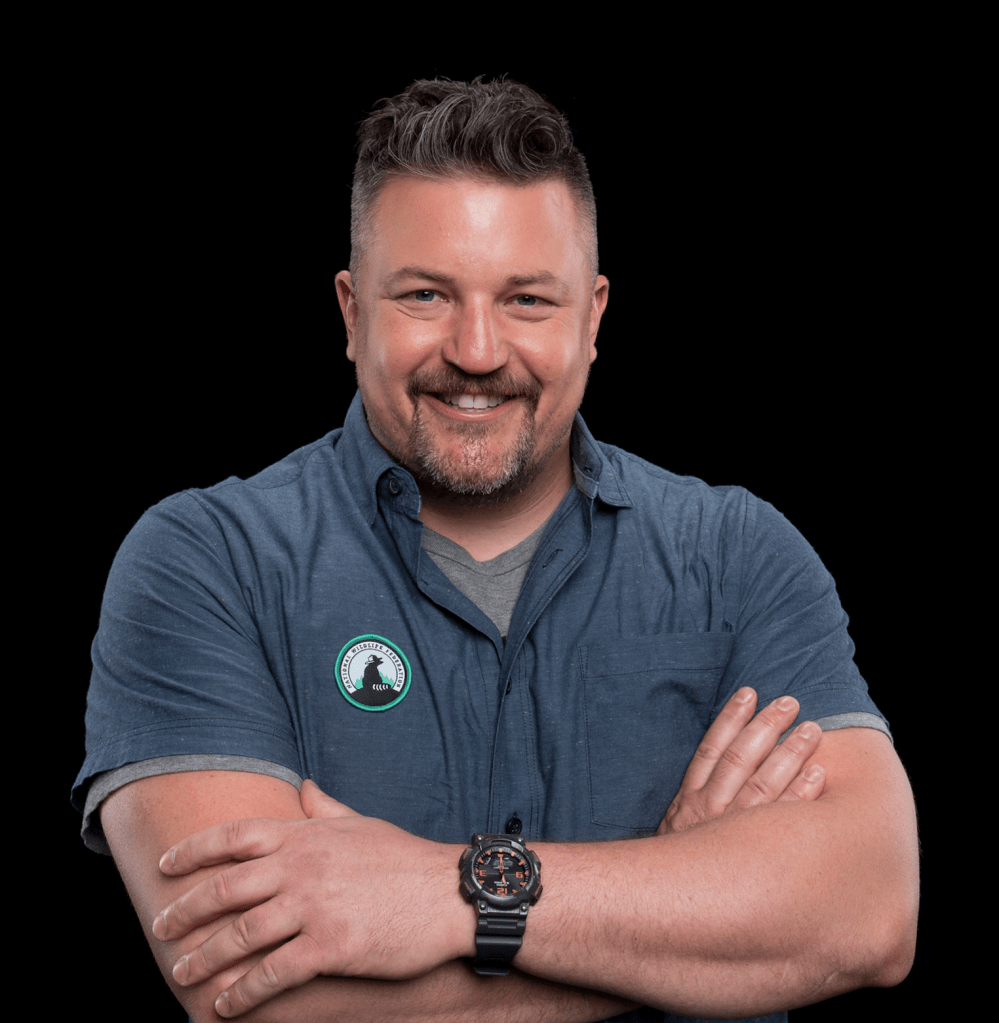
Today, David walks us through all the ways leaves help the environment – and how bagging them up and sending them to a landfill makes a bad situation much worse.
We also discuss useful tips for keeping leaves even if you have an HOA or difficult neighbors who might think you are neglecting your space.
So if you still have leaves in your yard, please listen and take NWF’s pledge to leave the leaves, and reap the rewards for years to come.
Be sure to follow David on instagram, and get David’s Book “Attracting Birds, Butterflies, and Other Backyard Wildlife”.
Did you have a question that I didn’t ask? Let me know at podcast@jumpstartnature.com, and I’ll try to get an answer!
And did you know Nature’s Archive has a monthly newsletter? I share the latest news from the world of Nature’s Archive, as well as pointers to new naturalist finds that have crossed my radar, like podcasts, books, websites, and more. No spam, and you can unsubscribe at any time.
While you are welcome to listen to my show using the above link, you can help me grow my reach by listening through one of the podcast services (Apple, Spotify, Overcast, etc). And while you’re there, will you please consider subscribing?
Links To Topics Discussed
People and Organizations
NWF Certified Wildlife Habitat
NWF’s Pledge to Leave the Leaves
Books and Other Things
Attracting Birds, Butterflies, and Other Backyard Wildlife – by David Mizejewski
Note: links to books are affiliate links to Bookshop.org. You can support independent bookstores AND Jumpstart Nature by purchasing through our affiliate links or our bookshop store.
Credits
The following music was used for this media project:
Music: Spellbound by Brian Holtz Music
License (CC BY 4.0): https://filmmusic.io/standard-license
Artist website: https://brianholtzmusic.com
Transcript (click to view)
Michael Hawk owns copyright in and to all content in transcripts.
You are welcome to share the below transcript (up to 500 words but not more) in media articles (e.g., The New York Times, LA Times, The Guardian), on your personal website, in a non-commercial article or blog post (e.g., Medium), and/or on a personal social media account for non-commercial purposes, provided that you include attribution to “Nature’s Archive Podcast” and link back to the naturesarchive.com URL.
Transcript creation is automated and subject to errors. No warranty of accuracy is implied or provided.
[00:00:01] Michael Hawk: Hey everyone. If you’ve been following Nature’s Archive for a while, you might be familiar with the idea of leave the leaves.
It represents one simple act of omission, not raking, blowing, or mulching leaf fall, and it’s resoundingly positive for the environment. But even if you think you know why leaving the leaves is helpful, I invite you to listen to today’s guest, National Wildlife Federation, Naturalist David Mizejewski. If you’re unfamiliar with David, let me tell you that his skill and enthusiasm for nature interpretation is second to none .
Today, David walks us through all the ways leaves help the environment. And how bagging them up and sending them to the landfill makes a bad situation even worse. We also discuss useful tips for keeping leaves, even if you have an HOA or difficult neighbors who might think you’re neglecting your space. .
So if you still have leaves in your yard, please listen and then take NW F’s pledge to leave the leaves and reap the rewards for years to come. So without further [00:01:00] delay, David Mizejewski. I.
David, thank you so much for joining me today.
[00:01:05] David Mizejewski: You’re welcome. I’m excited to talk about leaving the leaves.
[00:01:08] Michael Hawk: Yeah. And I think, based on if we have longtime listeners listening right now, they’re probably familiar with this concept, but I look forward to getting into a little more depth with you today. Now, before we jump into the leaves, I would love to just learn a little bit about yourself.
So you’re a Naturalist at the NWF. How long have you been with the NWF?
[00:01:30] David Mizejewski: I actually just celebrated my 25th anniversary working at National Wildlife Federation. I started all the way back in July of 2000 and I came actually initially to run. Our national program that we now call Garden for Wildlife or our native plant habitat program, which is really all about helping people take their own little piece of the earth, their own yards or garden spaces, their community spaces, and reconnect them to nature, reconnect them to the ecosystem [00:02:00] primarily by planting native plants, by not using pesticides and by doing things like keeping your leaves on your property, which has a whole bunch of benefits, which I’m sure we’re gonna get into in detail.
[00:02:11] Michael Hawk: Absolutely. And you’re so much more than a iNaturalist. You are an environmental educator, I would say you’re very active in that space. I’m curious, did. This career pathway that you’ve found yourself in how did that come to be?
[00:02:27] David Mizejewski: Well, that’s a very long story, but the short version is that, I feel like I was born with this innate love of nature and I think probably a lot of your listeners can relate to that. So I. Really explained myself as a lifelong nature geek and got to just learn about nature as a kid from firsthand experiences just playing out in nature, which is something, sadly that is not happening much anymore.
But for me, I learned as much as I could. I read every book on nature. I watched every nature documentary. I went and got a degree in human and natural [00:03:00] ecology, and I paired that with political science thinking I would get involved in advocacy until I realized that I’m not really good at advocacy.
It’s, that’s really tough work and it’s adversarial and it’s so critically important for conservation. But after that epiphany and realizing that’s really not where I could best, serve the cause of conservation, I didn’t really know what to do. This was right after college, so I ended up getting a seasonal position as a naturalist in a nature camp.
And what I learned from doing that is that. What I’m good at and what I love is sharing my knowledge and my passion and my excitement. Again, all the nature geek stuff that is just in my DNA with other people. And so I did that for a summer and I realized, okay, this is what I want to do. I want to, be a science communicator.
I want to be an educator. I want to be an interpreter of the natural world and use my passion as a force of good, hopefully to inspire other people to wanna learn more, to want to get [00:04:00] outside and of course want to get involved in conservation efforts. And so, not too long after I graduated, only about three years, I was able to get hired at the National Wildlife Federation.
And I know I’m pretty lucky to land my dream job at age 24, but it’s what I do at the National Wildlife Federation, whether it’s. Writing materials or curating content for our website and our blog, or I’ve written a book on this whole subject of natural gardening called Attracting Birds, butterflies, and Other Backyard Wildlife, which got turned into an Animal Planet series, which I then hosted and got into doing on camera work.
And so for these last couple decades any media opportunity that there is, like I said, written on camera doing podcasts like this I’m there. I want to get other people excited and learning about nature so they can get involved.
[00:04:49] Michael Hawk: Since you said this has always been in your DNA, maybe this question is not a great question, but you can reimagine it so that maybe it makes a little more sense. But [00:05:00] maybe in your formative years, was there a spark moment or some moment that really solidified this view that you had that like nature is where you wanted to be?
[00:05:10] David Mizejewski: I can’t identify one specific moment that led me to this career path that I’ve chosen, or that epiphany that I had like a conscious thought like, this is what I want to do. But what I can say is that I know that the opportunity to be able to go out and explore nature as a kid.
That I was lucky to get back in the eighties, it was a little bit more common then, but, the whole sort of Gen X trope of, our parents opened the door and out we went and we didn’t come home until they called us for dinner. It really is true, and looking back at my childhood and how hugely important that experience was to me, again, developing and I don’t know, honing this natural affinity that, like I said, I was born with.
it was huge. It [00:06:00] was so incredibly foundational. And of course, I read Ranger Rick Magazine, which is published by the National Wildlife Federation, and I was a junior naturalist at our local nature center and, my parents signed me up to do fossil hunts and all of those things, those youth experiences with nature really put me on the path to where I am today.
And so I can’t over emphasize how important it is to get kids outside in nature because not everybody’s gonna grow up to be a professional iNaturalist, but anybody that, as a kid, gets to play in nature and just explore and experience is gonna grow up to somebody who understands why it’s important that we protect nature.
[00:06:41] Michael Hawk: Leaning into that Gen X trope of like the door was open, you were on your own. Are there any moments you look back on like, an encounter with a copperhead or something like that, that you’re like, oh wow, I am lucky to have had that experience,
[00:06:57] David Mizejewski: well, thankfully, I think as far as [00:07:00] kids go I had sort of a natural caution and a natural respect for nature. So probably the worst thing that I did that could have turned out, in a not so good way is I probably climbed too many trees and, falling out of a tree in the middle of the woods and, breaking your leg probably wouldn’t have been good.
But some of my friends were maybe a little bit less cautious. I do remember one time as probably, nine or 10-year-old boys, one of my friends thought it would be a really great idea to jam a stick into a yellow jacket hive tunnel that was in the stream bank. And we all stood there while he did it.
And of course, we got swarmed and stung and, that probably was foolish. And if God forbid one of us was allergic, that could have turned out bad. But I really can’t think of anything that. Was so, so scary that it would’ve been life threatening. And I think that’s it’s a good question because it’s something that parents worry about today, right?
Oh my gosh, if I let my kid out, they’re gonna, they’re gonna, venomous snakes, they’re gonna get eaten [00:08:00] by a bear, and the risk of those things is so, so small. And so, especially compared to other dangers that, that both kids and adults face on a daily basis, getting in a vehicle and driving to the grocery store is exponentially more dangerous than, going into nature.
Right? You’re domesticated dogs. Are far more dangerous than any wild animal in terms of the statistics on how often they harm people and even kill people. So I think perspective is really important, because I think our fear of nature is such a huge overreaction to any actual danger there is.
And what we end up doing is cutting ourselves off from nature to our own detriment, particularly kids. So I think it’s a good question, but I wanna flip it on its head there
[00:08:47] Michael Hawk: Yeah. And I’m glad you took it that way because that’s the message that often comes out. And even in your case, you got stung by some yellow jackets. The aggregate benefit of all of the experiences that you had [00:09:00] far outweighed that one, somewhat negative encounter due to your friend.
[00:09:05] David Mizejewski: Without question. And yes, thank you for acknowledging that. It was not me that stuck the stick in the yellow jacket nest. It was a friend, a less smart friend.
[00:09:14] Michael Hawk: Yeah. So let’s jump into the leaves and I understand that It’s already October. And October is leave the leaves month. So can you tell me what’s the big picture for having a whole month about leave the leaves?
[00:09:30] David Mizejewski: Yeah. So Leave the leaves month is something that the National Wildlife Federation has been doing for three years where we’ve officially designated the month and we’re doing a whole targeted really education and public awareness campaign centered around the idea of in fall when the trees lose their leaves, trying to keep those leaves.
On site as much as possible. And I’ll unpack all of why that’s important in a minute, but it’s something that we’ve been promoting for literally [00:10:00] decades. In fact, I recently found an old newspaper clipping of an interview that I did talking about why it’s important to keep some of your fallen leaves on your property.
That goes all the way back to 2003. So the idea of leaving the leaves is not a new one for us at the National Wildlife Federation. Even if Leave the Leaves month is a newer campaign, but. The reason we talk about this I mentioned, a lot of my work at the National Wildlife Federation falls under our kind of Garden for wildlife umbrella.
And what that is all about is helping people realize that nature literally is all around us. It’s not just in far away places like, wilderness or national parks. And we can actually restore many aspects of nature, right, in our own cities, towns, and neighborhoods starting. Literally right outside our door, in our own yards and garden spaces.
And so when we think of that as an opportunity to reconnect the places where people live into the bigger ecosystem, so we’re actually adding [00:11:00] benefit and not just destroying and taking away and, habitat destruction and pollution, which is typically what we think about the human impact on nature, right?
This whole idea of gardening for wildlife, of planting native plants, of reducing our lawn, of not using pesticides providing natural habitat through our garden spaces for songbirds and butterflies and native bees and other pollinators and so on and so forth. It’s a really powerful act that we can all do, and especially in these very turbulent times where, you know, just on a big scale, it seems like there’s so many problems.
The idea of taking that personal action by. Nurturing a natural habitat garden is, I think, really powerful. It’s very uplifting to me personally when I can, plant some, like right now the asters of the golden rods are blooming in my yard, which I live in New Jersey by the way.
And it’s gorgeous and it’s wonderful, but it’s teaming with bees and late season monarchs on their [00:12:00] migration down to Mexico. That lifts my spirits ’cause I know that I nurtured that and I know it’s doing something good. And so that’s where the leave the leaves come in. This is part of this bigger set of work that we’re doing at the National Wildlife at Ocean, encouraging these natural landscapes, to the benefit of wildlife, but also people too.
And the gist of it is pretty simple when you think about it. And so here’s the basic concept. The fall months and many places around the country, temperate climates, the deciduous trees, and actually also the evergreens will lose their leaves or their needles.
Obviously evergreens don’t lose them all, but they drop the, foliage as they get ready for winter dormancy and what happens to them while they fall right down at the root zone where they suppress weeds, they retain soil moisture, and then they slowly compost and break down, returning the nutrients right to the root zone of those plants.
That sounds an awful lot [00:13:00] like mulch and fertilizer. That is provided free by Mother Nature. So that’s, at a very surface level, the whole idea of leaving your leaves is just, Hey, look, mother Nature is providing us with this stuff that makes our garden soil better. It actually protects our plants and our landscapes.
Why are we throwing it away when we could just be leaving it in place or moving it into our garden beds and using it as a natural mulch and fertilizer? The big lawn industry and the chemical industry has trained us as Americans that, you have to get out there and rake and throw away your leaves or blow them even worse and then turn around and go buy mulch and fertilizer.
So from that very simple point of view, we’re trying to encourage people to be a little bit more sustainable. And oftentimes when you’re sustainable, you save a buck, right? If you’re recycling that natural leaf layer. And using it as a natural mulch, natural fertilizer. Well you, you’re gonna save money ’cause you don’t have to go out and buy those things.
So that’s one, one [00:14:00] kind of concept. The other big one is that the natural leaf layer that forms is crucially important. Wildlife habitat for all sorts of species. And again, we can get into the details of that, but that’s really the gist of it. It’s recycling natural material, keeping it out of the landfill, which is super important.
And it’s also about providing wildlife habitat. And again, we can go a little bit deeper into both of those.
[00:14:25] Michael Hawk: Yeah, for sure. And you said something that I wanted to dig into here before we get a little bit deeper. You said, we’ve been taught to clean up our yards, rake the leaves, or worse blow the leaves. So tell me why blowing is worse.
[00:14:40] David Mizejewski: leaf blowers are super popular. And they require fuel. And that fuel either is in the form of, basically gasoline or even electric. They make the job easier, no doubt, but they also are terribly polluting, not just air pollution, which is bad. The [00:15:00] motors on gasoline powered lawn equipment.
This is lawnmowers, weed whackers, as well as leaf blowers are not regulated the same way that our car engines are. And so their emissions are through the roof particulate matter, but also carbon pollution, which is causing climate change, right? So when we’re out there burning that gasoline, blowing all the leaves, you are contributing in a small way to your own carbon footprint that is fueling global climate change.
So that’s bad. And again, the particulate matter is bad to breathe. But the other reason why leaf blowers are bad is that they cause tremendous noise pollution. And there have been studies looking at the leaf blowers and lawnmowers and other, lawn and garden care equipment, interfering with birds and bird song.
And quite honestly, just from a very selfish point of view, they’re just freaking obnoxious. And I learned this moving from working in an office pre pandemic to now being a full-time remote employee and just how loud [00:16:00] and ubiquitous leaf blowers are in suburbia. It really was shocking to me so much so that oftentimes I have to have my window shut.
It’s a gorgeous day today. Beautiful early fall weather, but I can’t have my window open because you would hear through this microphone that I’m recording on all of the leaf blowers that are happening right now in this very moment because the leaves are starting to fall and it’s horrible. You can’t hear nature.
And so anyway that’s a little soapbox about that. And here’s the thing. Look, I know it’s harder to rake. Raking is quiet and it’s good exercise for us, right? So if you are gonna move your leaves, and again, I’m gonna hopefully convince folks listening why maybe you don’t want to or not, at least not all of them.
If you do need to move your leaves like off your lawn or for whatever reason, try to use a rake, it’s better for you. Physically it’s better for the environment. If you have to use a leaf blower and I recognize that, there are times and places where that’s going to, be the best [00:17:00] solution.
Try to go with an electric one. Still based on fossil fuels, but much less polluting, both in terms of emissions as well as noise pollution.
[00:17:09] Michael Hawk: Yeah, absolutely. I have found myself becoming more and more sensitive to the leaf blowing noises as I get older. And I don’t know if it’s just something I’m just more attuned to or if there’s just so much more of it now than there used to be. Very often I’ll be.
Working from home have to keep the window shut and endure an uncomfortably warm room combined with the lack of nature exposure that I would otherwise get through the window. So, yeah,
[00:17:34] David Mizejewski: Totally. Yeah. It’s a lose. Lose. Exactly.
[00:17:38] Michael Hawk: So you mentioned that leaves are incredibly important part of, I mean, they’re habitat and I was telling you before we started that my background is in like network systems.
So I very often think of the world in terms of systems, and of course we all live as part of the largest, most complex system that exists. The ecosystem that we’re part [00:18:00] of. So these leaves, can you maybe get into some of the details of who they’re supporting, what they’re supporting, like. Just to maybe kick it off I want to tell you about one of my favorite learnings of these last few years, and that’s about leaf mining insects that are literally sometimes inside a leaf pupating when the leaf falls off and they complete their life cycle.
Then on the ground after that leaf falls off, and I know there’s a, so many other important stories of beneficial insects or other organisms as well.
[00:18:37] David Mizejewski: Absolutely. And you know what I thank you for pointing out leaf miners. That is not one group of wildlife that we’ve focused much on at the National Wildlife Federation during leave the leaves month. So maybe they’ll get the spotlight next year in our campaign. But yeah, I mean that’s a great example because it’s hidden from our view for the most part.
But it’s a role that our fallen leaves are [00:19:00] playing for a whole suite of species, right? The leaf mining insects. And so let’s start with the invertebrates, the insects, the earthworms and the snails and the leaf layer. Again, naturally forms when trees and shrubs lose their leaves.
And the herbaceous vegetation too, will go dormant in winter months or the dry season depending on, people’s climate conditions and their regional differences. But at any rate, in many ecosystems you do have this natural layer of dead vegetation that kind of sits on top of the soil.
And of course, anytime anything out in nature is gonna ultimately be used as a resource by something. And so within and underneath that leaf layer is all sorts of life. And a lot of it is invertebrate life. And so, again, some of the animals I just mentioned are, I think most people logically think of them.
Oh yeah. Earthworms and, snails and, things like that. isopods depending on where you grew up, you might call them Rollie pollies, or you might call them pill [00:20:00] bugs. You might call them potato bugs. These are these little terrestrial crustaceans. They tend to be grayish.
They live in the leaf layer because they actually have gills. They breathe through gills. And the leaf layer, as I mentioned a few minutes ago, traps moisture. It helps keep moisture in the soil, which is beneficial to all the plants out there. But it actually provides a safe place for these isopods, which are fantastic decomposers.
They eat decay, plant material, and they can actually metabolize and break down toxic metals in the soil. So they’re really good for, pollution mitigation too. And they’re doing this job all around us, out of sight, out of mind. But if you don’t have a leaf layer they don’t exist. They can’t be there.
The ground will just get too dry. But some of The invertebrate species that I think most people don’t realize need that fallen leaf layer include things like bumblebees. Now most of our native bee species, we’ve got 4,000 or so here in North America, [00:21:00] do not live in hives like the non-native honeybee does, right?
They don’t have queens, they don’t make honey, none of that. And they will typically over winter as pupa in hollowed out plant stems or in tunnels and dead or dying trees. But our bumblebees are social bees, and they do form hives, and they do have queens. Now, the hive does not survive when winter comes, but the queen does, or a queen does.
And guess where she goes? She buries herself underneath the fallen leaves in a little burrow. And those leaves not only, keep moisture there so she doesn’t dry out, but they provide insulation. Think of like your winter coat, it’s got insulating material in it, or your comforter.
While those leaves do the same thing, they trap little pockets of air that stay warmer than the surrounding environment. And so especially, you know, in areas where there’s snow, you get even more insulation. But at any rate, our bumblebee queens need the leaf layer. But the one that I think really blows people’s minds the most in terms of insects [00:22:00] that use the leaf layer are butterflies and moths, right?
We think of butterflies and mos as you know,the adult form they’re flying around. We think of pollinator gardens and it’s always about planting lots of flowering plants and, maybe caterpillar host plants. But what do these insects do during the winter months? Well, many of them, moths in particular, will pupate.
In the leaf layer over the winter, It’s so complex and many of them, many of our like giant silk moths, so you know, things like the Luna Moth and the sacro moth and the io moth and the polyphemus moth. These big honking, quite beautiful moths.
They have these, large caterpillars as you would expect from a large moth species. They grow up on their caterpillar host plant. It’s different for each of the different species. But when fall comes, what they’ll do is they will spin their silken cocoon and wrap it in a leaf. Then that leaf will fall off the [00:23:00] tree and lives and exists in that fallen leaf layer again, where it’s insulated and the pupa stays in that form throughout the winter.
That is how these insect species survive the winter. And then come spring they’ll emerge as the adults and they’ll repeat the process. So the reason you might be thinking, well, why do I care about moths? Well, moths are pollinators, but they’re also part of the food web.
And when you know that 96% of our backyard birds feed their babies exclusively a diet of insects, mostly caterpillars and mostly moth caterpillars, you can really easily just thread the needle from your fallen leaves right now at this time of year and bird populations next spring, because without those moth caterpillars.
Parent birds are not gonna be able to successfully raise their babies. And most people love seeing beautiful birds in their yard. So that’s my pitch everybody, if you want to see birds, [00:24:00] especially if you wanna see baby birds in your yard next year, leave your leaves this fall because many of our moths that are gonna feed those birds next year need that as their overwintering area.
I could go on and on. There’s so many more examples, but.
[00:24:13] Michael Hawk: Yeah. I like the Caterpillar example and, we had Dr. Doug Tallamy on the podcast and his lab did a study. of chickadees. I forget which species.
[00:24:24] David Mizejewski: Believe it was Carolina Chickadees and yeah. And I, Doug is a good friend of National Wildlife Federation and so a lot of the stats that I just quoted, you come from his research. Yeah. But, took one pair of chickadees in order to raise one nest of babies. They had a catch between six and 9,000 insects over like a 16 day nesting event.
And they only forage within about 150 feet or so from that nest. So this is wildlife conservation on the scale of your own yard. Think about it. If you had an oak tree that’s supporting lots of [00:25:00] caterpillars at also a nesting place for chickadees, potentially in your yard. and you’ve kept the leaves,
So the chickadees have the place to forge for the food and for the moth caterpillars to emerge, et cetera, versus a lawn and maybe a few non-native plants that didn’t support any moth. Caterpillars. That’s a stark difference. And it’s one that unfortunately most people have the lawn and the non-native plants.
And so it’s no wonder that our North American songbird populations have plummeted over the last, 50 or so years. It’s no wonder that the monarch butterflies literally disappearing. In our own lifetime, because a big piece of the puzzle is how we treat our landscapes and our cities, towns and neighborhoods, including our own yards.
And if we have nothing but lawn and nothing but non-native plants and we’re spraying pesticides everywhere, these wildlife are gonna disappear. And it’s happening. But the message here is that we have agency here, we have choice.
We could do very simple things like leaving our [00:26:00] fallen leaves, using them as natural mulch, reducing our lawn, planting more natives, don’t spray pesticides, et cetera. These are simple things we can all do, and oftentimes they save us money and time, and at the same time, they provide tremendous, enormous benefit to our wild neighbors, the songbirds, the pollinators, et cetera.
It’s such a win-win thing to do that I really hope people will be inspired to try it out this year. Keep some of your leaves on your property, don’t bag them up. Don’t send them to the landfill, which is really the worst place for them. But yeah, that’s really what it’s all about.
[00:26:34] Michael Hawk: And maybe you could talk a little bit more about the soil health aspect, because you said it’s like a natural mulch. And I know a lot of people that have a highly maintained property. They’ll put mulch down, but every so often they’ll rake up and replace the mulch as well. In this case, the leaves are breaking down, creating soil, probably better aerated soil, which has benefits too.
So can you tell me a little bit about the [00:27:00] soil benefits and then how that also, aside from just bringing more nutrients back to say the tree that dropped the leaves in the first place how it benefits the plants that already exist in that space.
[00:27:11] David Mizejewski: Yeah, I mean you’ve pretty much summed it up. What the benefit is there, right? if we allow what happens in nature, which is for those fallen leaves and other dead vegetation to just naturally compost in place at the foot of the plants that they fell off of, they are going to, as they are consumed by the decomposers, like the isopods and the earthworms, which then excrete waste, which is concentrated nutrients that used to be in those leaves that helps build healthy soils.
Now, depending on what region you’re in, you’re gonna have different kinds of soils and, different vegetation But speaking broadly, this is what happens, right? This is how healthy soil is formed for plants to grow in, regardless of what region you’re in, right?
And so when we literally throw that away. there’s no way for the soil [00:28:00] to regenerate itself. and that’s why you then have to go out and buy fertilizer because you’ve taken away all of those nutrients that otherwise would have recharged that soil health and become available to the roots of the plants.
You mentioned aeration as well, urban soils and even suburban soils can be pretty hard packed. I live in suburban New Jersey. not too far outside of New York City. But my house has been here for almost a hundred years and we have clay soil here. And let me tell you.
It’s hard packed, a hundred years of people walking on it and, doing whatever has really compacted the soil downs. I moved here about five years ago, and one of my big goals has been not only to reduce the size of the lawn, which I’ve done probably about at least half of my lawn, which used to be the whole yard is, has now been converted into garden beds.
But my second big focus really has been to build the soil and I’ve been using fallen leaves to do that for the last five years. And I’m finally at [00:29:00] this stage getting some pretty good, native type woodland soil, which would be the sort of the native historical type soil where I live.
And it’s pretty amazing to see the transformation, to be able to actually dig in it instead of just hitting, like concrete, the hard clay and getting some of I’ve got a lot of trees so it’s shady. And so. That’s a tough gardening challenge. There’s not a lot of plants that are gonna do really well in full shade.
But I’m relying on woodland, wildflowers and ferns, all native species to where I live. And most of those do require a rich forest soil humus type situation, which I did not have. But because I have each year put a layer in my yard, what works for me is about three to five inches of fallen leaves that come from my trees.
But I am also the crazy guy that goes down my street with a big tarp and rakes my neighbor’s leaves my neighbors puts, put them all out to the curb to be collected. I will take those and I will drag them [00:30:00] down the street into my yard to make this nice natural mulch layer.
And it really is benefiting not only my plants, but also, I know that I’m supporting more wildlife because I know how many creatures actually depend on that leaf layer.
[00:30:14] Michael Hawk: I am just visualizing you going down the street with a tarp. and what people might think, but you know, we should normalize that behavior.
[00:30:22] David Mizejewski: A hundred percent. I call myself a nature geek, and I wear my geek flag proudly, and hopefully I’m inspiring other people to, to not be so worried about it and to, maybe keep some of these, this incredible natural resource out of the landfill and on our property.
And I do wanna actually talk about the landfill for a second, because, again, I was saying there’s really two main reasons to leave your leaves. One is to, just use this material rather than throwing it away the other’s wildlife habitat. But as far as that first one goes, as far as throwing it away, not only are you denuding your own yard.
But what ends up [00:31:00] happening when you throw those leaves away is that they end up in the landfill and as organic material once they get buried in anaerobic conditions. ’cause there’s not oxygen in the landfill when those organic materials break down, they produce methane, which is, we talked about climate change and the, fossil fuels and the pollution from our lawnmowers and leaf blowers, methane blows all of that outta the water.
And our landfills are the third largest source of methane pollution. And methane is like a super potent greenhouse gas trapping heat in our atmosphere, again, contributing to global climate change. And so, again, the third biggest source of methane and a big portion of that is coming from yard waste, which is largely made up of fallen leaves as well as grass clippings and maybe some woody debris, but it’s mind blowing when you think about it.
That’s something that we absolutely do not have to do. Bag up our leaves and throw them in the landfill is still [00:32:00] happening at such a huge level, and it’s causing such a huge emission of this really potent greenhouse gas. So don’t throw them out, keep them on your property. That’s the number one message.
From the National Wildlife Federation, there’s lots of different ways you can use them if you keep them on your property. The most natural, of course, is just leave them where they fall. And that’s great. that’s what happens in nature. That’s wonderful. Now, I mentioned earlier they will smother your lawn if you have a thick layer.
A light scattering of leaves is no big deal for a lawn. Butyeah, you might need to move them off of your lawn, either because you just want to, for aesthetics or maybe you live in an HOA that is gonna demand that you do it or fine you and that kind of thing. So that’s where you get your rake out and you rake them into your garden beds.
If you don’t have enough garden beds. maybe this is a perfect opportunity to add a few extra cut into that lawn, turn it into a garden bed that you fill with beautiful native wildflowers and trees and shrubs or whatever vegetation [00:33:00] is by you, and use that fallen leaf layer right there as a natural mulch.
That is probably the most practical thing for most people to do. Most people are not gonna be able to just leave them right where they fall. I mentioned HOAs. We do a survey each year for leave the leaves month. And this year’s survey showed that 40% of respondents actually are required by their HOA or by, municipal landscape ordinances to remove the leaves from their lawn at least.
So we know that’s a thing for a lot of people. But so again, the most practical thing is use that, that those leaves as a natural mulch. if you have too many leaves, even for that. Put ’em in a compost pile, just make a leaf pile in the back of your property somewhere and they’ll naturally compost.
You could also shred them or run them over with a mulching lawnmower type scenario, and that’s better than throwing them away. But just remember, you’re chopping up all the wildlife that are in them, like those moth caterpillars but I don’t want [00:34:00] anybody to feel guilty for doing that if that’s your only option.
The most important thing is to keep them from getting tossed into the landfill, because that is, it’s just insult to injury. Not only are taking away the habitat, not only are you taking away the free natural resource of mulch and fertilizer, but then you’re contributing, to methane production from landfills, which is just an awful thing.
So if nothing else, just commit to keeping them out of the landfill and use as many as you can on your property and then compost or, shred or mulch the rest.
[00:34:31] Michael Hawk: Yeah, the landfill aspect that you just touched on that’s news to me. Like of course I knew methane was a big problem at landfills. I had no idea that a good chunk of that is coming from leaves and organic matter that we’re throwing out.
[00:34:44] David Mizejewski: Yeah. It’s something like 10 million tons of yard waste gets buried in the landfill every year. That’s a lot. And so that’s preventable. We can keep most of that out. I have not, in the five years that I’ve lived here, I have not thrown away a single leaf, and I [00:35:00] still actually have some lawn.
That’s where, my dogs play fetch. And when we have parties, people mingle or whatever the lawn is, the people habitat. And of course I don’t put pesticides or fertilizers or any of that stuff on it, but the rest of my yard is, are just these beautiful garden beds, like I said, filled with native wild flowers and trees and shrubs that are providing habitat.
And pretty soon here, I’m gonna be out there with my rake moving the leaves that fall on the lawn into the garden beds as the perennials are going dormant. It’s a nice blanket that’s gonna protect them. And then over the winter and into the spring, they’ll naturally compost and break down and fertilize those plants and build the soil.
Everybody can do this.
[00:35:41] Michael Hawk: Yeah. And you started to touch on the aesthetics problem and some of the workarounds that you have there, whether it’s like your own kind of self-perception of your property or an HOA driven requirement. Maybe it’s peer pressure from your neighbors. I don’t know if you have any other tips or suggestions as to how to get past some of [00:36:00] those different impediments that someone might run into.
[00:36:03] David Mizejewski: Yeah. I’m really glad you asked that because this is such a huge issue and it’s also one that is so overblown. I hear so much resistance each year when I’m out here, talking about leaving the leaves from people who just, like, they freak out and they’re like, oh my gosh, it’s gonna look ugly.
And I’m like, take a deep breath. It’s all cool. Like. Is that really with everything going on in the world, what you’re gonna be worrying about right now, that it’s not gonna be quote unquote neat and tidy. So I think some of this is just sort of perception and we have an opportunity to be mindful about how we are, perceiving things and what our reactions are to them.
But I will say this, it’s, maybe a little bit of a different aesthetic than buying bagged, shredded hardwood mulch. When you’re talking about using fallen leaves in your garden beds, maybe it’s a little bit more rough, [00:37:00] maybe a little bit more rustic, but really not that much, right? And so some tips I can offer are to help minimize that if that’s not your jam, right?
If natural looking is not your aesthetic or you’re worried about, again, an HOA coming after you. Couple tips I can give. Number one, move the leaves into your garden beds. That in and of itself is going to, clear them off the lawn and give a perception of tidiness. But another pro tip is use an edge.
So make a delineated edge with like a shovel and cut an edge around that garden bed. And you would be surprised at how far that goes into communicating visually. Like I am doing this with a deliberate plan in mind and it’s part of the aesthetic versus somebody just assuming that you’re lazy and didn’t wanna do your yard work, right?
An edge is really powerful to communicate that. You can also do things like incorporate. Decorative [00:38:00] features. Maybe you have a little statue or maybe you’re, you’re one of the folks that have gone as far as to participate in our program at National Wildlife Federation that we call Certified Wildlife Habitat.
And this is where we recognize people with a little yard sign that says, this is a habitat, and I’ve done this on purpose. I’ve planted native plants. And so maybe you have your certified wildlife habitat sign out in your garden bed with the fallen leaves. But just being intentional and doing little things like that can communicate to your neighbors that this is a thing.
Another thing that people really freak out about so unnecessarily is they’re like, what about the wind? The wind’s gonna blow the leaves everywhere. And I am here to tell you, at least anecdotally, from my own personal experience, that’s such a non-issue. I have pictures that I have taken in my yard in November and January and March of my beds where, you know, when I first moved the leaves in and then after a windstorm, [00:39:00] and then three months later and yeah, maybe there’s a couple leaves that blew out onto my lawn.
But it’s so minimal, it’s just not an issue. And guess what? If a few leaves blow on your lawn, number one, it’s not gonna hurt your lawn. Number two, just get the rake out and move ’em off. Not a big deal at all, but like the histrionics that people get into trying to, justify why I have to throw my leaves away is very silly to me sometimes, especially since I’ve been doing this.
And I know from firsthand experience that. A lot of this stuff just really is not that big of a deal. So yeah, rake ’em off your lawn, you want to get fallen leaves off of sidewalks and walkways. We want to keep accessibility in mind and wet leaves can be slippery and that kind of thing.
Absolutely. But for the most part, you can do this in a way that isn’t gonna make your yard just look like a wild mess, and you’re gonna get all the benefits.
[00:39:49] Michael Hawk: Yeah. And I guess one other tip I would throw in there as well, so this is a little bit different because it wasn’t so much about leaving the leaves, but when I tore up my front yard and replaced it all with native [00:40:00] plants it was a good opportunity while, while I was working on it and while the work was being done to chat with neighbors when they walked by and tell them like, this is what I’m doing and then this is why, and I found.
It by and large everyone was very supportive of it. And a few folks were like, can you tell me where you got the plants? And, asking questions now my neighborhood might be a little more progressive in that sense than the average neighborhood, and I’m very lucky that my immediate neighbors are great and have no issues whatsoever.
I could definitely see if you had a very problematic relationship with a neighbor, like anything could set them off. But nonetheless, just that community element is probably a helpful step as well.
[00:40:43] David Mizejewski: So, so important. And again, I’m really glad you brought that up. We all need more community. in our country at this time in its history, right? And talking to each other and finding common ground, I think is so critically important. [00:41:00] And one way we can do that is to spend some time outside in our yards and engage with our neighbors even.
It doesn’t even have to be about lawns or native plants or leaves, but that’s a good one, right? But yeah, talk to your neighbors. Absolutely. and there’s no better opportunity than when you’re out doing a little bit of yard work, when your neighbors are, walking their dog or maybe they’re doing their own yard work, right?
when we’re cooped up inside and separate from each other, we don’t have those opportunities. and yes, it is such a powerful tool when it comes to minimizing pushback against. A more natural landscape aesthetic because as we talked about earlier, it’s really important that we do this. We’re trashing habitat and in many ways the places where people live, become dead zones where it doesn’t really support much other life, and that does not have to be the case, right?
These simple things that we all have the power to do. Planting native plants, reducing lawn, reducing or eliminating [00:42:00] pesticides can overnight quite dramatically increase the habitat for a whole host of wildlife species that can safely coexist right alongside us if we just give them some habitat. Again, the songbirds, the butterflies, all the other cool beneficial insects, the small and medium sized mammals, that are out there, doing their job as predators or prey or whatever, right?
Like having wildlife around us and nature around us, we know from study, after study benefits us mentally and emotionally and even physically. Doing yard work is great exercise, planting, gardening, is great physical activity for us. Huge benefits to kids and their mental and emotional and physical development as well.
So, yeah, I The whole idea of planting a wildlife garden seems so silly and so inconsequential, but it really is the exact kind of thing that can change the world because it’s the epitome of the idea of thinking globally, but acting [00:43:00] locally. And when we all do that, it really adds up exponentially and we really can move the needle on a lot of bad news when it comes to wildlife conservation and the health of the planet and our communities, right?
So I think the community piece is really critically important. Gotta get out and talk to your neighbors.
[00:43:18] Michael Hawk: So many things that you’ve touched on already, in this discussion that are just so important. And I keep coming back to, I don’t know that any one element stands above the rest in terms of personal wellbeing and agency and community and all, and just of course fundamentally helping wildlife.
But that sense of agency, I keep coming back to that as you’re talking in how important that is. And especially like for me, this is just I’m not guessing that everyone would do the same thing I do, but I’ve turned into an iNaturalist sort of fanatic and I am frequently going out and surveying my yard.
And that’s that novelty of like, Hey, this is a new thing. What is this thing? [00:44:00] And then finding out that it requires a certain host plant And that’s why it’s here. Like you can connect the dots really easily at that point and be like this thing is alive in my yard because of what I.
[00:44:13] David Mizejewski: Yes, absolutely. And you know, I love that example because it’s a great illustration of how we can actually use technology to help deepen our connection to nature. There’s this artificial divide that sometimes gets perpetuated of like, oh, we want to, we’re overly technological and we’re too dependent and we spend all day with our face in our phones and that those things are mutually exclusive.
And, And you know, maybe as a tech guyyou’ll get this intuitively. These are just tools, right? And we can use them in many ways to actually deepen our connection to nature. And the advent of things like iNaturalist or the Merlin app from the Cornell Lab of Ornithology, which will identify the bird songs around you.
These things are tremendous opportunities to get people [00:45:00] more engaged in being naturalists. You know, A naturalist, I’m a naturalist, that’s my title. Anybody can be a naturalist, right? Charles Darwin was a naturalist David Attenborough Jane Goodall, who just recently passed away.
These are famous naturalists, the local nature center, the woman that works there, she’s a naturalist. Your national Park folks, they’re naturalists. Anybody can be a naturalist. It’s really just about having an interest in nature and wanting to learn about it. And, for me personally.
In my role as iNaturalist, I think it’s also about being a communicator and being able to share that knowledge with other people to help interpret what’s going on in the natural world and inspire them to wanna learn more, and also to get involved in protecting nature. For me, that’s a key part of being a naturalist, but, not everybody has that skillset.
And if it’s literally just about learning and observing and enjoying that’s being a naturalist too. So I do encourage everybody, get an old fashioned field guide. Join your birding [00:46:00] club. Download an app, whatever it takes to pique your interest. I say it’s all good.
[00:46:06] Michael Hawk: Yeah I take the opportunity to show my neighbors pictures I’ve taken of things in my yard and, share that passion and like, Hey, if we just look like I’m not gonna get on my soapbox with my neighbors. It’s a little different kind of approach that you take. But the moral of the story is always, I just was looking and look at this amazing thing that was right here under my nose the whole time.
So, circling back then to you said that this is the third year of leave The leaves month.
[00:46:35] David Mizejewski: That’s right. Yeah. So, we decided to do this campaign just three years ago and really focus our efforts at the National Wildlife Federation on getting this messages out, message about leaving the leaves in a very targeted way instead of just doing it passively. And so, this year we have launched.
Something kind of neat that we’re hoping everybody out there listening will do. And that is to take the leave the leaves pledge. And this is, [00:47:00] super easy. It’s literally just, clicking the button saying, I pledge to make the commitment to leave some of my leaves. And of course that puts you in touch with us.
So we’ll be able to send you more information via email about natural gardening, about local ecology. And you know how you can get your own yard or garden space certified as a wildlife habitat with National Wildlife Federation. It’s really creating a communication stream. There’s something psychological when we take a pledge that is a little bit more impactful than just thinking.
I’m gonna do this right? If even that simple act of just clicking the pledge does have an impact in getting people to actually do the thing you’re asking them to do. And we have a goal this year, we’re trying to get 10,000 people to do it, which in the grand scheme is not that many people. So if folks want to take the pledge and access a bunch of information about leaving the leaves, they can go to our website.
So it’s nwf.org, as in national wildlife federation [00:48:00] nwf.org/leavetheleaves. And the pledge is there, certification for your garden is there. And each year for leave the leaves month, we put together some new content that we’ll put out on our social media or our blog. And this year we have this really awesome quiz.
Help that. Well, it’s before we quiz you, we give you the information. It’s a photo essay on looking at some of those giant moth species I talked about earlier and showing you what the moth looks like and then showing you what it’s cocoon looks like wrapped in the dead leaf. And then we actually have photos of those cocoons in a landscape.
And so the quiz, like, you have to look and try to find the cocoon. And let me tell you, I got two of them wrong. I could not see them as a trained iNaturalist because they’re that well camouflaged in the fallen leaves. So anyway, nwf.org/leave the leaves. That’s where you could take the pledge. You could do this fun quiz and test your [00:49:00] ability to spot the animals in the leaf layer.
Lots of good stuff.
[00:49:03] Michael Hawk: It sounds like a lot of fun. I’ll check that out here today. In fact, before it slips my mind, I’m going to include this in my newsletter as well. So, I’ll try to help get the word out now before we wrap up. I’m curious you talked about the different things you’ve done in your own property and how you haven’t let a leaf go to the landfill in so many
[00:49:24] David Mizejewski: Five years.
[00:49:25] Michael Hawk: So many years. Have there been any standout moments where you maybe discovered one of these caterpillars or something else that you would not have been aware of? had you not been leaving the leaves.
[00:49:39] David Mizejewski: Oh gosh, I can’t think of one standout moment because almost every day I am out puttering in my yard and, seeing a cool beetle or spotting a bird that probably wouldn’t have been there because it was foraging in the leaf layer. And things that are out there in the world, but they rarely show up in people’s [00:50:00] yards.
I had an eastern towhee show up in my yard and it was, again, it was foraging. This is a bird species that forages for food in the fallen leaves. And I actually didn’t see it with my own eyes. I have little. Wildlife cameras scattered around my yard so that I can see what’s going on when I’m not actually out there or at night.
We have an incredible number of rabbits and foxes that are constantly running through the yard, but they’re nocturnal so you don’t see them during the day. But yeah, seeing monarch butterflies coming and laying eggs on my milkweed. Is pretty powerful, especially knowing what trouble that species is in right now.
So yeah, things like that. Hearing screech owls and um, knowing that because I and my neighbors and my community have emphasized keeping our mature trees in this community and knowing that those screech owls are based on their calls are in their courtship behavior. Those are just a few moments that I can think of in my own yard.
[00:51:00] I did put out a screech owl nesting boxin a pine tree. I don’t have any dead trees with tree cavities, which is where the screech owls are gonna nest. So hopefully the, the screech owl nesting box will peak their interest and I’ll get them actually nesting in my own yard in this big mature pine tree.
[00:51:17] Michael Hawk: Yeah, so many things every day, every week that this leads to. And I love to hear the parallels too, because you’re talking about the Eastern towhee. We have the California towhee here. and if you have mulch there, people sometimes get frustrated with the towhees because they dig so much and mess up the mulch, but if you’re leaving the leaves, it’s not an issue at that point.
They can do their thing naturally and it’s not messing anything up.
[00:51:40] David Mizejewski: Right, exactly. You know, I’m glad you mentioned that. ’cause there is one other thing that we haven’t talked about. That is something that, listeners in California and other parts of the West might have to face in a way that Easterners generally don’t, or not as often, and that is fire safety.
And I, this is one sort of caveat [00:52:00] to the leave the leaves message. And that is, you don’t want to, if you’re in an area that is prone to fire or there’s high risk of fire, you wanna follow best practice when it comes to fire safety protocol and defensible space and things like that.
And so, if you are following those protocols and it’s conflicting with this message of leaving the leaves, please follow the fire safety protocol. That said, wildfires are not just a thing of the west anymore. In fact. Here in New York, in New Jersey and on the border with New York last summer, we had a raging wildfire that lasted for weeks.
And, so at any rate it’s a growing issue. We developed a resource on how you can have sort of natural landscapes that are also fire safe, and you can find that on the National Wildlife Federation’s website as well. You can just Google Fire Safe Landscapes, national Wildlife Federation, and we have that tip sheet.
We also did an article on it in National Wildlife Magazine. But the bigger message there is adapt this, leave the leaves message for the [00:53:00] region that you live in. It’s all gonna be slightly different. We’re a very diverse country, ecologically. And maybe you don’t have a lot of leaves where you are, and that’s fine.
Maybe you do, maybe fire’s an issue. So just, go with the local flow and follow the best practices for safety and do as much as you can to keep the leaves on your property safely to benefit wildlife and the local ecosystem.
[00:53:20] Michael Hawk: That’s an excellent point. And it’s a very nuanced one too when it comes to fire protection and what you can do in that space. Hopefully I can have a thorough episode on that in the future. It’s something I’ve been working on. But that said, we’re nearing an end of our time allotment here, and I really appreciate you taking the time and telling us about this great new focus on Leave the Leaves a little more of a deliberate directed focus that I hope continues to move the message forward.
And before we go though you do so much in thescience communication space and so much for the National Wildlife Federation. [00:54:00] Where can people. Find you and keep track of what you’re up to. Do you have social media, a personal website other resources?
[00:54:08] David Mizejewski: Social media is a great way to keep in touch. I’m pretty much on all the places. if you could spell my last name, you will find me. It’s at, you know, mizejewski, and I’m sure you can, find that in the show notes how to spell it. But yeah, I’m on most social media platforms, so is the National Wildlife Federation.
So I would encourage you to give NWF a follow as well. And that’s a really great way, if you have a question, I try to be really, active and present and responsive. Not everybody can do that, but I do spend time trying to engage with folks, so if you have questions I love hearing from folks, so please do follow.
[00:54:42] Michael Hawk: Kudos to you for being able to do that. It’s so hard to keep up with social media, and I do
[00:54:46] David Mizejewski: it is
[00:54:47] Michael Hawk: that you do. Do you have any other projects or anything else you’d like to highlight? Is there something happening in the month of December, for example, or anything else that you wanna point to?
[00:54:57] David Mizejewski: We don’t have a campaign per se [00:55:00] although we do have some great resources on. Artificial versus real Christmas trees. If people wanna read up on which one’s more sustainable? I won’t spoil it. If you Google it, you’ll find the articles.
But yeah, for me personally, last year I had a series come out on a platform called The Great Courses. This is an online learning platform. It’s an app and you could stream it. And I did a series called Field Guide to North American Wildlife. So it was 12 episodes of 30 minute deep dives into some of my favorite and some of the most interesting and unique wildlife species.
We have here right in the us. So that is out and available. I’m currently working on a new series that won’t be out until 2027 ’cause I gotta write it and then I gotta record it. But the new one is gonna be called Secrets of Backyard and Urban Wildlife. And I’m actually gonna do 18 episodes and we’re gonna do a deep dive on a lot of the things we’ve touched on here today.
Like what does it take [00:56:00] for a moth to go through its lifecycle in suburbia? The episode I’m writing right now is called All Snakes Are Good. my challenge for myself, is to write this in a way that even somebody who has the mentality of the only good snake is a dead snake will have their minds changed.
So you can stay tuned for that. That’ll be, again, we’re shooting for spring of 2027.
[00:56:24] Michael Hawk: Both of those sound amazing. I’ve listened to some of the great courses in the past and generally very high quality outputs that they have. So, super cool. Do I hear a blue Jay in the background?
[00:56:37] David Mizejewski: You did good. Good ear. And this is how loud Blue Jays are. I have my windows shut like we were talking about and so yes, the Blue Jays are out in full force, squawking it up, so.
[00:56:48] Michael Hawk: Yeah. It brings back memories. We don’t get Blue Jays here in California. We have different jays, but I grew up in the Midwest, so they were a common species. Anyway, with that fun note, I[00:57:00] would like to thank you again for taking the time today and I appreciate you and the work that you and the National Wildlife Federation are doing.
Thank you so much.
[00:57:09] David Mizejewski: You are welcome. Thanks for having me and happy leave the leaves month.

