

#114: Mistletoes Are Keystone Species – Dr. David Watson – Nature's Archive
Summary
Today’s episode is about one of the coolest plants that I can think of – both figuratively and literally!
Stick with me for a moment. When you think of a parasite, what comes to mind? Maybe mosquitoes, ticks, tapeworms. Probably nothing you want to invite into your house or property.
But there are parasites that are super beneficial to ecosystems.

The parasite I’m speaking of is also the cool plant I alluded to. Well, it’s actually a large category of parasitic plants. In fact, they’ve separately evolved on five different occasions. What are they?
Well, mistletoes, of course!
Dr. David Watson joins us all the way from Australia to talk about these spectacular plants. Today you’ll learn why mistletoes are beloved by birds, provide food for many other animals, are key to nutrient cycling, and why they are literally cool plants.
There are even mistletoes that grow on, get this, other mistletoes!
Find Dr. David Watson on Bluesky.
Did you have a question that I didn’t ask? Let me know at podcast@jumpstartnature.com, and I’ll try to get an answer!
And did you know Nature’s Archive has a monthly newsletter? I share the latest news from the world of Nature’s Archive, as well as pointers to new naturalist finds that have crossed my radar, like podcasts, books, websites, and more. No spam, and you can unsubscribe at any time.
While you are welcome to listen to my show using the above link, you can help me grow my reach by listening through one of the podcast services (Apple, Spotify, Overcast, etc). And while you’re there, will you please consider subscribing?
Links To Topics Discussed
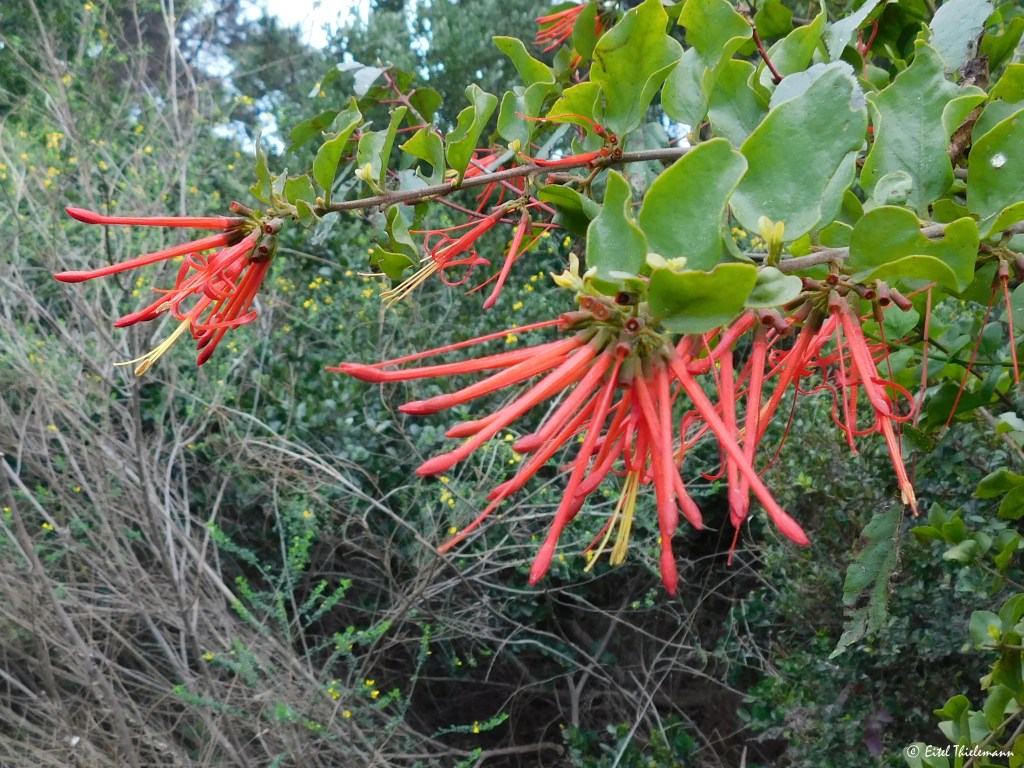
Quintral Mistletoe – https://www.inaturalist.org/observations/173326890
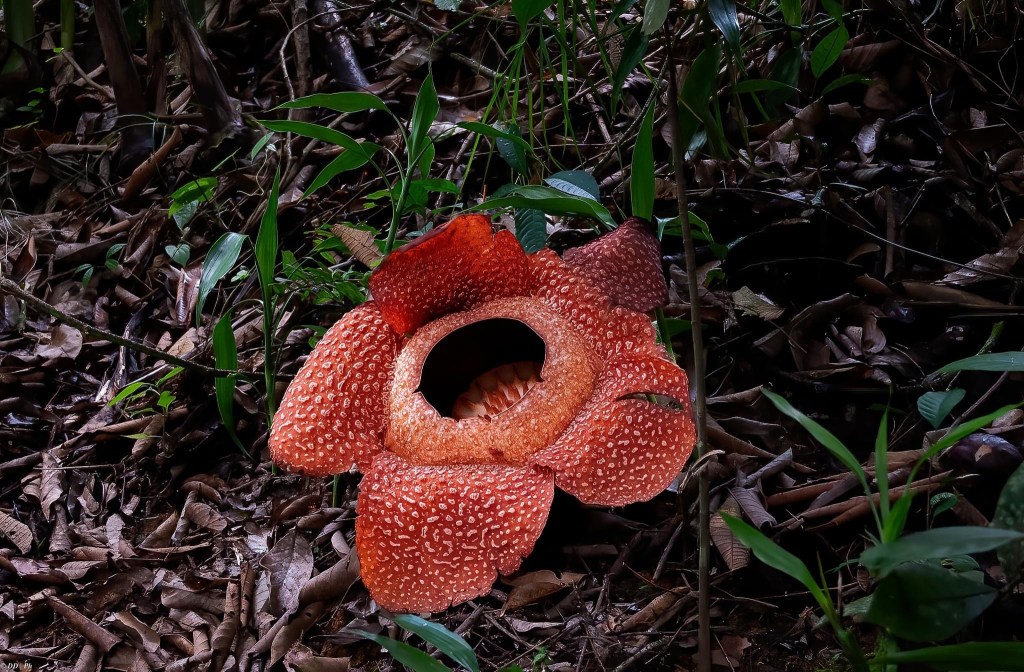
Rafflesia, aka the corpse flower – the largest flower in the world, is a parasitic plant:
Credits
The following music was used for this media project:
Music: Spellbound by Brian Holtz Music
License (CC BY 4.0): https://filmmusic.io/standard-license
Artist website: https://brianholtzmusic.com
Transcript (click to view)
Michael Hawk owns copyright in and to all content in transcripts.
You are welcome to share the below transcript (up to 500 words but not more) in media articles (e.g., The New York Times, LA Times, The Guardian), on your personal website, in a non-commercial article or blog post (e.g., Medium), and/or on a personal social media account for non-commercial purposes, provided that you include attribution to “Nature’s Archive Podcast” and link back to the naturesarchive.com URL.
Transcript creation is automated and subject to errors. No warranty of accuracy is implied or provided.
[00:00:00] Michael Hawk: Today’s episode is about one of the coolest plants I can think of, both figuratively and literally. Now, stick with me for a moment. When you think of a parasite, what comes to mind? Maybe mosquitoes, ticks, tapeworms, probably nothing you want to invite into your house or onto your property, but there are parasites that are super beneficial to ecosystems.
The parasite I’m speaking of is also the cool plant I alluded to earlier. Well, it’s actually a large category of parasitic plants. In fact, they’ve separately evolved on five different occasions. So what are they? Well, missile toes, of course. Dr. David Watson joins us all the way from Australia to talk about these spectacular plants.
Today you’ll learn why missile toes are beloved by birds.
Today you’ll learn why missile toes are beloved by birds. Provide food, eh, [00:01:00] today you’ll learn why missile toes are beloved by birds. How they provide food for many other animals are key to nutrient cycling and why they are literally cool plants. There are even missile toes that grow on get this other missile toes.
So get ready for an incredible discussion about missile toes with Dr. David Watson.
Dr. Watson, thank you so much for joining me today.
[00:01:27] Dr. Dave Watson: it’s my pleasure.
[00:01:28] Michael Hawk: I think it’s gonna be, as is often the case for me is I get to pick the guests that I have on this podcast. I’m always excited, but I’m especially excited today because I’ve been thinking about mistletoes a lot here in I’d say recent months, maybe even years.
And I admire them, but I’ve never really had a chance to investigate them beyond the superficial. So here’s my chance and hopefully the audience will enjoy the discussion that comes along with it.
[00:01:53] Dr. Dave Watson: Excellent. Let’s go.
[00:01:55] Michael Hawk: And you’re also my first guest from Australia.
[00:01:59] Dr. Dave Watson: [00:02:00] well, we’ve, we’re gonna have to correct that imbalance because we’ve got it all going on.
[00:02:04] Michael Hawk: I have seen that. And I think it’s the time zone that can be a little bit of a challenge.
[00:02:10] Dr. Dave Watson: I studied in your fair land. I’ve spent, I lived in this, in the US for five years, so it is doable.
[00:02:15] Michael Hawk: Yep. It certainly is. And I will say that I have had, a couple of New Zealand guests. So if I can do New Zealand, I can, you know, another hour or two time zone difference. It’s not that big a
difference. Alright. So, I already gave away. We’re gonna be talking about mistletoes, but maybe we can step back a little bit at how did you find yourself in this field of parasitic plants and mistletoe in particular?
[00:02:42] Dr. Dave Watson: So unlike many researchers, it, I, the revelation didn’t really happen during my PhD. It was before and after. So I first saw, I’m a city boy, originally grew up in Melbourne and I’d seen mistletoes in, in trees, street trees, like introduced trees. And I’d ask my parents what they were and they said, oh, that’s mistletoe.
It’s [00:03:00] like, okay. And that’s where the inquiry ended. But then during my honors research, which is, you don’t really have it in the us but it’s like a, it’s like a compressed master’s. It’s the first research degree that you do straight out of your undergrad. And for my honors research, I was looking at the effects of habitat fragmentation on woodland birds in Southern Australia.
And in some of my sites there were mistletoes. And I noticed that those sites were the ones that had all the cool birds. And I filed that away. I read a little paper about it. And then that was that. Then for my PhD, I was working on all sorts of other things, habitat fragmentation, been in ancient systems, in cloud forests and in Central and South America.
And so going to conferences and all the people I was talking to were in this fragmentation space. And they were paranoid, they were protective. They were territorial. They were not very collaborative people. And I just assumed that’s the way science is, that’s the way scientists are. I can play this game.
But then as my PhD was finishing. I was looking to do something with mistletoe stuff. ’cause [00:04:00] in my work in Mexico, I found the same thing. Any mistletoe you find there’s cool stuff going on. There’s hummingbirds, there’s EIAs, there’s tans. So I was gonna write a big review paper about this and I approached an editor and said, look, I’m thinking about doing this.
What do you think? And they said yeah, I think we think that’s worthy. Go for it. And so I reached out to a few researchers and said, look, I’m doing this review. I read your paper about some such and such. And they were always responsive, always friendly. Here’s 10 years of data, go for it. I heard you’re doing a review.
it’s like, wow, what generous, collaborative. Open-minded people. And so, as a contrast to the world I was raised in terms of my core business as a PhD student, as a, as an early career researcher, I realized that these were my kind of people. And then once you become known for something, once you start doing something enough and you, I had a big review paper then opportunities just found their way to me.
it’s a fun thing because it’s a parasite, but it’s a parasite that has positive effects. And so that’s a bit of a. A lot of people have a bit of a double take when they [00:05:00] hear that. And so it’s actually quite straightforward to explain something in a grant proposal or to potential funders. It’s like, huh, that’s pretty freaky that you really need to work that one out.
So it’s partly ’cause it’s weird and a bit counterintuitive to people, but primarily it’s because of the two things, the fundamental fascination I have with natural history and the fact that there’s all sorts of things going on around mistletoes. And people who study mistletoes, their foresters, their mammal, their ologists their pathologists, their physiologists, they’re climate change people.
They come from every walk of life in the life sciences. And they’re all connected by these freaky little plants. And so we are generous. I think just we are necessarily generous because we know that there’s so much we don’t know. And that by collaborating is how we can move forward.
[00:05:48] Michael Hawk: I find that kind of interesting, and I don’t have the proper metaphor. I don’t, I think, but what you found in this field of mistletoe research, is there a name for it? Missile tonology,
[00:05:58] Dr. Dave Watson: Lo there is, it’s called [00:06:00] Loranthology , but it’s a very obscure word that I think only five people use.
[00:06:04] Michael Hawk: Okay. In any event that the people in that field are behaving the opposite of a parasite, they’re free, they’re share sharing
freely with you.
[00:06:14] Dr. Dave Watson: Indeed.
[00:06:17] Michael Hawk: you’re exactly right. And that’s why I wanted to, I have this topic or at least investigate this topic because I think when the average person the person outside of the field of natural history hears parasite, they think of things like tapeworms or maybe mosquitoes or, something like
that.
And it’s kind of like, eh, I don’t, I don’t
like that.
[00:06:37] Dr. Dave Watson: right. A problem that needs fixing. Yes.
[00:06:39] Michael Hawk: Yes. so you started to go down this path already, maybe you can tell me a little bit about what is a parasite and how this concept applies to plants. ’cause that’s ultimately what a mistletoe is.
[00:06:50] Dr. Dave Watson: Sure. So it’s. As with all biology when you first start learning it, it’s lots of black and white. It’s, there’s plants and animals. And then the more you learn, the more you [00:07:00] realize that, oh, it’s complicated. There’s lichens and they’re not really plants or animals that it’s, oh, it’s complicated.
So the parasite term. Is a catchall for a way of being an organism that takes from other organisms, but without necessarily killing them. So there’s lots of insects, lots of wasps, all sorts of weird little wasps that lay their eggs on caterpillars, on all sorts of things.
And those little developing larvae, eat that animal and consume it completely and kill it. So that’s not paras. Tho those aren’t parasites. That’s another term. Parasitoids. But parasites it’s a generic term. There’s parasitic fungi, there’s parasitic algae, there’s parasitic plants, there’s parasitic animals, there’s all sorts of crazy parasites.
But so they, it’s non-destructive. Consumption is the key to their, to what makes them tick.
[00:07:46] Michael Hawk: So to clarify ’cause I was thinking a little bit about this. I had a guest a couple years ago and we talked a lot about parasitoid wasps.
[00:07:54] Dr. Dave Watson: Nice.
[00:07:55] Michael Hawk: expert. Expert. And so is a parasitoid, a subset [00:08:00] of parasite, then that’s just one that kills the host.
[00:08:02] Dr. Dave Watson: Effectively, yes.
[00:08:03] Michael Hawk: And I imagine there’s gray areas in between
where you might have something that’s normally Yeah, there always is.
So that you could have parasites that maybe accidentally kill their host
[00:08:12] Dr. Dave Watson: Yeah, and a lot of it is condition dependent. So even the parasites you open with, those nasty, worms and things, most of those, it’s not in their interests to have a negative effect on their host. They just want to just creep in under the radar, do their thing, get a little goodness, and then go off and complete their life cycle.
And so my wife actually worked on the effects of seabird of parasites and seabirds and found that ticks and lys and all those things you find on, on, on young seabirds in these really high density colonies they only really have a negative effect on growth rate. If conditions are poor, if there’s not much food around and those chicks are already struggling, that’s when that added cost can really start to have a detrimental effect.
But otherwise they’re just along for the ride. And the losses you’re talking about are trivial for a large organism. So most of what we think about, so parasites [00:09:00] generally, I. Quite benign and they have a huge range of positive effects occasionally on, on the individual in terms of immune system and priming and all the rest of it.
But at the larger scale, at food web scales yeah, they’re the glue that holds together complicated food webs because they don’t kill and yet they, they can transfer energy between things quite some, quite readily.
[00:09:20] Michael Hawk: Not to get too far off track, but coincidentally this week I was listening to a researcher who is looking at human immune systems and they were talking about some studies that showed that people who do not have parasites, that have grown in very clean conditions.
Are more likely to have autoimmune problems later in life, which is really interesting.
[00:09:42] Dr. Dave Watson: a whole thing, the allergy cascade. So we’ve known little bits of this for ages that people who grow up in a house with pets don’t get asthma, don’t get hay fever as much. People who grow up on farms are far less likely to have food allergies. And it’s been tracked down to, yeah, particular nematodes.
Like roundworms you get when you’re a kid, [00:10:00] especially if you’re running around outside eating dirt, whatever. Then your immune system is primed. It’s like, oh, that’s a low level infection. I can get rid of this. That’s a foreign body. I can do this. But if you don’t have that if you’ve got those sort of he helicopter parents that, hover around you and have an ultra clean environment with no little nasties, then the first peanut, your body meets.
It’s like, oh, what’s this? And that’s when you can start to get all these nasties.
[00:10:25] Michael Hawk: I’m probably jumping ahead a little bit now, so we’re talking about people, but are there similar properties that you see then in, in plants? Like, so I’m, we’re talking mistletoes here and mistletoes grow on other plants. So do you see some sort of immune response that’s positive?
[00:10:40] Dr. Dave Watson: Yeah, so this is, we, this is great. We’ve just gone straight to the gray areas. So strictly speaking, plants don’t have immune systems. I. So they can’t really mount a defense the way an organism does in terms of white blood cells or whatever, but they most certainly are not passive bystanders.
There’s all sorts of things that plants can do if they feel themselves being [00:11:00] challenged by something. And there’s some work in Africa showing that an acacia that with a mistletoe seed that’s latched onto it, trying to get in. It will push out, it’ll push out a plug of resin.
It’s like, no, you don’t, you are not getting a free lunch today. And it looks like a mistletoes are one of the reasons why eucalypts have such a crazy diversity of bark 101 different ways of shedding their bark. That’s like a regular way of just getting rid of all those little freeloaders before they start
[00:11:26] Michael Hawk: Mm. Yeah, that, that makes sense. So, I’ll back myself up a little bit outta the gray area and perhaps we can continue to explore the spectrums of. Parasitism I, as I understand it, you can have hemi parasites and there’s probably a whole array there.
[00:11:43] Dr. Dave Watson: That’s right. So, strictly speaking mistletoes are hemi parasites. So the reason that it’s half, that’s the Greek word for half. So, because they’re green plants. They’re green plants. They photosynthesize, they do the whole thing that regular plants do. They convert light they use light as a [00:12:00] catalyst to, to make carbohydrates, but they don’t have a root system.
So instead they rely on the plant that they’re attached to. And they, they basically hook into the plumbing of that plant and take the fluids circulating in that plant. Not just the water itself, but anything dissolved or dissolved in there. And so, so that, that makes them hemi parasites.
And an equivalent that your listeners might know about is strangler figs. So there are a plant that grows on other plants for a while and then attaches to the ground. So they’re a hemi epi phyte. They start as an epiphyte, but then they become a regular plant with their roots in the soil.
So that Hemi, in a few terms in in biology.
[00:12:37] Michael Hawk: Interesting. I didn’t know about Hemi Epiphytes. So yeah.
That’s a, maybe a future topic here.
[00:12:42] Dr. Dave Watson: Oh, strangler figs. Very cool.
[00:12:45] Michael Hawk: in this sort of painting the picture of the boundaries of parasitic plants, what are some of the more surprising or extreme examples that you’ve encountered?
[00:12:56] Dr. Dave Watson: Well, so firstly, within mistletoes, and then more [00:13:00] broadly, so within mistletoes, there are some mistletoes that break the rules. There are some mistletoes that have no, no photosynthetic tissues at all, no leaves. There’s this amazing mistletoe. The local name for it is Quintral. It’s it’s in the genus Tristerix.
And it’s, it lives on columnar cacti in Chile. And if you know your columnar cacti, you know that like Saguaro, you know that they’re a big upright plant with trumpet shaped white flowers at the very top of the, of at the high point of the plant. This mistletoe lives completely inside the cactus, and when it wants to flower, it just punches out these buds through the middle of the of the plant, halfway along, they’re bright red flowers.
It’s crazy. And then they get pollinated, they get turned into fruit. So, so quintral or oryx is an outrageous plant. And there’s an equivalent one in Africa that that parize euphorbes, which are the African equivalent of large cacti. And that’s in the genus viscom, the same mistletoe that’s in Europe.
The quintessential, [00:14:00] Christmas mistletoe again, leafless Hollow, parasitic lives entirely in the dark. Inside its host it’s mental. But within the broader parasitic plant world there’s many. Weird and wonderful ways of being a plant. And one that your listeners might have come across is Rafflesia the largest flower in the world.
So you might’ve seen pictures of these as orange and blobby with these big fleshy petals that unfold from a bud, the size of a basketball. And they’re parasites. They’ve got no leaves. They live inside vines or lianas. So a woody vine is called a Liana. And rafia, they’re these freaky things that live inside Woody vines.
You never even know they’re there. And then when the planetary alignment is just right, you get a bud popping out the side that gets bigger and bigger and bigger. And then overnight it unfurls craziness.
[00:14:50] Michael Hawk: Wow. There’s so many things I’m gonna have to look
up after we’re done talking
[00:14:55] Dr. Dave Watson: So they’re Philippines. Philippines is the center of their diversity, but they get throughout Southeast Asia into [00:15:00] Borneo sack, that kind of neighborhood.
[00:15:02] Michael Hawk: You mentioned the hotspot for this species is in, Philippines, in that area. Do you find a higher density of mistletoes back to mistletoes specifically in any part of the world or on any, say genus or family of plants?
[00:15:18] Dr. Dave Watson: Great question. So the second part is just being looked at Now I’ve got colleagues who are looking at that and there appear to be some groups of plants that seem more, more likely to host mistletoes than others. And they’ve diversified over time, but that we’re still working on that stuff. In terms of overall patterns by geographic patterns, it’s pretty similar to other other groups of organisms around the world.
Tropical forests. Tropical forests are where mistletoes go. Bananas. We’re still finding new ones. I was in, in in Columbia, oh, a few years ago and found out mistletoe with like 17 centimeter long flowers. Wow. That’s distinctive. Took some photos, took some measurements, checked off to my colleagues.
They’re like, yeah, that’s a new one. We don’t know about that. It’s like, ah, okay, cool. Added to the list. So there’s still new ones being [00:16:00] described. There’s at least two undescribed ones we know of in Australia. But yeah, worldwide. Tropical rainforests, especially in South America, are centers of diversity.
But I guess the flip side of that is that in those dark, very complicated systems where there’s like 5, 6, 7 layers of leaf bearing canopy before you get to the sky. You don’t see mistletoes, you’re walking along in the forest understory. The only reason, mistletoes are around is ’cause the flowers are shed on the bottom.
So they’re not a very prominent part of the rainforest from a human’s point of view. Whereas in desert systems diversity isn’t very high. There’s only one or two species in many desert areas you might visit, but they are much more prominent, much more obvious component of those ecosystems.
And that’s partly to do with how we perceive the system. But just from a biomass point of view they’re much more important in our its own systems.
[00:16:50] Michael Hawk: Oh, interesting. So it’s a higher percentage of the overall biomass in those systems.
[00:16:54] Dr. Dave Watson: Exactly.
[00:16:55] Michael Hawk: So in another coincidence and maybe it’s not really a coincidence because as I said, [00:17:00] mistletoe has been on my mind. I was looking at some iNaturalist observations and somebody here in my neck of the woods in the Bay Area reported a mistletoe on a willow, a salix species. And I had a feeling for which species of mistletoe it was.
Long story short, someone who really knows their stuff came along and helped identify it. And in the course of, the online discussion that we had, he, he said that the whole history of mistletoe evolution is super complex and it leads to a lot of difficulty in using, the physical attributes, the morphology of the mistletoes to identify them.
So, long story short, with that background, what clues, what insights do you have about how mistletoes came? I keep saying mistletoes. I think it’s actually mistletoe. that, is that
[00:17:54] Dr. Dave Watson: more, it’s like fish more than one species. mistletoes. mistletoes is a perfectly good word.
[00:17:58] Michael Hawk: Okay. So, how [00:18:00] did mistletoes appear on the scene?
[00:18:03] Dr. Dave Watson: All right, well, so firstly just a bit of a few facts and then we’ll get into the history. So, mistletoes aren’t one thing. They’re a way of being a plant. There, there’s three things that they do that makes them a mistletoe. So they’re parasitic, hemi parasitic, we talked about that already.
They attach to their hosts above ground. So they’re aerial and hemi parasitic. they’re woody, so they’ve got woody tissues. Now you can think of all sorts of other plants that are two of those three, like dodder. dodder is an interesting one. It’s an aerial hemi parasite, but it’s not woody.
And then there’s all those freaky little things that live in forest underst stories that attach to the roots, and they’re not mistletoes. So aerial woody hemi parasites, those three attributes they have evolved independently on five different occasions. And they’re not each other’s closest relatives.
They always came from root, parasitic shrubs, woody shrubs. And three of those [00:19:00] lineages are pretty minor, small groups of of plants in tropical forests, either in Asia or in Latin America. But there’s two families that have gone bananas in terms of diversification. And they account for the vast majority of mistletoes worldwide.
So, those two families are what most people think about when they think about mistletoes. And when you look at them now, they’re a very distinctive group of plants that have evolved independently and many of their their traits are convergent, but they popped up in the fossil record fully formed.
And so we don’t really know much about, about the early history of that, but we get a few clues from looking at the way different mistletoes do their thing today. And recently I pieced together what little bits we know that they used to do and what they still can do in today’s forests. And then looked at the history of when, of, when these lineages came to be.
mistletoes today depend on birds to move their sticky seeds around. If a mistletoe seed falls on the ground, nothing happens, it might [00:20:00] sprout, but it needs to be on the branch of a tree, a living tree of a compatible species and then it can make a living. But if you look at the history of it the switch from root, parasitic shrub in the forest understory to canopy, parasitic plant, a mistletoe up above, above the ground that predates birds.
That happened ages ago. And the major transitions occurred around the 30, 30 million year ago Mark. there were birds around, but not the kind of birds we see today that move mistletoes around it. But it was right before songbirds became a thing. And so it looks like a. On two occasions at least, possibly four.
These root parasitic shrubs were moved into the canopy by mammals. In Africa, it’s a group of mammals associated with the little dwarf lemurs and bush babies that you can find nocturnal critters in Africa and Madagascar, and then in Latin America a tiny little marsupial, the Monto del Monte the sole living representative of a whole [00:21:00] order that used to be widespread in Gondwana all the way across Antarctica when Antarctica was forested.
And those two dudes were the first agents, as far as we can tell, that took this root parasitic plant up into the canopy, either wiped off the seeds or defecated the seeds up there. And the seeds are like, Hey, look, we can actually do this. And that was right around the time when songbirds were emerging.
So I. Songbirds most definitely helped diversify mistletoes, but they weren’t the agents that first explained that switch from the root parasitic to the aerial parasitic. That was our great grandparents.
[00:21:36] Michael Hawk: Wow. And, talking about a seed falling on the ground, maybe it sprouts, but it can’t take hold. That takes me back to your earlier discussion about hemi parasitic and the fact that mistletoe can photosynthesize. So in, the lifecycle of a typical mistletoe, is the host plant just helping it through those [00:22:00] initial stages to get it to a size and maturity where it can produce its own nutrients or is that mistletoe continually using certain specific nutrients from the host plant throughout its life?
[00:22:11] Dr. Dave Watson: Good question. And it’s the second part. So it’s constantly taking water and whatever’s in the water. But in most parts of the world, think of mistletoes as water parasites. What they really need is water. The rest they can make themselves and before they’ve attached to the plumbing system of the tree they’ve got a green seed.
Their seed doesn’t have a seed coat, so it’s a photosynthetically active seed. So it needs to be deposited in quite a well lit area because it needs to photosynthesize even as an un sprouted seed to power that initial growth and that initial push into through the bark to make that connection with the with a, with the vascular tissue of the host.
[00:22:47] Michael Hawk: . Well, I’ve already learned so much, including how mistletoe is a label
Is, in my mind, I was thinking about trees, like we call things trees and we have a feel for what trees are, but they’re all vastly different from [00:23:00] each other. I. So, that’s what we’re looking at
here. So with all this variety, I’m assuming that mistletoes will play vastly different roles in the ecosystem as well.
So, can you tell me a little bit about what do they do beyond take from the host tree?
[00:23:16] Dr. Dave Watson: great. So they do a fair bit and they’ve been studied quite well. There’s a group of mistletoes that are quite diverse in North America. Mexico sneaking up into Canada, but especially in the Western us they’re called dwarf mistletoes. And they prioritize coniferous hosts, pine trees, fir trees, even some on Cyprus.
And they. They’re public enemy number one to commercial foresters because they take a beautiful Christmas tree with all the straight board feet and, whatever units of timber you want to use and turn it into this contorted structure that can never go through a saw mill. And so there’s been tens of millions of dollars of research done on mistletoes courtesy of the US Forest Service to try and find a weak link, a little [00:24:00] chink in the armor of this pernicious parasite.
So the dwarf mistletoes of the US have been very well studied and by extension looking at their relatives in in Mexico. Australian mistletoehave been quite well studied in terms of their ecosystem impacts. And just now we’re starting to see some really good work being done in many parts of Africa and many parts of Latin America, quite often by homegrown researchers in those regions either studying them as, as entities in their own right and learning out new stories.
Like there’s a, the first bat pollinated mistletoe was just described in Brazil a few years ago. But also seeking to test these ideas that have come from other systems and see if it applies in a novel ecosystem. But surprisingly, not just among mistletoes, but in parasitic plants more broadly the few really detailed ecological studies that have looked at these plants and how they fit into their world.
Remarkably congruent in their findings. And it’s it’s the exact opposite of the effect that it has on the host. So we spoke at the start about how parasites make a living [00:25:00] by taking from others. That’s what makes the mistletoe. And so obviously there’s been some studies showing that trees and mistletoes have slower growth rates.
They may be more susceptible to drought, they may be more susceptible to, to, to dropping branches prematurely, surprisingly, very little. Evidence, direct evidence for mistletoes affecting mortality. And every study that’s looked at that has found it’s often indirect, like a tree with mistletoe might get more beetle damage, and that’s, that pushes it over the edge.
Or a tree with mistletoe might get more fungi coming in through those connections. And that then leads to, to, a fatal disease. But in terms of the ecology of not just the tree and the things on the tree, but the neighborhood around that tree, the stand, the woodland, the forest.
There’s been some, a few studies done on that in Europe and North America. My own work in Australia. And it, it shows that sure, they take from their individual infected host, but then they give and they give really freely. They’re one of few groups of [00:26:00] plants that relies on animals to both pollinate their flowers and disperse their seeds.
So they bribe freely with carbohydrate rich nectar and amino acid, rich fruit. With a fruit, it’s quite often for a specialist consumer ’cause it’s a sticky thing. It’s quite hard to process. And it’s very reliable. So you have all these different birds around the world that have worked out.
If you can find mistletoe you will never go hungry again.
[00:26:25] Michael Hawk: On a, sorry interrupt. I recall on a trip I had to Australia, actually, there’s actually a bird called a mistletoe
[00:26:31] Dr. Dave Watson: The greatest bird in the
world.
So, so there’s those partnerships with pollinators and with seed disperses, I. But also we see the way that the parasitic plants draw water from their ho, from their host, which is really important. If they can’t do that, then they die, within minutes. They don’t do it actively, they do it passively by retaining very high concentrations of nutrients in their stems and leaves.
So they’re full of [00:27:00] salts, of goodies. And they use that concentration to pull to, to passively pull water from the host as the water tries to equilibrate across that that gradient between the two plants it’s effectively like osmosis. And then when the plant is done with its leaves they churn through their leaves quite quickly.
They drop their leaves with all of those nutrients still in them. So. Parasitic plant litter, leaf litter and mistletoe leaf litter in particular can have 17, 20 times the concentration of potassium as the host. Many metals that are quite rare in soils and, herbivores have to work really hard to find to get a complete diet.
It’s just loaded in mistletoes. And so that’s one of the reasons it’s such popular food. So many browsing herbivores will go out of their way to eat mistletoe. Not really as a main meal, but just as a, like, almost like a vitamin just to get all the bits and pieces they’re missing. All the great apes go out of their way to eat mistletoes.
It’s one of those things. But then they drop it as a steady stream of enriched [00:28:00] litter and that. That’s like crack for a forest. It just goes bananas. All the microbes and the fungi and the soil that are limited by particular nutrients suddenly have unlimited nutrients. So decomposition rates go sky high carbon assimilation rates increase the porosity of the soil, increases invertebrates, move in, mopping up all these tasty fungi and then insectivores.
Follow in, in hot pursuit of the insects. So worldwide we see in areas with more mistletoes, like two comparable forests. One’s got a few mistletoes, the other one doesn’t. There’ll be more species of animal in that forest. Some of it is with a mistletoes. Some of it will be because those connections ’cause they eat mistletoefruit or because they need mistletoe nectar.
But most of it, it’s through that brown fruit web from the lizard to the insects to the insect of wares. And insect of wars are one of the most dominant groups in most forest communities. , so yeah, they might take from an individual host, but they give back to the [00:29:00] entire ecosystem. And if you look at where those nutrient inputs occur, it’s within the feeding zone of their host.
So the host gets those nutrients back, it just rents them out to the rest of the ecosystem for a little while.
[00:29:12] Michael Hawk: Yeah that’s really interesting to think about because I am thinking about adaptations of, say, desert plants where nutrients and water and. Soils tend to be very porous and low nutrient. So a lot of times they have adaptations that allow them to retain their leaf drop and cycle that back into the soil.
So, oh yeah. My mind is going wild with all the different hypotheses that that one could come up
[00:29:36] Dr. Dave Watson: Yeah. And all of it comes down to the fact that they’re parasites. So different rules apply. They didn’t work hard to get all those good things, and so they’re just gonna drop them because they know there’s more coming down the pipe.
[00:29:48] Michael Hawk: that process apparently, as you said, doesn’t hurt the tree enough to kill it. So that recycling is perhaps part of that process that keeps the tree going with better [00:30:00] soils or more um, spongy, soils that can hold water.
[00:30:02] Dr. Dave Watson: Exactly. And some Spanish colleagues found that, not just that, but the birds that eat mistletoe fruit eat other fruit and they bring in those seeds as well. So if there’s a, if there’s a tree with a few mistletoes in it, you’re gonna get more fruit bearing shrubs in the understory in a few years.
[00:30:17] Michael Hawk: Yeah. So I mentioned the mistletoe bird, and you were talking about seeing a lot of bird diversity near mistletoes. Beyond eating the fruit and then dispersing the seeds, are those birds eating the leaves in situ or are there other things going on too?
[00:30:33] Dr. Dave Watson: sure. So leaf eating is quite rare in birds. There’s only a handful of birds that do it. There are a few birds that eat mistletoe leaves. But none in a really, so there’s turacos in Equatorial Africa. There’s the plant cutters in Patagonia. There’s a few weirdos that do it. But from a bird point of view, nectar and fruit are the two big ones. But then nesting there’s a, an a startling variety of birds preferentially nest inside [00:31:00] mistletoe clumps. So if you think of your, a cartoon tree, just a generic tree, it’s pretty open. It’s got a crisscross network of branches in there. And then a a canopy of leaves.
And different birds have worked out ways of affixing a nest to that. They might hang it from a branch. They might put it inside a fork. They might stitch some leaves together. But mistletoes are like a compressed tree. They’re more branched and the leaves are semi succulent.
They’ve got a very high amount of water in them. So in a dry area or in a windy area, in a very hot area it’s measurably cooler inside a mistletoe clump than inside the rest of the tree. And many birds in all parts of the world will seek out mistletoes as a structure within which to place their nest and a microclimate within which to to raise a family.
So, and you see that worldwide, like Cooper Hawks, a, a bird that’ll be in your backyard. They almost every Cooper’s Hawk Nest described is in a mistletoe.
[00:31:54] Michael Hawk: I did not know that. And I do see them a Excellent. Well, now you know where they’ve come from.
it’s a [00:32:00] good indicator. Yes. The thing that has always been interesting to me about birds that nest in mistletoe is that. It is a hotspot for a lot of activity, a lot of other birds. So I’m wondering, how do you reconcile a bird choosing to nest somewhere where there’s like all this extra attention from other bird species coming in and maybe other mammal species as well coming in?
[00:32:23] Dr. Dave Watson: Yeah, so that we tried to capture that. It was the we’ve looked at that specifically in a few cases. And I think the title of one of our papers were cafeterias are a lousy place to raise a family. Because of just the, what you’re pointing out, typically it’s seasonality is your friend.
So that when there’s peak fruiting or peak flower availability that’s not during the breeding season of these birds. So it’s not as if they’re having to bother. But a lot of the missiles we’re talking about are quite large and the fruit and the flowers are born on the ends of the stems.
Whereas the nests are quite often on the connection, on the house story between the mistletoe and the host or right within that network. And that might be a meter away from where [00:33:00] things are coming and going. So I think you can have, I think you can have both without too much troubles.
But certainly some predators will keen on that. And so there’s counts of African lizards, of various birds of prey. Hiding in and around mistletoe clumps waiting for birds to arrive because they know it’s just a, it’s a center of activity.
[00:33:18] Michael Hawk: So interesting and the phenology aspect of it. I know you were telling me a little bit before we started recording that there’s some very, surprising, maybe not surprising, but interesting side effects of the phenology of these plants as well. So maybe you can tell me
[00:33:33] Dr. Dave Watson: Yeah. So there’s, and it’s, so phenology is like the timing of things in nature. So the seasonality of organisms of plants and animals and most areas in the world will have their sort of flowering seasons. So you go to a particular area, it’ll all be a bit drab. And then all the flowers will appear.
And that’s universally to do with availability of water. From a plant’s point of view flowering is a costly exercise. It needs extra soil [00:34:00] moisture, it needs extra nutrients not just to make the flower, but to put in nectar to put in whatever attractants it’s using to bring pollinators into, to, to pollinate the flower as parasites, mistletoes have access to high amounts of water year round.
And there’s this fascinating pattern that you see that they flower when nothing else is flowering in their area. And that’s intentional because by, by timing their flowering during a period of regional scarcity they’re maximizing the likelihood of pollinators to visit and therefore successful pollination.
So we see this the world over. So right now, where I’m in Australia, it’s summer February. It’s getting towards the end of summer. It’s very hot, it’s very dry, and the only flowers around are mistletoes. And another thing that you see that mistletoes are quite weird about is they’ve got this phenology will differ between individual plants.
So if you are looking for a mistletoe flower you’re in a, in a place where there’s plenty of them, you look at three or four plants, you don’t find any flowers, [00:35:00] keep looking because the many plants will be on a slightly different tempo. And so even though peak flowering of that plant might be in, let’s say February, there’ll be a few plants that have stuff going on in August and a few that have still got a few flowers lingering into June.
So they can, they’ve got very long tails of that flowering distribution.
[00:35:21] Michael Hawk: Is that just a function of genetic diversity or is it about the location that these plants are, or any insights into that?
[00:35:29] Dr. Dave Watson: Yeah there’s little tempting nuggets of research that have looked at this, but nothing really thoroughly comprehensive to nail that question. It looks to be genetic. It looks like early flowers came from early flowering stock. There might be a component of host identity in there as well, that if there’s hosts that have a quite a high seasonality like deciduous hosts certainly, where they’re not doing much for a while and then suddenly they’re doing a whole lot.
mistletoes may be piggybacking on that dynamic. More than that, dunno. And we [00:36:00] just with colleagues in Chile recently got the good news. We got a grant funded to look at seasonality and mistletoes in Patagonia that are already showing some pretty clear phenology changes along an altitudinal gradient.
So let’s chat again in five years and I’ll have a more comprehensive answer to your question.
[00:36:16] Michael Hawk: All right, I’ll add it to my
calendar and. It’ll happen.
[00:36:20] Dr. Dave Watson: All right.
[00:36:21] Michael Hawk: that actually reminds me a little bit too of a question that sort of just passed right through my brain earlier, and that’s what are the, as I understand it, a lot of these mistletoes are specialists. They, you talked about the dwarf mistletoes tend to be on some of these confers plants.
What are the evolutionary pressures that sort of drive this specialization that occurs?
[00:36:44] Dr. Dave Watson: Sure. So most mistletoes are specialists to a degree, and that’s at the genus level. There’s very few mistletoes that are only found on one particular species of host. There are a few, but that’s the exception rather than the rule. The [00:37:00] rule is you’ll get mistletoes that go on oaks. You’ll get mistletoes that go on junipers, you’ll get mistletoes that go on pines, but within pines, they’re not that fussy.
And then you can get them on exotics as well. So there’s plenty of examples of mistletoes that will be just as happy growing on trees that aren’t from their area at all, that groaners or mentals or street trees or whatever. In terms of. What’s driving that? It’s probably a couple of things.
It’s actually quite tricky to from a mechanical point of view to foil the defenses of a plant to get in there, attach yourself to its tissues, to its vascular bundles. And they vary a fair bit between different kinds of plants. So once you cracked the code, then it’s quite easy for you to continue to do that.
So, so one of the reasons is just simple morphology in that respect. The other one is who’s moving the seeds around. And quite often there’s a thing called a search image, like when you are going to the supermarket. You’re just not just going randomly. You’re going in there to get the milk and you haven’t been in the supermarket before, but you’re pretty sure you know where to find milk in this area.
And so it’s the same thing [00:38:00] with birds. Birds know that in these kinds of trees, I sometimes find a ball of foliage with tasty treats in there. So I’m just flown into this area. I’m gonna gravitate towards those trees looking for that particular distinctive thing in the canopy, and that can reinforce those patterns of genus level specialization that we see.
[00:38:19] Michael Hawk: I like the grocery store analogy. For a search image. I’m gonna use that. ’cause I talk about search image a lot when I lead hikes and do things like that. I am definitely very search image driven to the extent that I can go to the grocery store, look for a product, and if they changed their packaging, I could be staring.
Yeah. I could be looking right at it and I don’t
[00:38:39] Dr. Dave Watson: it’s, that’s like a librarian’s nightmare. It’s like, that’s why you never miss misfile a book ’cause it’s effectively lost it. It has to be there
[00:38:47] Michael Hawk: Right. So are there getting a little like, recursive or inception oriented here? Are there parasites of parasites? Like are there parasites of mistletoe in particular?
[00:38:57] Dr. Dave Watson: There are indeed, there are epi parasites that [00:39:00] parasitize other mistletoes. So yes, there’s a few mistletoes that do this. Some, that’s all they do. And they’re only mistletoe, mistletoes. There’s a few in Australia that are either on mistletoes or on root parasitic shrubs like sandalwood.
So yes, it’s a thing. It’s most definitely a thing. Written several papers about this stuff. It’s probably under reported. But the coolest thing is that it’s probably far more common than we realize ’cause it happens within species. So if you are looking at a big ball of mistletoe chances are that’s more than one genetic individual of plant.
Chances are it was an existing missile. So of, name your species, and a bird came to visit it. When it had ripe fruit and when it has ripe fruit, other plants in the district probably have ripe fruit too, and it might regurgitate or defecate a seed on that mistletoe. That seed will sprout, that seed will easily connect with the vascular tissue of itself and just merge in like borg, like with the whole fricking thing.
And [00:40:00] the only way you can tell is during flowering season, one branch will not be flowering, or one branch will be flowering at a slightly different phenology. So yeah it can call into question what an individual is.
[00:40:13] Michael Hawk: Oh my gosh, I’m gonna be looking for that. We have a lot of mistletoe in our area here, especially on oak trees, but we have we have some of those dwarf mistletoe well on our what Foothill pines get ’em a lot in the, in our area and yeah. Yeah, whole new level
[00:40:27] Dr. Dave Watson: Yeah, it’s like I said, once, once you’re infected, man, look out.
[00:40:32] Michael Hawk: And I also learned recently we were out with a few friends looking for a specific early season butterfly, because here it’s, it, well it’s March now and some. Butterflies start flying in February, even January in our area. We were lucky that way with the climate that we have. And there’s one called a great purple hair streak that I learned that actually uses mistletoe as a host plant.
So do you find like some other things I’m interested in, just to throw it all [00:41:00] out there to you are gall makers and leaf miners. So I’m wondering what you found in that realm.
[00:41:09] Dr. Dave Watson: So butterflies, I’ll start with the good news. Yes, butterflies, especially Lycaenids and Pierids. So two of the big families. There’s mistletoe specialists, the world over and, again it’s because it’s a very predictable, once you’ve worked it out and you’ve found out how to find it, it’s a very predictable source of high quality leaves with high moisture content.
And they’re not chemically defended again, because mistletoes or parasites, there’s no, no mistletoes have spikes or thorns or nasty chemicals. They’re just there, they’re just ripe for the plucking. So you see many groups of insects thrips, pysllids, even spiders. There’s a whole lot of mistletoe specialist fauna that we’re talking about.
And often they’re not a subset of the tree fauna. They’re completely unrelated and they’ve got links with things in the understory. So they’re just a different component of the canopy associated with that little ball of [00:42:00] foliage. So yeah, worldwide you will see all sorts of groovy butterflies that are either associated with mistletoe as a food plant, or have an association with an ant that uses the mistletoe as a food plant, and often they’ll be in the nest with them and have freaky little ant proof pads on there.
On their otherwise squishy bodies. Leaf miners and galls not so much. There’s, you do see some leaf miners in there. I dunno anything about them? I don’t think anybody studied them. We had a little look at at psyllids, these little sap eating insects that are like a miniature cicada that make a little shell out of extra carbohydrate or wax over their heads and described a bunch of new species.
It’s like, okay, someone else needs to uh, do their work before we can do our ecological work. And galls no, you don’t really see galls too often. That’s one of those funny things because you might think of mistletoe itself as almost a gall forming organism forms this sort of expressions on a tree.
But you don’t tend to see fasciation or galls or weirdness on mistletoes. They seem to be, [00:43:00] I dunno they’re too cluey for that.
[00:43:02] Michael Hawk: Yeah, they one thing that, that I’ve been asked before and I didn’t really have a great answer to is, there’s a type of fungus that can create these, sort of gall like witches brooms, like just these scraggly different growths on the tree. And they look a little bit like tiny mistletoe a way.
But totally unrelated.
Um.
[00:43:20] Dr. Dave Watson: right. Yeah. So it that process of sort of random growth is called fasion. And it’s like a gall. But when a gall is in leafy tissue as opposed to woody tissue, and you can see it in dandelions, you’ll occasionally see a dandelion just growing outta the ground instead of one long stem with a little yellow flower at the end.
It’ll be a long stem that turns club like with a whole row of flowers on it. And various mutagens can cause fasciation. It can be mites, it can be a virus it can be fungal pathogens, something mucking with the Mary stem, something mucking with the little the point at which things divide.
And you can see that and that’s, yeah, no mistletoe is related. It’s all that same plant just that’s forgotten how to grow properly.
[00:43:59] Michael Hawk: So with [00:44:00] that sort of distraction into the world of my special interests of galls and leaf miners what else comes to your mind when we think about the ecosystem impacts of mistletoes?
[00:44:11] Dr. Dave Watson: Yes there’s two things that are tickling my fancy at the moment. One is, one is climate change stuff and the other is history. And we’ve spoken a little bit about both, so. I mentioned that lots of things nest in mistletoes because they’re they’re a dense structure and they’re, they’ve got that high moisture content of their leaves.
There’s a bit more to it than that. And so we’ve done some work now showing that at the whole of tree scale a tree with mistletoe in it is measurably cooler than an otherwise similar tree. And there’s a reason for that. The stomata, those little holes in leaves where gas exchange occurs.
The way plants regulate water loss is there’s two little cells either side of the stomata called guard cells, and when there’s lots of water in the tree, they close and the stomata is closed up. mistletoes can’t close es their leaves are always open. They are always [00:45:00] bleeding moisture into the world and so on.
[00:45:02] Michael Hawk: That goes back to the sort of the osmosis comment.
Yeah.
[00:45:05] Dr. Dave Watson: they’re just always drawing and always releasing water. And so in very hot, very dry conditions, there can be a 10 degree difference of a mistletoe infected tree as opposed to a regular tree right next door because of that just dripping tap effect. And so if we’re thinking about street trees and cities, we’re very concerned about urban heat island effects.
Cities have lots of hard surfaces that, that store heat. And anything we can do to add green space to our cities we know helps. But adding mistletoes to street trees in our cities, I think is a next level strategy that I need to I need to, get on a global campaign to to make that happen.
[00:45:43] Michael Hawk: Is this something that, that could efficiently be done by people? Because I guess if a bird comes
along
[00:45:47] Dr. Dave Watson: we’ve, yeah, we’ve done it. We’ve done it. It can be done. I’ll send you the paper. And look, the other thing that, that, that really gets my flips, my pancakes is the, is how long has this bird [00:46:00] mistletoe dance been going on for? So I mentioned that mammals got the party started a long time ago.
But just recently I reviewed a lot of what we know about early bird diversification and early mistletoe diversification. And it looks like they tracked through the same places at the same time, certainly in Latin America. So when some of the main lineages came into Southern South America from the south, from Antarctica, as Gondwana was splitting up, it looks like mistletoes and birds basically hitched a ride on one another and leapfrogged right the way across the Americas.
And so working that out is gonna occupy my mind for the next year or so.
[00:46:39] Michael Hawk: The other maybe crazy, ill-informed thought that came to my mind is, here in California we have the coast redwood trees, which are just these immense trees and they can have ecosystems in the canopy where different plant matter accumulates, A bird comes along, it drops a seed, and you can have shrubs not parasitic shrubs, regular shrub just growing up in the canopy.
so that has me [00:47:00] wondering like, is this a ripe area for new mistletoe to emerge? Because, you have this kind of alchemy going on, way up there in the canopy.
[00:47:11] Dr. Dave Watson: Yeah, for sure. That’s where amazing things happen and there’s some very clever epi fight researchers that, that are looking at those sorts of things. And the way, regular plants grow in that system, they can grow roots outta places that they normally don’t grow roots from.
And you get crazy animal communities up in there as well. Tardigrades go bananas in coast. Redwood epithetic gardens,
[00:47:31] Michael Hawk: we’ve been talking a lot about mistletoe on trees. Do you ever see mistletoe, again, it’s a fuzzy definition, like what is a tree? But do you see mistletoe on other plants? Smaller plants?
[00:47:41] Dr. Dave Watson: Rarely. And there’s, I mentioned those two main groups of mistletoes that account for the vast majority of them. There’s the Loranthaceae, which is a southern derived Gondwana derived group. They’re the ones with the. The bright flowers, they’re often called showy mistletoes. And then there’s the Visceae, which is originally from Laurasia.
They’re smaller flowered. [00:48:00] And that’s the Christmas tree mistletoe that’s that we tend to think of. And the earliest branches of one of those families, the Loranthaceae, , their root parasitic mistletoes. So they were mistletoes before there were trees to infect. So we are talking 70 million years ago or so.
They popped out. So ancient beasts. And they’ll infect anything. So they’ll send out roots, almost a hundred meters in any direction. They’ll infect carrots in your vegetable garden. They’ll latch onto anything they can find. And there’s actually a real issue around Perth, where they grow that they’ll find cabling used for telecommunications, fiber optic cable. And they’ll the roots just assume it’s some strange route that they’ve never encountered before. Wrap around it and slice it in half. They’ve got a hydrostatic guillotine that can just cut through anything. And so you’re there having a chat with your friend.
And suddenly internet goes out mistletoe,
[00:48:52] Michael Hawk: I, that one really hits close to home because I spent many years working in the , telecommunications industry, and fiber cuts were [00:49:00] a big deal, and very often hard to locate. But I don’t ever remember having to locate a mistletoe induced fiber cut. Usually it was an animal or a root of a tree, or more likely an accident train derailment or, something like that dug into the earth.
So, wow. So you’ve peppered this conversation with a number of tidbits about the research in the papers that you’ve written. I’m curious if you have anything else you’d like to say there. Do you have any other uh, discoveries or research findings that you’d like to share or maybe something in progress that we can look forward to?
[00:49:33] Dr. Dave Watson: Sure. Yeah, there’s a lot of what I’ve spoken about was directly from work I’ve done or I’ve done in collaboration with colleagues in terms of where things are going. I hinted at this in the history bit. Yeah, so it looks like the group of, let me leave you with this.
The most diverse group of birds in the world got that way because of mistletoe. So the tyrant flycatchers and their allies is a group of just hundreds upon hundreds of [00:50:00] species. That’d be familiar to many of your listeners as King Birds and Peewees, all those distinctive fly catches you see in the us.
But then you go to South America and there’s 101 versions of them, and then there’s the tings and the mannequins and all their little friends. They rode the mistletoe wave coming all the way up from South America as those plants moved into the forest and added a regular source of fruit and a regular dripping tap of high nutrient leaves.
Those frugivores and insectivores came up there with them. So that’s a massive preview of about three papers that are gonna be published in the next two or three years. In terms of other stuff oh look, there’s just so much. I think I’ll just leave, I’ll leave it with that one.
[00:50:43] Michael Hawk: Alright. . So if home gardeners homeowners, they don’t even have to be gardeners, is somebody with some property wants to help biodiversity in their area, like, I think it’d be really cool if I found a mistletoe in my yard.
I don’t have any in my yard. It’s a pretty small plot. But what might [00:51:00] people be able to do in this parasitic plant world to to help.
[00:51:06] Dr. Dave Watson: Yeah, great question. And honestly, I just say it’s more about not doing something rather than doing anything about it. If you find a mistletoe in at your place of work at a park that you, where you walk your dog, if you’re lucky enough on land that you manage. Leave it alone, and just have a good look at it.
So most people think that they’re doing the tree a favor by removing a mistletoe. It’s like, oh gosh, that’s dangerous. That’s, that’ll be the death of the tree. Quick. Get the man out with the machine. You don’t need to do that. mistletoes and trees have been doing that dance for tens of millions of years.
It’s gonna be okay. The tree is gonna be just fine. But now that you’ve noticed it, pay attention to it. Pay attention to it as the seasons come and go. Look at it, look underneath it. And then you’ll start to get a window into the world of all these things around you that you didn’t even know lived in your place.
And that’s, to me that’s just a little lens through which to understand just the [00:52:00] delicious complexity of biodiversity on, wherever we live. And that’s what continues to inspire my work, is just all these connections occur because of these freaky little plants.
[00:52:10] Michael Hawk: Yeah, it sounds like they’re really keystone species.
[00:52:13] Dr. Dave Watson: Yep. So I published that paper in 2001 that launched my career.
[00:52:18] Michael Hawk: Oh yeah. Okay. I can thank you for that. We talk about that a lot on our walks around here. When we, find an oak tree, you know, an oak tree is a keystone species, and then the keystone species supports other keystone species. And there you go. So, thinking back have you had any top of head events like wildlife encounters or a mentor, anything like that has really steered your view of the natural world in some way?
[00:52:46] Dr. Dave Watson: Good question. So, the mistletoe caper is only really about a third of what I do. So I’m actually an ornithologist, I’m a bird guy. And so my interest in mistletoes came through birds. And I also do a lot of work with acoustics and using [00:53:00] sound to, to monitor environmental health. So you’re only seeing a third of Dave in this interview.
But where I trained at the University of Kansas my office was in the Natural History Museum. And I was surrounded by bird nerds. It was paradise. And one of my mentors there was Mark Robbins. He was a collections manager. And I’m pretty good at identifying birds by call. I can be walking in many forests around the world and know who’s who, just by what I can hear.
But this guy is next level. So for field work I was in Oaxaca in southern Mexico, and. Every morning I’d record a few hours of pre-dawn calls just to make sure when I was back in the lab that I wasn’t missing anything in my daily bird surveys. And he was down the corridor. He was singing out, oh, did you get the, whatever it was.
It’s like, oh my God. He was last in that forest like 30 years ago, and it’s already right there. It’s still, he knows exactly what’s what in those forests. But, so I was in the field with him, with Mark in the Amazon. And that was that I had many life-changing moments on that trip. We were with [00:54:00] Mikoshi indigenous people on their land surveying birds in their forest.
I grammar. And we are preparing specimens as part of our work. ’cause there are a lot of undescribed species down there. Lots of things we didn’t know about. And lots of things where there’s no genetic samples. So you needed to get some tissue samples to work out, who’s who. And you get pretty grubby doing this sort of work all day.
And so every few days you’d go down to the river for a wash and there were too many poisonous snakes around the banks of the river. So the protocol was you’d get your toiletries together, head out in a dugout canoe to the middle of the river. The river where there were big boulders. And the girls on one side, boys on the other, pick your rock, take your clothes off straight into the water and wash up. So I was doing that one day. And I’ve got freckles on my skin. And there were fish tetras who were nibbling on those freckles. They thought it was food. And I was already, already a bit alarmed ’cause you had stark naked in a tropical river and things are nibbling on you. But then something bumped my leg.
And I looked down and there’s lots of logs that tend to come to flow down. Tropical [00:55:00] rivers, lots of logs as trees fall into the water and get dislodged. I just thought it was a log, had a look down, and it’s like, oh, it’s a log with this cool sort of pattern of sort of diamond shaped,
Ooh, that’s not a log that’s an anaconda.
And suddenly I was outta the water, completely finished with my toiletries for the day. But that little moment sticks with me because we’d been in camp for weeks. We’d been in and around that river all day, every day on the water, in the water, doing all sorts of things. And that’s the world’s largest snake just hiding in plain sight.
And so a lot of my research on birds is about the word detectability and about being really upfront about. What you don’t know. And you go into an area and you do a survey and you know what’s there, but you don’t always know what’s what’s there because you might have missed it. And so sneaky things occur in nature that just ’cause you didn’t see it doesn’t mean it’s not there.
And that whole concept, detectability, which really brought into sharp focus with that really big snake.
[00:55:59] Michael Hawk: [00:56:00] I can’t imagine that. I don’t know what I would do in that case. But your heart rate has it returned to normal
yet?
[00:56:06] Dr. Dave Watson: yeah. Because I love snakes. I go outta my way to to find snakes. Behind me, there’s a snake in the tank behind me there. But that was a very large snake. And it, yeah, it was, it took me a while to process.
[00:56:18] Michael Hawk: And. Before we wrap up, one of the things that I really like to focus on is connecting people to nature, helping raise environmental awareness. So I’m curious what you found to be most effective in helping people move up a rung in their own personal environmental awareness.
[00:56:33] Dr. Dave Watson: Great question. I often start with just familiar things around the people that I’m talking to right now, because I think a lot of people will dismiss. I’m not a scientist. I’m just a farmer. I’m not a scientist. I just work in a school. But then put all that to one side and start talking about what you see around you.
And they know. They know who’s who. They know the name of that tree. They know the name of that bird. They know that one lives here year round and that other one flies, great distances and just [00:57:00] anchoring, what you’re talking to people about, based on what they know and the truth that they’ve experienced themselves can be a really powerful way to to find that common ground rather than just bombard them with, no, you’re wrong.
I’m the clever person. Put that completely to one side and just really inhabit that, that shared space.
[00:57:18] Michael Hawk: Absolutely. And and engage and be open-minded, I suppose, goes right along with what you
said. So if people wanna follow your work and see more about, see more of what you’ve already done not just what’s coming up in the future, where can they go?
[00:57:33] Dr. Dave Watson: Well, if you google Watson and mistletoe you’ll be overwhelmed. If you’re having trouble sleeping, there’s all my papers. Just read through them and you’ll be out like a light. I’m pretty active on Blue Sky. I used to be on Twitter before it became non-functional and I’m, yeah, so, so, so look up my socials.
And I’m, and yeah, all my papers are on my website. Easy to find, so just Google me.
[00:57:56] Michael Hawk: Alright, I’ll make sure to include links to those and other [00:58:00] tidbits that we talked about today in the show notes. So before we wrap up for today, is there anything else that’s been eating away at you that you really wanted to talk about?
[00:58:07] Dr. Dave Watson: We have covered a lot of ground. I’m happy, I’m fulfilled. I think all the main points are just out there.
[00:58:14] Michael Hawk: I really appreciate it. This you made it easy for me today in navigating through this broad topic. So thank you so much. I appreciate you and all the time you’ve taken and your whole career of work that you’ve been able to share with the
[00:58:27] Dr. Dave Watson: Thank you. My pleasure.

