

#105: From Fear to Fascination: Kevin Wiener on His Journey at All Bugs Go to Kevin – Nature's Archive
Summary
Do you love spiders and insects? Or perhaps you are more apprehensive of them – or even suffer from arachnophobia. In either case, today’s discussion is for you.
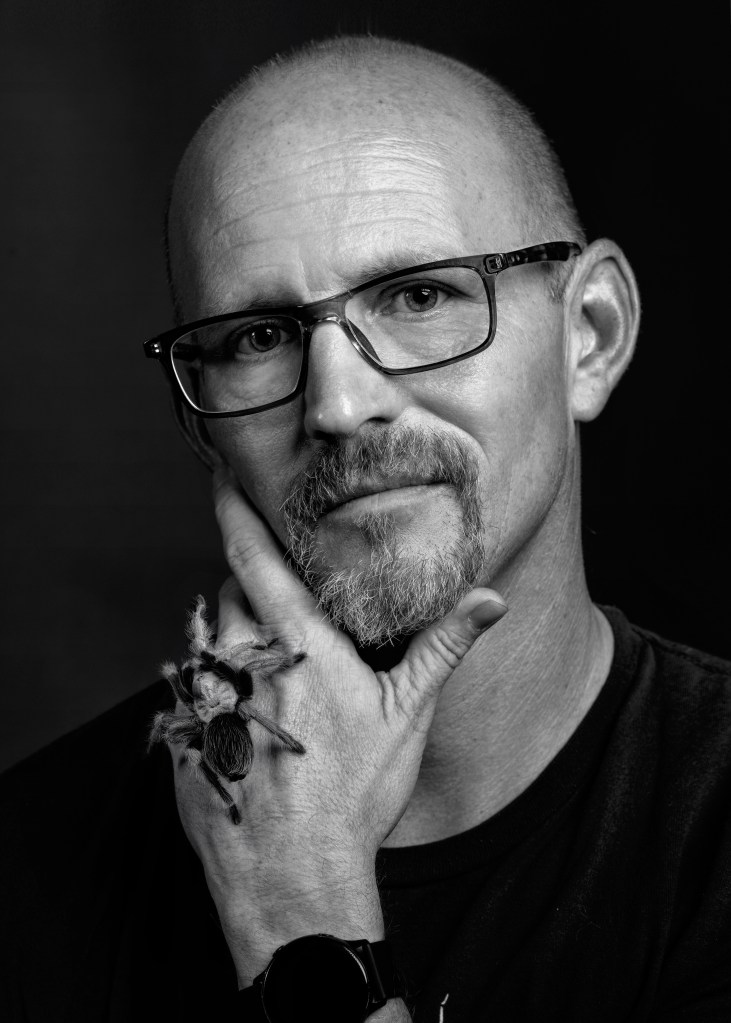
Join me for an enlightening journey into the world of insects and arachnids with Kevin Wiener. Kevin is an environmental educator and founder of the thriving ‘All Bugs Go To Kevin’ community. In this episode, Kevin shares his inspiring path from pest control to becoming a passionate advocate for arthropods. Explore the crucial roles insects play in our ecosystem, debunk common myths about animals like the Brown Recluse spider, and learn about sustainable pest control methods – including what you can do in your own home.
Kevin also discusses his experiences with arthropod pets, the importance of community support in overcoming fears, and the joys of integrating photography into environmental education and personal discovery. Whether you’re a seasoned nature enthusiast or just curious, this episode offers fascinating insights and practical tips for fostering a balanced ecosystem in your own backyard. Don’t miss this chance to transform fear into fascination and discover the often overlooked beauty of bugs.
You can find Kevin at allbugsgotokevin.com, and of course, if you’re on Facebook, consider joining the All Bugs Go to Kevin group. It’s one of the bright spots of social media.
Looking for more great insect and arachnid podcast content? Here are our insect-oriented episodes!
Did you have a question that I didn’t ask? Let me know at podcast@jumpstartnature.com, and I’ll try to get an answer!
And did you know Nature’s Archive has a monthly newsletter? I share the latest news from the world of Nature’s Archive, as well as pointers to new naturalist finds that have crossed my radar, like podcasts, books, websites, and more. No spam, and you can unsubscribe at any time.
While you are welcome to listen to my show using the above link, you can help me grow my reach by listening through one of the podcast services (Apple, Spotify, Overcast, etc). And while you’re there, will you please consider subscribing?
Links To Topics Discussed
All Bugs Go To Kevin – website
All Bugs Go To Kevin – Facebook Group
Brown Recluse Spider by Richard Vetter
Travis McEnery’s Brown Recluse Documentary
Spiders of North America by Sarah Rose
Podcasts Mentioned
Kevin Wiener on the Bugs Need Heroes podcast
Credits
The following music was used for this media project:
Music: Spellbound by Brian Holtz Music
License (CC BY 4.0): https://filmmusic.io/standard-license
Artist website: https://brianholtzmusic.com
Transcript (click to view)
Michael Hawk owns copyright in and to all content in transcripts.
You are welcome to share the below transcript (up to 500 words but not more) in media articles (e.g., The New York Times, LA Times, The Guardian), on your personal website, in a non-commercial article or blog post (e.g., Medium), and/or on a personal social media account for non-commercial purposes, provided that you include attribution to “Nature’s Archive Podcast” and link back to the naturesarchive.com URL.
Transcript creation is automated and subject to errors. No warranty of accuracy is implied or provided.
[00:00:00] Michael Hawk: Do you love spiders and insects? Or perhaps you’re a little bit more apprehensive about them. Maybe you even suffer from arachnophobia. In either case, today’s discussion is for you. Join me for an enlightening journey into the world of insects and arachnids with Kevin Wiener.
[00:00:14] Kevin is an environmental educator and founder of the thriving All Bugs Go To Kevin community. In this episode, Kevin shares his inspiring path from pest control and his own apprehension of a lot of these insects to becoming a passionate advocate for arthropods. Explore the crucial roles that insects play in our ecosystem, debunk common myths about animals, such as the brown recluse spider, and learn about sustainable pest control methods, including what you can do in your own home.
[00:00:42] Kevin also discusses his experiences with arthropod pets, the importance of community support in overcoming fears, and the joys of integrating photography into environmental education and personal discovery. Whether you’re a seasoned nature enthusiast or just curious, this episode offers fascinating insights and practical tips for fostering a balanced ecosystem in your own yard.
[00:01:03] Don’t miss this chance to transform fear into fascination and discover the often overlooked beauty of bugs. You can find Kevin at allbugsgotokevin. com and of course if you’re on Facebook consider joining the All Bugs Go To Kevin group.
[00:01:17] It’s one of the few bright spots that I find on social media. So without further delay, Kevin Wiener.
[00:01:23] Kevin, it’s great to see you today.
[00:01:25] Kevin Wiener: Good to see you! This has been a long time in the making. I know we’ve talked about getting together for a podcast for a long time. And you did actually, you helped us with the Jumpstart Nature Cicada
[00:01:37] I did,I did.
[00:01:40] Michael Hawk: happy to be able to get into a little more depth with you and learn a bit about your background and how you took this sort of non traditional way into entomology.
[00:01:50] Well, I’m excited to talk about it, how do you introduce yourself these days when you meet people and they are like, what do you do?
[00:01:57] Kevin Wiener: Oh gosh, it’s such a weird thing since I left the nine to five and have kind of taken this whole thing on the road. But, , I just tell them and I’m an environmental educator that has a focus on, on arthropods or bugs. I usually say bugs cause people understand that. and it’s so much broader than that because just in the last, last couple months, I’ve spoken to incoming freshmen at a university.
[00:02:18] I’ve done in person programs with live animals. I’ve done meet and greets with All Bugs Go to Kevin members where we went on bug hunts. I’ve done other bug hunts, and then I’ve done other in person educational programs as well. I’m just doing so much in that respect. It’s so hard to tell people what it is. I do besides just saying, you know, I’m an environmental educator. I started a Facebook group that really took off and I’ve got a huge amount of support behind me that allows me to be able to do this. And that’s kind of like the quick, version of how I say it.
[00:02:49] And then usually there’s a ton of questions that follow it. So
[00:02:53] Michael Hawk: then you can kind of drill into whatever the person is interested in. You have a lot of talents that I think we’re going to talk a bit about today at various points. so what came first for you? Were you already doing environmental education or did, was it the Facebook group, All Bugs Go To Kevin, or something else that? Kind of, you know, got you on this track.
[00:03:15] Kevin Wiener: Yeah. So when I got started in pest control, um, that was initially what kind of started the interest cause I was not a fan of all this stuff, but, the company I worked for sometimes was involved, with local entities and one of them had a bug fest every year and we would go and the company I know just wanted their name out there cause they didn’t really Do a whole lot to educate, even about the animals we had on the table.
[00:03:38] Cause we usually had a tarantula or whatever. And so nobody ever wanted to do this thing. Nobody ever wanted to help cover it. And I was like, what is wrong with these people? You get to go to the freaking nature center and hang out with really cool people and see this in like, in this really cool place and this.
[00:03:53] And like all this really cool stuff about this place. Why would nobody want to go there? And so I was like, yeah, sure, I’ll do it. So the first year I went, I didn’t know anything about the animals on the table. And When the next year came around, I knew I wanted to change that. So I started learning about the stuff on the table and then gradually through the job and through my own fascination and getting a macro lens for my phone, I just got a lot more into entomology where I just started kind of stepping it up, going from just the bug fest to doing, uh, in person programs in preschools and things like that.
[00:04:25] , and so it’s just continued to just grow from this initially just, you know, Stepping out for the company I work for and saying, yeah, I’ll do this bug fest thing. And then I saw how much I enjoyed education and kind of had a knack for it and just continued to kind of grow it from there. Then it was, , about five and a half, six years after I started really getting.
[00:04:46] Into all this stuff, that I started All Bugs Go To Kevin. I didn’t even want to start All Bugs Go To Kevin. Initially, there was just a lot of people behind me saying, dude, you need to do this, your photography and the way you educate people and all that stuff. And so, Me jumping in and doing that was not something that was just like, woohoo, you know, but I wasn’t going to do it without feeling like I had the tools to be a decent educator and at least be a good leader of a community.
[00:05:11] I didn’t think it would become 235, 000 strong as it is now. I thought it might be a thousand people, but I still knew kind of, I wanted it to run a certain way.
[00:05:20] Michael Hawk: couple of things stood out to me there. It sounds like you already had some interest in nature though, because when that tabling opportunity came up, you’re like, well, who wouldn’t want to go spend time here? So where did that, uh, kind of baseline nature interest come
[00:05:33] Kevin Wiener: Oh, I mean, as far back as I can remember, my dad was taking me on hikes. It’s just snakes and spiders, stinging insects, things that were jumpy or flying sporadically, I just didn’t know anything about. And then, you know, I grew up with a grandmother who made us kind of think that they were worse than they were.
[00:05:51] So I thought bites were more, more common of, you know, you name it. Um, there aren’t a whole lot of things that people claim. Bite that bite often. Mosquitoes and ticks and horse flies are the big ones that actually do bite often. But a lot of the things you hear people complain about, a lot of times they don’t even know what bit them, if it was, if it was a bite at all.
[00:06:11] Yeah, , I was really hiking with my dad and, we did some camping trips, usually once a year we went on a camping trip as a family and things like that and, , It was just when I got out, uh, on a hike or, you know, uh, going through a creek bed or whatever, if I saw a snake, if I saw a really large spider, uh, or anything that I just didn’t know about, I was ready to kind of pack it up and be done.
[00:06:31] , just the fear within me, just that, that uneasiness and not knowing. Whether it was safe or not, you know, I just wanted to get out because my grandmother just had me terrified of these things that they were gonna, you know, legs in my brain when I sleep or something, you know, and not quite that bad, but she was not fond of arthropods in general.
[00:06:48] Michael Hawk: And that’s something I think you and I have in common is that there, there’s an overblown risk of, uh, of what these things can do and the, and. I think we, as a society, very often lump all arthropods into a pest category. When in reality, if you really think about, well, what would define a pest? It’s a small, small percentage, uh, that, that we.
[00:07:10] Really need to be cognizant of.
[00:07:12] Kevin Wiener: True, and most things that people would deem as a pest aren’t always pests. As a matter of fact, most of them are usually not pests. So, houseflies and blowflies, they’re annoying if they’re in your house because of maybe, uh, A leaky trash liner and you got debris in the bottom of your trash can that’s building up and they’re using that as a food source or whatever it may be.
[00:07:34] But you know, when they’re in the environment, they’re eating that same nasty, funky stuff and rotting, decaying animals I really would love to see a new term coined for, in place of pest, something that says we’re important, but sometimes we’re not so fun, you know, um, you know, something that says it’s more situational than, than a certainty.
[00:07:56] If you see this, it’s a problem. Um, and people see something labeled as pest and then they just believe it’s a problem all the time. And termites are a great example. If they’re eating your home, that’s something you’re, you’ve invested your money in and you probably do need to do something about that, but when they’re eating, rotting, decaying wood, 50 feet from the back of your home, that’s perfectly fine.
[00:08:18] They’re, they’re decomposing and they’re helping to create healthy soil and they’re helping the environment.
[00:08:23] Michael Hawk: Yeah, that’s great perspective. And I will consult my thesaurus and see what creative labels I can come up with in this realm. And maybe, actually, maybe the listeners out there know something that would work well for that descriptor.
[00:08:38] Kevin Wiener: I’ve been thinking of working on that and seeing if we can’t find a way to Get people to start using a new term just through social media,
[00:08:46] Michael Hawk: yeah, that sounds like a great. Vision that you have and, and sorely needed. And I don’t want to get on my , soap box too much about, pests and so forth. But, uh, as, as you know, I, one of the things that I really like to do is highlight, like if you think about. Earth systems and what’s going on in ecology.
[00:09:06] You have, you know, plants that are converting sun to energy. They’re making sugars and that’s, that’s the foundation, right? They’re the producers of energy that supports everything else. Now, how does that energy get from a plant to other organisms like us? Well, sometimes we can eat the plant directly. But very often there’s an intermediary in there and very often it’s the insects that are the intermediary.
[00:09:28] And on top of that, it’s the insects that are doing the bulk of the pollination, keeping those plants healthy and genetic flow working and everything else that goes on. So, uh, the insects, , are way, , undervalued,
[00:09:44] Kevin Wiener: Well, they are. And, and like, one of the things I like to talk to people about is like, tell me your favorite animal. Let’s trace it back to insects. Because even if you say the family dog, I can trace it. Your dog’s needs back to something that needs insects. If your dog food has chicken in it, well, chickens eat lots of bugs.
[00:10:02] They need them for, you know, for proper growth and all the things. And so, chickens need that need that. And so, if your dog eats a plant-based diet, well, they definitely need insects and, and pollinators need, need, the other insects, the decomposers. Without decomposers, you don’t have healthy soil for things to grow in, for the pollinators to pollinate.
[00:10:20] Things like when you start to really understand the big picture, not only is it really. Just neat, but it’s super eye opening, and the more I go outside and I’ll see this bug and I’ll see this animal, you know, just all these different animals out there doing their thing, and now I have a better idea of why they’re there and what’s going on and how they kind of connect to one another at times.
[00:10:40] Birds, we don’t have birds without insects. Most birds need insects to some extent. And I think about going for drives now and not seeing, you know, on my windshield, not seeing dead bugs on my windshield.
[00:10:51] I used to, 30 minute drive was enough to have to clean off my windshield sometimes. And now I can drive for eight hours and two, three little smudges I’ll see on my windshield. You know, um, we need these things. They’re so important.
[00:11:06] Michael Hawk: Something you said is you started working in pest control and, , then tabling for that company and that. Was maybe a primary instigator for learning more. What were some of the steps that you took to go from kind of being aware, but, apprehensive or fearful of some of these things to, to really understanding them and advocating for them.
[00:11:28] Kevin Wiener: Well, initially, you know, like 13 years ago when I started in pest management, it was just information gathering. So I was really putting my focus on the pests that I was dealing with. German cockroaches or bedbugs, , brown recluse or, , Different types of flies, whatever it may be, you know, those are the things I was really learning about, but then somewhere in there, , you know, I’d gotten a macro lens for my phone just because I wanted to be able to see the things I was looking at on the job a little closer.
[00:12:00] Took a picture of an acrobat ant, saw the eyes. And that changed it for me. It just, it went from this little speck, this little, you know, to this living, breathing animal. And just from looking at the eyes and, um, and it reignited my passion for photography because I used to do a lot of photography with 35 millimeter, nothing macro.
[00:12:19] But it just got me excited about photography again.
[00:12:21] Michael Hawk: it sounds like there were kind of multiple self reinforcing. It was like you had a feedback loop that formed.
[00:12:28] Kevin Wiener: I did. Well, I was, you know, I, I, I would, I would see something little, little tiny speck of something. Maybe it was a bug. Maybe it wasn’t, but I was photographing it anyway. And then I would get home and I would go through my photos and I would identify, I would do the work. Get out the books, go to bug guide, whatever.
[00:12:44] I didn’t have AI back then when I was first starting so, um, so that wasn’t even an option if I wanted to and so I just did the work and then I started reaching out to experts on social media, , actual professional scientists who study whatever area and then started getting information from them.
[00:12:59] And so I would identify it. I would see if I was correct through an expert. If I was right, great. And then I would start learning more about it. Um, if I was wrong, then I would find out where I went wrong. So the next time around, I could learn more. Um, and it was just that over and over and over and over again, every single day.
[00:13:16] , and the more I did it, um, and observed these animals, observation was huge, seeing that these animals were just going about their day. , and if they were worried about me at all, it was cause I was huge and scary and they just needed to get away from me cause they saw me as a dangerous animal. , But most of the time they just go about doing what they’re doing, and I am not an important part of their world and they didn’t hurt me.
[00:13:36] And that, you know, so there were no stings, bites or any unsavory behaviors that I would witness. And I could just get in there, observe them. And the more I witnessed that I was safe and they were still like doing what they do, , it just made it easier to feel comfortable, but it also made it a lot easier to learn because of the comfortability, , to be able to just have my head in there, usually now looking through the lens and seeing what they’re doing.
[00:13:58] It’s so important. I mean, you’ll learn, , people are seeing stuff they’ve never seen, like that science hasn’t recorded before just because they’re paying attention and they’re recording it with their phones or with the camera or whatever. , but it, it’s amazing what that does for fear. It’s amazing what that does for, uh, just to learning, even just without the books, you can learn so much.
[00:14:17] Then you connect the books and you see that the science is connecting with what you saw with your own eyes and just, you know, Yeah, like you said, it’s just this big loop and it just keeps, and my excitement just keeps going. The most exciting thing that I, that, that I learned is the most recent thing I learned, you know, um, because it’s all just fascinating.
[00:14:35] Michael Hawk: yeah, it’s kind of like when somebody asked me, you know, what’s your favorite. What’s your favorite insect? What’s your favorite tree? What’s your favorite bird? It’s kind of like, well, the last one that
[00:14:43] I paid attention to. So, I’m imagining that you, you probably have a bit of a library of, uh, of reference books now at this point
[00:14:52] Kevin Wiener: Not too bad, but, Not as much as people would think. A lot of people, um, it’s a lot more now, but, but it’s because I’ve had authors that have sent me books to, uh, see if I’d review them or had photos in a book and got a copy because my photos were in it. And so some of the things on my shelves were given to me, uh, in, in different ways.
[00:15:12] , of course I have the Brown Recluse. Spider by Richard Vetter because that’s probably one of my favorite topics, I mean, I learned so unconventionally.
[00:15:21] I, I, most of my learning was through social media and scientific papers.
[00:15:24] Michael Hawk: Yeah. There’s so many paths. And that’s one of the things, when I first started this podcast, that’s, I focused a lot more time than I do these days on, trying to reveal how there are lots of different paths in this world of environmental education or environmental study more generally. You mentioned about observing and paying attention. And I recall you telling me in the past about some of the, , arthropod, um, Pets that you’ve had over the years. Uh, how, how did that play a role in this sort of evolution that,
[00:15:59] Kevin Wiener: Oh my gosh, so much.
[00:16:01] Michael Hawk: yeah.
[00:16:01] tell me about some of the, uh, most more interesting observations you had, the, the types of pets you had.
[00:16:08] Kevin Wiener: I mean, there’s so many different things. , like just in the beginning, it was, um, mostly spiders, , and native spiders. And that’s where I started to really kind of grow what I was doing, uh, in education in person. But just watching the different hunting strategies, uh, like a wolf spider versus a cobweb spider, , and defense strategies and all those sorts of things, when you’re actually like dropping food in and then they are gung ho, ready to go get it.
[00:16:30] And then your hand goes in there and they are moving the other way, just the fact that they can just, you know, distinguish the things they can, even though their eyesight isn’t great, you know, that all those little things started to teach me that like, I’m safe around these animals. Like I really have to push.
[00:16:45] The limits, uh, with most of these animals to have something bad happen. The, uh, Brazilian yellow scorpion, Tidius serulatus is a scientific name, I believe, and they’re, , And so I think there’s like around a dozen, maybe 15 species that are now known to be able to reproduce without a mate.
[00:17:04] And this was one of them. So I had it from a second instar and raised it all the way to an adult and watched it have a brood. Um, and so to witness things like that is really cool. And then to see this medically significant scorpion that Could potentially kill me. I mean, it’s not likely it’s not, you know, it’s more likely just to make me have a really bad day, but like this is a medically significant scorpion and to see how docile it was and how, like, I didn’t hold it, but, um, you know, I respected the fact that it could hurt me, .
[00:17:35] It was one of my most easy going scorpions. It was one of the easiest ones to photograph, to, to move from one enclosure to another when I needed to, like all the things working with it. And, even when they’re medically significant, it doesn’t mean that their behavior is crazy dangerous and they’re out to get you even.
[00:17:50] And that’s another thing I think people, oh, well, it’s, it’s medically significant. This thing could hurt me. So it’s probably going to, and when the likelihood is so slim. ,
[00:17:59] Michael Hawk: any human you see on the street, you know, you could say the same
[00:18:02] Kevin Wiener: much more worried about humans than bugs.
[00:18:06] Michael Hawk: You, you mentioned, you mentioned a word instar, second instar, I think is what you said.
[00:18:11] Um, and for those who are maybe unfamiliar with, , lifecycle, could you explain what you meant by
[00:18:17] Kevin Wiener: Yeah, so an instar is just a stage. So, when a, when an arthropod comes out of the egg, that’s the first instar. And then, um, anything that goes through incomplete, , or gradual metamorphosis, they are going to molt and just get a little bit bigger, still look pretty. Kind of like they did before they molted, um, but each, each stage is called an instar.
[00:18:40] And, uh, and then their final instar is once they reach that adult, uh, final form.
[00:18:46] Michael Hawk: And different species could have. Different numbers of
[00:18:50] Kevin Wiener: Absolutely. Absolutely. And, you know, and then you have things that go through complete metamorphosis. And even the larvae have instars. Like the larvae a lot of times of different species will molt. Uh, multiple times as it grows, uh, before it pupates and becomes an adult. So even, um, even the, the larval forms will have instars.
[00:19:12] Michael Hawk: kind of fun to think about because if you just step back and realize, Hey, they have an exoskeleton and as they grow, it’s going to get a little, you know, those pants they’re wearing are going to get a little bit tight.
[00:19:24] Kevin Wiener: That’s how I explain it to people. I say it’s like buying, like, like they, when they molt, they just basically have this hard shell that comes off and then they, uh, Immediately, like, everything is soft, so they immediately just puff up and they’re bigger immediately after a molt. But they’re kind of empty inside, so it’s like putting on clothing that is, um, a couple sizes too big because you know you’re gonna gain some weight, because you know you’re gonna fill them in, and so that’s why they molt, because they fill it all in and then they need more room until they reach that, that, uh, final molt.
[00:19:56] Michael Hawk: A moment ago, you mentioned that you’re a fan of the Brown Recluse, and you have a book about the Brown Recluse, and you did a whole podcast. Was it, uh, Bugs Need Heroes?
[00:20:07] Kevin Wiener: But yeah, I did one on, for BugsNeedHeroes, um, uh, it was the last one I did.
[00:20:11] Michael Hawk: So I will point to that in the show notes. I don’t want to recreate a deep dive on Brown Recluse, but I would like to hear a little bit about your experience with them. I think some of the listeners are probably going to be aware that this is one of those spiders that has Uh, a mythology and some reality too, around, um, around it.
[00:20:31] , so what, what’s a brown recluse? Why is it a spider of interest for you?
[00:20:36] Kevin Wiener: Well, so brown recluse are medically significant spiders. , and, , outside of the brown recluse, the only other medically significant spiders that are in the U S are black widows. There’s three different species. it’s one of the four medically significant spiders that we have in the United States.
[00:20:51] , they definitely, , Have a reputation that is, while, while they are medically significant, ca can cause harm. , their reputation’s a little bit overstated because of just a lot of bad information. Infor, you know, we just, we didn’t, we know a lot more now than we did in the 1950s. I think that’s, that’s when they discovered theder necrosis and all that kind of stuff.
[00:21:11] People just are still holding onto the old information or just wrong information altogether. And then they continue to share it. My grandmother’s best friend’s uncle lost their, their leg to a brown recluse, you know, and there’s not a case in medical literature where anybody’s lost a limb. Um, but yet there’s thousands of stories like this.
[00:21:32] At one time I believed a lot of that stuff. And so once I started learning and realizing that almost everything I knew was Not based on anything factual. I started learning, you know, cause I started hearing other people talk in endearing terms about this spider and I’m like, these people have got to be nuts.
[00:21:51] but I, I stuck around to find out, you know, what was in the Kool Aid and it turns out it was just facts, you know, and it was, it was, Things that they could back up. And, um, and then that’s when I really started to learn the importance of data and, and being able to back up what you, what you say and the information you pass on, not just passing on something you heard from Uncle Bob, because Uncle Bob could be wrong no matter how smart he is, no matter how reputable he seems, he could be giving bad information.
[00:22:17] So whenever you get new information, you know, verify it, make sure that you can back it up because if you’re going to repeat it, you should make sure that it’s good information.
[00:22:25] Michael Hawk: Well, I guess until that point, I remember when I was growing up in Omaha, Nebraska, uh, I, you know, back then the internet really wasn’t. a big thing yet. And, uh, I spent a lot of time actually watching the local TV news. And I remember seeing a story, and this is just like the power of narrative and the power of fear.
[00:22:45] there was a local story about how the Brown recluse was, range was expanding into Southeastern Nebraska. And it was scary, you know, to, to hear about that. And I still remember that story here, you know, a couple of decades later. Of course, I know, I know more about it now. But that’s the sort of thing I think that people tend to remember.
[00:23:08] Now, did you, did you ever keep a brown recluse, like in a terrarium
[00:23:12] or, uh, anything like that? Yeah?
[00:23:14] Kevin Wiener: Yeah, I, uh, last year I probably talked to about 20, 000 people in person through the different programs and the bug fest and stuff doing, , Uh, I talk on brown recluse and black widows, and I had a container with a dozen, , brown recluse in it, and I picked them up, I poked and prodded and antagonized them just to show people their behavior, that they just were not doing anything other than running away, playing dead, or just not harming me.
[00:23:40] Sometimes I would poke one in the, like, just right up in the face, and it would just step right up over onto my hand, like, okay, whatever, you know, they, but they are not quick , to become defensive. Or if I did the same kind of things to say a wolf spider, I might get a different response because they’re a little bit more defensive.
[00:23:56] And still super cool spiders, unlikely to bite you. I mean, like, I’m talking about me putting myself in a position to antagonize an animal. , and I have yet to come close to seeing anything. , threatening from a brown recluse and all the thousands of times I’ve handled them and poked them and prodded them.
[00:24:13] And you can see it on the, um, Travis McEnery did a, brown recluse documentary, and I do that on, on there and talk a little bit about the control aspects, , pesticide free control, options that people have on that documentary.
[00:24:26] Michael Hawk: Yeah, that’s a, I remember when you, um, when that was released and seeing that it was very well done. So of course I’ll link to that
[00:24:34] Kevin Wiener: Yeah. Travis did an amazing job.
[00:24:37] Michael Hawk: Can you maybe just to tie this in a bow, we’ve talked about, well, you know, they aren’t, you know, the, the, the mythology around this, like , the risk that they pose is, is overblown.
[00:24:47] , can you tell me about. , what they do in the environment, what are they hunting? back to this earlier discussion about pest versus non pest, like what, what value are they providing? Yeah,
[00:25:01] Kevin Wiener: so they’re, they’re, they’re value there and that’s one of the things we, we, a lot of times we look at the things that they do instead of, and then we don’t always look at what they’re providing, uh, just being a food source, but, um, but outside of that, they are, , they’re eating, , other spiders, they’ll eat other brown recluse, , they’ll eat, Just about any insect they can take down, but I think in a lot of cases they’ll eat more soft bodied, , things like certain types of larvae and things like that.
[00:25:25] , they seem to be more commonly found in connection to structures, so they do really well in the dry environments of wall voids and attics and having this more controlled environment. , that’s really where we run into them. From my experience, more than anything, is in structures and not so much in the environment.
[00:25:43] So in wall voids and stuff, you’ve got things like carpet beetle larvae and other beetle larvae, and flies and all kinds of things that could be in these spaces that give them food sources. And it allows them, a lot of times, just to stay put. And most of the time when people see recluses in their home, they’ll see a mature male that’s out looking for a female to mate with.
[00:26:02] But anyhow, it’s, it’s those kinds of things that they’ll be eating and, , the panic that people have, and they’re like, sometimes they’re actually in your walls eating things. I’ve, I’ve seen roach infestations where, uh, where I’ve caught them eating a German cockroach. and then, you know, when I go under a roach infestation, it’s not often that they’re more concerned about something other than the roaches, but occasionally they’ll be like, I am seeing so many spiders, like they’re probably here to help,
[00:26:26] Michael Hawk: They’re, like armed guards protecting the perimeter of your house in a way. yeah, I’m constantly amazed here where I live in California. We have a lot of Western black widows
[00:26:38] and, you know, I can, you know, Any evening I can go patrol the perimeter of my house and probably find 15 pretty easily, , without too much effort.
[00:26:47] , so there’s certainly more. There’s probably some in the crawl space. It just, it’s like, wow, there’s a lot of food out here for these, if there’s this many of these, uh, Western Black widows around. I kind of take solace in that. It’s like, I have a nice habitat here because, because I, I have all these black widows they’re helping me out.
[00:27:05] Kevin Wiener: Well, and people, a lot of times, like when it comes to crawl spaces, they will call a pest control company out to fog their crawl space because they know there’s spiders in their crawl space, because in their mind, these spiders are going to be coming up into their living space from the crawl space. Now, while those things, uh, do happen from time to time, most cases they chose the crawl space because it’s the perfect environment for them and that’s where they want to be, and that environment is almost always going to be much different from the, uh, the living space in your home.
[00:27:33] And so there’s, you know, going to be more humidity. Airflow’s different. There’s a lot of things that are different for them. And so they pick this environment and then you get all these spiders, cobwebs, spiders, cellar spiders, and things that’ll fill up your, your crawl space. And then you get these bugs, other things, maybe roaches and things that will move through the crawl space and get caught and eaten by these spiders.
[00:27:54] And then people. Instead, we’ll have a company come and fog their crawlspace, kill all the spiders off, and then they start seeing more crickets and other things coming into their home. I can’t help but to believe that that is greatly because they, they remove, that first line of defense and They don’t, they don’t realize it, but that’s partly I think pest control companies want you to do business and they’re gonna tell you all you have spiders in your crawl space you don’t want that and instead of Just saying, oh, spiders in the crawl space aren’t so bad.
[00:28:24] And I’m not saying that’s, that’s pest control companies across the board, but that is kind of the general idea I see from people in the industry is they would rather convince you you have a problem that you need their help with than then to tell you that it’s not really a true pest issue.
[00:28:41] Michael Hawk: Yeah, I’ve had that experience actually where, uh, every so often I do have a pest control company come out and check out my house for evidence of termites, you know? So like, I think that’s, that’s a good practice,
[00:28:56] uh,
[00:28:56] Kevin Wiener: is a good practice.
[00:28:57] Michael Hawk: usually a termite company does other pest control as well. And I’ve had, I’ve had the people come out and they’re like, well, I’m just going to tell you.
[00:29:05] You know, off the record, there’s nothing you need to do. But when I write my report, because my bosses look at it, I’m going to recommend a few things. and, uh, I don’t think you need to do those things, but that’s what the expectation is, you know, of, of my bosses. That’s kind of paraphrasing what I’ve encountered a few times.
[00:29:26] So I’ve been grateful that the individuals kind of recognize this. whereas maybe the, the business interest, is different. , but the point you bring up, I think is, is great because. Generalizing a little bit. When you think about predator prey dynamics, if you’re a prey species, one of the ways that you survive is by rapid reproduction. And, , you know, these top level predators, you know, even if you’re thinking mammals and you’re thinking like, you know, tigers and, lions and, you know, things like that, they are not going to reproduce at the same rate and they need longer to mature. And like, all of these things are the case.
[00:30:03] So if you go in there and you get rid of your top level predators, in this case, spiders as one example, yeah, all these other kind of prey species, are going to have a period of advantage. You know, where they’re gonna reproduce and fill that void much faster than those predators can come back.
[00:30:19] Kevin Wiener: Right. The more you learn, it’s, it’s just amazing, just how much we need these animals. I think, you know, I think the more that we can help people understand where, we’re at. their food comes from, I think people can kind of get it, gain a better understanding of the importance of insects.
[00:30:36] , just knowing where the food in the grocery store that you’re consuming is coming from and how it got there. You can learn so much, but people just kind of, I think, get to a point where they just expect things to show up in the grocery store. They don’t care about the process ,
[00:30:49] Michael Hawk: At this point, Kevin told me about a story from when he was working in pest management. He went to a customer that was new to him. The customer was like, yeah, I get a mosquito treatment and I was told that it doesn’t kill things like bees and butterflies. Is that correct?
[00:31:03] Kevin Wiener: And I was like, are you kidding me? I said, that is absolutely incorrect. It absolutely will kill butterflies and bees and pretty much just about anything with six or more legs. And she’s like, well, why would they tell me that? I said, well, I’m guessing they were misinformed or they, they misunderstood some things So just like, people are being told this repeatedly that these products are not affecting other wildlife other than the target, and a lot of, most of the time it’s probably not the case.
[00:31:31] Michael Hawk: how do you find for people who maybe are sort of, hooked on a monthly pest service or, you know, something like that, uh, how do you help them start to take steps in that direction? of understanding like, you know, there’s more to this story and maybe you could save some money, you know,
[00:31:47] as well,
[00:31:48] as helping the environment.
[00:31:49] Yeah,
[00:31:50] Kevin Wiener: the first thing is ask questions. , What is it that, why is it that you feel that you need a pest control service? If it’s because the company said, well, you got these spiders all around the outside of your house, they’re going to get in if we don’t come do service for you and you’re afraid of spiders and you don’t realize that they’re probably not going to come in very often, if at all, and that even if they did, they weren’t going to hurt you because that’s not what the pest control company wants you to know.
[00:32:12] And so I think first kind of figuring out like what it is, why do you have it? Why do you have the service? Why did you get it in the first place? , and then do I still have that going on? Is it really a problem to begin with? Is it something that requires regular pest control service, or do I only call them when I have an actual problem?
[00:32:29] And I’m going to say in most cases, people can call when they have a problem. from my experience, if people would call a company out because they had ants, and then the company would talk them into a quarterly contract that they would just keep paying for, and ten years later they’re still on that same contract.
[00:32:45] And it’s just because it was a convenience and it was just kind of like, well, I mean, when I do have a problem, they come when I call, you know, and those sorts of things, because they know they get like a free, a free callback in between services if something pops up. So they’re paying for this convenience of having problems resolved when they pop up by having us come and spray supposedly preventatively.
[00:33:08] But almost every time I would go to a customer and my first question is, are you having any issues? And 90 percent of the time they said, no. Probably more than that. They’d say, no, I don’t have a problem. Then why are we spraying today? You know and so but but we’re neglecting Like if the the concern is that these you know ants are coming in around the window or spiders coming into the door A lot of times these companies aren’t addressing the seals around the window or the door sweep or things that are allowing these animals to get in they’re just trying to do the chemical solution because that chemical solution has to be reapplied.
[00:33:44] If you fix the door and they don’t stop, start coming in anymore, you’ve solved their problem fully at that point, you know, so you aren’t going to keep calling, you know, calling them back for business. And so There are really good companies out there that try to do things right. , and that will replace the door seals and do those sorts of things.
[00:34:04] But, um, from my experience, , for most of the people that I’ve talked to within the industry, they don’t do a, they don’t do a whole lot of focusing on exclusion work. It’s mainly just chemical application.
[00:34:15] Michael Hawk: kind of a classic interview on the Ologies podcast with a myrmecologist and, and he talks about, you know, fighting ants and his number one tool, a caulk gun. You know, watch the ant, see where it’s getting in and caulk that area. and I think his number two tool was, uh, diatomaceous earth. You know, something, you know, something pretty, you know, non toxic anyway, and, uh, and effective
[00:34:40] Kevin Wiener: Yeah. And I mean, it’s amazing what you could do. Like you could put a, uh, little bit of like, grape or strawberry jelly. in a spot near where you’re seeing ants, like if you’re trying to figure out where they’re coming in, and then just give it 20 minutes, an hour, whatever, and give those ants time to find it and start trailing, and then you can find their entry points, because you gave them a food source and you’re, you’re making them want to come, and then they start to show you their trails, and then you know where to put stuff.
[00:35:07] So just baiting them with something Non toxic to them, it doesn’t need to be ant bait, but if you’re gonna deal with ants and you’re gonna use a toxin, using an ant product that is an actual ant bait that is, made to attract the ants as a food source, they take it back and affect the colony. It, it can affect other organisms, but it’s, uh, much more minimally invasive, than a broad spectrum insecticide, which probably kills, like, 90 percent of animal life.
[00:35:33] So.
[00:35:34] Michael Hawk: Yeah. Don’t, don’t get the can of raid and spray the trail. That’s not gonna, they’re going to come back and it’s going to be toxic for you and everything else. So
[00:35:42] Kevin Wiener: And people don’t understand, like, the whole system that, like, you’ve got a queen, the baby maker, who you’re not spraying, in most cases, when you’re spraying a trail. So if you spray a trail, the baby maker’s gonna make more babies, because that’s what she does. And, uh, yeah. So you just, uh, end up putting out a toxin that’s killing, uh,
[00:36:02] Michael Hawk: now for people who maybe come to this realization and they recognize like, yeah, you know, this is kind of silly. I’ve just been, funneling money away, uh, without really thinking about it and they, and they stop. Um, is there any kind of, you know, pardon. Pardon the choice of terminology, but like any kind of withdrawal that happens.
[00:36:22] It was like, I was, I was mentioning this concept of pests can come back much more quickly than the predators come back. Like, is there, is there a period of difficulty in that transition time that people might encounter that they just kind of have to work through?
[00:36:36] Kevin Wiener: That’s a great question. I don’t know. you know, like whenever we stopped doing business with people, I didn’t get the follow up. I didn’t, you know, cause we were no longer doing business. So I had no, no reason to, to go back to their door. And so, um, but what I can tell you from my own personal perspective, After I started doing pest control, I probably for a year or two did pest control because I could do it for free.
[00:37:00] Just because I didn’t know what it was doing. I didn’t realize the harm it was causing. I was just like free pest control. I can do it myself. I’ve got a truck full of stuff. So I would do a pest control inside, outside of my house, just like I did for our customers. And then once I started learning more about it, I was like, I think I’m gonna stop doing this.
[00:37:18] And within, I don’t know, maybe, three months, I noticed that I was having less ants coming in the house. I was seeing less issues. I started, adding native plants to my yard and letting some of the back part of the yard grow out to give habitat. Even less stuff was finding its way into my house. And all I can help to think is I’ve created habitat for them to go to that’s not my house.
[00:37:40] And I’ve also stopped killing off the spiders and the other predators that are stopping different things from getting into the house in the first place. And then fix your door seals. Make sure you caulk around your windows, you know. but like, for me, it was like, oh my gosh, things are actually better after just a few months.
[00:37:58] I didn’t notice anything being better or worse, quitting, but like, I did notice that less ants and less things. And usually if I see an ant, it’s just one ant. I don’t get a trail of them. So, and some of it’s just dumb luck. I think a lot of it has to do with the fact that I’m not killing everything in the crawlspace off anymore.
[00:38:16] And the spiders are able to kill some of the things coming through. And I’m not stopping the systems that are going on in my yard and I’m putting plants that the animals, in my area can use, which also brings other things that need those animals and just the whole circle of life starts to happen in your own yard.
[00:38:34] And then I don’t, I don’t need all the pesticides anymore.
[00:38:37] Michael Hawk: here, you know, where I live in San Jose, we just, we just had one of our. One of the weirdest, worst heat waves that, that we’ve had like on record in October, we had multiple days, something like six or seven days in a row over a hundred degrees. We had a few days up 105, 106, and our normal high temperature should be about 80.
[00:38:56] And to me, you know, where I’m going with this is I’m really realizing I have to double down on some of like the home efficiency sort of things. to really, keep our energy bills under control, make the house more comfortable and adapt to, this kind of new world that we live in. And I recognize that Yeah, these little gaps and you go around and you do the exclusion, you fix the door seals and the, and the caulk around the windows and things like that.
[00:39:26] You’re getting two wins at once there. You’re making your house more comfortable and efficient at the same time.
[00:39:32] Kevin Wiener: And I try to tell people that all the time. I’m like, do you like spending your money just for no reason? Do you like really high energy bills? Because if you don’t, you can stop paying the pest control company and you can lower your energy bills by, you know, uh, 15 in caulk to do your whole house or something, you know.
[00:39:53] If that, in some cases, so.
[00:39:55] Michael Hawk: And you know, the question I asked a moment ago about kind of like a withdrawal when you terminate these monthly services or quarterly services or what have you was based on my own experience in my backyard. So not so much in my house, but, I. Was paying a landscaper and they were applying different chemicals at times to like our rose bushes and, you know, things like that.
[00:40:18] And I had them stop. I told them no more chemicals. and, uh, that first year I noticed a lot of aphids. And I was actually pretty excited by that because I like aphids. Uh, I’m one of those,
[00:40:29] Kevin Wiener: They’re pretty interesting.
[00:40:30] Michael Hawk: they are interesting for, don’t get me started. I’ll just say that. Um, but, uh, without going down that road, , I, I really realized how gardeners could become very alarmed by that.
[00:40:46] And, After a year or two, I don’t see those huge outbreaks of aphids anymore. I see aphids. I see small outbreaks. And then, you know, nature’s pest control comes and takes care of them. and you can see it if you
[00:40:59] Kevin Wiener: That is, that’s, that’s, that’s the fun.
[00:41:02] Get out there people. you, you have aphids on your plants. Go see, see who else is there because you’ll find, you’ll find like the, the hoverfly larvae that are down there feeding on it and ladybugs and, um, lacewings and, and even assassin bugs sometimes that are, that are in there doing the work and, um, And other predatory flies, like the long legged flies, which are, you know, like, metallic green, red, crazy cut, like, they just, depends on how the light hits, they’re just so cool looking, these tiny little, quick little flies.
[00:41:31] it’s, and the reason I know this is because I get down there and I look, But that’s where the excitement is, is like when you start to plant in your yard, especially if you really have some diverse plants, you’re gonna, after a year, possibly even more quickly, you’re going to start to see those predator prey relationships take place because you’ve got.
[00:41:49] You’ve got food for lots of different animals that are going to support a healthy, balanced, ecosystem, even in your backyard.
[00:41:55] Michael Hawk: Yeah. You’re building up with those native plants, kind of that, uh, that food web, you know, of you have, you have redundancy in your predators that, you know, can specialize at different stages or on different, different insects and so forth. one of my favorite photos, my favorite macro photos, and maybe this is a good way to talk about your photography a little bit, uh, I had found in that kind of transitional period, some cluster of aphids, hundreds of them.
[00:42:21] thousands, probably, really. It’s hard to count. These are so small. and they were being protected by ants, which is its own kind of really amazing thing. These, the ants, you know, we’re, we’re using those aphids as a food source. And while I was photographing these ants, kind of. caring for quote unquote, the, the aphids and aphid wasp came buzzing in and I would see the ants like rear up and kind of like wave their, their legs and antenna around, telling that, that wasp, like, no, these are, these are our aphids.
[00:42:57] Kevin Wiener: are my ladies.
[00:42:58] Michael Hawk: Yeah. , and I was lucky to get a of, um, that process, you know,
[00:43:04] Kevin Wiener: That’s pretty cool.
[00:43:05] Michael Hawk: Yeah. , So to your point, it’s like, that’s, that was a kind of a mind blowing experience. Because it’s like, this is the sort of. Nature interaction that you see on TV, but just on a micro scale in my backyard.
[00:43:21] Kevin Wiener: And you see it. I mean, if you get out there and look, you’ll see it all day long. If you’re paying attention, if you just really get down there and just dial in on an area, I love to look at a, like a, just a small patch of my yard and I’ll sit there. Sometimes just have a stool and sit there and stare into maybe a five foot by five foot section of plant life just to see what moves.
[00:43:38] And I’ll just stare kind of towards the middle and let my peripherals work a little bit. And then once I see something move, or even just a, a leaf That just bobs a little bit. Something could have landed on it or jumped off of it. And then that draws my attention to where they are. And then I start to get kind of more in tune with what’s going on in there.
[00:43:56] And you start to get drawn in more and more, the more you do it. But that, like talking about the aphid, you said we didn’t want to get on that subject, but the thing is we got on it and, and just a little, little bit of information, you know, we talked about is super exciting and there’s so much more. And that’s just one, one organism, you know?
[00:44:14] Arthropods are 80, 85 percent of all animal life that is known on this planet. so if we can get excited about aphids, maybe if you’re not excited about the world of bugs, you can get, get in there, get, you know, get dive in because I mean, aphids are cool, but I mean, there’s a lot of stuff that isn’t in my opinion, a lot cooler too.
[00:44:34] So.
[00:44:36] Michael Hawk: Oh yeah. Yeah. And I think something that we undervalue is, kind of the journey of discovery, you know, like walking away day after day, having discovered something in my yard and in the process, like you talked about looking at some plant life. That’s kind of, it’s kind of, meditative, you know, in a way, because you’re, you’re in the moment, you’re really
[00:45:00] in the moment observing and, and then you walk away like feeling connected to nature and it’s, it’s like a healing process.
[00:45:08] But anyway, I’m back on my soapbox. I wanted to ask you about your photography, as, as a lead in. So. Tell me a little bit about that evolution is you, you said you rediscovered photography. How have you been able to couple this interest of photography with your, , environmental education components of your life?
[00:45:27] Kevin Wiener: Oh, gosh, in so many ways, first off, when I do my photography, it’s really important to try to get angles, , and compose a shot that people feel connected to, that they can almost feel like they’re in that world with the animal and, and, uh, almost like they’re a, a buddy in the neighborhood, if you will.
[00:45:43] And so when people can look at it and feel a little less threatened, just be based on the composition and the angle that I choose to photograph the animal in. , and it does make a big difference. the slight angle change in the way your flash sits can make it go from angry looking to cheerful just because the, where the flash hits on their eyes or whatever gives it a certain expression.
[00:46:02] So all that does make a difference. But in person programs, I’m able to use it, , whether it be to teach people about identification of brown recluse with some of my OutClose, uh, stuff, or being able to use it in reference materials, like Sarah Rose, , used, I think, 23 of my images or something like that in her book, , I’m super honored to be able to do that.
[00:46:23] Um, but then social
[00:46:25] Michael Hawk: that’s a spiders of North America.
[00:46:27] I think it’s the
[00:46:28] Kevin Wiener: Yes. Yes. And you, you covered that book. , that was actually the first episode of, , I have ever listened to of your podcast was you can thank Sarah Rose for us getting connected
[00:46:38] Michael Hawk: Yeah,
[00:46:39] Kevin Wiener: um, because listening to her podcast, that’s when I met you. Then I, what I think I emailed you or sent you a message through Facebook or something just to say, I have, I enjoyed your podcast , and then here we are now.
[00:46:50] So.
[00:46:51] Michael Hawk: Yeah, absolutely. And you talked about integrating some of those photos into your in person programs. And it reminded me, You talked about going and actually doing in person programs with preschoolers.
[00:47:05] Kevin Wiener: Mm hmm.
[00:47:06] Michael Hawk: What does that look like? What do you show them? What do you talk about?
[00:47:10] Kevin Wiener: So. Up until recently I had lots of animals that I took with me. Um, now that I’m traveling a lot and stuff, it’s going to be a lot more talks and using my photography to educate. But doing a preschool, it’s basically show and tell. , how many legs does an insect have? How many legs does a spider have?
[00:47:28] just getting into the animals that I brought or showing photographs , That they might find interesting and talking about their different, uh, their anatomy or, or the colors or whatever. What that really, I feed on any talk that I do. It doesn’t matter if it’s preschool or adult or anywhere in between, I’m always reading the room, asking lots of questions and it goes where it needs to go based on what I think the people in the room needs.
[00:47:52] So if I see somebody cringe at something I said, then I know that. Somebody has a fear or at least disgust for this animal. And let’s ask questions and, and, and unpack that a little bit. With preschool, it really is just a lot of just show and tell, let them touch what they can touch, hold what they can hold and ask all the questions they want to ask and they ask some of the best questions because their brains just work differently. And, um, and it’s, it’s a, it’s pretty, pretty cool to, to hear some of the questions that come up with.
[00:48:23] Michael Hawk: Something that, that at least the way my brain is wired, I often think of, I think how so often that preschool age, there are no preconceived fears or preconceived or minimally, you know, so, so you get this very open environment with, with young children and for a lot of Kids, it changes at some point, maybe a negative encounter, or they’ve just heard sort of the, the messaging, the negative messaging enough, or, or whatever the case might be.
[00:48:53] But I want to, I don’t want to talk about that because I think that’s an interesting psychological thing that happens, maybe a discussion for another time, but what I’ve noticed about all bugs go to Kevin is a, on that group, a disproportionately large number of people who offer up a because they had a fear and they’ve been able to overcome it. Attribute that. Like how, why are they coming to your group in the first place and what’s happening to help convert them and see this bigger world
[00:49:28] Kevin Wiener: It’s the community. It really is a community aspect. , you know, I’m a recovering alcoholic. And one of the reasons that Alcoholics Anonymous is such a helpful program is, uh, when you have people in the room that all can relate to you. And what you’re going through, it makes it a lot easier to talk about it and go through it.
[00:49:46] And so whether you’re someone who loves bugs, because that’s kind of a niche thing, and a lot of people don’t have friends in their neck of the woods, they now have that through this community. But also the people who are, are, Afraid of something, , you know, they have this, this community that, that will just, um, embrace them and love them and just say, it’s cool.
[00:50:07] I used to be there too. Here’s what helped me or, you know, whatever stage in the journey that somebody is in, they share that, , or they share what helped them. And, and that community aspect is so important, but then they also get experts and, , And in various fields of entomology, arachnology, and so on, um, that they can tap into as well, so they can, , they can really kind of fill all of the voids that they may have, , on the subject, , through All Bugs Go To Kevin, because we have the fun conversations and the lighthearted, uh, , things happening, but we also have, , real deal conversations about, , science based information and, and truly care about making sure people get good information and, , are getting what they need, whatever that may be.
[00:50:50] But somewhere in there, I’ve always talked about how important it is to me that all bugs go to Kevin, have a focus and the fear to fascination. How it started to kind of become that for other people, like the thing that people talked about, I have no clue.
[00:51:03] other than just by us doing it effectively, I guess. , and there are other groups that are doing an amazing job as well. and we all have our place. People don’t like my group, they can go to another one that fits, fits their personality a little bit better and they can still get that, that solid education.
[00:51:21] They may not get the community aspect. But I do think it’s the community vibe that is what helps people and what draws people in. Because we, we don’t like, we don’t like going through things alone and we like sharing things we, we take joy in with people that enjoy it too. And to be able to share a picture of a spider that you took that your entire family would say, ew, gross, why would you even show that to me?
[00:51:45] To share that with a group of over 200, 000 people that will tell you it’s the most beautiful spider they’ve ever seen, , it’s a big difference. And it makes you want to come back.
[00:51:55] Michael Hawk: you have, you have a army, of, uh, admins and, and, and volunteers and moderators and contributors who have all these different specialties and areas of expertise. And, , it really does seem to be a place that you can get both the community and the kind of the scientific accuracy in an accessible way.
[00:52:16] It’d really be fun to like, like hire a academic researcher to, to investigate some of these, , situations a little bit more, but you know, my, my expectation is that people don’t. Just suddenly see a picture of a spider and suddenly say, well, hey, other people are taking pictures.
[00:52:33] They must be fine. It’s a gradual process. There’s some steps along the way.
[00:52:38] Um, and, and I like to, I have this dream that the Nature’s Archive audience can kind of be my own community. bit of an army to go out there and help people, , learn a bit about ecology and nature and fill in those gaps that, maybe we had in our education, you know, over the years, what recommendations would you have for a listener who like, say love spiders or love centipedes or, you know, whatever, pick your species of choice.
[00:53:07] And they’re, and they’re trying to show other people. Why, what would you recommend they do to kind of help connect with some of these folks that are more apprehensive?
[00:53:17] Kevin Wiener: It’s all about asking questions for me. It really is. , that’s one of the best ways to educate is ask people why they feel the way they do, figure out what they know, because No one wants to be talked down to, so if I give them a bunch of information they already know, then I’m talking to them like they’re an idiot, and I don’t want to do that either.
[00:53:32] I don’t want to over explain anything, um, and so it’s all about asking questions and, you know, so if it’s about millipedes, hey, have you ever seen a millipede before? Yeah. You know, what do you think about ’em? You know, oh, well their legs freak me out. Well, what is it that’s so freaky about ’em? And, you know, and oh, well they, you know, just the way they move just is weird.
[00:53:52] Or they feel weird on my skin or whatever. And so I ask the questions, and then that gives me a place to go and talk about, you know, things like, well, did you know that they, you know, don’t have any really any defenses that you need to be worried about, so they’re not going to hurt you and things like that.
[00:54:06] And so while they do feel a little bit weird when they walk on you, you don’t have to worry about one if you see one. Things like that, whatever it may be, but it’s just all about asking questions because you make them feel important and then they listen when you’ve got an answer.
[00:54:18] Michael Hawk: I think that’s great advice. And for someone who maybe hasn’t taken the plunge and joined all bugs go to Kevin, what, can they expect? How can they interact with the group?
[00:54:28] Kevin Wiener: Um, well, one, they can expect to, , follow the rules because my admins are amazing and they, they do make sure that we keep the dynamic. It’s, uh, , educator friendly. Um, we want to make sure that kids of all ages, if they see information on there, that they’re not going to be running too many unsavory comments or things that, you know, parents wouldn’t want their child repeating and things like that.
[00:54:50] , It’s a tough dynamic to keep and we want adults to be able to do adulty things, but we also try to keep the cussing down and things like that. So, if you aren’t a part of All Bugs Go To Kevin, , it’s this amazing community where we have some of the, some of the best macro photographers in the world sharing their photography and we have some of the top, experts in their field that are sharing their knowledge on All Books Go to Kevin.
[00:55:14] so you have all these great things, but we also want there to be the community aspect, and we want people to be kind to one another and helpful to one another. And so even snarky, passive aggressive type stuff, you know, those kind of comments usually get deleted if we feel like It could be determined that that is meant to hurt somebody or put them down or anything like that.
[00:55:35] We want positive communication, positive talk about the animals. If we aren’t saying all the negative stuff, because everyone else is doing that, they’re just getting a lot of positive. So positive things from the people in the community, positive information, and then the information that they get that is, you know, whatever bad, if you want to call it that, like the things about bites or whatever.
[00:55:56] They get Science based information, but we’re not getting stories, personal stories, because so much of that can’t be confirmed. We just want to have Good solid information and then a lot of positivity. And that’s why I think people are coming around in some cases so quickly to overcoming their fears because they’re just coming into this place full of people.
[00:56:16] They’re like, Oh my God, I’m so proud of you. You’re doing such a good job. I can’t believe you did that here. Try feeding this spider water on a Q tip or whatever it may be, but people are getting in there. They’re getting excited and they’re encouraging each other and lifting each other up. And I think that just makes such a difference.
[00:56:33] I know it did for me. Just having people that helped guide me along as I was learning things, but also didn’t make me feel stupid for loving this stuff more and more each day, you know, and fostering that growth.
[00:56:44] If all bugs go to Kevin isn’t for you, find a place where you can learn about these animals and their importance that, that does work for you. Because they are important and we absolutely need them. And the planet is in decline. And, this went from this, you know, starting all bugs go to Kevin.
[00:57:00] I thought it was just going to be this fun place for me to bring people together that I was already friends with. And then maybe some new ones along the way. I thought I would get 500, 000 people. Um, but this is now turned into a mission for me to change the world. And I really. I plan to do big things, and I never thought I could do that until this amazing community showed me that I can, and that I have something that I didn’t realize I had, you know, I have this ability to educate, , and I do think I do it differently than a lot of people do, , and I think that that is why I have the effect that I do, and so I’m just going to keep doing it.
[00:57:35] Trying to grow as a human being and do it better each day. Um, and I’m just going to keep doing that until I die. I just don’t see myself doing anything other than fighting for this planet until I die.
[00:57:46] Michael Hawk: I think that we’re, two peas in a pod in that respect. And, you’re already doing amazing things and I’m excited to see. where you go next. seems there’s a lot of opportunity in front of you for making a bigger impact. And, I know that they, that we’re both sort of in a similar position where we are, hoping to be able to at least pay our bills while, you know, spreading the, the word on behalf of
[00:58:11] nature.
[00:58:11] Nature, you know, can’t speak for itself. It needs advocates.
[00:58:15] So Kevin, time has flown by,
[00:58:17] Kevin Wiener: It
[00:58:17] has.
[00:58:18] Michael Hawk: So how can people connect with you, help you contribute, help fund your activities? Like what, where would you like to point people?
[00:58:25] Kevin Wiener: all bugs go to kevin. com. , and, and that is, , I’ve been working on that for a while. Like, it’s growing daily. There’s going to be a Patreon. So the Patreon, if you want to support me by just supporting the content and just coming over and seeing what I’m doing, there’s going to be a lot of exclusive stuff that you’re not going to see other than Patreon.
[00:58:43] if you want to support what I’m doing, if you want to support monetarily, there’s opportunities to do it on Well, there will be Patreon and then on my, my website. outside of that, like if you want to support me, just start loving bugs more, like get out there and start looking and learning. And if there’s something you’re afraid about, then get to the bottom of that and figure out like, why is it that you’re afraid?
[00:59:08] And then, and then learn about the situations. That, that create those worst case scenarios that maybe you’re afraid of and avoid those situations and, and then work towards being less afraid of the animal and, and more wary of the situational, things. I just want people to, you know, at the very least respect them and, and let’s start, doing some things differently, , towards a better planet.
[00:59:30] Michael Hawk: I kind of have the chills right now. You’re very inspiring, Kevin. So
[00:59:34] Kevin Wiener: Oh, thank you.
[00:59:35] Michael Hawk: thank you , , for taking the time today and sharing your work and, this, uh, inspiring outlook that you do have. Maybe we can do, uh, another one of these in the future. So if
[00:59:45] Kevin Wiener: We can do a part two.
[00:59:46] Michael Hawk: Yeah. If you’re up for it, I’ll, I’ll just put an open ended question out there to listeners.
[00:59:50] And if there’s a topic you’d like to hear about, , like it seems like spiders and arachnids are really in your wheel, wheel house as maybe scorpions, is there, do you want to plant any seeds out there? Things you’d maybe be open to taking questions about or, or discussing in more depth in the future?
[01:00:07] Kevin Wiener: Obviously brown recluse, black widows, things like that. , spiders are just, , I think because it was my number one arthropod fear, uh, when I overcame that fear, I just fell in love hard with these animals. , and I just want to fight for them so much. so spiders I definitely have an affinity for, and arachnids in general I think are pretty cool.
[01:00:26] Michael Hawk: I think I kind of misspoke a little bit too, because I think I made it sound as if scorpions are arachnids, right?
[01:00:32] Yeah, so I, just to clarify that point.
[01:00:36] Kevin Wiener: Yeah. and there’s so many different types of arachnids. Maybe we could talk arachnids. That would be fun.
[01:00:41] Michael Hawk: Yeah.
[01:00:42] Kevin Wiener: That’ll, that’ll get me to like freshen up on some of the arachnids. I’m not as, don’t that I don’t study as in depth, I guess. So
[01:00:49] Michael Hawk: So let’s ruminate on this a little bit and see what we can come up with. and like I said, if anyone has any question, , that they would like to pass along, informations in the show notes to contact me. all right. Well then Kevin, again, thank you so much. It’s I, I feel my life has been enriched by having met you and, and, and I look forward to continuing the conversation and, , to, to what comes ahead.
[01:01:13] Kevin Wiener: appreciate it. And I look forward to it as well. And I look forward to working together more because I know we’re going to, so in other, other areas. So,
[01:01:22] Michael Hawk: Yep. All
[01:01:23] Kevin Wiener: all right.
[01:01:23] Michael, you’re an awesome guy and I appreciate your time and
[01:01:26] appreciate you having me.
 Nature's Archive Podcast
Great Podcast, Thank You!
LikeLike
Thanks for listening!
LikeLike