

#127: Salt Lakes – An Unnatural History with Caroline Tracey – Nature's Archive
Summary
What comes to your mind when you hear “Salt Lake”? If you’re like many people, perhaps you think of the Great Salt Lake in Utah. Or perhaps the Dead Sea or the Caspian Sea.
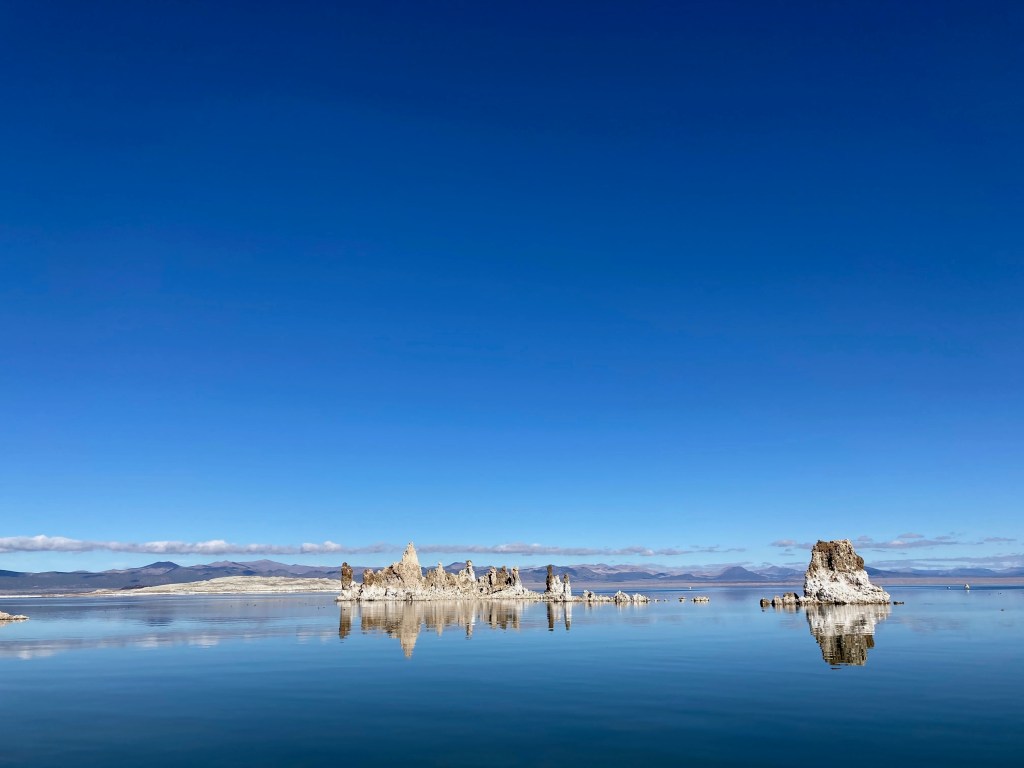
But there are over 100 perennial salt lakes around the globe, and hundreds of seasonal ones.
Each of these lakes have amazing histories and support unique ecosystems, making them a precious resource for biodiversity.
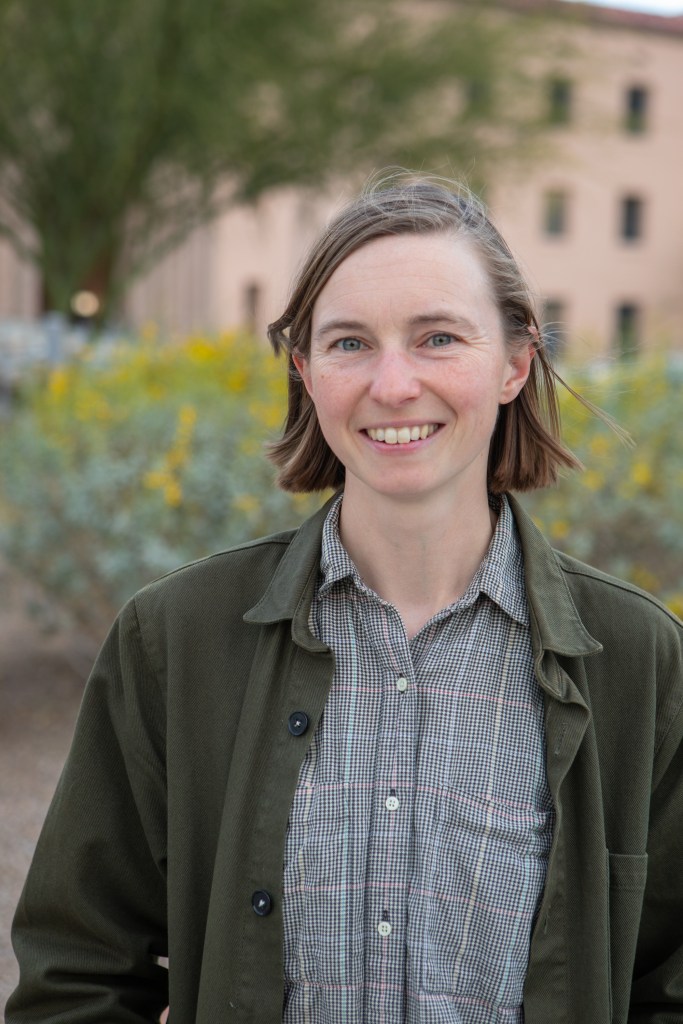
My guest today is Caroline Tracey, author of the new book “Salt Lakes – An Unnatural History”. Caroline’s book weaves a fascinating ecological story with her own personal narrative, unveiling one of Earth’s most overlooked ecosystems.
Today we discuss a few of these amazing stories, and look at the unique life that these lakes support. We also reveal the threats these salt lakes face, and how diminishing water levels not only put many species in peril, but threaten the health of people in nearby communities.
But there are success stories, in flight or emerging, for many of these imperiled lakes. You can find Caroline on her website, cetracey.com, on instagram @ce_tracey, and read more of her writing on her substack.
Did you have a question that I didn’t ask? Let me know at podcast@jumpstartnature.com, and I’ll try to get an answer!
And did you know Nature’s Archive has a monthly newsletter? I share the latest news from the world of Nature’s Archive, as well as pointers to new naturalist finds that have crossed my radar, like podcasts, books, websites, and more. No spam, and you can unsubscribe at any time.
While you are welcome to listen to my show using the above link, you can help me grow my reach by listening through one of the podcast services (Apple, Spotify, Overcast, etc). And while you’re there, will you please consider subscribing?
Links To Topics Discussed
Salt Lakes – An Unnatural History – publisher | bookshop.org | amazon
Credits
Thanks to Amelia Heinz-Botz for editing this episode!
The following music was used for this media project:
Music: Spellbound by Brian Holtz Music
License (CC BY 4.0): https://filmmusic.io/standard-license
Artist website: https://brianholtzmusic.com
Transcript (click to view)
Michael Hawk owns copyright in and to all content in transcripts.
You are welcome to share the below transcript (up to 500 words but not more) in media articles (e.g., The New York Times, LA Times, The Guardian), on your personal website, in a non-commercial article or blog post (e.g., Medium), and/or on a personal social media account for non-commercial purposes, provided that you include attribution to “Nature’s Archive Podcast” and link back to the naturesarchive.com URL.
Transcript creation is automated and subject to errors. No warranty of accuracy is implied or provided.Caroline Tracey
[00:00:00] Michael Hawk: What comes to mind when you hear Salt Lake? If you’re like many people, perhaps you think of the Great Salt Lake in Utah, or maybe it’s the Dead Sea or the Caspian Sea, but did you know there are over 100 perennial salt lakes around the globe and many hundreds more of seasonal ones.
[00:00:17] Each of these lakes have amazing histories, and they support unique ecosystems, making them a precious resource for biodiversity. My guest today is Caroline Tracy, author of the new book, Salt Lakes and Unnatural History. Caroline’s book weaves a fascinating ecological story with her own personal narrative unveiling one of Earth’s most overlooked ecosystems.
[00:00:39] Today we discuss a few of these amazing stories. And we look at the unique life that these lakes support.
[00:00:45] We also reveal the threats salt lakes face, and how diminishing water levels not only put many species in peril. But threaten the health of people in nearby communities.
[00:00:55] But there are success stories, either in flight or emerging for many of these Imperiled Lakes. We talk about several of those and what you can do to help, you can find Caroline on her website, ce tracy.com, on Instagram and read more of her writing on her substack. And by the way, each of these are linked in the show notes.
[00:01:14] So without further delay, Caroline. Tracy.
[00:01:17] Caroline, thank you so much for joining me this morning.
[00:01:19] Caroline Tracey: Thanks for having me.
[00:01:21] Michael Hawk: gonna just jump right in. We’re gonna be talking about Salt Lakes, could you paint a picture of what a Salt Lake ecosystem looks like? What makes them so special?
[00:01:31] Caroline Tracey: Absolutely. Salt Lakes are lakes that form at the base of closed valleys. These usually appear in deserts, so you’ll be driving somewhere like Eastern California or Nevada and be in this kind of yellow, brown, sagebrush landscape, and all of a sudden there will be a. Bright blue glistening, body of water. surrounded by very shiny white,
[00:01:57] And what’s so remarkable about that combination is the contrast between the color of the landscape and the color of the water. It has to have that contrast because the closed basins only occur really in desert regions, otherwise there would be enough water that it would flow out.
[00:02:15] And the salt in the lakes actually makes them glisten more brightly than a normal lake. So they have this really stunning , strange and otherworldly aesthetic appeal of a contrast between a really bright body of water and a desert landscape.
[00:02:33] Michael Hawk: yeah, you come up over a hill with the brown kind of sagebrush habitat and then suddenly it’s the bright white of the salt and the water and it’s like, oh my gosh, what is going on here? Having driven across Nevada and explored in Nevada, They just stand out so much. I think that’s a, a good place to find salt Lakes probably as good as almost any,
[00:02:54] Caroline Tracey: absolutely. Yeah. Nevada is the great basin, right? This sort of interior desert of the United States that does not flow out to the ocean. All the water goes inward, but it’s not just one big basin, right? It’s, it’s dozens of smaller basins that are all closed or almost all closed. Some connect between two or three, but each one of those closed basins has,
[00:03:16] either a salt lake that’s permanent, that’s there all year round, or a salt flat that sometimes fills with water. And so when you’re driving through Nevada, you just are constantly coming upon these really striking salt based landscapes.
[00:03:30] Michael Hawk: I think for someone experiencing a salt flat for the first time, you think it’s snow or something. It’s just so bright, white, glistening, reflective, just, you know, an amazing experience to see.
[00:03:43] and. The fact that it’s a closed basin. I guess the question that comes to a lot of people is why is there so much salt?
[00:03:49] Where does that come from?
[00:03:50] Caroline Tracey: Yeah. That’s a good question. I think that one, one thing that people have asked me about my book is, well, like what’s the threshold for a salt lake? How much salt does it have to have? And there’s a huge range of salt concentrations in salt lake. Some are much less salty than the ocean.
[00:04:04] Some are much more salty, like 10 or more times salty than the ocean. and for me it’s really that closed basin geology that, that makes a salt lake. But the way that the salts appear, is partially from these ancient seas that used to exist in , much of what’s now the American West. it’s called the Western Interior Seaway, right? and when the climate changed at the end of the Pleistocene, that water evaporated and left these much smaller sort of little footprints. So, for instance, the Great Salt Lake in Utah was Lake Bonneville. And when you’re at the shores of the Great Salt Lake, or in even sort of Salt Lake metropolitan area, you can see these kind of.
[00:04:44] Old, lake Shores from when it was Lake Bonneville. And that lake went all the way into Nevada and Idaho. So over time, these really large bodies of water shrank, but the salts don’t evaporate with the water. So that’s,, where the salts come from. And interestingly, you know, one thing that I think people often don’t know is that , the rivers that feed the salt lakes, which are very important because they’re losing water every year to evaporation, they need an influx of fresh water.
[00:05:10] It’s always fresh water that’s coming in. Or sometimes, you know, there’s a little bit of mineral suspended in that water. Like the Colorado River we think of as like a very salty river because it’s got all these minerals suspended in it, those will end up in the Salt Lake basin. But really it’s important that they’re getting an influx of fresh water.
[00:05:27] Michael Hawk: So I guess without that influx of, fresh water, then the salinity just increases over time.
[00:05:33] Caroline Tracey: Exactly, and that’s the problem that almost all of these lakes around the world are facing right now. That those rivers are really important for the societies we’ve built around the American West and in other regions around the world. And so farmers and industry and cities divert the fresh water to use for things like alfalfa or cotton or lawns.
[00:05:54] And that water is not ending up getting to the salt lakes anymore. It’s evaporating off those fields before it gets there.
[00:06:01] Michael Hawk: Yeah, I think that the eye-opening thing for me when I first became aware of Salt Lakes was just like how much salt there is on the landscape and how you do need like this outflow to to also help you need the inflow of fresh water in an outflow to, kind of carry the salt away and distribute it, in a less concentrated way, but.
[00:06:18] When that doesn’t happen, now you have a unique ecosystem that arises. And before I get into that, I’m, I’m gonna just leave that as a teaser because I think there’s some fascinating things that happen from an ecosystem standpoint. I do wanna back up a little bit and ask you about how you got interested in Salt Lakes.
[00:06:35] Like what drew you to them?
[00:06:36] Caroline Tracey: It was essentially what I just described. I, uh, was I, in my early twenties, I dated someone who’d grown up in the Central Valley of California, and we did all these road trips around Eastern California and Nevada, and those were regions that I had never seen. I grew up in Colorado, so I thought I really knew everything about the American West, and turned out I knew one slice of it.
[00:06:56] , And I was floored by the desert of California and the Great Basin in Nevada. And I was especially floored by the fact that at seemingly every turn or every mountain pass, there was this salt landscape at the base of the valley. in places like the Salton Sea, or Walker Lake in Nevada.
[00:07:14] Just really surprised me and made me want to learn more.
[00:07:17] Michael Hawk: So I understand this interest and dare I say, love of Salt Lakes has led to many writings from you , but ultimately a book that is scheduled to be released in March of this year.
[00:07:29] I saw it was already on pre-order on Barnes and Noble and Amazon, and some other places.
[00:07:33] Caroline Tracey: Yeah, the book will be out on March 17th from WW Norton, but yes, it’s available for pre-order. You can go to Amazon or Barnes and Noble, or you can go to your local bookstore and ask them to order it. All of those ways are available.
[00:07:45] Michael Hawk: And then obviously I’ll, I’ll link to some options in the show notes as well. But can you tell me a little bit about the book who’s your intended audience? What are you hoping people can take away from it?
[00:07:55] Caroline Tracey: The book is a mixture of environmental reportage about salt lakes and about the decline of many of the world Salt Lakes, and the scientists and activists that are working very hard to conserve them. And then it’s also a personal narrative, um, that spans basically age 23 to 33 in my life. And that includes many different things living in multiple places around the world.
[00:08:20] I, I was living everywhere from California To Central Asia, in that time. And there were salt lakes in almost all the places I was living. and also there’s kind of a queer coming of age narrative, , that ends with, you know, a, a happy ending of me getting married.
[00:08:34] Michael Hawk: Yeah, I’ve looked at the book and, uh, it’s, it’s like part. Ecology, large part ecology, but then also, you know, memoir coming of age some travel adventure. It’s an interesting mix, for sure.
[00:08:45] Caroline Tracey: Yeah., I, I really enjoyed getting to do all the research and reporting because I got to talk to tons of different types of people and go to the archives and read a lot of scientific journal articles. It was just a very varied research process.
[00:08:58] Michael Hawk: yeah, it sounds fun to me. I love the learning process and the research process, and I understand that through the midst of all of this you ended up living in Mexico City and came to a surprising realization there.
[00:09:13] Caroline Tracey: I ended up in Mexico City because I was working on a dissertation that had to do with migration and the geography of migration. Nothing to do with the environment really. I had been living there for over a year. I had started dating the person who’s now my wife.
[00:09:28] Um, and in the midst of the 2020 Pandemic, I was reading a book about the history of Mexico City and I learned that Mexico City was not just built on a lake, but it was built on a salt lake. And I just sort of couldn’t believe my luck there.
[00:09:42] Michael Hawk: It seems, you know, it’s kind of like destiny, I guess in a way. What a fun realization , to have. Did you, did that make you go out and explore differently locally, like finding the, the remnants , or echoes of that, historic lake.
[00:09:54] Caroline Tracey: At the time there was kind of a controversy around the remaining lake bed of, it’s called Lake Texcoco, was the, , lake on which Mexico City was built. they were going to build an airport on the lake bed, and that was eventually canceled and it was turned into kind of a park.
[00:10:08] It’s an interesting place to visit because you can see these kind of layers of, what was originally a lake bed. And then they tried to do this kind of managed vegetation, much like what you see at Owens Lake.
[00:10:19] And then on top of that, you see like. Runways and parking lots that did get paved and that are still there. And interestingly, flood in the summer, there was a lot of rain in Mexico City and the runways were underwater for some time. I don’t know what they were planning to do, if they had built that airport.
[00:10:34] And then now you have these sort of park infrastructure, you have skate parks and you have bike trails. So it’s a very interesting, layered landscape. But I guess, you know, the other sort of more personal surprise too is that when I read this and had this realization that the lake was built on a salt lake, I learned that my, my father-in-law who’s now passed away actually had worked on some of the drainage projects.
[00:10:57] He had had these very unusual stories about, you know, building an enormous tunnel out of the city and having to dig up the sort of central Boulevard.
[00:11:06] And, and so it turned out that there was this sort of personal connection in my, in-laws that I had no idea about until I started researching this Salt Lake.
[00:11:14] Michael Hawk: One of the things I find myself saying all the time, and here’s another example of it, is like it’s all connected. Like everything’s is connected in some way. Sometimes we just don’t see it in the moment.
[00:11:24] Caroline Tracey: Yeah. In my case, things just keep coming back to Salt Lakes. I imagine in other people’s lives, you know, they find their own obsession and it all comes back to that. But I agree with you. I think things are really connected.
[00:11:34] Michael Hawk: getting back maybe a little bit to Salt Lake’s you know, you, you’ve described sort of the situation that they occur in closed basins, arid areas where there’s a lot of evaporation, maybe inflows reduced.
[00:11:47] , And I know, like for me personally, growing up, I always heard about the Great Salt Lake and how unique it was. And in my mind, for some reason I sort of translated that to, oh, these, these are exceptionally rare. Is this the only one?
[00:12:00] Like in my mind, I think I thought that was the only Salt Lake. But it turns out in these, in the geographies that you’ve described, they aren’t that uncommon. Approximately, like how many Salt Lakes are there and where are they distributed on the globe?
[00:12:13] Caroline Tracey: That’s a good question. Yeah. I think that you’re not alone in believing the great Salt Lake was the only one, or the exceptional one. It is exceptional, the largest one in the Western Hemisphere, but there are many others around the world. I think that one of the main reasons that many people don’t know about them is that they occur in these desert regions.
[00:12:32] And so they’re often very remote. They’re not in places that people have settled. Um, salt Lake City and Mexico City are somewhat unique, in that those are such big closed basins that they’re not as desertic as other places like Nevada or Kazakhstan. , But somewhere like, . Even the Caspian Sea that’s on any globe is technically a salt lake.
[00:12:53] It’s a closed basin, so technically that’s the world’s largest salt lake. It depends on where you draw the line. I, I tend to say there are over a hundred on the Earth’s surface. , But there are, salt lakes that are permanent, or they call them perennial.
[00:13:06] That means that they have water in them all year round. And then there are seasonal and ephemeral salt lakes. So seasonal would be like the valleys in Nevada that you see that, , fill in the spring with snow melt, and then they evaporate over the course of the summer. But that happens pretty regularly every year.
[00:13:23] Ephemeral would be something like Lake Manley at Death Valley, where every time there’s an enormous atmospheric river, it fills with water and it makes the news. You know, that’s a, that’s an ephemeral salt lake because, most of the time it’s just a salt flat. And then occasionally with rain it’ll,, it’ll fill.
[00:13:37] And, I write about, for instance, one. In Australia, much of Australia is a desert region, and so they have a lot of ephemeral salt lakes there that are almost all the time. They’re dry and then they’ll, they’ll fill with, big typhoons.
[00:13:49] Michael Hawk: I’ve visited like Badwater Basin, and some areas in, Death Valley, and very often, even in dry ish years, there are some puddles around. , But I, I did get to observe. One of the times where it filled up with water and it was actually like , a real lake.
[00:14:06] so maybe starting with that as sort of an extreme example of, an ephemeral salt lake. What is the ecosystem like in those places that are by and large, dry and extremely salty, but occasionally fill up with water?
[00:14:21] Caroline Tracey: Yeah I’m envious that you went to go visit it when it was filled of water. It seems so neat.
[00:14:26] Michael Hawk: Yeah.
[00:14:26] Caroline Tracey: Yeah. I think that, for me it’s helpful to picture a small valley in Nevada. Right. maybe some people can picture that, where you have, like I mentioned, the sagebrush landscape there.
[00:14:37] It’s, it’s a diverse, you know, there are a lot of grasses. It’s not only sage. The grasses and shrubs, and along the waterways you have riparian vegetation. Like these very green leafy plants. , this would be kind of the, the surrounding valley would have that kind of vegetation the arid step vegetation in the drier areas and the riparian variant vegetation around the creeks and rivers.
[00:15:00] And then as you get closer to the salt flat what starts to happen is it gets muddy. And , you start to see that there’s been water there, it’s collected and it started to evaporate in this kind of concentric way. , Maybe some of the California listeners know about vernal pools, for instance, in the Central Valley, it’s the same kind of concept where you have this, this really like outside in evaporation, but on a valley wide scale, right?
[00:15:24] And so you get to this mudflat area and that area come sometimes has like reeds, and sort of green vegetation. Then from there you get to a drier whiter, right? The flat. you know, the, I think when we pictured in our head, we have maybe like the Bonneville salt flats, where it’s just this like massive white ice, like salt.
[00:15:44] But when you’re walking around in these, playa in Nevada often it’s muddy. It’s sort like there’s a sort of a crunch at the top, but then your, your feet are going into mud. And each of those sort of concentric rings supports different, creatures, different habitat.
[00:15:59] And so, sometimes people use the word often sterile to describe playas or salt flats. But, there are actually a lot of microorganisms that that can live in these highly salty, environment. When you see pictures of the great Salt Lake where it’s like purple and orange, those are micro microorganisms.
[00:16:17] And some scientists have done research at places like Mono Lake, in eastern California to try and find, creatures that maybe would be analogs to places like Mars, like to see if some of those micro creatures that exist in these extreme environments in the American West would be the type of creatures we would find life and other planets.
[00:16:34] And then obviously as you get more to the sort of more wetter rings surrounding that playa, it’s supporting a whole diversity of desert creatures.
[00:16:45] Michael Hawk: Yeah, it’s such an interesting point that you make, and a lot of the organisms that live in these environments are sort of like extremophiles. They’re living on the edge of what they’re able to adapt to, which. Leads to the, those who are interested in life off of earth studying them. , So in, in these like ephemeral cases, is the salinity typically a lot higher?
[00:17:05] Like in the Death Valley example, lake Manley example,
[00:17:09] Caroline Tracey: that’s a good question. I’m actually not sure how that works because the salt flat is there all the time, but then when it fills, it’s theoretically filling with water that’s pretty fresh, which maybe would mean that it’s actually a lower salinity than some of the permanent salt lakes.
[00:17:23] I should find out an answer to that question and get back to you. ’cause I’m actually not sure
[00:17:27] Michael Hawk: Yeah. It’s interesting. May maybe it it’s initially very fresh and then as it persists and dissolves some of the salt, maybe it, it increases over time. , But I guess ultimately what I’m curious about in those cases is like you mentioned the vernal pool example. And maybe vernal pools are more reliable than some of these extreme cases.
[00:17:45] And when they refill with water, you’ll see things like fairy shrimp or, or certain organisms that have, adapted to withstand periods of drought, but then they can take advantage of these cases when there is water. Do you see similar sorts of activities, in these, salt lakes?
[00:18:01] Caroline Tracey: Yes, you similar to vernal pools where you have fairy shrimp, you have um, what’s called brine shrimp or at Mono Lake, they’re called alkali shrimp. And, those are.
[00:18:11] Ancient creatures that have dispersed by wind predominantly, , to get to the different salt lakes. So they have these, tiny cysts they call them, that are like a little hard shell, and those can be dormant for years, and is when it’s floods and the condition is correct for them to, break out of their shell and hatch, then the shrimp, , will come to life and, and start to reproduce.
[00:18:34] And similarly, , you also have brine flies and alkali flies. There’s been like kind of a speciation debate, with the flies.
[00:18:42] The flies are some of the sort of most newly evolved creatures that flies, got to salt lakes and they like speciated , to deal with the salt. And I would say both brine Shrimp and brine flies have just very unusual life cycles.
[00:18:57] And then in the case of the shrimp, they create these kind of like bubbles around them in the water and come up to the surface and they just both have these very unusual life cycles.
[00:19:07] Michael Hawk: I would love to get into some of those adaptations a little bit more. Uh, can you give a couple examples of off the wall, reproductive strategies and then other adaptations ’cause I think for most organisms, high salinity is a challenge and you can’t survive.
[00:19:20] You have to have some way to deal with that.
[00:19:22] Caroline Tracey: yeah. In the case of the brine shrimp that I mentioned, for instance, they have multiple forms of reproduction. They can, give birth to a live brine shrimp or they can give birth to a brine shrimp that later hatches. And so that enables them to reproduce no matter sort of what the condition that, , they’re giving birth in is.
[00:19:42] And also to give birth twice a, have sort of two generations, right? You don’t have to live the whole year to get to the season of reproduction. and then in the bird life, because this sort of odd food chain of microorganisms and flies and shrimp. supports a high number of a few species of birds, right? There are, um, many birds that go to the freshwater, sort of inlets surrounding salt lakes, but there are relatively few birds that want to get their whole nutritional content from shrimp and flies, especially salty shrimp and flies. But for the few birds that do, it’s like an all you can eat buffet because they come to Mono Lake or Lake Abert, and it’s just like flies and shrimp everywhere because they don’t have that many other predators.
[00:20:25] And so those birds have some interesting, adaptations. One of them is that they for the most part, they avoid ingesting the salt. So they’ll like kind of like fling the salt off with their beak before ingesting the, the creature. But they also have, , tear ducts where they can,
[00:20:41] filter out some of the salt that. They do ingest, they have specialized, I believe kidneys. also they’re, they’ve adapted to be able to get rid of these salts in their bodies. And there’s an ornithologist that I got to interview and speak with for my book named Margaret Rubega. a professor at University of Connecticut.
[00:20:59] But she did a lot of research in Mono Lake. , And she found the mechanism by doing, and this was in the nineties, like before it was, you know, before cameras were everywhere. She got these like freeze frames of, the phalarope, which is one of these salt tolerant birds that, , is really common at Salt Lakes.
[00:21:15] Just how they are able to pick up. Flies, off the surface because you can imagine there’s sort of like the surface tension of water. It’s actually challenging for a bird with a beak to get a fly off of the water. And so she was able to discover exactly how they kind of use the surface tension to their advantage, like kind of suction and then like open their beak quickly , and grab it.
[00:21:36] , They have to eat a ton of those flies.
[00:21:38] Michael Hawk: , they’re a relatively small bird and, and lightweight, but the flies are smaller and lighter still. So you could see where the salt would accumulate if they don’t have a strategy to do that.
[00:21:49] Caroline Tracey: And I believe, I, I don’t wanna get this backwards, but I believe one of the things she showed was that , it’s such a small bird that if they just eat shrimp, it’s not nutritionally dense enough and the body of the shrimp is too big. So they would like fill their belly but not get enough energy.
[00:22:02] They have to eat the flies because they’re tinier and more nutritionally dense.
[00:22:06] Michael Hawk: interesting, it reminds me , at the Mono Lake Visitor Center, they have a, a video. That kind of tells the history. And, uh, in the video they show some gulls walking along the shoreline and their beaks are open. There’s so many flies.
[00:22:20] They’re just letting the flies come into the, come into their mouth and they forage that way. It just, it’s just so funny to see.
[00:22:27] Caroline Tracey: Yeah, I mean, going back to what I mentioned before about often these salt, flat salt lakes being described as sterile. I think when you actually start talking to the scientists, it’s completely the opposite. They just talk about them as these incredibly abundant places. Um, and it’s just abundance of a smaller amount of species.
[00:22:44] But, you know, I, it was a really impactful moment for me the first time I went to a salt Lake, sort of at the time of abundance, because I had visited Salt Lakes, but either I hadn’t known to pay attention or I had just been there at the wrong time of year, like, in the snow or whatever. and I went to Lake Abert, which is in, , south Central Oregon, in the late summer.
[00:23:04] And it was just, ribbons of flies around the shoreline and these sort of like ribbons of gold that I was like, what is that? And when I got closer, it was the cysts they had like cast off. And I think that it is one of another one of these sort of beautiful and striking aspects of salt Lakes that , they really do, have an abundance of life that you don’t see everywhere.
[00:23:24] Michael Hawk: One of the things I really enjoyed about my visits to Mono Lake is there’s a, a population of Osprey there. And at first I, I was like, why here? There’s, there’s not fish for them, to catch, but it provides a protective area. They’re little islands in the lake and , it’s a home for them While maybe they go and they forage elsewhere, , it’s another layer of the benefit that these habitats provide.
[00:23:49] Caroline Tracey: Yeah, exactly. The predators don’t necessarily want to go to the salt lake. So if they can stay there and have it be their home base they can fly to find fish in the fresh waters surrounding.
[00:23:58] Michael Hawk: And there’s so many things we’ve started to touch on, that, , I think will help build the picture of, why these ecosystems are important and the threats that they face. But before maybe we get into that fully, you mentioned the seasonality of this, of these lakes. So, my understanding is that some of these bird species, they’re essentially migratory stopover points.
[00:24:17] Is that accurate? And if so, can you maybe paint a picture of, an example or two?
[00:24:22] Caroline Tracey: Absolutely. Yeah. , The salt lakes are, are really important in, the migration pathways that go up the west and the center of the country. , One example is the phalarope, that I mentioned before. Those, birds lay their eggs, , often in southern Canada, in Saskatchewan. And then they start to migrate south for.
[00:24:42] the Austral summer, via Salt Lakes. And it’s, it’s pretty amazing because they are just flying between Salt Lakes, which is where they get their nutritional content. , And, it’s a relatively small number of birds that migrate via salt lakes.
[00:24:56] , But for the birds that do, it’s, it’s really important. So another example, besides the phalarope of which goes from Canada down to Argentina, that’s the one bird that goes across the entirety of Americas
[00:25:07] Michael Hawk: it’s incredible.
[00:25:08] Caroline Tracey: But there’s also the eared grebe that’s, a very important bird, um, , that migrates , like across North America.
[00:25:13] So , you know, great Salt Lake down to Mexico and back. One ornithologist explains to me that in general with a, if you think of a bird species it’s very unusual to see more than 1% of that bird species at any given place, , at any time. So, you know, obviously something like a sparrow, you’d never see 1% of sparrows in one place at one time.
[00:25:32] But. In the case of eared grebes, you get 90% of them at the Great Salt Lake at one time. And so these salt lakes are just completely, indispensable for the species that use them because they, are few enough in the landscape that a very high concentration of those birds, flock to ’em.
[00:25:49] Michael Hawk: In terms of then, , the reliance on Salt Lakes for migratory connectivity. You’ve already mentioned that Salt Lakes can be a little bit unpredictable, certain ones, so are they, are they going to the ones that are more reliable, generally the ones that, that typically always have water year round?
[00:26:06] , Or do they take advantage of some of the., Ephemeral Salt Lakes or the temporary ones that evaporate by summer.
[00:26:13] Caroline Tracey: That’s a really good question. I think it’s a question that scientists are actually working on at the moment. one of the groups of scientists that I got to spend time with, in my research for the book was, um, called the International phalarope Working Groups. So, a couple of scientists, who grew up at Mono Lake.
[00:26:28] Realized that , there wasn’t a lot of knowledge about how phalaropes were adjusting to the decline of Salt Lakes, and in the case of Mono Lake to the increased regulation at Mono Lakes since the, since the nineties. And so they wanted to try of do exactly that geographic research that you mentioned, figure out, okay.
[00:26:44] If, if Lake Abert dries up, which it has, what happens to the phalaropes that go to Lake Abert? Do they simply die or are they able to kind of recalibrate and go to different, salt Lakes? And so what they did was they put a few trackers on birds that they were able to catch when they were nesting.
[00:27:02] . In Southern Canada. And what Ryan explained to me is they were really surprised by the results that there had been this idea that, um, basically the birds are going to Mono Lake getting super fat, you know, just eating, chomping down tons of flies, and then like picking up and going straight to Ecuador where there are some very important salt ponds that they stop over at.
[00:27:24] And what actually was the case was that they were stopping at these more ephemeral ponds, that weren’t really on sciences radar so much. You know, the birds actually knew about, uh, these smaller bodies of water that, you know, are more remote or just more insignificant , to humans.
[00:27:39] And so they hadn’t paid a ton of research attention. However the problem is that if Lake Abert what is supposed to be a perennial, a permanent salt lake is drying up, which has, a few times in like the last 10 years. The smaller lakes are definitely drying up. And so I think that’s a big, a big question for scientists right now is, does the fact that 90% of I eared grebes go to the Great Salt Lake mean that the Great Salt Lake is just that important or does it mean they have no other options because everything else is drying up?
[00:28:10] Michael Hawk: I was thinking like, oh, well, okay, at least they have a plan B. But you’re right, the Plan B is highly correlated to plan a. , So if one is successful, the other one might be if, if not, then it’s a problem.
[00:28:25] So I think this is a good lead in , to the threats. We’ve already talked about a couple you’ve mentioned. How water, uh, upstream is diverted and that’s presumably one of the causes for these lakes drying out. But can you walk me through, you know, why are the salt lakes in peril?
[00:28:42] What are some of the factors that are leading to this? Uncertain future.
[00:28:46] Caroline Tracey: Yeah, you might have seen newspaper headlines, especially a few years ago around like, 2020, 2021, about the Great Salt Lake reaching a historic low elevation and the dust problems that has provoked. And it’s not the only one.
[00:29:01] I mentioned the Aral Sea that, , is another Salt lake that’s lost 90% of its surface area since the sixties. . In general, the issue facing the Salt Lakes has been water diversions. So each of these lakes is fed by a few principal rivers.
[00:29:17] Some of the smaller ones are just fed by ephemeral creeks, but the bigger lakes have rivers that are feeding them. , And the issue is that those waterways are really important for human society and the different economic activities that humans do in arid landscapes. So in the case of Utah, a lot of the water is diverted for agriculture.
[00:29:39] It’s also diverted for industries and cities and lawns. But really, if you look at sort of the state statistics, agriculture is the biggest consumptive user of water. There’s a difference that some scientists in Utah explained to me between consumptive use of water,, and municipal use of water where, , in the case of agriculture, you’re diverting the water, you’re putting it on farm fields, and the vast majority of it is evaporating off of the leaves of the plants.
[00:30:03] It’s not really recharging into the groundwater, whereas in a municipal use of water, actually some of the Salt Lake City activists say like, when you go to the bathroom in Salt Lake City, flush twice, once for you and once for the Great Salt Lake because, actually the treated water is one of the principal, waters that does reach the great salt lake that isn’t diverted.
[00:30:22] And so municipalities, lawns are a big issue in municipalities because it’s similar to a farm field where the water can evaporate off, but actually the human use showering and that kind of thing , isn’t quite as big of a, , of an impact, as we might think. , Really it’s. Agricultural diversion, for alfalfa, for cotton in the case of the, Aral sea and other big commodity crops.
[00:30:44] And then unfortunately around the world we’ve started to see the impacts of climate change and those have really accelerated these impacts of water diversion. So while historically it was really this sort of relatively straightforward, , problem of we just need to divert less water and get more water to the lakes, that’s still true.
[00:31:02] But at the same time, we’re facing a situation where we have much more unreliable snow pack and overall trend of decline. I mean, if you look at, I’m from Colorado and i’m seeing people’s photos of like barren ski hills in December, right? This is something that was definitely foretold, about what was going to face the mountain west, but that we hadn’t actually seen,, and this year we’re seeing the sort of really noticeable decline in snowpack.
[00:31:27] So that snowpack is what feeds those rivers that then get diverted and that then reach the lakes. And so right now we’re facing this kind of dual problem of humans choose to divert the water because that’s how our, economic and legal system works with regard to water, but also we’ve changed the climate in a way that is making less water available.
[00:31:48] Michael Hawk: Yeah, snowpack is such a, I think it’s hard for people to kind of wrap their heads around the importance of snowpack because it’s sort of one of those free ecosystem services that we’ve always had. And I dare to say, if you ask a typical person about like, where does water come from?
[00:32:03] They may point to a reservoir or, , lake Mead or, , something along those lines. Not recognizing that in the West, the snowpack is really the biggest reservoir that helps, you know, spread out the water, , on the landscape over the course of a year. And I was just speaking to somebody, , at where I work, and, they’re like, wow, you see all the snow, you know it’s gonna be a good water year.
[00:32:24] All the snow the Sierra just got, and I mentioned to them it was primarily above 8,000 feet. So while those really high elevations did well, the total snow pack is still not great right now because it’s just at these, tippy tops at the mountains. It’s not down as low as it would typically be this time of year.
[00:32:41] it’s so immense. Hard to wrap our heads around.
[00:32:43] Caroline Tracey: definitely. And it’s changing. The cycle of when it melts is changing and, I think, , we’re going to. See a big push, I think for new kind of engineering of water storage and other types of things in the very near future.
[00:32:57] Michael Hawk: Now, you mentioned dust and dust impacts, and earlier you also mentioned Owens Lake. , And I think those two things kind of go hand in hand. So can you tell me a little bit about what is the risk to people in the environment when it comes to the dust that emerges from these drying lake beds?
[00:33:14] Caroline Tracey: Absolutely. , The bed of Salt Lake,, is obviously, dust particles like any other sort of dirt, but it’s not like a piece of ground. It’s been exposed to the elements and has sort of, compacted over time. It’s, It’s very loose and so when, when the water evaporates, it exposes a very admissive kind of
[00:33:36] area of shoreline that, , in past human experience has created really severe dust problems. So that’s been true. Almost everywhere there’s been a large case of Salt Lake drying up right in the Aral Sea. There is a long list of health issues that the, drying up the Aral Sea caused, , in large part because, it’s not just dust, it’s also the residue from all of the fertilizers and insecticides and pesticides that were used on the cotton fields in that region that then washes away into the Aral Sea or the water evaporates.
[00:34:12] And those, those particles are still there on the lake bed and now they’re in the air. And so, , that’s been a case where there have been really dozens of different health issues that have been identified in that region from all the way from sort of prenatal effects to effects on the elderly, in Mexico City in the 1960s and 70 s, they were closing the airport, I believe up to 30 times per year because, , the dust storms in the city were so bad. , That was a big part of what, precipitated them to try and control dust there. And then Owens Lake, Californians may be familiar with is a lake that, , was in the Eastern Sierra region, , at the, the base of the Owens Valley, a large valley Eastern California.
[00:34:56] And it was, , dried up pretty quickly because the Los Angeles Department of Water and Power diverted the rivers that fed it so that Sierra runoff, , snowpack runoff could be used as water for Los Angeles. And so Owens Lake dried up, , within about a decade after those water supplies were cut off and were diverted instead to Los Angeles.
[00:35:20] And by the 1990s I believe it was the most admissive single site in the country. So it had the highest levels of pm 10 and pm 2.5 of anywhere in the country. But at first, they could not regulate it under the Clean Air Act because it was considered a natural site since it was technically just a lakebed.
[00:35:41] It wasn’t considered like an industrial site. They actually had to change the, , regulation,, the way that Admissive sites are defined by the Clean Air Act in order to, create a lawsuit that could hold Los Angeles Department of Water accountable , for the dust that was coming off of that site.
[00:35:57] And in the meantime, it was a really big problem for the people that lived in that region. It’s a fairly sparsely populated area, but there are some towns around the lake where, people had to have gas masks because when there were dust storms, it was that severe. , People had, , asthma, people had cancer.
[00:36:15] , And so what has happened there has been actually. A success story in the sense of being able to control dust, not a success story in terms of necessarily restoring the lake. But in some ways yes, because what has happened is that over the course of multiple lawsuits between, the Great Basin Air Quality Control District, which is the regional Air Quality Agency in Eastern California and Los Angeles, department of Water and Power has been on the hook, for controlling all the dust that comes off of that large lake bed.
[00:36:46] , you can go visit. , It’s not clearly marked that’s open to the public, but it is, you can go check it out. , And they have everything from rectangular cells that have shallow flooding to, something that’s like dirt clods where , they’ve been able to compact the dirt so that it doesn’t emit dust anymore.
[00:37:04] They have, managed vegetation. It’s like a little farm of like salt tolerant grass, all types of different, adaptations to control dust and experiments to control dust because they didn’t know what was gonna work when they started. And so they’ve been actually able to get to an air quality level that’s better than most cities.
[00:37:21] , When you go there, it’s no longer a place that you should be afraid to breathe. , They have only a few days per year that are out of compliance. And those out of compliance , are not the skyrocketing levels that they were in the past. And it’s also been something of an, a success story for the ecosystem too.
[00:37:37] A lot of, once they built these sort of shallow flooding ponds, , and this patchwork of different types of ecosystems, a lot of bird diversity came back. And so it’s been really important kind of for local, the local Audubon Society, , has kept track of,, what species diversity has been coming back.
[00:37:53] And it’s been very impressive.
[00:37:54] Michael Hawk: Yeah, if I recall too, the, I remember seeing maybe on the periphery that they even do, , a little bit of irrigation to , keep it damp and Yeah, lots of different methods being used there. But yeah, the toxic dust, , it’s like, I think about all the news stories I’ve seen, like when we had bad wildfire seasons with , the different particulate sizes and the negative side effect here.
[00:38:17] Now you’re compounding that, so you’re getting those really challenging, particulates for our lungs, and then they’re toxic on top of that, which is just like. Ecological disaster and human disaster, , all tied into one. , Now you mentioned that there’s at least been the success of being able to control the dust, , through these lawsuits.
[00:38:37] And I guess, , there’s maybe a another minor success story in Mono Lake. Very similar. So for people that aren’t familiar with the geography and distance here in California, Los Angeles County, Los Angeles, the city is like a couple hundred miles away from.
[00:38:52] Mono Lake , and slightly closer to Owens Lake. , And it just goes to show the need for water in the West that they’re diverting or have historically diverted water and continue to from these far flung areas. But can you tell me a little bit about Mono Lake and, some of the success story there?
[00:39:08] Caroline Tracey: Yeah. Mono Lake is, , also a really important success story., I think Owens Lake is sort of success story of the Clean Air Act being used to regulate a salt Lake. And Mono Lake is the success story of something called the Public Trust doctrine, which is an idea that came from ancient Roman law.
[00:39:26] , The idea that the. The government was responsible for the waterways within its borders. In the case of ancient Rome, it applied to the shoreline of the Mediterranean. And it came into American law on the shore of Lake Michigan and Chicago with, with, a railroad right of way that the government stepped in and said, no, actually this is this area is the responsibility of the state of Illinois to protect and maintain.
[00:39:49] And in, those historic cases, it was really about maintaining the waterways for commerce that you know, obviously in the eras of sailing navigation and steamships, it was really important to maintain waterways to enable commerce. But in the 1970s a law professor made the argument that actually this public trust doctrine could apply to other values as well, like recreation and conservation.
[00:40:14] And so Mono Lake very quickly became the test case for that idea in California. And it was a really, um, sort of David and Goliath effort where relatively few people knew about Mono Lake. And even fewer obviously knew that it was declining because of the water diversions that took water to Los Angeles.
[00:40:35] And so essentially a small group of college students, they got a grant from the NSF that was at the time designed for undergraduates to do summer research. They went and camped out at Mono Lake for the summer and they did a baseline ecological survey where they did bird counts.
[00:40:52] They did the first research about the reactions of brine shrimp and brine flies to increasing salinity. And they’ve prepared this just fundamental document in terms of the ecology of Salt lakes. That then was able to be used by a small group of activists that wanted to hold Los Angeles Department of Water and Power accountable.
[00:41:14] Most everyone was afraid of trying to take on the, the massive, city utility. But a group of environmentalists and one of the county governments that had been affected by the loss of that water, took Los Angeles to, court and it went to the California Supreme Court.
[00:41:31] And at the California Supreme Court, they said that based on the public trust doctrine, Los Angeles , was indeed responsible for restoring the lake because it, it was something that was important to the state to, to restore for. To maintain and conserve for recreational and ecological values.
[00:41:49] And so at Mono Lake it hasn’t been a complete success story in terms of the implementation. , The state water board set what’s called like a management elevation. A certain elevation of the water they would like to get to, and the lake has not gotten there. In fact, I think, , precisely because of the effects of climate change, it’s been slower to get there than, than was expected.
[00:42:08] But it is a really important success story in terms of setting a legal precedent to say the public trust doctrine can be applied to maintain salt lake at a certain elevation. Um, now there is a lawsuit that’s in process in Nevada that kind of builds on the Mono Lake precedent that’s at Walker Lake.
[00:42:27] Um, and there. It’s a different state and it has a different politics and it’s a different moment in time. So, the State Supreme Court did not say like, yes, we are gonna hold the local irrigation district accountable, in the same way that the California state government said, yes, we’re gonna hold Los Angeles Department of Water accountable,
[00:42:45] but they are working on, a number of different types of strategies that can be used to ensure that more water reaches the lake. More working in concert with the irrigation district instead of, threatening , to take their water rights, which is what they were afraid of. And there’s also a lawsuit in Utah, which again, it’s a different state, a different politics, a different period of time.
[00:43:06] But I think that the public trust auction is a really powerful tool that has legal precedence that were set at Salt Lakes. They were set at Mona Lake. And that, i’ve been thinking about it with regard to things like data center fights that are going on around the whole country right now.
[00:43:20] I think that it would be a powerful legal tool for a group of citizens to say we want the state to enact the public trust doctrine to say no. Like we can’t dedicate all this water to, to a data center.
[00:43:31] Michael Hawk: So we have a legal precedent that can help and it seems like ultimately it comes down to reducing the diversion of water, of course, with the backdrop of climate change, making things less predictable and more challenging. But what else do you see that needs to happen to help preserve and improve these salt lake ecosystems?
[00:43:52] Caroline Tracey: It is a great question. I think fortunately, there are a number of options that are on the table currently. One thing that’s being tried at Walker Lake, in addition to the public trust doctrine lawsuit is. The use of water markets. So there is a nonprofit organization there called the Walker Basin Conservancy that buys water rights from willing sellers.
[00:44:15] They’re not trying to take anyone’s water rights, but when a farmer has extra land that has water rights associated with it, they can sell it at market value to the Walker Basin Conservancy. And through that effort that market based effort they’ve been able to obtain slightly over half the water rights they need to restore that lake to its target elevation.
[00:44:34] And that’s also something that I think is on the table in Utah, for instance paying farmers to have a shorter growing season they call this shoulder seasons. There are also some very in the weeds legal changes that are happening that are really promising. So for instance, water law in the west has a concept called beneficial use.
[00:44:54] That it’s often summarized as use it or lose it because they’re in the 1800s in Colorado, there were cases where people had made a claim to much more water than they could use, and their neighbors sued them and got those water rights from ’em. And so it’s created this situation where, because of that fear that your neighbor could sue you and get your water rights you have to use the entirety of the water that you’re allocated.
[00:45:16] And so there have been efforts to legalize something called instream flows, and that means the water that flows all the way to the lake water that just stays in the stream as a beneficial use. It wasn’t legal to just leave the water to which you were entitled in the river to go to the lake for many years.
[00:45:34] And that’s this very minute technical in the weeds, legal change, the legalization of instream flows. That is super important for just having a legal possibility for water to get to the lakes. So I think that, in terms of what can an ordinary citizen do um, you could become an expert in water law, which will take your entire life.
[00:45:54] But I think there are also a number of ways that people have gotten involved. We’ve seen just as a huge amount of interest in people living in the Salt Lake City metropolitan area to understand the issues facing Salt Lake and to lobby. There have been a number of great Salt Lake based lobbying days at the Utah State Capitol.
[00:46:13] And I think that type of thing can be repeated in other places. Too, at Lake Abert in Oregon, there’s a collaborative working group where they brought together the ranchers who are the ones who divert the water that reaches Lake Abert with the environmentalists who, historically had been at odds.
[00:46:30] They found out they all actually really like each other and they’re really working hard to get to a collaborative solution. So I think that, the solutions are gonna be. Localized and place-based, and they’re gonna have to do with specific states water laws, but hopefully the different states and localities can learn from each other.
[00:46:45] Michael Hawk: Yeah, and I’m glad that you brought up the complexity of the water laws and policy decisions and all of that because there’s just, there’s so many, there’s some laws that just date back, a century plus. And and they’re just so heavily embedded. So it’s nice to hear that there are people working on ways to adapt and modify those laws and also collaborate with each other.
[00:47:05] How about public perception? I keep thinking about the Utah example and the Great Salt Lake is really core, I think, to the identity of people. I mean, There’s even the city is named after it, salt Lake City. So I imagine that getting people connected and having a reverie for these places would be helpful too.
[00:47:23] Have you seen situations, cases success stories along those lines?
[00:47:29] Caroline Tracey: I think that, what’s been happening in Salt Lake City the last few years has been a really impressive success story of this, of when you talk to people in Utah, they say, for decades no one cared about the great Salt Lake. Everyone actually thought it was gross and smelly and worse than the desert because it was not the desert.
[00:47:44] It was like weird water in the desert, it was, there are dumps near the Salt Lake. It was just this sort of scorned ecosystem. And in recent years there’s been a big up swelling of interest and activism around the lake, really trying to educate people. There was for instance, a group created a massive collaborative poem about, the.
[00:48:04] Great Salt Lake. Another group of students that I got to interview held like a memorial for the Great Salt Lake when it reached its very low elevation. And so there’s been just a ton of this, like hearts and minds work in the Great Salt Lake region that I think is really powerful and that is going to translate into political change.
[00:48:23] It’s a matter of connecting that public change of opinion with the public policy. But they’re really working to do that. Another example that comes to mind is the Salton Sea, which we’ve mentioned in California that is an interesting place because it has had this recent surge, I think in interest.
[00:48:39] People wanna go there for kind of the apocalyptic tourism. There’s this town of Bombay Beach that some listeners may be familiar with that now has this kind of art scene. And I think a big draw is this weird. Weird feature of the landscape that I don’t know, what is the information that sort of gets out about that lake?
[00:48:59] It has an incredibly complex history where it was created by accident and then it was continuing to be filled by irrigation water. And then because of legal changes, it’s been shrinking quite fast. And , in that case, it’s been really terrible for the air quality of the people that live around the lake.
[00:49:14] And I think that’s a lake where there’s an opportunity of there’s an upsurge in interest. People wanna go see this weird place in the landscape. Maybe it’s just a matter of getting the information about out there of, actually it’s not cool that it’s shrinking.
[00:49:26] It needs to at least have a low level of water. And there are a lot of people working on that. I think, there’s sort of parts and minds work to be done everywhere. It’s just a matter of keying it to the local needs.
[00:49:36] Michael Hawk: I almost wish we could do an entire episode on the Salton Sea because it is such a, strange and interesting story and a case example, an extreme case example. I think E each of these lakes have really interesting stories, . And it’s exciting that you are profiling it in this way, and I’m looking forward to seeing the response from the public to your book and, all the successes that you’ll have going forward in revealing this.
[00:50:00] You called it, I think the subtitle of the book is an Unnatural History revealing the natural and unnatural side of these lakes.
[00:50:07] Caroline Tracey: Yes. It’s a partially a reference to the Terry Tempest William Book Refuge, which is about the 19 87. Um. Flood of the Great Salt Lake the year that she wrote a memoir about the year that the Great Salt Lake was at its high water record. So mine is about its low elevation record, and we uh, wanted to make a nod , to that
[00:50:26] Michael Hawk: Nice. So before we wrap up, is there anything else that that you’d like to say? Do you have any other. projects or papers or books in the works that you’d like to mention?
[00:50:37] Caroline Tracey: Oh gosh. I am just at the early stages of researching a new book that I hope will be about the history of the sugar beet industry in the American West, which is important, forgotten commodity that really reshaped the ecology of the region. So that’s where I’m that going with my sort of obsessive brain next.
[00:50:55] Michael Hawk: Oh my gosh. It, It, and that speaks to me as well. Just, down the road, over the hill behind me is an area that used to be a sugar beet plantation farm. I’m not sure what the proper term would
[00:51:06] Caroline Tracey: Absolutely. Yeah. Spreckles.
[00:51:07] Is there? It’s all, yeah. The Bay Area. I think the first functioning sugar beet plant in the US was in like what’s now Fremont? Had a different name then, but yeah, that, that region, that whole area, Southern, South Bay had a ton of sugar beets.
[00:51:22] Michael Hawk: Like I said, it’s all connected.
[00:51:24] Yeah.
[00:51:24] So here we are, you know about the area just over the hill from where I live. And how about like social media, website, anywhere you wanna point people towards?
[00:51:34] Caroline Tracey: I have a website, which is cetracey.com. Tracy is spelled T-R-A-C-E-Y. And I have an Instagram account that’s at c e underscore Tracy, T-R-A-C-E-Y. Those are the two places I think that are easiest to find me. There’s a link to a substack newsletter on the website. If if that’s easiest way to keep in touch
[00:51:54] so the website is the easiest way to find it.
[00:51:57] Michael Hawk: I’ll make sure we link to that too in the show notes.
[00:51:59] Caroline Tracey: Great.
[00:52:01] Michael Hawk: Alright, this has really been enlightening and enjoyable. I hope you’ve had a good time today.
[00:52:05] Caroline Tracey: I had a great time. I hope you did too. So Yeah. And I really look forward to uh, getting to share this interview.
[00:52:10] Michael Hawk: Yeah, I’m looking forward to it as well. And thank you so much. Thanks again and I appreciate you and all the work that you’ve done.
[00:52:17] Caroline Tracey: Thanks for thinking of me. I really appreciate it. And. It was fun. I.
[00:52:20] Michael Hawk: And one more thing before we go. Special thanks to Amelia Heinz Botz for editing help with this episode. Thanks so much for listening. I.
 Nature's Archive Podcast