

#112: Incredible Deep Sea and Tropical Marine Habitats – Dr. Judith Gobin – Nature's Archive
Summary
When we think about habitats, it’s easy to picture the rich diversity on land—vast prairies, scorching deserts, lush forests, and intricate wetlands. But what if I told you the ocean is just as diverse, filled with ecosystems as unique and vital as any on land? The only difference? We can’t see them as easily—but that doesn’t make them any less important.

Today’s guest is Dr. Judith Gobin, joining us all the way from Trinidad and Tobago. Judith is a recently retired professor of Marine Biology from the University of the West Indies.
And she’s here to tell us about tropical marine habitats, such as mangroves, sea grass, and coral reefs. She has a particular interest in deep sea habitats, such as cold methane seeps and even whale falls. It’s a bit morbid, but weighing up to 300,000 pounds, in the case of a blue whale, a dead whale literally creates its own habitat.
To my surprise, I learned that the ocean floor more than 200 kilometers away from national coast lines is basically a free-for-all for exploration and resource extraction. Judi tells us about a new treaty that aims to better control these operations, which can disproportionately harm island nations such as Trinidad and Tobago.
It’s a deep dive into ocean science, conservation, and awe-inspiring ecosystems.
Did you have a question that I didn’t ask? Let me know at podcast@jumpstartnature.com, and I’ll try to get an answer!
And did you know Nature’s Archive has a monthly newsletter? I share the latest news from the world of Nature’s Archive, as well as pointers to new naturalist finds that have crossed my radar, like podcasts, books, websites, and more. No spam, and you can unsubscribe at any time.
While you are welcome to listen to my show using the above link, you can help me grow my reach by listening through one of the podcast services (Apple, Spotify, Overcast, etc). And while you’re there, will you please consider subscribing?
Links To Topics Discussed
Biodiversity Beyond National Jurisdiction Treaty
Deep Sea Videos mentioned by Dr. Gobin
Credits
The following music was used for this media project:
Music: Spellbound by Brian Holtz Music
License (CC BY 4.0): https://filmmusic.io/standard-license
Artist website: https://brianholtzmusic.com
Transcript (click to view)
Michael Hawk owns copyright in and to all content in transcripts.
You are welcome to share the below transcript (up to 500 words but not more) in media articles (e.g., The New York Times, LA Times, The Guardian), on your personal website, in a non-commercial article or blog post (e.g., Medium), and/or on a personal social media account for non-commercial purposes, provided that you include attribution to “Nature’s Archive Podcast” and link back to the naturesarchive.com URL.
Transcript creation is automated and subject to errors. No warranty of accuracy is implied or provided.
Judi Gobin
[00:00:00] Michael Hawk: When we think about habitats, it’s easy to picture the rich diversity on land. Vast prairies, scorching deserts, lush forests, and intricate wetlands.
[00:00:08] But what if I told you.
[00:00:10] The ocean is just as diverse, filled with ecosystems as unique and vital as any on land, maybe more so The only difference, we can’t see them as easily, but that doesn’t make them any less important.
[00:00:22] Today’s guest is Dr. Judith Gobin joining us all the way from Trinidad and Tobago. Judith is a recently retired professor of marine biology from the University of the West Indies. And she’s here to tell us about tropical marine habitats such as mangroves, sea grass, and coral reefs.
[00:00:38] She has a particular interest in deep sea habitats, such as cold methane, seeps, and even whale falls. It’s a bit morbid, but weighing up to 300,000 pounds in the case of a blue whale. A dead whale can literally create its own habitat.
[00:00:54] To my surprise, I learned that the ocean floor, if it’s more than 200 kilometers away from a national coastline, is basically a free for all for exploration and resource extraction. Judi tells us about a new treaty that aims to better control these operations, which can disproportionately harm island nations such as Trinidad and Tobago.
[00:01:13] It’s a deep dive into ocean science, conservation and awe inspiring ecosystems. So let’s get started. Here’s Dr. Judith Gobin.
[00:01:22] Okay. Judi, thank you so much for joining me today.
[00:01:24] Judi Gobin: Oh, thank you. I’m really pleased to be on this podcast with you.
[00:01:29] Michael Hawk: I’m excited for so many reasons to have you on, because one a listener Edward recommended that I reach out to you and and help make a connection. It’s always a lot of fun when that happens, because so often the listeners of this podcast have such great insights into great people. So I, I know this is going to be a good discussion
[00:01:48] Judi Gobin: Well, I hope I can live up to that. But thank you for that. And thank you, Ed.
[00:01:54] Michael Hawk: And you know, the second thing as listeners know, if they’ve been, you know, I think paying attention to the themes of some of the episodes I’ve had over the last year I, I’ve really been trying to promote more about Marine systems. And I think that they’re, you know, just. Obviously, it’s sort of like platitudes, but.
[00:02:14] So important, but also so overlooked and there’s so much peril facing marine systems. So I think this is very important episode to have as well.
[00:02:24] Absolutely.
[00:02:25] , I’ve already teased what we’re talking about. So before we get into that though, I, I always like to hear a little bit about your personal journey into, into the field that you’ve chosen.
[00:02:34] Michael Hawk: So going back, have you always been interested in nature and more specifically in the ocean and marine systems
[00:02:41] Judi Gobin: Yeah, it’s living on a small island. Most of us, when it comes to our, what we call our August vacation period, or, the long summer holiday, the long summer vacation, we tend to go to the beach. We, in the old days, we When we didn’t, we weren’t able to travel that often, we went to the beach for, and the beach house for two or three weeks at a time.
[00:03:05] And that’s where my love for the ocean really developed. Apart from being able to swim, when you’re sat on the beach even as a little child, you’re digging in the sand, but you see all these wonderful animals moving around in the sand and just sort of as you get into the water. And then there’s all the, the fishermen when they’re pulling in the scenes.
[00:03:28] So it’s, it’s really a very typically Caribbean island kind of scene. scene where you have the scene being pulled in by this group of fishermen. And it’s all very exciting. And the kids huddle to see what’s coming up. And of course, it’s all very exciting because there’s a variety of fish. There’s, there’s funny looking fish, there’s fish that you might not have seen before.
[00:03:51] And it, in the old days, it was also a very good catch as well. So that’s really where my love for the ocean started. And then when I went to university, so it’s going to date me a bit. If I see in the days that I started university, there wasn’t really marine sciences or marine biology being offered, but there was of course the biology, the zoology and the, some botany and environmental courses.
[00:04:18] So And I, I did a play, a pure zoology biology degree, but fortunately for Trinidad and Tobago we had an institution called the Institute of Marine Affairs, which had been started, in the late 70s , and it was a UN organization, and it was very exciting because it was the first institution that actually, there were experts, UN experts, foreign experts at the time, and instruments, oceanographic instruments.
[00:04:53] It was a first for Trinidad and Tobago. And I was fortunate that I was, after my university degree in 1982, I was able to get a first a summer job there and then a permanent job and that really escalated my interest in the marine environment because here we had, it was actually the first sets of studies, samples being done at an institution in our, on, in our islands and documenting marine life, documenting the status of our marine ecosystem.
[00:05:30] So it was really very, quite interesting.
[00:05:33] Michael Hawk: in that era, was there already a sense that, that some of these systems or the, the, the production, the, the fisheries you know, any other metric where. Declining,
[00:05:46] Judi Gobin: in fact it was all because this was really our first reveal of what was actually there. Because we’d always, textbooks tell you what’s on a rocky shore. , textbooks tell you what’s in a wetland. All of the marine ecosystems, coral reefs and so on.
[00:06:04] But for the first time we were actually sampling, we were actually scuba diving, we were actually documenting what was present in our own reefs. So it was the start of an era of getting to know and scientific identifications of what we had in our marine ecosystems. And it, it really was quite exciting and also excellent baseline studies for then what was to come much later.
[00:06:36] So using these baselines so we did benthic surveys, we did coral reef surveys, we did mangrove surveys, fisheries. So fortunately for us, we had those baselines to then compare 10 years later, 20 years later. So I am really pleased to see that we do have a very good baseline of information that we can use and certainly be able to see trends and how things have changed and that we have seen, of course.
[00:07:09] Michael Hawk: right? It definitely sounds fortunate that you were able to do that because I, I’m thinking of, of so many stories I’ve heard where some scientific endeavor begins and establishing that baseline can be, it can be difficult to get funding to do those sorts of things. Because if people believe there’s no problem, it’s like, why, why measure it?
[00:07:27] But you, you have to have that baseline when the problem does arrive.
[00:07:31] Judi Gobin: Yeah. Oh, and it was very exciting, of course, for Trindad to be there because the, we were trained by a lot of these foreign oceanographers, foreign ecologists, foreign biologists, and the Institute of Marine Affairs then built up good capacity, good human capacity. So we started then to have oceanographers.
[00:07:52] We had benthic ecologists. We had coral reef ecologists. So, it really is quite a success story and it all started at the Institute of Marine Affairs. Yes,
[00:08:05] Michael Hawk: of the different marine ecosystems that are there. Maybe that’s a good lead in to, like, I think a lot of folks are pretty comfortable with terrestrial systems. We we can talk about different types of forests or wetlands or, or things like that. But you know, we aren’t so familiar with those in the ocean because they’re kind of beneath that glassy sheen of the water and we don’t see them and interact with them
[00:08:31] all the time.
[00:08:33] So could you maybe provide a quick overview? You could start with the systems that are in Trinidad and perhaps move more broadly beyond that some of the more productive or biodiverse marine ecosystems that are out there.
[00:08:48] Judi Gobin: Sure. So just let’s remind our listeners the location of Trinidad and Tobago. So we are the southernmost islands of the Caribbean, a twin island state, Trinidad and Tobago, southernmost. So we are actually at the tip of South America. We are very close to Venezuela and of course, and as I mentioned, South America.
[00:09:13] So. The reason I mention that is that we are actually in a very unique position, meaning that we are not totally oceanic because we are influenced by outflows from the Orinoco River in Venezuelan South
[00:09:30] America. So it’s it means we’re not, we haven’t got the blue waters like one would expect, but we do have it as you go further north.
[00:09:41] So that’s why when you go further north and starting with our. Our twin, Tobago, which is really more of what we would consider to be our tourist island. That’s why you have the proper oceanic reef developed there. It’s the Buccoo Reef, and it’s very well known worldwide, I believe. We still have on record one of the largest brain corals located there.
[00:10:11] And it’s wonderful diving. So Trinidad and Tobago has a bit of both, as I may say. We’re in a unique position. So we do have a coral reef, which most listeners would appreciate. We have the variety of fish, biodiversity of organisms reef organisms. You name it, we have got it. And of course, The one thing about, tropical islands, it’s, of course, it’s all very colorful, the sponges, the corals, the fish, the variety.
[00:10:42] So very colorful, very typical of what you would see in a textbook or in a some marine aquaria and so on. The ones that you can’t so you dive and you snorkel, you’re able to see what to reveal what’s in the coral reef system. What is not as easy to see is, of course, as you go from your beach, sandy beach into the water in the intertidal as you’re walking in.
[00:11:10] You don’t see the interesting organisms that are there. So our sandy beaches are rich. in biodiversity. So these are where you get all the burrowing shells, the bivalves, you get the tiny crabs, you get the there’s small intertidal fish as well, which kids, as kids, you try to pick from the water when you go swimming and things like that.
[00:11:35] And then you move out into the, so you can have a seagrass bed. So we have, the seagrass beds tend to be often found. Proximal to the coral reefs system and often proximal to the mangrove ecosystem as well and wetland system. So, for example, in Buccoo Reef in Tobago, We have all three ecosystems literally next to each other.
[00:12:05] , and again, the wetlands are, they would be, there would be an estuary that brings the fresh water to the sea. And that, of course, makes it the mangrove system, the ecosystem. It’s that mixture of the estuarine runoff flows from the terrestrial environment and coming in a river, of course, and where it meets the marine environment.
[00:12:32] And you can imagine the productivity and the sort of richness of the productivity, and that is why that area where the mangrove meets the seagrass beds, the seagrass beds reach, meets the coral ecosystems, you can understand and appreciate why it is so productive and diverse because the organic material that’s being brought by the estuarine system feeds and, this system, which is, sharing all of these rich resources in places like Trinidad and Tobago.
[00:13:09] So, for example, our huge, we have very huge wetland systems. One of the larger ones is the Nariva Swamp and or the Caroni Swamp, and they are extremely interesting areas most, people who have never been, they think swamp, it’s muddy, it’s murky, you can’t see what you’re stepping into but it’s, it’s really quite interesting and attractive.
[00:13:38] Michael Hawk: And are these saltwater swamps or brackish
[00:13:41] Judi Gobin: Right, so these would be brackish water. So some parts of course, the, the sort of more terrestrial areas are going to be more fresh water. Then you get into the estuarine and then you get into some areas which can actually be quite salty. And that’s where in the sort of saltier waterfront area where you get into the seawater now, you will have the more salt tolerant plants and animals as well.
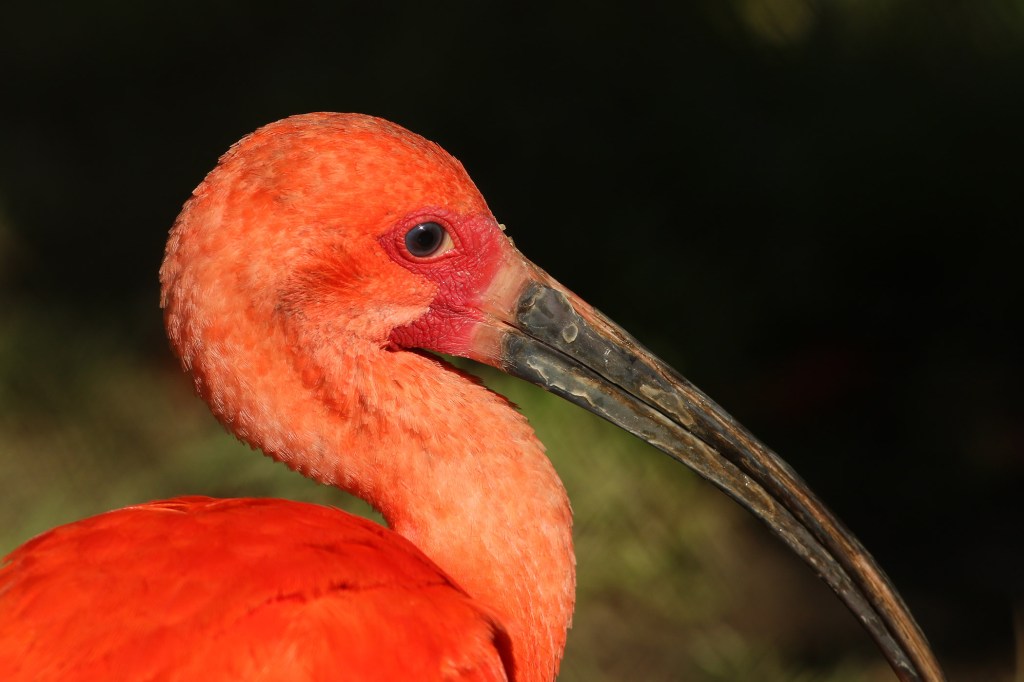
[00:14:10] So you’ll have Mangrove plants that are more salt tolerant on the outer part of a mangrove wetland or of the wetlands where it’s actually now in seawater, basically, so the richness of these environments and the support you have crabs and the shelled organisms, you have mussels, you have a lot of waterfowl, a lot of bird species, and in Trinidad and Tobago, our national bird is the The Scarlet Ibis and the Caroni Swamp is well hopefully lots of our listeners are going to recognize that it is an extremely very wonderful place to visit to see thousands of scarlet ibis as they are roosting when they come in the evenings.
[00:14:57] They come in around five, six, six o’clock in the evening. They, they fly off during the morning period and they come. So that’s when we have the tourist boats going down into the swamp because the green mangrove trees are dotted with scarlet ibis. So they basically look like, thousands of apple trees with just red dots on them.
[00:15:21] And of course, close up, that’s the whole exciting part of the tourism activity where you can actually see them roosting.
[00:15:28] Michael Hawk: So just kind of for, for my benefit, comparing these systems to terrestrial systems I know that And this is sort of what you were describing. So, so perhaps I’m just repeating in a different way, what you said, but ecotones. So if you have two different habitats that are close to each other, we call that an ecotone and they’re often very productive because you’re
[00:15:49] getting, you know, two different systems interacting and potentially
[00:15:52] twice the number of resources in close
[00:15:55] proximity. So is it kind of the same concept
[00:15:57] Judi Gobin: Kind of The same concept and, and that’s what makes the marine environment so rich because you’re having not just this sort of seawater that’s circulating and coming from different areas and different wave patterns and different oceans, movement of water, but you are also having the terrestrial input.
[00:16:17] And that terrestrial input is very rich in organic material. You have, remember you’re having break down of carbon material from trees and animals or being transported via the estuaries, passing through the mangrove systems and getting into the sea and then, of course, the associated seagrass bed or the coral reefs.
[00:16:40] One of the interesting things about the wetland systems and the mangrove forest is when you think about based on the locations that on the ecotones that we’ve just mentioned and spoken about, the mangrove system actually operates as a filtration system, so it tends to trap some very good organic material as well as It’s the not so good material.
[00:17:05] It tends to trap the garbage and the solid waste that’s coming out from the terrestrial environment that you have dumped in rivers and so on. And so I, I quite like that function of mangrove systems where they are really a filtration system. They also trap pollutants and chemicals so that there’s that sort of balance.
[00:17:29] Even as you have the richness of resources released and filtered water, as it were, into the marine ecosystem.
[00:17:38] Michael Hawk: right. And then on the topic of, of mangroves, the thing that, that I hear a lot as well is that they are really important for managing say storm surge or other, you know, yeah,
[00:17:51] Judi Gobin: Absolutely. Yeah. So, so they’ve got the other functions are exactly that. They are, that’s, this is why we encourage our nationals and our park. Park management colleagues and so on do not remove wet the mangrove system, do not remove the trees. Let’s not lose it because they are actually severe windbreaks and for hurricane protection.
[00:18:15] They protect the land, of course, and I, I think recently I saw where they’re encouraging marinas and so on to be developed in certain areas of wetlands because it’s really one of the more protected. on, in small islands like ours. At the same time mangrove systems, they are nursery areas because there’s amongst the sort of branches of, of the tree, the roots rather of the plants, the marine plants, this is where you have, baby.
[00:18:47] organisms, you have nurseries and because of that protected system, quite a number of marine organisms come into and amongst the roots of the mangrove plants to lay their eggs or to protect their young at the time when, of course, they are most vulnerable and then they’ll swim back out into the ocean.
[00:19:12] So it’s a nursery area as well.
[00:19:14] Michael Hawk: thinking of where I’ve seen mangrove, so they, you know, primarily in the tropics, but I think they nudge into the mid latitudes, just a little bit, the Southern middle latitudes
[00:19:24] Judi Gobin: yeah, yes, yes.
[00:19:27] Michael Hawk: and the one I really want to ask about, but I don’t have a good question for on land, I’ve always had a kind of a special interest in prairies. Um, and you’re talking about seagrass beds. So I’m, I’m wondering if similar to on land where prairies are often kind of overlooked is, is sort of like single monoculture grassland, which is the furthest thing from the truth.
[00:19:50] Do you encounter misunderstandings about seagrass beds in a similar way?
[00:19:56] Judi Gobin: Yes, so I think the equivalent of prairies for us would probably be more what we would consider to be marsh, the marsh systems, which are marshlands let’s say along the estuary before you get into the mangrove, well, before you get to the mangrove trees and so on. There would be, because we talked about that, when you have that inundation of seawater, into an estuary, then you have these plants that are the, it supports vegetation that’s very typical of marsh systems where, you have water in there sometimes, and then, of course, it can totally dry out.
[00:20:39] So then these marsh plants, like Spartina and so on, the grasses and sedges, these are adapted for those conditions. So it could, it can get quite dry. It can get quite dry. Because sometimes the, the saltwater isn’t able to go back out if it’s blocked and so on. And then you get into the, plants, the plants, the mangrove plants themselves.
[00:21:05] And then you get into The, the seagrass beds are actually in the, waterfront. So you know, you can walk out into the intertidal systems and there’ll be these blades of grass that are, it’s, it’s mats of grass and the equivalent really in, in temperate systems is, are the kelp forests. Because so that’s what the seagrass beds for us, but they’re, they’re much shorter.
[00:21:31] They’re also more grass like they don’t tend to be as forest. And that’s why we would say seagrass rather than kelp forest. So the kelp forest, yes, it looks like tall trees underwater. These are grasses. They may be a maximum of maybe a meter or less. And these, they are really more typically grasses.
[00:21:56] And it’s a very rich ecosystem. It if you walk into it, it’s quite silty and soggy. But it’s a rich, again nursery area. Highly productive area because these grasses Remember that they it’s a it’s a carbon source These are plants just like the mangrove systems. So carbon is produced hair in great proportions per unit area, and that’s what productivity is all about.
[00:22:29] So then you have animals that can, and of course turtles are very common in these areas, lobsters and other, some other types of fish and, your crustaceans and mollusks and so on, because there’s a lot to feed on, on the grasses themselves, you’ll have attached organisms. Now we’re talking, lower level within the food chain.
[00:22:52] So there’s lots for these, the, the larger animals to feed on. So again, a very rich environment. Most, People walking in, they’re like, it’s yucky, it’s murky, it feels squishy to the walk. But we encourage people to remember that it is such a valuable ecosystem. And just like mangrove systems, we really should not go tearing them down.
[00:23:19] We should not go clearing them. They also have a protective function, an underwater protective function because this, they, they hold the substrate together. So when you have waves and soil rolling in, they provide a protective function because they reduce the velocity of the waves because they’re, they’re there.
[00:23:41] They’re a protective barrier, pretty much like mangrove systems.
[00:23:45] Michael Hawk: Yeah, it’s easy to just think about surface waves, but you know, the, the wave action is literally deeper than
[00:23:52] that. So I want to back up to something you said a moment ago, just to clarify because it made me think here for a moment. You mentioned that, that these systems are. Carbon sources. And I think when you said that, tell me if I’m wrong, that’s, that’s from the perspective of other organisms.
[00:24:09] Like it’s, it’s a source for other organisms, not from like an atmospheric science standpoint. They’re, they’re a
[00:24:14] sink from that standpoint.
[00:24:16] Judi Gobin: Yes. So the the carbon sources, they are also carbon dioxide traps. So, because remember they’re plant material, so, and this is where we can branch off into all the considerations about the importance of marine ecosystems, because they not only provide the, the richness of the carbon material as food sources to organisms across terrestrial going all the way into the marine ecosystems, but the, it is also the ocean system is also the largest.
[00:24:55] So when we have activities that negatively impact on the ocean systems, then we reduce the resilience of the ocean ecosystem. then you can imagine. it, what’s going to happen is we are beginning to reduce that ability of the ocean to trap.
[00:25:16] excessive carbon dioxide and to continue working at the level that it has always worked at. And that’s really where the problem lies in terms of trapping of carbon dioxide and how the regulation of the climate change and so on. So the ocean really is very key.
[00:25:36] to assisting in maintaining the regulation of carbon dioxide on, It’s the largest ecosystem, and we still don’t know as much as we know about terrestrial systems. And there’s a lot still to be discovered, but do in terms of biodiversity and so on in the marine ecosystems.
[00:25:59] But what we do know is that, and we should, we want to encourage, is Let’s not pollute as much, let’s not put as much solid waste out there, let’s not increase toxicity, let’s not increase contamination and pollution, because that’s actually going to compromise the resilience, let’s say, of our, of the ocean system to continue with its valuable function of trapping carbon dioxide.
[00:26:27] .
[00:26:27] Michael Hawk: As I understand it, as there’s more sort of free circulating carbon dioxide in the ocean, it actually changes the pH.
[00:26:35] Are you, are you able to speak to that?
[00:26:37] Judi Gobin: I might not get the specific science correct, but of course, it affects the pH, the acidity, when we pump things that are the carbonic, because the carbonic bit is, and it’s got an H in there, which is of course the the then relates to the pH and so on.
[00:26:55] So this all then has to do with the the acidification of the ocean. So there is that component as well. So we have all the various things we have that are affecting the ocean. So we’re having chemicals, pesticides, contaminants. All of these products are entering the ocean and of course overloading the system.
[00:27:19] And we are also having acidic materials from wherever, from materials that we use from pesticides, from contaminants. And this, and that’s where this whole component about acidification comes from. So as we increase the acidity, of course, we are changing the stability of the ecosystem. And they, what the ecosystem is a custom and needs to thrive and to continue producing the resources that it’s a custom producing.
[00:27:55] Michael Hawk: All right. I know one of the things that I was really looking forward to getting into is. Looking at the deep sea systems in a little bit, pardon the pun, but in a little bit more depth and you know, you’re, you’re a , benthic ecologist and that has led you into looking into some of these systems.
[00:28:12] So maybe you can tell us a little bit about what it means to be a benthic ecologist and how that led you into the deep sea systems.
[00:28:20] Judi Gobin: Sure. So as a marine biologist, marine scientist at the university, I was engaged in a lot of benthic ecological surveys. And those are basically you look at marine organisms that are living in the sediments. These are the, and lots of. Listeners may not, they may think, Oh my God, what’s there? But you have some of the most interesting organisms there.
[00:28:46] You’ve got polychaetes, you’ve got nematodes, you’ve got crustaceans, you’ve got fish and, and, diverse environment. And when you think about it, it’s a very. In extremely productive environment, meaning it’s that part of the food chain where all of your other animals are feeding off of. So it’s the base, really, of the entire food chain.
[00:29:11] So my benthic organisms, although you look under a microscope and you spend days and days trying to identify what are these little worms. What are these little organisms? What are these nematodes and gastrotrichs and all the various things? Copepods and so on.
[00:29:27] Why are they important? They’re important because they’re the food source for everyone else up the food chain. And if they go missing or if they are negatively impacted, as they often are with drilling for oil, drilling for natural gas deep sea mining rather just mining in the ocean and so on.
[00:29:49] So negative impacts or destructive activities can wipe out the food source for a larger number of organisms. So we’re not going to be able to have the fish that we’re accustomed to having. And , this is actually one of the reasons why there’s been a decline in the fisheries, because a lot of the exploration activities have negative and other activities have negatively impacted on the benthos or the benthic systems.
[00:30:18] And the study of benthic ecosystems is. really part, I’m very pleased to see, it’s a major component of environmental impact assessments across the globe. So, we were very pleased that it was included and it has to be included in marine environmental impact assessments. that then led me to As part of those studies and my collaboration with colleagues, I was invited on the exploration vessel, E. V. Nautilus, and it’s owned by Professor Robert Ballard. And Professor Robert Ballard is well known as the, the marine archaeologist who was responsible for locating the remains of the Titanic.
[00:31:04] He has really just kept his interest in marine archeology , and marine biology and biodiversity. And this exploration vessel as opposed to a research vessel. The exploration vessel is all about exploring different areas. And we were very fortunate in the Caribbean that the vessel was coming to Trinidad and Tobago rather it came to Grenada first, in 2013 and a year later in 2014 came to Trinidad and Tobago.
[00:31:39] I was on that vessel with Professor Robert Ballard. And of course, I guess that’s the highlight, one of the highlights of my career. What was also very interesting, of course, is in the textbooks, As a marine scientist, a marine lecturer, I had noted that there were certain seeps, cold seeps that were present.
[00:32:04] That’s where the, it’s, it’s in the core of the earth where there’s release of gases coming out from the, the core of the earth. And there, some of them were located in our deep seas and it’s so they’re, they’ve been on maps and they looked pretty close to Trinidad and Tobago and Venezuela and South America.
[00:32:27] So one of the more exciting discoveries on that vessel. And it was also a first for Trinidad and Tobago and the Caribbean, where for the first time we had all of this wonderful imagery, lovely videography that was very clear about what we were seeing. And we were very excited, my colleague Dr. Diva Amon and myself, we were very excited about what we were seeing.
[00:32:54] Because yes, we know the names and we know some of the names. We know some of what we expected to see, but it was really mind blowing because here you were, the videography is just amazing. The, the vessel is equipped with remotely operated vehicles or ROVs with camera systems that are attached and you could see everything really clearly.
[00:33:16] And. As I mentioned, the bits were, on, in the textbooks that I had been using to teach my students. We stumbled upon the seeps and they are cold methane seeps that we were now able to see really in action. And we have those documented in some lovely videography, which we can share with podcasts.
[00:33:41] listeners who are interested, but it, it really was a first for Trinidad and Tobago and the Caribbean. And when we were in Grenada as well, one of the other exciting things, and Grenada is north of us and more oceanic. Grenada is also well known for the only The active submarine volcano, Kick-‘Em-Jenny, is located off of Grenada, the island of Grenada.
[00:34:08] And so the volcanologists on board were very interested of course, it’s a wonderful place for volcanologists to be studying and surveying. And we, on that expedition, and that one was in 2013, we discovered muscle, Bathymodiolus muscle, that was the largest on record. So we have the largest muscle on record, Bathymodiolus species and that’s from Grenada.
[00:34:38] So we we were very chuffed that here we were, we were able to uncover new treasures that were basically in our backyard in the Caribbean. And so it was the start of an amazing foray into the deep sea.
[00:34:54] Michael Hawk: That muscle that you found, is it only then only found near that volcano?
[00:35:00] Judi Gobin: It’s not, it’s not actually. So it wasn’t a new species, but it was we know that they are present in areas under those similar types of conditions. But it, it was the largest one on record and, but, but following , your train of question I’m very pleased to tell you that our 2014 expedition off of Trinidad and Tobago and other parts of, of the area,
[00:35:28] we have, we have collected close to 198 I’m very pleased to tell you that our 2014 expedition off of Trinidad and Tobago and other parts of the area, we have, we have collected close to 198 potentially new species of organisms and I’m going to pitch in here that one of the ones that’s been described before is actually named after me.
[00:35:46] It’s called Lamellibrachia judigobini. So any of our podcasters interested look for
[00:35:57] Michael Hawk: I will definitely do that. And I’ll link to what I find in the show notes so that people can find that.
[00:36:02] Judi Gobin: So really the, the, the, the point is the, the sort of excitement about all of this was we are still in 2013 and, and even up to, and 14 and, and now certainly we are still discovering new species in the deep sea. And this is why. We recognize deep sea as being extremely important.
[00:36:25] Sure. We knew that our marine ecosystems, as we’ve talked about earlier in this conversation, we’ve talked about how very important they are, and especially for small islands, states like ours that rely on the ocean’s productivity to basically feed its people for our tourism, for communities livelihoods, shipping, transport, oil and gas.
[00:36:50] as well. Now we are recogni Of course, it’s just as important and the deep sea really is quite, it’s another very large ecosystem that is, is one that we hadn’t quite considered in the equation before I mentioned professor Robert Ballard and The, the really, this whole discovery of seeps and so on has really only happened in the last 45 years or so.
[00:37:20] So the interest and the, the sort of building of knowledge and capacity in deep sea biology is still fairly young. But having said that, we have learned quite a lot about the deep sea, and we know that, of course, the deep sea, like the other ecosystems we’ve been talking about, It’s not barren. There are, there is a huge biodiversity of organisms as we revealed in our deep sea for Trinidad and Tobago and that’s just really the tip of the iceberg.
[00:37:54] We haven’t seen it all. We haven’t documented it all. We certainly haven’t documented it. photographed or videographed, the videography. We haven’t got, we haven’t done it all. But so we know there are lots of new species waiting to be discovered. And one of the very key things about. Because perhaps listeners want to know, well, what’s the big deal?
[00:38:19] We discover new species. Okay, it’s nice to have a biodiverse environment, a biodiverse deep sea. Well, there’s that very important element that we need to consider and it’s The use of some of these organisms for extraction of products. And this is what we call or refer to in science as marine genetic resources.
[00:38:46] Marine organisms and the marine environment is the last frontier. We are still discovering marine organisms. We are also, these Resources or the genetics, the sort of DNA material and so on that we extract from them are what’s used in a lot of cosmetics, pharmaceuticals, cancer, drugs enzyme production, foods, and so on.
[00:39:13] So we have this huge genetic resource that is now available and has been for some time is now available to us. It’s not that it’s only, we are only now recognizing it. In Trinidad and Tobago and based on our deep sea expeditions, we are now working with colleagues because for too long, our genetic resources resources from the Caribbean were used for to, to get to the point of some really very, as we all know, the pharmaceutical industry is a huge industry hugely productive financially beneficial one.
[00:39:52] And we have not had the benefit of those of any sort of fall out from these products or even the, let’s say, capacity building for our researchers. We are now at the point though, that we want to be involved and we are ensuring that we Will be involved in any future research of this type in the Caribbean.
[00:40:22] Michael Hawk: I I’d like to follow up on that, but also backing up before it gets too far distant in our conversation. the cold methane seeps that you were able to actually see as a part of this exploration effort. How deep are those?
[00:40:38] Judi Gobin: Okay. We’re talking very deep here. We’re talking 3, 500 to 4, 000 meters.
[00:40:46] Michael Hawk: So you’re dependent on those remotely operated vehicles to go down there.
[00:40:50] Judi Gobin: Oh, absolutely. Absolutely. Yeah. The, the, these exploration vessels, they’re amazing. Of course that’s the way you can get to these depths. 3, 4, 5, 000 meters and the, the two, the remotely operated vehicles are tethered so that they’re released one together and one has got the camera attachments.
[00:41:14] So it’s picking up all the movement and everything. And it’s really quite exciting when you look at the videos. Because you can actually control the, so we sit in, in the, on the, the vessel itself. We are sitting in a huge lounge where the screens are huge and you’re seeing everything that the ROV is seeing.
[00:41:34] And it gives you the, the sort of size dimension as well. So you know what you’re looking at, you know what you, the size is, and you can also, the ROV operators. that are amazing people, they also can instruct the ROV arms to pick samples up, place them in a box, and that’s what’s brought up to the surface for us.
[00:41:56] That’s how we collected the, the specimens and the samples.
[00:42:00] Michael Hawk: And how common is it? Like the, the thing that really stood out to me when you began to tell me about this is the fact that it’s cold. I, I often hear about these you know, maybe, maybe seismically induced, yeah,
[00:42:14] Judi Gobin: That’s right.
[00:42:15] Michael Hawk: Uh, so is this a relatively rare thing to find then?
[00:42:20] Judi Gobin: It’s the, it’s, it’s, it’s not actually. So in the, the sort of first discoveries were the, the hot seeps and the hot outflows where the temperatures were excessive. And then, then that was where you had all these interesting organisms living and thriving in these extremely hot temperatures.
[00:42:40] So that sort of blew the, the deep sea biology excitement really blew it up because here we thought, nothing could live at this depth because there was no light, there was no productivity, there’s no food and so on. But The hot seeps the hot, emission areas provided that support and there were organisms living there.
[00:43:01] Similarly at the cold seeps, which are really quite interesting as well. It’s actually is as the, it is the methane gas is coming out of the, the ocean floor you could see it. It it’s, it’s frozen. It looks like ice. It looks like an a snow cone consistency. Just, and so it’s, it’s was really quite interesting and there you have mussel beds, thousands and thousands of mussel thriving in that area because they’re using the methane as the food source.
[00:43:32] Michael Hawk: So the, the, the methane has carbon.
[00:43:34] Judi Gobin: Yes, of
[00:43:35] course. Yes,
[00:43:36] Michael Hawk: uh, and then they’re somehow able, they’ve adapted over eons to be able to use that.
[00:43:41] Judi Gobin: absolutely. Yeah. Yeah.
[00:43:45] Michael Hawk: And, you know, the other thing, the, the picture that kept coming to mind and, you know, as you can tell, I am kind of a fish out of water when it comes to these systems.
[00:43:53] I, I know I don’t know as much as I’d like to know. Which of course is partly why I invited you here today,
[00:44:00] but you know, you, you sometimes see these stories and sometimes even videos of say a whale, for example, who has perished and fallen very deep in, in the ocean and suddenly all of these organisms.
[00:44:16] Come from somewhere to to consume that whale. And it just got me thinking that there’s a lot of settling of organic material that happens probably through all depths of the ocean.
[00:44:30] Judi Gobin: Oh, yeah, absolutely. So that’s, that’s what we call a whale fall. So the thing about the deep sea, as the depths we’re talking about, we’re talking anything over, 200 meters. But when we talk deep sea, we’re talking at, 600 meters, a thousand, 2000, as we, you can imagine. And, and I guess this is where the original sort of conversations and documents
[00:44:53] suggested that it was all very, just very deep and it was just very flat and there was nothing there. But we have learned exactly as based on the whale fall. So once you have any kind of carbon material, remember there’s no substrates, like there’s no sort of rocky shore there’s no sort of rocks for things to adhere to.
[00:45:18] And, and so on. So it’s, it’s very open. It’s of course, very deep, very dark, very cold. And so the, and then a lack of food resources. So when you have something as rich as a whale fall or a seep, Then you will have an accumulation of organisms, and it always starts with the microorganisms which are by the millions in the ocean.
[00:45:45] So they will automatically be the sort of first opportunists, and then you’ll have the other aggregates coming, and the ones that will feed on them, and so on. And then you have this aggregate of of And a diversity of organisms that will come feed on it and then, then begin to, they reproduce and, and move away.
[00:46:05] So it really continues to support this system.
[00:46:09] Michael Hawk: How do some of the more distant organisms discover something like a whale fall? What senses do they rely upon to to make that discovery and know to go there?
[00:46:20] Judi Gobin: Yeah, that’s, that’s one that’s we’re still not sure how that’s actually how that actually happens.
[00:46:27] Michael Hawk: Yeah, delving into the world of animal senses. It’s,
[00:46:29] it’s, uh, it’s so complex. And then add on
[00:46:33] Judi Gobin: we know, of course.
[00:46:34] Michael Hawk: meters plus deep.
[00:46:36] Judi Gobin: Absolutely. Well, we know of course, that most of these organisms use, sonar systems for, for detecting an echolocation for, well, for sound and for sort of any kinds of because they’re also remember this depth. , most deep sea animals haven’t got any sort of developed eyes and things like that.
[00:46:57] So they use more their sort of echolocation and the sort of sonar systems to locate food and know to move away from predators and so on. So it is all part of that whole operate operation and the way things, that they do things, but yeah.
[00:47:16] Michael Hawk: Okay. So just so much to discover in these deep sea systems.
[00:47:21] And. I think a lot more nuance than we’ve probably given credit, you know, to these systems for so how would you, if you’re, if you’re speaking to somebody who maybe unaware of the importance and also challenges faced by deep sea, how might you describe , those two related aspects?
[00:47:43] Judi Gobin: So small islands. States or SIDS. Recently this whole conversation about deep sea biodiversity and protection of and conservation of biological diversity has come to a head in Discussions of a new treaty called the Biodiversity Beyond National Jurisdiction.
[00:48:07] And I see it as a, and a lot of us marine scientists, see it as a landmark treaty. One that we we are very, very pleased about because there’s, it’s what I consider to be a science based treaty, because there’s now , this real and genuine link between science, what we know, and how we want to conserve and protect it.
[00:48:34] So to put it into context, you have in the outside of national jurisdiction. So this is not in our, our territory. So this is outside, let’s say of Trinidad and Tobago’s national jurisdiction.
[00:48:46] Michael Hawk: If I could pause you on that, like when we think about national jurisdiction in the ocean you can almost imagine, and I’ll have to look it up, but there’s a perimeter that extends from the land, a certain number of kilometers, basically
[00:49:00] Judi Gobin: It’s, it’s 200.
[00:49:01] It’s 200.
[00:49:03] Michael Hawk: And then all of this space outside of that. So you imagine a globe and then extend.
[00:49:08] Open ocean. So
[00:49:09] can anybody kind of do whatever they want in
[00:49:12] Judi Gobin: That’s right. It’s called, it’s, it’s, it’s basically falls under the, the rule of law, the common heritage of mankind. So you’re free to go there. You’re free to do whatever. And the, and of course, a lot of the shipping and transportation routes.
[00:49:27] fall outside of national jurisdiction, that is the areas that are an island or territory may be responsible for. And so what has happened now, of course, with development and with all of these exploration, the deep sea being the last frontier, as I mentioned, for obvious reasons, they are rich resources, they are untapped resources.
[00:49:51] resources. And there are these resources which, which have been, we know are present, they’ve been documented. We know a reasonable amount about them. These are like polymetallic nodules. These are, the other minerals, diamond, copper, and a lot of these minerals and components are what contributes to mod or what they make up parts of new technologies, our computers, our phones, and so on.
[00:50:25] And the demand, of course, is great. Very great. So, countries are already applying to the International Seabed Authority, which is actually the authority base. It’s the institutional basis in actually in Jamaica And. You have to apply, all the states and countries have to apply to the International Seabed Authority for extraction licenses to go into the deep sea now, to mine for these materials.
[00:51:00] Michael Hawk: And that’s as a result of the new treaty
[00:51:02] Judi Gobin: no, are very fortunate that the treaty has come at the right time because there were exploration requests so from, you have countries that are able to go out and explore because it’s quite costly, of course, for the deep sea mine for these materials. It’s, it’s, it’s, it’s quite expensive. So , they’ve been these exploration requests to the international seabed authority. And. Exploration activities have had begun even before the treaty came into, well, the treaty is a new treaty, but it’s not in effect just yet until parties have signed on and so on and ratified.
[00:51:48] So we’re at that stage now, but we are very pleased that the treaty is hopefully going to be ratified before any one of these activities, actual deep sea mining takes place. So there’s been exploration going on and it still is going on. A lot of the territories have joined together to request that there be no further exploration activities, that there be no deep sea mining.
[00:52:19] You’ll see it’s very topical. There’s the conversation of pro deep sea miners and, and anti deep sea mining. As a scientist, of course, we like to consider that we have very balanced opinions, and I started this off by saying that the trea the treaty is science based, and I think it is very important for us to consider that we would, we should really not destroy before we have a really good idea and document what is actually out there.
[00:52:55] So we’re talking here, when you mine in the deep sea, it’s not just going out on a vessel and picking what you want. Through, with the use of an ROV or, sampling in some other way. This is picture a bulldozer at this depth, we’re talking 3, meter, just trampling through and taking everything in its path.
[00:53:22] And that’s really what we object to. This is really quite destructive. We are already aware that there’s been, there are negative impacts of oil and gas exploration activities. There’s always releases, there’s always contaminants, there’s pollutants, and they affect oil on the sediments, the benthic organisms that I looked at, some of them were covered in oil.
[00:53:44] Often there’s a sort of, it goes, some systems are abiotic where everything dies off when you have the activities going on, or for a short period after. Sometimes they recover seven, eight months later, but of course it’s never back to what it was. In the deep sea, we have no idea what’s going to happen because we, we, It’s not like we can experiment or we can do a survey at the moment, but what we do know is the machines that are being used are so destructive that they are going to literally be destroying everything in its path.
[00:54:25] And that really is the aspect that we’re very we want to bring to the fore that let’s take a step back. We want to ask, the industrialists, we want to ask those who are thinking about it, those with, the money, to finance these activities. Let’s take a step back.
[00:54:43] Do some more scientific studies and then come up with proposals pretty much like you would do for an environmental impact assessment in the deep sea. Unfortunately for us, the biodiversity beyond national jurisdiction, the treaty, there are sections and one of which is environmental impact assessments.
[00:55:02] One is capacity building, and I did allude to that. earlier where the small island scientists like myself, we want to be involved in this conversation because what happens in the deep sea is going to affect our islands. It may be outside our national jurisdiction, but the ocean is connected and that connectivity is, it means negative impacts can come into our systems and we can feel the brunt of that.
[00:55:35] So we need to be part of the conversation. At the same time, as I mentioned, with the development of drugs and so on, and pharmaceuticals that are now on shelves, cosmetics and so on, that are in use, that will have a label that says it came from a Caribbean sponge. Or Caribbean coral, Caribbean scientists would like to be involved in that process.
[00:55:58] And the BBNJ treaty does actually specifically state that there must be capacity building in areas where these kinds of activities are taking place.
[00:56:10] Michael Hawk: So you mentioned that the treaty still needs to be ratified and signed off. Who, who is driving this effort and, and what is the outlook? How long do you think it might be before we
[00:56:21] do get to a ratified state?
[00:56:23] Judi Gobin: we, are aiming, to have all the signatures for, so it’s the United Nations and so you just, you could just go online, look at the United Nations the treaty, and you, by, by I believe it’s the end of 2025, we must have a certain number of signatures. So the numbers for it to, and then for it to move to be ratified and so on.
[00:56:47] So we are hoping. That they, we will get the numbers.
[00:56:52] Michael Hawk: You said you’re hoping that you’ll get the numbers. is there some question as to whether that will actually occur?
[00:56:57] Judi Gobin: Not so much that be where there’s been very, very good support and very good interests, but there’s of course in some first world countries. They, of course, there’s been the, they’re the ones driving the, the need and the request for the deep sea, for deep sea mining.
[00:57:17] that and the demand, of course, so they are not going to jump to sign on because they want to carefully have, conversation, they want to see what’s going in all the annexes and things like that, how it’s going to affect their activity and the process.
[00:57:35] Michael Hawk: understood. And I can guess who some of those,
[00:57:38] Countries might be. So considering what we’ve talked about today, including this treaty and, you know, the productivity of, of these systems, what else would you like people to know, say, from the perspective of an island nation or specifically Trinidad and Tobago about you know, for those who are far away from the ocean, you know, what else would you like them to know about the importance of this treaty, these systems and the ocean in general?
[00:58:05] Judi Gobin: I always say to my students that, that sort of common thing that we see, what happens in Vegas stays in Vegas. Well, what happens in the ocean in Northern territories doesn’t stay there. It’s also it comes south as well. So we are impacted by global activities.
[00:58:25] Small islands such as ours, island chains such as ours are affected by oceans because it’s because of that connectivity, huge connectivity of oceans. Sure, it’s going to take some time because of the movement of water, tides and currents and upwellings and so on. But it is going to affect some system that is not that close to you.
[00:58:50] So my advice. Is really, let’s think about what we’re putting into the ocean. Let’s think about what we are doing as global peoples. Let’s try to reduce those negative impacts. And, and we, we can control some of it. Sometimes, we’re kind of like, oh, well, I put the waste out. So I don’t dump it in the ocean, but then I don’t know where it goes and so on.
[00:59:17] But let’s think about if each of us does our own part, even in our own areas, in our homes, in our offices let’s ensure that our waste products, what we’re throwing down the, the drains, what we’re, using in our showers and in our, the, the grey water coming out of our homes, that, because it’s going, it’s ending up in the sea.
[00:59:41] anything that’s coming out of those drains, it’s going to end up in the sea. And when you think of all the different components, it really is that we need to make a move to ensure that we reduce what we are doing. And of course, those of us who are in positions to impact industry and to impact governments and institutions, then I would say, we need to do it because the ocean is in trouble.
[01:00:09] We know this, and this is why there’s been a decade of ocean studies and scientists have gotten together. Lots and lots of scientists have gotten together to make a plea for the ocean. And There’s a lot more that we know about space. There’s more money being spent on space programs. From where, as a marine scientist, I’m going to say, we’re not so sure what the resources are.
[01:00:34] As opposed to, we know the richness of resources of oceans and deep, the deep sea in particular. But yet, we’re not spending. I believe it’s certainly not even a tenth of the amount of money that we’re spending on space. We’re not spending that on deep sea biology and deep sea understanding and surveys and so on.
[01:00:56] And we do know that there are resources here that we need as a people.
[01:01:01] Michael Hawk: And maybe that ties into one of my, my wrap up questions and that is if you could magically impart one ecological concept to help the general public see the world, like you see it, what might that be?
[01:01:14] Judi Gobin: So on top of, of that request that I’ve just made, I would say we, so we are what we eat. When you eat, seafood, when you eat, even you eat seafood, then remember that fish or that crab or that lobster has been eating some small organism or animal from the sea. we want to ensure that what that, the protein that you are having, which you need for sustenance, that it’s not, you’re not ingesting contaminants.
[01:01:48] You’re not ingesting chemicals that you shouldn’t be ingesting. So let’s look for substitutes. Let’s try instead of putting plastics into the environment because they become microplastics. I mean, Some folks are going to say, well, I’m not going to be eating seafood, but I think it’s important for us to be aware of what we’re eating and what we’re not eating.
[01:02:16] And that’s why I’m, I’m suggesting that we all just become very aware of what we’re eating. And sure, some of us want to continue. Some folks are going to say, well, I’m not going to be eating seafood, but Some of us love seafood. Some of us want to continue eating seafood. So let’s try and attack the problem at this source.
[01:02:36] Let’s try and reduce plastics coming into the environment. Remove that microplastic concentration and ensure that it does not get into, or make attempts to ensure that it doesn’t get into our foods.
[01:02:48] And now on all plates.
[01:02:49] Michael Hawk: plastics have only existed for a microsecond on the ecological timescale and they’re
[01:02:55] Judi Gobin: Yep, absolutely, and it’s everywhere.
[01:02:58] Michael Hawk: yeah. Well, so before we wrap up, I’m, I’m interested to hear from you, if you have any upcoming projects or activities or anything of that nature that you’d like to highlight.
[01:03:08] Judi Gobin: So at the moment, I just I’m actually an advisor to the CARICOM organization, which is the Caribbean Islands as a common market, CARICOM, and I am working specifically on advising. Some of the nations, some of the islands that make up CARICOM and nations to sign on to the biodiversity beyond national jurisdiction.
[01:03:36] So I’m working in that capacity now to really , attempt to get the messages across as to why it is so very important for us, a small island developing state. To ensure because that we sign on and this treaty comes into effect because it is very important for small island states such as ours, or we are going to be trampled on and we’ll be left behind.
[01:04:05] Michael Hawk: And more generally, if people want to follow you specifically or your work, where can they go like a website or social media or anything of
[01:04:13] Judi Gobin: So I’m, I’m still working on those, just having recently retired. I’m working on those so I can share those with you.
[01:04:20] Michael Hawk: All right. Well, Judi, I greatly appreciate all the time that you spent in preparing for this and speaking today. And I appreciate you, you know, specifically. So thank you so much.
[01:04:33] Judi Gobin: yeah, thank you very much, Mike.
 Nature's Archive Podcast