

#111: Earthquakes: Myths, Surprises, and Hidden Dangers with Dr. Wendy Bohon – Nature's Archive
Summary
Today’s guest is the brilliant Dr. Wendy Bohon, an earthquake geologist who has a passion for making the complexities of our planet accessible and engaging. Dr. Bohon is known for her dynamic science communication – in fact, you may have seen her viral videos through her Dr Wendy Rocks channels on YouTube and other social media.
Today, Dr. Bohon delves into the fascinating world of geology and earthquakes, exploring their impact on our environment and society.
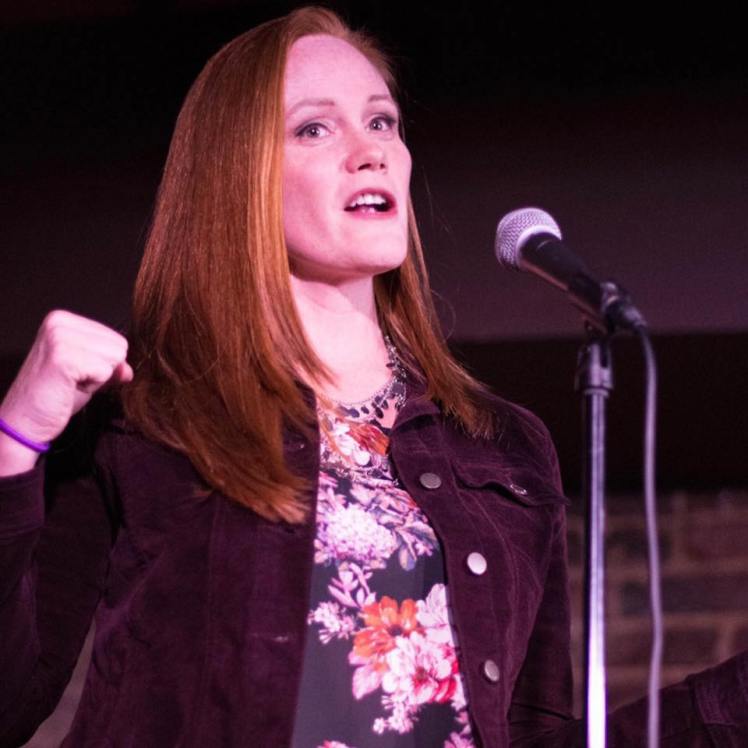
In this episode, you’ll discover how earthquakes occur, how earthquake geologists figure out how often faults rupture through fascinating paleoseismology, and what terms like magnitude and epicenter really mean, and how they can mislead us, too!
And did you know that the Richter Scale is actually no longer used? In fact, it began phasing out of use in the 1980s! What’s replaced it? Check in around 49 minutes to hear the story. In fact, it turns out that earthquake magnitude is a pretty poor way of understanding earthquake impacts. Dr. Bohon has some excellent metaphors to help us visualize what really happens to a fault during an earthquake rupture.
Dr. Bohon also tackles common myths about earthquakes, from breaking down the misconception of earthquake weather to clarifying the real risks of seismic events. For example, did you know that in some respects, people in the eastern United States face greater potential impacts from earthquakes? We discuss how you can prepare.
And can people cause earthquakes? The answer is a resounding yes. But can we use that power to release pressures in fault systems and avoid “the big one?” – well, you’ll have to listen to find out.
Today’s episode was one of the most fun ones that I’ve done in a long time.
You can find Dr. Wendy Bohon at wendybohon.com, and DrWendyRocks on YouTube, Instagram, and BlueSky, and DrWendyRocksIt on TikTok. I promise you – her content is great, so check her out.
Did you have a question that I didn’t ask? Let me know at podcast@jumpstartnature.com, and I’ll try to get an answer!
And did you know Nature’s Archive has a monthly newsletter? I share the latest news from the world of Nature’s Archive, as well as pointers to new naturalist finds that have crossed my radar, like podcasts, books, websites, and more. No spam, and you can unsubscribe at any time.
While you are welcome to listen to my show using the above link, you can help me grow my reach by listening through one of the podcast services (Apple, Spotify, Overcast, etc). And while you’re there, will you please consider subscribing?
Links To Topics Discussed
Earthquakes in All The States – Dr. Bohon’s YouTube series
LESSONS FROM COVID-19 LOCKDOWNS WITH RASPBERRY SHAKES
My Shake App – free earthquake warning app
Putting Down Roots in Earthquake Country – a great FREE resource for anyone with earthquake hazards (i.e. nearly everyone)
Raspberry Shake – make your own at-home seismometer!
Richter’s Scale, by Dr. Susan Hough
The Big Ones, by Dr. Lucy Jones
Note: links to books are affiliate links to Bookshop.org. You can support independent bookstores AND Jumpstart Nature by purchasing through our affiliate links or our bookshop store.
Credits
The following music was used for this media project:
Music: Spellbound by Brian Holtz Music
License (CC BY 4.0): https://filmmusic.io/standard-license
Artist website: https://brianholtzmusic.com
Transcript (click to view)
Michael Hawk owns copyright in and to all content in transcripts.
You are welcome to share the below transcript (up to 500 words but not more) in media articles (e.g., The New York Times, LA Times, The Guardian), on your personal website, in a non-commercial article or blog post (e.g., Medium), and/or on a personal social media account for non-commercial purposes, provided that you include attribution to “Nature’s Archive Podcast” and link back to the naturesarchive.com URL.
Transcript creation is automated and subject to errors. No warranty of accuracy is implied or provided.
[00:00:00] Michael Hawk: Today’s guest is the brilliant Dr. Wendy Bohon, an earthquake geologist who has a passion for making the complexities of our planet accessible and engaging. Dr. Bohon is known for her dynamic science communication. In fact, you may have seen her viral videos through her Dr. Wendy Rocks channel on YouTube and other social media platforms.
[00:00:19] Today, Dr. BoBohonelves into the fascinating world of geology and earthquakes, exploring their impact on our environment and society. In this episode, you’ll discover how earthquakes occur, how earthquake geologists figure out how often a fault might rupture through fascinating paleoseismology. And what terms like magnitude and epicenter really mean, and how they can very often mislead us, too.
[00:00:43] And did you know that the Richter scale is actually no longer used? In fact, it began phasing out way back in the 1980s. So what replaced it? Check in around 49 minutes to hear the story. It turns out that earthquake magnitude is actually a pretty poor way of understanding earthquake impacts, too.
[00:01:00] Dr. Bohon has some excellent metaphors to help us visualize what really happens to a fault during an earthquake rupture, and why no two earthquakes are ever exactly the same.
[00:01:10] We also discussed some of the common myths about earthquakes, from breaking down the misconception of earthquake weather, to clarifying the real risks of seismic events. For example, did you know that in some respects, people in the eastern United States actually face greater potential impacts from earthquakes than those, say, in California?
[00:01:29] We also talked about how you can prepare for the inevitable. And can people cause earthquakes? The answer is a resounding yes. Now, if we can cause earthquakes, does that mean that we can trigger small earthquakes to release pressure and fault systems and avoid the big one?
[00:01:44] Well, you’ll have to listen to find out.
[00:01:46] Today’s episode was one of the most fun ones that I’ve done in a long time. You can find Dr. Wendy Bohon at wendybohon.Com and DrWendyRocks on YouTube, Instagram, and blue sky. She’s also on TikTok under DrWendyRocksIt. I promise you her content is spectacular. So check her out. So without additional delay, Dr.
[00:02:07] Wendy Bohon.
[00:02:09] Wendy, thank you so much for joining me today.
[00:02:11] Dr. Wendy Bohon: It’s great to be here. Thanks for having me.
[00:02:14] Michael Hawk: As we were chatting a little bit here before hitting the record button, this podcast is very often about topics of ecology, but I’ve always had a deep interest in broader natural sciences geology included. And I don’t know why it took me so long to reach out to you, but I finally did. And I’m really looking forward to the discussion that we’re going to have today.
[00:02:34] Dr. Wendy Bohon: I’m so glad you did. I love to talk about geology and earthquakes and the natural world, so it’s a great fit.
[00:02:40] Michael Hawk: And now I live in California, which is known for some earthquakes and plate tectonic actions. So it’s a doubly meaningful for me.
[00:02:49] Dr. Wendy Bohon: It’s always helpful when it has a direct impact on you personally, for
[00:02:53] Michael Hawk: Yeah, I’m right in between the San Andreas fault and the Calaveras fault,
[00:02:58] Dr. Wendy Bohon: I know where you are.
[00:02:59] Michael Hawk: Yep. The Calaveras is a little bit closer, barely by maybe a mile or two. And that seems to be the one that’s been more active for us in recent years. Yeah.
[00:03:09] Dr. Wendy Bohon: Yep, although, the activity on faults isn’t always indicative on the level of danger that they pose. No,
[00:03:17] Michael Hawk: Yeah, and I think we’re, we’ll talk a lot about that here in a moment, so maybe back up a little bit and, tell me a little bit about what you do, you, you said you’re an earthquake geologist, so what does that look like from a day to day standpoint
[00:03:32] Dr. Wendy Bohon: people often confuse being a seismologist with being an earthquake geologist, which is totally understandable. So seismologists, which is a more common thing. Thing I think people are used to hearing about study kind of the interior of the earth and the waves that the earthquakes produce.
[00:03:47] I’m interested in how earthquakes impact the surface of the earth. And so I study how they change the rocks, how they change the shape of the ground and how they impact humans and our infrastructure and our systems. So, for me, on a daily basis, that can mean looking at earthquakes around the world doing research to understand earthquakes, but more specifically to understand certain fault systems.
[00:04:10] Like, say the San Andreas, right? We want to know how often there are earthquakes, how big those earthquakes can be, when the last earthquake was, answering those sorts of questions.
[00:04:22] Michael Hawk: Gotcha. And I guess it makes sense in retrospect, but before this discussion I would have conflated those two professions for sure. So does this part of what you do then do you look into sort of the paleo record to assess the periodicity of earthquakes on certain faults and
[00:04:38] Dr. Wendy Bohon: Oh, yes, that is my favorite thing. There’s nothing I love more than sitting in a fault trench, staring at a dirt wall. So, um, earthquakes are interesting because they happen on a geologic time scale, and that’s much longer than a human time scale. And so the number of earthquakes that we, as humans, observe on any one fault is going to be very limited.
[00:04:59] And so in order to understand the history of a fault system, we have to use various tools. And one of those is called paleoseismology, or the study of ancient earthquakes. And what we do is we will find an active fault, we dig down into the fault, make a sideways cut across the fault. And then we look at how the layers of rock and dirt have been disturbed by past earthquakes.
[00:05:20] Then we can date those different layers that have been disturbed to figure out when earthquakes happened in the past. And by looking at when those earthquakes happened, we can start to get a cadence for about how often earthquakes happen on that fault or that part of a fault. And that gives us the information that we need to figure out the recurrence interval or about how often earthquakes can happen on that section of that fault.
[00:05:44] Michael Hawk: Can you get a sense for the intensity of the earthquakes that happened in the past as well? Gotcha.
[00:05:49] Dr. Wendy Bohon: Order to do that, we have to have multiple trenches on the same fault. And so, the magnitude of an earthquake is the way we describe the amount of energy that was released or the size of the earthquake, and that is related to About how much of the fault that ruptured. So it’s related to the area of the fault that broke the length and the depth inside of the fault itself.
[00:06:12] So if we have multiple paleo seismic trenches across one section of a fault, and we see an earthquake in all of those, we can start to get an idea for what the magnitude of that earthquake was. If we only see it in a couple of them, that would be a smaller magnitude earthquake versus if it’s the entire length of a very long fault, then we would know that Fault section is capable of generating larger magnitude earthquakes.
[00:06:36] It
[00:06:40] Michael Hawk: way. I was thinking more, I guess there’s different fault systems we’ll get to. So I’ll withhold my comment here that I was about to say until we get to that section. But I am curious. What led you into this field in the first place?
[00:06:52] Did you live around earthquakes or discover it later in life or, how
[00:06:56] Dr. Wendy Bohon: was a later in life discussion. So I actually I was very much an arts kid, right? I was into theater. I did ceramics. I wrote poetry. I loved, guys with long hair playing guitar and doing sappy love songs like that was my total jam. And I had actually a theater major in college. And while I was there, I took a, just a general education class.
[00:07:19] And it’s one of those big lecture halls with like 325 people, you know, and I’m just frantically scribbling notes thinking, this is so interesting. There’s this guy’s talking about soils and how soils are made and the vegetation and the ecology around soils. And I look around and I am the only person that’s awake.
[00:07:36] And I was like, Oh, I probably should take some more geology classes. So we ended up picking up a geology major. In addition to the theater major, just because I thought it was really interesting, but it was just truly like an interest. And then I moved to LA and I was a professional actress in Hollywood.
[00:07:51] And then I felt the Hector mine earthquake. That was a magnitude 7. 1 that happened in the middle of the night out in the desert, but it was widely felt across all of Southern California. And I was hooked. Yeah, there were aftershocks rolling in all night. And I was like, this is, it’s scary, but it was also exhilarating.
[00:08:09] And I had. So many questions. And so I went and I drove to the USGS in Pasadena and was like, I want to volunteer. And they were like, no, because it was the day after a big urban earthquake, right? They were a little busy. So I finally I did. I went back and I said, you know, I really want to volunteer. I want to learn more about earthquakes.
[00:08:29] This is my background. And a woman there named Lisa Wald was like, well, I could use some help doing some outreach and education stuff. And I was like yes, thank you. So I started doing that. Then I eventually ended up getting hired at the USGS. And then I decided that I wanted to learn more about the science of earthquakes.
[00:08:46] And so I went back and got a master’s degree and a PhD in earthquake geology. So you never know how one thing is going to literally shake up your life.
[00:08:54] Michael Hawk: Yeah it’s interesting to hear that story. And so often. I know for career changes, it begins with volunteering somewhere.
[00:09:01] It’s great that you were able to convince them to take you in, which then led to this whole new direction. And the other thing is like you mentioned the theater major, I imagine that probably comes in pretty handy when it comes to science communication.
[00:09:14] Like, some of the techniques to reach people and engage people.
[00:09:17] Dr. Wendy Bohon: yeah, absolutely. Those so called soft skills are actually really important in a lot of different jobs. But especially for me with earthquake hazards, I feel that I have a societal responsibility to explain the science behind earthquakes and to act as a bridge between the scientists and the people that can actually apply the information to help make infrastructure safer, to make communities safer, and for each individual person, right, to take some have some agency with their own personal safety when it comes to earthquakes.
[00:09:47] Because, there’s no such thing as a natural disaster. What we have are natural hazards that become disasters when we have vulnerable people and vulnerable infrastructure. So if we can reduce vulnerability through education, through preparation, then we can really, start to lower our risk and make sure that we don’t just survive the earthquakes, but that we thrive in their aftermath.
[00:10:09] Michael Hawk: So we’ll make sure to talk about. How people can get that sense of agency and take action a little bit later. But I’m intrigued. I think of this podcast as a means of science communication.
[00:10:22] So since I brought up that topic, I’m curious as what you would like to see more from. Either from the scientists themselves in terms of how they can communicate and reach people better or from people like me who are coming at it from a more of a amateur enthusiast perspective.
[00:10:40] Dr. Wendy Bohon: I love this question. I don’t know that I’ve ever been asked this question before in terms of scientists. I think that we can do a much better job explaining our science, explaining why it matters and explaining, how it matters to individual people as well as tilt lawmakers and, organizations when it comes to science enthusiasts.
[00:10:58] That’s my sweet spot, right? Because we’re all mhm. Having this human experience together and geology in particular is an observation based science. We all touch the ground every day. So rocks, the soil, the dirt and the things that happen because of natural processes impact all of us. And so tapping into people’s curiosity I think can go a long way towards helping people understand.
[00:11:23] Things that they’ve never been exposed to. There’s no reason most people should know any of this stuff about earthquakes. No reason, right? We don’t really talk about it in formal education unless you really love the Discovery Channel and catch, like a Documentary or something. There’s no reason people should know.
[00:11:38] So this is a great opportunity to get some of that information out there Not just because it’s interesting because oh my gosh, it’s so interesting But also because it has real world implications and could actually help to save people’s lives
[00:11:50] Michael Hawk: Yeah, I’m thinking again through the sort of ecology lens. And I think a lot of people when they’re out exploring, looking at an ecosystem, looking at the plant life, the, and on up the trophic levels to to the animals understanding the soils is very often where it all begins. Like we have this Ridge.
[00:12:07] Along the Calaveras fault, in fact it’s made of serpentine rock and serpentine soils. And we learn in ecology that those are kind of low nutrient soils and we learn how they were created deep sea. I don’t remember I’m, I’ll probably cut that out, but it’s like a deep sea process that that somehow this deep sea rock gets, thrust to the surface over time.
[00:12:30] And then it creates this unique habitat where you only find specific plants. You don’t find them anywhere else. So like, to me, that’s a direct tie in for uh, topics that we’re talking about here today. Just
[00:12:43] Dr. Wendy Bohon: absolutely. And if we’re thinking of California, for instance, a lot of the land use patterns and the settlement patterns across California can be they’re dictated in part by the location of the faults. So in the desert, you can often tell where a fault is reaching the surface of the earth because there will be a line of springs and like palm trees.
[00:13:03] Because when a fault moves, it grinds up the rock, which makes it easier for water to move up and down. And so you’ll have more water in the system, and so you create these really interesting, like, ecosystems along the fault. And then people can, they know that water is there. It makes for easy transport.
[00:13:19] Most of the missions in California are actually built on fault scarps, because they have such beautiful views. So a lot of the things that we do in California are based around the landscape. And the landscape here is controlled largely by the tectonics.
[00:13:32] Michael Hawk: So why don’t we take this as an opportunity to talk about the different processes that lead to earthquakes
[00:13:39] how would you I mean, I think there’s a lot of different reasons why earthquakes occur, but if you were to start, how would you explain that to somebody?
[00:13:46] What are the primary causes of earthquakes?
[00:13:48] Dr. Wendy Bohon: right. So let’s just start the story at the beginning. Okay, so that the surface of the earth is covered by a thin skin of rock that we call the crust. And if we think about cutting the earth in half, it’s almost like a hard boiled egg. You have that thin, brittle skin of rock, and then you have the white part of the egg.
[00:14:04] That would be like the mantle. And then you have the inner part, which is the core and you can actually divide up the earth in different ways. You can divide it up by how. Different parts of the earth behave, their mechanical properties, or you can divide them up by their composition. And so if we think just about the crust, mantle, and the core, that’s based on their composition.
[00:14:22] But we have something called tectonic plates, and that’s basically covering the surface of the earth, and that’s made up of the things that behave brittly. So the crust and the very upper part of the mantle. It matters that those are brittle because only things that are brittle will break. So if we imagine chocolate chip cookies, okay, we’re pulling out a beautiful, fragrant pan of chocolate chip cookies.
[00:14:45] You pull one off, it’s burning your fingertips, and then you can bend it, right? Because it’s still nice and soft and hot, but once they cool, you can’t bend it anymore. It’s gonna crack. It’s gonna break because it’s cold. And so that is what causes earthquakes in the lithosphere. So the brittle part of the crust in the upper mantle is like cold and brittle.
[00:15:05] Cold is relative here, but yeah, Only the rocks that are brittle are the ones that can break, and that breaking causes earthquakes. Okay, so now we have the lithosphere that’s covering the earth, and there are tectonic plates. It’s broken up into these big pieces, and these big pieces are moving around over the surface, and the places where they come together are the places where we have the most earthquakes.
[00:15:26] So they can come together in different ways. They can slide past each other. This would be a strike slip or a transform fault. So the San Andreas fault is a strike slip fault. They can push together, and that’s called a convergent boundary. And that’s where you get subduction zones where one, tectonic plate is diving down, sliding down underneath the other one.
[00:15:48] That’s where we get the largest earthquakes. You can also have divergent boundaries. And this is where the tectonic plates are pulling apart from each other. This is like the mid Atlantic Ridge. So this is where new crust is being created, being born all the time. And so those three places, Are the places where we have most of the world’s earthquakes.
[00:16:07] Michael Hawk: So a lot to unpack which is exactly what I was looking for. So just a terminology question before we get much further. So the lithosphere is inclusive of the crust and portion of the upper portions of the mantle that are a
[00:16:20] Dr. Wendy Bohon: Yes,
[00:16:21] exactly.
[00:16:22] Michael Hawk: brittle. Okay. Yeah, that’s one of those things. I think when I went through school, they didn’t really talk about lithosphere until maybe college.
[00:16:28] So they left that. That extra bit of information out at first and now when I think about the tectonic plates, the easy and overly simplified sort of model I have in my head is that they’re they’re floating around on top of molten earth and these plates are moving in different directions, which is why you have the different types of faults that you talked about.
[00:16:53] Convergent, divergent, strike, slip. Yeah. Now the question that I have is, since, like, to me, it seems like the crust is contiguous. So even though they’re plates, they connect everywhere. so there’s, it’s hard for me to envision how is there momentum? How is there a force that’s causing these plates to move?
[00:17:16] I have an idea but. I don’t have a good way of explaining it. So I’m hoping you can help me here.
[00:17:21] Dr. Wendy Bohon: that’s such a good question and I love the way you framed that. again, it’s like, there’s lots of pieces and parts to dig into. So I’m going to do my best to answer that. People often think of faults as like big cracks in the ground, like you see in Iceland, and that’s not really what it looks like.
[00:17:37] You do have these tectonic plates that are crushed together. There, there is continuous crust, continuous ground everywhere. There’s no, like, big, deep hole to fall into, but we have this model that, there’s this line between these 2 plates, right? And 1 is 1 plate and 1 is the other plate. And this exact spot that you could put your finger on is the boundary.
[00:17:59] But it’s actually much more complex than that. It’s like a zone where it’s come together and it’s like broken up. So, for instance, the San Andreas and I’ll keep referring to that just because it’s the most famous fault system. I feel like people have a pretty good idea of where it is. That’s a very broad zone of faulting and deformation related to the plate boundary.
[00:18:19] Now, what’s moving the plates? This is the coolest thing. About geology. So much of it. You have to use creative ways to understand it, right? Because we can’t really see inside the earth and we can’t go down there and touch it. So we have to use all of these creative tools in order to figure out what’s happening.
[00:18:34] And as we get better technology and more powerful computers in order to make models, we learn a lot more. So when I was in school, like we learned kind of the convection model, you can imagine like you’re boiling a pot of water and you have something on the top and it’s, you’re going to have those convection cells that are rotating away from each other and they’re moving things on the surface.
[00:18:53] But now what we think is happening is you get you get a push from the divergent boundaries, like the mid Atlantic Ridge, you have molten material that’s coming up and that’s pushing the plates apart. But you also have slab pull. So, as a tectonic plate starts to dive down into the mantle, the heat and pressure will actually cause the minerals to change and get more dense.
[00:19:17] And as they get dense, it’s like having a bowling ball on the end of that plate that starts pulling it down faster and faster. So, you have both slab push and slab pull that’s causing the plates to move through time. And, I also learned that the mantle is like molten rock, right? And when I had that conception in my head as a student, it was like looking down into a volcano and it’s this bubbling red liquidy mass.
[00:19:44] The mantle is actually more like silly putty. So, if you have silly putty, it looks like a solid, but if you set it down on a table, it will start to spread out really slowly. So it’s like both a liquid and a solid, not really either one. It depends on what the pressures are on it and what’s happening.
[00:20:01] So, that’s more like what’s happening inside the mantle. It’s not a bubbling brew, a witch’s brew down there. It’s more like a silly putty.
[00:20:09] Michael Hawk: Right. So it’s a little more viscous and not so, movable, I suppose underneath all that pressure.
[00:20:15] Dr. Wendy Bohon: Right.
[00:20:16] Michael Hawk: , it’s really interesting to hear that description. And the other, I guess, sort of related question, we, I think a lot of us are familiar with the super continent Pangea and how, like over time, Plates have moved and separated and, contract or contract is not the right word but reconverged,
[00:20:33] can we Infer that the plates that exist today are pretty similar to the plates that existed, all those hundreds of millions of years ago?
[00:20:43] Dr. Wendy Bohon: Oh, no, man, they are changing through time. They will break up. They’ll come back together. And where the land masses are, what parts are because each plate can have a land mass and it can have, ocean, so continental crust and oceanic crust. It’s just crust. One is just low enough that it has water on top of it, but what that looked like, it changed.
[00:21:03] It changes through time continuously. And so the plates are moving very slowly. Again, it’s this human versus geologic time scale issue. The plates are moving really slowly to us, but over geologic time, we have millions and billions of years for these things to reconfigure. And so we have had super continents in the past, Pangea, Gondwana, Laurasia.
[00:21:24] And we still deal with the consequences of those past supercontinents today. So I was saying, most earthquakes happen along the boundaries of the tectonic plates. But if we think about the United States as a whole, we, most of the United States, sits on the North American plate. And so the edge of the North American plate runs through California.
[00:21:45] And then, the other side is the Pacific plate. L. A. sits on the Pacific plate, but the rest of the continental United States sits on the North American plate. But we have earthquakes in the plates interior, right? We have earthquakes in, there was a big one in New York that people felt. There was recently one in Maine that people felt.
[00:22:01] There was a earthquake in Texas not too long ago.
[00:22:04] Michael Hawk: I’ve always been fascinated with the the new Madrid fault area in Missouri, which had, phenomenally large earthquakes.
[00:22:11] Dr. Wendy Bohon: Yes. So there’s lots of these old fissures, old cracks, old faults. From when we had different super continents, they collided, creating faults, they tore apart that created faults. And so as the plates are moving, they’re not moving exactly the same rate across the whole entire landmass. And so the interior of the plates are also accumulating stress and strain through time.
[00:22:36] And eventually that stress and strain will be released in earthquakes on these old faults. But. There’s a couple of things that happen, right? We don’t necessarily know where all those faults are because they don’t have earthquakes very often and because many of them are covered with a layer of sediment.
[00:22:53] The Appalachian Mountains have been eroding for 250 ish million years. And so all of that rock and sediment is covering up the bedrock where we would actually see those faults. So they’re not very active and they’re buried. Difficult to see where they are and what’s happening. But also, earthquakes in those areas because the crust there is very old, cold and dense, earthquake waves travel really well through that kind of environment, as opposed to the West Coast, where our rocks are more warm.
[00:23:21] They’re broken up. The waves don’t travel as well. So earthquakes on the East Coast and in the Midwest are often felt over about a 10 times broader area than a similarly sized earthquake on the West Coast. And so Even small earthquakes on the East Coast that are happening as a result of, old faults and the, accumulation of very slow stress and strain through time.
[00:23:41] They’re felt by people. And it can be really jarring and upsetting because it doesn’t happen very often. But when it does, lots of people tend to feel them.
[00:23:50] Michael Hawk: Right. A lot of population centers and I, I mentioned the New Madrid fault. I know that Charleston has a history of some major earthquakes in South Carolina and just thinking about what you just said, where they, earthquakes can be felt approximately 10 times further. I’m assuming the impact. Is also similarly proportion where, like, the impact of buildings and infrastructure and things like that.
[00:24:12] Dr. Wendy Bohon: Yeah, that’s an excellent point. And that gets to the idea and the difference between hazard and risk. So, on the East Coast, there’s a pretty low earthquake hazard, right? They have a high hazard for certain things like floods or snow storms or hurricanes, but they have a low earthquake hazard. On the West Coast, we have a high earthquake hazard.
[00:24:31] We have lots and lots of earthquakes. But on the West Coast, we’re generally prepared for earthquakes. We have seismic building codes. We have a population that knows what to do. Our infrastructure has been built or modified in order to withstand earthquake shaking. for listening. On the East Coast, even though they have a low earthquake hazard, they have a very high earthquake risk, because when earthquakes do happen there, the buildings are not built to withstand earthquake shaking, people don’t know what to do when an earthquake happens, and so the consequences of even a moderate size earthquake can be really outsized just because that hazard risk is a little bit different for the East Coast than it is for the West Coast.
[00:25:09] Michael Hawk: So this might be a little bit speculative and I do want to. Roll back to causes of earthquakes, because I’ve taken this in a different direction. But when we think about, again, just like, I’m not, I don’t study earthquakes, but just my top of head knowledge, I’m aware of a few of these big events that I want to say we’re like magnitude 7.
[00:25:27] 0, 8. 0 Charleston and new Madrid, and that’s over a couple hundred year period. So is it fair to say when you say that there’s a greater risk in the East coast That were generally underprepared in those parts of the country.
[00:25:42] Dr. Wendy Bohon: Oh, yeah, new Madrid earthquakes, so an 1811 and 1812, there was a series of very large earthquakes in the mid continent. Centered around the Mississippi River Valley, Missouri in particular. And they, the magnitude, we didn’t have seismometers, so we don’t know exactly what the magnitude was the way that we would measure it today.
[00:26:00] So we have to rely on what is recorded in the rocks and what’s recorded in people’s diaries and letters. And because earthquakes are felt over a broader area, it can sometimes be difficult to figure out exactly what the magnitude was by using these subjective reports of what happened. So we think they were magnitude seven, maybe magnitude seven plus.
[00:26:21] That’s a huge earthquake, especially to happen, in the middle of the country where they don’t happen very often. And so people are not generally prepared. And even now structures aren’t built to withstand earthquakes. People don’t generally know what to do when there’s an earthquake. And so they can be really potentially damaging and dangerous.
[00:26:39] A magnitude seven earthquake in California, if it’s under a population center, could be, extremely problematic. And then you take that and you put it on the East Coast, where you also have these population centers, but populations that aren’t prepared could really be devastating.
[00:26:53] Michael Hawk: So, as I hinted before, we will talk a little bit more about like what you would like to see individuals, governments, et cetera, do perhaps, and, to address this risk, but back to causes of earthquakes. So I think we have a general understanding of kind of some of the simple. Plate tectonic action that’s happening.
[00:27:14] What’s sort of the next level that you would go into?
[00:27:17] Dr. Wendy Bohon: Right? So, as the tectonic plates are moving, they’re causing stress and strain to build up inside of the rocks. And as that stress and strain builds up, eventually it’s. Something people don’t know is that rocks are actually elastic y. They can bend. Not a lot, but some. And so you have a whole lot of rock.
[00:27:35] You can actually have some deformation that happens inside the rock. Some bending before it breaks. Eventually, the rocks aren’t going to be able to take up any more of the stress and strain that’s caused by the motion of the tectonic plates. And the rocks are going to break. And when they break, they release energy that we feel as shaking.
[00:27:53] So, it’s if you snap your fingers, what are you doing? You’re pushing two surfaces together. Eventually, you overcome the friction between your fingers and your fingers slide, and they release energy that we hear a sound. So it’s just like the same thing in a fault. You move the rocks, you build up stress and strain.
[00:28:11] Eventually, it moves. It releases energy that we feel as shaking. That’s the seismic waves.
[00:28:16] So every earthquake produces different kinds of waves, regardless of what kind of fault it happens on. And those different types of waves travel at different speeds. The first wave is a P wave, a primary wave. I call it a push pull wave. That wave, if you imagine that it’s coming towards you from my voice, every little particle of rock is going to move back and forth in the direction that the wave is moving.
[00:28:38] Dr. Wendy Bohon: And that wave travels at around six kilometers per second. Earthquakes also produce S waves. I call them shaky, snaky waves. They’re shear waves, and they travel more slowly, about four kilometers per second. And if you imagine again that the wave is coming towards you like my voice, every little particle of rock would be shaking back and forth.
[00:28:56] So perpendicular to the direction of the wave propagation. And now the difference between those helps you to figure out where the earthquake is. And so, or how far away it is, right? So like, thunder and lightning, you see the flash of lightning, you start counting. To wait until you hear the thunder, and that tells you about how far away the lightning was from your location.
[00:29:15] You can do that with the P and S waves as well. So when you feel the P wave arrive, then you count until you feel the S wave, and you can get an idea for about how far away the earthquake was from your location. Now, you don’t know exactly where it was coming from, but you can get an idea of how far away it was.
[00:29:33] Michael Hawk: Which of these waves do we feel on the surface the most? Do we feel both the P and the S waves as people?
[00:29:40] Dr. Wendy Bohon: Yes. So, there’s P waves, there’s S waves, there’s love waves, there’s Rayleigh waves, there’s all these different waves. P and S are the fastest ones. So if you’re far away from an earthquake, you may feel a jolt and then there would be a pause and then you would feel some more shaking. What you felt is the arrival of the P wave and then the arrival of the S wave.
[00:29:58] So, in April of this past year, I was in Maryland and I felt the P wave from the New Jersey earthquake arrive. And I was like, that was an earthquake. Okay. And I start counting and then I feel the S wave and I’m like, that was an earthquake. That was an earthquake. I’m in Maryland. I felt an earthquake.
[00:30:16] And so, I knew about how far away it was. And I, my first thought was, oh my God, was that in Charleston? My second thought was, oh my God, was that New Madrid? And then I start looking at the data to see, is there shaking near Charleston? Is there shaking near New Madrid? And then I look and I’m like, New Jersey, like what?
[00:30:33] You can feel both of those. Now, if you’re close to where the earthquake is, you’re going to feel it all at once. So it’ll just feel jolty and you won’t be able to tell the separation just because you’re close and they haven’t had time to spread out yet.
[00:30:46] Michael Hawk: Makes sense. And I think the other piece of it is you often hear or see, like you pull up the USGS website and you’ll see an epicenter location. So I think with this principle that you just mentioned the time differential gives you a distance. So if you have multiple stations that are recording triangulate a little bit and figure out where the center of the rupture was.
[00:31:08] You
[00:31:09] Dr. Wendy Bohon: Exactly. Yep that’s one way to do it. We have computers that can do it faster now, but you can definitely do it on, using pen and paper doing triangulation for sure.
[00:31:18] Michael Hawk: Yeah, and I’m always amazed I’ll pull up the usgs website after feeling an earthquake and literally within seconds, they’ve already have their first estimate of the epicenter and of the intensity, the magnitude, I should say of course, that sometimes gets refined over the next several minutes as they, assess more data,
[00:31:36] Dr. Wendy Bohon: Yes, that’s an important point that you just made. We try and get information out as quickly as we can, but there is a tradeoff between speed and accuracy. And so if magnitude change magnitudes change slightly, or if the depth changes a little bit, if the location changes a little bit, that is a feature, not a bug.
[00:31:56] That means we’ve gotten more data and we’re refining our understanding.
[00:32:00] Michael Hawk: So I’m afraid maybe I’m getting into the weeds too much when this idea of an epicenter, what you described before, when looking at the paleo size, Seismology record. Is that right? Paleo seismology, is that the
[00:32:12] Dr. Wendy Bohon: Yeah.
[00:32:12] Michael Hawk: You’re looking across the fault to see like how long of a section ruptured.
[00:32:18] So what is the epicenter in that context? Is it just the very center of the rupture or
[00:32:25] Dr. Wendy Bohon: Oh, so good.
[00:32:26] Michael Hawk: definition?
[00:32:27] Dr. Wendy Bohon: That’s a good question. Earthquakes actually start miles below the surface of the earth at a place called the hypocenter. The epicenter is the point on the surface directly above the hypocenter. And we just use that, how do we refer to a place deep inside the earth? Right? So it’s just easier and Matthew to talk about the epicenter.
[00:32:46] Not, this is some of the complexity, right? It sounds pretty easy when you just describe it, but not every fault actually reaches the surface of the earth. Only some faults go all the way to the surface. You can have buried faults. And so we couldn’t use paleo seismic methods to study buried faults because we can’t dig that deep.
[00:33:04] We have to look at use basically seismic waves from other earthquakes. To act like an ultrasound that allow us to look inside the earth the same way, you know, you use an ultrasound wand to look at a baby inside someone’s tummy. We can use earthquakes and the waves from those earthquakes to look at .
[00:33:22] The subsurface of the earth the first few miles of the crust, right? And see where the faults might be and try and figure it out that way. So the epicenter is the point on the surface. The epicenter is the point below the surface of it. But as to whether or not, like if we’re talking about, say, the southern section of the San Andreas, you can actually have earthquakes.
[00:33:43] Earthquakes on zip, kind of like a zipper. They don’t break all at once. So you can start that zipper at one end and zip. Say towards the north, you could start at the north and unzip towards the south. Or you could start in the middle and unzip in both directions. So there’s lots of different ways that the faults can break, and that can cause differences in where we feel the most shaking.
[00:34:07] So generally speaking, the shaking intensity that you feel is gonna be different depending on how big the earthquake is, how far away you are from the earthquake when it’s happening, and the local rock and soil conditions where you are. But it also has something to do with the directivity of the waves.
[00:34:24] So if you imagine you’re skipping rocks in a pond, you skip the stone and it hits the water and creates waves. But the largest waves are gonna be in the direction that the rock was going, right? They’ll go out in all directions, but they’ll be biggest. In the direction that you threw the rock.
[00:34:38] Earthquakes are the same way.
[00:34:40] Michael Hawk: Wow. So in the case where you unzip in a certain direction. Is the epicenter the source of the unzipping, the point where it first ruptures.
[00:34:49] Dr. Wendy Bohon: yes, the epicenter is the place where the earthquake starts.
[00:34:52] Michael Hawk: Okay.
[00:34:52] Dr. Wendy Bohon: Or the place on the surface above where the earthquake starts, because it actually starts below the surface.
[00:34:58] Michael Hawk: . And I think that also drives home the point where sometimes people say, hey, my house was fine when we had this earthquake, like the Loma Prieta earthquake or something like that.
[00:35:06] So, so I don’t really need to worry but in actuality, every earthquake is going to be different because it might you know, as you said, the directionality of the waves may be different even if the intensity or the magnitude is the same.
[00:35:18] Dr. Wendy Bohon: Right, and I think we’ve done a disservice by talking a lot about the big one. And I recognize that where you are, the big one is different. So if you’re in the mid continent, right, the New Madrid is the big one. If you live in Southern California, a rupture on the San Andreas is the big one.
[00:35:34] If you live in Northern California, it could be a ruptured on the Hayward that people talk about as the big one. If you’re in the Pacific Northwest, the Cascadia is the big one. So recognizing that, if we focus in again just on California, because it has a lot of faults there’s more than 500 active faults.
[00:35:51] In California, more than 70 percent of the population of California is 40 million people live within 30 miles of an active fault. And so it doesn’t have to be 1 of these enormous earthquakes in order to cause local or regional damage. And so. People need to. Stop focusing on the big 1 that may or may not even happen in your lifetime and focus on the earthquakes that are much more likely to happen and impact you personally that happen on smaller faults closer to where you are, because those happen more often.
[00:36:23] And even though they don’t cause these huge regional problems, they can still be a big deal for the people that live nearby.
[00:36:31] Michael Hawk: So I guess the other aspect of impact on the surface is also the depth of the earthquake as I understand it because I remember. There was this is many years ago now there was like a major earthquake near seattle It may have even been like almost an eight or something like that but there was very little damage on the surface and I remember this story being that it was so deep that
[00:36:51] Dr. Wendy Bohon: Nisqually. Yeah.
[00:36:52] Michael Hawk: Yeah so how does the depth of the earthquake factor in and How might that vary across the continent?
[00:36:59] Dr. Wendy Bohon: that’s a good question. When we were talking about intensity, so every earthquake has one magnitude, but it generates many different intensities of shaking. So what people are often most interested in is the intensity of shaking because that’s what actually we feel and what matters to us more than the magnitude.
[00:37:14] But what controls what you feel during an earthquake? Okay. Are again, the magnitude of the earthquake. Larger earthquakes cause more shaking over a broader region, the distance away from the earthquake in your local rock and soil conditions. Now, distance can be map distance like you are 35 miles away as the crow flies, or it could be distance as in depth down into the earth.
[00:37:37] So if you have an earthquake that happens three miles below the surface, then the closest people to that earthquake or three miles away. Okay. If you have an earthquake that starts 300 miles below the surface, then that means the closest people are 300 miles away. And so that depth makes a big difference as to what is going to be experienced on the surface.
[00:37:59] And so we can have really big earthquakes, especially along subduction zones, where you have one plate subducting down beneath another, so you can keep the crust or the lithosphere brittle down deep into the earth. And they don’t do any damage at all because they are so deep below the surface.
[00:38:15] Michael Hawk: that makes a lot of sense and Okay. I’m going to go, I’m going to go with the subduction question. So, So we’ve been talking about plate action as a trigger for earthquakes I know that volcanoes can trigger their own earthquakes from like magma movement and things like that. And I, and talking about the subject subduction area, I immediately think of the cascade range.
[00:38:37] It has a number of large volcanoes. So can you tell me a little bit about how. How volcanoes and earthquakes relate.
[00:38:43] Dr. Wendy Bohon: Oh, yeah. So the Cascadia is so fascinating and the volcanoes there, if you think about a map of the Pacific Northwest, they make a line, but they’re offset from the seashore, right? And the tectonic setting of that region, you have the Juan de Fuca plate that’s subducting or diving down beneath the North American plate.
[00:39:05] And as it dives down beneath the North American plate, once it hits a certain depth, the water that’s inside that plate starts to come out of the crystals. And what that does is lower the melting point of the rocks above it. That creates magma, and that magma moves up towards the surface and forms those volcanoes.
[00:39:23] So you can actually tell how deep the plate is by the location of those volcanoes. Now, there is something called, like, volcanic earthquakes. And as magma is moving around inside of the crust of the earth, it can cause rocks to break and cracks to vibrate. So it could be magma, it could be superheated gases, and those are called volcanic earthquakes.
[00:39:49] It can be harmonic tremor. So as things are moving, it’s going to cause earthquakes. And we can track the location of those earthquakes to figure out how likely the volcano is to erupt. So if they’re moving up towards the surface, then that’s making an eruption more likely. Right. Or they could be moving laterally.
[00:40:09] They could be moving sideways. Like, there’s all kinds of ways that magma can move through the crust, usually following zones of weakness. And so we almost always, or at least usually have some idea of what’s happening based on the volcanic earthquakes as to whether, volcanoes are, like, getting close.
[00:40:27] So it’s pretty cool.
[00:40:29] Michael Hawk: Yeah, I think it’s really fascinating just putting a couple pieces of what you’ve talked about together when you look at the map. Well, I guess the first thing that I think I found is a bit of a myth is the assumption that the San Andreas just goes all the way up the West coast. So you mentioned that there’s actually a different plate up there.
[00:40:45] The Juan de Fuca plate.
[00:40:47] Dr. Wendy Bohon: Mhm.
[00:40:48] Michael Hawk: Um, That’s subducting as opposed to strike slip, like you see in California.
[00:40:53] Dr. Wendy Bohon: It’s so cool. The whole western plate boundary is so amazing. So if we start at the bottom and think about the Gulf of California, right, that’s actually a divergent plate boundary. That’s opening up. It’s spreading apart. And then, as you move up into California the way the plates are interacting changes, and it changes into a strike slip boundary right at the end of the Salton Sea near Bombay Beach.
[00:41:14] That’s the official start of the San Andreas fault. And then that fault goes up. As it gets to L. A. It takes a bend. It twists. And that’s where you have the transverse ranges. They’re there because they’re getting squeezed. It can’t slide right. There’s something in the way. And so the transverse ranges are going up and then you continue along the San Andreas fall up towards northern California.
[00:41:36] Up through San Francisco, and then it goes off to shore and actually bends to the West pretty steeply. In near Eureka. It’s called the Mendocino triple junction. It’s like where all of the plates are playing bumper cars. So that is where the San Andreas goes off to sea. And then just above that, we have the Juan de Fuca plate, and that’s where subduction starts.
[00:41:59] So in Eureka, you have all of this stuff going on. And it’s actually the place that has. the most large earthquakes in California, lots of magnitude sevens up there. We had 1 on December, the 5th magnitude 7 offshore of Cape Mendocino. So super fascinating tectonics and geology all along the West Coast related to how the Juan de Fuca plate, the North American plate and the Pacific plate are moving through time.
[00:42:24] And oh, my gosh, this is so cool. The Juan de Fuca plate is actually the remnant of a larger plate called the Farallon plate. And we can do something called seismic tomography, which is like looking deep inside the earth and looking at the. The density and like how warm or cold the rocks are. We can see the Farallon plate chilling underneath the North American plate.
[00:42:47] It’s under there and we can see it. That’s wild. Like, it’s just so cool.
[00:42:52] Michael Hawk: And back to like looking at the map and what you just described, it sort of explains why the mountains are a little bit taller in Los Angeles as compared to the Bay area. I think it explains that anyway but
[00:43:03] Dr. Wendy Bohon: There’s other things going on. Anytime you get off of the direction of plate motion a little bit, sometimes you can open up these little these little, they’re called sag ponds. Or you can squeeze it together a little bit and that will make mountains. And so. Any time mountains, there’s a fault that’s lifting those mountains up.
[00:43:24] So think about that when you’re driving around. Think about driving like through Nevada. Anybody that’s ever been to Las Vegas. It’s like you know that you’re driving through these valleys and there’s mountains and everywhere you go. It’s like valleys and mountains.
[00:43:34] It’s called the basin and range. And at the base of every one of those mountains is a fault. And it’s because the crust in that area is actually getting stretched. And you can imagine if you stretch it, some pieces are going to drop down, right? So those are the basins and they’re dropping down along normal faults throughout the basin and range.
[00:43:52] So like, there are faults literally everywhere.
[00:43:54] Michael Hawk: John McPhee’s Basin and Range, as you talk about that. So, and then as you head northward, the volcanoes start in Northern California, parallel to Eureka, like, Lassen and Shasta. And then
[00:44:09] all the way Up. And then that offset from the plate boundary is really interesting.
[00:44:13] And I think you were describing that as the. The Juan de Fuca is diving beneath the North American plate. And you can think of it almost at a, an angle. And apparently at that depth where we see the volcanoes, that’s where the process you described occurs of the water. is Is it getting heated out?
[00:44:33] Dr. Wendy Bohon: It’s it de waters. It’s like a, it’s like a heat pressure thing. The water comes out of the rocks as they go down and then that melts. The rocks above it. And then that, hot things rise. That’s why hot air balloons work. So the hot magma will rise up through the colder crust. And then when it gets to the surface, that’s where we have the volcanoes.
[00:44:51] Michael Hawk: And those volcanoes are almost in a straight line, not quite a straight line,
[00:44:55] Which is really interesting. So when I hear about earthquake swarms, very often they’re associated with volcanoes, but I don’t think they always are. Can you tell me, like, is this just a pop science term? Is there a real definition
[00:45:08] Dr. Wendy Bohon: Oh, no. Swarms are a thing. So usually what happens is, we’ll have an earthquake, we call it a main shock, it’s the biggest, the main earthquake, and that will be followed by lots and lots of aftershocks, or the earthquakes that happen after that big earthquake. They happen as a result of kind of the crust settling into its new position, rocks around it are jostling in, they’re cracking and breaking in these little earthquakes.
[00:45:31] A swarm is different because there is no main shock. What you end up having is lots of earthquakes or multiple earthquakes that are all around the same magnitude. So you won’t have like a magnitude five followed by one magnitude for lots of magnitude threes and twos and ones. You’ll have like lots of magnitude 2.
[00:45:49] 5 to threes. And they often happen in areas where you have high heat flow. So there’s a lot of, the crust in that area is very warm. And so the rocks are not brittle in exactly the same way or in places where you have a lot of fluid moving around in the crust. So the process that governs swarms is still something that’s like, being actively investigated.
[00:46:10] I’m not sure that we really understand swarms very well. But they don’t just happen in places like California, right? There are earthquake swarms in Connecticut. There’s earthquake swarms in North Carolina recently. There have been earthquake swarms in Arkansas. So there are earthquake swarms that happen, all over the country.
[00:46:28] It is a normal process.
[00:46:30] Michael Hawk: And I thought maybe you were going to talk about Oklahoma there so I’m going to ask about fracking.
[00:46:35] Uh,
[00:46:35] Dr. Wendy Bohon: different.
[00:46:36] Michael Hawk: Yeah, so, I think over the years, as fracking has become more and more of a common activity at first, there was a loose correlation noticed with earthquakes, but I think it’s settled science as settled as it can be now that fracking can lead to earthquakes.
[00:46:52] Is that right?
[00:46:54] Dr. Wendy Bohon: So what happens, they’re Human induced earthquakes happen all over the place. And they’re related to the extraction of hydrocarbons in the subsurface and. It’s actually not the fracking that really causes the earthquakes. So they’ll cause little earthquakes. Okay. Starting from the beginning when we’re talking about fracking, that’s hydraulic fracturing.
[00:47:17] So you have places that have oil or natural gas and energy companies will take. A slurry of water and grit and different things, and they’ll inject it down into the ground in order to break up the rocks that have the hydrocarbon that they’re trying to extract because it’s like stuck in the pore spaces or something, right?
[00:47:36] Stuck in between all the little pieces of the rock. So they break it open in order to suck it out more easily, and that can cause small earthquakes. But once they’ve sucked it out and they’ve gotten everything that they want out of the ground, they have the wastewater that’s left over, what they had put in to help break up the rocks.
[00:47:53] You need to get rid of that. And so they will drill deep down into the subsurface, below aquifers, below anything that impacts people up here, and they will inject that into the ground because the ground can act like a giant sieve and clean that up. The problem is in some places when you inject it down, if you have faults that already exist there that are in the proper orientation, you can cause earthquakes and the size of these earthquakes can be significant.
[00:48:20] There was a magnitude 5. 8 induced earthquake in Pawnee, Oklahoma. It caused chimneys to collapse. It caused damage. I believe people were injured. One person was killed. So induced earthquakes are real and they can be damaging. They tend to happen more because of wastewater injection. Then they do because of fracking and it’s interesting because Oklahoma is in the mid continent, right?
[00:48:43] So it has naturally a very low rate of earthquakes, as opposed to, say, California that has a naturally very high rate of earthquakes. And so it’s easy to make a correlation between injecting wastewater down and earthquake earthquakes happening. So before 2009, there weren’t that many earthquakes.
[00:49:01] Thanks. 2009, there was a lot of injections. And for part of that time Oklahoma had more magnitude three earthquakes than California. That is not normal. And it was correlated with how much wastewater injection was happening. And so once all of those things were made, those connections were made, and that was understood the wastewater injection ramped back down.
[00:49:22] And the number of earthquakes decreased, and it’s not immediate, right? There is a time offset. It takes a while for the system toe to re equilibrate. But yes, or induced earthquakes is settled science. And in a lot of places, we know for certain that’s what’s happening. Other places. It’s harder. It’s harder to say.
[00:49:41] Michael Hawk: So we’ve been talking about 3. 0s, 7. 0s, throughout this discussion. So, and I made a mistake in planning for this discussion and I referred to it still as the Richter scale. So maybe we can talk about how the magnitude is measured and what scale is used and some of the updates that have happened over the years.
[00:50:02] Dr. Wendy Bohon: Right? Yeah, I worry sometimes that I get too much into the semantics, but I think the history is really interesting. Like, How we understand things, how things came to be so Charles Richter was a scientist that was working in Caltech in Southern California, and he had this particular type of seismometer, and he wanted to understand or, create a scale to talk about the different sizes of earthquakes and because there’s such a difference in the sizes of earthquakes, it’s a logarithmic scale, which is not intuitive for our human brains, or at least not my human brain.
[00:50:36] So I tend to think about just an easy way to think about magnitude for me is using spaghetti, love to eat, love spaghetti. If you imagine breaking one strand of spaghetti is like a magnitude 5, in order to get to a magnitude 6, you would have to break 32 strands of spaghetti to release the same amount of energy.
[00:50:54] What about a magnitude 7? That would be 32 times larger. So a magnitude 7 would be breaking 1026 strands of spaghetti. A magnitude 8 Would be breaking more than 33, 000 strands of spaghetti. Okay, so, like, that’s the logarithmic scale, and that’s what he came up with. Now, when Charles Richter came up with the Richter scale, what he was looking at was the amplitude of the seismic waves or, like, the size of the wiggle that you see, like, on the news when you see, like, the earthquake and what’s recorded by the earthquake from the instruments.
[00:51:28] And so he was looking at the amplitude of different earthquakes. And how far away he was from that particular earthquake, and that was how he came up with the Richter scale just based on amplitude and distance. Well, now we have a better understanding of how earthquakes work. We have faster computers, we have better instruments.
[00:51:45] And so we’re able to get more information out that describes more about each particular earthquake. And so we use something called the moment magnitude scale. It’s based loosely on the Richter scale so that they can be correlated. But it takes into account how far the ground slipped during the earthquake, the area of the ground that moved and the rigidity of the rocks that moved.
[00:52:08] And all of those things factor in to how big the earthquake was and how much energy it released. And there’s a whole, magnitude is so confusing. Like, I don’t know why some things have to be so confusing. But, Richter was describing the difference between each magnitude as a tenfold increase in amplitude or the size of the waves.
[00:52:28] And to do the conversion, that’s where you get 32 times more energy. So that’s why you’ll sometimes hear 10 times or sometimes 32 times. That’s the difference in the size of the waves versus the difference of the energy released during the earthquake.
[00:52:41] Michael Hawk: Okay, that’s a good point. I was going to ask about that because I always have this 10 times in my head. tying back together some of the way I think about the world from the ecology standpoint, there are a lot of community science efforts that people have, like going out with iNaturalist and taking pictures of plants and insects and reporting them.
[00:53:00] I have a friend who has an at home size seismometer, I
[00:53:03] Dr. Wendy Bohon: Yep.
[00:53:04] Michael Hawk: it would be it uses a raspberry pie computer, which is a cheap little computer. And I want to say, I’ll have to look it up, but I want to say maybe they cost around 500, give or
[00:53:13] Dr. Wendy Bohon: Or less, depending on what you want. Yeah.
[00:53:16] Michael Hawk: Aside from an interesting little hobby to see what’s happening, in your street.
[00:53:20] Is that helpful to the broader science? Is there a community science aspect to tracking earthquakes?
[00:53:26] Dr. Wendy Bohon: Absolutely. And Raspberry Pi, Raspberry Shakes, they’ve done a great job in putting together the community effort and creating tools where hobbyists and enthusiasts can look at their data together. And there was actually, this is so neat. There was a scientific paper published in Science that used that community data along with professional data and had a lot of these hobbyists as co authors on the paper.
[00:53:53] And what they were doing was using this It’s, huge network of seismometers, both the professional kind of research grade seismometers, but also raspberry shakes, raspberry pies to look at COVID lockdowns. Seismometers measure anything that causes the ground to move. It could be earthquakes.
[00:54:10] It could be ocean waves. It could be the breeze blowing trees nearby people walking. It’s construction noise traffic. There’s a lot of anthropogenic noise in the world. Right. And so what they were able to measure using the super dense network of seismometers, including these at home seismometers, was the reduction in anthropogenic noise in cities across the world as they shut down during COVID.
[00:54:34] It’s a fascinating paper if anybody’s interested in reading it. And that was a really good, way to look at how we can use these community efforts in order to advance the science.
[00:54:47] Michael Hawk: Well, I will look for that paper and link to it in the show notes along with the raspberry shakes in case anybody out there wants to get one of their own.
[00:54:53] Dr. Wendy Bohon: There’s also, by the way, Lego seismometers that really work. So it’s a Lego kit that you can build. So if you got kids at home that love Legos, like I do, right? Like, they can build a Lego seismometer.
[00:55:05] Michael Hawk: Huh? I didn’t know about that one. All right, why don’t we talk a little bit about some of the topics that we’re Some of the myths and actions that people can take as well.
[00:55:15] So starting with the myths I’ll leave it open ended for you, because you’re the expert, you’re the one doing the communication. So you probably see a lot more than I do, but what comes to mind in terms of some misperceptions maybe that exist in the public?
[00:55:28] Dr. Wendy Bohon: So one is that a large earthquake on the San Andreas is going to cause California to fall into the ocean. That’s a big no. The part of California that is on the Pacific plate on the other side of the San Andreas fault for most of the country is sliding up towards Alaska at about the rate that our fingernails grow.
[00:55:46] Another is earthquake weather. So our human brains love to make patterns and earthquake weather in China is considered to be when it’s unseasonably like cold and damp, whereas in Southern California, most people think of earthquake weather as being unseasonably hot and dry. And it usually correlates with the most destructive earthquake in that historical time and what the weather was like then.
[00:56:09] But as we talked about before, earthquakes start miles below the surface of the earth. Weather only impacts, the very surface. And so there is no such thing as earthquake weather. There’s no correlation between weather and when an earthquake can happen. Another myth that I hear a lot is that we should try and create lots of little earthquakes to stop a large one from happening.
[00:56:29] Which makes sense, but unfortunately, that’s not really how it works because of the logarithmic nature of earthquakes. So, back to the San Andreas, the largest earthquake we could expect is probably like a magnitude 8. And so, how many small earthquakes would we have to have in order to not have that magnitude 8?
[00:56:49] Well, we would need to have about 32 magnitude 7s. Or a thousand magnitude 6s, or like 33, 000 magnitude 5s. So just to put that in context, the Northridge earthquake, which a lot of people remember that happened, outside of L. A. 1994, it was a magnitude 6. 7. Okay, so we would need to have hundreds of earthquakes that size in order to potentially stave off a magnitude 8.
[00:57:17] But also, we can’t, anytime an earthquake happens, it changes the stresses and the crust around it. So if we ever make an earthquake, we cannot be sure of what else we might cause.
[00:57:28] What
[00:57:28] Michael Hawk: be like whack-a-mole,
[00:57:29] Dr. Wendy Bohon: right, that breaks the camel’s back? Do you really want to try and rupture the San Andreas, but hope it’s only going to be a little bit?
[00:57:36] Not me.
[00:57:38] Michael Hawk: Well, and it seems like the physics of that just doesn’t work because I’m thinking back to you describing the, these stresses building up to the point where a rock ruptures and it’s not just a rock, it’s like a massive slab of rock that ruptures. It would be hard to make it ruptured.
[00:57:52] Just a little
[00:57:53] Dr. Wendy Bohon: Or rupture where you want to, right? We can cause earthquakes, like we just talked about, through wastewater injection and those sorts of things, but we can’t control what happens once we change the stresses in the subsurface.
[00:58:07] Michael Hawk: And how about predictability, because I think this is confusing to people because we start talking about probabilistic
[00:58:13] views over long timescales versus, I think people would love it to be just like the weather where you have a pretty good feel for what’s going to happen, three to five days out
[00:58:23] Dr. Wendy Bohon: Right. I want to be very clear. No one can predict earthquakes. Anybody who says differently is selling something, okay? Nobody can predict earthquakes. What we do is forecast earthquakes, much like people forecast the weather. But you’ll get a weather forecast for, like a week in advance. We can give you an earthquake forecast for 30 years.
[00:58:43] So we’ll say something like, there’s an 87 percent chance of an earthquake in this area in the next 30 years. And that takes into account all of the faults in that area, the known slip rates or recurrences, how often earthquakes happen there, what their magnitudes could be. We just don’t know exactly what is going to cause a fault to to break and exactly when that’s going to happen.
[00:59:07] When is that switch going to flip? When is it going to be just the too much stress to happen? The exception to this is aftershocks. So we know that after an earthquake, particularly a large earthquake, that there will be aftershocks. We don’t know exactly how big they’re gonna be or exactly when they’re gonna happen.
[00:59:25] But we do know that they’re gonna happen. And they actually follow a mathematical distribution, which is pretty rigorous. We know that because of observations of, lots of earthquakes through time, but still, we can’t tell you exactly how big they’re gonna be. When, there’s going to be a magnitude 4.
[00:59:41] 2 and it’s going to happen at 2 PM on Wednesday. Like, we just, we can’t do that. I don’t know that we’ll ever be able to do that. And this is an interesting side note, for a long time in, like, the 60s, 70s and 80s. Earthquake predictability was, like, the Holy grail of seismology. We thought it was going to happen.
[00:59:58] Everybody wanted it to happen because you could do a lot with that. Can earthquakes actually even be predicted? Because in order to do that, you would have to have an earthquake precursor. There would have to be something that happens that we can measure and identify that happens before an earthquake and happens before every earthquake.
[01:00:17] And we just don’t see that. There was something called the San Andreas Fault Observatory at depth, where there was a hole drilled down into the San Andreas in an area where there was a lot of small earthquakes happening. To see if there were changes inside the fault that we could measure changes in heat, changes in water flow, changes in electrical current changes in anything.
[01:00:34] And we were not able to find anything. Does that mean it doesn’t exist, or does that mean we can’t measure it or that we don’t know what we’re looking for? So, there’s a lot of questions that still remain to be answered. People are still working actively towards that. But we’re not there. So if somebody tells you they can predict earthquakes, don’t listen to them.
[01:00:54] Michael Hawk: and and backing up to your comment about aftershocks, I know sometimes there’s even cases where, Okay. A quote unquote aftershock is has a higher magnitude than the original incident.
[01:01:04] Dr. Wendy Bohon: Yes, so that’s called in that case, we changed the terminology, right? So about 4 to 5 percent of earthquakes have an aftershock that’s larger than themselves. And in that case, we call that initial earthquake a fore shock. We call the new largest earthquake, the main shock, and then all the little earthquakes afterwards, or they can be big all the other earthquakes afterwards aftershocks.
[01:01:27] And so that means that about 1 out of every 20 earthquakes. Has a larger earthquake that happens afterwards. We have no way of knowing beforehand what earthquake is a foreshock and what isn’t.
[01:01:39] Michael Hawk: Right. And this is probably a good transition into what people can do. Because I think an obvious thing is if there’s a, if you feel a major earthquake, be prepared for more earthquakes
[01:01:48] Dr. Wendy Bohon: Exactly. It’s important to like level set and figure out what to expect because earthquakes can be really scary. And so if people are afraid. That’s okay, but you don’t want to just be scared. You also want to be prepared and the time to get ready for an earthquake is before it happens because they happen without warning.
[01:02:07] So if you live in an earthquake prone area, and by the way, most of the United States can have earthquakes. So this applies to everyone. You want to make sure that you have an emergency kit. If you already have an emergency kit for hurricanes or for tornadoes or for whatever, that can be the same thing.
[01:02:23] But you want to have water. You want to make sure to have medications. You want to have a radio that runs on batteries. If you have kids like me and the thought of not having an iPad running. For three days makes you a little twitchy, make sure you can get like those solar panel charger things, like there’s lots of things you can put in your emergency kit that would be good for earthquakes and other emergencies.
[01:02:44] Make sure you have medication, make sure you have food and water for your pets, they’re part of the family too. If you live in areas that have a lot of earthquakes or have earthquakes often, like on the west coast, you probably want to make sure to have your water heater strapped down. You want to have your house.
[01:03:00] Secured to the foundation. Make sure that you’ve secured your space. If you have a big picture or mirror or something hanging above your bed, you might want to move that because we spend a lot of time in bed. You don’t want things to fall on you. Make sure you strap bookcases to the walls. Strap TVs to the walls.
[01:03:18] Don’t put your liquor cabinet above the refrigerator because you might need a drink after the earthquake and all of those will have fallen off and be broken. Created a hazard, glass on the ground. There’s a book, a booklet that’s free online. It’s called Putting Down Roots in Earthquake Country that gives you all the things you can do before an earthquake happens. It tells you what to do when you feel earthquake shaking. So you drop down to the ground, take cover underneath a sturdy object like a table and hold on until all the shaking has stopped.
[01:03:46] If you’re near the ocean or near the beach, when you feel strong, prolonged shaking, that could be your natural tsunami warning. In that case, you immediately leave the beach. Go inland or go up to high ground. So, lots of things that you can do to prepare beforehand and to make sure that you can do after the earthquake has come.
[01:04:07] Michael Hawk: Yeah. A couple of little things that that I did when I moved back to California I did purchase special hooks for hanging things on the wall
[01:04:16] that would reduce The chance of something falling off the wall and especially if you put it in the studs, but back to your mirror comment If you had a mirror over your bed and you use these hooks, I still wouldn’t feel safe because sometimes the actual glass part is attached to the back of the frame and it can actually slip right off so even if your frame is attached nicely to the wall, the glass can slide right down and out.
[01:04:38] Dr. Wendy Bohon: People also need to consider what they would do if they’re not at home. What if you’re at work and your kids are at school? What if you’re at Home Depot? What if you are out and about? You need to think about the places that you go on a regular basis and just really just think through what you would do.
[01:04:54] Who would you contact? How would you get home? So thinking through those things, it’s the an ounce of prevention is worth a pound of cure. So just thinking through What you might do and how you can be prepared can really increase your resilience and decrease your anxiety. Because once you know what to do and you know that you are ready for most things, it really can help you sleep better at night.
[01:05:17] Michael Hawk: And speaking of sleeping at night, this was the other thing that, that I always recommend people do. I keep some hard soled slippers underneath my bed
[01:05:24] so That if I have to get up because of an earthquake, I have something I can quickly slip on in case there is broken glass or other, broken things on the ground.
[01:05:33] Dr. Wendy Bohon: Yes. Yes.
[01:05:35] Michael Hawk: so I will link to that that resource that you mentioned. Is there anything Else that comes to mind that people can do from a preparedness regaining a little agency in the sense of this unknown that might happen at any time.
[01:05:49] Dr. Wendy Bohon: I think understanding what can happen near you can be helpful because you don’t want to panic. Right? We have, there are maps showing the the probability of earthquakes where you are, and I’m actually doing a video series called earthquakes in all 50 states, where I go through earthquakes that have happened in every state in the country and what could potentially happen in the future.
[01:06:12] So the more, the more, you know, sort of thing, and some places you’re going to feel earthquakes every once in a while, and that’s okay, but maybe they’re not likely to be damaging, but you still want to know what to expect and what you can do. And a lot of the things don’t cost a lot of money, but they can make a big difference in the long run.
[01:06:31] Michael Hawk: And what about earthquake warning apps
[01:06:33] that you can get on your phone?
[01:06:35] Dr. Wendy Bohon: Reminder. So there is something called earthquake early warning, and that doesn’t mean prediction. That’s a warning that you get after an earthquake has already started. And so we talked about the speed of seismic waves while electricity travels a lot faster. So what happens is you have an earthquake that starts and as long as three seismometers nearby pick up shaking above a certain level, they will send that information to a data center, which then can send out an alert.
[01:07:00] And this is available all across the western U. S., so Washington, Oregon, and California. And you have to sign up to get the alerts in some cases. So it’s the my shake app and that will give you a warning to expect earthquake shaking. Okay. If you are really close to the earthquake, you’re not going to get a warning.
[01:07:20] You’re just going to feel the shaking. But if you’re farther away from where the earthquake is, it can give you seconds to tens of seconds of time to take protective action. And you may be like, who cares about five seconds? Like, what am I going to do? If you were having LASIK eye surgery, Those five seconds would be important.
[01:07:37] You’re at the dentist, right? Getting a cavity drilled. Ooh, those five seconds are important. But other things like if you’re in elevators, it can open the elevator at the nearest floor. So you’re not in an elevator during the earthquake. The earthquake early warning system can slow down trains to prevent derailments.
[01:07:53] It can open firehouse doors to prevent the emergency response equipment from getting stuck inside. So there’s a lot of things that earthquake early warning can do besides just give us a few seconds notice. But know what to do when you get that warning. Drop down to the ground, take cover underneath a sturdy object, and hold on until all the shaking has stopped.
[01:08:14] Michael Hawk: And in the case of that Humboldt earthquake from December 5th, I I was sitting right here at the same desk when that happened. And I got a warning, I’m pretty far away. Like, I don’t know, 300 miles, probably maybe more from the epicenter. And it popped up. It said expect light shaking and it already had the preliminary magnitude estimate.
[01:08:35] And sure enough, it was probably, my memory’s a little. It was probably 20 seconds, maybe 30 seconds before I felt the shaking, but I didn’t have to do anything. It was just light shaking, but I could imagine people closer. It would have been beneficial to have
[01:08:52] Dr. Wendy Bohon: I also got that alert. I was actually on a call with the State Geologist of California. We both got down underneath our desks. Neither one of us felt anything. But that muscle memory of practicing drop, cover, and hold on can be important. And then the following week, I was at work on the 19th floor of a building.
[01:09:10] And we got another alert for a magnitude 5. 7 in Nevada. Did the same thing, drop cover and hold on. And after 15 or 20 seconds, I felt the shaking. It was very light, the things were swinging and it’s good to practice that muscle memory and having an app available like that can really give you, seconds notice that can help you to make good choices.
[01:09:34] Michael Hawk: Can I squeeze one more question in before we get to the wrap up?
[01:09:36] Dr. Wendy Bohon: Absolutely.
[01:09:37] Michael Hawk: So very often what I do, because I’m a numbers oriented person, I’ll immediately go to the USGS. Earthquake, latest earthquake website. And after a few seconds, they give you an opportunity that they actually have a section that says, did you feel it?
[01:09:53] And you can go in and answer a few questions. How has that information used?
[01:09:58] Dr. Wendy Bohon: Oh, did you feel it is super cool. So there’s two products that the USGS creates after every earthquake of, particular magnitude or higher. One is called shake map that shows the distribution of earthquake shaking as measured by the seismic instruments. And then there’s the, did you feel it map that takes the responses from people and puts it on a map to show what different people felt in different places.
[01:10:22] Now, they are really important in places that don’t have earthquakes a lot, or earthquakes very often, and where we don’t have a lot of seismometers. So each person is like a little seismometer, right, that’s recording their experience. And it asks you questions like, did it wake you up? Did people near you feel it?
[01:10:38] Were you able to stand? Were there cracks in your walls? Did you see plants swaying? Lots of different questions to help understand what the intensity of shaking was in that location. And that can tell them a lot about like the local rock and soil conditions and give them more data about what shaking was like in these particular areas that may not have been measured by seismic equipment, right?
[01:11:00] Because there’s not a lot of seismometers everywhere. They’re very expensive to have and to maintain. And so it can give a lot of important data.
[01:11:09] Michael Hawk: Yeah, and I very often feel earthquakes because I spend so much time on the second floor of my house and my family, when they’re on the first floor, don’t feel it. So like, I’ll come out and I’ll be like, Hey, did you feel that? And, on the first floor, they don’t. So one of the other questions they ask is, were you on the ground level or not?
[01:11:22] So, so there’s some interesting things that can be derived.
[01:11:26] Dr. Wendy Bohon: There is one thing that I do want to say about that. That is really interesting to me. So, Where you are in a building often impacts what you’re going to feel and the type of building impacts what you’re going to feel. And so if you are far away from an earthquake, but you’re in a tall building, you may still feel it.
[01:11:42] So, here’s my example, right? You’re sitting in your house and somebody drives by and they’ve got the stereo up really loud. What do you hear? You hear the bass thumping, right? You hear the low frequency sounds. You don’t hear the person singing or the guitar. You hear the low frequency earthquakes are the same way.
[01:11:58] The high frequency waves attenuate or die off faster than the low frequency waves. And so if you are, for instance, in a tall building, those tall buildings are attuned to that low frequency. And so they will rock back and forth and you’ll feel it. There was a magnitude seven earthquake off the coast of Jamaica.
[01:12:18] And people in Miami and skyscrapers were evacuated because they were swaying so much because of that earthquake that was far away. And so so many things influence and impact people’s experiences of earthquakes, their distance, the size of the earthquake, the type of building that they’re in. So all of those things matter, which is why there’s a lot of confusion because people are like, well, no, that was a jolting earthquake.
[01:12:42] No, it was a rolling earthquake. No, it just depends on where you were.
[01:12:46] Michael Hawk: I hadn’t really thought about how a building might be sort of resonant with the wavelength that’s that’s being felt that’s really interesting. So I love learning about this stuff. Obviously following you on your social media channels is a great way to learn more. So maybe can you tell folks how they can follow you where to go?
[01:13:06] Dr. Wendy Bohon: Absolutely. I am Dr. Wendy Rocks across all social media, except for TikTok, where I’m Dr. Wendy Rocks It. But you can find me on YouTube, Instagram, Blue Sky, TikTok and I do have a website, just wendybohon. com, so you can find me there too. And I, I try and put out information that everybody can use and understand.
[01:13:27] Some of it’s just for fun and silly and some of it is You know, trying to explain a little bit more about the science to give people some insight into our Earth.
[01:13:38] Michael Hawk: It’s great content, and I will link to all of that, of course, and one last, well, I’m sorry, I keep lying. Two last questions. One, do you have any favorite resources like books or documentaries or anything like that? There’s so many out there, but like, does anything just spring to the top of your mind when you get asked this question?
[01:13:55] Dr. Wendy Bohon: I really love the stories of science. And there’s a seismologist, Dr. Susan Hough, that writes books about earthquakes. So she has a biography on Charles Richter, if you’re interested in him. And she has some other books about that. And then my mentor, Dr. Lucy Jones, wrote a book called The Big Ones. Which is not just about earthquakes.
[01:14:17] It’s about natural hazards through time and how they impact and change society. So if that’s something people are interested in, The Big Ones is a fantastic book.
[01:14:27] Michael Hawk: And I promise now the last question So you mentioned your earthquakes in all 50 states series. Do you have any other projects or anything else that you’d like to highlight that listeners can look forward to in the coming months?
[01:14:38] Dr. Wendy Bohon: That’s The Big One that I’m working on. I try and do a kind of a myth buster series. And I am working on a series to explain to people why the structural monitoring of buildings with seismic instruments can be really important. And the data that we get from that which can help us understand not only earthquakes, but how we can build better buildings to make sure that we don’t just build buildings that won’t fall down and kill you, but buildings that we can use after the earthquake so that we can recover more quickly.
[01:15:09] Michael Hawk: All right. Well, this has truly been fascinating. I really had to bite my tongue in many parts of the discussion because I wanted to ask more, but we could go forever. Thank you so much for all the time that you’ve spent today and all the work that you do. I really appreciate you.
[01:15:24] Dr. Wendy Bohon: Thank you. Thank you for having me and allowing me to talk to your audience and thanks everybody for listening. I appreciate your time and energy. I know you have a lot of things to do and you chose to be here.
 Nature's Archive Podcast