

#110: Why We Need Apex Predators – Coexistence with Dr. Jonny Hanson – Nature's Archive
Summary
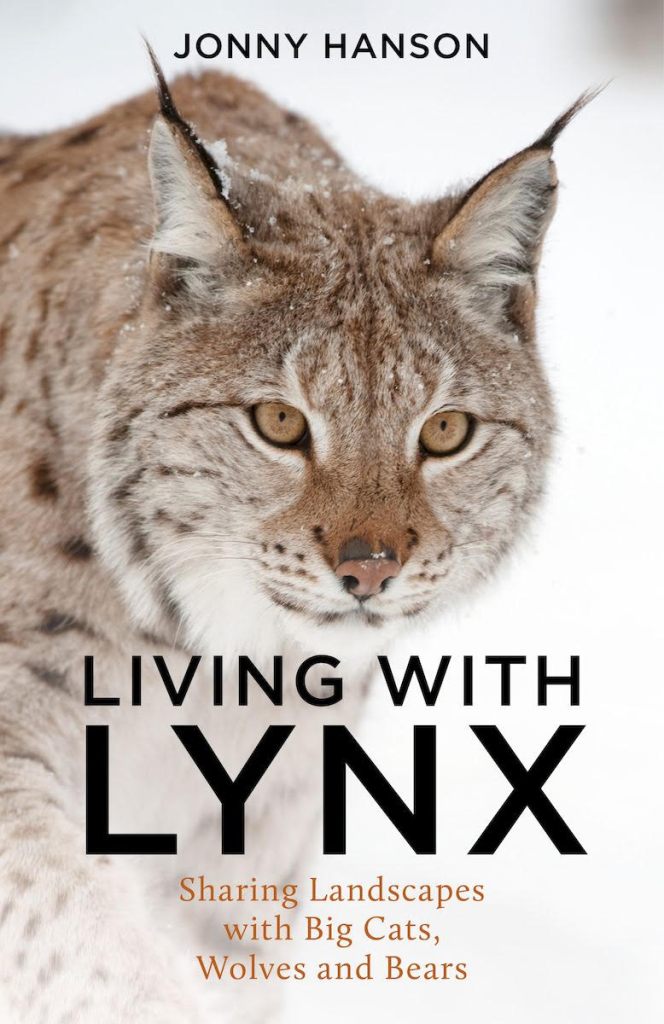
Dr. Jonny Hanson is an environmental social scientist, conservationist, and former community farmer. He’s also the author of Living with Lynx, Sharing Landscapes with Big Cats, Wolves, and Bears.
He spent months traveling Europe and the United States learning about the real-life challenges of reintroducing apex predators to landscapes, and how to make coexistence successful for everyone involved.
Today, we discuss Jonny’s travels, stories, and lessons learned. And of course, we begin with “why reintroduce apex predators in the first place”.
As an environmental social scientist, Jonny spends much of his time learning how to bridge the gaps in how different communities consider living with predators, and by the time we were done, I felt more confident than ever that we can and should allow these magnificent animals back into our landscapes.
This episode is full of amazing insights, and Jonny seems to be a quote machine. There were so many well stated tidbits throughout that I know I’m going to use in the future.
Not only that, but you’ll get to hear how Jonny actually bred mosquitos for money, and how that influenced him. And if you stick around to the end, you’ll also get to hear about his experience with concentrated bobcat urine.
If you can’t tell, this is a nutrient dense episode, but with plenty of fun stories, too.
Be sure to check out Jonny at jonnyhanson.com, and on facebook, instagram, youtube, and tiktok.
Links:
Dr. Hanson’s New Book – Living With Lynx
Coexisting with Carnivores – Dr. Hanson’s TEDx Talk
Trailer for Dr. Hanson’s Snow Leopard documentary
Wildlife Friendly Enterprise Network
Did you have a question that I didn’t ask? Let me know at podcast@jumpstartnature.com, and I’ll try to get an answer!
And did you know Nature’s Archive has a monthly newsletter? I share the latest news from the world of Nature’s Archive, as well as pointers to new naturalist finds that have crossed my radar, like podcasts, books, websites, and more. No spam, and you can unsubscribe at any time.
While you are welcome to listen to my show using the above link, you can help me grow my reach by listening through one of the podcast services (Apple, Spotify, Overcast, etc). And while you’re there, will you please consider subscribing?
Links To Topics Discussed
Dr. Hanson’s New Book – Living With Lynx
Coexisting with Carnivores – Dr. Hanson’s TEDx Talk
Trailer for Dr. Hanson’s Snow Leopard documentary
Wildlife Friendly Enterprise Network
Credits
The following music was used for this media project:
Music: Spellbound by Brian Holtz Music
License (CC BY 4.0): https://filmmusic.io/standard-license
Artist website: https://brianholtzmusic.com
Transcript (click to view)
Michael Hawk owns copyright in and to all content in transcripts.
You are welcome to share the below transcript (up to 500 words but not more) in media articles (e.g., The New York Times, LA Times, The Guardian), on your personal website, in a non-commercial article or blog post (e.g., Medium), and/or on a personal social media account for non-commercial purposes, provided that you include attribution to “Nature’s Archive Podcast” and link back to the naturesarchive.com URL.
Transcript creation is automated and subject to errors. No warranty of accuracy is implied or provided.
[00:00:00] Dr. Jonny Hanson: The Netherlands is half the size of Ireland, which is not a big island with three times the population. And yet this year, 50 plus wolf pups were born. So. Something in our brain, and with the people I was meeting, it just doesn’t compute. Because we’ve been fed this narrative that these species belong in wild places and suddenly they’re in farmed landscapes with sheep farmers and dikes and canals and power lines and all of this, and there’s something that doesn’t quite compute in our minds.
[00:00:30] Michael Hawk: The voice you just heard is that of Dr. Jonny Hanson, author of Living with Lynx, Sharing Landscapes with Big Cats, Wolves, and Bears. Dr. Hanson is an environmental social scientist, conservationist, and former community farmer. He spent months traveling Europe and the United States learning about the real life challenges of reintroducing apex predators to landscapes and how to make coexistence successful for everyone involved.
[00:00:56] Today, we discuss Jonny’s travels, stories, and lessons learned. And of course, we begin with why reintroduce apex predators in the first place. As an environmental social scientist, Jonny spends much of his time learning how to bridge the gaps and how different communities consider living with predators.
[00:01:12] And by the time we were done, I felt more confident than ever that we can and should allow these magnificent animals back into our landscapes. This episode is full of amazing insights, and Jonny seems to be quite a quote machine.
[00:01:25] There are many well stated tidbits throughout the interview that I know I’m going to use in the future. Not only that, but you’ll get to hear how Jonny actually bred mosquitoes for money and how that influenced him. And if you stick around to the end, you’ll get to hear about his experience with concentrated bobcat urine.
[00:01:41] If you can’t tell, this is a nutrient dense episode, so to speak, but with plenty of fun stories too. Be sure to check out Jonny at Jonnyhanson. com and on Facebook, Instagram, YouTube, and TikTok at Jonny H Hanson and links are in the show notes. So without additional delay, so without additional delay, Dr.
[00:02:03] Jonny Hanson on carnivore reintroductions and coexistence.
[00:02:08] All right, Jonny, thank you so much for joining me today.
[00:02:11] Dr. Jonny Hanson: Thank you so much for having me, Michael. It’s great to be on the show.
[00:02:14] Michael Hawk: And where are you? Calling in from.
[00:02:16] Dr. Jonny Hanson: So I’m joining you today all the way from the other side of the Atlantic, little Island off the Northwest of Europe called Ireland. And I live in The North of Ireland, a place called Ballymena. Our main claim to fame is Les St. Patrick, who is the patron saint of Ireland, and Moir Leamnesan, who is the patron saint of the town that I’m from.
[00:02:36] Michael Hawk: Awesome. So that’s a new country for a guest for Nature’s Archive, by the way. I’ve had a few folks from mainland Europe and one from London. So, yeah, slowly filling in that map, I suppose.
[00:02:47] Dr. Jonny Hanson: yep. Well, we have a long, proud association with North America here in Ireland, so I’m delighted to be the first Irishman to be on the show.
[00:02:55] Michael Hawk: , I’m looking forward, we were talking a little bit before I hit record about how I’ve really been wanting to talk about some of these topics that we’re going to get into here today. And in particular, . We’re going to be talking about. Your latest interest and how that’s manifested into a book that the, the working title seems to be Living with Lynx, Sharing Landscapes with Big Cats, Wolves, and Bears. Do I have that right?
[00:03:19] Dr. Jonny Hanson: that’s it. That is the title, and it’s a very exciting roller coaster ride through the nuts and bolts, the nitty gritty, the wonder, and also the fear of living alongside these animals, and the challenges, the opportunities, , in all its many facets and complexities.
[00:03:39] Michael Hawk: And in the preface, you use this phrase I jotted down over here, Rewilding Coexistence Journey. It’s sort of a encapsulation of that, both I think physically and metaphorically. So I’m curious, I don’t want to get too deep into the book yet, but can you give me the high level overview of what is your goal and which audiences are you trying to reach with this work?
[00:04:03] Dr. Jonny Hanson: I suppose my primary audience is help, is The public in Britain and Ireland, so I’m Northern Irish, so I’m part of the UK, but I’m also part of Ireland and in both of these islands and the two countries that , they’re a part of, we’re having a lot of discussions about whether we should , reintroduce large carnivores, particularly lynx, to a lesser extent, wolves, bears, theoretically, I don’t think anyone’s actually Got any practical plans with BEARS, but to date there has been limited public consultation on the issue and especially limited consultation with farmers, which is the the group that stand to have the most negative impacts from this , reintroduction of these species.
[00:04:48] So I really wanted to set out on a journey where I delved into the science of this topic and the stories of it. I wrote a technical report which delves into, it creates like a toolkit for all stakeholders, everybody interested in this topic, whether they’re for, against, or like myself, somewhere in between to understand the practical application, but I also wanted to create a popular book that was just a really good story about the journey I went on to explore this right across Western Europe, right across North America.
[00:05:18] But also, like you’ve already alluded to with the metaphysical, it’s a journey that takes us inside, takes us into our inner landscapes, because these animals roam there too, not just in the world around us.
[00:05:32] Michael Hawk: Right, and as you said, good chunk of your time was spent in North America looking at some of the reintroductions that have happened here and the stories and challenges, successes, failures, and so forth. So I think we’re going to get into a lot of that today, but I wanted to to back up. and understand a little bit about how you got to this point.
[00:05:53] So, like, going way back , did you grow up connected to nature or interested in nature?
[00:05:59] Dr. Jonny Hanson: Yeah, I always had just this innate love for the natural world and in particular, I just loved big cats. I can’t remember a time in my life when I just wasn’t obsessed with big cats. I also, interestingly, had a parallel twin passion and that was for farming. Because I didn’t just love lions and tigers and bears, oh my, but I loved cattle and sheep and pigs.
[00:06:28] My grandparents and my uncles farmed, so I grew up, and I grew up partly in a rural community in Ireland. And So I grew up with this love of the wild and these large carnivores that symbolize wild more than almost anything else. But at the same time, I grew up with this love of the domestic and of farming and of that.
[00:06:48] connection to the land and of our need to farm the land to produce food and to survive and thrive on this planet. And what changed and started to bring all of that together and into sharper focus was when I was 11, I moved with my family to live in Malawi in Southern Africa. suddenly all of these large carnivores that roamed the pages of National Geographic or the David Attenborough documentaries that I watched, suddenly I got to see them in real life in national parks in the country and also in the region, but also on the edge of our city of Blantyre, where breeding populations of lion and leopard and spotted hyenas.
[00:07:30] So we didn’t really see them. They probably saw us and did a runner to stay out of our way when they heard us come thundering through. But I began, I got to experience those animals in real life. But at the same time, there were rural communities living in absolute poverty that were struggling to make ends meet.
[00:07:48] And I realized that some of those animals posed a threat to those communities. So, for example, elephants raiding people’s maize fields, or leopards killing their goats, or sometimes crocodiles even killing people in the river. And I suppose it started to shape my perception of the need, or of the need for different perceptions on the same animals, that you can have the same animal, a leopard is a leopard is a leopard, but I had a very different perspective on it, living in comfort
[00:08:15] and wealth in a city compared to say, someone on the edge of the city who is losing livestock to that animal. So that brought both of those together. And then beyond that, once I got into university and my professional life, I also began to realize that what I wanted to do and what I think needs to happen.
[00:08:34] With the conservation of large carnivores, particularly is someone and science and social science that can bring those two worlds together can bring the perspective of the livestock farmer and the perspective of the large carnivore conservation, someone who can speak fluent farmer, fluent conservationist and build bridges between those worlds because nature and for large carnivores to thrive on planet Earth and for us to thrive on planet Earth, patchworks of National parks and protected areas are not enough.
[00:09:04] These large carnivores roam large spaces. They roam outside of the Yellowstones and the Serengetis of the world. That brings them into landscapes where people are. Those people are often farming or having livestock in some way. So I became really interested in finding ways to coexist in those landscapes.
[00:09:21] And so I work now at the intersection of livestock farming and large conservation. Not because it is easy, but actually because it’s hard. Somebody’s got to do it and it’s really important and I like challenges. So somehow I’ve ended up working in that space.
[00:09:36] Michael Hawk: you bring up so many interesting points and I always have to remind myself that I can’t cover everything here in these in these interviews.
[00:09:45] Dr. Jonny Hanson: You’ll just have to have me back.
[00:09:47] Michael Hawk: Yeah, yeah, absolutely. So yeah, we’ve, we’ve, for listeners of Nature’s Archive, they’ve, they’ve heard some of these themes, especially the, the connectivity aspect that’s required for genetic flow of, , animals that roam large distances and, and things like that.
[00:10:03] But , the part of what you just said that really resonated with me talking about your experiences in Africa, I’m thinking about how. When we start to discuss reintroduction of wolves, for example, there’s a lot in the news lately in the United States about wolf reintroductions in Colorado and some other places.
[00:10:23] If you are a rancher or a farmer and you’ve built a livelihood around an assumption, an assumption that there are no wolves, for example, suddenly you have some external force coming in that’s potentially going to upend that. So you can definitely see from the perspective of ranchers and farmers how, like, My plans are now all up in the air.
[00:10:46] Like, what am I going to do? I’m, I have financial risks now. I have potentially safety risks that we’ll talk about and, things like that. So that really stands out to me is putting our heads into that kind of their space to understand their perspective is really important.
[00:11:02] Dr. Jonny Hanson: Yeah, I think as the saying goes, it’s to understand someone else’s point of view, it’s good to walk a mile in their shoes. And coexistence, conservation in general, and conversation, the two words are almost identical, it’s just two changes of a letter. But actually, the communication at the heart of conservation, in other words, trying to understand someone else’s point of view and putting yourself in their shoes, walking a mile in those shoes, that’s partly why I wrote this book.
[00:11:29] And it is particularly, I guess you’re asking about audiences, I guess it’s, well, it’s aimed at British and Irish citizens. Most of those citizens live in cities. Most of them, although we are not that, you don’t have to go back too far to find those connections to the land, especially in Ireland and Scotland, the more rural parts of, of these islands. , most of those citizens probably have not. run a farm, or manage livestock, or knowing the complexities of that. And in terms of the potential range reduction of linx and wolves to Britain and Ireland, they’re maybe not going to therefore understand just what’s at stake, those sort of things you’re saying, those risks, those changes to way of life.
[00:12:10] And that puts a finger on one of the big drivers of conflict in this area, which is this rural urban split that, for example, when I went to Colorado and I visited a rancher, Who lives in the western part of the state. Not exactly in the reintroduction area, but they have had wolves return there. This is North Park near Walden.
[00:12:31] Wolves have come back over the border from Wyoming. He sees the reintroduction, or he saw the reintroduction as out of state actors and, funding the ballot initiative and also urban folks in the eastern part of the state who aren’t going to have to live with the consequences. And obviously, not everyone can agree on everything all of the time, but I think a good place to start is to acknowledge that we’re going to have different perspectives and not to, and particularly in the polarized political climate of both your country and my country as well at the moment, to recognize that just because someone has a different perspective and it may be different from yours, that that doesn’t mean that they’re the enemy.
[00:13:14] That doesn’t mean that it’s a black and white us and them. I think that’s a zero sum game, if you like. I think that’s a really important place to start having conversations about these, these animals.
[00:13:24] Michael Hawk: Mm hmm. And there are solutions or mitigations at least that that we’ll get into. So for, for perspective, you, you mentioned the audience being, say folks , in Britain and Ireland. What’s the current, landscape, so to speak, in terms of, carnivores in those locations? Like, are there any?
[00:13:45] Dr. Jonny Hanson: Not anymore. is the short answer. So we used to have Eurasian linx, which are a slightly bigger version of the North American linx. We would call it the Canadian linx, but I get that most North American sites with the 49th parallel just call it the linx, not the Canadian linx. So we used to, we used to have linx.
[00:14:03] We also had wolves, grey wolves, and we had brown bears, and those all disappeared hundreds to thousands of years ago through a combination of direct hunting, but also indirect competition for prey and for land, and pushed them to the margins, so we pushed them like, as happened in North America, we pushed them to the upland areas, to the marginal ground, but eventually This is accelerated partly by the fact that we are islands, so it was in ecological terms, it was easier for those species to become extinct, and they did.
[00:14:36] And that also means, because of our island status, that they can never return in ecological terms, they can only be reintroduced. that means that That reintroduction process, a bit like in Colorado, means that people are involved, reintroducing. Yes, it’s doing things to, with, and for nature. Yes, in the case we’re talking about today, it involves large carnivores, but it’s, it’s a social process too.
[00:15:04] It’s something that’s done by people, often very passionate people, sometimes polarizing people. These charismatic carnivores often attract, attract charismatic individuals. Just think of, of Tiger King. And so, because it is a social, social process, as a social scientist. I bring that toolkit to understand the different dimensions, the different social dynamics involved, the different cultural, psychological, the political, economic that are involved.
[00:15:33] And it’s complex because we as human beings are complex. And then you add this layer of our relationship with these extraordinary animals that have haunted our dreams for millions of years that we evolved with on the plains of Africa and that adds a degree of complexity too. So, Come into this topic in our islands and writing this book and go into places like North America to see what’s happening there, how coexistence works, go into Western Europe to see how coexistence works, especially when these animals return, is to give folks in Britain and Ireland an opportunity to think through, well, could this work in these islands?
[00:16:07] And if so, how could it work and should it work?
[00:16:11] Michael Hawk: So what, what’s the pitch, for. Wanting to reintroduce or potentially reintroducing some of these animals in the first place.
[00:16:19] Dr. Jonny Hanson: Yeah, the main pitch and rationale is the ecological So as apex predators, these animals exert profound influences in the food chain. They’re at the top of the food chain and beneath that other, what are called mesopredators. So like medium sized carnivores herbivores, all the way down through to the plant community.
[00:16:44] Even though apex predators are usually small in number, they have this outsize impact. It’s called trophic cascades. That cascades down through the food chain and that’s directly through the eating of usually wild herbivores, things like elk, or here we have lots of deer, sometimes an overpopulation of deer that are browsing everything in sight.
[00:17:05] But then the second aspect of apex predators presence in a landscape is what are called non consumptive effects. So, or you may know this from the Worlds of Yellowstone stories, the landscapes of fear. So by their presence in a landscape, they not only change the numbers of deer and herbivores by eating them, but they also change their behavior.
[00:17:24] So those animals start to change which parts of the landscape they are in and that in turn has ecological benefits. So because we have a problem with deer and an overpopulation of deer in some places that are causing ecological damage, the theory is that if we introduce lynx and potentially wolves. It will reduce the number of deer, it will change the behavior of deer and there will be ecological restoration.
[00:17:53] And that is, in my view, that’s the strongest part of the case for their return, which I talk about in the book. But there is nuance here. For example, a lot of people in Britain and I know they’re very taken with the the Wolves Change River story from Yellowstone. And I went to Yellowstone with a wolf ecologist called Joanna Lambert, who’s a professor at University of Colorado at Boulder, and she’s also a leading light in the reintroduction of wolves to Colorado.
[00:18:20] And it was really to explore that story and to see it in action and to understand the science and the science of it is a bit more complex than just a simplistic wolves change rivers. The truth is that wolves were one factor changing rivers. There were other factors at play. For example, beavers were reintroduced to the neighboring state forest around that same time and they were moving into that landscape as wolves were spreading through Yellowstone again.
[00:18:46] And then you have all the non biological factors like weather, climate, disease, all those sorts of things. But that concept of wolves change rivers, I’m not sure how much it’s taken hold of the public imagination in North America, but in Western Europe and in Britain and Ireland. If I had a dollar for every time I said to someone, I’m writing this book on large carnivore reintroductions, and they say Yellowstone wolves change rivers, I would be minted. It has taken hold of the public imagination, and it’s driving. A big part of the desire to see these animals back, even though it is unlikely to be cut and pasted quite the same way, but nevertheless it’s become a bit of a legend
[00:19:28] and it’s driving a lot of interest in this here.
[00:19:31] Michael Hawk: And I did want to talk a little bit about the wolf change rivers narrative I would say in the u. s. A lot of people do know about this and especially i’m sure my audience Is probably more aware than the typical person and you know what what we see and I suppose it’s fairly typical of any media these days where you know, the story came out the documentaries the You know the articles and the magazines and so forth and of course, they have to be simplified a little bit to to get you know people to read and understand and then As time goes on, then there’s the rebound effect where counter stories start to come out, and they’re like, well, that story of Wolf’s Change Rivers really wasn’t true fully to the same extent, and as you pointed out, like, the beavers were reintroduced nearby, so it was, it was good timing, to allow the riparian woodlands to come back as the beavers were coming in, because they need that habitat, too.
[00:20:31] So, From your perspective, your time in Yellowstone, did you, do you see any other myths or nuances that you think are important to the story of, large carnivore reintroductions?
[00:20:43] Dr. Jonny Hanson: My experience of Yellowstone is a beautiful place and we went to the last holding pen with Joanna. We went to the last holding pen from the mid 90s reintroduction, Rose Creek Pen. And so we walked up this Rose Creek, the little river. To get to it, calling for grizzlies as we went round the corner, just in case they didn’t hear us coming.
[00:21:08] No grizzlies. And then we bumped into a herd of fairly hormonal bison. And we gingerly picked our way across this meadow, dodging a herd of, I think about a hundred, to be honest, I was just so focused on staying alive. And they were still in the rut, even though the rut should have finished, and they were, tails were twitching, and we were getting nervous, and it was a little bit scary.
[00:21:30] Little bit hairy. but I realized that later when I was writing a chapter in ecology, that was me experiencing the landscape of fear. So because there was bison were there, we changed how we moved through the landscape. We didn’t just walk straight through that meadow. We crept around the edge and we kept the creek to our left so that if A grumpy bison came charging at us.
[00:21:48] We were going to leg it across the river and into the dense bush where they wouldn’t be able to find us. And I think what stands out to me from that is that sometimes we airbrush with sentiment the laws of nature at work in the world and those laws are pretty brutal. and when it comes to reintroducing large carnivorous wolves to Yellowstone, or when we start to think about it in terms of Britain and Ireland, There will be casualties and fatalities when it comes to reintroductions, there will be fatality rates, there will be lynx and wolves that are, hit by cars and shot by hunters and all of these things.
[00:22:28] And it was a reminder just that, nature is red in tooth and claw and reintroductions are not immune from that. I think there is a danger both with the world’s changed rivers and what I’m describing there is that we sometimes romanticize. these processes because they’re social processes and they’re extraordinary stories.
[00:22:44] Those comebacks, everybody loves a comeback kid. Not everybody loves a comeback carnivore, but we have this, just that story of the comeback is an extraordinary one. But I think we should be careful not to romanticize it. And I acknowledge that it’s taking place in a world that is shaped by those ecological forces and also the social ones.
[00:23:06] But at the same time, I understand why we romanticize it, because there’s a concept of. We’re talking about these apex predators that are keystone species, and so they’re ecologically a keystone species. They have this profound ecological effect, but I’m actually just before this call I was finishing up a paper with a colleague that we’re writing which is arguing that the snow leopard, which is my other line of work, may be a social ecological keystone
[00:23:32] species. So not only is does it have a profound EC ecological role, but it simultaneously has a profound role in our culture and in our psyche, both with the local communities who live alongside it and also at a global level that someone like me from Northern Ireland would spend a large part of my career working on the research and conservation of a species that I have never even seen in the wild.
[00:23:54] And so while I say we should be careful not to romanticize these species, I think we are hardwired to respond to them spiritually and psychologically and culturally because they are socio ecological keystone species. Like I said earlier, they don’t just wander the landscapes of the world around us, they simultaneously wander the landscapes of the world within us.
[00:24:19] Michael Hawk: I really liked that that concept of a, of a socio ecological Keystone species.
[00:24:25] I grew up seeing many of these, documentaries showing snow leopards and, and, prides of lions in Africa. And it always seemed like wildlife and natural landscapes were far away.
[00:24:38] And over the last decade or two, I’ve really been learning that there’s so much happening, like literally right outside my front door or in the city park or what have you. So I’ve been spending a lot of time trying to reconnect people to nature nearby. But, but having these charismatic, animals, across the globe that we can attach to is, is also important.
[00:24:59] And I have to keep reminding myself of that because I, I and fulfilling this dual path, if that makes any sense here.
[00:25:06] Dr. Jonny Hanson: It does, But you’re bringing the social and the ecological together. And you touch on a really interesting point there when, when you imagine those pride of lions in the Serengeti or that snow leopard on a lonely Himalayan hillside. I think those generations of wildlife documentaries, which I was also raised on and have inspired me.
[00:25:25] Tremendously, because often in those stories you saw wildlife only by itself and you never saw people, and I’m thinking of David Attenborough here, who’s a British treasure and a phenomenal individual, but for so many decades he, and his stories have become more nuanced now in recent years, but you still see wildlife, like large carnivores, in quote unquote pristine landscapes. that’s cool. And so something in our mind says that is where those animals belong in quote unquote wild places. The problem is then when they show up in urban California or in the Netherlands, which I was in, where wolves have returned. So they’ve walked over the border from Germany over the last decade.
[00:26:07] The Netherlands is half the size of Ireland, which is not a big island with three times the population. And yet this year, 50 plus wolf pups were born. So. Something in our brain, and with the people I was meeting, it just doesn’t compute. Because we’ve been fed this narrative that these species belong in wild places and suddenly they’re in farmed landscapes with sheep farmers and dikes and canals and power lines and all of this, and there’s something that doesn’t quite compute in our minds. I’m really passionate about telling stories that present that nuanced picture where we share landscapes, not just in the Yellowstones and the Serengetis and the Himalaya, where lots of people live too, certainly in the two protected areas that I did my PhD fieldwork in, but that we also need to coexist in these messy landscapes in between.
[00:26:58] And that is really important for the survival of wildlife, including apex predators, but it’s also really important for the flourishing of human beings that we get to see those animals on our doorstep and all the challenges and opportunities that that brings with it.
[00:27:14] Michael Hawk: absolutely. And one of the things that you brought up back to your experience with those hormonal bison in the landscape of fear, that’s, that’s one of the core elements of the Wolf’s Change River’s stories, is how the, the browsing elk now have to, they can’t just hang out in one place and continue to munch away.
[00:27:33] so yeah, not only did he bring the nuance there, but then there’s also some validation to, to elements of that story. If from the perspective, I’m going to stay on this theme of why reintroduce these, large carnivores in the first place. So you were talking about the ecological health of these areas the deer in particular.
[00:27:57] When I think of deer here in my area and much of the United States, there’s definitely uh, Compared to historical times, I think the many more deer, at least many more interactions, talking about coexistence So human wildlife interactions with deer and very often harmful in in the form of harmful to both I should say in the form of vehicle strikes and car accidents property damage potentially even even worse in terms of Personal health or death.
[00:28:26] There’s a number of fatalities that result from from vehicle strikes. Did you encounter much in the way of data? In terms of the how this might play out. I know there’s a lot of ifs and extrapolation and things like that, but if deer populations , would return to a, to some level that’s maybe more sustainable how does that trade off look in terms of , the negative impacts that the deer cause today?
[00:28:57] Dr. Jonny Hanson: that’s a really good point. And do you know, part of the reason why I’ve done this project, which has resulted in the report and then also the book, and also I did a TED talk, which hopefully we can get the link to that in the show notes, is that there hasn’t been a huge amount of socio economic work.
[00:29:15] Yeah. analysis. So the ecological studies that model the typical time frame for monitoring and modeling a population is a hundred years. So we’ve got studies now in place that are looking at population of reintroduced lynx over a hundred years, the habitat, the prey and the genetic health of that population.
[00:29:36] But there’s been a real lack of the social, the cultural, the psychological and the economic. And what you’re talking about there in terms of weighing up the costs and the benefit, there’s only been one cost benefit analysis that was published nine years ago with a failed attempt to reintroduce lynx to parts of Northern England.
[00:29:54] And that was eventually declined because of a lack of consultation with locals and also a lack of consultation with farmers and a lack of a lack of a good plan in terms of how they were going to deal with that. So that’s cost benefit analysis is the only one that I’ve come across in my two islands that has looked at this.
[00:30:14] I think there are others in the works. I’m expecting some to come out in, in 2025, but I haven’t seen them yet. And in that cost benefit analysis, they do talk exactly about exactly what you’re saying there, that there would be a benefit to forestry because deer are, they strip bark from young trees. They quantify that.
[00:30:34] They, say there may be some benefits from reduced road traffic collision. They even hint at there being, I think in the States you also have, and North America, you have Lyme’s disease that deer would. It’s like a tick borne chronic illness. So that, that could, there could be reductions in that. I suppose those things are hard to quantify. The forestry element, they were able to put a figure on it. And they also then weighed that up with the benefits that would come from tourism. One of the main drivers, Moving beyond the ecological case is actually the economic case and that the economic case for having these animals back is that they will unlock a bit of a tourism bonanza and that there will be vast sums, really considerable sums into the millions generated by tourism.
[00:31:21] And again, I was interested in looking at the Yellowstone example to see If the reality of tourism revenue in the Yellowstone area from wolves and to a lesser extent bears match the projections, and it has actually exceeded projections, I think it’s something in the region of 45 million dollars a year on wolf tourism in the greater Yellowstone area.
[00:31:42] So certainly there is the potential for economic benefit, with the caveat that with a cryptic cat species like a lynx, there you will probably never see it. So you’re selling the lynx as a brand, you’re selling trips to go check a camera trap, maybe as part of a tour, those sorts of things. So I actually think the economic case in that regard is fairly good.
[00:32:09] But again, my words of caution in the book and in the report is that there is the potential to be a mismatch between those who reap the benefits of this tourism bonanza, the tourism entrepreneurs who see opportunity as, as we do as people, because we thrive on exploiting new economic opportunities and we should in this particular area.
[00:32:31] I think it’s a strong case. There’s a mismatch between that and the livestock farmers who are losing sheep to the same lynx. To one, the lynx is an asset. To the other, the lynx is a liability. My recommendations in the report, and I discuss this in the book, is looking at models and ways that you can even out that discrepancy.
[00:32:50] How do we get some of that income flowing from the benefits, the economic benefits, to those who are paying the economic price? And I think that’s something that’s a complex question in other places too. Certainly I encountered it on my travels in Western Europe and North America too. Well,
[00:33:10] Michael Hawk: like to get into these discussions of trade offs because they are, they are complex. I don’t know what it is about my brain that I’m constantly drawn to these sorts of things, because I’m thinking here if we have a Lynx that is a tourist attraction, there’s also a balance that has to be maintained there, because I’m assuming that biologists are going to be tracking these Lynx when they’re reintroduced, there’s going to be some radio tracking or some other things, but you don’t want people to know where they’re at, because there could also be bad actors or or people with, as you said, it They see the lynx as a liability, and they are protecting their livelihood.
[00:33:46] So if they know where the lynx are, they may go out, hunting the lynx when when the population is not at a level that can sustain that. So, so many different variables at play here to consider.
[00:33:57] Dr. Jonny Hanson: it’s a good thing you like complexity. I like complexity and coexisting with carnivores is full of complexity and full of trade offs. So there’s lots to keep us busy.
[00:34:05] Michael Hawk: And I’m wondering, because you did mention the TED Talk, so I will certainly link to that. And I liked in your TED Talk how you laid out some tools, to help with this discrepancy that you’ve been talking about. So if you would be willing to entertain me and, and, and maybe give a bit of a summary of what those tools are and how they work, I, I would love to hear it.
[00:34:30] Dr. Jonny Hanson: Sure. So I’ve developed and I’m culled really building on the work of many other scientists and social scientists over years. What I call the Coexistence Toolkit. And it’s a suite of five different types of tools that we can use to manage and govern coexistence between large carnivores and human activities with a particular focus on livestock farming and livestock And they are deterrence, finance, force, enterprise and governance, and governance is the foundation in which all of the others sit. So in turn, deterrence is about, biologically speaking, it works by disrupting the attack sequence of a predator on livestock. So you have a collar around a throat, say, or you have a fence, or you have a livestock guardian dog or llama or donkey, or you have people in the landscape, because people like a range rider, you would get range riders.
[00:35:24] I met a really interesting range rider from California in Montana called Ellery Vincent, and I feature her in the book. People are the best way to deter predators. So there’s this whole suite of deterrence methods that can be used.
[00:35:39] Michael Hawk: if I could jump in on the deterrence, it’s just a, it’s probably obvious to everyone listening, but all of those things you mentioned cost money to, to implement. So just to point that out.
[00:35:50] Dr. Jonny Hanson: Just to point that out, and Ed, you’ve hit the nail right square on the head, because the next tool is finance, and there are two elements to the financial toolkit. One is that when livestock are lost by farmers, we compensate them, or we insure those livestock, so you pay an upfront premium. Or, that’s rarer, and rarer still is what are called proactive payments, so you pay, maybe a community or in a landscape of individual ranchers or farmers for having those animals on their land.
[00:36:17] Or there’s an example from Sweden, whenever wolverine lynx reproduced the Sami reindeer herding community got like a bonus. So different financial tools and they, offset the costs and it’s usually, they’re usually funded by public money, the theory being that these large carnivores are a public good, an unpriceable and irreplaceable asset, and we’re investing public money in their conservation by paying for the cost of those who have to live alongside them and lose livestock to them.
[00:36:46] But when you do that, you’re paying for the cost of livestock and you’re paying the market rate of a sheep or five yearlings or whatever it might be. You’re not paying for human labour. Once you get into training and equipping farmers to implement all of those deterrence methods that are in the deterrence part of the toolkit
[00:37:05] you’re getting into paying for human time and knowledge, and that’s expensive. So for example, in Switzerland in 2021, there were 4 million Swiss francs spent on carnivore coexistence. And at the time in that year, 160, 000 were spent on Compensating for wolf related losses. It’s risen quite a bit since then, but three of the four million were actually spent on the training and equipping of farmers, and that included researchers and extension agents and this whole great organization called Agradea that it’s because it’s a federal nation so it’s unlike the U.
[00:37:39] S. that coordinate it between the different cantons or Swiss states. those, both deterrence and finance, really important, but they do cost money. And with the compensation aspect of deterrence there is also this tension with how much verification is required to prove that an animal has been lost, to distinguish between an animal that’s lost to a wolf versus a domestic dog that has been worrying sheep.
[00:38:05] And the more complexity and the more verification effort when there’s a tension there to introduce it, because especially if it’s public money, for public money we require probity and safeguards, but then you’re introducing bureaucracy to busy farmers who are intolerant of bureaucracy. And that causes a lot of tension so that there is, there are challenges there in designing financial systems.
[00:38:27] Michael Hawk: It reminds me of, in the colonial days here in the U. S. there were various efforts to rid. The landscape of certain animals, certain trees, certain, different things like that. The government maybe saw that they, okay, we want to create more ranch land. We want to make a hospitable place for for agriculture, whatever the case might be.
[00:38:45] And the unintended consequence was that you ended up with some people that were For example, raising some of these animals so that they could kill them and get the payoff from the government
[00:38:57] I’m actually blanking on the on the specific examples, but these examples do exist out there.
[00:39:02] Dr. Jonny Hanson: They absolutely do. And money in particular, we have such a fondness for finance as a species. And it can, it also is human behavior, whether to incur incentives or to avoid penalties. And there’s a really great story in the book of
[00:39:18] when I was growing up in Malawi, the rainy season every year was from about December to March. And most of the country’s electricity came from hydro electric plant. And so. When in the rainy season, paradoxically, there was all this water everywhere and in the rivers, but it could lead to water shortages because the hydroelectric plant got overwhelmed by the flow through the river, led to park outages that led to less water being pumped.
[00:39:43] And so you could get electricity and water shortages. So my parents filled their water ensuite bath with water just to have a backup of water and obviously with all this water around there was a resurgence in malaria because mosquitoes, malarial mosquitoes were just breeding everywhere and we had fairly good layers of defense in our house.
[00:40:02] So if you think of the deterrence element we had mozzie screens on the windows, we slept under mosquito nets, we doused ourselves in mosquito repellent every night, we put on like long trousers and socks because they often lurked under beds and on their sofas and went for your ankles but that rainy season was particularly bad and so my parents turned to the last weapon in their arsenal which was they posted a bounty and they said to me and my my sister they said we will pay you 50p So what’s that? Most of a dollar. Yeah. To me, when I was 16, it was a lot of money and I immediately started doing the math. A bit like your story with the guy and his breeding his beavers or whatever they were. And so every morning at first light, I would race around the house to all the screens on the windows because the mosquitoes would gather on the screens and I would kill as many mosquitoes as I, as I could.
[00:40:54] And I was making more in the morning than I’ve had before in a previous week from my pocket money. It’s brilliant. And then one day I was in my parents bathroom and this bath is full of water, right? And I saw this microscopic movements on the surface of the bath that didn’t quite break the surface tension of the water.
[00:41:10] And I realized that mosquitoes were breeding in the bath. But I didn’t go and tell my parents and say, mom and dad, the mosquitoes are breeding on the bath, you need to drain this water. I kept my mouth shut because I knew that that bath was a source of tremendous profit and I wasn’t just printing money, it was a license to breed money.
[00:41:27] And so I just kept slaughtering mosquitoes, bringing in the bounty and I never said anything. Nobody got malaria, thankfully. I use that in the book as an example, just like you have said, of how money can change human behavior, for better or for worse, and that, we have to acknowledge that when we talk about using finance, it’s really an important tool in the toolkit, but we have to factor that in.
[00:41:53] Michael Hawk: Yeah, another one of the trade offs because then you, as you said, you need the bureaucracy to validate, what’s actually happening on the ground. So, sorry for the sidetrack there. So I think you were probably about to move on to the the next tool in the toolkit.
[00:42:09] Dr. Jonny Hanson: Next one is the use of force, and that is probably the most controversial, along with sport hunting, which is in the enterprise part of the toolkit. And the use of force is, so hazing, so things like bear spray would be a good example of hazing.
[00:42:26] Translocating, so removing a problem animal, or then lethal control, or culling, so actually whenever there is a pattern with an animal that either develops a threat to human life, let’s say, occasional mountain lion, or grizzly bear, or whatever, or a black bear that’s continually raiding bins and spending too much time close to people.
[00:42:47] Or also with an animal that develops a pattern of continually predating on livestock. And those patterns, once they’re set, can be really quite hard to, to break. again, This is a hard topic to converse about. It’s not a nice topic to converse about, but nevertheless, just like that landscape of fear I encountered in that Yellowstone meadow, it’s part of the cycle of life and death.
[00:43:14] And being involved in the process of conservation and rewilding, or farming for that matter, brings you very up close and personal with those processes of life and death that perhaps when we live in an urban environment we become a little bit detached from. And so there is a, there’s chapter in the book that I spend in Wyoming and I meet a rancher who traps coyotes, he translocates eagles under license from the Game and Fish Department there.
[00:43:44] I then go and see the Game and Fish Department. They have a specialist large carnivore team in Wyoming who are really inspiring. They’re on hand 24 7, 365 to respond to ranchers concerns whenever there is an issue with a particular predator. And that aspect of coexistence is the sort of thing, in terms of bringing it back to Britain and Ireland, that I’ve written about because we need to have these conversations.
[00:44:10] Even though they’re not nice conversations, but avoiding them is not going to make them go away. And at the European level at the moment, there has been a significant amount of conflict over the last couple of years. We had 2022 up to 2024, there was an Italian joker killed by a brown bear defending her cubs in northern Italy.
[00:44:30] The European Union’s president, Ursula von der Leyen, her pony was killed by a wolf around the same time in northern Germany. And so that has brought these issues of life and death when it comes to large carnivores right up to the top of the political agenda in Europe. And recently we’ve seen the downgrading of the world’s protected status from strictly protected to protected.
[00:44:50] Protected. So it doesn’t mean, as some I think are advocating, that it’s going to be just open season on wolves. They’re still a protected species. There’s still a whole series of hoops that have to be jumped to in terms of deploying lethal control. But this is one of these issues, whether it’s in North America or in Europe, and theoretically in Britain and Ireland in the future. It really gets under people’s skin. There’s a lot of emotion attached in, and we should acknowledge that and try to approach it again like we did at the start with understanding each other’s points of view, trying to walk a mile in each other’s shoes. I think that’s a good place to start with this topic, as it is with the every other.
[00:45:30] Michael Hawk: One of the things along these lines that I’ve heard discussed is there’s some, some discussion of, reintroducing grizzly bears to California and one of the topics that seems to come up is just, If you think about it from an ecological standpoint, it makes sense.
[00:45:47] But when you think about it from the individual bear standpoint, we as people are actively putting them in harm’s way in this case as well. So it’s, it’s als it’s not just the perspective of the rancher potentially losing an asset at the hands of one of these carnivores, but it’s the ethical dilemma of saying, well, there are going to be these conflicts that, that arise, at the same time.
[00:46:13] So it’s back to the complexity yet again.
[00:46:16] Dr. Jonny Hanson: Yeah. And the trade offs as well between that ecocentric approach that is focusing on the good of the ecosystem and the population, say of grizzly bears, it would be lovely in one sense to have them back in California so that the state flag could once again be live up to its mascot that’s on it. At the same time, there’s a tension then with the, from a biocentric point of view, that focuses on the individual
[00:46:44] and, Translocations are stressful.
[00:46:46] They’re stressful for the animals involved, stressful for the people involved too, but the mortality rates and the failure rates in translocations are significant because you’re taking an animal, And you’re moving it to a completely new environment. If that species already exists there, you’re probably putting it into the habitat of an existing territory and so you’re guaranteeing some sort of conflict there. if the landscape and habitat has changed since their last presence there, for example, in parts of Britain and Ireland, we have a couple of invasive deer species that Lynx have never really encountered in the wild, they didn’t evolve with these deer species. They’re deer species from Asia, Muntjac, Chinese water deer, Sika deer.
[00:47:26] So the ecosystem is different than the last time they were here. And we’re not quite sure, would they adapt to catching those species? So I think it’s, it’s good to have that. perspective and to bring it into the room and into the conversation as well and then to acknowledge it as a tension and a trade off.
[00:47:43] I also came across an example of it that’s focused more on the welfare aspect of the reintroduced animals but there was a bit of tension in the Netherlands when I was there on my research trip because a Dutch animal rights organization had sued a farmer for not protecting his livestock well enough from wolves.
[00:48:02] And this was a farmer who was a, he was the poster child. He was a demonstrator farm for fencing and coexisting with wolves in the Netherlands. So other farmers came to him to learn how to put up wolf proof fencing, electric fencing, those sorts of things. And this animal rights organization sued him under animal, farm animal welfare law, citing that he was not doing enough to protect his animals from wolves.
[00:48:27] Because they killed several of his sheep over a repeated a couple of months or something like that. And the judge threw the case out, but it does It’s another layer of complexity in this debate, not just rewilders versus ranchers, rewilders versus farmers. Then you have also the animal welfare element, which can go in both directions.
[00:48:47] So a lot of complexity, Michael, a lot of, a lot of trade offs. Keep you happy for a long time.
[00:48:52] Michael Hawk: So let’s, let’s keep on down your list then and introduce more complexities.
[00:48:57] Dr. Jonny Hanson: Okay. Well, the good news is that the next tool in the toolkit is about Good things happening. So all the other tools so far, deterrence, finance, force, are about trying to stop bad things from happening, mainly to livestock from large carnivores or addressing those impacts when they happen. But enterprise, which is the next tool in the toolkit, is about seeing the potential.
[00:49:20] from helping predators and landscapes. It sees the opportunity to, to profit from having these animals. I’m I did my master’s, I went to business school, I studied business management and sustainability. I, I set up, and I guess I should have said this at the start, after my PhD in snow leopard conservation and rural development, I set up and ran Northern Ireland’s first community owned farm, which integrated conservation and rural development and agriculture.
[00:49:45] So this is a topic that’s really close to my heart. I really think that the power of the market and the power of enterprise can be used to achieve conservation goals, with the caveat that neither are perfect. So, I’m really excited about this particular area. And there are three components to it. One is tourism, which we’ve, we’ve talked about quite a bit already in that these animals, because of their symbolic nature or their social ecological keystone status, people just want to see them.
[00:50:16] People want to be, they are attracted to them and they put their money where their mouth is. They pay for tours and they pay for experiences that are attached to those animals. The second aspect then is, again, because it’s a matter of life and death, it’s a bit more controversial, is the idea of sport or trophy hunting.
[00:50:36] And that is something that’s, I guess, it’s a lot more culturally familiar in North America, where hunting, particularly in rural areas, is much more common than in Europe. And then when you add Britain and Ireland, there is less hunting, but also it has a bit of class baggage attached to it in Britain and Ireland, and then there’s the ethics debate of it, but in theory that can also be used to generate income from having these animals in that you sell the right to shoot one to someone who’s going to pay a hefty sum and that income then places a value just like with tourism where you’re shooting with a camera to maintain that animal in a landscape and those are both what are called use values.
[00:51:20] The third aspect of the enterprise toolkit is certification schemes so that’s something like predator friendly or what nature friendly wildlife friendly certification schemes A rancher or farmer produces in a certain way, usually involves implementing those deterrence methods, probably non lethal control, and they sell their wool or their lamb or their beef under a mark or a brand that is attached to a particular species in a particular landscape.
[00:51:49] And we haven’t had any of those in Britain and Ireland, there have been a few, there are some discussions about having them. I went to see an example of one in Belgrade, Montana, Becky Weed, who was an early pioneer of predator friendly certification in the 90s. She’s not doing it anymore, she’s semi retired, but there’s opportunities there, and I love the idea, Michael.
[00:52:12] I really love the idea. It brings together enterprise, conservation, agriculture. It’s just like the perfect combination of things, but it’s complicated to get it to work. Turning any idea into profitable business is a challenge, but just because it’s challenging, doesn’t mean that it shouldn’t be tried.
[00:52:27] And there’s certainly opportunities there with that certification schemes because whereas relatively small numbers will come to a place as a tourist and even fewer numbers will pay a hefty sum to shoot that animal so they can mount the head on the wall, in theory by creating a mark or a certification scheme you can then transfer some of that value
[00:52:51] to urban consumers who live in California or who live in Belfast or Dublin or London or something like that. So theoretically speaking, I think it’s a great tool to even up that financial mismatch that we have where the people living alongside it, the ranchers and farmers are paying the price, but they’re not seeing the income.
[00:53:09] And in theory, you’re transferring some wealth and income from urbanites who want to have those animals back but aren’t paying the price. You’re transferring some of that income to those rural communities. So I hope we can see that in the future in Britain and Ireland if we have lynx and wolves back, something like that.
[00:53:26] Michael Hawk: I find that so interesting too. That, before finding your work, I had never heard of a certification scheme like this, other than like, say, , BirdSafe or BirdFriendly Coffee, for example, the Smithsonian has a program like that. And, and yeah, it costs a couple dollars more, but it’s coming from coffee plantations that are implementing certain standards that You know help sustain migratory bird populations and it makes a lot of sense if if somebody is inclined to want to support wildlife to say, okay Instead of stealing from the future i’m going to pay an extra two dollars, you know now for my coffee So, so I like that and I hope to maybe delve into that certification side more in future future podcasts
[00:54:11] Dr. Jonny Hanson: a shout out there to the Wildlife Friendly Enterprise Network, which maybe you could put the link for that in the show notes as well. So they administer predator friendly in North America and South America, I think, but more generally they run wildlife friendly enterprise certification schemes all over the world, from jaguars to sea turtles to elephants to maybe even gibbons.
[00:54:32] And interestingly, we come the The psychology of all of this, talking to Becky and her husband Dave about predator friendly In the American heartland, or at least in Montana, there was a cooperative of small producers of wool in that part. So I think from Idaho, Montana, a couple of neighboring states.
[00:54:55] And when they were reintroducing it, they ran into a bit of a marketing problem in that the term predator was not, it didn’t go down well in certain areas. It may, have gone well, done well on the east coast and the west coast, but in that particular place at that particular time it didn’t. And that’s again, just that, The polarizing power of predators.
[00:55:16] We have a tendency to think of them either we love or we hate. We romanticize, we demonize. So
[00:55:21] Michael Hawk: Mm
[00:55:22] Dr. Jonny Hanson: even predators are not immune from the need for a good, good marketing overhaul at times. So maybe wildlife nature friendly is a little more
[00:55:33] Michael Hawk: Mm hmm. And let’s see, the last last tool in your toolkit is Governance.
[00:55:41] Dr. Jonny Hanson: Yeah, so governance isn’t all the others so far have been management tools and governance is well governance of anything is really high level management, but governance is the foundation in which all of these other tools sit, and it’s things like policies and procedures, it’s stakeholder forums that bring together different people with different values and different visions for the landscape that they live in, bring them together in a room in terms of finding ways to share that landscape and compromise and find a degree of consensus.
[00:56:11] It’s dispute settlement mechanisms and forums. It’s maybe zoning of landscape where you say, okay, in this part of the landscape, the focus is on nature conservation. In this part of the landscape, the focus is more on farming and that result results in trade offs in terms of the prioritization we give to what species is in a landscape or whatever.
[00:56:32] It all sounds extremely boring, but it is extremely important. In fact, it is probably the most important element of conservation in general and particularly with coexisting with with carnivores and yet going back to my own interest as a social scientist and bringing the social science to bear on on this The sort of skills that you need to solve intractable environmental problems are the same sort of skills that you need to solve intractable human problems and conflicts over anything.
[00:57:05] So in this space, what we need to be doing increasingly is bringing the sort of processes that you get in peace building and dialogue and that’s something we know well in Northern Ireland where we’ve made extraordinary strides over the last 25 years compared to the conflict that raged here between 1968 and 1998.
[00:57:27] Even in my lifetime it’s been extraordinary although there’s plenty of work to do. the point is that methodology of making peace with each other we need to apply in the sort of natural resource and carnivore coexistence conflict to make peace, not so much with nature, although that is important, but more to make peace with each other in relation to nature, because coexisting with carnivores is less about conflict between people and predators, and it’s much more about conflict between people.
[00:58:00] over predators. So we need tools and methodologies that don’t come from from natural sciences. That’s why it’s really important to have an interdisciplinary approach and to bring people from multiple backgrounds and perspectives to work on these sort of challenges. They don’t fit into silos, these little academic silos that we’ve inherited from the Victorians.
[00:58:19] We need to be bringing in those sort of methodology is piece building and adding that to ecology and biology and my own background in human geography and history and enterprise management. So governance is absolutely key and it’s definitely not boring.
[00:58:37] Michael Hawk: So so many different things to consider and think about here in the endeavor of reintroduction.
[00:58:43] So if, if there were just like one or two things that you would like my listeners to take away from this conversation, what would that be?
[00:58:51] Dr. Jonny Hanson: think the first one is that coexistence is a social process. It’s something that is done by people, even though it’s done to, with and for nature. And it involves people from many different backgrounds, it involves many different perspectives, many different values, many different visions for the future of landscapes. And, It’s not some motherhood and apple pie approach that thinks we’ll all sit around a campfire, sing Kumbaya, and everything will be hunky dory.
[00:59:26] It acknowledges that there will be conflict , between people, that some of those visions and values may be irreconcilable. And nevertheless, if we want to have a flourishing planet and flourishing countries, whether it’s the US or the UK and the Republic of Ireland, my two nations, or Malawi, where I partly grew up.
[00:59:48] It involves sharing spaces with people who think differently from us. And it’s not just with large carnivores, that’s just one emotive topic that we’re taking here. It’s the one that animates me and I think about most. in terms of moving forward and finding that flourishing space and having flourishing landscapes, it involves a degree of give and take.
[01:00:09] And I think in our polarized political climates on both sides of the Atlantic, it’s really important to find that common ground and to hold on to it. It’s really, really important. And I would, it struck me in writing this book that it’s coexistence is, it’s as much about sharing landscapes with each other as it is about sharing them with wildlife.
[01:00:32] So that’s one of my, my key take home messages. The other one is just that it’s an extraordinary topic. You know, I don’t study nature, so much as I study our relationship with nature and the crisis of extinction around the world and the nature crisis, as we sometimes call it, is not so much a crisis of nature.
[01:00:55] The loss of biodiversity is a symptom. And in many ways, though, nature, nature was here long before we were, and nature won’t be here long after we’re gone. But more than being a crisis of nature, it is a crisis of our relationship with nature. So as much as we talk about the coexistence toolkit and the importance of deterrence and finance and enterprise and the use of force and governance and the importance of technical tools.
[01:01:21] And hopefully I haven’t bored your listeners too much with arcane discussions of X, Y, and Z. Coexistence is a technical process, but even more than that, it is a relational process and a relationship, relational process with each other, but also relational process and engagement with the natural world.
[01:01:39] And it is, it’s just something that fascinates me as well as someone who is a scholar of relationships between individuals in relation to the natural world and individually in relationship to the natural world. There is something about these species that just has such a hold on our minds psyche and a hold on our identity has a hold on my psyche and my identity.
[01:02:03] You know, I was in, Montana, the university of Montana football stadium, I was getting a tour from an English professor. Well, he’s a, he’s a professor from England. He’s actually a professor of environmental philosophy. And we were, the rugby world cup was on, which for your North American listeners is like American football without pads, basically.
[01:02:22] And, So that’s what we play here, and I was talking to him about that, and I looked up at this, the fixtures for the University of Montana’s, I think the Grizzlies, for the coming season, and it showed all the teams, and of the eight fixtures, four of the teams were large carnivores. And if you look at the NFL, it’s just full of large carnivores as symbols, and Jacksonville Jaguars, and even here with rugby, the British and Irish Lions is like a rugby team of the four nations of Britain and Ireland playing together, there’s the English Premier League.
[01:02:52] It is extraordinary just the hold that these animals have on our imagination. They are flesh and blood creatures that roam the landscapes of the world around us, but they’re also symbols that roam the landscapes of the world within us. And it’s just so interesting to, to study and try to understand all of those complexities and all of the trade offs.
[01:03:13] And I hope that this book will help other people to explore that too.
[01:03:18] Michael Hawk: Well, I have to say I’ve learned a lot from you just in this discussion, but of course also your book. I’ve been over here furiously jotting down notes and some of the quotes you’ve said and some things. I’m really looking forward to sharing this with the audience. So thank you so much for spending all this time today.
[01:03:34] But before, before we hang up I do have a couple more questions for you. And, one in particular, I, I assume from your, your travels in. In researching this book, you’ve already mentioned a few stories, but I’m wondering if there’s anything else in the other top of head events that really stand out in your touring Europe and North America in the creation of this book.
[01:03:55] Dr. Jonny Hanson: Yeah, so I, on my, the US leg of my trip, I flew into Denver and then I went up to Colorado, Wyoming, Montana, and then I drove down through the Idaho Panhandle, through Oregon, and down through California to San Francisco. And I had, I was struck there, I was staying with some friends in Sonoma County, and there were two wildlife experiences there that just made me realize that it’s not just in the vastness of Wyoming or the vastness of Yellowstone where you get really cool wildlife that we have to share landscapes with.
[01:04:30] And one was my friend in Sonoma who’s aging now a little bit. And I was like, okay. He asked me to climb up on the roof of his garage and shovel all the raccoon crap that was on the roof of his garage to get rid of that. And then, because he’s a biologist by training, he’d given me concentrated bobcat urine.
[01:04:46] I don’t even want to know how he got hold of concentrated bobcat urine. And I had to sprinkle that. He said, you have to sprinkle this all over the roof to try and to detur these flipping raccoons crapping on my roof. And I thought that was really just interesting that’s using. biological deterrence to get rid of these raccoons, but also in Sonoma, my last visit on my, all of my travels, both across Western Europe and North America was with a mountain lion project.
[01:05:13] And Quentin Martins, a guy there who runs an organization called True Wild, and even in greater San Francisco, there are mountain lions living. And it just reminded me that sharing landscapes is not just about those quote unquote pristine national parks as important as they are as cores that protect core populations of bears and wolves and mountain lions and all the rest.
[01:05:38] But it’s also recognizing, as you were saying, nature on our doorstep, whether that’s mountain lions in Sonoma, raccoons in Sonoma, or whether it’s otters and pine martins here in Northern Ireland. It’s seeing the beauty and wonder of nature wherever we are
[01:05:54] Michael Hawk: Absolutely. I, as you talk about that, since I live in the Bay Area, I’m thinking of all these encounters I’ve had. I had a encounter with a mountain lion on a trail about a decade ago, and it’s, it stands out so much in my mind because even as someone who is wildlife aware, in the last decade, I’ve learned so much more.
[01:06:14] And I feel like while I would still have great respect for that mountain lion, I would not have the same fear that I had with that first encounter. So it’s, it’s, important to, uh, understand these animals more. I think, back to the point of the crisis of our relationship , with nature I could see in my own experience that my relationship has improved. I would, I would be better prepared for encounters like that in the future.
[01:06:41] All that kind of rambling aside I, I’m, I’m curious, do you have any other projects, papers, anything like that, that you would like to talk about coming up soon?
[01:06:51] Dr. Jonny Hanson: Oh, a bunch of papers in progress, but I’m not gonna, I won’t bore you with all the details. Because at the end of the day, we make sense of the world, not just through science, as absolutely critical as it is, but we also make sense of the world through stories. And it’s that combination of science and stories that I see as very powerful
[01:07:11] powerful in helping us understand and reconfigure our relationship with nature, with ourselves, and with each other. And so the book is one of those. But I’m also working on a Snow Leopard coexistence documentary from Nepal, where I support the work of Nepali colleagues, and two phenomenal Nepali colleagues there.
[01:07:31] And we’ve been working on it for a couple of years. We now have a teaser, so it’s like a two and a half minute proof of concept that we’ve now made. We’ve filmed it. Last year that’s available on my social media and on YouTube and we hopefully can get the link, the YouTube link in the show notes and it’s just, it will transport you in two and a half minutes to the wonders of the Himalaya.
[01:07:52] And it also, it takes that old tired trope where conservation for a very long time was about western Europeans and northern Americans going to Africa and Asia and South America and saying you need to do this, here’s a list of things you need to do, you need to change that. It was quite dictatorial and it had at times shades of neo colonialism or it came even from colonialism.
[01:08:15] Conservation has a lot of baggage which we’re not going to get into now because that’s a whole podcast. But the point is, In going to Nepal and learning about how Rinzin and Tashi work with communities to coexist with snow leopards, we’re actually asking what can we in the West, what can we in Britain and Ireland learn from Nepal?
[01:08:35] Actually, we need your expertise as we consider living with these animals again. You’ve never lost These animals, that’s the ideal scenario to never, never lose them. But as we think about their potential return, the opportunities and the challenges, what can we learn from Nepal? So worth checking that out and I hope there will be a short film version at film festivals in 2025.
[01:08:57] Michael Hawk: Sounds great. And you alluded to a YouTube site, your social media. So, where are you most active? Where can people find more about you?
[01:09:06] Dr. Jonny Hanson: So if you go to my website, jonnyhanson. com, that’s two N’s and Hanson with an O, I have a, you can sign up to my quarterly newsletter, which is out four times a year that has all the highlights of what I’m up to. You’ll get all my social media links. I’m on most things, including very recently TikTok. I have a countdown videos out, little series of videos previewing each chapter of the book.
[01:09:27] You’ll also get the link to the YouTube channel, which has a countdown. My back catalogue of some short videos that I’ve done for science festivals and things. So plenty of things there to follow up with.
[01:09:39] Michael Hawk: Okay. Sounds great. And, as we talked about, I’ll make sure to link to all of these things in the show notes. So before we. Finally, finally hit stop for today. Is there anything else that is burning in your brain right now that you want to get out there?
[01:09:53] Dr. Jonny Hanson: No, I think I’ve, I’ve got it all off my chest. That was really fun, Michael. So thank you. It’s nice to, nice to connect over the miles with the benefits of technology. And, I’m looking forward to being back in the US of A, which I am developing a great affection for in 2025, hopefully with my book and with my short film in tow.
[01:10:15] So watch this space.
[01:10:16] Michael Hawk: Well, if you, if you come back to the Bay area, let me know. I can do my best to connect you with groups or, or, or book signing events or whatever the case might be.
[01:10:25] Dr. Jonny Hanson: Nice one. Thank you very much.
[01:10:27] Michael Hawk: All right. Well, thank you again. I, it’s been quite enjoyable and I look forward to staying in touch.
[01:10:32] Dr. Jonny Hanson: Thank you so much, Michael. Take care.
 Nature's Archive Podcast