

#85: Life After Dark (Nocturnalia!) with Charles Hood and Dr. José Martínez-Fonseca – Nature's Archive
Summary

Dr. José Martínez-Fonseca 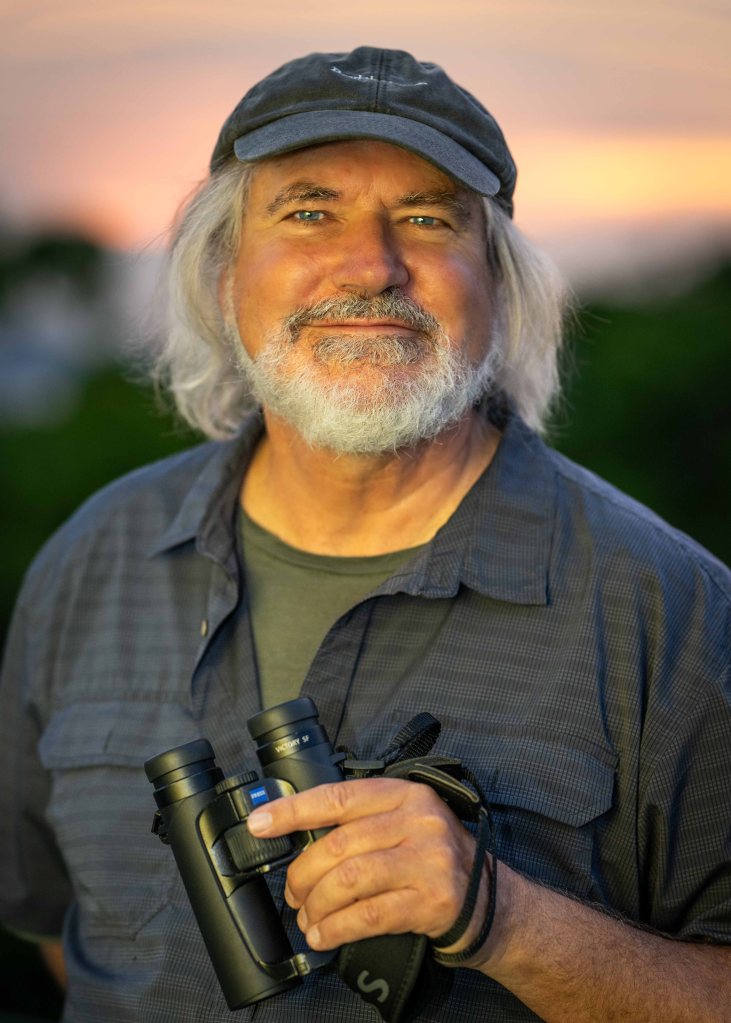
Charles Hood
Let’s dive into the enchanting world of hidden wonders that come to life after dark!
Our guests today are Charles Hood and José Martínez-Fonseca, authors of the new book “Nocturnalia: Nighttime Life of the Western USA” from Heyday Books.
Charles is an author, poet, birder, and world traveler, and as you’ll hear, an exceptional naturalist, too. Jose has a PhD in Bat Ecology, and as a result, has extensive experienced studying animals of the night.
Today we uncover the intriguing behaviors of nocturnal creatures such as nectar-feeding bats and vampire bats, scorpions that glow under UV light, and the often ignored but fascinating small owls – we’re talking owls the size of a American Robin – or even smaller! Observe how even the familiar environment of urban backyards transform into arenas of ecological discovery when the sun goes down.
Tailored for nature enthusiasts and curious minds alike, this conversation is a gateway to a world less explored – the intriguing and overlooked world of nocturnal nature.
Did you have a question that I didn’t ask? Let me know at naturesarchivepodcast@gmail.com, and I’ll try to get an answer!
And did you know Nature’s Archive has a monthly newsletter? I share the latest news from the world of Nature’s Archive, as well as pointers to new naturalist finds that have crossed my radar, like podcasts, books, websites, and more. No spam, and you can unsubscribe at any time.
While you are welcome to listen to my show using the above link, you can help me grow my reach by listening through one of the podcast services (Apple, Google, Spotify, Overcast, etc). And while you’re there, will you please consider subscribing?
Links To Topics Discussed
A Salad Only The Devil Would Eat, by Charles Hood
Charles Hood’s Website
Jose Martinez-Fonseca on Instagram, Facebook, and his photography website
Nature’s Archive episode about Bats with Dr. Dave Johnston
Photos
All photos courtesy Charles Hood and José Martínez-Fonseca.
Credits
The following music was used for this media project:
Music: Spellbound by Brian Holtz Music
Free download: https://filmmusic.io/song/9616-spellbound
License (CC BY 4.0): https://filmmusic.io/standard-license
Artist website: https://brianholtzmusic.com
Transcript (click to view)
Michael Hawk owns copyright in and to all content in transcripts.
You are welcome to share the below transcript (up to 500 words but not more) in media articles (e.g., The New York Times, LA Times, The Guardian), on your personal website, in a non-commercial article or blog post (e.g., Medium), and/or on a personal social media account for non-commercial purposes, provided that you include attribution to “Nature’s Archive Podcast” and link back to the naturesarchive.com URL.
Transcript creation is automated and subject to errors. No warranty of accuracy is implied or provided.
[00:00:00] Michael Hawk: Let’s dive into the enchanting world of hidden wonders that come to life after dark. Our guest today are Charles Hood and Jose Martinez Fonseca authors of the new book Nocturnalia: nighttime life of the Western USA. Charles is an author, poet, birder, and world traveler. And as you’ll hear an exceptional naturalist too. Jose has a PhD in bat ecology.
[00:00:23] And as a result has extensive experience studying animals of the night. He’s also an amazing photographer.
[00:00:28] Today we uncover the intriguing behaviors of nocturnal creatures, such as nectar feeding bats, and vampire bats, scorpions that glow under UV light and the often ignored, but fascinating, small owls. We’re talking hours, the size of an American Robin or even smaller. Observe how even the familiar environment of urban backyards transform into areas of ecological discovery when the sun goes down,
[00:00:52] this conversation is tailored for nature enthusiasts or curious minds, and it’s a gateway to a world, less explored the intriguing and overlooked world of nocturnal nature. So without further delay Charles Hood and Dr.
[00:01:05] Jose Martinez Fonseca
[00:01:07] Charles and Jose, thank you so much for joining me today. I think this is going to be an interesting discussion to say the least.
[00:01:13] Jose Martinez Fonseca: Thank you for having us.
[00:01:14] Charles Hood: Thank you for having us. We’re excited to be part of this magnificent experiment that you’re carrying out.
[00:01:20] Michael Hawk: Yeah, it’s a three year long experiment so far.
[00:01:23] Charles Hood: Well, it hasn’t crashed and burned yet, so here we all are carrying on. This would be like episode 90 or whatever you’re up to.
[00:01:30] Michael Hawk: Yeah. Yeah. That’s about right.
[00:01:32] You’re both very interesting people and the reason why we’re here together today is because of your book, Nocturnalia, Nature in the Western Night, which. To me, it’s just a fascinating concept. So I think we’re going to talk about that, but we’re likely going to stray into some other topics as well.
[00:01:51] Maybe just to get started I’m really interested in my guests, how they got interested in nature in the first place. And. Possibly how you two came to collaborate. So I don’t know if those fit together or not, but Charles, do you want to go first?
[00:02:07] Charles Hood: Sure. There is a, you know, we’ve all heard about bird watchers keeping their bird lists and we know birders and they’re very fanatical. You’ve had some guests. And there are mammal watchers who are equally concerned about seeing all the mammals of the world. And I was on a mammal study trip in Brazil.
[00:02:23] based on a boat. And one of the bat wranglers was Jose, who had a reputation already as being the great Yapook catcher. A Yapook is a water possum from Central America. And then he could dive off a boat and catch these animals barehanded. I knew about that part. So I was talking to Jose on the boat and I said, Oh, you know, I’m interested in bats.
[00:02:42] Oh, I’m interested in bats. He says, and he says, I take pictures of bats in flight. And I’m like, you’re kidding me. How do you take a picture of a bat in a flight? And so he shows me his pictures. And then I said, you got to show him, do this, explain this to me. And he, we take out my journal. He does a little diagram of where the boxes and where the bat is and he says, you have to go to the dump and get some wires from old speakers and you have to make sure you subduct tape on this part.
[00:03:05] And he was getting national geographic quality pictures. And I will say that with all due respect to Merlin Tuttle and all the other great bat photographers, Jose was, and is. Fabulous. And I said, Oh my gosh, Jose, you have to teach me how to take pictures of bats. This is like something I’ve always dreamed of.
[00:03:22] And he says, yeah, next time we’re together, we’ll do it. So we ended up coming, he ended up coming to California and went to Yosemite with me, saw his first snow bank. We went up to the bristle cones to see the great pine trees. And one thing led to another, Jose got into a PhD program and now he is Dr.
[00:03:40] Jose to the rest of us.
[00:03:42] Michael Hawk: I have to ask Jose, do you post your photos anywhere?
[00:03:47] Jose Martinez Fonseca: I do have a website and an Instagram. but coming to a question about how I got into nature I grew up Nicaragua. I lived there until I moved here for the PhD program in 2018. But yeah, I grew up in a really small town, 6, 000 people near the Pacific coast. Near, but not like super close, just like geographically.
[00:04:11] And I always liked animals. And very early, I started Catching bugs and by the time I was in high school, my mom would let me go, you know, longer trips around the town and I started actually a specimen collection and those were mostly reptiles and amphibians because I got a book from my dad that was about herps.
[00:04:35] some of those specimens now have made it to some museums here in the US, but.
[00:04:41] I wasn’t interested in that, but when I finished high school, I actually started an engineering degree because
[00:04:50] I didn’t know anyone else who did biology. So it was really hard for me to kind of like find a path. Into a professional career with that.
[00:04:59] So I started with engineering, but once I was in engineering, I actually met some biologists and because of photography, I decided to move to biology. So I switched universities later and
[00:05:09] that led me to work with some people from Northern Arizona university who were doing bat work in Nicaragua.
[00:05:17] And those were the ones that eventually invited me to come. To Arizona and started the PhD program and now I’m a postdoc, but I still, you know, going catch animals and, or see them or taking photos of them. That’s still like my main goal in life is I, the PhD and all these other degrees or whatever is, it’s just a mean to do more fieldwork and.
[00:05:44] Sea animals.
[00:05:45] Charles Hood: And Jose has been in about 20 books. His work has been in 20 books and then he’s the author of two herpetology books besides our Nocturnalia collection.
[00:05:55] Michael Hawk: Yeah, that’s spectacular. I’ll make sure to link to your Instagram and other resources that you have. And Arizona I lived in Arizona for a little while. I was. More down near Phoenix and really became enthralled with the Sky Islands there. And in fact I really want to do an episode with someone, I don’t know who yet, but someone to talk about the Sky Islands and how incredibly diverse and interesting they are.
[00:06:22] So I can
[00:06:23] Charles Hood: The person would be his wife Erin, who’s doing her PhD on lizards of the Sky Islands.
[00:06:31] Jose Martinez Fonseca: Yeah, my wife’s working with spiny lizards. And they one of the most diverse places is the Sky Islands and the Chiricahuas. So yeah, we’re living here in Flagstaff. So we get to go there a few times a year for her work.
[00:06:46] she’s getting her PhD at UC Berkeley, but
[00:06:49] Michael Hawk: great. Yeah. Yarrow’s spiny lizard. I can’t remember the uh, the Latin name, but that’s the one when one of my first trips down to the sky islands that I saw, and I’m like, Holy cow, what is this thing? And yeah, the diversity down there is just amazing.
[00:07:07] Very cool. So let’s touch on the book a little bit. Tell me about the concept of the book. What was your goal, your audience you’re trying to reach with this.
[00:07:17] Charles Hood: We’re very lucky to work with Heyday Books in Berkeley, and it’s relatively small, but company with a big heart and they do a variety of issues, including natural history, Native American issues, some political issues as well. And I approached them with the idea that half of the day is nighttime, if that makes any sense, it would, You know, and. Get we all think of sort of nature as a daytime activity. We know there are animals out at night. No one’s that ignorant, but all the nature shows are typically done. You know, the zoos are open during the day and we go hiking during the day unless you got lost, in which case you have a different concern on your mind And yet the mammal watchers are out at night quite a bit. And Some of the birdwatchers are too. So my argument was that if we’re ignoring nocturnal nature, we’re ignoring half of the nature that is out there in that I really wanted to try to reverse that and also give people a little more sense of security.
[00:08:12] American culture is really good at making us fearful. We distrust each other. We distrust our environment. And we’re told basically the night is bad and you better lock your door and turn on your security lights or else the night will get you. And you think that’s ridiculous. How did we ever get around as a species all these millions of years if we couldn’t walk around at night.
[00:08:34] And of course, as Jose can verify. You can hike by starlight fairly safely. Now we want to caution our listeners. Don’t get bitten by a rattlesnake. You will regret it. Don’t get eaten by a bear, please. But really out of the thousands of field nights that Jose and I have done together, here we are no snake bites.
[00:08:51] Haven’t been eaten by a bear yet. Haven’t been robbed. You know, it’s like the night is not some inherent enemy to be locked away, you know, lock the door and hide from the night.
[00:09:00] Jose Martinez Fonseca: I know a reason was that we’re both interested in photography and both like to do a lot of like flash photography. And just experiment with like lighting and long exposures. So this was like a good excuse to, to go out and try to get some more unique photography.
[00:09:28] And many of the subjects I study are heavily nocturnal, including bats and other small mammals like rodents, but also amphibians and reptiles. So every time I go to places, I always wonder like, what does place look like at night? And. I always like, you know, go to a nice park and I’m like, man, I wish I, it will open at night and come and see because this frog or this lizard it’s in the range.
[00:09:58] So my wife actually makes It’s a bit of fun of me because every time I was like, she asked me like, do you think this is a good place to be at night? So yeah, talking about coming back later and try to find critters, but it’s true for most places. Like even the trash can outside your house, probably it’s a lot more interesting at night. Just because the animals are coming and look around and we all know the ones in the day, we started a bit with camera trapping and long exposures, trying to find some places that are well known during the day, but not so much during the night.
[00:10:39] Charles Hood: And one of our goals was to photograph bats in a way that’s more attractive. Like we actually use the same kind of reflectors and soft boxes that they use at a fashion shoot. If you know that expression, a deer in the headlights. That’s the one kind of picture we don’t want to take. And one problem with bats, when you are handling them, they’re echolocating, when, just as you’re holding them or right when you release them.
[00:11:00] So their mouth is open and their teeth are showing, and they can look a little bit fierce. So it’s a little tricky. We can get good night pictures of bats in flight with our system, but to make them look less fearsome is, takes a little bit of luck, shall we say. you Take 10, 10 pictures to get the brand ambassador shot of a good, happy, sexy. Don’t mind me. I’m just a great, gorgeous bat picture.
[00:11:23] Michael Hawk: Yeah. Bats, of course, are broadly misunderstood in a lot of different ways. So it sounds to me if I, put a couple of these comments together, recognizing that. We as a society don’t have a comfort with nighttime biology, nighttime activities. And then also maybe as a self reinforcing fact of that there’s probably less observation that’s been done at night.
[00:11:48] So I’m assuming that part of this interest is that there’s a sense of novelty and a lot more opportunity for discovery. Of the organisms at night.
[00:11:57] Charles Hood: Yes. When we were in Madagascar together, certainly we were getting data on bats. That was, you know, we’re just. I’m an amateur technically, right? I’m, just, I’m a retired English professor who sort of knows what he’s doing, but not quite. but we were getting range extensions on bats or noticing details about behavior.
[00:12:16] So for those of us who would like to contribute as community science members, Oh my gosh, just basically documenting what’s around your house and putting it up on a situation like iNaturalist would be so helpful and so productive for the general social community.
[00:12:33] Michael Hawk: Yeah, absolutely. That’s a common theme here in nature’s archive is that we can all contribute to science and in very interesting ways, you know, even at my house. I’ve moth lighted in my backyard and, you know, you see the, you know, the carpenter ants are more active at night and there’s like a whole, the moths of course are obvious and the bats that fly by.
[00:12:54] So yeah, so, so much opportunity. And then you have the advantage of being able to go to some pretty cool places to do this as well.
[00:13:02] Charles Hood: have made it happen, shall we say. What it cost me to go to Madagascar is maybe a different question, but yes, he and I have, I’ve been to Borneo, he and I have been to Madagascar, blah, blah, blah. That’s the whole, you know, trying to make your childhood dreams come true aspect of our collective lives.
[00:13:19] Michael Hawk: But we’ll make it real accessible here today for people that want to get out. And they’re out near their home in their home, whatever to explore. talking about the book, one of the things I really enjoyed about it was how you talk about more than just the animals that are out at night.
[00:13:36] You begin talking about astronomy and meteor showers, and even this really cool phenomenon called noctilucent clouds, which I’ve always been really interested in. Why did you choose to include this? this broader setting of the night to kick off the book.
[00:13:51] Jose Martinez Fonseca: we’re trying to be very appealing to a lot of different Demographics or interests. And turns out we were also interested in astronomy. So again, it was like another excuse to keep trying astrophotography things like that. But, it’s just shocking how many people, are not aware of, like, we’re part of a galaxy, or there’s other stuff out there that you can if you go out far from the city and look up You will be able to see and think things that, you know, maybe you have seen in, discovery channel for a brief moment, but it’s actually just out there, like do you need to do much else than just being a dark side and look up?
[00:14:43] I live here in Flagstaff and I don’t know if you know, but like says, what’s. The first dark sky city in the world, and people in the community really feel proud about it. And, you know, we have some telescopes like the, from the Lowell Observatory that’s where Pluto was discovered.
[00:15:02] And so that the theme of astronomy and some, in some parts, like the social aspect of. the dark sky and how to embrace that. It’s very present. And so we both were trying to also capture that.
[00:15:34] Charles Hood: and Hades, you know, are the two Atlas, they should be adjacent to each other.
[00:15:38] And yet we’ve got some really good astrophotography from either my house or Jose’s house or from nearby, you know, we got in the car, we went a little bit further into the desert, a little bit, you know, out away from the city, a little bit more. And so again, you don’t have to be a professional to have a great experience.
[00:15:54] And we were doing this with standard off the shelf cameras. as we’ve gotten into it more. We have a little bit better, mounts and telescopes, but a basic. A basic eyeball, your basic eyes and a basic camera and a basic tripod, and you can get a great picture of the Milky way.
[00:16:08] Michael Hawk: yeah, it really helps to demystify the night, I think, which fits the theme of your book as well. And maybe also ties into some of the broader ecological concepts that, that I like to talk about. And we’ll probably get into a little bit later when it comes to we aren’t the only ones that look up at the stars and use them for navigation.
[00:16:27] There are animals that do. So I’ll plant that as a teaser and we’ll probably get into that a bit more later.
[00:16:33] Charles Hood: You’re absolutely right. Half of the 11, 000 species of birds migrate and they generally migrate at night. There’s a little bit of summer diurnal night migrators There’s a little debate about how much migration is actually at night the day, but they’re getting a couple of things.
[00:16:47] Out of that choice of migrating at night. And one of which is they get to use that map called the sky, that the star chart is really helping birds to navigate on these long distance travels. They’re also using other cues as well. Ultra they’re using polarized light and smelling their way across the landscape and landmarks, but the start, yeah, the magnetic field, of course the star chart is absolutely as important or.
[00:17:16] Parallel to the magnetic field of these 11, 000 birds, even, you know, of course, bats migrate, even dragonflies migrate. So there’s this great pulse of energy moving across the landscape when we’re busy, not paying any attention to it. And that pulse of energy, all that great flow of life is. Not just the bird itself, but then an entire ecosystem Cause inside the birds are of course, a microbiome of very small things, but even just basic things like the seeds that are in their tummies that are getting distributed.
[00:17:49] You know, when the bird takes off, it doesn’t just void it’s entire body all at once. It’s carrying with it all of this material from the home ecology to the next stop. So think this energy transfer is happening around the world year round.
[00:18:06] Michael Hawk: So let’s talk a little bit about the organisms that are active at night. And we’ve been, you know, bats are an obvious one. We already been talking a bit about bats. And you know, there’s a whole episode that that we had a couple of months ago with David Johnston.
[00:18:23] Where we got into bats for about an hour and a half. we’ll touch on some of it here, but probably won’t get into that kind of depth but I want to take it a totally different direction and reveal some of the maybe overlooked things.
[00:18:35] And you talk a bit about plants and the interesting things that plants do at night. So can you tell me a little bit about. Some of the surprises, some of the things that, that you reveal about plants.
[00:18:49] Charles Hood: are Well we know that some plants are pollinated. And when we say we, isn’t that a terrible term? We whom
[00:18:55] are pollinated at night, generally by Sphinx moths. Although there’s a couple of other options too. And you ask yourself, well, why do that?
[00:19:07] When we have great hummingbirds during the day, but during the day, everybody is competing for the same kind of, whether it’s the wind or whether it’s a hummingbird to be pollinated. So if you switch over to be pollinated at night, you have a different set of possibilities available to you as a plant, but that’s you know, a big white showy flower, like a datura flower is going to get visited by a Sphinx moth, I think many naturalists are aware of that, but you’re working on the book, I was surprised how much the plant itself as a plant is doing at night.
[00:19:35] Cause I was so. stupid. I guess I’ll be honest to say, but it was so ill informed. Like, I just thought, well, it’s nighttime no photosynthesis happening, nothing for the plant to do, but wait until sunrise when it’s going to get active again. And we now know from things like detailed laser studies that the actual Plant itself is changing its structure.
[00:19:55] It’s physical shape is it’s a kind of profile as water moves around the plant. And even a desert plant, like a creosote is actually changing diameter branches and changing its profile. All through the night, even like the way humans have restless cycle in a more deeper sleep cycle, the plants seem to be going through these hour long cycles as they move water up and maybe mend some tissues and then go into a little bit more of a stasis and then begin to move some other water around so that the again the landscape at night is still So Active, still alive, all the processes that we think of as being a normal part of nature, like photosynthesis, these versions of these processes are happening, even after the sun has gone down.
[00:20:41] Michael Hawk: And the more I learn about plants, the more parallels I see to humans because like, okay, any athlete knows that nighttime is your recovery time. So I guess it, it stands to reason like, you know these are organisms that have adapted to our environment and they’re busy doing other things at different times of the day.
[00:21:00] It’s a chance for them to. To do something else at night and be fit that ecosystem. And you mentioned desert plants and the one that comes to my mind, I was fortunate to have a Saguaro cactus in my yard when I lived in Arizona. And it was just barely old enough to start blooming before we moved away.
[00:21:21] And you know, everyone told me that bats would actually visit those Saguaro flowers. And I’ve heard lots of. Desert cacti, maybe other desert plants to are pollinated by bats. And maybe Jose is this a topic that you could expand upon?
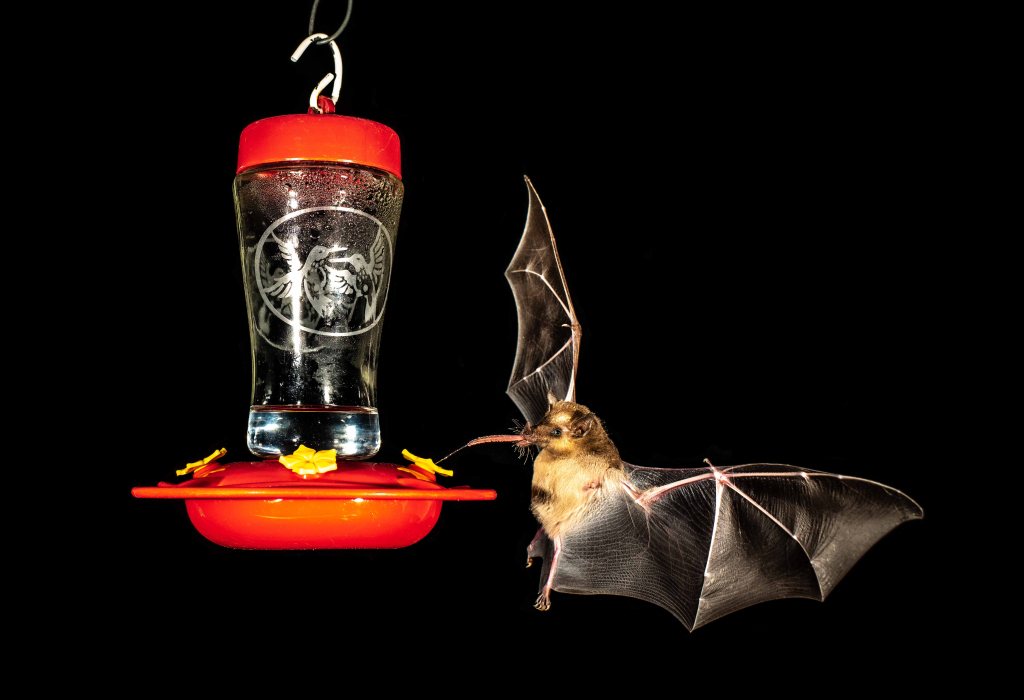
[00:21:37] Jose Martinez Fonseca: Of course yes. In the case of Arizona, there are at least two species that are nectar feeding bats. Some people call them the tequila bats because they are also are the ones that pollinate agaves. these are relatively large bats. They have long really long, that’s, you know, the common name, long nose or or long tongue bats.
[00:21:59] And it’s because it’s an actual feature the tongue can be as long as their body length. So.
[00:22:06] They use these long tongues to be able to get the nectar from these big flowers like the saguaro. And while they do that, because this flower is so big, they have to almost get in head first.
[00:22:20] Into the flower into, and that’s where the plants can deposit all the, pollen around in the body of the animal. So it’s not even just the face of the animal that’s pollinating. It’s a, it’s an amazing amount of pollen that can be every time that the bat is going into a flower and really increases the success of the plant.
[00:22:42] Because for a plant like the saguaro in the desert it’s really expensive to, to create a flower. You’re trying to save as much, the most moisture possible through the year, and then you suddenly have this giant flower that is really delicate, it requires a lot of water and sugars and energy.
[00:23:00] It’s actually makes sense that they flower during the night where that flower can lose less water and then you have a very specific pollinator that’s gonna transport the pollen only between those flowers during that night. So it’s even decreases the chances of Missing the pollen in the course of, you know, an animal visiting 10 different species of plants.
[00:23:30] If they’re related, great, this cross pollination. But if they are completely unrelated and they cannot be cross pollination, by the time you deposit your pollen and this pollinator goes into a, or nine species, maybe to lose all the pollen that you have, you’re trying to send to another plant by the time this animal visits the other one.
[00:23:53] So it is all about niche partitioning and how the night has been this like, opportunity to radiate into and take advantage of the space and time of these other animals. even the same animals that can be diurnal and eternal they can have
[00:24:13] extremely different behaviors and so all because of that.
[00:24:18] The more south you go, the more species of bats that can pollinate plants you will be able to find.
[00:24:25] So I think there’s just a function of the diversity of bats and across the continent, but it’s very lucky that, yeah, we have a few species up here in the, US. Yeah,
[00:24:37] Michael Hawk: It makes sense to me the, desert adaptations, as you pointed out it makes sense for a plant to flower at night. So it doesn’t it’s able to retain its precious water better. And then you have these bats that have adapted to be able to feed on the nectar. Do you, beyond the deserts in the Western U S are there are there bats like up in my neck of the woods or in some non desert locations that are nighttime nectar feeders
[00:25:03] Charles Hood: In California, they’re only in southeastern California and along the San Diego belt, so like Anza Borrego, they’re coming into yeah, the southern end of California, it has to do with the ability of the plant to produce all that.
[00:25:19] Mega nectar. So saguaros are obligate, you know, bat pollinated plants, so to speak, saguaros need bats no matter what. But generally up in central California, you’ll have the night plants are typically pollinated by some of the large moths. So the Sphinx moths complex,
[00:25:38] Michael Hawk: Got it. And is that true in other parts of the U S then as well? It’s mainly the moths then that are doing the pollination at night.
[00:25:45] Charles Hood: Texas has got a third, pollinating. Bat that we don’t have in Arizona and California . So go
[00:25:51] Jose Martinez Fonseca: but that will be,
[00:25:53] Charles Hood: go to Big Bend to see another Bat . A good reason to have a vacation
[00:25:57] Jose Martinez Fonseca: there will be only three species of pollinators in the U. S. and they all occur close to the border with Mexico. These bats are in a family that is called Philostomidae and they are the leafnose bats. So the California leafnose is in that one, but the California leafnose is a glenium bat.
[00:26:15] It actually feeds on insects and these are nectar bats. The chunk of their species richness is in the tropics. So. They fade away as you move in, and that’s to the up or down.
[00:26:29] Michael Hawk: much diversity, so many places to look. And when I think of diversity, very little.
[00:26:37] competes with arthropods. And I know that there are tons and tons of different arthropods that you’re only going to find at night, or will at least be most active at night.
[00:26:46] Charles Hood: So we’re going to encourage your listeners to get a 10 dollar UV flashlight, you can spend a hundred dollars if you want. But you don’t need to do that.
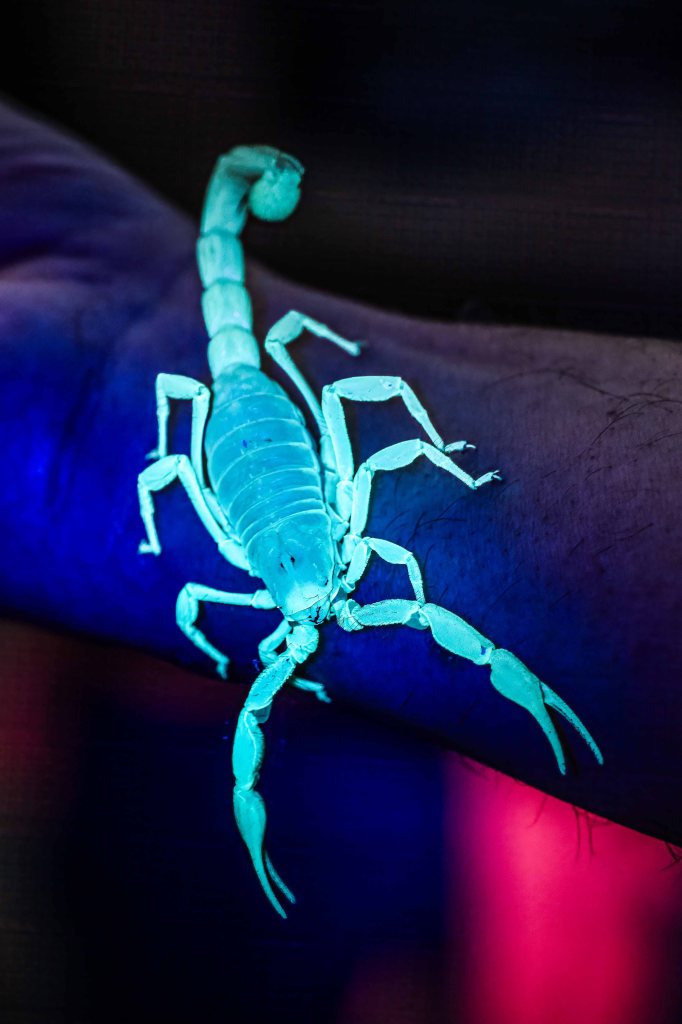
[00:26:54] Just get a UV flashlight and go to some open rocky habitat. is fine. Deserts are better and look at the scorpions. They absolutely, the entire scorpion, the pin, the pincers, the tail, the body, the legs, every part of the scorpion glows at night vividly, It’s sort of a lovely blue green pale white, blue green, that with, and You know, when we’ve done a few experiments just for the book, you know, Jose’s found six scorpions in five minutes. It’s just so fun. This is, This is the thing that makes kids love nature.
[00:27:30] Michael Hawk: Yeah. I totally agree. And, some of my, you know, some of the listeners that have heard me for a while have probably heard me talk about this, but I sometimes help out with a field ecology class from a local community college. And we often go to this area called the Alabama Hills, which is in the Eastern Sierra.
[00:27:47] It’s in the great basin desert as it starts to. You know, maybe transition to Sierra habitat, excellent place to, to find scorpions. And I think the thing that surprises me is with black lights, you can do it. You don’t have to just look for scorpions, right? Like there are other organisms that will fluoresce under black light.
[00:28:05] Charles Hood: Well, yes, and I’ve used black lights to look for flying squirrels. You know, there’s, there are three species of flying squirrel in North America. They’re all nocturnal and recently discovered that they fluoresce under UV light and a lot of arguing about, there’s argument about even why the scorpions fluoresce and it’s not entirely known.
[00:28:27] The latest theory on the scorpions seems to be, it may help them detect moonlight and know when they’re physically exposed as like being under a boulder versus being in the open, they’re in the open. They’re going to get predated by a pallid bat or by an owl or something. So it may help them in their sense of who they are out of it in the nature, but.
[00:28:44] That’s not completely agreed upon. So yes, flying squirrels, fluoresce, platypuses, fluoresce, those that you are planning to go to. Yes. if you’re planning to go to graduate school, boy, do we have a great fun project for you? Figure out this whole fluorescing under UV light thing with mammals by all means and publish the great book on it.
[00:29:04] And I’ll be the first to buy it.
[00:29:06] Michael Hawk: And did I hear you say Jose,
[00:29:07] opossums
[00:29:08] too,
[00:29:08] Jose Martinez Fonseca: Yeah, opossums too. There’s a bunch of animals now, and a lot of mammals that are recently being, like, documented to be some kind of fluorescence under UV light. And most people don’t know. It could be also in some, at least in some cases could be just like a side effect for something else.
[00:29:28] So like some pigment that is useful during the day, turns out it’s just close at night, but not necessarily will have a function, but it’s very new. It’s just until recently that someone had decided to go through the collections of mammals without UV light and.
[00:29:45] Charles Hood: Well, there’s a story. Jose, do you remember the story? It was actually lichen specialists who noticed the flying squirrel fluorescing. So it was as a by product of botany in essence. And then, yeah, now you go to a specimen collection and to the so called Pelt vault and get to figure out what glows and what doesn’t glow.
[00:30:06] And then someone can tell us why I’ll be looking forward to that any day now. Alabama Hills. Oh my gosh. And when you’re there, readers and listeners, be sure you go to the movie museum at Lone Pine and learn about all the many hundreds of movies that were. filmed in the Alabama Hills. It’s a great cultural resource.
[00:30:24] And then go up the road, just a tiny drive to Manzanar and see the sad history of America’s concentration camps. So it’s, you get to see scorpions and movies and have a history lesson all in the same. Little Lone Pine radius trip
[00:30:40] Michael Hawk: Yeah, our last trip there in July, just a couple months ago there was a wind scorpion and it fluoresces as well. It’s not related to scorpions. Yeah. So, yeah. So, so many discoveries as to add to the list of fluorescing I think that one was known, but I do see, you know, friends occasionally finding new things that were not known to fluoresce before.
[00:31:03] Charles Hood: and while people are on the Alabama Hill Strip go up to Bishop and that’s a great place for bats there’s a city park there that’s got a pond and there’s a little stream that runs through the pond is through the State through the city park and Bishop and if there’s a baseball game There are a lot of bats feeding around the stadium lights and there’s Yuma Miotis bats feeding on the water if you bring a bat detector, you know, someone with a bat detector You can get six species in half an hour at the right there by Holiday Inn Express and the baseball diamond near the dog park across from Schat’s Bakery in Bishop is a fabulous place to see a whole mess of bats.
[00:31:41] Michael Hawk: I, I know that spot.
[00:31:43] Jose Martinez Fonseca: just want to add I really like that area. I, the first time I visited Charles in California, we actually went to the Alabama Hills and we went also to the Inyo National Forest. So if you go a bit higher in elevation and you go at night in the early days of the summer I actually have not heard them there.
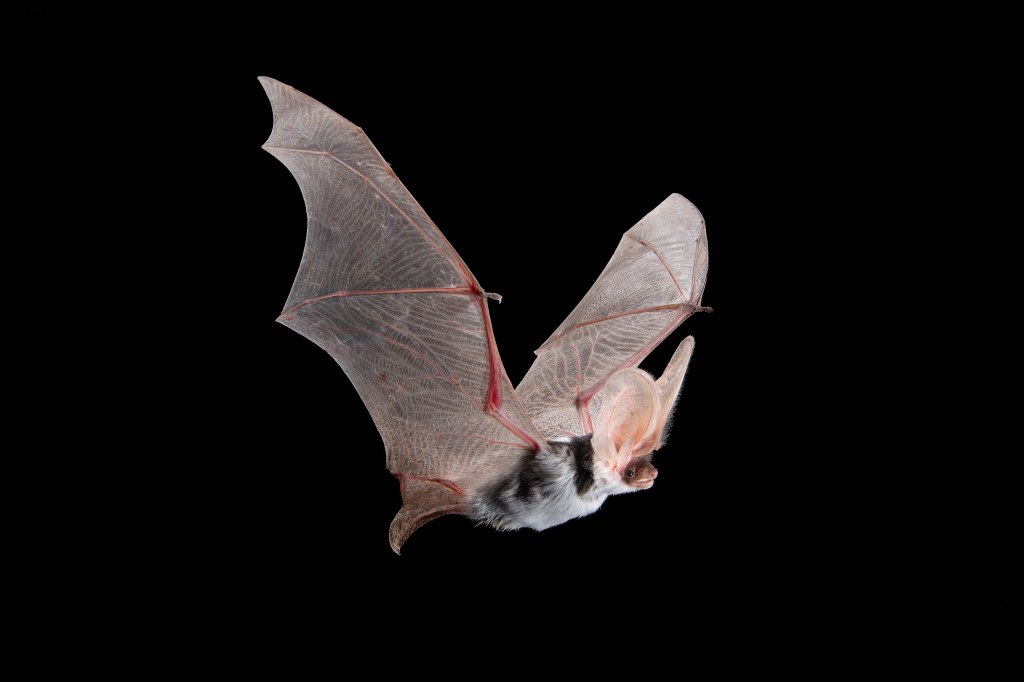
[00:32:04] Yeah, but some people that work there with bats also told me one of the rarest species of bats and mammals in the entire North America can be from there. And that’s the spotted bat. And it happens that this animal… Actually it echo locates like a frequency that is low enough that we can hear it.
[00:32:27] So if you get out at night and you hear like a little…
[00:32:30] That’s the only hearable bat that you’re going to find in, in, in that kind of landscape. And they actually feed on moths. And there’s this kind of arm race between moths and these bats because most bats that also feed on moths, they collocate very, in very high frequency.
[00:32:52] And most of the mods have evolved to avoid or detect some of those sounds and do some like avoidance, like either by maneuvering or just stop flying and just let gravity bring it down. So, and the last moment where the bat is about to catch it, they can like dodge the bat. so what the spotted bat did was you know, all this.
[00:33:15] Bats are echolocating at these frequencies. I’m just gonna echolocate way below that. So I take some moths, by surprise, basically. And that’s exactly what they do. And now there’s this thousands of years, and now there are moths that also can detect
[00:33:34] Or counteract some of the, collocation from the
[00:33:37] spotted bats, but it’s an ongoing dynamic and it’s so rare.
[00:33:41] This spotted bat is like really a unique thing. You I hope people like Google and see,
[00:33:48] Charles Hood: No, we’ll put a picture in the show notes. Jose will put a picture in the show notes because it’s black and white. It has immense pink ears. This is just a fabulous looking animal. And yes, the Eastern Sierra is one of the places in the world where you could go and actually hope to see one.
[00:34:03] There’s another spot up by Crowley Lake a little bit further north from Bishop. So. we think of it as maybe mountain biking or trout fishing or something, but it’s actually a fabulous place for wildlife. Brushy tailed wood rat is something you can see when you go up to see the bristlecone pines.
[00:34:19] There are marmots up there. Chance for a puma, you never know. It’s going to run across your front of your car sooner or later, everybody, has, it has for both the, both of us. If you want to see a puma, the more time you spend out in nature, the better luck you’re going to have.
[00:34:34] Michael Hawk: Well, you’ve definitely piqued my interest on this bat. So I’m going to be looking it up and yes, I will include any photo that you have and some links in the show notes too. you know, in my recollection of the book there’s a point where you also talk about if you’re out at night and you’re exploring and I want to make sure we leave some time.
[00:34:52] to give people some hints and tips and suggestions as to how to do this. But you mentioned looking in water as well. And I remember one of the night hikes I led here in the Bay area last year, there was a very experienced night hike leader Along with me and he went straight to the water and found a giant water bug like right away.
[00:35:12] And it’s cool. Very cool thing to see. And I didn’t really stop to think, well, you know, how come I’ve never seen one of these in the day before, but I think this is another example of an arthropod. That’s as most active at night.
[00:35:23] Charles Hood: I’m going to say tentatively. Yes. With a question mark in my voice, don’t they hide under rocks during the day, but nature’s so complicated, you know, I don’t want to be, you’ll hear from someone, ah, no, they come out at 4 p. m. You idiots. Don’t you know anything on that podcast of yours? Yeah.
[00:35:39] I
[00:35:39] Jose Martinez Fonseca: I know that. I know that at least some species in Central America, they move between ponds at night, so they fly during the night. That’s mostly to avoid predators and because there are great swimmers, but they don’t move so graciously on land. So if they move at night, there’s a bit of better chance to be able to disperse between bodies of water.
[00:36:04] Michael Hawk: And you had an incredible photo in the book of a male with dozens of eggs on its back, which,
[00:36:10] Charles Hood: Yeah, we got that from a woman named Renee Clark, who lives in Tucson. And so again, we’re trained to be afraid of nature, but here’s a brilliant photographer who happens to go out alone just because that’s often her social situation where her day off doesn’t match anybody else’s. And I asked her about that.
[00:36:27] You know, in the book, and she does say, like, you have to be sensible, look behind you, look around you, but there’s no reason not to go do your thing. And there are such amazing experiences to be had if we could just go out and have a little look.
[00:36:41] I was going to just ask Jose, you’ve been out at night as much as I have, you know, or more. How do you feel about being out in nature at night? What does it make you feel like?
[00:36:49] Jose Martinez Fonseca: It’s a lot of like feeling of discovery, I think. Again, it’s like you can visit a place a thousand times, but then the time you do it at night, it just looks completely different. And yeah, you can most of the time recognize the path and But you look and you can find anything.
[00:37:07] Like I did that growing up in Nicaragua and the night is… You hear different sounds different things. Like the trees don’t look the same. And I think in some ways it might have to do with You’re more focused. You cannot just walk and ignore everything around you. You need to use a flashlight and that’s focus your vision to concentrate more on like what is each thing. I will say I always want to be aware of what’s around me.
[00:37:37] So it also triggers Like my vision in a way that like I’m just looking for any movement and any color that is a bit off the main part of the landscape. So just makes it easier for me to appreciate little things and find little critters. to be at night than during the day.
[00:37:57] During the day you cannot get, overwhelmed. Like, you can see too far and you miss to check the crevices or to look down on your feet and see, I don’t know, a blind snake going by. So.
[00:38:09] Michael Hawk: miss so much. I think. And I know that neuroscientists talk about how all of our sensors, our eyes, our ears, our sense of touch, like it’s overwhelming and our brain is so good at just filtering things out. And I suppose at night you have a natural filter occurring in a way that allows you then to detect more and focus more and see things that you might not otherwise see.
[00:38:31] Charles Hood: I think we smell better at night and that I don’t mean our body scent, which is the same as always, perhaps worse by the end of the day, but I mean, you know, it’s a little more humid perhaps. So that’s carrying sense a little bit more. But again, we’re alert to it. So I’m thinking of a time when, you know, Jose and I were in Texas and we were waiting in a river to look for things, but I just remember the rich aroma of the earthiness, if that makes any sense the vegetative sense. it. was so overpowering in a good way. And I think during the day I’m busy as Jose said, I looked. I can look very far. I can, you know, in the great basin, you can see 200 miles in a straight line, 100 miles here and in my desert. And, I’m busy watching the road signs and doing all the things that my brain is trying to do.
[00:39:16] So at night I have to smell and I have to listen and I have to think about the environment in a way that I find very, they talk about mindfulness. Does that term mean anything anymore? Does everyone’s using it so much? I’m not sure, but if there was, if there is such a thing as mindfulness, one has to be mindful at night.
[00:39:31] And I like that kind of heightened sensibility. I think it’s a real gift that I get to receive that amount of nature coming in. Again, it could be a very short walk. It doesn’t have to be, you know, it could be within a hundred meters of the parking lot and you’re already. into a different kind of world.
[00:39:47] Michael Hawk: so one more thing I want to just cover about nighttime ecology, nighttime biology, nighttime animals. And that’s. You know, you can’t ignore owls. I think everybody loves owls. Well, most people love owls. And I really like how in the book you give a good amount of focus to the small owls.
[00:40:05] And there’s so many interesting small owls, I think that are overlooked and people might not realize are out there. just want to ask, you have any interesting anecdotes or encounters with with owls in your adventures at night?
[00:40:19] Charles Hood: The whiskered screech owl. So this is a southeastern Arizona, northern Mexico species, about the size of a robin or a blackbird. we have a whiskered screech owl picture in the book and Jose got that picture because it flew into his bat net.
[00:40:34] Jose Martinez Fonseca: There was a, one of those nectar bats caught in the net. There were several. So I’m working, trying to untangled them. And suddenly I just see the whole net just moving. And these are, for people that are not familiar, these are like fishing nets, but thinner and they’re black and with smaller gap sizes.
[00:40:56] So you place them between two poles and in the hopes to capture bats.
[00:41:02] Michael Hawk: Are these like Mist nets that are used in bird banding. Yeah.
[00:41:06] Jose Martinez Fonseca: exactly. Yeah, they’re usually a bit thinner and the holes are, usually a bit smaller not too fine, but yeah, smaller than the ones for raptors. But So,
[00:41:17] yeah, if you’re familiar with, you’ve seen bird banding, it’s basically the same.
[00:41:21] You can just the same, but the thing with bats is that they have teeth, so they, can chew through the nets a lot more than a bird. so yeah, I see the whole net just moving. And so I, turn my headlamp along the net and I just see this. This huge animal with Screech Owl is not huge, but compared to the bats, it is.
[00:41:42] So, what happened is that the owl tried to get one of the bats that was caught in the net, and the bat was fine, but had to get the… the owl and a lot more familiar handling bats and owls were a bit more challenging because of the talons and the net kind of just like disappears into the plumage so it was a bit more challenging for me but it had happened actually several times and this last February I was catching bats In Nicaragua and we had a spectacle owl
[00:42:17] just sitting on a branch above one of our nets and it stayed there for at least four hours just watching people working and the bats being caught on the nets.
[00:42:29] If you live in the forest and you hear all this animals squeaking and lights and everything.
[00:42:36] Owls are really smart and apparently very curious because, this animal was just there watching everyone and we left the site before
[00:42:45] left. So, that’s
[00:42:48] really neat and also gives me a chance to take photos
[00:42:53] Michael Hawk: That owl was strategizing for sure. It was trying to figure out how can I take advantage of this situation?
[00:42:59] Jose Martinez Fonseca: Yeah. Yeah. The many animals really, you have to be careful in some places where you place nets for bats because the animals that are really dexterous and they can take advantage of you catching bats. Possums are pretty good at If you don’t pay attention and a possum is going to come and get your bats for you.
[00:43:19] And
[00:43:20] It’s surprising how they don’t get entangled. They just grab it. And I have had in Brazil, actually in a trip I made Charles, we had a mouse opossum, which are like this big, which was a tail,
[00:43:33] Charles Hood: Jose, you’re on radio. how big is that you said this big, you held
[00:43:37] Jose Martinez Fonseca: yeah, so it’s only like true. So mount a possums are maybe three inches long. The whole body plus the tail, which is maybe another four inches. But they are true opossums and yeah, we have had them like just walk along the mist net. On top of them, isn’t it? Just from one of the polls to another one.
[00:44:00] And I don’t think that one in particular was trying to get a bat or anything. But they are so good at moving through like vines and stuff that the net is not a problem. And some bats can also move in the nets pretty good, like vampire bats, because they are very used to walk on the ground.
[00:44:20] So sometimes they get in the net and they just walk along, along it.
[00:44:25] Charles Hood: I remember the first vampire bat you showed me, we were in Brazil and I thought you were putting me on, you know, like you said, that’s a vampire bat.
[00:44:32] Oh, you’re teasing the gringo, you know, how dumb do I look, but it was a vampire bat and they are extraordinarily dexterous. And, you know, part of their hunting strategy is to approach animals on the ground. They, you know, walk up to a sleeping animal. We had caught one in Nicaragua, and then after it bit Jose, and he dropped it, it didn’t fly away.
[00:44:49] It ran away, a scurried, like, I want to say like a cockroach. That’s maybe a little pejorative. I don’t know.
[00:44:55] Jose Martinez Fonseca: And just to clarify, it bit me, but it’s my, it was my fault. I was handling to get a photo of it. And just. This will have never happened if I’m just like, there. It wasn’t like the animals trying to get me or anything. I had it in my hand and I wasn’t wearing a glove and, I don’t know, all these sort of things, but trying to get a photo of it in flight.
[00:45:18] And it turns out when I let it go, instead of just flying away, it decided I’m going to get a quick drink.
[00:45:26] And we are doing all this in the dark. And so I cannot see what is that, what’s going on. And they actually caught me and I didn’t feel it. I realized I was bleeding until I felt the warmth of the blood coming down my arm. vaccinated for rabies and you know, things like that happen.
[00:45:44] Michael Hawk: I think that’s a
[00:45:45] Jose Martinez Fonseca: yeah don’t manipulate bats with that. Yeah.
[00:45:48] Michael Hawk: I think being on top of your vaccinations is a requirement for handling bats. So you know, back to the owls real quick and the whiskered screech owl in particular to me, one of the things that, you know, I know a lot of my listeners know this, but for those who don’t you know, most owls don’t.
[00:46:03] Go who, who, who at night, they have different vocalizations. So I guess that’s one tip that I would pass along is especially with all of the great tools we have at our disposal, like the Merlin sound ID app and things like that, when you hear interesting sounds at night, take a recording because it could be one of these.
[00:46:22] Less typical owls like around in my neighborhood, we have a Western screech owl that you know, has like a bouncy ball kind of sound. And I think until you hear it and draw the connection, most people wouldn’t recognize it as an owl and they’re around. And the Whispered Screech Owl has a particularly interesting, if I recall, it’s like a Morse code kind of call.
[00:46:44] Charles Hood: Yes, and then the Eastern Screech Owl, which is the sister species, has got a whinny like a really high pitched horse. Like eee, I even thought we could, I was even going to play one on the podcast because it’s so fun. Like, it’s not like the hoo at all, and the hoo from our Great Horned Owl, which is of course so owl like, Really, that animal should be renamed an eagle owl.
[00:47:05] It’s related to the same large owls of the old world too, which are generally called eagle owls. So we have this immense owl, but most of us sort of default to thinking that is the owl. But in reality, in North America, so if I can go from Mexico to Canada, and including Alaska, we have 23 species of owls that have occurred, of which 19 are regular, but 23 total.
[00:47:27] That includes You know, some vagrant owls as well. So most of those by definition are going to be small, including like the elf owl, this dinky little thing, the size of a house sparrow that lives in these woodpecker holes and saguaros. So yeah, the idea of who, who, and big is a truth about one kind of owl, but all the other owls are busy vocalizing in a very different way.
[00:47:46] And, like flammulated owls eat moths. So they’re busy doing lots of things besides just catching. A house cat, like Great old Owl is doing.
[00:47:57] Michael Hawk: one thing that I’m hoping that this discussion will maybe catalyze some people to do. And then just more generally is to explore more and You know, rebuild some of that connection with nature, especially, you know, in this case, nature at night and Charles can you set us off in that direction?
[00:48:14] How would you recommend people start to do this?
[00:48:18] Charles Hood: There are so many fun, easy things we can do in our own regular neighborhoods in order to enjoy nature overall, but of course nature at night, one simple trick is to get a outdoor suitable. light Like you would use to work in your garage and put a UV light bulb in that light fixture and then hang it on a tree by a white sheet and wait for the moths to come in.
[00:48:43] This is sort of a summertime thing here in the northern hemisphere for those of us in Canada and North America, Thanks for watching! but a UV light will attract insects. Even in your backyard, if your house is near us, you know, some water or near some chaparral, obviously you’re going to get a little richer diversity, but a simple outdoor light with a UV light.
[00:48:59] Don’t put it by the porch light because you don’t want the bugs coming in your door when you open the door, but further out in the yard, if you have a backyard or you can, frankly, you could even do it in a city park. If you can run an extension cord from one of the picnic areas. Another thing to do is look for nature at night during the day.
[00:49:15] And that starts by going to a city park with some big trees and looking for owl pellets. Owls and other raptors cannot completely digest all of the bones and fur from their prey, and they don’t pass it through their bottom end. It doesn’t fit that way. So they cough it up in a little hairball. And these are about two inches long, gray cylindrical.
[00:49:34] Sanitary to be honest, you could pick them apart with your bare fingers, but we won’t say to do that. This program will say, get some rubber gloves or get a little plastic Tupperware and pick it apart with some toothpicks or something. But where the owl pellets accumulate on the ground, if you look straight up, that’s where the owl was probably going to be roosting.
[00:49:51] And even if not. By picking the owl pellet apart, you can find out what it’s been eating and you’ll find little mouse ribs and mouse jaws, perhaps some scorpion pieces. So that’s really fun. Also during the day, we can see what’s passed at night simply by looking for the footprints. I’ve seen Jaguar tracks right where I was walking.
[00:50:09] You know, I walked along a trail at dusk and then came back in the morning and the Jaguar followed by footprints in Ecuador, but bears. Coyotes, raccoons. These are going to leave very distinctive footprints. And the last thing is to plan a family vacation and go to one of the big Western American parks like Death Valley or Joshua Tree, Carrizo Plains.
[00:50:29] And if we do a little road drive in the middle of the night, plan to come there when there’s. As dark a moon as possible as much of a new moon as possible and go out, you know, latest in the evening, sort of 10, 11, 12 at night and the snakes are going to be on the road. You’ve talked about this before in the program.
[00:50:44] I know about the attraction of snakes and warm pavement and you can see. Kangaroo rats that way. Certainly you can stop and look up at the Milky Way in the summer. That would be a good, fun thing to do, but it’s a great way to survey a lot of habitat quickly and easily from the comfort of your own vehicle.
[00:51:00] And you’re not going to be quite so scared or quite so alarmed if you’re new to it. And then stop at Maybe one of the little uh, you know, nature loop trails that are in all the national parks and then break out the flashlights and go for a little quarter mile loop and see if you can get the wood rats or the kangaroo rats a little bit.
[00:51:15] Closer. you can always try to join like the local astronomy club or some of those organized events. And always ask those people, like they spend a lot of time at night. And maybe they’re not all interested in wildlife, but if… They do get to see a lot of animals just because they are out
[00:51:34] Jose Martinez Fonseca: they do get a lot of like by catch, which is a lot of nature. And that will be something. You can also try one of the fun things if you have a bit more of a budget is to try a small trail camera in your backyard and you can be surprised of how many animals use the backyard, especially if you live relatively close to like a creek or some pathway for nature.
[00:52:01] And how many animals just go by every night
[00:52:05] They’re really affordable now, this camera. So you can find someone some for like 30 and you can get to the fancy ones that are like a couple of hundreds, but you can say some really cool behaviors if you like. Set them to record videos.
[00:52:20] One of the things I love the most is when they’re like two animals, two different species interacting. And, sometimes they, they both do like avoid each other. Sometimes they just don’t care at all. And so those are really cool and something that everybody
[00:52:35] can try.
[00:52:37] Charles Hood: You could also put your camera traps up in a nature area.
[00:52:40] Some of them have a little locking mechanism, so you could lock it to the tree, or you could just put it out, you know, one evening, and come back and get it the next morning. It’ll remind everybody that the famous mountain lion of Griffith Park, P 22, was discovered on a camera trap that was set up, you know, by Miguel Ordenana to look at…
[00:52:57] Bobcats. He wasn’t looking for Pumas. It’s just that he discovered P 22, you know, it became P 22 after he discovered it. It’s unnamed, unnumbered at the time of the, of discovery. So the idea is that you can just do simple little things, get the little 10 UV flashlight and look for scorpions. Not to be afraid and just to give yourself permission to be out in nature, I think is the start of where all this pleasure begins.
[00:53:21] Michael Hawk: Yeah, I’m gonna, I’m gonna second the trail camera or camera trap. I’ve been doing that in my backyard now for a couple of years. And I just point it, for the most part, I keep it pointed towards a little birdbath that I have because a lot of animals will visit the birdbath at night. And it’s revealed some interesting things.
[00:53:40] I don’t have anything like blow your socks off interesting, but yeah, an occasional owl, an occasional raccoon, a possum you know, things like that do show up Well, this has been a lot of fun as we sample the variety of nighttime life.
[00:53:55] And with that in mind Charles, if you could magically impart one ecological concept to help the general public see the world as you see it, what would that be?
[00:54:04] Charles Hood: I’m so glad you asked that. And I really appreciate this opportunity because I do have a feeling that nature belongs to all of us. And I want to then add to that, that not just fancy nature, Yosemite national park and the Grand Canyon, those places, but. The world is nature and our world around us is perfectly valid and perfectly interesting.
[00:54:26] So that’s one reason I published a book called A Salad Only the Devil Would Eat, colon, The Joys of Ugly Nature. Cause where I live out in the desert, it’s pretty beat up. I gotta be honest. And it doesn’t necessarily look attractive, but if we stop and spend some time in this habitat. There’s a tremendous amount of diversity going on, and it belongs to all of us.
[00:54:45] You don’t need a special credential. You don’t have to go to a fancy park. You don’t need 5, 000 binoculars, . Just go out and start looking, start poking around just start having fun. Nature belongs to everybody
[00:54:57] Michael Hawk: It’s hard to add to that but Jose, do you want to try, do you have any any of your own perspectives?
[00:55:04] Jose Martinez Fonseca: Oh, well, yes, I think Charles really hit a good one there. And maybe just add that we are, yes, nature belongs to everyone and we are nature too. you know, we all share the same space in terms of like. ecological concepts. One of the things I enjoyed the most learning about is the ones about niche partitioning and how this drives a lot of unique things in every species.
[00:55:34] And You know, we always talk about, okay, there are 10, 000 birds in the world, and there are 1, 400 bat species. But, if you look at them, they’re all doing different stuff, and why is that, and how that drives the shape of their wings, and faces, and ears. So, that’s something that really caught my attention when I was a kid, and I think, Might be a very interesting topic for any person interested in nature to look more into and try to relate all the observations this partitioning of
[00:56:11] different ecological niches.
[00:56:14] Michael Hawk: Yeah, that’s a really fun one. And just hearing you talk about it, I’m thinking about some of the examples that we’ve talked about in the past. So that’s thank you for sharing that.
[00:56:23] Charles Hood: can I just follow up with one more idea in your other podcast? I want not to give you a plug, but for the jumpstart podcast I live in a regular house in a regular neighborhood on regular budget, you know, there’s nothing special or magic.
[00:56:35] I don’t live in some nature preserve. I live in the most middle class neighborhood possible, but we, my wife and I did get rid of the lawn in front and get rid of our, very diseased, problematic ash tree, and we just planted desert plants. And I couldn’t believe it within one day, we already had things coming in and the diversity of insects that have come to my front yard.
[00:56:54] This is right in the middle of you. Everyone around me still has their, you know, their lawn lawns and their beat up cars and everything. It’s not at all adjacent to a national park, but if you make a small difference in your habitat, suddenly then your access to nature will expand. And so I do get sphinx miles and I do get swallowtail butterflies and I do get praying mantis things that I’d never seen at my house before.
[00:57:16] My house list is up to, I think, 73 bird species. If you just look there, you know, stuff is out there. If you just give it, if you give nature a chance, it’s ready to interact.
[00:57:27] Michael Hawk: Perfect. Yeah. you. Thank you for that. I love hearing those stories stories of transformation. So it seems like you both are very active, so I think I already know the answer to this question, but do you have any other upcoming projects that you might want to highlight?
[00:57:42] Charles Hood: I’m working on a book for heyday that isn’t coalescing very clearly, but I’ll be happy if it ever does. I really am interested in how our concepts of the ocean have evolved so that even when my father joined the Navy in world war two versus what the oceans represent to us now, so I’m trying to write a Pacific ocean book and not just about seabird success stories of which there are some actually, but also the ocean in our cultural and imaginative landscape.
[00:58:08] I may be too big of a topic for me to write, but I spent a lot of time looking at ocean birds. In the last couple of years, I spent a lot of time on boats, maybe because I do live in the desert boats and ocean seem tremendously exotic to me and I deeply covet, you know, water in some kind of a strange psychological way.
[00:58:26] So that’s an untitled book that’s yet to come from heyday If I can never figure out how to write it, finish writing it.
[00:58:34] Michael Hawk: Sounds, sounds fascinating. And Jose
[00:58:37] Jose Martinez Fonseca: In my case, I am as I mentioned before, I am postdoc here at Northern Arizona University. I mostly have like research projects. Right now I’m working with an endangered species of mice that it occurs in eastern Arizona. It’s called a New Mexico jumping mouse. It’s actually a nocturnal, a mostly nocturnal species that hibernates up to 10 months of the year.
[00:59:02] And so I’m looking forward to more time in the field. My wife works with lizards in southeastern Arizona, so at least I have chances to go there once in a while. And this. Next year, I will be doing more bat work in Nicaragua, hopefully. So have to wait a lot because of COVID. So, I’m hoping to go back and keep my quest on photographing as many bats as possible.
[00:59:33] And Central America is just a great place for that.
[00:59:37] Charles Hood: How many bats have you photographed Jose, A species, not numbers of individuals, but how many species.
[00:59:43] Jose Martinez Fonseca: About 180 right now. I,
[00:59:46] Charles Hood: we’ve got to, we’ve got to find a way to get you to 200. Why don’t I be there when you take your 200th bat species picture.
[00:59:52] Jose Martinez Fonseca: Yeah,
[00:59:52] Charles Hood: think of someplace to go.
[00:59:53] Jose Martinez Fonseca: yeah, I only have seen like, 21 species here in the U. S. So there’s at least another 20 here in,
[01:00:00] Charles Hood: Yeah. The U S has 45 species. As I know from listening to this podcast.
[01:00:05] Jose Martinez Fonseca: yeah, your previous host Dave Johnston he invited me to come to one of his surveys in the lower Colorado. And that’s where I saw my first California leafnose bat.
[01:00:18] So, yeah, I’ve been in the field with him.
[01:00:21] Michael Hawk: very nice. And We hinted about this earlier, but so we’ll start with you, Jose. Where can people go to see some of your work, some of your photographs?
[01:00:29] Jose Martinez Fonseca: Yes, I have a Instagram profile and a website. They’re both called Jose Gabriel Wildlife. So, in the case of the website, josegabrielwildlife. com. yeah, I’m trying to keep it up to date. I think…
[01:00:42] All photographers fall behind and the website, but yeah, I’m trying to at least have a new album.
[01:00:50] Every time I go to a trip and it’s heavily focused on amphibians and reptiles and bats.
[01:00:57] Michael Hawk: I’ll make sure to link to those. and how about you, Charles?
[01:01:00] Charles Hood: I do have a website, it’s called Charles hood books com, but I don’t do anything with it because social media seems to me too much time on my computer and phone. And I’m already on the computer phone so much as is. So I know it’s antithetical to say this. But it’s not really my, if you want to find out who I am, go buy my books, go read Nocturnalia.
[01:01:21] It’s a good, it’s a good looking book. Anyway, it’s got nice pictures. Thank you to Jose.
[01:01:25] Michael Hawk: I’m sure I can find like on bookstore.org or something, a list of of all your books I can point people towards as well,
[01:01:32] Charles Hood: Thank you. Timber Press and Hay Day books. They’re my, my they’re my people. I’ve published 19 books, but a lot of them are poetry and they’re long since come and gone in the world of literature.
[01:01:44] Michael Hawk: Alright. Well thank you both so much for, this kind of dipping of the toes and into nighttime life here for the podcast. And as far as the book goes you hit on it here Charles, there’s amazing photography. It’s a very accessible book. I think it would be a fun read for people.
[01:02:05] And I say, read there, there are words, but the photos are great too. so thank you so much. I appreciate both of you making the time today.
[01:02:11] Charles Hood: Thank you.
[01:02:11] Jose Martinez Fonseca: Thank you. Michael.
 Nature's Archive Podcast