

#83: If Trees Could Talk with Dr. Grant Harley – Nature's Archive
Summary
There are living trees in the United States that are approaching 5000 years old – and I’m not talking about trees that clone (I’m looking at you, aspen). Imagine if those trees could talk! Well, in a way, they can!
That’s where dendrochronologists like Dr. Grant Harley come in.
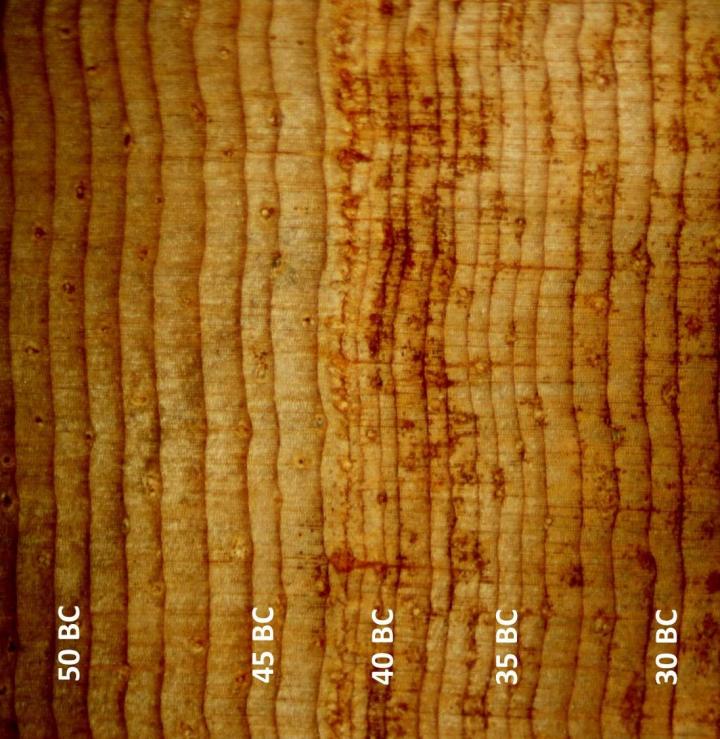
And it turns out that the science of dendrochronology is so much more far reaching than I ever imagined. Dr. Harley tells us how he reads the trees, inferring things like climate patterns, wildfire history, and community ecology. But this unique science even allows for dating artifacts, such as coffins, cabins, shipwrecks, and other wooden objects.
We cover all of this and more, including how tree rings are assessed without killing the tree. And how technology is used to make these assessments. Dr. Harley also answers why trees in the western US make better specimens for assessing historical climate. And just what is the medieval climate anomaly and why is it important to us today?
I feel like Dr. Harley could make a series of podcasts out of dendrochronology, the history it tells us, and the mysteries it helps us solve.
Find Dr. Harley on Twitter @dendrotrog.
Did you have a question that I didn’t ask? Let me know at naturesarchivepodcast@gmail.com, and I’ll try to get an answer!
And did you know Nature’s Archive has a monthly newsletter? I share the latest news from the world of Nature’s Archive, as well as pointers to new naturalist finds that have crossed my radar, like podcasts, books, websites, and more. No spam, and you can unsubscribe at any time.
While you are welcome to listen to my show using the above link, you can help me grow my reach by listening through one of the podcast services (Apple, Google, Spotify, Overcast, etc). And while you’re there, will you please consider subscribing?
Links To Topics Discussed
Note: links to books are affiliate links
Fundamentals of Tree Ring Research by James Speer
The Fellowship of the Tree Rings RadioLab episode that Dr. Harley appeared on
North American Dendroecological Fieldweek
Credits
Michelle Balderston provided editing assistance for this episode.
The following music was used for this media project:
Music: Spellbound by Brian Holtz Music
Free download: https://filmmusic.io/song/9616-spellbound
License (CC BY 4.0): https://filmmusic.io/standard-license
Artist website: https://brianholtzmusic.com
Transcript (click to view)
Michael Hawk owns copyright in and to all content in transcripts.
You are welcome to share the below transcript (up to 500 words but not more) in media articles (e.g., The New York Times, LA Times, The Guardian), on your personal website, in a non-commercial article or blog post (e.g., Medium), and/or on a personal social media account for non-commercial purposes, provided that you include attribution to “Nature’s Archive Podcast” and link back to the naturesarchive.com URL.
Transcript creation is automated and subject to errors. No warranty of accuracy is implied or provided.
[00:00:00] Michael Hawk: Did you know that there are living trees in the United States that are approaching 5,000 years old? I’m not even talking about those, the clone I’m looking at you Aspen. These are trees that are standalone And you can find them right where I live in California. Imagine if those trees could talk. Well, in a way they can.
[00:00:18] That’s where dendro, chronologists like Dr. Grant Harley, come in. And it turns out that the science of dendrochronology is so much more far reaching than I ever imagined. Dr Harley today tells us how he reads the trees, inferring things like climate patterns, wildfire, history, and community ecology. But this unique science even allows for dating artifacts, such as coffins, cabin, shipwrecks, and other wooden objects. We cover all of this and more including how tree rings are assessed without killing the tree and how technology is used to make these assessments. Dr.
[00:00:51] Harley also answers why trees in the Western US make better specimens for assessing historical climate. And just, what is the medieval climate anomaly But we’re going to talk about it. And we’re going to talk about why it’s important to us today. I feel like Dr. Harley could make a series of podcasts about dendrochronology and the history that it tells us in the mysteries that helps us solve so i hope you enjoy today’s introduction without further delay Dr. Grant Harley Dr. Harley, thank you so much for making so much time to speak today.
[00:01:21] Grant Harley: Of course. Glad to be here.
[00:01:22] Michael Hawk: As we were chatting here in the run up before actually hitting the record button, I’m super excited about this discussion because it seems that everything you do, everything that’s on your webpage anyway, are all areas of keen interest for me, things that I’ve always been interested in, even before I took more of this ecology slant.
[00:01:42] So many topics I want to get into today. I hope we can do it all.
[00:01:45] Grant Harley: Yeah, let’s do it.
[00:01:47] Michael Hawk: All right. So why don’t we just start real quick with who you are and how you got to where you’re at. can you tell me, where did you grow up and how did you get interested in, I’m going to say nature, and it’s a very broad definition of nature.
[00:02:01] No, it’s perfect. Um, yes, I’m a Florida man. I was born and raised in, in central Florida, in a town called Lakeland, which is between Tampa and Orlando. So it’s a heck of a place to be from and kind of grow up. I’ve driven through there a couple of times.
[00:02:15] Grant Harley: Yeah, good thing you’re not hurt. Cause yeah, Interstate 4 is the interstate that goes between Tampa and it’s like the most dangerous interstate in the country.
[00:02:23] But yeah, it’s like growing up in a parking lot. But that’s what I love about Florida, is it has a lot of natural areas still. And so I was able to, you know, escape, , explore through the woods, swim in freshwater springs. That’s kind of what, like, drawed me first to, to kind of nature is just being surrounded by being able to explore, in it.
[00:02:41] And so, yeah, I was born and raised in Florida, went to high school, everything in Polk County, and then, went to University of South Florida in Tampa for bachelor’s, my master’s in geography. And from there, I went out to do a PhD in geography at University of Tennessee in Knoxville. spent four years there, graduated in 2012.
[00:03:02] And was lucky enough to get a professor job right out of finishing my PhD at University of Southern Mississippi. And so then bounced down to Hattiesburg, was there for four or five years. And this job came up and I was thinking with kind of the tree research that I do and towards studying the environment, there’s arguably no better place than Idaho, with a lot of public lands and natural spaces. And so applied for the job, lucky to get it. And, uh, we moved here in, 2017, been here ever since.
[00:03:32] Michael Hawk: Nice. And I want to talk about geography for just a moment, because,looking back on my own educational pathway, I think if I had realized how broad geography is that probably would have been the route I went. What’s, your pitch to people who want to get into nature? Like why geography?
[00:03:51] Grant Harley: Oh my goodness. Yeah. So this could be a whole nother episode of the podcast because I love flying the flag for geography because I’m, I’m a geographer by training. and that’s where all my degrees are in. it is a discipline that’s,kind of at a crossroads in this country, broadly in North America, where they’re,kind of searching for an identity.
[00:04:08] because it’s, it’s,it’s tough going back to your question and what I pitch to students, is it is so broad, right? So broad. So it might, it’s a little nebulous and thinking, early career students minds of like, well,what job can I get if I major in geography? and so it’s really, that’s what I use the intro class that I teach as a platform to kind of likeexplain all the different jobs that are available, all the different kinds of issues and questions you can address by getting that kind of broad training in,geography,that I hadn’t.it’s a fantastic discipline.
[00:04:39] Michael Hawk: Yeah. There’s so many, uh, branch points. I actually went back to, I try to occasionally take classes just to fill in the blanks in my own personal education. And I took a geography class at a local community college here a few years ago, and that was my eye opener because I, Iwas always great with maps.
[00:04:58] And I always thought geography was just maps. And then I knew weather it was sometimes like, you know, meteorology was in geography, but yeah, there’s geology. There’s,mean, you could get into political science from a geography perspective.
[00:05:11] Grant Harley: Yeah, we have a, uh, actually a geographer on staff here. That’s a, he’s a political geographer. So he studies, geopolitics and conflict, immigration, emmigration, all, all those issues, you know, movement of, of people, especially right now in Ukraine. I think he’s actually in Ukraine right now, or on the border of Ukraine.
[00:05:27] but that’s geography. That said, and I’ve got a similar story. And I, started at USF in Tampa, I think finance. I was a major in finance and then I moved to, something else. And then I took an introduction to geography class. I was like, Oh my gosh, light bulb went off, realize it’s really broad.
[00:05:45] you can study the environment, you can study people, you can study marketing, it’s such an eclectic and synthesizing discipline that draws on a lot of other disciplines, that it just really appealed to me.
[00:05:56] Michael Hawk: Yeah, it’s probably a good place for people who aren’t quite sure which direction to go.
[00:06:00] Grant Harley: totally.
[00:06:01] Michael Hawk: as you went down your path, you know, some of the things we’re going to talk about today, your studying of trees and tree rings and paleo climatology and all these different things, how did you start to focus, I mean, it’s still broad, but how did you begin to focus Throughout your collegiate pathway.
[00:06:17] Grant Harley: So I actually studied, I started in caves, which is, arguably the opposite of, trees. so I was, a, caver,growing up, loved, you know, exploring caves. It’s, the kind of the exploration aspect of it and actually being certain that, uh, if you dig a hole in the ground open and it’s a cave, you’re 100 percent certain that no one else in the history of humanity has been in that space, which is pretty cool, um, in my mind.
[00:06:43] realized, of course, going through, you know, again,undergraduate, that you can actually study caves and, andpaleoclimates by looking at, uh, stalagmites and cave growth forms that exist in the, in those environments. And so that’s the path I took during my,my master’s degree. When we got to Tennessee, there was a really charismatic, dendrochronologist that was there at the time.
[00:07:04] And I think I saw he gave a talk the summer that I got there. I was like, I’m switching to tree rings. And I haven’t looked back. So I’ve really only been studying tree rings for, I guess since 2008 is when I started it at Tennessee. yeah, I love the broad application of dendrochronology. You know, you can date old houses.
[00:07:23] We’ve dated. historical instruments, we study of the climate, ecology, carbon, so it’s such a very, you know, like geography, it’s very broad in its applications.
[00:07:35] Michael Hawk: Yeah. And this is something that I think a lot of, you a lot of people, students, are aware of the concept of a tree ring. You see that at nature, museums and preserves and things like that. And unfortunately, it seems like very often the takeaway for folks is, Oh, you can see how old a tree is, but there’s so much more depth.
[00:07:54] Why don’t you tell me one of the crazy side effects, oddball things that you can tell from tree rings that maybe a, an average person doesn’t know about.
[00:08:04] Grant Harley: Let’s see. So one of the neatestapplications of dendrochronology that I’ve seen is,researchers that go back to civil war battlefield sites. And, they actually use CT scanners to scan the trunks of the trees that still exist.
[00:08:23] ‘Cause they lived, they were, growing back in the 1850s, 1860s when you had the American Civil War. and study the battle through, the intrusion of bullets in the trees. and they actually date when the bullet went in and,the, I mean, they have a pretty good idea of what, when that battle happened, but, that was one of the crazier applications of dendrochronology that, that I’ve heard of.
[00:08:46] I haven’t done it personally, but,I’m always surprised to kind ofpull it back to something I’ve been involved in. I’m currently involved in a project where we’re excavating, unmarked graves in Jackson, Mississippi. so it’s at the site of the current University of Mississippi Medical Center in Jackson.
[00:09:05] It’s the only research hospital in the state. So it services a huge area, mainly population. the really, the only Green space on their campus left, they went to build a parking garage or a building or something like that. And, of course, they did the pre surveys. They found 7, 000 pine boxes, right?
[00:09:24] 7, 000 unmarked graves. And so we’re a really small portion in that huge research project with a lot of bioarchaeology. People actually, exhuming bones and studying, who these people were. and so that’s probably the oddest kind of unintended, project that I’m involved in.
[00:09:41] Michael Hawk: So those pine boxes, then are they looking to try to age those pine boxes from the growth patterns?
[00:09:47] Grant Harley: Right, and so they have a pretty good idea of the dates of the cemeteries with written records, but they have no idea of the individual graves because they’re unmarked. they basically were… Past patients at the hospital that passed away and maybe didn’t have any family. And so they just, put them in a pine box and put them in the ground with no marker.
[00:10:04] and yeah, so the archaeologists are excavating the pine boards and they’re sending them to us or our lab here. And we can date when those trees were cut and then most likely immediately used in the construction of those pine boxes.
[00:10:19] Michael Hawk: Well, I think I’m going to come back to this and try to learn from you how you date those, uh, those boxes, but maybe this is where we talk a little bit about the whole process of evaluating tree rings in the first place. So what does it look like? How do you, let’s just take a simple example of a standing living tree.
[00:10:36] How would you go about assessing that tree?
[00:10:39]
[00:10:39] Grant Harley: the first thing to think about is we, so we have a couple of like,theorems or principles in dendrochronology, arguably the one, the most important is,is site selection. So it really matters,where you select your trees to try to address whatever question asking, right?
[00:10:56] And so if,if I’m looking to, use some trees to, uh, you know, look at their tree rings to reconstruct temperature, I’m probably not going to go to Florida because those trees aren’t really limited by temperature because temperature is really nice and doesn’t really get cold. I’m probably gonna go to like really high elevation sites or high latitude sites where you have trees that are like Actually limited by temperature.
[00:11:20] And that’s the first thing is you ask you, well, what am I trying to address? I, you know, if you’re looking for, to look at drought, you need to go to a dry area because those trees are going to be sensitive to the amount of rainfall, not the tropics. Right.and so the, you know, where in the region or environment really dictates, what those trees are going to be able to tell you about the environment.
[00:11:39] Michael Hawk: So taking that drought example, so just to maybe not put too fine of a point on it, but if you have a, like a drought adapted tree, when you do get periods of substantial rain, you may see more growth, for example, than in a more typical dry period.
[00:11:53] And then if it is exceptionally dry, it will, it’ll be even less like, is that kind of what you’re looking at?
[00:11:59] Grant Harley: Right. And so that we, for kind of drought analyses or a drought project, we will go to like,the American Southwest, for example, is a phenomenal area around the globe, where you have trees that are like just Barely hanging on to the margins of life and they’re limited by moisture, right?
[00:12:16] How much rainfall they get. And so they’re in a really heavy monsoon, summertime, for instance, the North American monsoon. That ring will be really wide. And if it’s, that the monsoon fails and they don’t get much monsoon rainfall, the rings are going to be really narrow, or if there’s 10 years of monsoon failure, 10 really narrow rings, or honestly, trees might miss a ring. It’s called a locally absent ring. and so if you take an arc back to what you asked before, like if you have a tree or what do you do, well, we core into it. With the tree didn’t form the ring right in the spot where you core it with a little handheld borer.
[00:12:53] you missed that year and the crux of dendrochronology cause it’s an annual, it’s actually a sub annual. a science, if you’re off one year, you’re completely wrong. ’cause it’s a chronosequence and so it’s highly important, obviously to make sure that every ring has the correct calendar year assigned to it.
[00:13:11] Michael Hawk: And you started to say, like, I think another maybe misunderstanding a lot of people have, because you go again to these nature centers and you see like entire stumps that have been cut. that’s not what you’re doing necessarily, right? You’re using a special tool.
[00:13:27] Grant Harley: Yeah. We’re using a special tool. It’s about, if you can imagine like a,a drill bit, everyone can picture like a,a a handheld drill, like a DeWalt drill or whatever, and a drill bit. But the drill bit is hollow inside. And so when you turn it with your hand, it pulls itself into the tree and it extracts like about a pencil sized piece of wood that has a signature of the pattern, the rings on it.
[00:13:47] And that’s just a really nice way to, acquire all the rings of a tree to the tree’s life without cutting it down, And killing it. And, a lot of trees have defenses against, you know,poking a hole into it, because that’s a really common question, like, well, you’re poking holes in trees.
[00:14:00] and so there’s a lot of studies that, go back to previously sampled trees and analyze the health of the trees and how those trees have defended against the hole we poke into it. so yeah, there is a little bit of damage, but it’s localized. And it allows us to see the,trees without killing, or the rings without killing the tree.
[00:14:17] Michael Hawk: And this, uh, you called it a chrono sequence?
[00:14:20]
[00:14:20] Grant Harley: Yeah. A chronosequence in terms of, if you can kind of imagine, everyone’s seen a cut stump, a tree. Uh, the very center of that cut stump is called the pith. P I T H. That’s basically when the tree was a little tiny seedling. And then every year, In a concentric fashion, it put on a volume of wood, around that seedling and as the tree kind of grew and the trunk got bigger and wider.
[00:14:44] and that’s what we, basically what we look for and sample.
[00:14:47] Michael Hawk: and this is maybe like a really of a, more of a left field kind of question, but, , are there any trees that show more than one ring per year? Like they have two different growth cycles within a given calendar year.
[00:15:01] Grant Harley: Totally. That’s a really good question. And, A really good thing that lot of people should understand. Dendrochronology doesn’t work everywhere, right? and there might be a little jumping ahead a little bit, but we probably are back to it when we get to the paleoclimate aspect, right?
[00:15:14] Of, there are a lot of different proxy indicators. We call them proxies because these are natural archives of environmental change or climate change that exist in objects, natural objects around the world, right? Like caves, stalagmites, fish ear bones, ice cores, lake sediments, tree rings, corals, right?
[00:15:33] if you’re looking to say anything about the ocean, you can use trees because there is a teleconnection there with the environment, but you better get in the ocean. And look at clam growth, otoliths,corals. And so to,answer your question, there are trees that form multiple rings per year.
[00:15:49] mainly they exist in the tropics, which is kind of an area that’s,it’s kind of a frontier for the science of dendrochronology. some trees, some species work in the tropics, most don’t. And if… You can’t establish as a dendrocology, if you can’t say that this tree forms consistently annual rings, then it’s not useful, right?
[00:16:11] So, ifthat tree’s forming one ring this year, and then two next year, and then one the next year, and then three, you can’t use that. as a chronology.
[00:16:20] Michael Hawk: Yeah, that makes sense. And I’m also thinking back to what you were saying with some of these drought adapted trees where there may not even be a tree ring in a given year. So that leads me just to the conclusion that you must have to sample a fair number of trees and species to cross reference to each other.
[00:16:36] Grant Harley: Totally. That’s why it’s super important. You know, if I were to go and pick a study site or a forest to grab tree rings from, we would core 25 to 30 trees. and so the number of samples, the number of trees we get is usually around that number. any more than that, you’re not really adding much more to your data set.
[00:16:54] but we certainly need to have enough so that, we’re not missing any rings. it’s kind of like, like all,you know, statistics of trying to get a good sample population.
[00:17:03] Michael Hawk: That makes sense. as we were talking, you know, at the beginning too, there’s just so many exceptions to everything I only imagine too, that,all the background knowledge you have to have to, select the site and get that sample of different growth patterns for different trees.
[00:17:16] And then you have microclimates and you have all these other things you have to account for in this,I skipped ahead. So I want to go back to the borer. when you bore out this core. Then how do you go about looking at it and assessing it? What’s kind of the next step there.
[00:17:32] Grant Harley: So the next step is, so we,we will go into the forest, and use our little, uh, handheld increment borers to extract pencil size piece of wood from trees. we usually immediately put those in paper straws. I’d like to look at it as we extract from the board toto just to see what the tree rings look like.
[00:17:48] You can automatically tell, especially if you’re calling a pine tree and you actually see the rings in the piece of wood. Now you can tell how old it is or an estimation of how old it is, but we immediately put it in a paper straw. That paper straw helps to kind ofdry the core out so that when we get back to the lab, we take those cores out of the straws.
[00:18:06] We mount them in these special channelized wood structures that they’re called core mounts. we glue those in there to help,stabilize the core. We then sand it down using, just regular sandpaper. And what that does is it kind ofputs a nice polish on the surface of the core.
[00:18:23] So you can exactly see the rings under a microscope. And then we measure them. And then called cross dating is the final form, uh, in creating a data set from, from tree rings.
[00:18:36] Michael Hawk: And when you’re looking at these and measuring these, so, so this question is gonna be totally skewed because about a month ago, I was up at the, ancient bristlecone pine forest
[00:18:48] Grant Harley: Nice. Yeah. White Mountains.
[00:18:49] Michael Hawk: in the white mountains, exactly. There was a ranger there that showed the increment borer and talked a little bit about how it worked.
[00:18:56] And they had a nice video in the visitor center as well. And one of the things they said there was that some of these, rings are so small that you’re like having to look at through microscopes to, to make these assessments. so if you have microscope at your, in your tool bank, what else do you have to do to really inspect these?
[00:19:15] Grant Harley: Yes. Uh, and you kind of touched on a, um,crux actually in the science of,we, we have microscopes here in,in, in my lab here at Idaho. but to the old way of measuring tree rings was on this, really high precision, measurement stage where you turned a little wheel and it just,at a micro, like a thousands of a millimeter increment just moved.
[00:19:33] And there was a bull button you would press. Every ring when the crosshair and your reticle got to every ring. And And so you kind of manually had to measure every ring. So imagine like, you know, measuring 5, 000 years of bristle, it would take you like four days, right? Now we have these super high resolution cameras.
[00:19:51] And then just Nikon or Canon cameras that are calibrated. They’re especially calibrated to. Argo, photography stage, and we just take a scanned image at like 40, 000 DPI. And that gives us a digital image that we pull into a computer software and just can, I can drag a path, with my cursor all along the axis of the core.
[00:20:12] And then the special software just, measures the rings for me, take a fraction of the time. the technology has advanced a lot.
[00:20:20] Michael Hawk: Yeah. Well, okay. And that, that probably answers some questions I had coming because I’m thinking about, yeah, 5, 000 rings in, a few foot, length of a core is pretty crazy. But then I’m guessing that same software can help give you some assessment of the width of the rings and point out anomalies or things that maybe are of interest to whatever question you have that you’re looking to answer.
[00:20:42] Grant Harley: totally. Yeah. And not just the width of the ring, you know, I mentioned earlier, it’s, it’s a sub annual or can be a sub annual science. you know, we’ve gotten now to measuring, the early wood portion of a ring. And the late wood portion of a ring as we call it, and just for audience who don’t know what that means, the early wood portion, if everyone knows the, you know, again, go back to the cut stump, that light colored band or the white band that goes around.
[00:21:03] That’s the early wood portion. Those are cells that are formed by the tree. Early on in the growing season, and as that tree progresses through the summertime, it starts to slow down its growth and it starts to form the same type of cells, but the cells are really small and they have really thick cell walls.
[00:21:19] And so that color kind of changes to the darker band. And so the early wood light band plus the late wood dark band is one annual ring. over the past 10, 20 years, I realized that, oh my season wood widths can be more accurate at saying something about the climate than total ring width.
[00:21:38] And so we might just measure the early wood or late wood because they can more accurately say something about more seasonal sub annual climate.
[00:21:45] Michael Hawk: Yeah. That’s really interesting because you’re getting a running, within the year, you’re getting kind of a running point of view of what’s happening.
[00:21:53] Grant Harley: Totally.
[00:21:53] Michael Hawk: and the other thing I think that really stood out to me from my, and by the way, for anyone who’s not seen the ancient bristlecone pines, I’m certain I’ve mentioned it on the podcast once or twice before,number one, if you have the chance to do it, but, uh,you know, number two, these are the oldest living things on earth as we understand it right now, just to, explain what’s so special about them.
[00:22:13] Grant Harley: Did the ranger kind of point in the general direction of Methuselah or what they call Methuselah?
[00:22:18] Michael Hawk: no, but so this was part of a field ecology class that I sometimes help out with and the, uh, the professor knew the general direction, but yeah, we didn’t see Methuselah, but there were definitely, even on the little nature walk that we did there, definitely some very old trees, easily 2000 years old, along that walk.
[00:22:35] And yeah, that’s the tip of the iceberg.
[00:22:38] Grant Harley: And I don’t want to take, I don’t want to take us off. We can come back or not go down this road, but like the story of Donald Curry, I don’t know if they mentioned Donald Curry.
[00:22:48] While you’re there. It’s an amazing story.
[00:22:50] Michael Hawk: he, it was, he, the, uh, university of Arizona. kind of founder of, of dendrochronology.
[00:22:56] Grant Harley: No, so that was A. E. Douglas. so Don Curry was a graduate student. I’m blanking on exactly, where he was a grad student, but he was basically given permission by the Forest Service. Again, blanking on the decade that this was, I think 50s or 60s. he cored, actually cored the Bristlecone Pines and got his boar stuck.
[00:23:14] in the tree, I had one bore. So I got special permission from the forest service to cut it down. And then after he cut it down, he realized after, cross sitting in the tree that at that time, cause that was, this is before they found Methuselah tree. That was the oldest non clonal tree in the world.
[00:23:31] And he cut it down. And so he got the name killer Curry. just colloquially, but he actually went on to have a really amazing career at University of, I think it was at North Carolina, but in another field, but, yeah, I just can’t imagine that feeling of at that time thinking you cut down the oldest thing in the world.
[00:23:48] Michael Hawk: Well, I’d say I, and I’ll, I’ll drop the bristlecone pines here after this, but one of the things they have in the visitor center is a timeline and, it’s based on Methuselah. So Methuselah is thought to be the oldest of these bristlecone pines. And I can’t remember, uh, it’s close to 5, 000 years old, I believe. so on this timeline, you see all the things that have transpired over the 5, 000 years, and they just get more and more amazing. Likethe invention of paper
[00:24:13] is like 200 AD or something. And then you go back and King Tut born and then the pyramids of Giza, like it’s older than all of these things.
[00:24:22] And it just, it blows your mind to see it.
[00:24:25] Grant Harley: it’s pretty sobering, right? It’s it’s one of the amazing things to think that that tree has been rooted In the same place for all those years and again, like you’ve experienced walking through those ancient trees, it’s pretty sobering to do that.
[00:24:39] Michael Hawk: Yeah. I just, yeah. thinking about what that means. And I purposely word that vaguely. were we? I think I was talking about how,how many rings there are and how difficult it is. and that’s leading up to the fact that. When you’re looking at old trees, there’s a lot of uncertainties about how they’ve grown and what the growth pattern is. And you might have,multiple stalks that have fused together, or the interior might be hollowed out and rotting like a lot of oak trees.
[00:25:08] so when you’re getting down to like, okay, I know this is the site that I want to bore at, then, do you have a special eye for picking out the best tree?
[00:25:17] Grant Harley: There’s some pretty good research that’s published in papers that kind of, identify, uh, what’s called like,old age architecture. And so there’s certain kind of characteristics that trees, that mainly trees, um, I’m, Thinking of conifer trees, you know, any,pine tree that they take on when they get really, really old.
[00:25:34] So obviously one is like really large, trunk. that’s one of the most common misconceptions is, oh, it’s a large tree. It’s really old. that sometimes is the case, but most times not. really large lower limb. So there’s a certain kind of, architecture that these trees, take on where I can kind of look at it now having cored thousands of trees and go, yeah, that’s probably pretty old or no, that’s not really old at all.
[00:25:56] mainly I get contacted by people who have a really large tree in their yard and they think it’s like 500 years old. I’m like, no, it’s probably 40 years old because when you think about environment, trees growing in their yard, it’s probably irrigated. It’s got no competition, but it might be fertilized.
[00:26:13] gosh, some of the oldest trees I’ve cored are just tiny, no bigger than someone’s arm. they just kind of suppressed under the canopy of trees and just kind of hang out there with really low light. so you never can tell.
[00:26:26] Michael Hawk: Yeah. That’s really interesting. And you think about like, Growth strategies in general, you do see a lot of animals that grow really fast, have shorter lifespans too.
[00:26:35] Exactly.
[00:26:36] so now, okay. You’ve,you’ve extracted a core and you have some nice software and cameras to help you with your work. Now I’m, I’mglad that’s the case.
[00:26:45] Otherwise there’s probably, some people losing their minds after a while.
[00:26:49] Grant Harley: And their eyes.
[00:26:50] Michael Hawk: yeah, their eyes.
[00:26:51] So I know there’s lots of things then that you can infer beyond the weather conditions and the growth, Weather conditions is an inference already, because you’re really just looking at the growth rates and then making some assumptions.
[00:27:04] But what else are you looking for in these rings that give you some indication of the ecological history of that area?
[00:27:10]
[00:27:11] Grant Harley: so let’s say we’re in the eastern U. S. like an eastern deciduous forest. that’s really common in, in the eastern U. S. you have, you know, compared to the west U. S., you know, in the east, you’ve got really thick,generally higher biodiversity with regard to Different types of tree species you have to have. A lot more competition, right?
[00:27:29] And so the ring patterns in those trees are going to be probably more dictated to competition than they might be for like, for climate. kind of the opposite in the West where you have more spaces between trees, less competition. So you have less of that ecological, signal and you have more of a climate signal.
[00:27:47] And so it really can get tricky, especially if you’re kind ofworking in the East, try to find trees that have the least amount of ecological signal and the most amount of climate signal if, again, if your goal is to do something with climate. if your goal, if you’re an ecologist and you want to use kind of tree rings as a tool to answer some kind of question about community ecology, then yeah, you probably want to go to the east.
[00:28:11] And you want that ecological signal in those trees that you core. they’re going to go back to like site selection, it really kind of depends on what you’re looking for. and again, knowing, you know, the different, the actual phrase is called, your signal to noise ratio. And so based on your question, you kind of want to minimize that noise that would otherwise interfere with your signal that you’re looking for. and do that by choosing your trees carefully.
[00:28:38] Michael Hawk: Yeah, and you had, I think that really drew it together nicely for me, because you talked about some of your oldest trees or the smaller ones, because maybe they were enshrouded by a canopy and didn’t have optimal growth conditions. So that limiting factor there is light, not climate. And I think that’s at least in my mind, a really good example of what you’re talking about.
[00:28:57] Grant Harley: Totally.
[00:28:58] Michael Hawk: So one of the things that I also found really interesting is, you know, we’re talking about coring living trees. And as I understand it, you can actually go deeper in time. So you can already go pretty deep, at least. Okay. In one location with those ancient bristlecone pines. but I know there’s some other techniques you can get even into deeper time through these methods.
[00:29:16] Can you tell me a little bit about how that is achieved?
[00:29:20] Grant Harley: Sure. Yeah. The, um, so the, the, primary method is called cross dating. and it’s one of the foundational Aspects or principles of the science, you know, without cross dating, we really don’t have a proxy or science. real quick tangent. I’ll get back to the question, but the actual process of crossing is actually bled its way into,matching up the patterns in, uh, bands of stalagmite growths, same thing with corals.
[00:29:48] And so that, that process of kind of matching the patterns of their growth bands or rings is super important in kind of weaving together the stories that like 50 different individual trees tell in the same forest, right? So it’s kind of averaging many different trees, better understand, how they’re growing.
[00:30:07] You know, through their lifetime, so that’s the first thing we do, you know, even if you think of like crossing like a barcode, it’s basically matching barcodes, right? Likeevery core I pull out of a tree has a certain pattern of rings. And that basically looks like a barcode that you would see, in whatever product you might buy.
[00:30:23] And so if you can picture, 50 barcodes that aren’t exactly the same, cause they’re all, different trees are individual biological organisms. They’re not going to have the same growth rate. But they’re going to be responding in a similar fashion to the environment in any given year, right? And again, it’s with in those certain environments where the trees are doing wildly different things where the science really doesn’t work But other than those really rare occurrences trees are going to be responding in a similar fashion.
[00:30:49] You can then match up those barcodes to create a chronology. It’s just an average, chronology of growth. For as long as your living trees, um,have lived for in your given area. If you want to extend back in time, like you said, we, we look for dead trees, look for remnant stumps or logs on the ground.
[00:31:06] We can actually get into old cabins or structures and collect those, that, that material. And again, cross date that, to extend our chronologies back in time.
[00:31:17] Michael Hawk: Interesting. So you could find a cabin that some frontiers person built in 1700 and take a core of the wood that they use to.
[00:31:27] Grant Harley: Totally. Yeah. And then, and if you think like, you know, come across an old cabin in the woods, uh, that, you know, at some point, some person in, in the past cut down those trees and they use them to build that, that structure. We have no idea when they cut down those trees intense. We have no idea when those rings were formed, but what it requires is what’s called a reference chronology.
[00:31:48] So it requires you to have a chronology already in place in that area. That’s going to have the same signal. As you know, the material in the cabin, and again, that’s where the barcode matching comes into place is we match the barcodes of the cabin trees with our reference trees, and hopefully extend that chronology back in time.
[00:32:09] And usually that’s the case.
[00:32:10] Michael Hawk: Again, you’ve added so much more nuance here because I’ve always, imagined this, like you have your rings lined up and maybe two parallel rows and you’re moving one until you get that nice Match where the widths are all the same, but, but then it’s even more complicated because the tree on top that you’re comparing to the tree on the bottom, maybe it was in growing in a more mezic area or,some other aspect about it.
[00:32:33] So it won’t be the same widths necessarily. It’s just, it’s the same kind of fingerprint almost. so yeah, very challenging and I can see where software can be helpful.
[00:32:42] Grant Harley: right. And you really hit the nail on the head when that, was a really nice description. what we really look for are called marker rings. And so marker rings are those rings that are just, they’re anomalies, right? They’re just, really,kind of rare, maybe one every 10 years, really, anomalously narrow rings.
[00:32:58] Or honestly, really wide rings can be marker rings as well. And then again, that they go back to like the mechanism, what’s controlling those marker rings. This is going to be just extreme environmental or climate conditions. It’s going to impact all the trees in that area, not just one or two, but all the trees, because it’s a huge effect on the forest and that’s what we use to really match up those patterns, looking at those marker rings.
[00:33:22] and again, if one core from a tree is off by one year, we can tell that and we can, oh, that, that helps us identify what that tree might be missing a year. so it helps us cross sitting and matching up those patterns.
[00:33:35] Michael Hawk: So then circling back to those pine boxes, you have, basically planks or boards at that point. it’s not like a full core. Is the process still kind of the same? It’s just, you have a smaller cross section to, to work with.
[00:33:48] Grant Harley: Right. So if you can imagine like, you know, when they would fell a tree, back in the day, they would rip lengthwise,the pine tree, these are what happened to be to create coffin planks or boards. And so we really only have like,a spline, a portion of the trunk. and so we really can only date the pine boards that have like the outermost growth here, or a lot of these still have bark attached.
[00:34:11] that lets us know that that’s the absolute outermost ring, the death year, if you will, of that tree. And that tells us when that tree was cut down. and we have, of course, we have like, lumber records, uh, timber sales, uh, back in the late 1800s. And so we kind of match up,what the trees are telling us, with their written records, to date each individual grave.
[00:34:32] they actually have a list of people who died in that hospital. So they’re trying to match the dates that we give them with their candidate list to do the best they can at identifying whose bones these are
[00:34:48] Michael Hawk: Yeah. And then I guess it’s a,it’s a similar process then for other, Plank structures, so to speak, whether it’s a, an ocean vessel or,you know, a structure or whatever the case might be.
[00:34:59] Grant Harley: a musical instrument. One of the coolest projects we’ve done recently was a, a music professor here at the, at the university heard that there’s a new dendrochronologist in town when I, when I first got hired. And so he showed up with this huge standup bass, that ended up being older than he thought. And so the maker changed and it’s like,now worth a lot more money. back when I was at Tennessee, um, we actually dated a Stradivari violin and it kind of confirmed that, thatit was you know, Stradivarius, Which is probably the most expensive thing I’ve worked on.
[00:35:30] So I think it was like 5 million dollars.
[00:35:32] Michael Hawk: and they let you take a core out of it.
[00:35:34] Grant Harley: No. So, so that the musical instrument is a little bit different. so that most instruments are like kind of butterflied from like one piece of wood. And so we just kind of took it and put it on our,our, we have a flatbed scanner and like a paper scanner.
[00:35:45] We just likescanned it at high resolution. it’s a little more than a paper scanner, but just for people’s minds, picture a big paper scanner and we scanned it a high resolution and dated it without, hurting it, there were a team of people in really nice suits that who were there to protect it.
[00:36:01] so it’s pretty intimidating.
[00:36:02] Michael Hawk: Yeah, I guess you don’t know what’s going to pop up in your email box any given day is some crazy request.
[00:36:09] Grant Harley: Exactly.
[00:36:10] Michael Hawk: I, I want to get into a little bit more of the climatology and wildfire side of all of this. And, you know, I’ve heard that you can infer some things about fire return intervals or average fire behavior in an area.
[00:36:26] what does that look like? What are you looking for to come to some of those conclusions?
[00:36:30] Grant Harley: So it looks totally different than what we’ve been talking about, to this point. And so so it’s a large part, portion of my research program here. I love studying fire, through tree rings. It’s actually, it’s called, it’s dendro pyro chronology, so dendro tree pyro, and so essentially we’re looking for scars that, are caused by a wildfire, that burns through the forest, it basically scars or kills a portion of what’s called the cambium of a tree. And so without going too much in the weeds, the cambium is like the only living portion of the trunk of the tree. It’s a really thin layer of cells right inside the bark. So if you have a fire that burns through, it’s going to kill a little bit of that cambium and that just like,You know, if you were to cut your arm, you have a scar from your skin healing over, right?
[00:37:21] tree kind of heals over, that scar, uh, or that, that burn. it leaves evidence of a past fire. And so we look for trees that have, you know, 15, 30 fire scars on them. Because again, that’s direct evidence that a fire burned through the forest. We can look for changes in frequency,of fire activity through time.
[00:37:41] Michael Hawk: And it also, I think probably it must give you some Through a selection bias, I suppose some indication of the severity of those fires. So
[00:37:48] Grant Harley: Yeah, so the, um, the sampling design is really interesting with fire history. You know, there’s a couple of different,ways that you can implement that type of research. I tend to go more of a targeted sample design where I go through the forest and I actually, we actually look for what’s called a cat face, which is like a very specific dendro term, but basically it’s just really triangle shaped portion of a tree trunk at the very base where recurrent fire has, opened a wound and kept that wound open. Cause if you have one fire that kind of wounds a tree, that tree’s going to heal over itself. If there’s no more fire, you’re not going to be able to see it. It’s going to be buried inside the trunk as the tree grows out, you know, and older. but if you have a lot of fire, you know,maybe a fire every three to five years, that wound is going to be open.
[00:38:39] and you’re going to be able to like take a chainsaw and cut a small portion of that trunk away. Um, so the sampling, technique is different. Uh, we don’t really use an increment bores for that. Cause it’s very difficult to core a tree and get the fire scars that you’re looking for. so we’re, we’re kind of required to take a chainsaw and remove, you know, very, very small portion that just has the fire scars.
[00:39:06] they’re a little bit different, but, as effective.
[00:39:09] Michael Hawk: I’m trying to wrap my head around what this looks like is I think I’ve seen what you’re talking about, before and where my mind got a little bit lost was, okay, there’s a, there’s some minor damage and the tree can repair itself. In this case, there’s not really that same opportunity to repair itself.
[00:39:25] so are you able to assess the number of fires or the return interval of those fires in this case, if you don’t see that new growth, the attempt at repair essentially.
[00:39:36] Grant Harley: right. Well, and why we’re required to take, you know, with a chainsaw, we can remove what’s called a partial cross section. So it’s anywhere from 10 to at most 25 percent of the trunk. So like, kind of like a pie slice almost. we tend to go really, really thin. again, that, sample that we remove that little pie slice, it’s going to contain all those growth curls or those fire scars.
[00:40:00] so we can actually see where those scars started in the trunk.
[00:40:06] Michael Hawk: Okay. I think I got it. The, the, geometry of it makes sense. So it’s like a long, along the one edge of the pie piece, where the tree is repairing itself, uh, that you’re able to, to see this is that.
[00:40:19] It’s hard to explain without drawing it.
[00:40:22] Grant Harley: I know it or showing it yet. It’s really difficult to kind of visualize. but yeah, and if anyone’s listening, that’s familiar with like chainsaw use, it requires us to take like lateral cuts and plunge cuts. so it is a little dangerous, We have to take training from the Forest Service.
[00:40:38] You have to have a,your certification basically to operate a chainsaw because it is, arguably the most dangerous part of the science is operating a chainsaw, but, um, it’s really the only way to acquire that fire information, from a tree.
[00:40:50] Michael Hawk: And I don’t know if this will work or not, but,you have a photograph of one of these cuts that maybe would, for anyone who wants to see a visual, I could include in the show notes.
[00:40:59] Grant Harley: Absolutely. Yeah, I’ll, I’ll, I can send you a really nice example of a kind of a fire scarred, partial cross section.
[00:41:05] Michael Hawk: So do you have any observations or anecdotes from this work that you’ve done and looking at fire history that are surprising , I think to answer that, we probably also have to understand what you were looking for and where you were looking
[00:41:18] Grant Harley: Yeah. I think like the, I mean, the main, take home message, which I think Again, like if any viewers are in the West, they’re going to know this already before without me telling them our forests are in trouble. basically we have suppressed fire for 70, 80 years.
[00:41:34] the active process of land management was to, uh, see a fire, put it out, right. Even though that fire might be natural, you know, as we kind of, Population grew and that’s understandable, right? You can’t have a wildfire that kills a bunch of people. so in doing that, we’ve essentially allowed the forest to build up a bunch of material.
[00:41:52] And that’s kind of what everyone’s seen every year is wildfires are out of control. again, not, I’m not pointing to blame anybody. it’s a natural factor of a growing society. but you know, that’s kind of why our wildfires are out of control now. in addition to being worsened by, dry conditions, really hot temperatures,
[00:42:11] Michael Hawk: This may be too much of a leading question, but, I have an impression that,that some of this research revealed a much higher, I’ll say quote unquote natural, because there could have been, I mean,that’s a, that’s a thorny definition in and of itself, but, a higher frequency of fires historically then maybe people realize is, is thatroughly accurate or is that aligned with, what your research has shown?
[00:42:35] Grant Harley: Yeah, it directly aligns with it, I mean, honestly, across any portion of the US, there’s been, you know, fire suppression for about 80, 90 years. what we see is we see really, frequent fire. I mean, gosh, we’re just now about to publish a study at a Yellowstone National Park where we Have constructed a fire record with tree rings, an annual fire record back to 200 AD. And so it’s about an 1800 year long record. It’s a really long record of fire. And there’s about a five year fire return interval in this area up until like1900 and then nothing. You know, when you have about a hundred years of no fire in an area that has seen a fire every five years or seven years for 1, 700 years, you’re gonna have a problem.
[00:43:23] Michael Hawk: yeah, that’s, that’s for sure. And yeah, and I think that’s the thing too. It’s just, there’s, there’s going to be this psychological impediment I think that we have, because I think we’re so used to seeing fires as these huge, immense, out of control, like canopy fires and, presumably, these more frequent fires were quicker and less,less thorough in their destruction, at that point.
[00:43:47] the Smokey Bear campaign was a really, successful campaign. I think it’s considered like the most successful marketing campaign in, in history. Which obviously you need to happen, right? You can’t have people going out and setting fires. but again, it got people, I think in general, thinking fire is bad.
[00:44:03] Grant Harley: Fire is not needed in this ecosystem or these ecosystems in the West when it actually depends on it. But again, touchy subject.
[00:44:11] Michael Hawk: yeah, oh yeah. There’s so much more depth to that, that,hope to do a, uh, a jumpstart nature podcast on. On that, actually.
[00:44:20] So maybe then getting a little more into the climate side, I did have a listener, so I asked, my Patreon supporters, if they have any questions in the topic that we’re coming up with. And I think this serves as a good transition. And they were wondering,what can we infer about carbon sequestration from tree rings?
[00:44:36] Grant Harley: Yeah. quite a lot. So, um, to kind of, talk about the basics of, we can tell, you know, kind of carbon allocation for a tree. so you can tell what the tree rings or you can, you can kind of trace it chemically. and so if you think of like,the process of photosynthesis and respiration, in that process or those processes, trees, actually act as a carbon sink.
[00:44:59] they have the ability to store more carbon than they release in the atmosphere via, respiration. And so you can get an idea of the, of carbon allocation and carbon sequestration, how much trees are pulling out of the atmosphere by looking at those growth rings. And then chemically you can trace it with what we call isotopes, which is a really small atom that leaves a signature of different elements that are involved in that process.
[00:45:22] And so,the most two common isotopes that we can, essentially measure through a ring sequence or a core, are carbon and hydrogen. So carbon can kind of tell you about the amount of carbon, the tree kind of sucked up and allocated locked in this wood. Hydrogen tells you more about like the amount of water, the type of water that was involved. yeah, it’s a little expensive, the main point I was gonna say is it’s, it’s a kind of a burgeoning or a, frontier area of, of the science of dendro chronology, that people are now starting to realize that we can create carbon sequestration models from not looking at like, again, I think the challenge is you need a lot of trees.
[00:46:03] And so there’s actually a big push to use what’s called the forest inventory, analysis program, the FIA, which is a lot, a lot of tree cores across the globe, mainly the U. S. to construct these models that can be scaled up to the globe.
[00:46:19] Michael Hawk: again, I think like every tree probably has different behaviors too, in terms of how much carbon is shunted to the root system versus retained in the,you know, in the shoots and limbs and stuff.
[00:46:28] Grant Harley: And it matters how old the tree is, so the age is a dependent, the species, you know, yeah, it’s, a really important, interesting area of the science.
[00:46:37] Michael Hawk: You’ve already hit on some aspects of how dendrochronology can help us understand historical climate, just based on looking at these growth patterns. And then,I’m imagining a big database of all these assessments that have happened in,in suitable locations around the world. So you can see, okay, this wasn’t just a California thing, or it wasn’t just a,a Maine thing, or, you know, whatever the case might be, Very open question, but like how does dendrochronology itself help us understand historical climate?
[00:47:07] Grant Harley: the main process would be again, go back to that principle of site selection. Um, there’s another principle called the principle of limiting factors that I touched on. I didn’t really name it by name, but it’s essentially, it’s the job of a dendrochronologist to, analyzing how your tree rings are correlating with instrumental data. You can kind of tease out what’s the limiting factor in terms of having all the different metrics we measure. You know, we measure precipitation and temperature and, vapor pressure deficit, all these things, right? We have a host of weather and climate metrics that we have been collecting for in the U. S. 120 years. And so we can actually build a mathematical model between the tree rings of the past 120 years and actual instrumental data. And based on the strength of that model, we can then infer that past rain widths are an estimate of this much rainfall or this much temperature, right? So it’s kind of calibrating the modern tree rings and extrapolating and reconstructing estimates of past conditions based on what the ring sequence is, right?
[00:48:16] And based on how old your trees are, tells you how, how far back in time you’re able to go.
[00:48:22] Michael Hawk: That makes a lot of sense. Cause yeah, we have 120 years of pretty good. concrete data, that, that can be cross referenced. And I guess that also leads into another question is I know people are looking, say at ice cores and looking at some of the other things that you mentioned. is there a cross reference between these other, I’m going to call it deep time, it’s not really that deep time, but,deeper time, measurements or assessments.
[00:48:46] Grant Harley: Yeah, there are ways you can, use what are called like multiple proxies. So,there are these really complex mathematical models where you can like use ice cores and lake sediments and tree rings, to calibrate them together to reconstruct Is that kind of what you mean?
[00:49:04] Michael Hawk: Yeah, yeah, like if you take the principle or the idea that, we don’t know what we don’t know, like maybe somehow something is different once we get beyond those 120 years. and if you can cross reference, what say your tree rings are telling you versus what the lake sediment is telling you to say, okay, I feel more confident now that, that this is, we’re on the right path.
[00:49:23] Grant Harley: Exactly. And that’s a really good clarification. Um, so I,I actually use, so in, in any kind of like. Climate reconstruction that I perform. I do look in that area for other proxy reconstructions of similar climate metrics. in the example I use of the Yellowstone, actually reconstructed snow pack to go along with our fire record and there, I got on the NOAA website, there’s a huge paleoclimate, uh,repository of past studies.
[00:49:53] Publicly available data. I downloaded uh, a lake sediment reconstruction of, drought from a nearby lake, and use that to validate what we’re seeing, right? Because if if I’m seeing something totally different may, maybe I’m wrong, maybe they’re wrong. Who knows? that kind of, there’s an interesting point. But your kid, yeah, you’re looking for corroboration or validation or, an assurance that, that you’re on the right track with your reconstruction. Cause again, they’re, they’re just estimates, right? of past conditions.
[00:50:21] Michael Hawk: Yeah, another kind of in retrospect, uh, maybe obvious light bulb just went off in my head and that’s along the Sierra Nevadas and the Cascades. There are still glaciers, so they’re actually, yeah, I’m, I, presumably there are ice cores from those glaciers that can help you see what the historical snowfalls were.
[00:50:38] And,yeah,
[00:50:39] Grant Harley: yeah,
[00:50:39] I mean, especially in, in, temperature as well. Like we’ve been conducting a really extensive sampling collection effort, from Mount Baker all the way down to, we just got back from Sequoia National Park and like the Southern Sierra, to collect tree cores for temperature reconstructions along the West Coast or the Western U. S. and yeah, we’re absolutely going into, ice patch, ice core, those glacier records to, uh, to see what they are telling us, how they match up with our, our recongestion of temperature.
[00:51:11] Michael Hawk: and I was hearing just recently, you know, I’m sure you, know all about this, but you’re talking about sedimentation, which is also a indirect indicator of runoff. you know, there’s just so much you can piece together with all these different data points.
[00:51:24] Grant Harley: Absolutely.
[00:51:25] Michael Hawk: , and this is a case of where I don’t know what I don’t but What interesting conclusions that you’ve been able to find from. You know, looking atthe climate record in this way.
[00:51:35] Grant Harley: Definitely. so in any kind of like paleo climate study that we’re doing with,in, in my lab specifically, as that’s what I’m interested in, is raising trees to try to get back to at least 2000 years, really 2000 years will give us a really good characterization of what’s called the medieval climatic anomaly. And that was, Other than current time period, the most recent event of really warm temperatures, specifically in the northern hemisphere. And so if we can compare current temperature and drought to what was occurring during the MCA, or the medieval climatic anomaly, that was about 800 to 1100 or 1200 AD, and that kind of portion of history.
[00:52:19] Then we can kind of assess. are current conditions anomalous? Are they, or did, was it warmer or drier back when we weren’t pumping up oil and emitting greenhouse gases. Right. And, andobviously affecting the climate, that’s a really important benchmark in, in terms of paleoclimatic, analyses is of comparing current conditions to what happened, 800 to 1200 ad during the M C A and then, Kind of how that transitioned into the Little Ice Age, because again, this was before humans were impacting the climate on a major way.
[00:52:52] And so by studying then what is more natural changes in conditions from like really warm, really dry MCA to really cold Little Ice Age, we can better understand like the variability, the rate of change, that our climate naturally, goes through.
[00:53:08] Michael Hawk: What challenges might you face when trying to reconstruct climate data from, tree rings?
[00:53:13] Grant Harley: So I think the main challenge is making sure you have accurate instrumental data, right? So again, if you think. If you don’t have any instrumental data, what are you going to use as your calibration model or, your benchmark, that you use to reconstruct back in time. So if you know, if you’re in an area across the globe with like really sparse or inaccurate instrumental data, then that really limits you with regard to your kind of reconstruction or paleoclimate power.
[00:53:41] and so, yeah, weobviously have those regions across the globe where we need more instrumental data. that will better inform not only our past paleoclimate reconstructions, but our future forward models, of climate, right? so that, and again, in, in focusing on the U. S., you know, areas that, that have inaccurate data.
[00:54:02] again, you’re, you’re kind of hamstrung and limited. but I think probably the biggest challenge.
[00:54:07] Michael Hawk: All right. Well, I know we, we only scratched the surface or maybe, um, scratch the cambium layer,
[00:54:14] So if people want to dig in a little bit deeper into dendrochronology and learn a little bit more, do you have any, any books or, maybe YouTube videos or anything else that you might point them towards.
[00:54:25] Grant Harley: Totally. And I love that question. Um, there’s a whole host of areas I can kind of point you to and just real quick, uh, to kind of touch on the highlights. the major book, you know, it’s, it’s, I think available on Amazon, for fairly inexpensive, is, it’s called Fundamentals of Tree Ring Research by James Spear. So Jim Spears, a professor at, uh, Indiana state university. If you look them up on Google, you’ll find them. You’ll find this book. It’s a really good kind of a, um, you know, written for just a general audience. so it’s less jargon’s great. YouTube, there’s been a lot of YouTube videos that have been popping up over the past five, six years, , you know, how to core a tree.
[00:55:04] So you can get like, you can get demos on anything nowadays on YouTube, especially within the world of dendro. then we actually have A dendrochronology science camp where you can come and learn about tree rings. So it’s called the North American dendro ecological field week. That’s a mouthful.
[00:55:22] It’s N A D E F of NADF. if you Google search that we have a webpage. it’s a little expensive. It’s like 1500 bucks or so. we kind of changed the location. Of this field week. depending on the year. So we just had it a month ago in like on the shore of Lake Tahoe, which was absolutely amazing.
[00:55:42] it’s just 50,students, professionals come together, uh, everything’s included. we take a project from A to Z and you leave there being able to construct your own, dendro projects. Yeah, that and I like science Twitter a lot or science X, whatever it’s called now.
[00:55:57] seeing papers that people put off on there, then it’s pretty good. So we have follow some dendro chronologist on, X.
[00:56:03]
[00:56:03] Michael Hawk: well, yeah, thank you for that. I’ll include links, where I can to those resources to in the show notes as always. And, Yeah. From,from what you’ve been able, you have an interesting perspective. I think your field has an interesting perspective because you’re looking at, time in a different way, I think that most people do.
[00:56:19] So again, maybe I’m leading into this question too much, but if you could magically impart some ecological concept to help the general public see the world as you see it, what might that be?
[00:56:30] Grant Harley: one of my favorite ecological concepts is, um, the abundance center hypothesis. they kind of feeds into some of the work that we’re doing now, but I won’t get into that. But it’s essentially, it’s, uh, if you apply this hypothesis, to tree species, it basically says that like trees that are in the center of their geographic range, Are going to, have a different kind of life than trees that are on the very margins of the range, right, of where you expect to find that species or not.
[00:57:00] And so it’s at those margins that we’re seeing a lot of change now, in migration, in a host of species. so yeah, so it’s a better understanding how the ranges of, Plant species might change with impending climate. So current impending climate change, I think this is super important. not only for like natural systems, but if you can not probably not part of this podcast, but like if you study how like the agriculture right of where it might be suitable to grow a certain type of crop in 50 years as opposed to now.
[00:57:33] Super important for our food system as well.
[00:57:35] Michael Hawk: Yeah. Interesting. It makes sense. And, and again like so many good, concepts it takes something that makes sense and makes it clear. And on your, on the forefront of your mind. so do you have any upcoming projects or anything that you’d like to highlight?
[00:57:51] Grant Harley: Sure. Yeah. So we’re working on, probably the biggest project that I can think of is the North American temperature atlas. and listeners might be familiar with the North American drought atlas, it’s a really, it’s a gridded drought reconstruction product where you can go to any location and better understand the drought history of that area. We want to do the same thing but for temperature, and so we’re working on this North American Temperature Atlas to compare with the drought atlas. Where anyone can go and look, interesting findings that we have recently come across again, like I mentioned, doing temperature reconstructions across the entire U. S. The one place that we found where current temperatures. are cooler than in the past is the Southeast US. so it’s kind of this warming hole, if you will, of, uh, I mean, it was warmer back in the 1800s than it was now, as suggested by our records. And so that’s really interesting, because that’s the only place where we found that to be true.
[00:58:49] We think it’s because there’s been a lot more trees being planted and grown there so that the forestation is, really high there that might be cooling off that area. that’s a really interesting kind of project that we’re currently delving into.
[00:59:03] Michael Hawk: Yeah, very interesting initial insight. And then also anything with Atlas in the name kind of has me right away. I’m going to, be interested to follow along with
[00:59:10] that. if people do want to follow you, your progress on this project, are you personally on social media or webpage, whatever,where should people go?
[00:59:17] Grant Harley: Yeah, that’d be great. Um, so I am on X or what used to be called Twitter. Um, so my handle is at dendro trog as in like dendro tree trog cave. and, uh, I’m pretty active on X. really only focus on like science based stuff. nothing else. So if you’re interested in dendrochronology, follow me, follow the people that, that I converse with and, um, friends with a whole host of people on there, so that’d be a good place to find me.
[00:59:44] Michael Hawk: All right. Sounds good. And then, , one other, shout out, and I don’t know, I think I mentioned this earlier, but, If it doesn’t make the cut back to resources where people can learn more. and this isn’t going to necessarily be Super deep learning, but definitely very entertaining learning.
[01:00:00] As you were on the radio lab podcast, this past summer, talking about some of your work,in a very interesting way. So I’ll make sure to link to that as well.
[01:00:08] Grant Harley: That’d be great. I appreciate it.
[01:00:10] Michael Hawk: All right. Well, thank you so much for getting into such a broad topic and, putting up with some at times, uh, vague and open ended questions for me.
[01:00:19] been a very educational experience. So,thank you for that. I appreciate the work that you’re doing and continue to do.
[01:00:26] Grant Harley: But I very much appreciate your interest, Michael. Um, Awesome to be a part of this, uh, uh, whatever episode this ends up being. So, obviously appreciate the work you’re doing. So thank you very much.
 Nature's Archive Podcast