

#81: Dr. Emma Greig – From Fairywrens to FeederWatch – Nature's Archive
Summary
Dr. Emma Greig is a behavioral ecologist who has been leading Project FeederWatch, a multi-decade community science effort led by the Cornell Lab of Ornithology and Birds Canada.
Today’s discussion could be broadly characterized as “how to take care of the birds that visit your yard” – and you might be surprised at some of the recommendations.
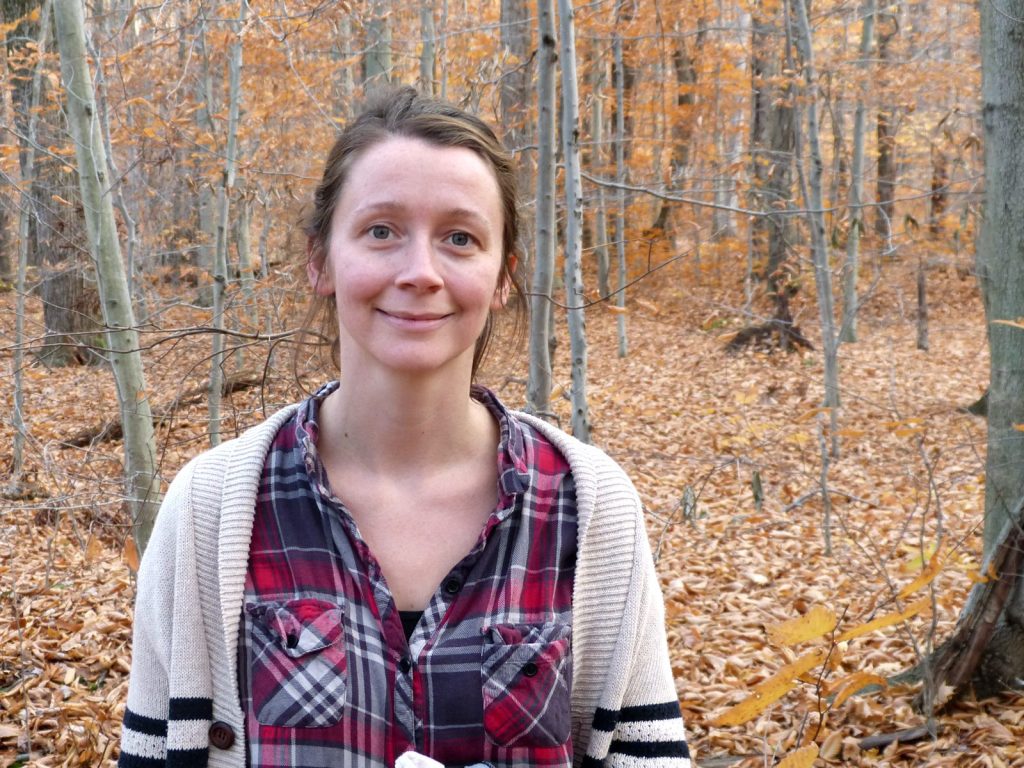
Our discussion begins in Australia, where Dr. Greig did her dissertation. Her work studied the amazing behavior of the splendid fairywren, a small and colorful Australian bird, who literally sing in the shadows of a predator.
From there, we get into Project FeederWatch and the practice of bird feeding in general. Project FeederWatch has collected an immense dataset that reveals a lot about birds that visit feeders and people’s yards in general. We discuss some of the findings, and how you can participate. It’s easy!
It’s a wide ranging discussion, including topics like – does feeding birds affect their migration routes or timing, or their geographic ranges? How to minimize pests getting into your feeders? Does widespread feeding birds impact populations or the composition of bird communities?
We also talk about best practices for feeding birds. Yes, we’re taking on a responsibility of caring for wild animals, so there are several important things we need to do, such as paying attention to disease spread.
Dr. Greig gets into all of this and more. So if you feed birds or are considering feeding birds, this is an important episode to listen to.
Find Project FeederWatch on Twitter.
Check out Jumpstart Nature’s podcast episode #2, “Plant Your Birdfeeder“, for more from Dr. Greig and other experts on birds and their habitats.
Did you have a question that I didn’t ask? Let me know at naturesarchivepodcast@gmail.com, and I’ll try to get an answer!
And did you know Nature’s Archive has a monthly newsletter? I share the latest news from the world of Nature’s Archive, as well as pointers to new naturalist finds that have crossed my radar, like podcasts, books, websites, and more. No spam, and you can unsubscribe at any time.
While you are welcome to listen to my show using the above link, you can help me grow my reach by listening through one of the podcast services (Apple, Google, Spotify, Overcast, etc). And while you’re there, will you please consider subscribing?
Links To Topics Discussed
Killing with kindness: Does widespread generalised provisioning of wildlife help or hinder biodiversity conservation efforts? – scientific paper by Jack Shutt and Alex Lees
Project FeederWatch – Begins on November 1!
Credits
Michelle Balderston provided editing assistance for this episode.
The following music was used for this media project:
Music: Spellbound by Brian Holtz Music
Free download: https://filmmusic.io/song/9616-spellbound
License (CC BY 4.0): https://filmmusic.io/standard-license
Artist website: https://brianholtzmusic.com
Transcript (click to view)
Michael Hawk owns copyright in and to all content in transcripts.
You are welcome to share the below transcript (up to 500 words but not more) in media articles (e.g., The New York Times, LA Times, The Guardian), on your personal website, in a non-commercial article or blog post (e.g., Medium), and/or on a personal social media account for non-commercial purposes, provided that you include attribution to “Nature’s Archive Podcast” and link back to the podcast.naturesarchive.com URL.
Transcript creation is automated and subject to errors. No warranty of accuracy is implied or provided.
[00:00:00] Michael Hawk: My guest today is Dr. Emma, Greig. Dr. Greig is a behavioral ecologist. Who’s been leading project feeder, watch a multi-decade community science effort led by the Cornell Lab of Ornithology and Birds Canada.
[00:00:12] Today’s discussion could be broadly characterized as how to take care of the birds that visit your yard. But you might be surprised at some of the recommendations. So our discussion begins in Australia of all places where Dr. Greig did her dissertation. Her work study the amazing behavior of a tiny little bird called a splendid fairy Wren.
[00:00:31] And how it would literally sing in the shadows of a predator. From there we get into project feeder watch and the practice of bird feeding in general. Project feeder watch has collected an immense dataset that reveals a lot about the birds that visit feeders and also people’s yards in general. We discussed some of the findings and how you can participate. By the way it’s easy.
[00:00:52] And this wide ranging discussion, we include topics like does feeding birds effect the migration routes or timing of their migrations or even their geographic ranges. How to minimize pests, getting into your feeders.
[00:01:04] And does the widespread feeding of birds impact populations or the composition of bird communities.
[00:01:10] We also talk about best practices for feeding birds. Yes, we’re taking on a responsibility of caring for wild animals when you put a bird feeder out.
[00:01:18] So there are several important things that we need to do. Dr. Greig gets into all of this and more so if you feed birds or are considering feeding birds, or just like to observe birds in your property, this is an important episode to listen to.
[00:01:31]
[00:01:31] And by the way, project feeder watch officially begins on November 1st. So listen to this episode for more information and check the show notes for links.
[00:01:40] Dr. Greig, thank you so much for joining me today.
[00:01:42] Dr. Emma Greig: It’s a pleasure. Thanks for having me.
[00:01:45] Michael Hawk: Yeah, the goal of today, we’re going to talk about this really interesting long-term community science project, Project FeederWatch, and hopefully get into some of the intricacies of bird feeding. Like it seems like a simple act to go and put a bird feeder out and observe birds, and in a way it is.
[00:01:59] But you know, there’s another layer to that, another layer of observation and best practices and other things that I think will be fun to dig into. So I’m super excited because this is something that I think is so relatable to so many people out there listening.
[00:02:13] Dr. Emma Greig: Yeah. Birds are one of the easiest creatures, I think, for people to connect with because they’re all over the place. They’re beautiful, colorful, very charismatic, and so it’s something that a lot of folks really notice when you’re outside. You might not notice the little voles running through the lawn, but you notice the cardinal sitting on your back porch.
[00:02:37] Michael Hawk: Hard to miss a cardinal for sure.
[00:02:39] Dr. Emma Greig: Mhm.
[00:02:39] Michael Hawk: And that’s a bird out here in California that we actually don’t have, we don’t have Northern Cardinal in California, but we have some other colorful ones that can take their place. So before we jump full force into this space that we’re talking about, I’d like to learn a little bit about yourself and how you got to the Cornell Lab leading Project FeederWatch.
[00:03:00] So,where did you grow up and how, and or when, did you get interested in nature?
[00:03:05] Dr. Emma Greig: Yeah, I, grew up in Michigan and I got interested in nature, just really running around the backyard like a crazy kid. That was the start of the scientist route. But the start of the ornithology route was actually, raising little finches. You know, those little zebra finches you can buy at a pet store and keep ’em in a bird cage and watch ’em?
[00:03:30] Well, when I was little, I had a pair of these zebra finches, and I remember when they first had a little nest of babies, and I just thought it was the coolest thing ever that these little birds would raise young, in my house. And then you’d end up with five little finches, coolest thing in the world.
[00:03:52] So I got into this whole finch raising business and got hooked on birds. And now I actually study birds in the wild, so more appropriate. But, it’s funny how these things can get started.
[00:04:06] Michael Hawk: Yeah, I can only imagine as a kid seeing that happen. It’s like magic in a way. Like just all of a sudden there’s five finches when there were two before.
[00:04:15] Dr. Emma Greig: It’s so magic. Yeah. Those little eggs and man, those teeny little pink babies. Just crazy that, that’s how it works.
[00:04:23] Michael Hawk: I love hearing about zebra finches, actually, because, for two reasons. When I was living in Arizona one day, a zebra finch just appeared in my backyard, so it was obviously somebody’s escapee that showed up. And, I hope they got it back probably, unfortunately, probably not. But.
[00:04:41] Dr. Emma Greig: Yeah.
[00:04:41] Michael Hawk: I was like, what is this bird?
[00:04:43] I’d never seen a bird like that before. And then a few years later I got to travel to Australia and I got to see them in the wild, and connecting that full circle was super cool for me anyway.
[00:04:56] Dr. Emma Greig: So cool. Yeah, it’s crazy isn’t it? When you see a bird that you’re so used to seeing in a pet store or in a birdcage, and you then go and you see it in the wild. I did actually my dissertation work in Australia, so I remember also taking the bus to my field site and the sign of the road was full of cockatoos and I just thought, wow, this is what cockatoos are supposed to be doing.
[00:05:20] Flying around squawking with their big flocks, so, so crazy. Seeing them in that context. It’s hard to imagine then having a cockatoo in a bird cage ’cause they’re so big and loud. Anyway.
[00:05:35] Michael Hawk: I don’t want to turn this into Australia reminiscing, but I am interested in the work that you did in Australia and,my time was mainly spent in like the Sydney and Brisbane area of Australia, and there were cockatoos like in downtown, just hanging out in downtown, which was wild to see.
[00:05:53] So probably skipping ahead a little bit from this time as a child where you were observing, your caged zebra finches to the research you did in Australia. Tell me what were you doing in Australia? I’d like to learn more.
[00:06:06] Dr. Emma Greig: I was studying a little, bird called a fairywren. There are different kinds of fairywrens, and they all have cool names like the lovely fairywren, the superb fairywren. And the species I focused on was called the splendid fairywren, and I was studying their vocalizations.
[00:06:24] So trying to understand how do they learn their songs, how do they use their songs, what did those songs mean? So I spent my days waking up in the middle of the night and going out to these territories in the dark so that I could record their dawn chorus recordings, and then, um, relate that to all sorts of other things about those individual birds at our study site.
[00:06:47] It was a really, really fun project.
[00:06:51] Michael Hawk: And I think the names are pretty accurate. They are all like splendid or superb or like the coloration on them and the iridescence. So cool to see. What were you able to determine in evaluating their songs?
[00:07:05] Dr. Emma Greig: Well, I studied a lot of different things about their songs, but the piece that is always the neatest to me was this strange behavior they had where males would sing a special song. We called it the type two song, and it was this trill, whenever they would hear the song of this very frightening predatory bird called a butcher bird.
[00:07:31] So if a butcher bird would fly through the habitat, all the birds would give alarm calls. They were scared to death of this thing. But if a butcher bird would sit on a little post and sing, these male fairywrens would all sing back to him. I was like, what, why are you doing this? So, a chunk of my dissertation was trying to understand what is the function of this fairywrens song?
[00:07:59] Is it even a song? Is it an alarm call? What are they doing? And the best I could figure was that this was a song that males gave at a strategic time. And that time was strategic because when a butcher bird would sing, everyone would pay attention, including female fairywrens. So it was a way that they could really project themselves into the world by saying, oh, everyone’s listening now.
[00:08:27] And it’s kind of, maybe your awareness is really heightened ’cause you’re listening to something scary. I’m going to sink my little trill right now. that was the coolest, piece of info from my dissertation, I think, was figuring out these little type two calls.
[00:08:41] Michael Hawk: Yeah, that is fascinating to think about and I think that’s a great hypothesis. Like, is there any way to prove that? What’s the next step?
[00:08:49] Dr. Emma Greig: I tried with experiments to sort of tease apart that, okay, in this context it seems like it’s certainly not an alarm call. And females did tend to respond more to playbacks of type two calls when they were proceeded by a butcher bird call, so females would react more to them. So there is some experimental hints that this interpretation is true.
[00:09:11] I guess I always still hesitate to say this is definitely the truth, because it’s just hard to know these things for sure. But that was the best that I could figure.
[00:09:20] Michael Hawk: Yeah, spoken like a true scientist. There’s always a little wiggle room for doubt in case there’s a better explanation that arises but that sounds really persuasive to me, anyway. On a personal note, I haven’t looked into fairywrens, like taxonomically. Do they have any relation to the wrens that we experience here in the United States, or are they just very, very distant relatives?
[00:09:46] Dr. Emma Greig: They’re very distant relatives, and I think they got the name wren because they hold their tails up like the wrens in North America do. But it’s not because they’re actually related to wrens. So just a little convergence in the tail holding behavior.
[00:10:04] Michael Hawk: Yeah, I assumed as much and anyone who’s traveled to some of the, like to Australia or, or some of the more tropical areas, you might find a lot of bird names like magpie-lark or cuckooshrike. And it’s like they’ve noted the morphological similarities of two different birds and then just said, okay, we’re just going to call ’em both.
[00:10:23] So you can’t trust those common names, I suppose.
[00:10:26] Dr. Emma Greig: Yep.
[00:10:28] Michael Hawk: With that, as background then, how did you navigate your way to Project FeederWatch?
[00:10:33] Dr. Emma Greig: Well, that came about because I came to the Cornell Lab of Ornithology, actually to do a postdoc about fairywrens. So those Australian birds led me to the lab. And when my postdoc was over, I just really super, super loved working at the lab. And I didn’t want to leave, but I didn’t know what to do. And I remember going to the HR department and saying, gosh, I’d do anything, you know. I could work at the front desk or you could maybe put me at the library for a little while, you know, part-time. What could I do to kind of stick around until something more significant comes up?
[00:11:14] And the woman said,there’s this opening starting out with Project FeederWatch, if you want to give that a try. And I thought, well, ok, yeah, I could go for this. I’ll give it a shot. So my point here is that I didn’t have a lot of background in citizen science or participatory science or large data sets.
[00:11:33] I was a behavioral ecologist studying fairywren songs coming into this position. And I have just totally fallen in love with FeederWatch and the data set. It’s really been a cool, now 10 years since I took the position. it’s kind of crazy how these things all unfold.
[00:11:55] Michael Hawk: I think it’s a dream for a lot of us to someday end up working at the Cornell Lab of Ornithology, so.
[00:12:02] Dr. Emma Greig: Yeah.
[00:12:02]
[00:12:02] Michael Hawk: It’s fun to listen to what your path was and how it’s panned out. So tell me a bit about Project FeederWatch then. How long has it been going, what is it, what’s the goal?
[00:12:12] Dr. Emma Greig: Yeah, it’s a wonderful program. It has been going on since the late eighties. It was actually invented, I think, about a decade before that in the seventies through the Long Point Bird Observatory up in Canada. And it was just a Canadian winter bird counting effort, that was sort of the idea behind it.
[00:12:32] And it was conceived by a, a woman named Erica Dunn. So there’s the goal, and then in the eighties they thought, we want to expand this and look at winter birds across more than just Canada, because a lot of birds have ranges. They are both the US and Canada, of course. And so it was then in the eighties that they partnered with the Lab of Ornithology.
[00:12:52] And that was when the program took the form that it has now. But the amazing thing is that since, I think it’s 1988, 87/88, that winter. Since that winter, people have been counting birds for Project Feederwatch, following the exact same protocol,for all that time people have been counting birds the same way.
[00:13:16] So what this means now is that it is just this humongous, beautiful dataset of standardized observations of birds in winter. And you can just do so much, really, whatever kinda project you can come up with, you might be able to answer with Feederwatch data that’s maybe too big of a statement, but a lot of different questions you can answer with FeederWatch data.
[00:13:43] So it’s a really cool program.
[00:13:45] Michael Hawk: There’s so much I want to ask. so who, who participates in Project FeederWatch?
[00:13:50] Dr. Emma Greig: Anybody who wants to. Now the name FeederWatch leads it to be people who have bird feeders. So that’s the core audience. But you don’t have to have a bird feeder to participate by any means. And this is something I’m trying to encourage, and it’s only something we’ve been encouraging in the past few years, but there are lots of ways to support birds that don’t involve having a bird feeder.
[00:14:16] I hope this podcast is one more step in the direction of helping people know that even if you don’t feed birds, you can participate in this Project FeederWatch and observe the birds around your, your home and still contribute to this awesome data set.
[00:14:35] Michael Hawk: So you said around your home, so there is a constraint to being close to your home to participate?
[00:14:40] Dr. Emma Greig: No, there is not. That’s what people tend to do because that’s often where people have their bird feeders or where they want to sit and watch birds on the weekend. But you can do it anywhere. You could do it at your office. If you’re a teacher, you can do it at your school with your classroom. Nature centers do it. Zoos do it. You can do it at your vacation rental if you want to. So any place is fine for FeederWatch.
[00:15:07] Michael Hawk: And you also said it’s a, since close to this inception anyway, that there’s a standardized way in which this data has been tabulated. So what are the requirements for someone like, you’re, sitting at home and, looking at your birds, and how do you go about, contributing, like specifically contributing to Project FeederWatch.
[00:15:28] Dr. Emma Greig: The quick and dirty about the FeederWatch protocol is that we ask people to identify all the birds that they see over their count period, and, you can count for as little or as much time as you want. But you’re just going to say, okay, I watched my birds for this amount of time over the weekend. And the goal of the watch is to tally up the largest number of each species seen at one time.
[00:15:52] So let’s say you look out your window and you see two blue jays on your feeder. Oh, okay. You mark down two blue jays. Or two Steller’s jay or scrub jays, wherever you may be. Then you, look out your window again, half an hour later, do another check. And you see there are now three scrub jays at your bird feeder.
[00:16:14] Okay, now I’ve got three. Now your tally is three birds. It’s not five because we’re trying to get a sense of the most number of individuals that you see at one time. And the reason for that is so that you don’t count the same bird over and over again and artificially inflate your bird counts.
[00:16:35] So that’s what everyone’s been doing for all these years, is coming up with these numbers for their backyard birds and it’s added up to a lot of birds, let me tell you.
[00:16:45] Michael Hawk: I had a funny visual come to mind as you were describing the protocol for not, you know, double counting a bird and I was thinking about like a nuthatch or a titmouse something like that, that continually goes back and forth between the feeder and some other place to eat it’s seed.
[00:16:58] Like grab one seed, go somewhere else, eat it, grab one seed, go somewhere else and eat it. So you’re sitting there for 30 minutes and it’s like, I had 145 nuthatches, but it was really just one the whole time.
[00:17:09] Dr. Emma Greig: Exactly, exactly. That’s what we’re trying to avoid is,just count the most you see at once.
[00:17:14] Michael Hawk: Yep. Yeah, obviously I think most people would figure that out after a few instances, but nonetheless, it’s still funny, to think about. and actually, I wanted to ask you like, I know why I put out bird feeders because, I enjoy observing them. I enjoy showing my kids the birds and the diversity that exists.
[00:17:34] And I hope that it plants a seed, so to speak, in their lives, to have a closer relationship with nature than maybe they might otherwise have. I started mentioning this behavior thing with the nuthatch or, titmouse, and that maybe is a good lead in like, why do you see people feeding birds? What are the reasons that you’ve heard from folks participating in this?
[00:17:57] Dr. Emma Greig: Well, the reason that you describe is absolutely one of ’em. People want to connect with nature, and I just think it’s so cool that, you can just put a little tray of seed on your back porch and actually bring nature right to your window and be able to see, oh, these are all the birds that are around, or some of the birds that are around.
[00:18:15] It’s really cool that they will do that and respond to the food that we provide like that. I think another huge reason why people do this, bird feeding hobby is they want to help birds. That’s a, I think, a large motivation. especially in colder climates when food is scarce, when there’s a big snowfall, you will often see lots and lots of birds at bird feeders, and that’s ’cause they’re coming in for this easy meal.
[00:18:43] So I think that’s another big part of it for folks is they want to help these birds.
[00:18:48] Michael Hawk: Absolutely, that’s maybe the most fundamental reason, now that you mention it. So you started to say, and you corrected yourself, like, uhyou can see all the birds in your area, and then you said, well, some of the birds in your area. So what are you missing potentially if you’re only focusing on the birds that go to your bird feeders?
[00:19:06] Dr. Emma Greig: Well, this is the,limitation of the FeederWatch data set, and it’s that it’s really a program and a data set designed to capture information about common backyard, often resident birds because these are species that are around in winter and they’re also species that tend to come into view from a person’s window.
[00:19:32] FeederWatch is not an ideal data set if you want to study, say, population trends in :red-eyed vireos, a little insectivorous, migratory bird, that’s probably not going to be around your feeder. Very hard to see. You might only notice it by listening if you’re walking around a wooded area. So that was why kind of stopped myself and said, by putting out bird seed and bird food, you see some of the birds that are in your area, but there are birds that you won’t necessarily see.
[00:20:03] and that’s largely insectivorous, you know, small cryptic little warblers passing through. So that was what I meant by that
[00:20:11] Michael Hawk: Yeah, and, actually Project FeederWatch, what months of the year does it run?
[00:20:15] Dr. Emma Greig: November through April. So that’s another piece of it is, it’s definitely geared towards winter resident species, not so much migratory species.
[00:20:25] Michael Hawk: So, yeah, unless you’re lucky enough to live in a, uh, very, temperate or moderate climate, a lot of those insect oriented birds are not going to be around those months of the year. But there, there probably are a few, I would imagine, even in some of the colder areas that are looking for, overwintering insects or things like that.
[00:20:42] Dr. Emma Greig: Yeah, there are, there certainly are. I mean, you’d be surprised, for example, how far North American robins will spend the winter. We think of them as a species that disappears in winter, but they’re often around in, big flocks in the forest, eating berries and surviving somehow even in very cold climates.
[00:21:01] So yeah, some do stick around.
[00:21:04] Michael Hawk: If somebody’s listening right now and they want to participate in Project FeederWatch, how do they start?
[00:21:09] Dr. Emma Greig: Step one, pop to our website and sign on up and we will get you organized for, uh, getting into the data entry. The other thing to do is just read the protocol instructions and make sure you understand how to count your birds. And then no matter what you have in your yard, whether it’s bird feeders, bird baths, maybe you don’t have any of that, maybe you just have some plants and hedges, start counting your birds.
[00:21:35] That’s really all it takes. So it’s not much, not too much to get started. When you do sign up, I should say, we, send people, A bird identification poster. So even if you’re not super familiar with a lot of the birds in your area, or you feel like you’re just getting started identifying birds, we try to make it as easy as possible to feel comfortable identifying the birds that you’re likely to see in your yard, whether you live in the East or the West.
[00:22:02] Our poster has those species.
[00:22:05] Michael Hawk: Oh, that’s neat. Is it a virtual poster or an actual physical poster that you can hang on your wall?
[00:22:11] Dr. Emma Greig: It is a physical poster that you can hang on your wall. Yeah, old school.
[00:22:16] Michael Hawk: Yeah, I like it.
[00:22:18] Dr. Emma Greig: Yeah.
[00:22:19] Michael Hawk: And as people are counting their birds, how do they submit their observations? Like, I’m really familiar with eBird and I think a lot of my audience uses eBird. is that the tool or is there a separate interface?
[00:22:32] Dr. Emma Greig: There is a separate interface for entering FeederWatch data because it does follow a different protocol than the eBird data collection method. And we have both a online on the web version, and then there’s also a mobile app version that you can use. So you can use the mobile app to tally your accounts in real time, or if you prefer keeping track on a little piece of paper, then you can do that and go online and enter on the website at a time of your convenience.
[00:22:58] So two different ways to do it.
[00:23:00] Michael Hawk: Yeah, and I’ll be honest, I made the mistake in, previous years of just assuming that submitting my backyard observations on eBird was essentially going to the same data set. So, that’s why I wanted to make that clear for folks that they don’t make the same mistake that I made.
[00:23:14] Dr. Emma Greig: Yeah, and a lot of people write to us and ask us if that’s true. If their eBird counts will go to FeederWatch or FeederWatch to eBird and, it’s a little fuzzy to answer because all the bird data are stored in the same large database at the lab. It’s all there, but you would never blend FeederWatch data with eBird data because of those special counting protocols that we have for FeederWatch.
[00:23:39] You want to compare apples to apples when you’re doing analyses of bird counts, and so that’s why we tag them differently, I guess that’s a good way to think about it.
[00:23:48] Michael Hawk: So I’d like to dig a little bit more into ways that those who do feed birds at home can do a better job of it. Because likethere was a situation here, just as an example on the West Coast, and I think maybe it expanded across much of the US a few years ago where there was a really big salmonella outbreak that affected pine siskins and some other species as well.
[00:24:09] And a lot of that was due to the pathogen spread at people’s bird feeders and bird baths and recommendations were, take your feeders down, clean them, leave them down until everything died down. And I think that was an eye opener for a lot of people that, it’s kinda like with great power comes great responsibility, like you’re supporting these birds, but then you’re also responsible,for that support.
[00:24:30] So,from your perspective, what are some of the best practices that people should follow if you’re putting a feeder out in your yard?
[00:24:40] Dr. Emma Greig: :There are a variety of things you can do to basically, make your restaurant a bird friendly restaurant. And if you go out to eat somewhere, you want it to be a nice atmosphere, you want the food to be healthy, you want it to be hygienic. And that’s the same sort of things we want to think about when we’re creating a space for birds to really enjoy.
[00:25:04] So if you’re going to choose to actually use a feeder, ’cause again, you can do all sorts of things to host birds without using bird feeders. But if you are going to use a feeder, it’s great to choose feeders that are easy to clean so thatyou know, if we have another case, like the big salmonella outbreak that you referred to, it’s easy to take your feeders down, clean them very thoroughly, put them in the dishwasher or whatever you need to do.
[00:25:30] And then when you put ’em back out, you know they’re going to be fresh as daisies. Another thing to think about with feeders is making sure they don’t have strange crevices that birds can get stuck in. You’d be surprised what birds can do. I would say simple, simple feeders tend to be good feeders.
[00:25:49] Another thing to do is to just make sure that you’re putting out reasonably fresh bird seed. Want the food to be of good quality. So that’s another thing to think about. :And if you have cats, I would say you might want to keep ’em inside because cats are pretty good at catching birds. So if you’re going to put feeders out, I would recommend having a, catio or something to keep the birds out of harm’s way from pet cats.
[00:26:20] So those are, just a few tips.
[00:26:22] Michael Hawk: Right, I’m a big advocate for keeping cats indoors for lots of reasons, we own three cats ourselves. I think that’s a good one. And I’m, I’m also thinking that cats aren’t the only predators that might be attracted to a feeding station. You know, you could also have, raptors or other animals that catch on like, oh there’s lots of tasty meals coming to these bird feeders. So from a placement standpoint, where should feeders be placed relative to, say, a home and other vegetation that exists?
[00:26:55] Dr. Emma Greig: It’s a little bit tricky to know really how to prevent birds from, getting snatched up by a Cooper’s hawk if one decides that he’s going to start frequenting your yard. But I would say that, Cooper’s hawk are native birds too, and they’re going to eat something, so, it’s hard to not feel bad if they’re eating something at your bird feeder.
[00:27:15] But I urge people to maybe not feel too bad about it because even if they eat a bird that’s not at your bird feeder, they’re still eating. So I don’t feel too concerned about Cooper’s hawks and sharp-shinned hawks and raptors benefiting from the congregations of juncos and goldfinches and how sparrows that you might find around feeders.
[00:27:35] But if you want to try to mediate that, one thing you can do is try to keep feeders close to vegetation so that birds would have a place to escape quickly if a hawk swoops by, they’ve got some big bush nearby, or you might create a brush pile that birds could hide in. So there are a few little techniques you can try to give the little guys more of a fighting chance if a Cooper’s Hawk comes around.
[00:28:04] With respect to where to place feeders in relation to your home, I :would say that windows kills, window strikes are the other thing to be mindful about, and it’s sort of counterintuitive, but the closer that feeders are to a window, the safer it is for birds because they can’t get up enough speed to really harm themselves if they get spooked and fly to a window and they’re only two feet away from the window, for example. You know, if you’ve got a lot of windows, putting feeders close is a great idea.
[00:28:35] And if you don’t have a ton of windows, then it’s not, such a big deal. But you can also always think of, or look up bird window clings and those sort of window strike deterrents that exist. And I can never remember what they’re all called. But there are lots of different kinds of those things.
[00:28:50] Michael Hawk: Yeah, there are some good ones that I know come highly recommended. I’ll try to include a couple links that, it looks like some of the bird advocacy groups are proponents of in the show notes. yeah. And it really is counterintuitive because you put those feeders closer to the windows and you might actually notice birds fluttering up against the windows more often, but you’re exactly right.
[00:29:08] they’re just kinda like lightweight brush offs as opposed to full speed, potentially injury inducing or fatal impacts that could happen from a further distance. I forgot to ask, going back to disease spread and cleaning your feeders, I think it’s a great idea. I, I see so many really novel bird feeders for sale online.
[00:29:28] And if you’re on social media and you’ve been looking at bird feeders or bird seed, then you suddenly get all these, amazing products being advertised at you. And some of them are really intricate and they do have those crevices or moving parts or things that, you know, thinking about the safety of the bird is important.
[00:29:44] And then also, the ability to clean them. Now, how often should people clean their bird feeders?
[00:29:53] Dr. Emma Greig: I would say there’s not a real hard and fast answer to that, to be honest. And certainly if you observe a sick bird, then it’s a good idea to, go and clean your feeders right then and there, but if you don’t observe any sick birds, we don’t have a sort of scientifically backed feeder cleaning frequency that’s going to have a, a detectable effect on bird disease spread.
[00:30:16] We just don’t know. Because we don’t know, actually, that’s one of the things that we’re going to try and start to address within the Project FeederWatch dataset in the coming years. this season we’re going to roll out some new information that we’re going to collect about sick bird observations and about feeder cleaning practices.
[00:30:36] if you’re interested in doing this or learning about this, I super encourage people to consider participating in FeederWatch this year, and I hope that we can actually learn, how much cleaning do you have to do to make a difference for birds? This big question that we make a lot of recommendations about, but we don’t really know the answer to.
[00:30:56] So stay tuned for the answer in a few years, let’s hope.
[00:31:01] Michael Hawk: I may be off base with this, but if I were to characterize then the state of knowledge. Like we know that cleaning a feeder is helpful, we just don’t know what the optimal amount of cleaning is. And if we were to give a recommendation, like, clean your feeder every five days, maybe people are wasting their time.
[00:31:18] is that where the concern is?
[00:31:20] Dr. Emma Greig: It’s possible. We just don’t know. Maybe you need to clean your feeder every day for it to have an effect. Or maybe there’s just so much transmission that happens away from feeders that cleaning feeders doesn’t make a difference. I doubt that that’s really the case. So I don’t want to say that as a, likely outcome, but it’s possible. The state of knowledge right now I think is that we say to clean your feeders if you see sick birds.
[00:31:47] And we have a kind of course recommendation for every couple of weeks, but I think we really want to nail that down a lot better. that’s based on common sense. which is fine, common sense is very useful and it’s certainly not worthless, but it makes it hard to, say to everyone, well this is the answer.
[00:32:06] Cause it’s a little more fuzzy than that at this point.
[00:32:09] Michael Hawk: All right. Good points for sure. And. You know, similar question for bird baths, it’s a different environment In a bird bath, you have liquid, which can have its own side effects. Do you have a recommendation for people that, that put water out for birds, how often they should clean those facilities?
[00:32:25] Dr. Emma Greig: Again, this is just based on common sense and sort of better safe than sorry thing, but refreshing a bird bath, bird bath water, even every day seems like a nice idea. if you have a pet animal, you change its water every day. So I would pour out bird bath water and replace it every day if, if you’re able to.
[00:32:44] That being said, if you don’t get to it for a few days, is it the end of the world? Certainly not.
[00:32:49] Michael Hawk: Got it. I’ve been trying to err on the side of, maybe over cleaning, especially after that salmonella outbreak a few years ago, which was so devastating.
[00:33:00] Dr. Emma Greig: Yeah, it really was.
[00:33:02] Michael Hawk: One other, like I’m thinking about some of the other unanticipated side effects people might have with bird feeders. And if you’re lucky enough to live in bear country, I know that feeders can actually attract bears.
[00:33:14] Probably not the type of animal that one would expect. but even in cities or, anywhere for that matter, you might find that you’re attracting rodents or other animals that maybe you don’t want. So, uh, are there suggestions you have for people in the unanticipated feeding of other animals that might result with bird feeders?
[00:33:34] Dr. Emma Greig: Yeah, and if bears are the thing that you’re attracting, we say, take those feeders right down. Stop feeding them until the bears are hibernating, because it’s just so dangerous for people and for the bears if they get habituated to food that people are providing. So we really strongly discourage that. For things like rodents, rats, mice, things that are not quite so treacherous as bears, but are certainly unwanted, it’s hard to prevent those things if you’ve got a lot of bird seed around. If that stuff is falling on the ground though, and those animals are around, they’re going to be around. So the best strategy is, other than just trapping the heck out of those things, if you can do it, maybe for a period of time, skipping the bird seed and just sticking with maybe a suet block if it’s cold weather, or maybe just have a hummingbird feeder or a fruit feeder with an orange on it for a little while. So you can feed birds without having to use bird seed.
[00:34:32] And that might be a strategy for folks to use if they have troubles with rodents or other mammals come into the seeds that they put out.
[00:34:40] Michael Hawk: Some of this might fall into the, world of like mythology or urban legends, so please correct me if, some of this is inaccurate, but. You know, some of the things that, that I tend to do to help. one is the seed selection. I try to be really intentional about the type of seed.
[00:34:53] Uh, some cheaper seeds have lots of filler products that birds will just toss on the ground, and that seems to attract,some of the rodents who don’t care as much. They aren’t as picky necessarily as birds. and then also baffles and again, location of the feeder. Like where are they accessible or not accessible to the animals that you are selecting for or, selecting against.
[00:35:17] Dr. Emma Greig: Yeah, those are all excellent other methods of continuing to put out seed, but limiting the mammal exposure. Yeah. Very good points about seed selection and baffles.
[00:35:26] Michael Hawk: So speaking of potential myths, do you encounter common urban legends or myths about like, certain types of food to put out for birds or, anything in this space that you would like to maybe dispel?
[00:35:42] Dr. Emma Greig: I, I can’t think of, uh, too many bird food urban legends. I suppose the one thing that’s coming to mind right now is, uh, sometimes people write to us and worry that if they are going to go on vacation, how are the birds going to manage if they leave for a little while and stop feeding them for a couple of weeks?
[00:36:03] And that question comes up a lot. And I would say that for the most part, it is absolutely no problem. Because even though birds are coming to your feeders a lot, that’s not the only food source that they know. Most species have a wide range of food sources and you know, this is how they survive in winter habitat where food is ephemeral.
[00:36:26] They’ve evolved to be able to do this. So you don’t have to worry if you have to take down your feeders for a little while. In most cases. The exception would be if, you know there’s some super, super cold storm going through, then it could be a little rough on ’em. But most of the time it’s no big deal.
[00:36:42] Michael Hawk: and I’ve, I’ve realized too, there’s, some other interesting, maybe second level questions that I have, uh, because you’re talking about these birds that generally will have multiple food sources. Maybe there’s another neighbor that has feeders out, or maybe there’s natural plants that are providing food or they can switch their diet somewhat to fruit or to insects or something else to supplement.
[00:37:03] But by putting bird seed out on a large scale, you know, if you think about the number of people in a given neighborhood or a city or, or even more broadly, does that disproportionately benefit some species or cause a detriment to other species?
[00:37:21] Dr. Emma Greig: Maybe in some cases it can, and I say this very hesitantly because there have been a few studies that have looked at this now, and they show that certainly some species like granivorous species or very bold species that will come to feeders benefit more from bird food being put out than others. How much that actually causes population declines in other species that are less dominant or not so inclined to eat bird seed, I think is still a big question mark for almost all species. It’s a big question mark. And what these are called are, they’re called like indirect effects. So you see an effect on the population of birds that’s coming to the bird food. What’s the effect on the populations of birds that aren’t coming to the bird food?
[00:38:13] Just because that bird food species is doing really well. We really have a lot to still learn about these indirect effects of bird feeding. Certainly there are cases in which it could be bad. You could have competitors outcompeting other species, but there are cases in which it could be good too.
[00:38:32] I could imagine it consolidating more competitive species around feeders, leaving more open areas for less competitive species elsewhere. So I, I think we just largely don’t know yet. And the last little thing I’ll say about it is that, even in studies where they can show, a negative effect of bird feeding or a positive effect of bird feeding in some system, it’s extremely hard to take that and generalize that to other species or other locations because a lot of these patterns are very context dependent on, you know, which are the species and how do they interact and what food sources are available, blah, blah, blah.
[00:39:14] ultimately, what I want to say is, you know, answer the question, is feeding good or bad, and…
[00:39:18] Michael Hawk: It depends.
[00:39:19] Dr. Emma Greig: It depends. Yeah. It’s like saying, is eating out good or bad? Well, it depends. Do you have enough money. Do you choose a healthy restaurant or bad one, or blah, blah, blah. It’s like a thousand reasons why In some cases it’s good and in some cases it’s not good.
[00:39:32] Michael Hawk: I like that explanation too of, a study is occurring, first of all, nature just has, it’s such a complex system. There’s so many variables. And I’m thinking in particular about a study that I read out of the UK that I’m sure you’ve seen, that looked at, bird provisioning and some of the impacts in the UK.
[00:39:50] And the things that came to mind there is, okay, we have an island. the environment is different. it’s relatively temperate but not warm, but the winters are relatively temperate, not a lot of freezing temperatures. so bird behaviors and migration routes and competition and food availability, totally different.
[00:40:10] It’s also a very, very densely populated area. That there are parts of the, of North America that can compete, but, not a lot. There’s a lot of open space in, in North America. And, on top of that, then bird feeding is a really big deal in the UK. Is that accurate, first of all, like comparing that study? I, I feel as if there are, there’s a higher percentage of people feeding birds in the UK than typically we find in the US.
[00:40:35] Dr. Emma Greig: I have to say don’t know. That sounds right to me, but I, I don’t know the statistics on that off the top of my head to be able to say that’s true or not true. But that, what that does also remind me, this is a slightly different point related to this though, is that there’s this whole other aspect of bird feeding, which is the effect that it has on people and perhaps indirect effects of that on how they interact with the environment and decisions they make, maybe who they vote for or how they spend their money.
[00:41:04] That could have incredibly positive effects on birds. So even if it, there was a negative indirect effect on one bird species, does that mean everyone should stop feeding birds? That’s a big thing to, to ask and without considering all the benefits to people of bird feeding.
[00:41:23] Michael Hawk: Right. I guess my point, like some of the conclusions in the study I’ll link to it, um, was that there were some birds that maybe were getting negatively affected by feeding, but there were some birds that were getting positive, effects as well. And just to your point, we can’t just pick up and drop those conclusions into the US. So is Project FeederWatch then with some of these extra pieces, in terms of tracking disease and other things, are you looking to decipher these variables a little bit more?
[00:41:49] Dr. Emma Greig: Yeah, exactly. eBird is this fantastic huge database on, on bird populations. And so sometimes you might think,why bother with FeederWatch? But I think with FeederWatch we can really delve deep into things like bird disease, food provisioning, and start to understand how we people interact with birds so much, in more detail than you can with just the bird sightings.
[00:42:14] So that’s exactly what we want to try to focus on more. And that’s also why I really, really want to emphasize how valuable it is for people to participate in FeederWatch who don’t have bird feeders. There is no way for us to understand the impact of bird feeders on birds if you can’t compare counts with feeders to counts without feeders.
[00:42:41] So if you just have a yard with some beautiful bushes and grass grasses that you let grow, and maybe a bird bath or not a bird bath, whatever, those bird counts are going to become extremely important to us. Really saying, well, how do bird communities at sites with feeders differ from bird communities at sites without feeders?
[00:43:02] So anyway, that’s the direction that I really am thinking FeederWatch is going to go going forward.
[00:43:07] Michael Hawk: And that’s interesting. That sounds like then there’s a, there’s more branching points from there because then it’s like, well, what kinds of natural and, and natural I say in quotes, but, uh, what, kinds of other provisions might be there? maybe it’s native plants, maybe it’s not native plants.
[00:43:22] Maybe there’s another variable that would be interesting to start to parse apart.
[00:43:28] Dr. Emma Greig: Exactly. Yeah. There’s a lot to be learned.
[00:43:31] Michael Hawk: And Yeah, I’m a huge advocate of native plants for lots of reasons, some of which are that, from a food chain or food web perspective, the native plants tend to support more of the base layers that than birds and other animals can utilize. so one of the things that, that we sometimes say is plant your bird feeder.
[00:43:50] If you don’t want to put one up, if you don’t want the responsibility of cleaning it or managing the seed, or whatever the case might be, plant your bird feeder. And,I hope some people like that and take it to heart.
[00:44:00] Dr. Emma Greig: I love that. I think that’s it. That’s exactly right. Just plant it.
[00:44:04] Michael Hawk: One other interesting… so I had a couple questions from listeners. I often send out notes on my Patreon saying like, what topics are upcoming and does anyone have any questions? And, and one was about responsibly grown bird seed. And I don’t know if this is something that is within your realm of, knowledge or not.
[00:44:22] but the, question that kind of came up is like, how do we know wherever these seeds are being collected at, are they also bird friendly? does such a thing exist? is there a way for people to understand where the seed is coming from and if they’re following responsible practices?
[00:44:36] Dr. Emma Greig: Oh man, that’s a good question. And I don’t know the answer to how do you figure out if your bird seed crops or the crops that are supporting those particular black oil sunflower seeds you’re buying, if those are grown with or without pesticides? I mean, it’s an issue that goes way beyond just bird seed, right?
[00:44:54] You could ask that question about anything you purchase. Your own food, your own clothing, your car, you know, and I totally encourage people to go there with everything they buy. I don’t have the answer for the bird seed component of it, but I think it’s absolutely an important thing to think about and where we spend our money makes a big difference to the environment.
[00:45:18] So it’s always something to consider.
[00:45:21] Michael Hawk: Yeah, I suppose starting by asking the question of whoever’s selling and, andthat can trickle up and it seems to me like bird friendly bird seed almost sounds like a joke. Like, of course it’s bird friendly. But, that should be a thing. That should be something that, that we know. We have bird friendly coffee, so we should have bird friendly bird seed.
[00:45:42] Dr. Emma Greig: That’s what I was just thinking. If we’ve got bird friendly coffee, you gotta have bird friendly bird seed.
[00:45:47] Michael Hawk: Yeah. there was a follow on to this question, they, they say, I go hiking a lot and I see a lot of acorns on the ground. If I’m in a space where it’s okay to collect, can I bring acorns back and feed them to my jays?
[00:46:01] Dr. Emma Greig: I guess so. Geez. I don’t know. I don’t see why not. I don’t know if there are any rules about moving acorns around, but, uh, if you’re asking me personally, go for it. Take that on whatever authority you want. I dunno.
[00:46:15] Michael Hawk: the joking side part is, maybe the jays can help disperse the oak trees then. So, maybe that’s true. Maybe, uh, you could repopulate an oak woodland by feeding native acorns in your backyard.
[00:46:28] Dr. Emma Greig: Hey, worth a shot, right?
[00:46:29] Michael Hawk: So another question that comes up a lot, and at least here in California, I see references in particular with Anna’s hummingbirds, but does feeding birds, and of course, with an Anna’s hummingbird, you’re putting a sugar water mixture out, not seeds. does feeding birds affect ranges or migration patterns of birds? Do you see any evidence to support that?
[00:46:51] Dr. Emma Greig: Yeah, this is a, also a very nuanced, or it’s a question with a, some nuance to the answer. I think largely putting out bird food does not prevent birds from migrating who want to migrate. If anything, it facilitates it because a trigger for migration is often photo period, how much light there is, and then what facilitates that is having enough calories in their system to be able to make the move.
[00:47:18] So the birds want to go and if you have a feeder out, they’re going to take a bite, take a drink, and then keep on moving ’cause that’s what they want to do. Anna’s hummingbirds are a funny case that I think is really super cool. Unlike most of the hummingbirds that are ruby-throated hummingbirds and black-chinned hummingbirds, the real common ones across North America. Anna’s hummingbirds don’t really migrate in the same way that the other ones do.
[00:47:45] So they have some elevational movements that they make in the seasonal elevational movements, but they’re largely resident hummingbirds. What we have seen though, through time within the FeederWatch data is, you could see it in any bird dataset, is that Anna’s hummingbirds have been expanding their winter range north.
[00:48:06] So you can now find an Anna’s hummingbird in someone’s backyard in British Columbia in January, sitting in the snow, drinking from a little hummingbird feeder. So we looked at FeederWatch data and, okay, you could document the increase in hummingbirds, but what we could also see, again, this is one of the benefits of FeederWatch, is we can track how people are using bird feeders.
[00:48:34] We could see an increase in the proportion of people who put out hummingbird feeders in the Pacific Northwest through time. So in other words, these two things were changing concurrently. Anna’s hummingbirds were becoming more common in the winter in the Pacific Northwest, and hummingbird feeders were becoming more common in the Pacific Northwest in winter.
[00:48:56] So there’s some feedback going on here, whether it’s people are keeping the feeders out because the hummingbirds are around, or the hummingbirds are sticking around because there are these feeders out. We couldn’t tease that quite apart from our study, but I suspect it’s a little bit of both things going on.
[00:49:16] There’s feedback between these birds and these people. I think that that in and of itself is super cool that we could see this interaction happening between birds and people. And that to me is one of the, themes, of a lot of different research projects that come out of FeederWatch and a lot of questions that people ask about bird feeding.
[00:49:36] The theme is that whether it’s good or bad, the stuff that we do around our homes has an impact on birds. So whether you make your home really nice for birds or not so nice for birds, it’s going to make a difference. And I think we, we see that with this Anna’s hummingbird, pattern.
[00:49:57] Michael Hawk: Yeah, I could see where it’s so difficult to tease apart, like there’s a correlation there. But at the same time, if you had the data, I would venture a guess that the types of ornamental plantings that are attractive to Anna’s maybe have also increased in the Pacific Northwest. And the climate maybe has warmed a couple of degrees at the same time.
[00:50:17] And all of these other things that happen at the same time, that could also be a factor or maybe not. That’s just very hard to tell.
[00:50:26] Dr. Emma Greig: Exactly. Very hard to tell. Yeah. And as locations become more developed, there’s that heat island effect. So the more urban places, it can, that can make the microclimate a little bit warmer. So that could be what the hummingbirds are capitalizing on. it’s tough to know, but regardless of exactly the cause and effect, that pattern is there with hummingbirds and hummingbird feeders for Anna’s.
[00:50:48] So it is very interesting.
[00:50:50] Michael Hawk: one other thing I wanted to delve into a little bit. So when we’re feeding birds, we’ve talked about like three different kinds of feeding. There’s, there’s seeds, there’s suet, and then there is this sugar water for hummingbirds and also some orioles and some other things, even bats, might find it.
[00:51:08] But, so many birds are reliant, at least for parts of their life cycles and some, all of their life cycle on insects. I’m wondering if you can tell me if, for insectivores, what can people do to support this vast array of other birds that require insects? And I’m going to point out like,Dr. Doug Tallamy did this study in his lab.
[00:51:31] a brood of chickadees being raised in the spring, required something like 6,000 caterpillars to be successfully raised, just to demonstrate the, breadth of the requirement, even for birds that we see come to our feeders eating seeds.
[00:51:47] So, I’m sorry, long-winded question, but, what do you recommend that people do, to support, attract or leave alone, I suppose, these other birds that you don’t always see at your feeders?
[00:51:58] Dr. Emma Greig: Oh yeah. Anything that you can do to support insect populations around your home is so wonderful. So if you can restrain yourself from any kind of pesticide use around your house, it’s fantastic. You know, unless you need it, ’cause termites are chewing down the beams of your home. Don’t spray stuff, leave the or man’s phone number somewhere else, you don’t need it.
[00:52:24] Leave a little patch of your yard unmowed so that that can go to seed and the insects can eat the leaves and the seeds and live in the stalks of the grass, and the birds can eat the green grass seeds. Leave some leaves in your yard unraked so that bir- or not birds, bugs can live in the leaf piles.
[00:52:47] Messy yards are good for bugs. Messy yards without pesticides. That will support so many birds. You may not even see them, but it’ll support ’em and it will support their nestlings. So that’s one of the best things you can do for birds around your home.
[00:53:02] Michael Hawk: Absolutely. I’m, I’m huge advocate of those practices. I like to tell people, just be lazy with your yard. because like insects have figured out how to live on everything. so you mentioned letting some things go to seed. There are seed eating insects. there are insects that over winter in leaf litter or that pupate in leaf litter and require that. There are insects that like bare ground.
[00:53:25] There are insects that will, reproduce inside the hollow pithy centers of stems. You know, it’s like all these different things. So leaving a patch of your yard is such a great idea for everybody to do. And I think, you know, if everybody could do that, at least, if not all your yard, part of your yard, I think we would see a big difference.
[00:53:44] Dr. Emma Greig: Yeah, I agree with you.
[00:53:45] Michael Hawk: Alright. So hopefully that doesn’t come across too strong, but,maybe you can’t be strong enough on that point, but I, I would like to ask you,as someone who is involved in a participatory science project or a community science project, like FeederWatch, and you do a number of things like this podcast and interfacing with people. What have you found to be most effective in helping people connect with the environment or move up a rung, so to speak, uh, in their awareness of the environment?
[00:54:13] Dr. Emma Greig: I think that it’s actually not anything that I do. I think that what does it for people, as far as I can tell, just from the correspondence that we get from participants in FeederWatch, is the key is just kind of noticing the birds and the creatures around them. So just taking a minute and watching, observing. And FeederWatch, because of the sort of counting protocol, that’s what all you’re supposed to do.
[00:54:44] You just sit and watch and tally up the birds. So it’s almost like you’re forced to, to zen out and,and watch what’s in your yard. Seeing that and just, and seeing it over and over again, and really learning your local birds, learning the local plants, that seems to be the thing that, that moves people as far as I can tell.
[00:55:07] But it really, I, I don’t have the answer to that, but that’s what I, the best I can say.
[00:55:13] Michael Hawk: I think that’s a great answer. I’ve heard similar things and experienced it myself. It’s just taking that first step, starting to observe and if you have a curious mind, it leads to all sorts of future steps, so, absolutely. So do you have any upcoming projects that you’d like to highlight and in particular, what are the details with Project FeederWatch so that people can prepare?
[00:55:32] Dr. Emma Greig: Yeah, well it’ll start, again this year. November 1st is the start date for the season to begin, and you could go to our website and sign up at any time. You can sign up way beforehand, no big deal. And then we’ll send you all your starting materials.
[00:55:46] Michael Hawk: And what’s that website?
[00:55:48] Dr. Emma Greig: It’s http://www.feederwatch.org. This year is going to be more different than probably any other year because we’re going to start collecting more information about the bird diseases that you may observe around your home so we can learn more about that.
[00:56:04] We’re going to be collecting more information about what you’re doing around your, your count site, how you change the food that you provide, or clean the feeders. So there’s more detailed information we’re going to collect this year, and I’m super excited to see, see the results of this new information coming in.
[00:56:21] So a very, very big season for FeederWatch.
[00:56:25] Michael Hawk: Sounds exciting and I’m not exactly sure at this point when we will publish this episode, but regardless, I’ll make sure to remind people and link to all these things in my newsletter. There’s a Nature’s Archive newsletter that I send out once a month. so that will go on to the agenda there as a reminder for folks.
[00:56:44] Dr. Emma Greig: Ah, thanks. Perfect.
[00:56:46] Michael Hawk: And if people want to follow you or your work in particular, where can they go?
[00:56:53] Dr. Emma Greig: On the FeederWatch website, there is a page called Scientific Articles where we list all the latest papers that have come out using FeederWatch data. So it’s not necessarily my work per se, ’cause lots of different biologists will use FeederWatch data, but that’s one way to sort of keep up with things.
[00:57:10] And if you are a FeederWatch participant, every year we send out an annual report that tells you the latest and coolest data results from that season of FeederWatch. So again, not my personal work, but it’s, uh, maybe more, more interesting to folks is the annual FeederWatch summary. Winter Bird Highlights is what it’s called.
[00:57:35] Michael Hawk: All good stuff. And does FeederWatch itself have a social media presence?
[00:57:40] Dr. Emma Greig: It does, there’s a FeederWatch Facebook page. I think we have a Twitter account, so yes, there’s social media for FeederWatch.
[00:57:50] Michael Hawk: All right, I will dig up all of those and and make sure they’re accessible for folks. Before we wrap up, is there anything else that you’d like to say today? It’s been really a fun conversation.
[00:58:00] Dr. Emma Greig: Yeah, it has been fun. I guess the only thing I can think of to say is if you’re interested in trying this FeederWatch, but you feel concerned you’re not going to know the birds enough. This is something I learned from looking at FeederWatch data. It is that average number of species that comes to someone’s backyard is 11, 11 species of birds.
[00:58:24] You can learn 11 species of birds. It’s not 600 like the bird book would make you think. It’s a dozen. A dozen, no big deal. So my last message is just to encourage folks to don’t stress out about it. Give it a try and you will learn as you go.
[00:58:43] Michael Hawk: That’s great advice. That makes it much more manageable to get started. So, Dr. Greig, I. As I said, it’s been a lot of fun talking today. Your enthusiasm for the project and the data and all the conclusions is really shown through. So thank you so much for all the work that you do and I appreciate you and Project FeederWatch.
[00:59:03] Dr. Emma Greig: Thanks a lot. It’s been super fun.
[00:59:05] Michael Hawk: Before wrapping up, thank you to Michelle Balderston for editing help this week. Thank you to the Patreon patrons for your continued support and everyone who has left ratings and reviews of the podcast.
 Nature's Archive Podcast