

#75: Birding Under the Influence with Dorian Anderson – Nature's Archive
Summary
Today we hear from Dorian Anderson, who you might recognize from episode #1 of Nature’s Archive.
Dorian has been a prominent figure in the birding world since 2014, when he bicycled nearly 18000 miles across the USA in what is known as a Big Year – an attempt to see as many bird species as possible.
Dorian loves a challenge, so his Big Year was much more than just trying to find lots of birds. His was a bicycle powered trip that didn’t use fossil fuels. He maintained a strict budget, built community as he went, and continued his personal journey of overcoming substance abuse. Amidst the trials of essentially being an extreme endurance athlete, Dorian also faced the inherent safety challenges of cycling on roads not necessarily designed with bicyclists in mind.
And today we have some exciting news – Dorian’s memoir, weaved into the story of the Big Year, is about to be released as a book titled “Birding Under the Influence”, which by the way is available for pre-sale now.
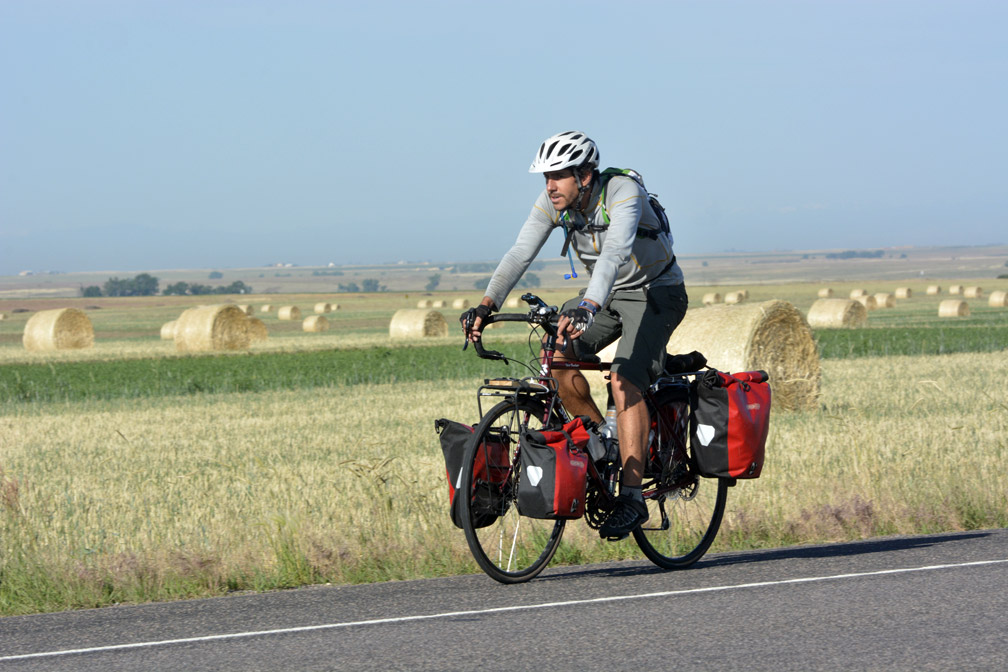
So in this episode we recap the Big Year, discuss the book and all that went into that, and how the Big Year launched a new career for Dorian as an international birding guide.
Dorian has some new stories to share. And if you aspire to be a bird guide, or just want to get some productive birding in on your next vacation, Dorian has some excellent advice and practical tips.
As for the Big Year itself, we chronicled much of this exciting story in episode 1, and the last 40 minutes or so of this episode are excerpts from that first discussion so that you can get the full story.
Find Dorian on Instagram or his photography website.
Did you have a question that I didn’t ask? Let me know at naturesarchivepodcast@gmail.com, and I’ll try to get an answer!
And did you know Nature’s Archive has a monthly newsletter? I share the latest news from the world of Nature’s Archive, as well as pointers to new naturalist finds that have crossed my radar, like podcasts, books, websites, and more. No spam, and you can unsubscribe at any time.
While you are welcome to listen to my show using the above link, you can help me grow my reach by listening through one of the podcast services (Apple, Google, Spotify, etc) linked on the right. And while you’re there, will you please consider subscribing?
Links To Topics Discussed
People and Organizations
Books and Other Things
Note: links to books are affiliate links
Birding Under the Influence: Cycling Across America in Search of Birds and Recovery by Dorian Anderson [Bookshop.org link]
Awe: The New Science of Everyday Wonder and How It Can Transform Your Life by Dacher Keltner
Dorian Anderson Photography – Dorian’s photographic website.
The Speckled Hatchback – Dorian’s Blog
Episode #1 of Nature’s Archive, with Dorian! Notes that most of episode 1 is appended to this episode.
Credits
Michelle Balderston provided editing assistance for this episode.
The following music was used for this media project:
Music: Spellbound by Brian Holtz Music
Free download: https://filmmusic.io/song/9616-spellbound
License (CC BY 4.0): https://filmmusic.io/standard-license
Artist website: https://brianholtzmusic.com
Transcript (click to view)
Michael Hawk owns copyright in and to all content in and transcripts of Nature’s Archive Podcast.
You are welcome to share the below transcript (up to 500 words but not more) in media articles (e.g., The New York Times, LA Times, The Guardian), on your personal website, in a non-commercial article or blog post (e.g., Medium), and/or on a personal social media account for non-commercial purposes, provided that you include attribution to “Nature’s Archive Podcast” and link back to the podcast.naturesarchive.com URL.
Transcript creation is automated and subject to errors. No warranty of accuracy is implied or provided.
Transcripts are automatically created, and are about 95% accurate. Apologies for any errors.
[00:00:00] Michael Hawk: Today we hear from Dorian Anderson, who you might recognize from episode number one of nature’s archive. Dorian has been a prominent figure in the world of birding since 2014, when he bicycled nearly 18,000 miles across the USA in what’s known as a big year and attempt to see as many bird species as possible.
[00:00:16] Dorian loves a challenge. So his big year was much more than just trying to find lots of birds.
[00:00:21] His was a bicycle powered trip that didn’t use any fossil fuels. He maintained a strict budget built community as he went and continued his personal journey of overcoming substance abuse. Admidst the trials of essentially being an extreme endurance athlete, Dorian also faced the inherent safety challenges of cycling on roads that were not necessarily designed with bicycle lists in mind.
[00:00:42] And today we have some exciting news. Dorian’s memoir weaved into the story of the big year is about to be released as a book titled birding under the influence, which by the way is available for presale. Now.
[00:00:53] So in this episode, we recap the big year. Discuss the book and all that went into it. And how the big year actually launched a new career for Dorian as an international birding guide. Dorian has some new stories to share.
[00:01:05] And if you aspire to be a bird guide yourself, or you just want to get productive birding out of your next vacation, Dorian also has some excellent advice and practical tips for you to do that.
[00:01:15] As for the big year itself, we chronicled much of this exciting story in episode. Number one. And the last 40 minutes or so of this episode are basically excerpts from that first discussion so that you can get the full story. You can find Dorian on Instagram and on his website, both. as Dorian Anderson photography.
[00:01:32] So without further delay, Dorian Anderson.
[00:01:35] Dorian, welcome back to Nature’s Archive.
[00:01:38] Dorian Anderson: Oh, great, Michael, I’m glad to be back for turn two on the podcast.
[00:01:42] Michael Hawk: And of course this is special to me and it’s hopefully will be special for you as well, because you were my very first guest for Nature’s Archive way back episode number one, that we recorded right before the pandemic. In fact, I even remember, we recorded in person and I was already feeling just a little bit nervous about that at that stage.
[00:02:02] Dorian Anderson: Yes. I’m sitting at the same kitchen table where we were before, so
[00:02:06] Michael Hawk: All right.
[00:02:06] Dorian Anderson: it’s like three years later, Three and a half, something like
[00:02:08] Michael Hawk: We recorded it, end of February. I didn’t release the episode until July. So it’s a three year anniversary as well, in a
[00:02:15] Dorian Anderson: Yeah, it works out perfectly.
[00:02:17] Michael Hawk: so the main focus, when we spoke, it was a wide ranging discussion, but of course it was your bicycle big year and everything that that entailed, which was,quite the phenomenal story and.
[00:02:28] What I’m gonna do here for this episode is I will attach that original interview after our,discussion that we have here today so that people can get all of the details. But, just so that we have a little bit of context here, maybe you can give, a short summary of what that year entailed.
[00:02:47] Dorian Anderson: I was a postdoctoral fellow in molecular neuroscience at Mass General in Harvard Med from 2011 until 2013. And, My research kinda stagnated towards the end of the second year and into the third. and I started to question if I wanted to stay in academic science and perpetuity.
[00:03:07] I had set myself up on this track after being a Stanford, nyu, of being a professor at one of these fancy schools. but I think I got caught up in trying to be the smartest guy in the room, which I, which wasn’t the case. I learned that very quickly, but I think a lot of it was like ego driven.
[00:03:21] And so through a long and convoluted series of events, which I won’t go into here cuz it’s chronicled right at the outset of the book, which we’ll discuss later. I decided to leave academia and set off on this bike trip. And the general idea was that the birders often do these big years where they take a whole year and race around the country or race around the world, looking for as many species as they can in one year.
[00:03:41] It’s basically a high-paced avian treasure hunt. but there’s some problems with these ex existing model in that he or she, or they who have the most money, is necessarily gonna see the most birds. And there is some amount of conflict on the environmental front because if you’re flying and driving and chartering helicopters and boats and things, you’re generating carbon emissions and thereby expediting the planet, planetary warming that is affecting some of these birds in terms of their distribution and their nesting successes and their food supplies.
[00:04:12] And so,
[00:04:13] Michael Hawk: Just to interject real quick some people might be familiar with the big year from the book and the movie of the same name, the big year, and some of the things in there were a little hyperbolic, but really you’re a hundred percent correct.
[00:04:24] The people that really get into this are chartering their own, flights and helicopter flights and you name it. So that is not an exaggeration at all. This is really what these top level people do when they’re approaching a big year.
[00:04:39] Dorian Anderson: and I think that. These people are spending six figures, like easily a hundred thousand. Nobody’s willing to put their number out there, which I understand. And, you could imagine that they spend 150 or 200,000 when it’s all said and done. So money really drives it. doesn’t say anything about the birding ability or the character of any of these people.
[00:04:54] But at the end of the day,it’s the money that moves it forward. People do big years on, on budgets, and have a wonderful time and a wonderful experience, but they’re not going to compete with somebody who can say, oh, yeah, you know what? I’ll put down the 10 K to fly from Miami to Anchorage last minute.
[00:05:07] it just, it doesn’t work for the average person or any, anyone near average. but it’s a ton of fun. I totally get the attraction of it and doing it on a bike was just, was another level of intrigue . I didn’t have the money, but I didn’t think I would learn a lot about myself driving everywhere and flying everywhere.
[00:05:22] I thought that putting myself in a position where I was gonna face a challenge like I had never faced before, was going to teach me the most about myself. And ultimately, that’s exactly what happened. and spending a year on a bike and biking 18,000 miles looking for birds, so it was definitely as hard, if not harder than I imagined it would be.
[00:05:44] Michael Hawk: And to embark on a cross-country bicycle adventure, essentially,there’s a whole logistics level to that. presumably, did you have to get in shape? Did you practice before doing
[00:05:56] Dorian Anderson: Yeah, so once I did, I decided that I was gonna do this in April of 2013. And an official big year, obviously starts on January 1st, so I had about eight months. there was a lot of other stuff going on in my life at that time, but I borrowed a bike from a friend for that summer and into the fall, and I would commute the seven and a half miles to and from work.
[00:06:16] Now, I had done no cycling when I cooked up this idea. so I didn’t have a bike, I didn’t have gear, I didn’t have experience, but I just started riding the 15 round trip miles to work each day. I was a pretty active runner, so I could run 10 miles on demand, and my calculation was that if I could run 10 miles on demand, I bet I could bike 50 on demand.
[00:06:34] . so I was in pretty good shape. To start with, but I did, I didn’t have any cycling experience.
[00:06:39] So learning how to, ride a fully loaded bike, learning how to handle a bike in traffic, learning how to use clip-in shoes was a complete disaster as I fell all over the road for the first day that I had to use those, little things about navigation. In a car, you just plug and play with Google Maps, but on a bike, you have to know is the road surface? paved? If the road surface dirt, what’s the wind doing? if it’s uphill and you, if it’s 30 miles of uphill, then that’s gonna take you three to four hours. Whereas if it’s 30 miles of flat, that might take you two. it was all trial by fire. I learned it all as I went along.
[00:07:15]
[00:07:15] Michael Hawk: and. as you were doing this, you certainly encountered a number of interesting situations. Again, we chronicled several of those in the original, episode that we recorded. but, just for those listening in, not wanting to wait to hear the, the replay of the first episode, do you have any anecdotes that kind of encapsulate what this journey entailed?
[00:07:37] Dorian Anderson: I realized at the outset that. I had a shot at getting 600 species without using any petroleum, but I’d have to start in the northeast to do that. And so I, in 2014, it was the original polar vortex. That was the time that, that, that term and that buzzworthy word was starting to be thrown around.
[00:07:55] And so when I started, I got 22 inches of snow on my second day in Massachusetts. I’d started north of Boston and my plan was to ride down the eastern seaboard. so I had to pedal through a whole bunch of snow right outta the gate. I got snowed on four times in the first 18 days. the temperature did not get above freezing, but once and only for a few hours in my first 24 days.
[00:08:20] So that was. Really difficult right at the outside as I’m biking in thermals and boots and pants and huge coats and ski masks I survived the East coast. I made it to Florida. I got hit by a car in Florida, and that episode gets an entire chapter in the book because I knew going into this that other big years, people have to worry about depleting their bank accounts, but their ability to survive is never in question.
[00:08:48] They have financial skin in the game, but there’s no physical skin in the game. And there was a chance that I could get hit and not come back. you have well over a thousand cyclists hit and killed in the US every year and probably well over a hundred thousand hit and injured.
[00:09:03] up until now there’s still no real big year deaths and big year injuries and traditional means. So it was a big risk. But I ended up getting hit in Florida, and that was, I survived just fine, but there was some kind of downstream outflow of that. But I think the message from that is that I knew that going in, I’d be subjecting myself to a lot of risk.
[00:09:22] America is a nation of cars and especially in areas like the south, drivers aren’t terribly accommodating of cyclists. but one of the things I had to convince myself was you can’t try to predict the unpredictable and a lot of what I,I didn’t. Before leaving was figure out how to manage my fears, so that I wasn’t sitting there on the bike every day worrying about getting a hit.
[00:09:42] And once I got a bit more experienced, as I moved around,I didn’t worry quite as much, but at the outset it was pretty hair raising, especially in the Northeast with the ice riding across western Texas was an adventure because there was absolutely nothing.
[00:09:53] I rode I 10 all the way from Austin to basically southeastern Arizona and you just ride from one town to the next, get in as early as you can, get outta the heat, get outta the wind. Going through the Rockies was amazing. Colorado was phenomenal. I got the bike up to 12,000 feet and I hiked to 14,000.
[00:10:10] looking for Ptarmigan and Rosie Finch. Pacific Northwest was really beautiful, like the Oregon coast was fantastic. And then in California it was interesting riding through Compton and seeing. How that neighborhood lived up to, or diverged from my limited knowledge of urban Los Angeles. and then doubling back to Texas to end the years.
[00:10:29] I got to see a lot of the country in a way that is really, in my, the word I use is authentic. it’s, seeing it from a car is one thing, but seeing it from the seat of a bicycle where you can smell and see and feel everything that’s happening, especially the burning legs is a totally different experience.
[00:10:47] Michael Hawk: So hopefully that gives people a framework for what ended up happening as I was riding around the bike, and of course I saw birds,and the metaphor that I used is the birds are the dots that I connected to paint a more complete picture of myself. So the birds are an important part of the story, but what, what happens in between the birds, I think more so than almost any other big year Is really where the story unfolds and the people that I met along the road and the challenges that I overcame and the revelations that I had. Many of those precipitated by the folks with whom I interacted,
[00:11:17] Yeah. So why don’t we just talk directly about the book then, because I think that will perhaps unveil a few of those other aspects of your big year. so when we spoke three years ago,you had foreshadowed that you were working on this book and it’s due out in November. Can you tell me the title?
[00:11:36] Dorian Anderson: Yeah, so it is birding under the influence cycling across America in search of birds and recovery. and yeah, the, it has been a long time in the working. I started it right when I got off the bike, but then my wife and I moved to Los Angeles and I was working full-time at USC and commuting an hour and a half each way.
[00:11:54] So I didn’t really get anything done for those years. And then it was fits and starts through 17 and 18 and 19. I was doing a bunch of birding projects and so it was like a couple of months of writing, but then I’d get sidetracked for six months and do, I did this consulting project in Columbia.
[00:12:09] So it was just, it was a lot of up and down. I think the most difficult aspect was, is that I didn’t take English in college. I did all science, math, Techie type stuff. , I got outta my English requirement by taking a film noir class. I was like, this is awesome. I don’t have to write any papers.
[00:12:23] This is fantastic. so I didn’t know how to build characters. I didn’t know how to write dialogue. I didn’t know how to tell stories. And so I went through several iterations of getting feedback and changing big chunks of the book, changing the structure of the book, changing kind of the overall layout of the book.
[00:12:41] So it took a lot of time. I can’t believe I’m gonna say this. If I were to ever write another book, I think the process would be much smoother knowing what I know now. But in science where the goal is to communicate, Information is clearly concisely and without emotion. it’s very different than writing a memoir where you really need to learn how to tell a story.
[00:13:00] So it took a long time to do that. And there were several rounds of editing, not only before I got to the publish of it, ultimately signed the book, but even once I got there with them. So it was an ordeal, but I think it is worth it when it’s all said and done.
[00:13:13] Michael Hawk: So we’re, I’m gonna dig into the title of the book cuz that’s a, that’s an important, probably the important layer that, that we have neglected so far. But before we do that, when you were in the midst of the big year itself, did you already know this was gonna become a book or, did that take some time to evolve?
[00:13:32] Dorian Anderson: I knew that there would be a really good story when I was done, assuming that I survived. so I wasn’t necessarily thinking book right away, and the other thing is that I knew that I’d need some distance from the project before I could start to sort it out of my head for the same reason that as we’re gonna discuss in a minute, I needed some distance from my alcoholism before the genesis of the bicycle trip.
[00:13:55] The genesis of the bike big year occurred to me. so I think that’s one of the messages that I try to lead people with is that like you have to make conscious decisions in the present moment to achieve desired ends, but then you have to be patient because it’s not going to happen overnight.
[00:14:09] And you have to give. Yourself and for lack of a better word, the universe time to, to make things happen. it doesn’t happen immediately.
[00:14:17] Michael Hawk: yeah, we see that. Time and time again. I think that’s good advice. Again, the title Birding Under the Influence Cycling Across America in Search of Birds and Recovery. You mentioned your alcoholism. So at the moment that you had left on this trip, were you still, struggling with alcoholism or was, like how did
[00:14:36] this stack up,
[00:14:37] from a timeline standpoint?
[00:14:39] Dorian Anderson: I have to be careful not to give the whole story away here, but basically through my, the second half of high school, my undergrad at Stanford, my predoctoral work at Harvard, and the first five years of my PhD at nyu, I was like a fall down. Bed wet, alcoholic. I just, I loved being drunk.
[00:15:00] I loved being high, and my drug use across that trajectory grew from marijuana as an undergraduate to lots of ecstasy. During my first stint in Boston, Harvard, to lots of cocaine while I was at nyu, to, getting involved a little bit, dabbling with meth, playing around with ketamine. Just the traditional like slippery slope of going down the kind of substance abuse ramp I have.
[00:15:25] I do have a fair amount of substance abuse history in my family. I don’t wanna go too deeply into that because those stories are for other individuals to tell, but I will tell you that it’s there. so I ended up getting sober, and this is a lot of the book is the process through which I got sober right at the end of graduate school and.
[00:15:43] I had been a birder as a little kid, but it, the instant that I discovered alcohol when I was 17, like birding just took this very distant backseat to drinking. And also I thought I wanted to be an ornithology, but once I got into the molecular biology, I really liked the fact that you can do an experiment in a controlled environment.
[00:16:01] Whereas ecology, it’s a bit more an ornithology, it can be a bit more difficult to do an ex a controlled experiment. So between the alcohol pushing my bird interest to the side and molecular biology and developmental biology, pushing my, the ornithology side of the interest to the side, birding just disappeared from my life from like ages 17 to 30.
[00:16:20] So when I got sober, My addictive underpinnings redesigned themselves on my childhood birding interest. And once I realized this was happening, I said I should run with this. Like I should leave academia and I should go searching for that 16, 17 year old kid that, that alcoholism forced me to abandon once I started drinking. that’s the general gist of the title. and so some people say that they’re addicted to birding or addicted to this or addicted to that, but for me, birding and photography and biking are my coping mechanisms. Those are the things that I do to stay busy and to stay engaged so that I don’t pick up or I don’t use.
[00:17:00]
[00:17:00] Michael Hawk: what’s interesting as you were describing that, I’m thinking about some of what I see in the media and press today. There, there’s an author, and I’m blanking on his name, but there’s a new book out about the power of awe and. when I heard about this book, it really focused on the fact that we’re all novelty seeking creatures.
[00:17:21] We’re looking for those dopamine hits and the bigger purpose and what you just described is nature and birding and particular giving you that sense of awe and giving you those little dopamine hits and taking that place it’s very interesting to see that connect with this book that is gaining a lot of attention right now.
[00:17:40] Okay. For those wondering the name of the book is all the new science of everyday wonder and how it can transform your life by Dacher Keltner.
[00:17:49]
[00:17:49] when you were in the writing process, I’m curious about some of the nuts and bolts of,the whole process. You mentioned, having to learn how to write dialogue and develop characters and things like that. How much of that was you on your own and how much was your publisher, Connecting up with you and, the editor helping you in that process.
[00:18:12] I’m curious where they came inin this
[00:18:14] Dorian Anderson: trajectory.So basically , I wrote some through 2015 and 16, but again, it was just, it was fits and starts because of the work that I was doing in la but I started going, at most of the time you have to go and get an agent.
[00:18:28] And so I went at the agenting process twice. With what I thought was a decent product and what I now realize was an awful product. And the difficulty with the agenting process is they want you to come in with a fully formed idea. they don’t wanna necessarily provide a lot of editorial guidance.
[00:18:53] I think that your idea has to be pretty well shaped and mine wasn’t. And this is a very complex story. There’s a lot of moving pieces. And so I think that I hadn’t figured out, like I had all the pieces in my head of the alcoholism, of the science of the birding, of the adventure. And another hugely important piece was my girlfriend, and I’m just gonna call her my girlfriend for right now.
[00:19:16] Cause I don’t wanna ruin everything that’s going to happen, but, There were all these moving pieces I could see them in front of me and I was shuffling them, trying to put them together in a coherent way. And I couldn’t do that. And because I couldn’t do that when I approached agents, I didn’t get any bites.
[00:19:33] But what ended up happening was I ended up getting put in touch with an editor Chelsea Green, which is a smaller New England publisher, and he is a birder and several people on their editorial board are birders. And so I sent them the book, see if I can figure this out, what I thought was the unquote finished book in February of last year.
[00:19:58] and then they came back. And they were willing to read the whole manuscript. I think that’s a big thing because it was a topic that, that many of them knew. And they said, this has a ton of potential, but it’s not there yet.
[00:20:10] and these are the things you need to do. And so I got that feedback back in April and it was really demoralizing. Cause I thought I had a finished manuscript at that stage and for reasons that I won’t go through, basically the beginning of the book needed to become the end, and the end needed to become the beginning.
[00:20:24] I was trying to spring something on readers right at the end, and it wasn’t working. So the structure of the, it wasn’t the content, it was the structure that was, it was the problem.
[00:20:33] Michael Hawk: That’s gotta be hard to hear because that’s a major reworking probably of,all points in between.
[00:20:39] Dorian Anderson: So that took eight, eight more months. And I sent it back to them in November, December. And then they didn’t sign the book until January of this year. but I’m really grateful that they were willing to give me the editorial input. like I said, I didn’t have a lot of writing experience.
[00:20:53] I read a bunch of memoirs before I started, just to see what I liked and didn’t like about different styles and things. But
[00:20:58] I required more guidance than seasoned authors or even people who had studied English or written papers in college, right? Once I started working with Chelsea Green, they really helped me.
[00:21:11] Like they didn’t tell me how to restructure it. They’re like, this isn’t working, so you need to go away and think about this. And it took me some time to do that, but I’m really grateful for them for reading it and saying that there is value here. It just needs a bunch of work. and once I got the structure sorted out, then I technically write well.
[00:21:27] So there wasn’t a lot of line editing but there were some like other aspects of the developmental editing of trying to make sure that I’m weaving the richest tapestry possible. So it’s like, you need to flesh this idea out a little bit or this can go, but once I got the structure down, it was like, yeah, this is working.
[00:21:44] But it was a painful process and it sucks being rejected,especially as somebody who’s kind of , ego driven and holds himself in probably higher regard than he should. being told no does not feel good those first couple rounds, but. it’s the same kind of thing with the drinking.
[00:21:59] Like I went through it all and I came out better at the other end. And because I struggled with the book, I learned a lot and I think I’ve come out better at the other end of it now as well.
[00:22:10] Michael Hawk: it seems like a common story of authors, even seasoned authors talking about rejection after rejection. And then next thing you know, it’s a bestseller that is the result of those series of rejections. another common story I hear when authors speak is, is perhaps their manuscript starts off as, 900 pages and then, once they’re done, it’s been slashed and cut and reduced into a much more succinct story.
[00:22:35] did you have any problems with, ity or anything like that in your manuscript?
[00:22:41] Dorian Anderson: I don’t think so. I mean, I, I read a bunch of like how to write a memoir type blog post and things before I started and they said a first time memoir should be between 80 and a hundred thousand words. and so I was always hovering right in there. I think that the version that I submitted to Chelsea Green and up being about like 90 90 or so, and then working with me lopped out about another 5,000.
[00:23:02] So it ends up being about 85,000 words. which is a bit, it’s funny cuz I think of that as like, oh man, I had other things that I wanted to put in in, and other things I wanted to say, but it reads really easily. And it flows really well. I’m actually reading the proofs. I’m doing the proofreading step of this right now.
[00:23:22] And I’m like, wow, this is really good. Somebody said something to me very early on, I can’t, it’s so embarrassing. I can’t remember the guy’s last name. He said, professor at the University of Michigan.
[00:23:29] And he invited me there to give a talk to their honors program about kinda career decisions and reinventing yourself. And he said to me, your book is only as good as the last thing that you leave out. And so while it was really painful to cut,certain conversations with interesting people or specific birds that I saw or what remained was therefore much better.
[00:23:53] And so that was a painful process. but I now see as I’m reading it again, And in its almost final form how well it flows because people aren’t gonna know what’s missing. I know what’s missing cuz it happened to me and I wrote it and then it got cut. But from the standpoint of keeping people turning the pages, it definitely reads better in this more streamlined form.
[00:24:17] Michael Hawk: And that’s a really interesting quote is I was deliberating what that means to me. And,and perhaps it’s obvious, but,you know, I’m thinking, okay, the last thing that you cut from the book. If you’d stack ranked all of the topics and all of the anecdotes and everything that’s in the book, and you removed the bottom item from that list, that’s the last thing you removed.
[00:24:37] So everything is obviously at least that good or better. So it’s an
[00:24:41] interesting way to think about it.
[00:24:43] Dorian Anderson: and that was a really painful process. And it will be interesting because there are people in my life who aren’t in the book who had an impact on me, but just from the way that the narrative flows, it would have been too much of a detour to introduce these people and give them enough context when I need to keep the story moving.
[00:25:03] there’s certain times when the detour is totally warranted. i e the very in depth. Description and discussion and kind of chronology of my relationship with my girlfriend is huge. But that’s the other thing is that I found that every time I went through the book, whether it was in my hands or with the help of an editor, I put more and more emphasis on fewer and fewer stories.
[00:25:27] Fewer and fewer people. I think a lot of big year books fall prey to trying to tell you every bird they saw . You don’t need to do that. Like you want to, you wanna leave people with the most memorable moments.
[00:25:41] You don’t need to hit every moment.
[00:25:42] Michael Hawk: I’m just thinking about,the people that, 618 birds, was that, how many
[00:25:48] Dorian Anderson: That’s right. Yes.
[00:25:49] Michael Hawk: so yeah, if you talked about all 618 birds, I mean, that’s the whole book.
[00:25:54] Dorian Anderson: Right.
[00:25:55] Michael Hawk: but speaking of the birds you saw. Sorry if this feels like a hard turn in the conversation, but you’re
[00:26:01] a spectacular photographer and I’ve been following you for years.
[00:26:05] Just for your photography even. are any of your photos in the book.
[00:26:09] Dorian Anderson: No, and this is funny. I never thought they would be, nor did I want them to be. this is it’s funny, you see all these people online who are content creators with other videos and whatnot on TikTok and YouTube and Facebook and so on and so forth. But this is old school content creation.
[00:26:25] While it’s not pen and paper,it’s a book and it doesn’t have any photographs in it. , I don’t think the story needs them. part of my job as a writer is to make people imagine those scenes, those moments, those feelings for themselves and let them paint the picture as they see fit.
[00:26:42] Part of it also is a more pragmatic concern of as soon as you throw in pictures to a book, it becomes longer. Which is more pages, which then that cost is passed onto the consumer. And if you’re talking about bird photographs, you’re then talking about color photographs, which are exceptionally expensive to reproduce at a decent quality.
[00:27:01] And so then you’re gonna pass that cost onto the consumer. So I never envisioned my photographs being in there. it’s funny because I have had a lot of people be like, oh, I can’t wait to see the photos. And I’m like, look, this is a book. this is a memoir.
[00:27:13] And it’s, if you think about memoirs, like Eat, pray, love and Wild and a Walk in the Woods, none of those have pictures in them. some of them were obviously very, cinemagraphic after the fact. but the books themselves are just the story.
[00:27:27] And I think that’s where the art form of writing comes in is. Using words to allow people to imagine and feel what they need to connect with me as a character and with the narrative as a story.
[00:27:40] Michael Hawk: and I don’t know if this is something that you wanted to share or not, but I saw on your social media post that it will also be available as an audio book.
[00:27:48] Dorian Anderson: Yeah, that’s the plan. It’s funny because they, the publisher, Chelsea Green, they certainly wanna do an audiobook and they offered me the opportunity to read it. One, I don’t necessarily think that I have the clearest speaking voice. the other problem is that I tend to talk very quickly . And , I’m going to be away in Africa, during the window when they wanted to record, the reading. And so I am not going to be available to do that. So I’m totally cool to turn it over to somebody else. I have actually only listened to one portion of one audio book, and the narrator was not terribly exciting.
[00:28:21] I’m hoping they find somebody who is somewhat dynamic because I like to think of myself as dynamic. but I hope they find somebody who is energetic and dynamic, let’s just put it that way. and I expect that they probably will.
[00:28:33] Michael Hawk: So at this stage, there’s no date yet for an audiobook production.
[00:28:37] Dorian Anderson: No, I imagine that will have to be part of the release package. When the book comes out on, on November 2nd, that’s when it actually will start shipping to people. so you’ll have the book version, you’ll have the Kindle version, and then you’ll have the audio book as well.
[00:28:49] Michael Hawk: I know we have more that we want to talk about beyond the book, but why don’t we just get into it right now. How can people support you? Where can they purchase the book?
[00:28:57] Dorian Anderson: The most important thing right now is that people buy the book Right now. the book is in what’s called pre-sale. And pre-sale is this time leading up to the release date. And it’s really important because online retailers, and. Brick and mortar bookshops actually look at the pre-sale numbers before making larger bulk purchases after the release date.
[00:29:18] So if I sell one book now, in pre-sale, that can turn into 10 sales a bit later. The most important thing is buying the book now because that helps get my pre-sale numbers up, which will then help with these bigger bulk orders down the line. Now the easiest place to get, my book is on Amazon.
[00:29:35] you can just in their little search engine put in birding under the influence, boom, up, it will pop. right now the Kindle version is available and the print copy is available. Again, these are both in pre-sales, so they won’t actually ship to you until November 2nd. Amazon is the easiest place to do this, and from my standpoint, helps me the most because that is the kind of reference pre-sale number is through Amazon.
[00:30:00] I understand, people might want to support a smaller outlet,. So bookshop.org is another place where you can get the book in pre-sale right now, and eventually I’m hoping that it will be available in all kinds of places. it would be awesome to be able to walk into the gift shop at McGee Marsh and see my book there, or, a gift shop at a National Wildlife Refuge and see my book there.
[00:30:21] But that will all happen after November 2nd. Right now the pre-sale is really critical. And then what happens after that? It will be a kind of a slightly different animal. but that’s the nuts and bolts for the moment.
[00:30:34] Michael Hawk: The other big thing that I’ve noticed since we spoke last is your international bird guiding has really taken off, and I’d love to hear a little bit more about that. if you’re willing to talk about it.
[00:30:46] Dorian Anderson: . yeah. I mean, it is, it’s something that I, I thought about as a little kid being a bird guide, but I obviously, through my alcoholism and my academic trajectory, it, it just completely left. My conscious, I wasn’t thinking about it at all. But,I’ve ended up falling into a number of different opportunities.
[00:31:03] I got to do some travel writing for the Nature Travel Network, which was cool. I got invited on a couple of different promotional trips so I got to go to Belize and Guatemala and Honduras and Taiwan, and then write about my experiences there for kinda an eco-tourism audience.
[00:31:18] I also fell into this consulting project with the Audubon Society and that familiarized me with Columbia and my wife and I do a fair amount of travel, international travel on our own. we actually leave for Peru in, in six days.
[00:31:30] but that being involved in the ecotourism writing really kickstarted this idea of becoming a guide again. And as, as my birding interest built momentum after the bike trip, it was kind of a logical, extension. And through a fortuitous series of events, I ended up staying next to one of the owners of Tropical Birding .
[00:31:50] he was in the hut next to us, in Thailand. And we just struck up a conversation and I said, yeah, I’m working factually for somebody here in the Bay Area at the moment. Alro Jaramillo. But his business is very Alvaro centric, and people travel specifically to travel with Alvaro. And I said to Alvaro, look, I know that you have, you and I have been working together, but this other opportunity has come up.
[00:32:08] And he’s dude, take it. Like,you don’t owe me anything. And so he was super understanding, when the opportunity with tropical birding came up and it came up at the beginning of the pandemic and they’re like, we’ll give you a tryout. And I was supposed to do that in Texas in April of 2020.
[00:32:23] And you know how that tape ends. So I, they called me and they said, this isn’t gonna work. I don’t know if we’ll ever be able to contact you again. I just sat tight. I put the guiding thing outta my mind and I worked on the book. And then there was still demand, especially once the vaccine came out for domestic travel.
[00:32:38] And so they were like, look, we’re gonna give you a shot. We’re just gonna throw you right into this. And so I led a tour in California. I led a tour or two in Texas and one in Florida. And those are all areas that I’d spent a ton of time birding. I was familiar with the, to terrain, how to bird those places.
[00:32:52] And the feedback was good. the clients liked me, which is a big part of it. I,think that’s the biggest thing that. Aspiring bird guides need to understand the birds are probably less than half of it. There are a lot of really capable birders, but being able to manage people, understand reading people, figuring out what they need and little things like you gotta carry their bags.
[00:33:13] you have to do all of these little service industry oriented tasks that, that is completely removed from identifying Now Western fly catcher, cuz it’s getting re lumped from Hammond’s fly catcher, for instance. so it’s just built a lot of momentum And we spent six weeks in South Africa and Namibia. So I got familiarized with those places and. Tropical birding then sent me back to do some more stuff, specifically photo stuff in South Africa last year. And then I go back to Namibia and dip into Botswana.
[00:33:41] This year I lead the photo tour to South Africa again. I go to Kenya for the first time. That’s a photo tour. So that’s nice because I don’t necessarily need to know every single little bird, but the time on the ground is going to help me learn every single bird. that’s a bit of an interaction, but most of what I need to know,in these foreign countries.
[00:33:59] combining my own travel, my own experiences with some photo stuff to learn some of the terrain and the birds, and then getting more into the hardcore birding. There, there’s a nice tapestry of options and avenues through which I can learn and improve.
[00:34:14] But you have to want to, you have to want to get good at birding in other areas. It’s not about building your list. And I think that’s, it’s a, it’s an ancillary benefit to being a guide and seeing all these cool things. And especially in Africa, we get to see all these other animals, which are just fantastic, but it’s work and it’s long days and you work really hard.
[00:34:31] Michael Hawk: and you answered one of my questions I was going to ask, and that’s, how do you get up to speed in a new location? And it sounds like there’s always, or at least nearly always some sort of pre-trip or fortuitous vacation or something that helps you build up that portfolio of locations that you’re familiar with.
[00:34:47] Being a a bird guide is a dream job, I’m sure for many people. but even aside from being a bird guide, if you’re just a casual birder and you’re traveling to a new location, do you have any suggestions as to how people might approach that so they could get up the speed faster or maybe have a more enjoyable birding adventure at their vacation destination of choice?
[00:35:09] Dorian Anderson: eBird is the starting point for everything these days. I think that looking at hotspots , I mean when you go somewhere different for and far away, , you have limited time. And so generally you, , you look at eBird and you see a bunch of red pins in a sea of,yellow and orange and green and blue pins and you want to go to those red pins cuz that’s sites that have the most species.
[00:35:32] And so what I do when I’m going somewhere new, even going back to South Africa and Namibia, is I’ll look at the hotspots where I, I. Think where I know I will be or think I might wanna visit, see what’s being seen there. and then I’ll actually use the eBird photo quizzes as well, which are nice because they’re not necessarily perfect photos of a lot of the birds.
[00:35:53] So you can tell it to filter. if you are going to Kruger National Park, which is in Puma Longa in the northeastern corner of South Africa, you can filter the photos and say me, show me things that are in Puma Longa, in the month that I’ll be there. And so that’s a great way to learn. I’m as wonderful as that is, I’m still really old school.
[00:36:10] Like I have several different, electronic apps on my phone. I’m really old school. I love the paper field guide. I don’t care that it weighs a ton. Like I said, I’ve, I’m, we’re going to Peru next week. I have the Peru field guide. I have my beat up Southern Africa guide, which has gotten a lot of workout now.
[00:36:25] Then I have the birds of East Africa over there too. And I have a shoulder bag, like a strap. Single strap shoulder bag, like a messenger bag, a really small one. And I’ll put whatever field guide, the relevant field guide is for my geography in that. And especially when I’m with my wife, we really enjoy being like, okay, we don’t know what that was.
[00:36:42] Take out the field guide, let’s leaf through it and find it. and not only does that include my wife and she’s very good at noticing details and colors and things, but I think that the process of going through the field guide reinforces the evolutionary relationships between the birds. And that’s how the field guide is laid out.
[00:36:58] It’s not laid out haphazardly. And when you use an app like, yeah, you can rotate the bird 360 degrees and you can hear the call and all of those things are wonderful. But I think that when you bird in a new location, , the first thing you have to do is get the bird into a family.
[00:37:14] And so if you are familiar with how the families are laid out in a. paper field guide, that’s a really, really good starting point. So I’m a huge field guide guy, and I will continue to use field guides moving forward. like I said, once I figure if you wanna play a call or something, the online, the app is great, but I just don’t think you get the global picture from an app that you do from a book, basically,
[00:37:38] Michael Hawk: Yeah,agree. Be, I can remember many times like my first few forays into Europe going through the Collins Guide and, I was looking for something in particular, but I may stumble across in, in the course of leafing through the guide, some other interesting bird. And I’ll pause and I’ll read about that.
[00:37:52] And so there, there’re these kind of happenstance learning episodes that happen, as well. and, my experience with the apps is you can experience that, but it requires a lot more intentionality behind it. which I see as, an impediment for myself and probably for most people.
[00:38:11] Dorian Anderson: Yeah. The other thing that works really well is you can use the field guide in conjunction with eBird checklist. So like the field guide is overwhelming, right? Like in the Kenya, Uganda, Rwanda, Burundi, Tanzania book, I think it has like 1500, 1600 species. Same thing in the Columbia book. It’s got 1900 in there.
[00:38:30] And so that’s really overwhelming. But if you get to a hotspot, once you’re in any of those countries, and then you download the checklist for that hotspot, right when you get out of the car, you start it up, then all of a sudden you’ve knocked out probably 70% of the species out of that book.
[00:38:47] So that when you see a fly catcher and you’re like, oh man, it’s like, it’s gotta one of these three or four. But then you look at what eBird offers you as things that are likely to be at that site. And you cross reference those two things, on the phone and in the guide you can narrow it down really fast.
[00:39:04] that’s something that I love to do. And in, in a place like Columbia where it’s all elevation based, you can’t tell from the range maps. Nobody wants to sit there and read like at what elevation is each bird. But eBird obviously is pooling the existing data already so that it’s telling you what you’re likely to see.
[00:39:18] Having the visual representation of that in the field guide, linking those two together, like in your own head, you can get things down to a, a relatively limited and manageable number of possibilities very quickly.
[00:39:30] Michael Hawk: Yeah, and perhaps I’m stating the obvious, but I use that technique even on shorter trips and I just came back from a road trip from California out to Nebraska and back again. And that was very helpful for me when I wasn’t quite sure where range boundaries were. The eBird checklist, made that super
[00:39:48] simple.
[00:39:49] So I also understand that you still are doing a lot of birding from your bicycle. can you tell me about, what that looks like these days? Obviously it’s not 18,000 mile journeys.
[00:39:58] Dorian Anderson: . Yeah. So actually I keep a, the game that I play around my guiding, so I’m not here all the time, so I miss a lot of the cool stuff that’s found is I do have a, a Bay area bike list, which is super cool because it is, everything is out backs from my house. So there’s no, no petroleum use.
[00:40:16] It’s all self-powered. And, like this morning for instance, a redheaded woodpecker has been in San Francisco for the last week and it showed up while I was guiding in Canada. And I’m like, oh my God, it’d be so cool if it sticks around for the time that I’m here so I can see it when I get back. And it miraculously did, so I actually rode the 20 miles up to San Francisco this morning, saw the bird, looked at it for about half an hour, and then rode back.
[00:40:37] Down here, to San Mateo,mid-morning or so. I definitely play this game around here. It keeps me in shape. it’s just a lot of fun. I really enjoy earning the birds like I could have just got in the car and driven up there, but I had a great workout. and the other thing is, being on the bike reminds me, I think doing things petroleum free has given me a new respect for the animals that I’m pursuing.
[00:41:00] we as humans, take transportation for granted, because it’s all powered by petroleum. but when you’re riding a bike or you’re running, or you’re kayaking, you’re like, wow, I’m gonna try to ride 50 miles today. I’m gonna be tired when I’m done. But a bird, like a, I guess it’s the bar tailed godwit can fly close to 9,000 miles in one hit.
[00:41:20] And from. Northern Alaska to this South Pacific where they winter. So I think that being on the bike and physically using my muscles to deliver me to birds has given me a new appreciation for what birds have to navigate and overcome as they move around. Same thing with fish. I think fish migration is even more interesting cause a bird at 5,000 feet can at least see the landscape and see, oh, maybe I’ll fly over there and not there, but a fish is under the water the whole time.
[00:41:44] So I, I’m really getting interested in fish migration and all this is stemming from the fact that I’m having my own little self-powered migration as I move around. and I think that’s important. I think that sometimes less is more. And I think that’s one of the things that my bike list has taught me, that yeah, anybody can have a really big list.
[00:42:00] But how you get those birds and what you learn about yourself along the way is equally important as your total number when it’s all said and done.
[00:42:08] Michael Hawk: Yeah, and you know, you are traveling terrestrial on your bike and it probably also gives you a good feel for the connectivity challenges that, a lot of mammals face.
[00:42:19] Dorian Anderson: Right. And the, this is something that is, is a big problem cuz humans have just fragmented habitats. I wrote about this in the book, like talking about how the Everglades has been, has experienced massive and degradative change over the past 50 years. How , sage grouse habitat has been fragmented by the oil industry.
[00:42:39] it’s really hard. And this is the fundamental disconnect and so how do you, how do we minimize our impact? And maybe that’s having fewer kids. Maybe that’s. Building fewer roads and dealing with more traffic. Maybe that’s living in smaller houses that have smaller footprints.
[00:42:54] Maybe that’s buying less stuff, maybe that’s keeping the same TV for 20 years rather than upgrading it every three years to get the biggest thing to compete with your neighbor. I think that all of these problems are connected and that the more kind of human specific activity in which we engage, the more the wildlife around us suffers.
[00:43:14] And so it’s really important that we set aside habitat and that we minimize our impact and think about the role, our role in the ecosystem. Cuz ultimately, like ecosystems can survive without people, but people won’t survive without ecosystems. And so we really need to make sure that organisms from bacteria to plants, to, to birds, to mammals, everything has a place and is as balanced as it can be given human presence.
[00:43:41] Michael Hawk: do you have any upcoming projects that you’d like to highlight?
[00:43:44] Dorian Anderson: It is funny. My upcoming projects are selling the book. my publisher has been like, do not do anything. Do not start thinking about the next book. Do not start thinking about another adventure. they’re like, really Through the remainder of 2023 and 2024, your focus should be on selling what is an almost existing product at this stage?
[00:44:04] the guiding will keep me really busy. Like I said, I’m gonna be in spending a ton of time in Africa. I think at some point, like I like the idea of being a part-time bird guide. I e doing about 90 to a hundred days a year because that will leave me time and flexibility do, to do some of these other projects.
[00:44:19] I would love to take the bicycle international. I have discussed with my wife the possibility of riding across Canada, which would be a relatively straightforward project. I’ve also discussed riding from Mexico to Panama, which would be a bit more challenging, but again,reward is proportional to risk.
[00:44:36] I’d like to be able to use the bike as a way of building international community. Like I think that it would be really cool to ride from, I don’t know if I would do all of Mexico, maybe fly to the Yucatan that I spent like a week in each country in Central America, and ride from Yucatan to Panama and video blog, the whole thing, and bring, physically bring people with me because I think that it would be cool for people to see.
[00:44:59] What life looks like on the ground in these places. Not necessarily every bird, but yeah, I do a lot of birding along the way. Kinda use that as motivation, but I’d love to be able to connect with people in those countries and highlight some of their causes, highlight interesting individuals, highlight interesting stories while continuing to tell my own.
[00:45:21] I think that would be the pipe dream would be able to marry the guiding, which is the purely bird side of things with the adventuring and writing, but really using that as a way to build community and to build connectivity between individual people and between groups of people.
[00:45:37] I, I think that would be bird guiding is a lot of fun. it’s a lot of fun, but I feel that I have. For lack of a better way of saying a bit more to offer the world than just being a pure bird guide. , and I hope that this book that I’ve written shows people that I’m,thinking differently and I’m doing things slightly differently and I’d love to be able to then go and do something on the bike, or who knows, maybe I go doing hiking for birds instead of biking for birds, But I think that like,these adventure projects have a lot of appeal to me in terms of the community they can build.
[00:46:08] Michael Hawk: definitely. It certainly, captures people’s attention in the process. if people want to follow your work, social media, websites, any other outlet that you have, where can they go?
[00:46:20] Dorian Anderson: Yeah, so my Instagram account, which was inactive for like three years, and now that I have a bit more time now that the writing is whining, got, I’ve just rebooted it, about a month ago. So my Instagram is Dorian underscore Anderson underscore photography. So that’s probably the best place to see my photography.
[00:46:35] I also have a website, which is dorian anderson photography.com. I’m on Facebook, people can find me on there. I’m building another website that’ll be, a bit more comprehensive with more of my writing, book stuff, interview stuff. I’m in the process of building that at the moment,
[00:46:51] and I guide for Tropical Birding. So you can find me on the Tropical Birding website and look to see our schedule isn’t set in stone, but if you’re interested in coming on a tour with me, please contact me directly. My, my email is the Speckled Hatchback, it’s a made up bird, so it’s the speckled hatchback gmail.com.
[00:47:10] So you can always just email me, be like, look, I wanna go on a tour with you. Or I want to go to this place. Do you go here? And I may say yes, and I may say no. I can point you in the right direction of how you can go about doing that. So I’m totally stoked to hear from birders. I love hearing from people about, like, how do I, how do I go about navigating Columbia? Is Columbia safe? Like I, oh, I saw you were in Te El Fuego and Chile. Like how is that place,I love answering those kind of
[00:47:32] Michael Hawk: Sounds great. So all of these things I’ll make sure are linked in the show notes as I always do. And as far as the speckled hatchback, we talk about that in the first interview, which, which will be included here. So if you’re curious as to the origin of that name, stay tuned.
[00:47:46] Dorian Anderson: Oh, excellent. Perfect.
[00:47:47] Michael Hawk: alright. So, Dorian, thank you, for making the time to talk about this.
[00:47:50] I wish you success in your book launch and I’m sure we’ll be in touch in the future.
[00:47:56] Dorian Anderson: Yeah, definitely. I’m really excited to see what you do in the podcast realm and now that you’re making a go at this full times, and to see what community you build through this and other future portals will be amazing to see.
[00:48:09] Michael Hawk: Okay. If you want to hear more of the exciting details of Dorian’s 18,000 mile journey, stay tuned for a replay of episode one. , I did edit it a little. I cut out about 15 minutes of the content that I thought overlapped with what we just discussed. So here we go.
[00:48:24] My guest today is Dorian Anderson. You might know Dorian from his Epic 2014 Biking for Birds Adventure, which was a nearly 18,000 mile 365 day bicycle only trip around the United States. In case that wasn’t enough, the trip’s goal was to see as many bird species as possible, what’s known as a big year.
[00:48:42] Dorian used this adventure to raise awareness for birds and their habitats, raise money and launch a personal life change. He demonstrated that you can pull off a big year without a big budget and in a carbon friendly way, and as you’ll hear Dorian’s story leading up to that monumental task is equally interesting.
[00:48:57] We discussed Dorian’s framework for taking on new projects and new risk, how he prepared for the 365 days on a bike, his amazing photography, and what project he has in flight that we can look forward to. So without further delay, here’s my interview with Dorian Anderson. Thank you Dorian, for doing this
[00:49:14] Dorian Anderson: today.
[00:49:15] Yeah, thanks a lot for having me, Michael. I’m really looking forward to chatting this afternoon. So
[00:49:18] Michael Hawk: I hinted already at one of the things that you’re best known for, and that was the biking for Birds big year. Mm-hmm. And that’s just an astonishing achievement to spend an entire year. How many miles was it?
[00:49:29] Oh, well
[00:49:30] Dorian Anderson: thank you for, first off, uh, it ended up being 17,830 miles, give or take. I mean, I had to kind of map my roots on Google each day, but. 18,000 miles, give or take. So it ended up being about 50 miles a day. If you, I think my average was 49 point something or other, including days I didn’t ride. When you average it all out, it was about 50 miles a day for 365 consecutive days.
[00:49:54] Yeah. That’s,
[00:49:54] Michael Hawk: that’s amazing. Through all kinds of
[00:49:56] Dorian Anderson: weather as well. Yeah, that’s right. Yeah, I started in Massachusetts, it was 10 degrees below zero when I started, and I got 20 inches of snow in the second day. So I, uh, I was delayed actually on January 2nd and third. I was housebound at my host’s house while they cleared the roads, and then I could get going again on the fourth.
[00:50:13] And it was brutal, but I started in the cold knowing that it would be as bad as it would get at the outset, and then it got better as I moved south from there down the eastern seaboard. So
[00:50:23] Michael Hawk: When you started, then you weren’t quite sure where it was going to take you. You just knew that taking that break and giving you that time, that that was going to open up some doors and maybe give you some clarity as to what your next step would
[00:50:34] Dorian Anderson: be.
[00:50:34] Exactly. Yeah, one of the reasons I selected the bicycle. There’s the environmental reason, which I’m sure that we’ll return to, , later in our discussion. But I also, I needed some headspace I needed to unplug and what better way to do it than to spend anywhere from five to 12 hours alone on the bicycle each day, uh, outside of the bicycle.
[00:50:52] I birded alone most of the time as well, so, I just wanted to kind of take my interest and, kind of binge on it the same way I used to binge on alcohol and drugs and just kind of see what happened and I didn’t know to what it would lead.
[00:51:06] But yeah, that was, I just kind of wanted to go and find myself and as you said, find some clarity and figure out what I wanted. And then I’ve been able to kind of spin that, that stunt into, not necessarily a full-time career, but certainly a, a part-time career that’s still gathering steam, kind of in the bird and photography arena.
[00:51:25] Right.
[00:51:25] Michael Hawk: I’ll definitely dig into that a bit more. , I’m curious also a little bit about the logistics leading up to this because I, I think when I imagine even just doing a short backpacking trip, I spend a lot of time preparing myself, understanding where I’m going to be, , where my water options are, where I can get food, where I can mm-hmm.
[00:51:41] Where I’m gonna stay. What was the preparation like for something as. Long is a big year. The
[00:51:48] Dorian Anderson: biggest thing was the route, because unlike a traditional big year where, and I think that it’s important, a big year is basically a project that different birders will undertake. Uh, it’s informal competition to see how many species of birds you can see in one year.
[00:52:00] And people do this at the county level, the state level, uh, the country or continent level, and even the world level. But the North American big year tends to be the industry standard because it’s been around for the, a long time. You get to explore kinda the home continent of North America, which is actually defined as when I did it as the lower 48 states, all of Canada and all of Alaska.
[00:52:21] It’s since come to include Hawaii, Mexico has never included in that. Their Ava fauna is probably more closely linked to Central America than it is to North America. Yeah. That, that’s what a big year is. But usually these people who do them either drive or fly and so they can, they can move around the continent really, really fast.
[00:52:38] So if a rare, a birder is in New York and a rare bird is reported in LA the person literally just drives over or takes a cab over to LA or to JFK and buys a $2,000 plane ticket to fly to lax. So I, I could never pick up the pen. So the biggest preparation for me was, was figuring out what the route was.
[00:52:56] Cuz once I set to it, I couldn’t make big adjustments. I could only make like regional or local tweaks to my national route. So I literally sat down with the field guide and tried to figure out how many birds I could see and. Where I could go to the fewest number of locations to see those birds. So I ended up kinda realizing that I had to go to New England in the winter and I had to go to Florida at some point in the year, and I had to go to Texas in the spring, and I had to go to Arizona between the spring and the summer.
[00:53:24] I. And I needed to be in California in the fall, which meant that I should fill in the summer with the Rocky Mountains, and then after California in the fall, I could return to South Texas at the end of the year. So by sitting down and kind of figuring out where the birds are gonna be, and then performing a riding calculation to figure out the shortest trace to connect the appropriate regions at the appropriate times of year, I generated my route and nobody had done this before.
[00:53:48] So there was no blueprint that I could use as a benchmark, so to speak. Beyond that, there’s not much you can do because you can’t say, I’m gonna go here on this day and there on that day and there on that day, and have, and have a month itinerary laid out because as, as I told you, I got.
[00:54:05] Two feet of snow on January 2nd and third. And so I had to throw my plan for January 2nd and third out the window, and I didn’t do a couple of things that I wanted to do on those days. So you can only really plan two or three days ahead because of weather and wind and how you’re feeling physically and .
[00:54:20] So a lot of it is you just kind of have to get on the bike and start pedaling and trust that it’s going to work out one way or another.
[00:54:27] Michael Hawk: You get to your destination at night, wherever that may be, and then you have a couple day window that you’re looking ahead. Exactly, yeah. Did you, did you find yourself studying about the birds you were expecting to see?
[00:54:41] Dorian Anderson: Fortunately because I had such a. I’d say a wide base of birding experience for my youth. Um, and I had done a bit of bird motivated travel in the years after I got sober. I had a pretty good grasp on the national birding landscape. I’m not an outstanding birder by any stretch of the imagination, although I’ve gotten a lot better since my big year.
[00:55:05] That, that really, when you spend a whole year birding, it really helps. But I, I knew what I would see where and when I was familiar enough, as I said, with the birding landscape, that I was in good shape in that department. Obviously, differentiating a willow fly catcher from an Aldo fly catcher, if you don’t hear them, it’s virtually impossible.
[00:55:24] Minus a few. Very, very specific but difficult ID challenges. I felt relatively prepared to manage the birds. I didn’t feel like that was gonna be, that was gonna be the biggest issue. The biggest issue was gonna be the cycling. Cause I had never done any cycling before this.
[00:55:38] , so not
[00:55:39] Michael Hawk: only was it a, uh, a bit of a mental adjustment to just kind of focus on this, but physiologically mm-hmm. It must have been substantial those first few weeks when you were, , for the first time
[00:55:49] riding
[00:55:50] Dorian Anderson: like that. Yeah. What was both good and bad? Is it, it was so cold and I got so much snow in the first month.
[00:55:56] As I moved in the first month, I basically moved from Boston down the eastern seaboard to just south of dc but it was so cold because of the polar vortex. It was actually the coldest January on record in the United States the year that I selected to do this bike trip. Yeah. That was, I think
[00:56:10] Michael Hawk: one of the first years that polar vortex came in into the, yeah,
[00:56:14] Dorian Anderson: that was the common language.
[00:56:15] That was the year that the term was coined. , But what that did is it limited my, time on the bike. It forced me to keep my miles low left. I freeze to death, and it forced me off of the roads completely on those days when it snowed. I mean, I had two or three different storms that dumped a foot on me as as I progressed.
[00:56:30] And so I’d lose the day or two after that. And as an addict, I’m not terribly good about regulating output or intake. That’s, that’s what the definition of the disease is. And so mother Nature kind of assumed that responsibility for me by periodically snowing on me at the outset and keeping my miles low.
[00:56:49] A bicycle big year isn’t like a marathon where you train for six months and then you rest, you rest for a week or 10 days beforehand, and then you go and you do it and you’re done, right? Like this is every day for an entire year. And so you didn’t wanna train for a year to ride for a year. So I did. I didn’t do a ton of training, so to speak.
[00:57:08] I just rode my bike to and from work, and I was an active runner at the time. So I was in good shape. Um, Yeah, but burnout, like load management was really, really important over the course of the year, and the weather at the outset of the year helped me by keeping my miles low. So were were
[00:57:22] Michael Hawk: you conscious of that fact at the time that Mother Nature was kind of helping you out, helping you regulate the expenditure?
[00:57:28] At the
[00:57:28] Dorian Anderson: beginning, not so much at the beginning. Looking back, I realize. That it was helpful. I was super frustrated because all I was excited, everything was new. The novelty of the bicycle wore off at some point in the year when I’m like, oh my God, I don’t wanna get back onto this damn thing. , but at the beginning of the year, it was just, I just wanted to go, go, go and get into a good rhythm.
[00:57:49] So it was frustrating being stopped periodically, but at the same time, when I looked back on it, I said, Hmm, you know what? This, this ended up working out really well because I don’t have the discipline to schedule the downtime for myself. You can tell by the way I talk, I’m really energetic. I don’t sleep a lot.
[00:58:04] I don’t, this is me. I don’t drink coffee. It wouldn’t be fair to the rest of the world if I, if I drank coffee, cause I’m such a spaz already that, that it would just be like overload. So I just, I’m go, go, go all the time in everything that I do. So, Sitting down was hard.
[00:58:21] Michael Hawk: Yeah. Yeah. So that frustration you had at the beginning with the weather, , did that lead to thoughts of quitting?
[00:58:27] Was there ever a point in your big year where you really were seriously thinking that this is just too much? I’m, I’m done. No,
[00:58:33] Dorian Anderson: there were, there were individual episodes like headwinds. Headwinds, like every hill ends at some point, and you’re afforded a view from the top, whether it be. , semi distant or like spectacular, you’re afforded view.
[00:58:47] Whereas wind feels like the, the university’s actively conspiring against you to stop you from doing what it is that you’re trying to do. And I had a couple of like roadside meltdowns where I like threw the bike on the ground and threw my helmet into a field and like walked down the highway or walked down the country road where I was because of headwinds
[00:59:05] there was one time in Texas I just got so frustrated, started throwing rocks at a stop sign and like it was all dented by the time I was done. But, so I, I was super frustrated for like 10 minutes at a time and then I, I like exploded and had my adult tantrum and then calmed down. But there was no time in the year that I thought about quitting.
[00:59:25] I thought that I had this plan in my head. My family lives in Philadelphia, and so I said the first three weeks, month to three weeks will basically be the prototype. And if I can survive riding from Boston through New York and onto Philly, then I can continue for there. So that I, I thought if all else fails, I can hang it up at my parents’ house and say this was a terrible idea.
[00:59:46] But once I got there, I said, I can this, I can scale this, what I’ve done, can be scaled over the rest of the year. The riding is going to get easier because I’m not gonna be dealing with the cold and the ice. , it will get more challenging in some respects because I’d be upping my daily miles and gaining altitude and spending more time at elevation.
[01:00:06] But getting to that first month was really, really key. Especially because I, it would’ve been easy for a car to slide off the road and run me over and so on and so forth at any point in the Northeast.
[01:00:17] Michael Hawk: Well, I’m certain there were many roads that were not the best for bicycles that you probably had to, , traverse throughout the year.
[01:00:24] How many birds did you end up seeing? I
[01:00:25] Dorian Anderson: ended up seeing 618. I guess that’s like the standing self-powered record at this stage. , I wasn’t really in it to break any records. I was, I was in it to push myself to see how many birds I could see personally. Um, there wasn’t a record. I guess there was, I shouldn’t say that, that short changes.
[01:00:41] Mark, there’s a guy, he’s a really cool guy, mark Kudrav, who lives here in California, who had done a bicycle big year the year before. But it was entirely contained in California. Um, and I didn’t actually know about this until I started my year and somebody filled me in on, somebody filled me in about it saying, oh, mark got 300 and I think he got 326 when it was all said and done.
[01:01:02] And you can’t, you really can’t compare it.
[01:01:03] Two efforts, like I ended up accruing more species because I, I had more time to cover more different habitats. It’s not, I didn’t do anything more than just pedal further, but that was facilitated by quitting my job, whereas he did his big year around his job, which is in many ways more impressive. Yeah, that
[01:01:21] Michael Hawk: is impressive.
[01:01:21] For the listeners, a little additional comparison, those people that you mentioned earlier that will hop on an airplane, go see a rare bird, they may get in the low 700 s if they’re very committed. To a big year. Like that’s where the records are, I think for,
[01:01:36] Dorian Anderson: for big years. Yeah. So everything has changed because they, since I did mine, they’ve now included Hawaii in the big year territory.
[01:01:44] And so there’s the old school records and then in the last five to six years have been like the establishment of these, these newer records. And so I actually don’t know what the North American Big Year record is off the top of my head. I’ll be a hundred percent honest in that I’m just not as interested.
[01:02:00] I don’t pay attention to effectively people with a lot of means. I’m good friends with a lot of the big year birders, but at the end of the day, it’s a travel contest and money fuels that. And so there’s not a lot of mystery as to who’s gonna see the most birds.
[01:02:16] It’s gonna be he or she who spends the most money. And so I haven’t really followed any of the big years since, since my bicycle big year because I. I don’t find it that interesting.
[01:02:26] Michael Hawk: Yeah, no, I, I understand. So, you know, I’m also a fairly driven person, maybe not quite as much as you from, uh, from what you’re describing. Uh, you know, so I like the list. I like to see how many birds I can see, but ultimately I go out in nature because it’s, a form of meditation for me. Mm-hmm. It allows me to put everything else to the side and just be in the moment.
[01:02:44] And, , for me personally, I don’t think I would ever fly around the country or the world chasing mm-hmm. You know, chasing a number. I might choose to do something more like what you did at some point, but, uh, but not adding on the stress of airports and money and, you
[01:02:58] Dorian Anderson: know, everything else.
[01:02:59] I mean, I think that, like, I think, no, Noah Stryker, who did this world big year, a couple of years ago, I, I really liked that idea because he was kind of using his big year to build international community. But the bigger thing is that. His returns never diminished because he had moved to new countries and so he, he added species.
[01:03:18] I haven’t seen a graph of this, but I’m just kind of surmising this. I imagine he added species at a relatively linear rate over the course of the entire year. Whereas in these North American big years, these guys and gals find their 700 species by June, and then the second half of the year is, is spent trying to get like anywhere from another 40 to 80.
[01:03:37] I think the big year record is somewhere like 7 70, 7 80 or something now at least for like the traditional ABA area. But those, each of those, a additional 50 is an individual plane flight, and that might be an individual plane flight to Alaska and then an individual plane flight to Texas. And so the returns diminish so quickly that you’re, that you end up flying for one or two birds at a time.
[01:03:58] Whereas in, in the world big years, you, you don’t have that and. It’s actually they fly less in the world, big years. They generate less emissions in the world, big years because they don’t, their returns don’t diminish and they can just move by moving countries or by moving continents as opposed to going to Alaska eight times.
[01:04:16] Right. To see eight individual trips to Alaska, which is what a lot of, a lot of big year birders will do. Yeah.
[01:04:21] Michael Hawk: Noah’s book is, uh, is amazing, and I’ll make sure I link to that too in the show notes. , he not only optimized in terms of minimal travel while going around the globe mm-hmm. But also really assimilated him, the cultures into his process.
[01:04:36] Yeah. Yeah. Which, which was very interesting to see. He had local help. Stayed with local people, local transportation. Yeah. Yeah. And I think
[01:04:43] Dorian Anderson: very, very interesting approach. And, and I, I liken Noah’s ear a bit to mine in that respect because he ended up staying with a lo a lot of local people. I had to rely on the American public to take care of me as I biked around.
[01:04:54] So not only did the birding community rally, but the cycling community and a lot of the people that I, I was fortunate in that I, I went to school. I mean, I went to high school in the Northeast. I went to college in California, and then I went to grad school back in the Northeast. And those schools were big names that attracted from all over the country and then repopulated the rest of the country with, with their graduates.
[01:05:13] And so I had this great network of alumni from high school, undergrad and nyu. When I did this, I, I got to stay with people, whereas a normal big year birder will just fly into town, rent a car, and stay in a hotel. I stayed with people, I stayed with all kinds of crazy folks and really welcoming folks all over the us.
[01:05:34] I mean, everybody was welcoming somewhere crazy on top of that. Uh, but. A lot of my story is, is the story, the folks that I met along the way, and that’s true in any big year. I think that, I think that if you ask any big year birder, world, petroleum biking, any permutation, they’re all gonna tell you that the people were the best part of it.
[01:05:52] And that that’s ultimately why you end up undertaking adventures like this.
[01:05:58] Michael Hawk: Did you by chance, um, keep track of your cost
[01:06:01] Dorian Anderson: throughout the year? Yeah, so my cost, the whole thing cost me about 15,000 bucks. Uh, that’s what I paid out of my pocket. Now, my wife, who works in corporate travel secured me a, a generous $6,000 from Best Western, um, in terms of a voucher that I used at different points in the year.
[01:06:21] So I spent about 60 nights with Best Western at about a hundred dollars a night. Uh, that would bring the total cost of my adventure to 21,000. , that includes all of my food for the whole year. That includes my bicycle, that includes all my bike tune-ups along the way. That includes everything. That’s what the, the whole thing cost me 21,000 bucks.
[01:06:40] You, you lived for a year, for 21,000. Yeah, exactly. And I mean, I had tons of help people fed me as I moved around, but, and people sheltered me as I, as I moved around as well. But I think I. Uh, considering what else you could spend 21,000 bucks on, I think that it was pretty much the adventure of a lifetime.
[01:06:57] Yeah, that’s,
[01:06:58] Michael Hawk: that’s amazing. And I know like the, this discussion so far, it’s been largely about you and, and what you did, but along the way you were raising money as well for a few different groups.
[01:07:06] Dorian Anderson: Is that correct? Yeah, I ended up raising, so I thought I could raise a hundred thousand bucks, but that was a bit optimistic.
[01:07:12] So I ended up raising half that. Um, I ended up raising 50080% of that went to the conservation fund, which is a conservation organization that targets specific patches of land for specific. , reasons. Usually we are trying to purchase this piece of land to help preserve this specific species. So that was one of the organizations that I worked with.
[01:07:37] And then I also donated 20% of my total to the American Birding Association, who is kind of a clearing house for all things American birding. They promote listing outdoor education, , bird related travel, anything and all things birding. So they’re just a, a really well run, well motivated, like visible organization in the North American birding community.
[01:08:00] So
[01:08:00] Michael Hawk: like if you put a business hat on, that’s like a huge return on investment right there. Just from Yeah, exactly. A dollar standpoint. And along the way, um, I, I believe I read that, that you were also interviewed by some local media. There were various, various other ways in which you were able to engage with the public and raise some awareness about Yeah, exactly.
[01:08:17] The birds, birds that exist maybe that people weren’t thinking about it didn’t realize were just right down the road from where they
[01:08:22] Dorian Anderson: live. Yeah. And I think that I, I was fortunate in that once news of this nutcase on the bicycle got out, there was enough momentum that people found me and wanted to talk to me, I did an interview, the Audubon Society, which helped, and Victor Emmanuel Nature Tours was really great because they ended up matching, they had like a, a three day match window where they would match up to like $2,500 of donations so people could donate through an online portal, kind of traditional style.
[01:08:48] But they helped with promotion. The ABA did a lot of promotional stuff. It was really nice to see the community get involved.
[01:08:55] Michael Hawk: So why do you think after all of this, you mentioned at the, at the onset, you weren’t entirely sure where this would lead. Uh, what was the most unexpected door that this opened for
[01:09:05] Dorian Anderson: you?
[01:09:07] One of the things that came out of it was that, I did a ton of blogging as I moved around the country. I wrote ev every single night except the like 10 or 11 nights where I stayed in places that didn’t have internet. And so my blog became this ritual for a lot of people in the birding community. And so that really, really built a personality and a brand for me.
[01:09:31] Um, and so when I got off the bike, because I had this big social media reach within the birding world, I got invited to go and on a lot of, a lot of international trips to kind of help shine the spotlight on a number of different inter international destinations like Belize and Guatemala and Extra Madre and Spain and Taiwan.
[01:09:51] So it kind of snowballed in that respect. And then I got to do a lot of travel. I wasn’t anticipating, but I think that I, I don’t necessarily know if it lent me credibility. I don’t think that doing a big year lens credibility, I think that. The best, best birders aren’t big year birders. They’re the people that you don’t hear about who, like, know their local areas super, super well.
[01:10:10] But it definitely like having a, having a visible persona was great. I think the biggest thing that came out of it was, was my association with the Audubon Society. So I ended up going to Columbia with them twice in 2016, helping them on this project where they are designing a number of different birding trails or itineraries within the country, within the new stabilized country, I should say, as a way to promote birding and ecotourism as a sustainable form of economic development.
[01:10:39] So I went kind of as a, as a Guinea pig detest two of the first, the first two trails that, that Audubon put together in collaboration with the Columbian government and a number of different, uh, international aid agencies. And then some chips fell the right way. And a friend of mine, Alvaro Jaramillo, who I’ve actually worked with here in the Bay Area, proposed that I write the trails.
[01:11:03] The third and fourth iteration in the series. And so I actually spent eight weeks in Columbia, uh, over the summer of 2018. Uh, and I got to get into a lot of areas at a lot of, a lot of foreigners, haven’t been. Um, I saw a lot of amazing birds, experienced Colombian culture in a really unique way. Uh, it was just me and a guide.
[01:11:22] I was always with like two or three people. So we were in a car. Everything was super accessible. It was, it was a really cool way to see the country. So I think that, , that project and my involvement in it really opened a lot of doors. And then that got me some experience in, in South America. And I since been to Ecuador and with my time in Central America, I now feel like I have a decent grasp on.
[01:11:44] neo tropical avi fauna, and so I can use that as leverage to now lead tourist down there.
[01:11:49] Michael Hawk: So you did mention your blog, , the Speckled Hatchback, and. In reading your blog, that’s actually a metaphor. Do you wanna talk a little bit about the, the name
[01:11:59] Dorian Anderson: to be? Yeah, so the spec and hatchback.
[01:12:00] It’s funny, the blog is, it’s, it’s mostly a, an online journal. Like there is some actual content on there, like, and when I travel to other countries, I write up, this is how one would go about visiting. Country X if you haven’t been there, like these are the logistics you need to consider, blah blah blah. So all of that is embedded in there.
[01:12:17] A lot of it is kind of my bike birding adventures around the Bay Area. But the blog is called The Speckled Hatchback. And when I was like 11 or 12 years old, I played on a local ice hockey team down the street from my house. And like the dudes, the dudes in a locker room one day were like, ra me about bird watching.
[01:12:31] They weren’t giving me a hard time. But this one guy, rp, his name was RP Urban and I, I played hockey with the guy for like six years. I have no idea what RP stands for, but that was, his name was RP Urban. And so RP was like kinda giving a hard time in the locker room after game one day and he’s like, dude, what do you do?
[01:12:45] Like go sit in the woods and like sit there quietly and wait for the speckled hatchback to go cheap, cheap, cheap. And I didn’t think about it at the time, but like RP had had zero experience with bird watching. It was kind of pulling my chain. But he had conjured this. This image of this completely believable bird name, this speckled hatchback.
[01:13:02] And so I use that as a metaphor, as a stand-in title. When I, when I came up with this blog, the speckled hatchback is something for which you’re always looking, but you’re never going to find, right? It’s this kind of like, it’s the unicorn, it’s the dream that can’t be realized, but the kind of keeps you motivated the whole way through.
[01:13:17] So it was a way of kind of like reaching back to my childhood birding interest, but then using this name as a metaphor for motivation to keep you going into the future in your birding or outdoor, whatever quest. I mean, let’s be honest, you’re not gonna read my blog if you’re not interested in birds. Uh, the programming is very bird heavy.
[01:13:37] I mean, there’s a lot of photography and some travel stuff in there, but it’s not gonna attract like new moms and monster truck fans. Let’s be honest. Maybe you’ll
[01:13:46] Michael Hawk: get some car people though. Hatchback. Yeah.
[01:13:48] Dorian Anderson: Yeah. If you google speckled hatchback, you get this like one hideous car and then you get the blog right after that.
[01:13:54] Hopefully the blog is ahead of that at this stage. Nice.
[01:13:56] Michael Hawk: So in a way then the speckled hatchback, the name, the metaphor, it’s seems to also, at least in my view, relate to risk a little bit. You said it’s something that you can maybe never achieve, but you can strive for. I’m curious, your big year sounds pretty risky.
[01:14:13] , some of the plans you have, there’s a little bit of risk. Yeah, definitely involved there. What, uh, do, do you have a framework for assessing risk? Like what makes a risk worth taking in
[01:14:22] Dorian Anderson: your mind? Yeah, I mean, it’s interesting because in the book I write a lot about, like, I have to constantly reassess risk as I move along.
[01:14:31] And like, one of the things I realized is that I actually got hit by a car when I was in Florida, , and just somebody wasn’t paying attention and made, made a right turn and just clobbered me down in Ocala and I survived that. But like in the wake of that, I, and I almost got clobbered several se probably six or seven times in the course of the year within like three or four feet of getting hit.
[01:14:53] I was only actually hit one time. So you have to manage the physical risk, but you also have to, I thought a lot about the risk wasn’t on America’s roads. The risk was back in my laboratory because had I stayed there, I risked pushing more time into a pursuit, uh, which I was good, but wasn’t necessarily destined to satisfy me.
[01:15:14] And so a lot of people look at the risk on the bicycle, whereas I look at the risk of not being on the bicycle. And I know that there’s, that’s obviously an extreme departure from what I was doing, but that gave me the head space to think about all of these things. Had I just moved to a biotech company or had I moved, uh, and immediately taken a teaching job, which especially for the first two or three years to figure out your rap, it’s like.
[01:15:40] One of the most time consuming things that you can do. I, I wouldn’t have had the head space to think about all these things. And so there is some amount of risk and there’s some amount of risk of riding a bike through Honduras. But you know what, there’s just as much risk riding a bike through downtown Detroit or downtown Philadelphia where I’m originally from.
[01:15:56] So possibly more risk. Yeah, possibly more. Right. And I mean, if you, if I survived the south, like the south was rough because not only do drivers, not like cyclists, but they go outta their way to actively harass cyclists. I had trash thrown at me, insult Harold, guys honking, like physically trying to force me off the road when I was in the South, though, there was risk there.
[01:16:14] But you just can’t live your life in fear. And I think that that’s what the, what I’d like to show people that there, there isn’t that much to be afraid of. Like most of what we’re afraid of is self-imposed. Most of what we’re afraid of is the process of making a change. We’re afraid of taking the risk and not the risk itself.
[01:16:32] These are the kind of things which I, which I thought a lot about on the bike when there was challenge or when I had. When I had something that like piqued my interest in a particular way. Everything in life is a risk reward calculation. If I, somebody reported a rare bird a hundred miles off my route, well it’s one more species towards my total.
[01:16:50] But what’s the, what’s the energetic cost of getting there? What’s the chance it’s going to be there? Once I am there, what’s the chance that I get hurt? Either they’re coming back so there’s, there’s always this risk reward calculation, but at the end of the day, you have to do what makes you happy and. I thought the bicycle would, would make me happy for a year, and it has made me happier in the long term.
[01:17:10] And I think, I think more of it is that it’s, there’s always like a default option. There’s always a default or a societally suggested, or generally prescribed course. And, and if you walk, run or ride that like your whole life, like you’re never, getting your head out of the, out of the tire tracks, like seeing high enough over the rut to see what else is out there.
[01:17:28] And I mean, academia for me was that way because I was good at it and I was really good at it in graduate school, so I could get away with murder when it came to like coming into lab drunk and like partying and doing a lot of really dumb things because I, I could always keep it on the academic rails.
[01:17:45] And so academia seemed like this perfect shelter for me because I didn’t get challenged there a lot and I could behave badly as a result of that. And once I sobered up, I started to say like, this, this structure doesn’t work anymore because it’s too comfortable. And that’s when I decided to go and do the bicycle trip.
[01:18:04] I
[01:18:04] Michael Hawk: like the concept of a default route, like you mm-hmm. There, there’s a default route for most professions and, uh, it’s very easy to see how that default route will progress. Mm-hmm. It’s a lot harder to think about alternatives to that default route.
[01:18:16] Uh, and, and in fact, I think one of the reasons why I’m doing this podcast in the first place is there are so many people that wanna make a difference in the environment. And when I talk to them, I find them stuck in their default path. Mm-hmm. And they don’t really know how to do it. Sometimes it can be small things that can be done volunteering.
[01:18:32] Mm-hmm. Uh, sometimes it can be big things that can be done like what you did. Uh, so what, what I’m curious about for people that maybe are looking to create their own route, like a non-traditional path, What kind of advice would you have for them to get started on that path? Mm-hmm.
[01:18:50] Dorian Anderson: Yeah. I think the first thing you have to do is come up with an idea.
[01:18:53] You can’t, you can, you can certainly walk into your job tomorrow and quit it. You can’t walk into your family tomorrow and quit them. But there needs to be some amount of foresight that goes, goes into a plan, they figure out what winds you up and then say, how could I leverage this to explore myself and interact with the world around me and sit around?
[01:19:14] I mean, like I said, I conceived the idea for the bicycle big trip early November of 2012, and I didn’t quit my job until mid-April of 2013, so effectively six months that I thought and thought, do I wanna do this? Can I do this? How would I do this? What is the route going to be? Where will I stay? And like pour yourself into it and get a plan. And then once you have the plan, then it’s just a function of taking the leap to go and do it. But I think it’s a mistake to, to depart if you have a decent gig or you have something steady now, I think it’s, it’s a mistake to quit it and then say, what do I want to do?
[01:19:50] I think that , as tiring as your day may be. Like, finish your work and then come home and then say, how am I gonna execute this plan and get everything line, get all your ducks in a line before you leave. I think that identifying the idea is really hard. And then that last step of walking, I mean, I, I walked into my boss’s office and was absolutely in tears telling him that I, I thanked him for the opportunity that he gave me.
[01:20:14] I mean, he funded my research for that stage. It was two and a half years and I ended up working out the rest of the year. I told him, I’m giving you eight months notice cause I’m gonna leave at the end of 2013 to do this bike trip at the beginning of 2014. He’s like, I’ll fund you through the rest of the year.
[01:20:28] But that, that last little hump of like quitting your job or making the decision to go do it, and it’s just on you. You just have to decide is this idea that I’ve conjured and that I’ve thought really hard about like, is this, do I want this to be a part of my life? Do I want this to be a part of my story?
[01:20:46] And it may never go on your resume and nobody beyond you may pay attention to it, but you have to believe that it’s going to make your life better and, and just, and that’s where like if you think about it before you take the leap for a little while, other people might tell you the opposite. They might say, just take the leap right away.
[01:21:03] And it depends what the project is. For me, I knew that I had to start on January one, and when I came up with the idea in the end of 2012, there wasn’t enough time and I wasn’t yet. Out of my scientific career. I got some really discouraging results at the beginning of 2013. And once I got those results, I said, this is the time to fold my hand.
[01:21:22] Shifting gears
[01:21:23] Michael Hawk: a little bit then, one thing that, that I really believe in when it comes to getting people excited about the environment. So shifting back to, uh, to that aspect of your big gear is, uh, you know, a lot of times people don’t even realize what is in their backyard.
[01:21:39] They may be walking by an interesting park that has animals, owls, whatever, and not realize it. So getting, getting people to see it for the first time and understand what’s there is kind of the first hook to then progressing to caring about it. For all the people you’ve interacted with, the, you mentioned that you stayed with some bicycle, bicycle community people on your trip.
[01:22:05] Uh, I’m sure there’s a better word than bicycle community people. Yeah. Yeah. But what, what did you find was effective in, in getting people interested or, or start to care about the birds, the habitat, the environment that sustains
[01:22:16] Dorian Anderson: them? Yeah. This is, this is really where my photography comes into play because I mean, people recognize the birds in their backyard and they might.
[01:22:25] Recognize a cardinal and a blue jay, and those birds are stunning, but they might not have seen a yellow belied sap sucker. They might not have seen a Says Phoebe, , or some of these other kind of like common, not necessarily backyard birds, but kind of forest edge birds, so to speak, or or pasture birds.
[01:22:41] And so I think that. If you can show people pictures of things and be like, this lives like right down the street from you, people will be like, oh, wow. I, I, I’ve never seen that before. And that’s, well, you haven’t been looking and you don’t have binoculars. And so as soon as you can get them in front of that bird with binoculars in their hand, like people start to make the connection of, oh my God, there’s a lot of stuff around.
[01:23:01] And birds are, birds are particularly user-friendly that way. They are very difficult to see. They’re more difficult to say that, to see than say an elephant or a lion. Right? The difference, the difference being that elephants and lions aren’t everywhere. Right? So what’s wonderful about birds is I, I can go birding in Central Park and see a hundred species in a morning.
[01:23:20] I can go birding anywhere that I go, and I’m totally engaged, right? If you like large mammals, you’re a bit more limited. But birds are really great cuz they’re universal in, in every habitat everywhere you go. And so I think that just showing people pictures of things, uh, and saying, this is actually really near you and you can, you can see this with, with just a little bit of effort, gets them going.
[01:23:42] Birding, the collecting aspect of it resonates with people. We talk about listing and it’s basically like a running list of birds. Everybody keeps, and you have, most birders have one for their yard, their county, their state, their home country. And once you get really obsessive, now the computer takes care of all of this for you.
[01:23:56] Cuz you can like basically live input your, your sightings and so it then kicks out your list for Tyler. There, there’s an app for that now. Yeah, there is an app for that eBird. Right? And so it’s great. And so they’re the collecting aspect of, of things birding resonates with people. And it’s just you, it’s not like collecting pez dispensers where you sit in your basement and you, and you’re hitting by on eBay.
[01:24:16] Right? You actually have to go and look for the bird. And you have to engage with the natural world to do that. And I think that once people look at birding as a scavenger hunt, Even though that might be like, the list might be the motivation to get them going. Once they start interacting with the birds and learning a bit about each species and their evolutionary history and their behavioral, , quirks and things, then they get, then they get hooked.
[01:24:37] So, and the other thing is like getting kids involved. I mean, obviously I started really young. I mean, my parents would like lock me outta the house and like, go entertain yourself. And like, I found two things to do. One was throw rocks at the commuter train that ran through our backyard. And the other one was look at birds while I was waiting for the next train to come to throw rocks at.
[01:24:53] So I just, I found on my own, I got super curious. But there’s also of different outlets you can take advantage of, like your local Audubon societies and local nature clubs. And I, there’s all sorts of instructional videos and stuff online nowadays. So there’s all kinds of ways to get involved. And it’s really, once people put their eyes on some of these beautiful birds for the first time that it, it registers and it’s like, wow, I didn’t realize I could see that here to tell people I can go out.
[01:25:18] I went outta my bike with a couple of friends two years ago and we saw like 180 species of birds and 24 hours just using our bikes. And people are like, I didn’t know there were 180 species in the Bay Area. It’s like that, it’s just a 24 hour sample of what’s in the Bay Area. And that like blew people’s minds, right?
[01:25:33] Michael Hawk: Yeah. I, I had a very similar experience recently, so I, for my day job, I, uh, travel occasionally and whenever I travel, since birds are so accessible, I always make sure I get out and, and see what I can see. And, uh, I was recently down in Ply Vista in the LA area, Uhhuh, and I had maybe an hour and a half in the morning before things started.
[01:25:51] So I went for a walk and. So I don’t know about 50 species of birds in that hour and a half. Mm-hmm. And I told some of my colleagues that, and you know, they were really surprised. Like, wow, really 50 species. I didn’t realize, like right here by the office, we had 50 species. Yeah, yeah. And, you know, it kind of faded.
[01:26:07] But then later when I showed them a couple pictures of a hooded ganser mm-hmm. There was a, there was a kingbird of some sort. I don’t recall. Cass’s maybe. Yeah. Yeah. You know, that really opened their eyes that made them want to go out and look. Mm-hmm. So I, I think you hit the nail on the head with that.
[01:26:23] It’s kind of coupling those two things together to drive that motivation.
[01:26:27] Dorian Anderson: Yeah. I mean, I’d love, I mean, in my pipe dream world, We’d have an educational curricula that was centered on like environmental stewardship so that when you learn math, you’re learning it through like a unit that is talking about like waste disposal and like you have this many pounds of this and this many pounds of that.
[01:26:46] And when you’re learning about history, you’re learning about history of waterways and like how we’ve abused some of them and resurrected some of them. When you’re learning about social studies, you’re learning about like how people in different parts of the world look at the natural world. And so I think that like the more exposure you can give kids, the better the long-term outcomes are gonna be.
[01:27:06] Because once, once adults, it’s really hard to take an adult who has an established behavioral pattern and a lot of adult responsibility and, and change, completely change that person’s thought process or their perception of the world. Whereas it’s like if you show a kid a picture of an albatross choking on plastic, that kid who is.
[01:27:26] Super naive to how the world works is going to be like, oh my God, I can’t believe people are letting that bird choke to death on, on discarded toothbrushes and bottle caps. Like, I want to help. Right. Whereas adults say, I want to help, but I’m too busy. They don’t have that like naive optimism that children have.
[01:27:42] And if you can get children involved, like before they become too practical about things as adults, that’s what you want. Because those people are then gonna give you, not to say that adults, there’s less return on investments with adults, but if you can get a seven year old involved, you’re gonna get 70 years of investment.
[01:27:57] Right. Like a return on, on getting that person involved in the natural world. And they’re more open to new ideas. Once people get older, they tend to get a bit more set in their ways. Yeah, I think,
[01:28:06] Michael Hawk: I think it’s human nature to fall into certain habitual patterns. Yeah. Day in and day out. And if you’re not thinking about the environment as part of your day-to-day life, It’s hard to start to care about it.
[01:28:16] Um, so yeah, small steps,
[01:28:17] Dorian Anderson: I suppose. And yeah, and I think, I think that’s an important thing. I mean, I, I went vegetarian last year strictly for environmental reasons, well, animal rights, resource management, like all of those things involved. And I had been, I’d been vegetarian for a year, a year in college and then gave it up after that and ate a very meat heavy diet for the next almost 20 years.
[01:28:38] But I just kind of said like, I can’t, I can’t sit and demand environmental action, environmental policy from those above me, which may or may not happen for various political reasons or financial reasons when I’m sitting there and I can make a really easy change in terms of going vegetarian, like boom, that not eating.
[01:28:57] If you can’t go full vegetarian, like getting rid of red meat or riding your bike. Like, I think that we all, we all are very good at asking for policy change, but we aren’t quite as good about making individual sacrifices. And if we make those small, those individual sacrifices, On a large scale ac across many people, then it will have an impact.
[01:29:16] If everybody who went to a climate march went vegetarian tomorrow, that would have infinitely better consequences than going to the climate march. Yeah, I think there’s a
[01:29:24] Michael Hawk: lot of, a lot of data out there that is really surprising when you dig into it. Cuz it’s very easy to see the car driving down the street and the exhaust coming out of it and, and, and saying, oh, that’s bad.
[01:29:34] , when you start to look at the food system and some other behaviors on a mass scale of 7 billion people mm-hmm. Across the globe, it, uh, it really can dwarf some of the things that we think are, are the bigger problem. Mm-hmm. Uh, and yeah, definitely the agriculture and food is something that we all need to look closely at.
[01:29:49] Yeah.
[01:29:50] Dorian Anderson: And just general consumption, . I mean, nobody wants to hear, we should scale back Christmas, but like most of what’s given at Christmas is stuff that’s gonna be discarded before the next Christmas anyway. Right. So just not buying as much stuff. Buying fewer but nicer things as opposed to a bunch of junk that’s just gonna end up on the scrap heap.
[01:30:07] Like these are, these are these conscious type decisions. I try to buy as much stuff as I can used, like if there’s a pair of pants at a Goodwill, give it to me. The more stuff we can buy used, like these are the, these are the little decisions like driving a car past when society tells you a car is like acceptably old.
[01:30:24] Like changing a car every three or four years is a little bit dubious, right? , yeah, I,
[01:30:28] Michael Hawk: I have to say that one really resonates with me. I had an old Honda Civic. And I, uh, every year I said One more year. And I kept doing that over and over and over. And then unfortunately, I got rear-ended on the highway.
[01:30:40] Oh. So the decision,
[01:30:41] Dorian Anderson: my hand was forced at that point. Yeah. Yeah. And like, that’s gonna happen, like if you drive a car into the ground. But I mean, there’s a pressure in the US and it’s incredibly frustrating consumerism where it’s like everybody has to have the latest and greatest all the time. We define success through material possessions versus how we should define ie.
[01:30:56] How we treat other people, how we take care of those who don’t have as much as us, how we treat the environment. , those are the measures of human beings, not what you own.
[01:31:06] Michael Hawk: So I appreciate all of the time you’ve given me here today. Oh yeah, no problem. For this interview, .
[01:31:11] All right. Well, thank you again. I really appreciate your time. Yeah, cheers. I really appreciate it, Michael. Yeah. And, and take care and keep us informed as to your upcoming adventures.
[01:31:18] Dorian Anderson: Yes, definitely. Thanks so much. All right. Cheers.
 Nature's Archive Podcast