

#72: The Nature of Viruses with Dr. Robert David Siegel – Nature's Archive
Summary
Have you ever been surprised to discover that something you thought you knew, like a milkweed or a bumblebee, actually encompasses a vast array of distinct species? Well, today we’re diving into a world that’s equally diverse and captivating: viruses. They may not be as readily observable as plants and animals, but they’re an essential part of our natural world.
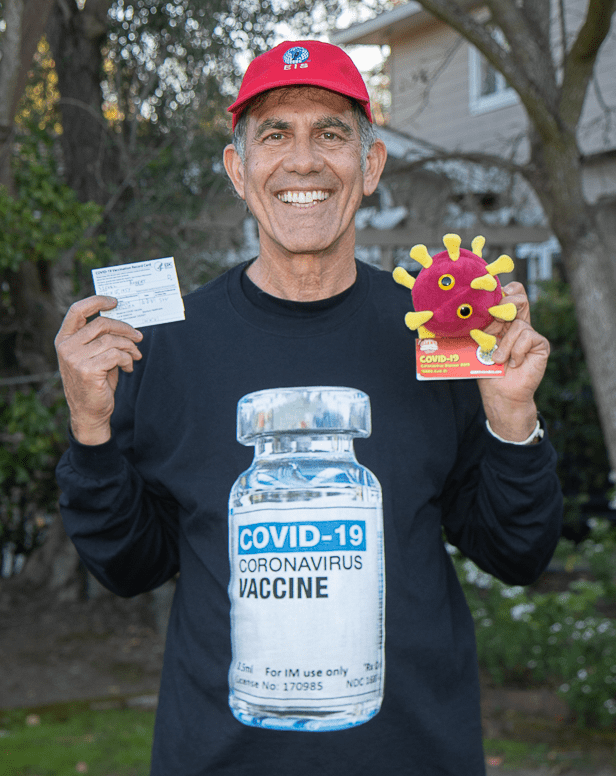
Joining us today is Dr. Robert David Siegel, a renowned professor of microbiology and immunology at Stanford University. With his extensive expertise in virology, Dr. Siegel sheds light on how viruses fit into the broader ecological landscape. We’ll explore their types, diversity, and the intriguing ways they infect their hosts and evolve.
Ever wondered why some viruses have the ability to infect multiple species or make astonishing jumps from one species to another? We’ll delve into this topic, with a focus on well-known examples like influenza and coronaviruses.
And let’s not forget our own immune system, the incredible shield protecting us from viral invaders. Dr. Siegel takes us on a journey through the basics of our immune response, including insights into the innate and adaptive systems. And did you know that the reaction we get from poison oak and poison ivy is actually an immune response? If you think you are immune to these plants, I suggest you listen.
And of course, we can’t conclude our discussion without addressing the promises and myths surrounding mRNA vaccines—a vital aspect of virus control.
But that’s not all! Dr. Siegel, a nature lover and accomplished photographer, shares his tales of chasing and photographing every order of birds in the world. Prepare to be inspired by his remarkable nature endeavors, which he graciously recounts during the final part of our conversation.
Get ready to embark on an enlightening and awe-inspiring journey into the world of viruses, their ecological significance, and the wonders of our immune system.
Did you have a question that I didn’t ask? Let me know at naturesarchivepodcast@gmail.com, and I’ll try to get an answer!
And did you know Nature’s Archive has a monthly newsletter? I share the latest news from the world of Nature’s Archive, as well as pointers to new naturalist finds that have crossed my radar, like podcasts, books, websites, and more. No spam, and you can unsubscribe at any time.
While you are welcome to listen to my show using the above link, you can help me grow my reach by listening through one of the podcast services (Apple, Google, Spotify, etc) linked on the right. And while you’re there, will you please consider subscribing?
Links To Topics Discussed
People and Organizations
ViralZone Website
Books and Other Things
Note: links to books are affiliate links
An Immense World – by Ed Yong
Breathless: The Scientific Race to Defeat a Deadly Virus – by David Quammen
Darwin: The Origin of Species | The Voyage of the Beagle
The Demon in the Freezer: A True Story – by Richard Preston
The Hot Zone: The Terrifying True Story of the Origins of the Ebola Virus – by Richard Preston
Microbe Hunters: The Story of the Microscopic Discoveries that Changed the World – by Paul de Kruif
Some of Dr. Siegel’s nature photography and writing in Punch Magazine
Credits
Michelle Balderston provided editing assistance for this episode.
The following music was used for this media project:
Music: Spellbound by Brian Holtz Music
Free download: https://filmmusic.io/song/9616-spellbound
License (CC BY 4.0): https://filmmusic.io/standard-license
Artist website: https://brianholtzmusic.com
Transcript (click to view)
Michael Hawk owns copyright in and to all content in and transcripts of Nature’s Archive Podcast.
You are welcome to share the below transcript (up to 500 words but not more) in media articles (e.g., The New York Times, LA Times, The Guardian), on your personal website, in a non-commercial article or blog post (e.g., Medium), and/or on a personal social media account for non-commercial purposes, provided that you include attribution to “Nature’s Archive Podcast” and link back to the podcast.naturesarchive.com URL.
Transcript creation is automated and subject to errors. No warranty of accuracy is implied or provided.
Transcripts are automatically created, and are about 95% accurate. Apologies for any errors.
[00:00:00] Michael Hawk: Bob, thank you for joining me today. This has been a long time in the making.
[00:00:03] Robert Siegel: Oh, it’s my pleasure. Thanks for inviting me.
[00:00:06] Michael Hawk: So just for a little context for people listening Bob and I have met a few times on bio blitzes here in the Bay Area. Bob, in addition to being an expert in the fields of immunology and virology and associated areas is a really great naturalist and photographer. And that’s how we first met.
[00:00:24] It’s been fun getting to know Bob and we’ve had a number of side discussions on these. Bio blitz is about viruses, and of course covid was a big reason for that. But even more generally, talking about viruses in nature and where they fit and adaptations that we as people have had to them and so forth.
[00:00:42] So I think that it’s gonna be a lot of fun to look at this topic today with that as our background.
[00:00:48] Robert Siegel: Great.
[00:00:49] Michael Hawk: , so Bob, then, can you tell me how did you initially get interested in nature and then virology more specifically?
[00:00:57] Robert Siegel: Great question. So yeah, I always tend to answer things at length and complicated, but I grew up in South Florida. South Florida is an amazing place, but the thing is, where you grow up, you don’t realize that where you’re living is an amazing place because it’s just your home. So now when I go back there, it’s full of all these weird creatures and plants and, and all kinds of stuff that, from my California eyes look bizarre.
[00:01:18] But from my Florida growing up eyes that just look normal. And even things that were introduced, like we have a lot of Madagascar periwinkles growing in people’s yards I just thought I. Periwinkles, that’s what grows in Florida. And of course, iNaturalist changes your mind about things like weeds, because we had plants that would grow in our yard which our yards were composed of crab grass, and we had these little things that would come up and they were weeds, but now I know that some of ’em are really interesting. There’s this one the, I love the name of it. It’s called Turkey Tangle, frog Fruit. And we had it growing all over the place, and if you actually look closely, it’s got these really beautiful flowers
[00:01:53] I wouldn’t say there’s any kind of seminal moment. And when I was in the. Sixth grade, , a new school opened, this school was an experimental public high school. And one of the things they did was they allowed you to move ahead in different subjects, particularly science and math.
[00:02:10] They chose a small number of kids who were good in science and math, selected by their teachers to go over to the high school and start taking, basically, seventh grade math and science. And so that propelled me in math and science. . . So that was one critical thing. The one thing I totally regret is that we never, when we went to school, Said, okay, we’re gonna leave the classroom and the world is our classroom.
[00:02:34] We’re gonna go outside, we’re gonna do the stuff that I do in my photography class. We’re gonna look, we’re gonna learn, we’re gonna, communicate. We never did that. So we were living in this incredibly interesting place and basically we sat in an air conditioned room, and studied a textbook.
[00:02:47] And so I wish they would modify the whole educational system so that people got out more. And in fact, I lived very close to the Everglades and the first time I ever got into sort of the Evergladey swampy things was I went camping in high school.
[00:03:02] And that like changed my life. I was already like graduating from high school by the time I finally went an hour away from home or less into the Everglades. And the Everglades, again, is just I. World class, ecological site, I realize I’ve now acquired a lot of affinity for that from growing up in South Florida. But, like imagine living, an hour away from alligators and never having seen them, it’s a travesty.
[00:03:27] But that, that was what everybody did.
[00:03:28]
[00:03:29] Michael Hawk: you did mention that you were a little bit ahead in science because of this opportunity that you had. So when you went to university, did you go straight into medical areas or, what was your approach? Do you know that you were gonna get into this field at that point?
[00:03:43] Robert Siegel: Definitely not. it’s, it’s funny cuz as a kid, my parents say whenever somebody said, what do you wanna be when you grow up? I would say, I wanna be a space scientist, chemist. I didn’t even know what those words were.
[00:03:54] But as an undergraduate, I tried out math because I had been pretty advanced in math and then I tried out music cuz I thought, maybe that would be a way to go. I ended up majoring in psychology. but I gravitated toward physiological psychology, what might now be called neuroscience.
[00:04:10] And then my first master’s degree was in education. So that of, foretold the future. And then I spent a year as a professional teaching assistant in this program called Human Biology at Stanford. And even though I had gotten my degree in social science, I actually was part of the biology part of that.
[00:04:29] Core curriculum because I just thought the biology was really cool. During that year, which was in the sort of second half of the 1970s, it was an unbelievable time for science.
[00:04:42] Science, sometimes has these fits and spurts that it’s not always equally productive. And it was a time when DNA sequencing was first developed just before that. It was a time when recombinant technology was just, which I think is probably the most important sort of laboratory advance in biological history, allowing people to move genes around and things like that.
[00:05:05] So all these things were going on and they were super exciting. And so I decided to get a PhD in molecular biology. Again, not having had taken a. Chemistry, physics, a biology core. Cause I jumped right into advanced biology or math. I took one math class and that was it. Again, somebody saw something in me that, was remarkable.
[00:05:26] So I went to graduate school and got a PhD in molecular biology. And again, was such an exciting time. And one of the most exciting things was viruses. So if you’re gonna sequence different things or you’re gonna study the biology, it was useful to look at a simple system where you could understand stuff.
[00:05:42] I got more and more interested in viruses as model systems. I had the opportunity to teach a course. . I taught a class on cancer and it was estimated that 15 to 40% of cancers had at least a viral component to them.
[00:05:56] So viruses again played a role. The first class I actually taught at Stanford was actually a chemistry class. So the chairman of this department asked me to teach a chemistry class. I said, you know, mert, you know, I’ve never actually taken chemistry.
[00:06:09] And he said, yeah, I know, but you’ve got a PhD in molecular biology, so you must know what chemistry you would need to know to, to learn biology. So I thought, yeah, that sort of makes sense. Who knows? So the first class I taught at Stanford was actually a chemistry class having not taken chemistry.
[00:06:23] And then and then I proposed a class on viruses, and basically I’m teaching that same class ever since called Humans and Viruses. So again, it’s, I stumbled into this and it just got more and more interesting, and that’s continued to the current time. It’s just continuing to get more interesting and new techniques are becoming available to just open up vast new, possibilities.
[00:06:45] Michael Hawk: So maybe you can start at a super high level and just tell me like, what is a virus and how do you think about a virus?
[00:06:52] Robert Siegel: Okay I actually teach a very intensive course. It’s 120 hours of lecture over two quarters called humans and Viruses. And my goal is that by the end of the course, they’ll know what a virus is. So there isn’t one single thing that defines what a virus is, but all viruses have certain properties in common.
[00:07:11] Viruses are smaller than cells. Viruses have genetic information that allows them to make copies of themself viruses all have a. Two phases of existence. They have an a phase where they’re inside the cell making more virus particles, and then they have a phase where they leave the cell and they actually have to get either to another cell within the body of their host, or they have to get to another host.
[00:07:39] So those two phases are called the inert and the dynamic phase. And those, some of those things are things that absolutely distinguish them from living things. So there are some equivalents in living things. We have things like spores in different fungi, plants that kind of are inert and they wait for the right conditions but not nothing quite equivalent to what we might see with a virus.
[00:08:02] So there’s a series of properties that together are what we, consider to be a virus. And then the thing that’s interesting is that each viral group we talk about, viral families has certain properties that distinguish it. One of the things that I spend a lot of time talking about is what are the things that distinguish coronavirus, cuz that’s on everybody’s mind.
[00:08:23] And just to go at length to your question, for instance, people often will compare coronaviruses to influenza. Now there is a classification system for viruses. And in that classification system, which is similar to the classification we use for living things coronaviruses and influenza are in different phyla.
[00:08:44] So that would be equivalent to comparing humans to sponges. I bristle a little bit when I hear people making these comparisons without thinking about the unique differences between different groups of viruses.
[00:08:56] Michael Hawk: My takeaway from that is that when we think about viruses, it’s like thinking about animals or, some really high level within our taxonomical tree. Let’s run with that here for a moment and your virus, influenzas or coronaviruses.
[00:09:12] If you start to drill down within those realms, what does that look like?
[00:09:18] Robert Siegel: So you’re asking about what is it that distinguishes different viruses? And I focus primarily on viruses that infect humans either viruses that use humans as their primary host or viruses that occasionally infect humans. if we think about viruses that infect humans, , depending on what your considerations are, about 33 groups or families of viruses.
[00:09:41] And so if we can ask what is it that distinguishes one family of viruses from another? At the highest level is something that’s absolutely fascinating. So the highest level of distinction between viruses is what is the nature of their genetic material? What is the nature of the thing that actually says, how to make a new virus?
[00:10:03] Now all living things have DNA as their genetic material. Some viruses have DNA as their genetic material also, but the majority of viruses that infect humans actually have RNA as their genetic material. So that’s a fundamental difference is there are no living things that have RNA as their primary genetic material.
[00:10:24] Now, all living things actually use RNA in terms of carrying out their metabolism and carrying out their gene expression and things like that. We might actually think about, why is it that so many viruses have RNA as their genetic material? And still at that highest level, we can think about one of the fundamental organizing principles of all of biology, and that’s called the central dogma biology and the central dogma biology, which was formulated in the 1960s by Francis Crick.
[00:10:57] When people were first discovering these molecules and figuring out what they did was that all living things have their genetic information in the form of DNA and that DNA, is actually expressed in the form of RNA and I’ll explain this a little bit more in just a second, and that RNA is used to actually make proteins and most of the interesting machines and structures in the cell are actually made out of protein.
[00:11:24] So in a way, it looks like RNA is the intermediary between the DNA instructions and the actual materials that we use to make a cell. And in a way, you can think about this as, for instance, if you got a cookbook and it was full of all kinds of recipes for making different things, the RNA might be the equivalent of making a photocopy of one page.
[00:11:49] You take it out of the book, you take that photocopy, you take it into the kitchen where it might get batter or other things on it, but you use those instructions to make the actual, pie or whatever it’s that you’re going to make. So in, in biological systems, RNA typically serves as an intermediary between the primary purveyor of genetic information, DNA a, and the protein structures and machines that we see.
[00:12:16] And in biological systems, DNA can replicate itself, but when you make RNA, it has no way to copy itself. It can only be used basically to make protein. So one fundamental question is, if RNA is a genetic material for the majority of viruses, how can it possibly copy itself? Because it’s gonna use the cell to do all its processing and the cell doesn’t have a way of copying RNA.
[00:12:42] So that leads to another interesting sort of aspect of viruses, and that is that all RNA viruses and some DNA viruses actually carry in the instructions for making a machine that allows them to make a copy of their genetic material. So they carry in a unique machine that allows them to make an RNA copy of their RNA for instance.
[00:13:05] Now that would be the case for influenza or polio or Ebola or SARS-CoV2. There is one group of viruses that actually has a different machine that allows it to make a DNA copy of its RNA and that will then use the cells machines to take the DNA and make more virus particles. So again, we’re, this is very basic stuff, but it, we’re already getting into the weeds.
[00:13:30] If you’re not familiar with molecular biology and dna, RNA which, as a, somebody who has a PhD in molecular biology, this is like my bread and butter in my happy place.
[00:13:40] Michael Hawk: I do have a suggestion. You said that you teach 120 hour courses that you hope your students come away with understanding what a virus is from that. So what we can do here, this podcast is probably gonna be roughly an hour. If you can talk at 120 times speed then maybe we’ll be good. Okay.
[00:13:57] We’ll do it being serious for a moment. When you talk about the RNA viruses bringing their own machinery to replicate themselves what’s that? Machinery.
[00:14:07] Robert Siegel: Interestingly enough, and we’re, we’ll come back to the whole classification thing cuz we’re just at the highest level of DNA versus RNA. But that machinery is basically a gene, the information for making a, a protein. protein that they’re making is actually a machine that I, that allows them to copy their genetic material.
[00:14:25] And , some RNA viruses actually have to bring that machine in. And other RNA viruses actually just bring in the information and as soon as they get into the cell, the cell says, oh, This is RNA, this is messenger RNA. I know how to turn this into a protein. So they don’t even need to bring the machine in.
[00:14:43] They just bring in the instructions for the machine. And for those viruses, the first thing they have to do is to actually make the protein that allow them to continue the process. So they actually come in as preformed messenger RNA. And other viruses that come in as the template for making messenger RNA.
[00:15:02] They actually have to bring in their own protein. It’s essentially the same protein but because the cell can’t recognize their RNA genome and express it immediately, they have to basically bring in their protein to create RNA from their genome.
[00:15:16] Michael Hawk: Wow. So there’s so much diversity here, and I know we’ve just scratched the surface and it’s already apparent how much diversity there is within the world of viruses. And I see two directions I could go right now. We could keep going down this path if you would like and maybe hit the next layer.
[00:15:32] Robert Siegel: Okay, so we talked about one of the fundamental things that distinguishes different types of viruses, and that is, is there genetic material? Is the information for making that type of virus DNA or RNA? Then we can go down to the next level and turns out at the next level, we can ask, is there genetic message stranded DNA or RNA, or double stranded dna, or RNA?
[00:15:57] Now, typically DNA is double stranded, so the double the DNA in our cells is double stranded. But some viruses, interestingly enough, bring in a single strand of DNA a. The same thing is true for RNA viruses most RNA in a cell. Is single stranded, but some viruses actually come in with double stranded RNA as their genome.
[00:16:17] Okay? So their starting place for these different viruses can be different, and we use that as a second level of classification. Then we also can say, is the RNA that comes in can, is it preformed message that can be used to make protein or is it something that has to be transformed into messenger, RNA?
[00:16:37] And so that’s another level of classification for these viruses. ? So those are just the genetic information for the viruses at the most basic level. Now, if we go beyond that, we can say, what is the structure of the extracellular virus? Particle? So some viruses as their extracellular particle have, they, they all have a protective protein coat, okay?
[00:17:03] Something that allows them to, to avoid destruction in the environment. And that protected protein coat has a terminology, it’s called a capsid. All viruses have a capsid. That’s one of the, it’s in fact, it’s the only gene that all viruses have to encode is a capsid protein. Because even the machine that allows ’em to copy their genetic material, sometimes they can use it, if they’re DNA, they can actually use the cells machine.
[00:17:28] If we look at that capsid, that protein coat, in some cases it’s like a box. And that box is not box shaped. It’s actually a box that has 20 sides. It’s an icosahedron. So what they do, those viruses stuff, their genetic material into this 20 sided box, and then it protects them when they go outside the cell or outside the body.
[00:17:51] Other viruses have a box that’s basically like, a necklace. And so you can think about the string as being the genetic material, and there’s beads on the string, and the beads actually protect the genetic material. So there’s a whole group of viruses that have a helix as their protective protein coat.
[00:18:09] So that’s another level is that virus either icosahedral, 20 sided, is it helical or is it neither of those? So there’s a few viruses, like the pox viruses that are neither icosahedral, a helical, and there’s a few viruses that actually have a double box like retroviruses. So they actually have a helical.
[00:18:30] Capsid. And then above the helical capsid, they actually have an icosahedral like capsid Now at the next level. We can divide viruses into those that actually have a membrane around the box, a membrane around the capsid, or those that don’t. So that membrane is a little covering that’s made out of the material from the cell membrane.
[00:18:54] So what these viruses do is they actually steal cell membrane to wrap the protective box the capsid. The majority of viruses actually have one of those membranes around the capsid. ? Viruses that have a membrane are called envelope viruses. And viruses, that lack of membrane are called naked viruses.
[00:19:14] And so that’s another high level classification. So we can first ask, is it DNA or RNA? Is it single stranded or double stranded? Does it serve as message or does it have to be transformed? What kind of container does it have? What kind of capsid does it have and does it have a an envelope?
[00:19:31] Does it have a membrane or not? So these are a series of things that allow us to divide viruses into different groups.
[00:19:38] Michael Hawk: Does the membrane and the capsid relate to how long a virus can. Survive in the wild. if, If you’re lacking a membrane will you have a shorter lifespan?
[00:19:49] Robert Siegel: That’s an outstanding question. And the answer is, it’s actually quite the opposite. the membrane, which is like a soap bubble, can easily dry up and once it dries up the virus can’t infect anything. So in fact, what tends to happen is that envelope viruses tend to be less stable in the environment.
[00:20:06] So if you think about viruses that, cause gastroenteritis, that are transmitted by somebody coming in contact with feces from somebody that was infected, those viruses tend not to have a membrane. And then, and those viruses are all il so they have a one of the 20 sided boxes and no envelope, and that allows them to be pretty inert in the environment.
[00:20:29] So they’re much stabler. So we might actually, for each of these things, we might pick a virus like influenza or SARS-CoV2, which is the virus that causes covid. And we might say, how does that fit into this picture? And we can go down the classification a little bit further also. But among the things that we talked about, SARS-CoV2 is an RNA virus.
[00:20:50] It has a s a single strand. Okay. It actually can serve as message as soon as it goes in. So it doesn’t have to bring in its protein machine cuz it immediately gets the cell to create that protein machine. It has a helical, capsid, all viruses that infect humans that have a helical, capsid have an an envelope.
[00:21:14] So it’s enveloped. And so that we can see how that fits in with these different viruses. One thing that’s really interesting is that if you are a naked virus and you just have the capsid, okay, which would be for humans, if you just have the capsid, you would be a, an IL virus. There’s a protein, a virally encoded protein on the surface of the virus, particle or vion.
[00:21:41] If you are a envelope virus, you have virally encoded proteins embedded in the envelope. So in each case, there’s information in your genome to make a virally encoded protein on the surface. Now that’s really interesting for a whole bunch of reasons. First of all, why would you stick that out there?
[00:22:03] That’s the thing that the immune system can see. So essentially you’re putting something out there that the body can react to and say, this doesn’t belong here. I can attack you. So why would a virus wanna do that? Well, That’s the way in which the virus can get into a new cell. ? So that outermost protein, which I call the tropogen, because it determines the trophism or the type of cell that a virus can infect that outer protein determines that cell type.
[00:22:32] It often determines what species the virus can infect. And many viruses are species specific and it determines the immune response to the virus. So the virus, even though it has to have a viral encoded protein, will go to some length to actually protect itself from being attacked by the immune cst.
[00:22:52] Michael Hawk: So one of the fun things about these types of conversations is everything kind of interrelates and, and we meander around and hit different topics and what’s coming to mind here is you hear this concept of viruses attacking cells, that there has to be a fit, like the receptor on the cell has to match the virus.
[00:23:11] Is that essentially what you’re talking about here? Is that another layer?
[00:23:15] Robert Siegel: Oh, yes. So basically when a lot of biology, involves, Interactions between proteins and proteins or proteins and other molecules. So often when these proteins interact, they form new bonds and they change shape. And shape determines function. So when two proteins interact, they change shape, they change function, and so suddenly they, the new shape of the protein allows them to enter the cell.
[00:23:44] And in the cartoons in the media, normally you see viruses injecting their genetic material into a cell. There are some viruses of bacteria that can do that. And essentially all the viruses that infect humans, what happens is the virus actually. Coaxes are forces the cell to take them up so they, the whole particle actually enters the cell so they don’t leave their protein coat or capsid behind.
[00:24:09] They actually take the whole thing enters the cell. And so it’s this interaction between these the viral protein on the surface, the tropogen and the molecule on the surface of the cell. That means that a virus can’t get into any old cell.
[00:24:24] It has to get into a cell that has a molecule or a protein on its surface that can interact with the virus. So again, if we think about SARS-CoV2, the outermost protein, which most people have heard of, we refer to as the spike protein. So the spike protein for SARS-CoV2 is the tropo gen. the spike protein has to interact with a cell protein.
[00:24:46] And we actually know the main cell protein it interacts with, which is the, this thing called the angiotensin converting enzyme two receptor. Okay, that doesn’t matter. We call it the ACE two receptor. So it turns out only cells that have a ACE two receptor that combine with the virus can let the virus in.
[00:25:07] So we wouldn’t see SARS-CoV2, for instance, infecting plants or insects cuz they don’t have that receptor. They don’t need that protein. Even among, animals, it’s limited to ones that have an ACE two receptor that looks like the human ACE two receptor. So for many viruses, the interaction, the protein on the surface of the cell is very specific.
[00:25:31] So if you think about something like H I v the H I V interacts with a protein on the cell, that’s pretty unique to humans. And so you don’t see H I V infecting a range of different animals, but for SARS-CoV2, the ACE two receptor is pretty conserved in evolution. So that means this virus seems to be able to infect a number of different animals.
[00:25:53] Or for instance if we were to talk about influenza, influenza is primarily a bird virus that can also infect mammals. So for some viruses you have a broad host range. For other viruses you have a very narrow host range. So, depends on this interaction between the protein on the surface of the virus and the molecule on the surface of the cell.
[00:26:16] For instance, influenza interacts with a sugar that’s found on many different cells. And so it can get into a range of different cells and a range of different species.
[00:26:25] Michael Hawk: So given that you mentioned the ACE two receptor has been, I think you said, conserved in evolution in a lot of different species. So does that then mean that there are many more viruses that could potentially jump species or crossover because of this type of receptor? Like, Viruses that attack or attach to ACE two in particular.
[00:26:45] Robert Siegel: Yes. So the receptors there, first of all, there’s a lot of viruses out there. There’s a lot of coronaviruses out there. Many of them may use the ace two receptor or another receptor. And so there, the potential for infecting humans with animal viruses is still very broad. We haven’t begun to see the different possibilities.
[00:27:03] And I actually, just as an aside, the virus that has one of the broadest host ranges is actually rabies. And that’s because it uses a receptor, that’s a brain receptor that is found in all mammals. And so basically that virus can infect all mammals. And one thing is, you might want to say, it seems like it’d be better to have a broad range receptor.
[00:27:24] You can infect lots and lots of different animals. That seems like a great strategy. But in fact, it’s actually usually a good strategy to actually be very specific and it’s like having a job. Okay, you might say if you can do five different jobs or you can do 50 different jobs, you’re really employable.
[00:27:41] But in fact, if you can do one job really well and really specifically and hone down onto that, you’re usually more employable. So for many viruses the strategy is you get really good at infecting one type of cell. if you think about it though both of those strategies work. So what often happens with viruses is you’ll get a diversity of behaviors based on the fact that some of them will be broad range in their specificity, will be a jack of all trades, and other viruses will be very specialized.
[00:28:11] So getting back to the question of are there more viruses that can out there that can infect humans? The answer is absolutely
[00:28:18] Michael Hawk: and I assume it can go in the other direction as well, that humans could transfer a virus back to an animal.
[00:28:24] Robert Siegel: Absolutely so one of the things that’s happening with SARS-CoV2 is this is primarily a bat virus, and it accidentally got into humans and it just turned out it could infect humans. It wasn’t nearly as good when it first got into humans. And it’s learning how to be better and better at infecting humans basically every day.
[00:28:45] That’s what all these new variants are about. And the reason why it’s changing so rapidly is it never saw humans before, but now that it’s these humans, it’s getting better and better at it. And that’s what viruses do. They get better at their jobs.
[00:28:58] And so one of the consequences that is a lot of humans are infected with SARS-CoV2 now, because humans hang out with so many domesticated animals and other animals. It turns out that animals that never would’ve had contact with bats before are now having contact with this new version of SARS-CoV2 that’s spreading around humans.
[00:29:18] And so what’s happened is humans have now spread this to all kinds of different animals that have a very similar ACE two receptor.
[00:29:26] Michael Hawk: Yeah, I’ve seen some news reports of everything from cats to white-tailed deer, now infected with some variant of SARS-CoV2.
[00:29:35] Robert Siegel: So it’s now infected all these different. Creatures. The implications for humans are, is a little bit unclear. So There’s some viruses like herpes simplex viruses that infect other creatures, but it doesn’t actually become resonant in those other creatures that it doesn’t start and and to evolve in those other creatures.
[00:29:55] And so we, other creatures that happen to get infected, for instance, in the laboratory with herpes simplex, don’t really pose a risk to humans. And so the question is, are all these different animals that are infected with SARS-CoV2, do they pose a risk to humans? And the answer is maybe, so they might serve as a reservoir.
[00:30:14] So if we got rid of SARS-CoV2 and all humans, maybe it could come back into humans from animals. The other thing is it might start to evolve separately in these other animals and create new variants, which can then recombine with, the human version and produce a variant that we haven’t seen before.
[00:30:31] So those are the possibilities. Or it may turn out that it’s more like herpes simplex and if we got rid of it in humans, it would basically fade away in the animal populations as well. So the answer is the extent to which these other animal populations pose a risk to humans is not known right now.
[00:30:46] Michael Hawk: Yeah, and I guess I was also thinking about how we pose a risk to animal populations as well. It. Makes me wonder, is there a precedent out there for this type of behavior? I guess you were comparing to to herpes viruses. But I’m just gonna go out on a limb and guess that this is just such a broad and complex field that there’s probably a lot unknown about viruses in other animals and where, what their points of origin were.
[00:31:17] Robert Siegel: Yeah, so when we find, we’re obviously focused a lot more on human viruses than they’re on our radar screen, so we often will track down human viruses. The animal viruses get the most attention are ones that are in agricultural animals. So if there happens to be a, big die off in, some species we may not know about the virus.
[00:31:34] We’re really concerned about viruses, for instance, that infect honeybees because honeybees are agriculturally important. So we tend to be human-centric, including the things that , involve our food and our pets and things like that.
[00:31:46] Michael Hawk: And when you were talking about the classification of viruses and going down that path was wondering about like when we hear. About influenza. There are different types of influenza, different categorizations, like all the way down to say, H one N one or H two N three.
[00:32:04] I don’t even know if that’s a real one. But what is that representing back in your taxonomy of viruses that you were talking about before?
[00:32:12] Robert Siegel: so you’re asking about the taxonomy of viruses, and until recently we used to classify viruses at the family level. And family level is something where the viruses all look alike. They all have the same properties that we’re talking about before. They have the same kinds of gene expression.
[00:32:30] And then because humans love to classify things, and because we’re learning more and more about the genetic structure of viruses, the we’ve added some higher level classifications and also some intermediate and lower level classifications. And so first we start adding the level above families, which is order.
[00:32:50] then about two years ago the international committee on the taxonomy of viruses actually decided we’re gonna go all the way and we’re gonna classify viruses, all the way from most of our organisms that we’re familiar with are classified, kingdom phylum class order, family, genus species.
[00:33:08] And then above that we put in domains. And so they decided to give every virus, basically a realm, and then go down. Kingdom found class art, family gen species. So we have added a lots of different classifications. In fact, the current I C T V classification involves what’s called 15 ranks. So 15 levels of classification.
[00:33:30] Getting back to your question. Once we get from the family level, then we can have groups of viruses that are what are called genera, so a genus of viruses. And then we can get individual viruses or species of viruses. Now, within species, we can subdivide that up and we can get into, you essentially what would be races.
[00:33:49] But that terminology differs a little bit from one kind of virus to another. But if you think about, for instance, for sars, again, it’s useful to think about SARS or flu in this regard because we’re a little bit more familiar with this. So for instance, SARS-CoV2 is a virus, it’s a species, okay?
[00:34:08] SARS or SARS one is a different species. And so that’s the level. But within SARS-CoV2, we’re now looking at different groups of viruses within SARS-CoV2. And so we have different sort of isolates or groups, and we have Delta and Omicron and things like that. And what we’re doing is we’re sub classifying those.
[00:34:26] And then , , we have, different groups within Omicron. And for our purposes, those are really important. And what those usually mean is they are seen by our immune system as different viruses. So if you have, for instance, there are three different really similar viruses that can cause polio.
[00:34:45] Polio one, two, and three. In terms of their genetic makeup, they look like they should be the same species and they are. But in terms of our immune system, you can get paralytic disease from any one of those or all three. And so in terms of both clinically and epidemiologically, some of those fine distinctions really matter a lot.
[00:35:05] So gets even more complicated with flu because for flu we have these different groups of flu that are characterized by the proteins are, that are on their surface of their envelope. So we were talking about that before. And flu has two proteins on the surface of the virus. Particle one is hemagglutinin and we just call that H and the other is neuraminidase.
[00:35:28] And then we call that n and we can talk about what the function of those are but we classify all viruses until which h and which ad. And so one group are called H one N one. Okay. And they’re circulating around in humans right now. But within H one N one, our immune system can distinguish between different H one N one s.
[00:35:46] And so you could have had H one N one and mounted immune response and be immune to that H one N one, but. It could be that the virus changes and you’re now gonna be infected with a different H one N one. And so you can be, even just because it’s H one N one, there are different isolates. So we actually name the isolates And that’s the reason why we have to get vaccinated every year for flu is that the virus keeps evolving. It’s not that our immune response has decreased, our immune response does fall off over time. But the main reason we have to get revaccinated for flu is that it’s a different flu, even though it might still be H one N one.
[00:36:21] And right now we typically get vaccinated for three different strains of flu or four different strains of flu every time we get vaccinated. So we get vaccinated for one group of H one N one s, the currently circulating one, we get vaccinated for one group of H three N two. And yes, you were right about that.
[00:36:38] And we get vaccinated for a whole different type of influenza called influenza B. So those are both influenza A. So again, it turns out that there’s a lot to viral classification and you could say, who cares? And the answer is your immune system cares and your body cares. And so we are a little bit more picky about these fine details about classification when they infect our own health.
[00:37:03] Michael Hawk: Makes sense. So I just wanna repeat and make sure I understood. So when we’re talking about H one N one, we’re already at roughly speaking a subspecies level, and then within H one N one, we have all of these other isolates that are important to track.
[00:37:20] Robert Siegel: Yes. So H one N one and H three N two are both a species of influenza called influenza A.
[00:37:27] Michael Hawk: Yep. Got it. Yeah. And again, that just paints a picture of the immense world of virology. You we’re just looking at one here and able to break it down into so many viruses.
[00:37:41] Robert Siegel: Like in most fields, there’s a lot of detail here. and again, some of the detail really matters, particularly if you’re, get the right. Vaccine or whether or not you get sick. And so some of that really matters. I think that for people who are, not gonna spend their life in virology, the thing that matters is understanding that subtlety exists.
[00:38:01] And that’s true for all of biology, all of ecology, is. it’s not that you need to learn all that, but you need to appreciate the fact that exists and that, and sometimes that actually matters. The question is, if you have different species that you’re trying to protect in the environment, not viruses, but anything, does that matter?
[00:38:17] You know, Does, is one finch the same as another finch, or is one subspecies of song sparrow the same as another species? And we try to avoid subtlety when we talk to the press or, communicating. But the fact is, I think one of the things to communicate is that subtlety is important.
[00:38:32] Michael Hawk: And that’s something I love to do here on the podcast because I think that the current state of media really drives people towards having sound bites, and you lose all that subtlety
[00:38:42] so I think one thing that comes to mind, We’re talking about viruses in the context of a taxonomy and they evolve and so forth. What is the theory is to the origin of viruses? Like wh when did they first appear on the landscape of earth?
[00:38:58] Robert Siegel: You can answer that question in a bunch of different levels. At the most interesting level, in a way, is that if you look at human viruses, human viruses come from other viruses.
[00:39:08] We might be looking and saying, oh, SARS-CoV2 just entered the human population from bats. Because humans are new on the scene and viruses have been around for a long time. We basically could track every single human viruses, either to recent history or to, more ancient history.
[00:39:24] For instance smallpox probably came from it’s actually probably a Roden virus, but it may have entered humans through through cows or other sort of livestock. And so, because of the fact that humans hang out with lots of other animals that they can get their viruses. So at the most interesting and important level, viruses come from other viruses, and you can say that about species as well.
[00:39:46] Now when Darwin was talking about the origin of species, he never got bored down to where does life come from? He was just saying, where’s, where does, how do you get from one species to another? In fact, he really, had trouble even getting that far. So he was just talking about how changes occur.
[00:40:01] And one thing that’s really important is that most viruses that infect humans probably don’t go back to the beginning of time. They probably are newer viruses either from animals or even just came into existence. So now if we wanna go back to the question of where did the original virus can’t come from?
[00:40:19] Now for many creatures, we now have this really powerful tool where we can sequence their genetic material and we can put all the different living things into a, a big tree based on how closely related their DNA is. And that has been a very effective method.
[00:40:35] For instance if you look at plants only recently if we applied classification using genetic material. And so a lot of the plants have been reclassified recently and their names of the plants that have been changed as a result of information from genetic material. Now we can do that to a certain extent with viruses, but viruses evolved so fast that we can’t really put them into a big tree in the same way.
[00:41:00] And so we can’t really use the genetic material to go all the way back in time. So we can hypothesize of where did the first viruses come from? And there’s several different theories. Okay. Now one theory is viruses started out as cells and parasitism. Is a form of, of life, a form of making a living that is common and has emerged many times.
[00:41:24] And so in this hypothesis, you’re saying you start as a cell, but you figured out you can get rid of a lot of your genetic material and just rely on other creatures to make your food for you, or to do, the essential work. And so you can get simpler and simpler because you’re just gonna live inside of a cell where life is good.
[00:41:41] And so that’s one theory. So that’s the degenerate cell hypothesis. A second theory is because some viruses have very few genes, some of ’em only have three or four genes. And so you can imagine that a bunch of genes with the proper properties, for instance, they’re able to make a protein coat, or they’re able to make a machine that can replicate the genetic material, the virus g get together accidentally and create a new virus, something that can now replicate inside the cell.
[00:42:11] So you take a bunch of genes from the cell, you put ’em together, and now you have a virus and it, there aren’t that many genes you have to put together to make a virus. And then from there you can evolve and get more complicated or grab more genes from the cell. And so that’s the assimilation model where you’re basically, a bunch of genes get together and form a club and they’re now a virus.
[00:42:28] So that’s another hypothesis. third hypothesis is that basically viruses, which exploit molecules in the environment, may have preceded all of life. So if you think about viruses are really simple, and we might kinda imagine this primordial soup, which has all these different molecules that have accumulated sugars and fat molecules and and the building blocks of proteins, which are am amino acid.
[00:42:56] And they’ve accumulated in these ponds, and they figure out how to get together and start replicating. And you know, you create a few genes. You now have a virus, so you don’t actually, you’re basically a parasite on the primordial soup. Now thinking about that is a little hard for people today because we live in an environment where there’s oxygen and things have to happen fast, and things break down and degrade.
[00:43:19] But in the early earth, it was a very different environment. There was a lot of energy around, and so you could actually accumulate things over the course of thousands, millions of years. And so a reaction that might need to occur in a second today might take a hundred years. It might be highly improbable, but it could just, everything, the time scale might be, slowed down by, A million fold.
[00:43:42] And so that’s another theory is that viruses sort of evolved along with living things in the primarial soup. And in fact, you might even think that life occurs when a bunch of viruses invent, find a membrane partner or they find some other things and a bunch of viruses get together and suddenly we have something that is, can replicate itself.
[00:43:58] So you have basically the first cell. So that’s the third hypothesis. The fourth hypothesis, what I don’t like very well, but there’s actually a, was a prominent astronomer who perpetuated this idea that viruses come from space. Okay? So viruses have these protein coats and they can endure harsh environments.
[00:44:18] And so maybe some viruses arrived from somewhere else on a an asteroid or something like that, and got to earth. The reason I don’t like that hypothesis is not that it’s not impossible, but first of all, it’s improbable. So the likelihood that a virus that could actually make its way in, in human life forms is, is highly unlikely.
[00:44:37] Cuz we talked about the fact that viruses are really specialized for the environment in which they live. And the second thing is it just pushes the question back further and says if that’s how viruses came to earth, or how did they come to, how did they come to exist, on the asteroid.
[00:44:48] So it doesn’t actually buy you anything, it just, it sounds cool and people like to think about, space and zombies and things like that, but most of those don’t actually buy you very much when it comes to viruses.
[00:44:58] Michael Hawk: So excluding the fourth hypothesis for, in my simplistic view thinking about this I’ve seen and observed viruses in plants and in, many different taxi. And when I start thinking about that and the precursor to animal life, being plants and the precursor to plants being like simpler organisms but I think my point is it’s pretty easy to see how viruses would’ve likely been in existence very early in this time sequence.
[00:45:26] Robert Siegel: Yes so if you’re asking me where do the viruses that exist today come from? I would probably, so let me go through each of those hypotheses. I suspect that viruses predate. Cellular life, and actually were instrumental in creating cellular life. But because the evolutionary lifespan of a virus is relatively short compared to other life forms, it’s likely that those progenitor viruses, don’t exist anymore in, in the form that you would recognize.
[00:45:56] So, So it, you couldn’t take a virus today and look back at its evolutionary history unless you could look at the cell and, it’s buried in evolutionary time. And so what about the viruses today? So I think the majority of viruses that infect humans probably arose from the assimilation model.
[00:46:12] You got a bunch of genes that got together and they can replicate. We even find things that are simpler than viruses that are, like, for instance, jumping genes. They don’t have a capsid, but they’ve figured out how, how to replicate themselves and move from one piece of DNA to another piece of DNA within the cell.
[00:46:30] Michael Hawk: Oh my gosh.
[00:46:31] Robert Siegel: So you have a series of precursors or in plants we have this wonderful pathogen called viroid . And the viroid is like a virus, but it doesn’t have a capsid because its RNA wraps itself into a very tight form that resists degradation so those little thyroids can actually get from one cell to another.
[00:46:51] One of the things that Darwin looked at, like the evolution of the eye, and he said we think that this complicated thing could arise. Cuz if you look at other animals, you can see all kinds of things that look like intermediates. Well, We can see the same thing with sort of virus particles that, that could possibly come together now what about the cellular degradation? And my theory is that there are a few big viruses that are complicated that actually I think may have evolved from degenerate cells. And those include the pox viruses. Now, pox viruses are huge, physically, huge viruses that actually are as big as some of the smallest cellular organisms like chlamydia.
[00:47:31] So it’s possible that some of the viruses that infect humans today had two different origins or possibly even three different origins. But I would go, I would basically say most of them are probably assimilated genes, that got together. and a few of them may be degenerate cells like like PX viruses.
[00:47:46] So that would be my, you know, again my buy-in. And one thing that’s interesting about pox viruses is they encode a few genes that no other viruses really encode. For instance, they encode a gene that allows them to make a protein that actually makes mRNA from dna. So typically other viruses all use the cells machine for making mRNA from a, from DNA And that allows them a special property. And that is that these viruses can actually are, it’s a DNA virus that can replicate in the cytoplasm or the outer part of the cell which most DNA viruses can’t do. They need a nucleus.
[00:48:24] Michael Hawk: Okay, so we’ve been talking about viruses from the standpoint of what they are and how they replicate and a number of different perspectives. Now, where does the immune system come into play in terms of attempting to fight off these viruses?
[00:48:37] Robert Siegel: . That brings up a whole bunch of really interesting things. Okay. So we think about these viruses which take over ourselves as this, these evil little parasites. And, but if you think about this from the virus perspective, it’s evolutionary goal is to make more viruses.
[00:48:53] So each virus is successful if it can produce more virus particles, if it can affect more cells, if it can affect more people. So if you were a virus that was really nasty and you came in contact with a person who killed them immediately, that would be a virus that would disappear from the earth because because it doesn’t benefit the virus.
[00:49:14] And so the virus actually has to be able to infect at least one other person in order to perpetuate itself. It needs to be able to spread. Now there is various theories about, oh, viruses are gonna become more benign as they stay in the human population, or more aggressive. And the answer is you really need to take this on a case by case basis.
[00:49:36] And for instance, even for a single virus, and we have a great example in where they introduce a virus that infects rabbits in Australia to try to control the rabbit population.
[00:49:46] Michael Hawk: Is that myxomatosis?
[00:49:48] Robert Siegel: Yeah. myxomatosis. So even within that population, the virus will tend to get more or less virulent. And if there’s lots of hosts, if there’s lots of rabbits, it can actually be replicate really fast.
[00:50:00] And even if it kills kills the host, kills the rabbit, it’ll be very successful. Okay. But as fewer and fewer rabbits occur, or the population start to decrease, a really virent virus won’t be passed on because all the hosts will be killed. And so the probability of being spread to another rabbit is really small.
[00:50:18] And so the virus actually oscillates in its pathogenicity in, its in its nastiness, in its spreadability based on how many hosts are available to infect. And so if you look at a virus like smallpox, it continued to be nasty even though it’s been infecting humans for thousands of years. And so there isn’t necessarily this drive to always become more benign.
[00:50:41] So some viruses do become more benign over time, and some viruses don’t. Now what we’re seeing right now with SARS-CoV2 is it seems like the virus is becoming more benign over time. But if you think about a new variant that might occur that completely different, the immune system doesn’t recognize it, that can replicate really effectively.
[00:51:01] It could actually be more virulent. Okay. So you have to take each one of these cases, so on an individual basis. Okay? So we have this system for basically trying to protect us from viruses. And in fact, we have this really cool immune system. And the question is, why do we have it? And the answer is probably because the viruses.
[00:51:20] So the immune system, which evolved, basically the vertebra immune system obviously evolved long before humans did probably as a response to trying to control viruses. Okay? So why do we see all these diseases then if we have this really great immune system? The answer is that the virus evolves very fast, much faster than the host.
[00:51:39] And so we’re seeing the cases where the immune system has failed. So we are have a selection bias for nasty viruses that can spread in humans. Okay? The ones that didn’t make it, the ones that were weeded out by the immune system, they, they never enter our radar screen. They never come into our scientific labs or anything like that.
[00:51:57] So you are more likely to see nasty viruses than you are to see things that were effectively controlled by the immune system. So if we think about the immune system has several different branches and they actually correspond quite a bit to the different. Features of the virus.
[00:52:13] So for instance when the virus comes in, there are certain things that are able to detect viruses. And one thing, for instance, we talked about the fact that RNA viruses have to make an RNA copy using a machine that they encode. And so there’s at some point a phase in their life where there’s double stranded RNA.
[00:52:34] Well, If you think back to the central dogma, there’s never double stranded RNA in the central dogma. Our cells don’t have double stranded RNA in the same way that a virus would need to replicate. So we have detectors, sensors in our body to look for double stranded RNA, and when we have it, the the immune system says, let’s kill that cell, because it’s saying that, potentially we have a viral infection or something bad.
[00:52:58] So we have detectors for viruses, features. We have some detectors for things that look like bacteria that don’t look like us. All that stuff, which doesn’t require knowing what specific virus just came onto the scene. All of that is called the innate immune system. So we have this whole system. It involves things like interferon and getting into your whole body into a state of alert.
[00:53:22] Michael Hawk: Is it fair to say know, if we have layers of defense with the immune system, that’s a course grained initial defense system.
[00:53:29] Robert Siegel: We have layers of defense. Our first defenses actually really don’t involve the immune system per se. Those are barriers. We have skin, and so we only have a certain number of places where things can enter our body. We have like our mouth and our anus and our nose and, and so we only have a few portals of entry.
[00:53:47] And so different viruses have actually specialized themselves to getting into different portals of entry, so different modes of transmission. And so that’s our first offense. And if you think about, for instance, viruses that cause gastroenteritis or infect gastrointestinal tract, first of all, it’s a great strategy for a virus because it never actually has to burrow through your skin.
[00:54:07] It just delivers itself. of like a donut where our our gastrointestinal tract is actually topologically outside our body. So it’s this great place for a virus and it can infect the cells there. So if we think about that, things that, that go into our. Intestines have to pass through the stomach.
[00:54:24] And so we have stomach acid so each one of our different portals of entry has different sort of physical defenses that can protect ourselves. So the first level defense is basically physical, physiological kinds of things. , for instance when you pee, it’s usually has enough pressure, particularly if you’re younger, to actually sweep out any bacteria or viruses that are trying to get in there.
[00:54:47] And so one thing is if you get, if you have a catheter or if you get older and your, urine flow is not as strong, that is particularly useful for bacteria. It’s not a really great portal of entry for viruses. But again, that physiological defense sort of degrades with time. So the first level of defense is that the second level might be this in innate immune system where it immediately can jump into action and doesn’t need any, there’s no time lapse for it to get going.
[00:55:14] Then you have a system that says, I want to specifically attack the viruses that infect that are infecting us. Okay? There’s millions of potential viruses that could attack us. And if you think about it, it would be nice to have a defense against every possible virus that could attack us and make antibodies, for instance, little molecules that combined to those viruses.
[00:55:37] But we only have 22,000 genes or so, and if there’s millions of viruses, we can’t have a gene that can recognize every virus. It’s not possible. In fact, we have that most of those genes aren’t involved in the immune system. Quite a few are, but most of ’em are not. And so we have this incredible system that allows us to generate diversity to different possible.
[00:55:59] Invaders. And so we keep a few cells for each of those different types in our body and they wait around as kind of sentinels. And if something that matches the sentinel for the is like poliovirus, what that will do is the body will say, oh, we need to amplify and and engage those cells that could recognize polio or that can recognize SARS-CoV2 or or recognize smallpox.
[00:56:25] So we have a potential army against lots of different theoretical things that might enter our body. Okay? So the body has no reason to know ahead of time that SARS-CoV2 exists in the world, but it just has such a broad diversity. And so that system takes a little while to jump into action. We have to first recognize it.
[00:56:45] We have to amplify those cells. Those cells become what are called effector cells. So they go from being detector cells into cells that might be able to carry out the business, the war business of taking care of the virus. So usually there’s a lag there. And so you might get sick and the virus might be that if you think about the balance of power, the virus might be in control for a while.
[00:57:06] Hopefully the immune system kicks in before the virus takes over and, causes serious disease or kills you. What we have here though is, as I said before, is that viruses have figured out ways to evade the immune system. All the ones that are, that you hear about, R S V those are viruses that have developed systems for ev evading the immune system.
[00:57:28] Michael Hawk: Can I pause you for a minute and back up? When you mentioned detector cells, just to clarify, does that literally mean that. It, the only thing they can do is detect this existence and signal to the immune system to ramp up the effector cells. Or are these detector cells actually able to do any fighting whatsoever against the virus?
[00:57:48] Robert Siegel: So the question about the detector cells what’s their function? So the first thing, several things about the detector cells. So the detector cells, they’re. Through a process, real kind of an amazing process. We actually have millions of different specificities of detector cells and they’re just floating around.
[00:58:06] And so we don’t have genes for them, but we actually have ways of recombining our genes into, mix and match things and undergo mutations. And detector cells first thing they do is they they detect and then they can and that we call that part of the immune system specificity.
[00:58:20] The second part of the feature of the immune system, we call adaptability. And what happens is they double, they amplify, and then they differentiate and they go from being detector cells into being effector cells. So those same cells actually can become cells that are, that can either make antibodies or can kill virally infected cells.
[00:58:39] And then a third feature of the immune system that makes it, absolutely incredible is the fact that they can remember what infected us. So you might have millions of specificity, but if you encountered polio, once you basically say polio was awful. I live in a world where there’s polio, I’m gonna keep a higher proportion of my detector cells present.
[00:59:00] And so that feature, the immune system is called memory. And so the immune system has memory, the adaptive immune system has memory, but the innate immune system doesn’t have any memory. It always detects the same thing. It always starts from the same point. So that memory is what we’re actually con.
[00:59:16] Trick when we create vaccines, we’re trying to convince the immune system that it’s seen a virus or it’s seen a bacteria, seen a a pathogen before, but it’s never actually seen it. And so that way we can increase the level of these of these detector cells and we’ll and so they can more, much more rapidly differentiate into affect your cells.
[00:59:38] And so, what we’re doing is we’re decreasing the lag time for the, for this highly powerful adaptive immune system to jump into action.
[00:59:46] Michael Hawk: Got it. So then in the press we often hear about T-cells and B-cells. , where do they fit then in this framework of the immune system that you just laid out?
[00:59:57] Robert Siegel: Just to back up a second, the adaptive immune system, which is gonna involve T-cells and B-cells as you talk about, also interacts with the innate immune response. And for instance, the innate immune response, you have certain cells that are just going around the body and gobbling things up and putting those pieces of proteins and the pieces of virus on their surface.
[01:00:19] And basically they’re asking the smart B-cell and T-cells or detector cells do we have something going on here? And so we have cells that are called antigen presentation cells. And they are part of the innate immune system because they don’t know whether there’s anything there.
[01:00:33] But they interact with the adaptive immune system. So the adaptive immune system consists primarily of a type of cell called a lymphocyte or a white blood cell. And these white blood cells, these lymphocytes, they come in two main varieties, which are called B-cells and T-cells and T-cells are sub subsequently subdivided into various types of cells.
[01:00:55] And B-cells are subsequently divided. it’s never simple and we should appreciate the subtleties that are going on here. Now, B cells, when they detect something, They actually will increase a number and they will differentiate and they will change into a new type of cell. And that type of cell looks different and has a different function.
[01:01:16] It has the same specificity, but it has a different function and that function is to make antibodies. The type of cell that they turn into is called a plasma cell. And a plasma cell is basically an antibody producing factory, which will make tons and tons of antibodies with exactly the same specificity that they originally detected.
[01:01:35] Now in the T-cells we have an important subdivision and that is we have a type of T-cell called a T helper cell. And those T helper cells are like the commanders of the immune system. They tell everybody what to do. So you might think of those as the conductor of the immune orchestra, the chief bureaucrat that just everybody what to do.
[01:01:54] Let’s do that much themselves. And T-cells basically stimulate other types of cells. So they also will amplify up if they see the the correct antigen. If they, if the antigen are not specific T-cell, we have millions of specificity of T-cell, then you’ll get more of these helper. Now they effector, part of the T-cell immune system is called these are called, it’s not an easy term, but they’re called cytotoxic T-cells or T killer cells.
[01:02:21] And cytotoxic T-cells can recognize virally infected cells. And they amplify up and they get more aggressive. So they get to be. Go from detect cells to being these killer T-cells. And again, you have millions of specificities of those. So now if you think about it we have these huge populations, one that makes antibodies, and those antibodies can combine with extracellular virus, the vens, the inert phase.
[01:02:47] And then we have another part of the immune system, which involves cell mediated immunity. Basically these cytotoxic T-cells and that can detect infected cells and attack cells when they are in the dynamic phase where they’re inside of cell to actually destroy those cells.
[01:03:03] So what it’ll do is I’ll kill our own cells because it’ll say this cell’s infected and it’s a goner, and I don’t want to make more viruses so that more cells get killed. So those two branches, and you’ll hear a lot about them with regard to SARS-CoV2 because you can mount. An antibody response to viruses, and you can be the T-cell response.
[01:03:22] And one thing that we couldn’t necessarily have predicted ahead of time is the fact that the T-cell response to SARS-CoV2 seems to have broad specificity. So even though we’re using a vaccine primarily against the ancestral strain of SAR SARS-CoV2, it’s still good enough to protect us from really serious disease.
[01:03:44] The antibodies which have a lot more specificity seem to be more variant dependent. So as the variants change, the antibodies become less and less effective. And one consequence of that is that we actually have a therapy against SARS-CoV2 that involves giving people antibodies that are made in the laboratory, and they have to go through all kinds of testing and FDA approval And so for a while, for instance, when the variant was delta, those monoclonal antibodies that are made in the laboratory were pretty good at at controlling the infection. Now the monoclonal antibodies that are available with us can no longer control the omicron variants that are circulating.
[01:04:27] Michael Hawk: So I think, this is just so amazing to hear and gives a good idea of the different layers of defense and how things are working and. Early on in this pandemic, as variants started to come to light I painted myself a picture that maybe is incorrect and I, I would like your opinion on it.
[01:04:46] And that’s with each successive exposure to a different variant, we grow a improved memory and , a more diverse set of antibodies that eventually will actually help us to counteract future variants. is that accurate or is this virus, I mean, I, I shouldn’t paint it as an either or, but like I, is it also possible the virus just keeps mutating way beyond what what we’ve currently seen?
[01:05:12] Robert Siegel: Yes. So that brings up just like most things, that brings up a whole several new lines of like things that are worth thinking about.
[01:05:19] And one thing is that if you think about, just not at a high level of evolution, but if you think about how can this virus evolve in terms of being able to spread, There’s two main ways that the virus will change. One is it can become intrinsically more contagious. It can become an intrinsically better virus at spreading.
[01:05:43] And if you’re better at spreading, you will come to predominate in the population. This is basically natural selection in action. It’s not really survival of the fittest, it’s survival of those individuals that are most reproductive. And that’s true not just for viruses, but for humans as well.
[01:06:00] Or for any living thing it’s not who’s strongest or more beautiful, it’s who can produce the most offspring. So that’s one way is you can be intrinsically better at producing offspring. And to our surprise, this virus keeps getting intrinsically better and better at infecting cells and infecting people.
[01:06:18] It’s becoming the most intrinsically, transmissible virus that we’ve ever met. Okay? That distinction is held by measles, which is like the Michael Jordan of viruses. But but this virus is knocking at the door of all the records that are being held by measles. Now, the other way that you can become spread throughout the population is if everybody in the population is immune to a certain strain of virus, for instance, a certain strain of covid two, and you have a strain that may not be as intrinsically contagious, but you could infect people who are already immune.
[01:06:54] You will win the game because if everybody’s infected, that O virus won’t get anywhere. But the new virus can continue to infect those people over and over again. And that’s typically what flu does. And to our surprise, this virus, which is quite capable of doing that, hasn’t really used that strategy as much, but it will in the future.
[01:07:12] It’s almost guaranteed that it will use variants that are not necessarily intrinsically more contagious, but are immune evasive that can get around the immune system. So that’s one reason why we’re probably gonna have this for a while Now, the other thing to look at is, What’s special about SARS-CoV2 and one thing is that SARS-CoV2 is in a family of viruses known as the coronaviruses, and it’s based on their shape.
[01:07:39] We’ve all seen pictures where there’s these spike sticking out from the surface, and so somebody thought that looked like a crown in an electron micrograph, and so they called it a coronavirus or crown virus. So coronaviruses among the RNA viruses have the biggest genomes. They have the most genes of any RNA virus.
[01:07:58] What are those genes that doesn’t have an extra machine for replicating. It doesn’t necessarily have an extra capsid protein or spike protein. It’s pretty similar to other viruses in that regard. What it has is a lot of small proteins and some of those proteins modulate the host response.
[01:08:14] They modulate the immune system and prevent us from mounting an effective immune response. And so one thing is that it’s likely and hasn’t really been studied enough that people who get infected with coronavirus are less protected than people who get vaccinated for coronavirus, because when you get vaccinated, you mount an immune response, but you don’t have these immune modulating proteins that are also present.
[01:08:37] When you get infected. You have a huge amount of spike protein, but you also have all these other proteins that are fiddling around with your immune system. And it’s that’s worth talking about as well. You know, In a way you can think about this in a broader context, and that is that many organisms have these interactions, with their with other organisms in the environment.
[01:08:54] So certainly viruses want to interact with their hosts in order to be most effective at producing progeny. this virus can, has some special tricks to evade the immune response. Now, one other bit that’s worth talking about is the fact that viruses mutate at a fairly high rate.
[01:09:15] And RNA virus is mutated a very high rate because when DNA replicates itself, it has what’s called a proofreading function that goes back and tries to make sure there’s as few mistakes as possible. When RNA machine replicates RNA, it doesn’t have that proofreading function, so it makes lots of mistakes.
[01:09:32] So viruses have the potential, particularly RNA viruses to evolve very quickly. Now, a variant is a series of mutations that are more successful than its predecessors. And so if you think about the mutation rate for RNA viruses, it’s really high. But if you think about the evolution of ever of RNA viruses, it’s a bit slower, but it’s still pretty fast.
[01:09:55] Now, coronaviruses again, are unique because they’re the only RNA viruses that we know about that have a proofreading function. So they actually are a little bit more accurate at replicating their genome. But again, there’s still plenty of mistakes that create sort of the fodder for evolution.
[01:10:12] So if you look about something like measles also makes a lot of mistakes when it replicates, but it’s basically stayed immunologically the same. So we’ve used the same vaccine for measles for decades, and it still works. Whereas for coronavirus, that’s just not true.
[01:10:28] Michael Hawk: You just gave really good context as to why the measles vaccine is still effective all these years later, and. Also we’re talking a lot about coronaviruses and SARS-CoV2. So why why all the press about mRNA vaccines? Can you tell me a little bit about what an mRNA vaccine is, how it works?
[01:10:51] Robert Siegel: Yeah, so I just gave a talk on mRNA vaccines. I’m gonna back up before I answer that question, I’m gonna back up a little bit because I am primarily a, an educator and particularly a educator with regard to virology. And so I am really struck by the extent to which narratives play a role in what we know about viruses and about coronaviruses and things like that.
[01:11:16] And so we’ve heard a lot about the mRNA vaccine narrative. And so I might frame this question about, what’s the scoop on the mRNA VA vaccine narrative? Why are mRNA vaccines so special? And why are they going to produce almost inevitably a series of Nobel prizes? Okay, so that’s a great question.
[01:11:36] Now, there’s a whole bunch of things about mRNA narrative that I think are are either misleading or completely false. The first thing is this idea that in record time we figured out how to make an mRNA vaccine and how to make an mRNA vaccine for this virus. So there’s a little bit of truth to that, but there’s also a really huge backstory.
[01:11:59] The first part of the backstory is that there’s several people who had been working on mRNA vaccines for a very long period of time. Particularly Katalin Kariko, who , she was a professor on a tenure track and she basically got demoted. So she was no longer a tenure track cuz everybody said, your work is not, panning out.
[01:12:19] But she thought it was so important that she persisted in working on these mRNA vaccines. So there was a lot of background work, and part of this story is gonna be the importance of basic research, whether it’s in virology or whether it’s in ecology or anyway, because it’s gonna play out in important ways later on.
[01:12:38] The second part of that story is that people have been working on vaccines for coronaviruses for quite a while. And what happened was, first of all, SARS came and went, although SARS could come back. And so people were interested in that and then MERS came and went but MERS, is, could still be a potential problem.
[01:12:56] And so people have been working on how do we make a vaccine for something like MERS.
[01:13:01] Michael Hawk: just to interject, coronaviruses were on the radar because of sars and MERS already and I think that those were the shots across the bow, basically that we should be prepared for another coronavirus.
[01:13:14] Robert Siegel: Absolutely. So we’ve been known about Coronaviruses for a fairly long period of time. People were dismissive about coronaviruses because they caused the common cold. And then the shot across the bow occurred when SARS emerged and what SARS was a coronavirus that was not causing the common cold that was killing people.
[01:13:32] And so we called we actually started calling that a pandemic coronavirus cuz it was, causing, spreading around the world and it was very dangerous. And then MERS came along and here’s a second pandemic coronavirus And so after they went away, people continue to study it and they accumulated an incredible amount of information about these two viruses, which to a certain extent we’ve been more focused on clinical stuff and things like that. And so I think we haven’t done nearly as much basic research on SARS-CoV2 because there’s the problem is still right with us.
[01:14:04] The pandemic virus is still spreading. Now. Several other lines of research, basic research that have been really important. And now I wanna talk a little bit about envelope viruses in general.
[01:14:16] So envelope viruses have a virally encoded protein in their surface, which we talked about, which allows them to get into a new cell and get into a new host. Okay? And it turns out envelope. Proteins are floppy and floppy proteins are not well recognized by the immune system. So envelope viruses are not nearly as well recognized by the immune system.
[01:14:41] one group decided what if we could make a modified protein that was rigid, that wasn’t so floppy? And so what they added was they added these slightly different structural agents, so an amino acid called proline. And by adding these two prolines, they were able to get much more rigid envelope proteins.
[01:15:02] And so that technology had also been applied to the MERS vaccine. So we had a potential MERS candidate with a double proline modification, which was very good antigen. So what happened with the mRNA vaccines is , we first heard about SARS-CoV2 on December 31st.
[01:15:23] 2019 and that it had already been spreading. So at that point it was already causing an epidemic in China. It was already a very serious virus that was spreading. The Chinese were on high alert for this, but we just heard about it on the last day and that’s why it became covid 19 because of 2019.
[01:15:41] Now the Chinese had already been doing research and 10 days later, mind blowing, the Chinese published the sequence, the entire sequence of the genome of coronavirus this big, RNA virus. And the day that occurred, so the Americans were already like gearing up cuz they knew there was a problem.
[01:16:03] Here’s this thing spreading in China. The day they got that a guy named Barney Graham, sent this to one of his colleagues and they said we can use what we know about the MERS vaccine and we can make an analogous vaccine using the two proline modification.
[01:16:20] And so they created in essentially one day a potential vaccine for SARS-CoV2. And what they did was they said we need somebody who can make a lot of this stuff. Let’s call this company that’s doing mRNA vaccines Moderna, and let’s give them our sequence, our potential vaccine.
[01:16:40] And again, within a very short period of time, within weeks, they were already producing the vaccine. And we can talk about, what’s special about mRNA vaccines, which is really your question. And so in a very short period of time, it was in humans and it was in human clinical trials.
[01:16:56] And by the time the year ended, we already had done large scale human clinical trials to show that the vaccine was wildly effective, more effective than anybody had, could have imagined. In fact, the F D A wanted a 50% efficacy , as the bar to get over in order to issue an emergency use authorization.
[01:17:16] And this had more than 90% efficacy. So it was wildly effective. . People were also making vaccines using these double proline mutations using, for instance, an adenovirus vector. And they were also doing it, using purified protein. So several other people were making vaccines using this this modified spike protein.
[01:17:36] And I think the modified spike protein is a key, an essential feature to why this vaccine works so well. And okay, so one thing that is really important to talk about is the fact that the real vaccine here is the spike protein, the mRNA or the adenovirus or the, whatever other kind of vaccine is the delivery system for making that spike protein.
[01:17:59] So you can make it with other systems and we would’ve had a SARS-CoV2 vaccine. Even if there weren’t mRNA vaccines, it might have taken a little bit longer. Okay. So let’s go back and say, why is mRNA easy to make? Because the mRNA that’s using these vaccines is basically made by a machine.
[01:18:19] So you don’t need cells or anything to make it like you typically need for mRNA. And so we basically type in the sequence and into a computer, we give it to the machine and it starts cranking out mRNA sequences.
[01:18:32] Michael Hawk: And in this case, the machine is only creating the spike protein. It’s not creating the rest of the machinery of the virus.
[01:18:39] Robert Siegel: It’s creating the message for the mod proline modified spike protein. And furthermore, because mRNA is easily degraded in biological systems because again, cells don’t want to see mRNA hanging around. The mRNA is not real mRNA, it’s modified mRNA. So it’s harder to break down. It’s been modified both in terms of the sequence of the gene that it’s going to encode, but it’s also the structure of the MR itself is not biological mRNA.
[01:19:08] So it’s more stable. So the other thing is you need to stick it in a carrier system, so cells will take it up. And so we have this lipid carrier system. If you think about it, all those elements went into making, for instance, Moderna or the essentially identical Pfizer vaccine. The Pfizer vaccine differs in the lipid carrier, for instance.
[01:19:28] But but those are both very similar vaccines. And so the first sort of part of the narrative that I think is not quite right is that we wouldn’t have a SAR COV two vaccine if it weren’t for mRNA. The second part is that it’s not the mRNA that actually is the vaccine. It’s the thing that the mRNA encodes that creates the antigen that’s used in the vaccine.
[01:19:47] The third thing is that because it’s mRNA, it doesn’t modify our DNA in any way. Those, that’s another important thing. Now, the fourth thing is that, and this is a subtlety that I think is important and nobody’s really talking about it. If we back up and we think about the history of vaccines, there are two main types of vaccines.
[01:20:06] Vaccines where. A weakened virus infects a cell and produces the antigen. That’s gonna be the vaccine. And there’s other vaccines where we just take the protein and we inject it into the body and it’s gonna be picked up by this, those antigen presenting cells and gonna be shown to the immune system.
[01:20:27] It turns out the immune response that you make from proteins that are made in our cells is stronger and slightly more diverse and better in a number of ways than the immune response we make from purified protein. So if you think about the polio vaccine, there are two versions of the polio vaccine.
[01:20:49] Most people know them as the Saban vaccine and the Salk vaccine. The the Salk vaccine is killed virus. So it’s just protein that that the cells are picking up and presenting to the immune system. The Sabin vaccine is a weakened form of poliovirus that the cells are actually making the viral protein.
[01:21:06] Now, if you think about mRNA vaccines, it’s the best of both worlds. So what’s gonna happen is the cells are gonna take up the mRNA. And they are going to produce the protein themselves. So you’re gonna get the more robust immune response with an mRNA vaccine that’s similar to a live vaccine as opposed to something like novavax, which is just purified protein, which is going to make the type two response.
[01:21:32] Now having been vaccinated with the vaccine before, I think that the purified protein might be a great booster. Okay. It would be less controversial in various ways and things like that. So I think we, we need to give a lot of thought to this purified protein vaccine.
[01:21:48] Michael Hawk: Given the power of mRNA vaccines and then maybe optionality with other types of vaccines to act as boosters. Is there any chance of eradicating SARS-CoV2 at this point? Like my assumption is no, it’s just, it’s out there saturating, the population and it’s in animal reservoirs like you were talking about, but what’s your answer?
[01:22:09] Robert Siegel: Okay. So I think about this a lot. I think the general conception, even among experts is that, the horses left a bar and that it’s too late to eradicate this thing. I actually have a sort of the minority opinion. Okay? I. Think, first of all it’s useful to know that we’ve eradicated a few other viruses before.
[01:22:31] Usually you’ll hear that we’ve only eradicated one virus, and that’s smallpox. We’ve actually eradicated two of the three strains of polio. So polio is a lot harder virus to eradicate, and we’ve gotten rid of two and we’re on the verge of getting rid of the third one as well. So we have three examples.
[01:22:47] We also have an animal virus called render pest. And that’s an interesting example too, cuz okay, here we’re gonna eradicate not just from people where we know what they’re doing, but also from livestock and wild animals as well. So we have a number of examples where things have been eradicated.
[01:23:01] I can state right off the bat that the vaccine technology, the therapeutics, and the diagnostic technology that are available to us for SARS-CoV2, are better than anything we’ve ever had for any other virus. So that’s in our favor. Other people will say there’s just too many people of infected, this virus is too clever.
[01:23:21] So maybe, you know, it’s too late. Or other people will say it’s got a short incubation, a very short incubation. And it’s replicating in our respiratory tract, which is less, available to the immune system. , you know, we might stop serious disease, but we’re not gonna stop transmission from one person to another.
[01:23:39] Okay? So my opinion is maybe, but I can tell you for sure that we can’t eradicate this virus if we don’t try. And I can tell you that if we were to eradicate this virus from an economic standpoint, from a technological standpoint, from a human triumph standpoint, that would be amazing. So why is it that when it comes to technology, like computer technology, we say anything is possible when it comes to space technology, anything is possible.
[01:24:05] But when it comes to SARS-CoV2, let’s just give up. And the other thing is, as I said before, it’s possible that animal reservoirs will be a huge problem for us. That it, that we won’t be able to do it cause it’ll keep entering the human population. And so maybe, but. We don’t know that. So I am really of the idea that we should try.
[01:24:25] Secondly, the probability that this will mutate into a new variant or a new strain or something that’s dangerous, is directly a function of how many people are infected and how many cells are infected. Every time a cell gets infected, it’s an opportunity to generate a new dangerous variant. One that can either be intrinsically more contagious, or one that can be immune evasive.
[01:24:49] It would be great for all of us if the transmission was less, if the number of people were less, we would be able to, when we went to gatherings that where people weren’t wearing a mask, our risk of getting affected would be less. So I see lots of reasons to give this a try and to put a lot of effort into it.
[01:25:05] One of the main things that’s standing in our way is not technology. Is not economics, but actually the fact that we live in a world where, as Patrick Moynihan said, everybody’s allowed to their own opinion but you’re not allowed to your own facts. But we now live in a world where everybody’s allowed their own facts.
[01:25:22] And so that’s standing in the way of basically eradicating this. So I am more persuaded that this may not be eradicated because we don’t have the will to do it. Then we then we don’t have the technology to do it. and if we couldn’t do it in the past, that doesn’t matter because the technology is improving, with amazing speed.
[01:25:41] So again, I’m an optimist about the biological possibility and I’m a pessimist about the reality of whether we can make that happen.
[01:25:50] Michael Hawk: Interesting perspective, and I think that societal component was weighing into my preface on the question as well, just looking at the reality of the world that we live in right now, unfortunately. But yeah, you’re right. I like the perspective and the optimism that you bring to that question.
[01:26:07] Why not? There’s a lot of things, there’s a lot more discoveries and advancements that would be made and would be beneficial for future pandemics if it were given a try.
[01:26:17] Robert Siegel: And then just, riffing off a little bit of that, I think that the basic research aspect of SARS-CoV2 is critically important. So one, one thing that has obsessed me is the fact that these small proteins in SARS-CoV2, many of them we don’t even know their entire function.
[01:26:39] We don’t know necessarily all the proteins they interact with in the cell. And I think these proteins are super important because I think they’re the reason why, for instance, early in the pandemic, our immune system overreacted to the virus. And often people would die and they would be no longer producing virus.
[01:26:58] It was their immune system that was killing them. I also think that it’s possible, at least this is my theory of long covid, is that the body has basically reacted to these essentially bat. Coronavirus proteins, and we basically overreacted and reset our immune system so it thinks we’re under attack even after we’re no longer under attack.
[01:27:21] So the virus is gone, but the immune system is still acting like the virus is there. And so it may turn out that if we study those, we can figure out a way to reset the immuno stat , the thermostat for the immune system so that we, can cure them. Right now, most of the therapies that are being used for long covid and basically for chronic fatigue syndrome are things that are symptomatically based.
[01:27:44] And so I think we need to get way beyond that. If SARS-CoV2, this little machine has caused this complex disease, the place to look is to see how did this little machine that’s understandable give rise to this complicated syndrome? And so I think you need to look back at the virus rather than at the patient to see what’s going on here.
[01:28:06] And I think that, again the economic impact of doing something like that would be tremendous. So I’d say, put your money on all these little proteins that sars that coronaviruses in general, but SARS-CoV2 is making.
[01:28:19] Michael Hawk: Do you see any efforts underway or funding that’s helping in this basic research front?
[01:28:24] Robert Siegel: So that’s an interesting question. I don’t see the kinds of publications coming out that I would like to see. But one thing is that people could be doing intensive research and sometimes we just don’t see it until they write their publication. And so it may be that people are actively working on this, but we’re not seeing a lot of this research in the news.
[01:28:42] And there, there is a site called Viral Zone and for anybody who wants to learn some basics about virology, that’s a great site to look at . And Viral Zone has this one thing, which it has what they refer to as the ome of SARS-CoV2. And the interact is every protein in SARS-CoV2 and what other proteins from the virus and what other proteins from the cell is interacting with.
[01:29:06] And there’s just huge gaps where we just don’t know what these proteins are doing. And so yeah the research may be going ongoing, but I’m not seeing it, in places where I would typically look for that kind of research.
[01:29:19] Michael Hawk: So you mentioned that in long covid it might be that your immune system is out of whack, it’s still responding. Can you gimme other examples where something like this happens?
[01:29:28] Robert Siegel: We have a selection bias in seeing viruses that tend to be. Pretty dangerous cuz they can evade the immune response. We also have a selection bias for when the immune system fails and is too active. Okay so these are diseases of immunological excess. . So the immune system usually does a great job, but sometimes it overreacts.
[01:29:48] And there’s a whole bunch of different examples where we know the immune system overreacts one, some common examples that many of us have experienced are things like allergies or hay fever or asthma. Those are systems in which your immune system is producing a response that’s not helpful.
[01:30:05] And that’s a certain part of the immune system that involves a certain type of antibody. Yeah, we said we can subdivide the antibodies. These are what are called immunoglobulin e antibodies.
[01:30:15] There’s another whole class of diseases where the immune system overreacts, and those are autoimmune diseases. So your body has this very elaborate system for telling what’s supposed to be there, what’s self and what’s not supposed to be there, non-self. And so if you detect something that’s non-self, you try to attack those.
[01:30:37] And so autoimmune disease is an example where your body makes a mistake. And it starts attacking your own cells. ? And those are things like type one diabetes where we’re starting to attack the cells that make insulin. Or it might be something like multiple sclerosis where we’re, we’re attacking the cells that line the neurons in our brain and we’re basically destroying that.
[01:30:59] The myelin covering that surrounds neurons. So there’s a whole bunch of these. There’s another group that are called delayed hypersensitivity reactions. And in tho in that case, the T-cells, not the antibodies, but the T-cells overreact to something. And the classic example of that would be something like poison oak or we have an immune response to some chemical of soap or something like that.
[01:31:22] And those present very differently. For instance, if you think about an allergy or hay fever, the response is almost immediate. If you think about this response, it actually usually takes 24 to 48 hours. So if you’re exposed to poison oak you walk through the stuff and you don’t get the rash for a day or two.
[01:31:40] Now a couple of interesting things about that rash. The first thing that’s interesting about that rash is the delay is the first thing that’s interesting. The second thing that’s interesting is that you have to basically that’s a memory response. And so you have to be exposed to poison oak at least once where you don’t get it, where immune system learns that poison oak is dangerous.
[01:31:59] So a lot of people say, I don’t get poison oak. And it’s possible that the next time they get exposed to it, they may get it. So for instance, I’ve never gotten really a poison oak rash. I go out in the woods all the time, but it’s because I avoid it and my brother gets it. So I’m pretty sure that I’m not genetically immune to getting poison oak.
[01:32:15] So I think it’s more because I’ve gone, out of my way to avoid it or to wash it off, afterwards. The other thing that’s really interesting about poison oak is that it’s not really a poison. We’re overreacting to a molecule. These oils called aus that really aren’t dangerous, and our immune system perceives them as dangerous, and now it’s this gigantic response.
[01:32:36] And so all the rash and all the itching and all the cell death occurs because we’re making this aberrant response against this molecule. And other animals, goats and dogs can run through the poison milk and they don’t get that response. So it’s pretty much in this case, that type of response is found in other animals, but the, that specific response to poison oak is pretty much found in humans.
[01:32:57] And the other thing that’s really interesting about is that, that oil is found in a bunch of things. So it’s found in poison oak and it’s found in poison ivy and poison sumac. But a similar sort of molecule is also found in things like mangoes. And so that’s one reason why, a lot of people are allergic to mangoes, but not everybody so,
[01:33:16] Michael Hawk: Very interesting. And I can’t tell you how many times I’ve heard people tell me, oh, I’m immune to poison oak. And I think of this, what you just described when they say that, it’s like the next time might be different
[01:33:27] Robert Siegel: oh no. So I grew up in Florida and we often hear people say, I never get sunburned. And then they’ll come back and they’ll be, really regret that they said that, cuz they hadn’t been out in the Florida sun before basically. So,
[01:33:36] Michael Hawk: And we talked about, at the very beginning, today, this audience, it’s a lot of people really interested in nature from a different perspective. It’s people who go out and they do look in the woods for fungi and bugs and birds and plants and you name it.
[01:33:52] So I imagine that little tidbit will be very helpful to them. And I think also it’s maybe worth a transition to talk about your naturalist interests. One of the first things that I learned about you is that you’ve been on a a venture to photograph every order of birds in the world. So can you tell me about that?
[01:34:12] Where are you at? What’s missing? What’s been the hardest one? There’s a lot of probably fun stories built into that.
[01:34:18] Robert Siegel: Okay so I don’t know where I came up with this. I liked. Taking pictures of nature. I actually teach classes at Stanford called Photographing Nature. They’re very popular I’ll just divert for a second and talk a little bit about the class. The class has basically four pillars.
[01:34:34] One is look around, you notice a tree, notice something in nature. So we’re the most oblivious generation in history. Not only in, in the most oblivious place. So most people go through the day, they’ll know exactly what’s on their phone, but they’ll have no idea what plant or animal goes by.
[01:34:50] So observe. The second thing is learn so you can observe, but then you have to go and figure out what’s there. Now we have some really amazing tools like iNaturalist, where you can take a picture of a plant or a bird and you can post it, and you can either instantly using an AI program or using a community who can look at your pictures, figure out what it is that you took a picture of.
[01:35:14] So it’s just remarkable, which. How much that’s facilitated our ability to learn about different things in our environment. The third part is communicate. So how do we communicate using pictures? And it’s interesting that we learn how to communicate with words and with math, we can be literate.
[01:35:32] We can be illiterate, we can be numerate, enumerate. We don’t even have a vocabulary for thinking about how to communicate with pictures. So there is no picturate, epicturate. We have to use words to talk about our ability to communicate with pictures. We have to literary words like visual literacy or something like that.
[01:35:49] So the third thing is how do we communicate with pictures, which we’re doing more and more, but most people don’t know what they’re doing. They’re just they may be doing it effectively. They may not be doing it effectively. And the fourth part of this is learning something about your camera.
[01:36:01] And there’s a subset now is because everybody’s now who’s using camera is now using technology to modify their pictures. Even if you’re using your phone and you’re not trying to, you’re still using technology to modify your pictures. So how can we learn about how to most effectively use some of that technology?
[01:36:19] So we learned a little bit about taking pictures and post-processing. So I’ve been really interested in nature photography for a while. I think it just enhances our world. And so I realize that. Some of the most interesting things to take pictures of are birds. They tempt you. They act close, they’re colorful, they they’re, sometimes they’re challenging.
[01:36:41] Sometimes they’ll talk to you, you know, they’ll make noise, so you’ll say, oh, come take my picture, or something like that. So it’s been really fun and challenging taking pictures of birds. And so I realize, oh, I have a whole lot of bird pictures. And I’m, I’ve always been interested in taxonomy.
[01:36:53] I’ve written a a textbook chapter on the taxonomy of viruses, okay. Which we were talking about earlier. So I decided for me, species are less interesting. One, sparrow looks a lot like another sparrow. But if you think about orders of birds, those are things we can wrap our heads around.
[01:37:09] For instance, penguins are an order of birds. Okay? Little kids can tell you, that’s a penguin, or owls are an order of birds. Again, almost everybody can tell you that’s an owl, Or, all, the perching birds basically fit in the same order. So we can think about things like that.
[01:37:23] So some order, some orders are less intuitive, but many of the orders are intuitive. So what if we could take a picture of every order of birds in the world? Now, first of all, we have to ask how many are there? Okay? And. The answer is, it depends on who you ask. ? So one of the most interesting orders is the order that includes hummingbirds.
[01:37:41] And so hummingbirds have these sharp little beaks, and by some people is in the same order as these birds called frog mouths or who have these giant beaks and look nothing like hummingbird at all, but genetically they have some similarities. ? So other people put those in separate orders.
[01:37:57] So I decided I would make it as hard for myself as possible, so I would have the maximum number of orders I could find, and that’s about 44 orders of birds. And so really it’s a thinly veiled excuse for traveling around the world to interesting places and looking for all kinds of creatures.
[01:38:13] But. Birds also. And so I’ve now gotten to the point where I’ve essentially gotten 43 of the 44, and that means that it had to take me to some wild places. Now it turns out two orders are only found in Madagascar, and by chance I had already photographed those two orders. So although I’ve been to Madagascar three times, I don’t have to go back.
[01:38:34] Now that I’m on my bird quest to go take those. But I would like to go back some of those. And the, these tend to be orders that nobody’s ever heard of before, like Mesites or Cuckoo Rollers. Because you have to go to Madagascar to see them. So the end game tends to be interesting.
[01:38:49] You have to go to interesting places. So I recently got back from New Caledonia where there’s a really interesting order that involves a bird called the Kagu. And so it turns out Kagus are not that hard to find. They’re not that hard to photograph, except you have to go to , New Caledonia to do it.
[01:39:05] Now the one order that’s left is a, is an order called the Hoatzin, h o a t z i n. And they’re found in northern South America. And again, as I understand, they’re not that hard to find, but you gotta go to where they are. But they’re really interesting birds. There was a, an article in the New York Times a couple of months ago about Hoatzins and how strange these birds are.
[01:39:24] So it’s been great. And some of the, these birds are, like, for instance, the Kagu is about the size of a chicken. It’s a big bird, and it’s a really interesting bird in all kinds of ways. It’s flightless. So that’s one reason why it’s not that hard to, take pictures of. And really the hardest order, I think is probably the kiwi.
[01:39:41] So the kiwi, there are five species of Kiwis. They’re only found in New Zealand. They are nocturnal and they’re shy, and you’re not allowed to use flash.
[01:39:52] So one of the things I did, was I actually got an infrared camera, and so it allows you to take pictures in the dark. And so that was a fun thing to do. I really need to go back and get better pictures.
[01:40:02] There are a few places where you can get pictures in the daytime of Kiwis. One of the things I did , since I make up the rules, I can decide if this is cheating or not, but one of the things I did was I went to a place where they breed Kiwis, and took pictures of baby Kiwis, you know, as they’re monitoring the eggs and stuff.
[01:40:17] So that’s fun. So I some pretty good picture of Kiwis, but they’re in captivity, so that doesn’t quite count. So I might need to make another trip back to New Zealand again.
[01:40:25] Michael Hawk: You do have the wild kiwis with infrared.
[01:40:29] Robert Siegel: There again, it’s, I, it’s slightly cheating. It’s in a reserve so it’s in order to really
[01:40:34] Michael Hawk: I see you’re coming clean.
[01:40:35] Robert Siegel: I could trick people, but yeah. So, But but then hopefully the next trip will be to there’s a place in Ecuador where it’s, Pretty straightforward to see the Hoatzin Bird. It’s also the national bird of, I think, Guyana.
[01:40:50] It’s their bald eagle, I guess. so that would be fun. And there’s some really cool, you have to go into the rainforest, which is cool.
[01:40:55] Michael Hawk: Yeah, . Birding is a good excuse , for lots of things. It’s excuse to go hiking, ex excuse to go to exotic places. It’s, excuse to refine your photography, buy new photographic gear. I’m hearing all of this coming out as you tell me this story.
[01:41:11] Robert Siegel: Well, It’s fun because you invited me to I went on my first Christmas bird count with you, and the first day we went out, this was a couple years ago, it was absolutely pouring rain. And so , it was an epic hike. was hard to keep your cameras dry and everything like that, but the sun would come out intermittently.
[01:41:29] And the light was really beautiful and the water was incredible. It was, Kind of an amazing experience. So part of it, part of the cool thing is getting in the game. So one thing if you don’t get outside and get in the game, you’re not gonna get the pictures.
[01:41:42] Uh, But I will say that you are sort of a birder, and I am a, I protest being a birder. I think birders are people who carry around binoculars. Birders are people who get up really early in the morning. Birders are people who have an eBird account. Birders are people who don’t care whether they photograph it or not.
[01:42:03] So they can see a, a band tail pigeon, you know, in the sky and they can say, oh, I count that. They also care about how many they count. So photographers, if I got one really great picture of a band tailled pigeon, I wouldn’t care if there were 10,000 there. Because I got my really great picture.
[01:42:19] But bird burgers care uh, so burgers care about how many species they see. So I’m more at a high level of orders rather than species. So, Most people would call me a birder, but I’m a, a birder. Denialist,
[01:42:31] Michael Hawk: with that spectrum that you just laid out? It’s like a slider switch for me. I kind of go back and forth between the two. It depends on the year.
[01:42:38] Robert Siegel: I will, I talked about one thing that I think is of as pit little, and it’s a funny anecdote.
[01:42:44] So the first time I went to the Gala Galapagos and I knew a lot about evolution and everything like that. I went to the Galapagos. I was, this was in the 1990s and I’m coming back and I have this memory of this there’s only one island where there’s albatross.
[01:42:58] And so we were on this island and the albatross flew across my head and I remember hearing it, go across my head and the sound, it was very quiet and the sound was like, of its wings going as it flapped, was a revelation to me. And I, thought, if I paid this much attention in my home, what could I see?
[01:43:16] You So I went back and I, became really interested in sort of looking around, you know, where you live, where your yard and, and finding nature, close to home. Now it’s interesting because I’ve been back to the gala Galagos a whole bunch of times, and I’ve been various other places where there’s albatross and I’ve come to the conclusion that that event never happened.
[01:43:35] And the reason for that is albatross rarely flapped their wings. I don’t know how I came to this vivid memory of this albatross flapping its wings, albatross can go for a long periods of time, never flapping their wings. And then the gala, gala goes, the albatross actually jump off a cliff and catch the wind, and then when they land they like crash down and I’ve gone back down. I’ve never really seen an albatross flapping its wings. So I don’t, I don’t actually think that actually happened, but it was life changing.
[01:44:00] Michael Hawk: Maybe it was a very large gull that you saw.
[01:44:03] Robert Siegel: Exactly. you know, Never let the truth get in the way of a good story,
[01:44:06] Michael Hawk: yeah. And to your point, I think we often overlook common things too, such as a common raven. And when you mentioned hearing the wings of this bird, which is apparently not an albatross every time a raven flies by, you can hear those wings, you can hear the air moving. And I am always just left awestruck by that.
[01:44:27] Robert Siegel: Actually let me just comment on a little bit. So one of my favorite sounds is the morning doves, which sounds like when they fly, they sound like a little mechanical device that’s not very well maintained. So they you wanna grab them, give them a little bit of oil so that they’re not as squeaky.
[01:44:42] Michael Hawk: Before I forget to go back, you mentioned viral zone.
[01:44:47] Do you have any other references or services or books or whatever the case might be that people who are interested in learning more about any of the topics we talked about today where they could go?
[01:45:00] Robert Siegel: So you prepped me ahead of time about asking about this question. So I don’t have any books and things like that sort of were my inspiration. So often when you talk about infectious disease, people will talk about a couple books. One is this thing called the Microbe Hunters, and a lot of the people in the generation before me read this book that was written, A hundred years ago as their inspiration.
[01:45:21] Other people will talk about The Hot Zone as being their inspiration. So I don’t think there’s any specific book, but there’s a lot of really great trade books about viruses. There’s a lot of good trade and I have a whole shelf full of books about polio and a whole shelf full of books about vaccines.
[01:45:36] And so a lot of those are really accessible maybe more accessible than my talk today. Stories about viruses and even there’s now like a whole shuffle of books about coronavirus and some of those are really good. A few of them are really bad, but there’s some that are really good. So I encourage people to, out some of these trade books about viruses.
[01:45:54] you know, Again, the hot zone would be fine. There’s a book called Demon in the Freezer, which is about the smallpox effort to eradicate smallpox. There’s a guy named David Quammen he’s written a book about Ebola. He’s written a book about coronavirus called breathless.
[01:46:09] And so there’s a bunch of really great books. I also thought about this cuz I recently finished another book that really has nothing to do with viruses, but I think it’s a book I would recommend in terms of your audience, if they haven’t encountered An Immense World by Ed Yong. It’s great cuz it changes.
[01:46:24] It’s a book that changes your perspective, so it Gets you out a hopefully it gets you out of your very human view of the world and realizing that that you’re the strange one, and animals are seeing the world very differently. And one really great example of that is is if you go out with a fluorescent light, you can see creatures like for instance, in my backyard, there’s a fluorescent millipede.
[01:46:50] And when you put a fluorescent light on it just, there’s just light up. They’re all over the place. Or there’s lichens or fungi that are fluorescent. And I learned that some reptiles are fluorescent. There’s even some mammals that are fluorescent. And so you write, ask, what are they doing with this fluorescence?
[01:47:05] And the answer is, It’s a normal thing. It’s just their color. It’s just that we happen to be blind to anything that’s beyond purple. And so the fact is that’s the normal world, but we’re just completely blind to things that are only, we only see things that are in our own wavelength range or in our own sound range, or in our own smell range or own hearing range.
[01:47:26] And so that’s really interesting. Or again, when you look at an animal and they look you straight in the eyes, if it’s a bird, they’re probably not seeing what because their birds are often, their eyes are often on the side. And so they’re seeing a very different you than you’re seeing of them.
[01:47:42] So again, I love the Ed Yong Bookers in terms of that there’s also a lot of great books about, evolution. I guess everybody should try to delve a little bit into into Darwin, things like that. If not the origin of species, then Voyage and the Beagle, which is somewhat more accessible.
[01:47:58] So lot of great books out there. And so as far as resources I, guess there’s some great textbooks of virology, but but I’d probably go to the trade books and I’d go to for data, for information. You might try Viral Zone. There’s also, stuff on the c d C site and there’s stuff on Wikipedia, so I think that’s good for looking stuff up.
[01:48:18]
[01:48:18] Michael Hawk: All right, so if you could magically impart one ecological or maybe biological concept to help the general public see the world as you see it, what might that be?
[01:48:27] Robert Siegel: me, what I’m really trying to convey to people is to, go out there, explore and immerse yourself and appreciate, and preserve. I think that the main thing that causes people to preserve the environment is being able to, get out there and see what’s there. And so I think that I’d really love to see people get involved with, there’s so many free walks and stuff on campus.
[01:48:50] A lot of entertainment is very expensive, but the community that’s out there is just so interesting. And the biology, I mean, there’s, yeah, I can’t think of anything more interesting than the diversity of microorganisms. And for instance, some friends will, they’ll introduce you to something like slime molds, which are probably not on your radar screen.
[01:49:06] And then suddenly you’ll start seeing slime molds or mushrooms and they’re beautiful and amazing and or types of insects, or birds or whatever. So it just increases your sort of appreciation for the world. It’s just, it’s such a life enhancing thing. And that’ll also get people to be more engaged in things like conservation.
[01:49:26] So I’d tell people to get out there. The other thing I would tell people as an educator is don’t buy into this sort of narrative that we’re too stupid to understand. If it’s complicated, maybe you just need to take a little bit more time to immerse yourself in the subtleties and the, it’s the nuances and things like that are often the most interesting and important parts of of the natural world.
[01:49:48] Michael Hawk: Totally agree. So do you have any, any projects or upcoming presentations or webinars or anything that you would like to highlight?
[01:49:57] Robert Siegel: So most of my projects are involved with teaching things at Stanford. I do, there’s some stead classes I have that are taught through the continuing studies department that are open to the public. And I have a bunch of projects like the Bird Project, but there’s no particular book or project and stuff that I’m necessarily like pushing right now.
[01:50:12] I do have a, column in a local magazine called Punch Magazine it’s called our Wild Side. And it’s basically, a way to show a lot of my nature photographs . And that’s been super fun.
[01:50:24] Michael Hawk: Great. And I guess maybe a related question then to wrap up as if people want to follow you or your work, where can they go? Are you on social media? Maybe on iNaturalist?
[01:50:35] Robert Siegel: Oh, so I’m definitely on iNaturalist. You could follow me there. One thing about iNaturalist is you can gamify it. And so I’m competing with myself in terms of, the thing that I think is interesting is not how many different observations you can post each time you, you see something, you can post an observation, but how many different species that are there.
[01:50:53] And so that actually, it’s not so much that, I want to see every single bird, but it gives you a window into the incredible diversity and beauty of nature. And for me, that often involves taking a, a fun picture. Something that’s interesting. I also have a a website where it has. Some of my travels and things like that on there. And that’s through the Stanford website. So basically you can search on my name and and find my Stanford website.
[01:51:19] I also think I would recommend, just because affiliated with the university, I would recommend going to the Stanford site. There’s a lot of like public talks and things like that, that you can go to. They may not be by me, but they’re super interesting.
[01:51:32] So the other place you can see some of the, some stuff from me is, so I have a number of venues where I’ve put medium format articles. So both on Medium. I also have some op-eds that ironically enough are on Fox News site. I think it’s interesting to go back and see what you thought about the pandemic or about various things in different parts of time, different points of time.
[01:51:56] I’m, I got some things really wrong, like I didn’t realize that, the US would screw up so badly in terms of their pandemic response. But but I’m pretty pleased with the stuff that I put out there. And I think it’s still, most of it still holds up. I have a fun, not many people have looked at it, but I have a fun medium post called Message in a Bottle.
[01:52:14] And it’s a sort of a riff on the the song by the police. But it talks about mRNA vaccines. It’s amusing talking about how prescient they were in that song, to predict them are vaccines. So there’s various places also I get, I have a number of interviews in the in the media.
[01:52:29] So they show up randomly.
[01:52:31] Michael Hawk: Bob, thank you again for this wonderful discussion. We covered a lot of ground. I know there’s a lot more that could be covered and I’ll try to make sure in the show notes to to link to some of those additional resources so the people who are curious can go find those and continue their own journey.
[01:52:47] So thank you again. I appreciate your time and you.
[01:52:50] Robert Siegel: Thank you so much for this opportunity. Of course, as you probably can tell, I will jump at every opportunity to discuss viruses and discuss nature and photography so this has been a great experience for me, so thank you so much.
 Nature's Archive Podcast