

#18: Kerry Knudsen – The Magic of Lichen – Nature's Archive
Summary
You’re gonna be liken this episode. Well, let me rephrase that – you’re going to like this episode about lichen.
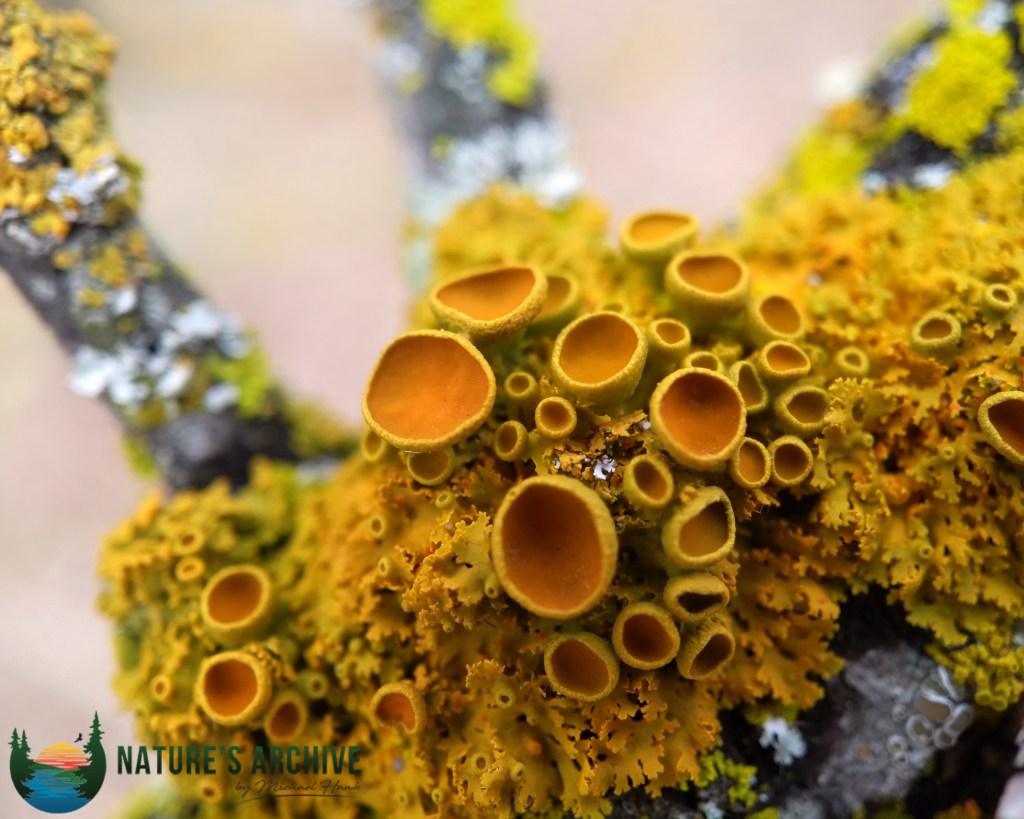
What’s a lichen? If you’ve hiked just about anywhere, you’ve probably seen one. They are colorful organisms that grow on rocks, tree branches, and even fence posts. Around where I live, I see lichens growing on people’s roofs, too!
I called them organisms because they are complicated. Sometimes they are characterized as symbiotic relationships between a fungi and an algae. But it’s much more interesting than that.
And there are few people better to help us learn about lichens and how to find them than Kerry Knudsen, a lichenologist at the University of Life Sciences in Prague.
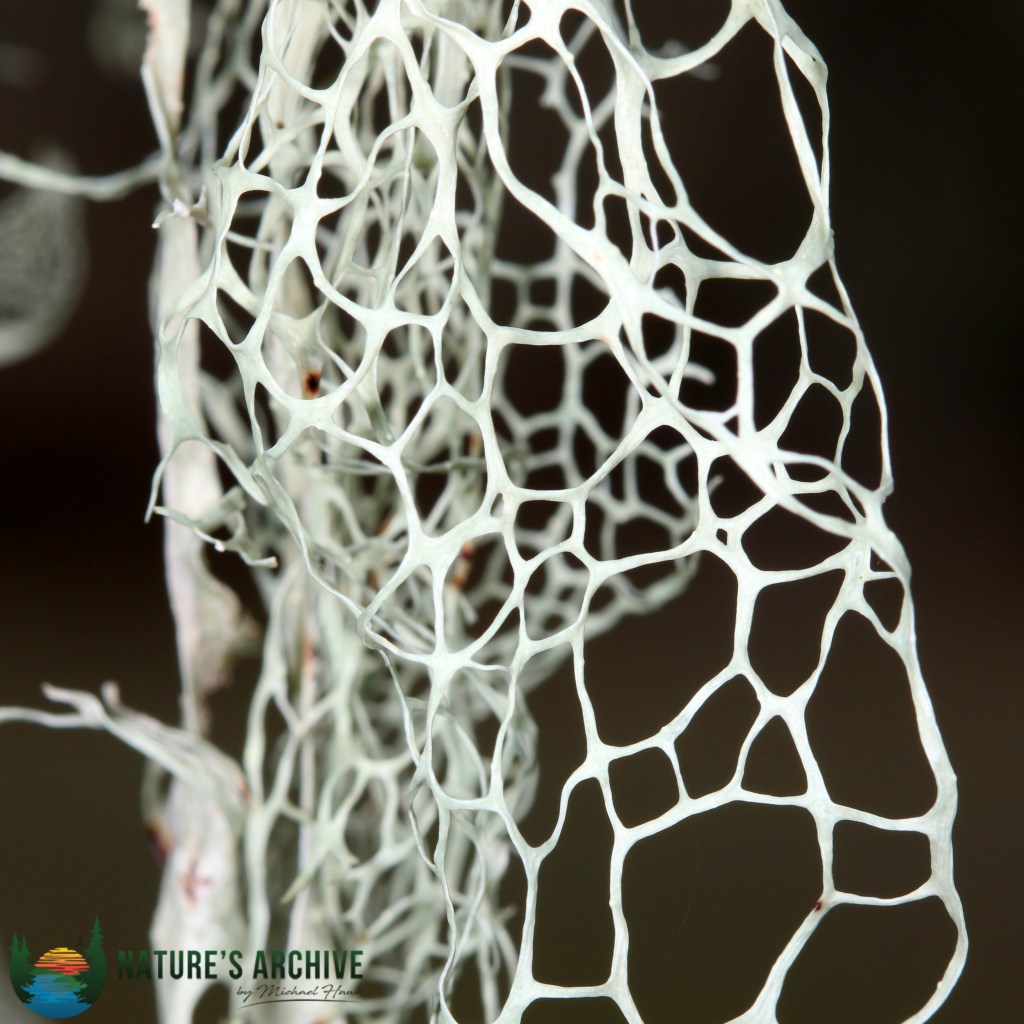
Kerry’s personal story is equally fascinating as lichens themselves. Kerry got started in lichens later in life after a health condition derailed a long career in construction. And he’s gone on to discover over 60 new lichen species that were previously undescribed, founded the lichen collection at the University of California, Riverside, and has 161 peer reviewed publications on ResearchGate and more elsewhere.
So get ready to learn about lichens, how they live, what they do, how they propagate, how wildfire impacts them, and much more.
So, as Allie Ward likes to say in her Entertaining Ologies podcast, despite my preparation and research, I had a lot of freedom to ask a smart person stupid questions, and I thank Kerry for his patience and detail in his answers. So without further delay, Kerry Knudsen.
Links To Topics Discussed
People and Organizations
Andre Breton – the founder of Surrealism kept a lichen collection just for the beauty and inspiration
Rick Halsey and the California Chaparral Institute. I interviewed Rick in a previous episode, focusing largely on wildfire ecology
Steven Levitt – University of Chicago economist who analyzed the ranching use of the Amazon rainforest. He had a podcast episode with his solution.
Theodore Payne Foundation – Kerry mentioned working here for a period
University of California Riverside (UCR) Herbarium
Books and Other Things
Note: links to books are affiliate links
A Field Guide to California Lichens – Stephen Sharnoff
Macrolichens of the Pacific Northwest – Bruce McCune
Usnea – Kerry mentions Usnea several times. Usnea is a genus with over 600 species, and is difficult to identify in the field.
More Resources
YouTube Video showing how to ID lichens, including how to do chemical spot testing
Kerry later told me about this free online lichenology journal that he co-edits.
Music Credits
The following music was used for this media project:
Music: Spellbound by Brian Holtz Music
License (CC BY 4.0): https://filmmusic.io/standard-license
Artist website: https://brianholtzmusic.com
Transcript (click to view)
Michael Hawk owns copyright in and to all content in transcripts.
You are welcome to share the below transcript (up to 500 words but not more) in media articles (e.g., The New York Times, LA Times, The Guardian), on your personal website, in a non-commercial article or blog post (e.g., Medium), and/or on a personal social media account for non-commercial purposes, provided that you include attribution to “Nature’s Archive Podcast” and link back to the naturesarchive.com URL.
Transcript creation is automated and subject to errors. No warranty of accuracy is implied or provided.
[00:00:00] Michael Hawk: You’re going to be liken this episode. Well, let me rephrase that. You’re going to like this episode about lichen. So what’s a lichen. If you’ve hiked just about anywhere, you’ve probably seen one. They are colorful organisms that grow on rocks, tree branches, and even fence posts and around where I live I see lichens growing on people’s roofs, too.
[00:00:19] I called them organisms because they’re complicated. Sometimes they’re characterized as a symbiotic relationship between a fungi and an algae. But it’s much more interesting than that. And there are a few people better to help us learn about lichens and how to find them then Kerry Knudson, a lichenologist from the university of life sciences in Prague. Kerry’s personal story is equally fascinating as lichens themselves.
[00:00:43] Kerry got started in likens later in life.
[00:00:45] After a health condition, derailed a long career in construction. And he’s gone on to discover over 60 new lichen species that were previously undescribed founded the lichen collection at the university of California. Riverside. And has 161 peer reviewed publications on research gate and more elsewhere. So get ready to learn about lichens, how they live, what they do, how they propagate. How wildfire impacts them and much, much more. So as Allie ward likes to say in her entertaining ologies podcast. And despite my preparation and research, I had a lot of freedom to ask a smart person, stupid questions, and I think Kerry for his patience and detail in his answers. So without further delay Kerry Knudsen.
[00:01:25] Kerry, thank you so much for joining me today.
[00:01:28] Kerry Knudsen: I’m glad to see you, Mike.
[00:01:29] Michael Hawk: Yeah, I’m really looking forward to this. I am certainly a lichen novice and where I live here in Northern California, there’s a lot of lichen around, so I’ve started. Paying more attention to what I see and learning a bit more and, in fact, just bought a couple books, so I just can’t be more excited to speak to you and learn even more.
[00:01:45] With that in mind, you have a very interesting background. If someone were to ask you what you do for a living, what would you tell them?
[00:01:53] Kerry Knudsen: I’m a lichenologist. I’m a scientist, but I’m not an academic. So that’s a big important part of this in science, and I’m not an academic, though I do work at an academic institution, and they do like their name on the publications.
[00:02:08] Michael Hawk: How did you get yourself into this position working at an academic institution without being an academic? Can you walk me through some of the steps that got you there?
[00:02:17] Kerry Knudsen: Well, when I got involved in lichens, of course, I belonged to the California Lichen Society, and I joined that after two years of studying on my own.
[00:02:27] As I started studying lichens around my house, the first, first acarospora I picked up, there was a problem with the naming. I looked up what was involved in it. And I wrote a note to the, to Arizona State University where they were doing a Sonoran lichen flora that came out in three volumes. I said, when somebody gets to this genus, this is a common species in Southern California in soil crust, there’s a nomenclatural problem and you should check this out.
[00:02:56] I’d been studying. Taxonomy to maybe go back to college. I sent that. They, uh, contacted me and suggested, uh, we would like you to look at some stuff and, and co collaborate and, uh, you should get a university. You should go to a, a herbarium somewhere and get on so you can get specimens sent to you. So I contacted two possible universities and, uh, UCR was the closest to home.
[00:03:23] So I just originally just used to go in one day a week and, uh, study specimens. After doing a little bit of studying and corresponding with them, they invited me to join and collaborate on an acarospora treatment. That’s what I did. UCR also asked me to start a lichen herbarium since I was already there, which I began.
[00:03:44] Michael Hawk: So a couple of questions. When you notice this problem with the nomenclature when you were studying the taxonomy, So you said that you wrote to Arizona State University about it. Did you have any credentials or publications at that point, or was that sort of your first No, no,
[00:03:59] Kerry Knudsen: I hadn’t had any publications yet.
[00:04:02] Michael Hawk: Sounds like you must have been very persuasive in that letter to get their attention like that. And actually, I know there’s more to the story, and I think the questions steered us maybe a bit too far along. So how about we back up? Can you tell me how you got into lichens in the first place?
[00:04:15] Kerry Knudsen: When I was Forced into retirement, I became a Mr.
[00:04:19] Mom, I was disabled at 42 and was told that I might not live another more than eight or nine years. And the, and my doctor convinced me to quit work and spend some time with my kids. He told me before I die. So, so I have, I have serious problems with my legs from blood clotting, a genetic disability. After about six or seven years as the kids got older and, uh, didn’t want to really spend any time with me.
[00:04:48] more than they did when they were younger, which is normal. I decided I had to do something. I had an interest in botany back in the 70s, and I started studying plants again, got a microscope, and began working on plants. I was hoping that the state would back me up in my rehabilitation to go to UCR or one of the local colleges and get a degree in botany, but I was already old enough that if I got the degree, by the time I went all the way through to getting a doctorate, I I’d be retired anyway, and so I’d be in my 60s.
[00:05:23] I really wanted to do that, and the rehabilitation people said I was too old. Too old to be sent back to college and to waste any kind of funding on that. And so, I was pretty depressed, you know. I was studying plants, I was reading taxonomic things, I was visiting gardens and going out into nature to learn plants.
[00:05:45] And I didn’t think much needed to be done in plants at that time. I was wrong, of course, but so I, I also had been reading some of the journals and I saw a guy up north in the Bay Area did a, an inventory of mosses in the Bay Area. I said, gee, I could do that. So I thought, ah, mosses or lichens, I’ll get into one of these.
[00:06:08] I actually decided that on one day. And I found lichens, and I began working on those. I didn’t really understand where it would take me. As I got more serious about it, I got in touch with the California Lichens Society. I corresponded with a few peoples there. I began studying at home, and I maybe wrote, I wrote one little article for them about lichen discoveries.
[00:06:32] I didn’t really think it was going to go anywhere. I was just figured that there was three, four hundred lichens in Southern California. I learned the ones in the hills around my house, published a few inventories in small journals. That would be it, and I’d go on to study mosses or something else. As it turned out, just in the hills where I lived, there was a lot of lichens.
[00:06:56] And as I tried to identify them, I couldn’t identify most of them, not with the literature available at the time. It was while doing this that I got interested in this acarospora. And wrote them about it because I just got their first flora, which was about macro lichens, which is great for where you live in the San Francisco Bay Area, but there’s just not many of them around my house in Southern California.
[00:07:21] And then I got interested in this one particular problem about an acarospora that grows on soil, and I worked on the nomenclature of it, and sent them a letter for the next flora. I had no intention of working on the flora. But I sent them a letter explaining the problems, and they, they were out of money for doing the acarospora treatment.
[00:07:42] And so they invited me to help a Spanish, uh, lichenologist on the treatment. And so I went to Arizona, and having studied taxonomy, the person I was asked to work with I didn’t think was too good. So anyway, I went to work on, started working on it right away. I had enough knowledge from studying books on taxonomy what to do.
[00:08:04] The lady that I was supposed to work with, she was really busy on grants in Spain. So I ended up doing it by myself. One of the things they asked me to do was to go to a herbarium and get a seat so I could borrow specimens and mail them, for instance, from Harvard and study them. That’s just really how it started.
[00:08:25] I got mixed up with UCR. They wanted a lichen herbarium. I got involved with doing that. Pretty soon I got a few grants, a small one at first and then one for 50, 000, and with that I really began building the herbarium.
[00:08:40] Michael Hawk: That’s a really amazing story. So UCR, that’s UC Riverside, correct? Yes, yes. And so how do herbariums work?
[00:08:49] Is it sort of like a, sorry for the terrible analogy, but is it sort of like a library exchange where you have local specimen that you sort of trade or lend to others? Oh yeah, yeah,
[00:08:57] Kerry Knudsen: yeah. In fact, for doing taxonomy work, you need, you can go out and collect stuff, but you also need to get like a, to establish names.
[00:09:08] You, for instance, have to borrow, like I had, I needed specimens from Harvard to figure out several problems. Then, as we got going. We needed specimens from Sweden, because most of the acarosporids had been named by a Swedish taxonomist, so I had to see those. Yes, it works just like a library. So, when I started the one at Riverside, I was impressed that a lichen collector named Haase had from, uh, 1890 to 1916 collected in the Santa Monica Mountains, and his specimens were at Harvard.
[00:09:41] And I thought, okay, this is the beginning of the 21st century. I’ll make a collection of just Southern California material, and that’ll be a record of what happened at the beginning of the 21st century. So, luckily, I was on disability. I never got any money for doing this. And for 15 years, I built that herbarium.
[00:10:04] A herbarium does work like a library. You identify stuff, we database it, put labels on it. Luckily, I had, with the 50, 000 grant from the Nature Conservancy, I was able to set up the herbarium to get started. And I worked on that for 15 years. I managed to bring in about 200, 300, 000 in grants. I’m not sure how much, and I would use that money to either pay for equipment, computers, microscopes, and used it also to collect in the field.
[00:10:35] So I built the herbarium and because I was on disability, I didn’t need to have a job.
[00:10:41] Michael Hawk: So it was a really, uh, passion project for you then. It turned into something that you thought was interesting near your house and evolved to this point.
[00:10:50] Kerry Knudsen: Yeah, yeah, really it did. Hey, I was, when in the very beginning, I was like one of these guys, I had, I got my first dissecting microscope to study plants.
[00:10:59] That’s all you need to study plants for most of the work. And so I was studying plants, but I was also picking up mushrooms, trying to find slime moles. And so, yeah, so it was a passion. Once I got involved in that, I, I began writing regularly and worked on the flora. The flora, the genus is so hard. That when the flora came out, it automatically had the same effect as if I had done a doctorate in it, in terms of recognition in the field.
[00:11:29] Michael Hawk: I’m curious too, so you, you found this path later in life. Oh yes. Was this like a, a latent interest? Like when you were a kid, were you also interested in the natural world or was this just like really a discovery?
[00:11:43] Kerry Knudsen: I was interested in sex mostly as a, as a younger person. And then, uh, I was mostly interested in art.
[00:11:50] Art, literature, I still maintain that interest now to this day. So nature as a child was not that important to me. As a young adult living in Chicago, and I was about 19, I was living with a woman. Somehow we got a book identifying plants. We’re in a city, we don’t have cars, we were flat broke most of the time, but we’d go around and look at sunflowers, trees.
[00:12:17] It was kind of, I don’t know, it was a cheesy book probably. But yeah, I started getting interested in that way. And then when we moved to California and I got my first job in construction, I suddenly had a lot of money. And so I rented a house with a gigantic yard and for four or five, well, for five years, I grew, a gigantic organic garden, grew herbs and, uh, besides vegetables, and I got interested in native plants, so I would order seeds from, from a company and grow native plants, too.
[00:12:51] That was my main, beginning of my main interest. Then, of course, I, construction caught up with me. I got another woman. We had kids. And so mostly I was working all the time.
[00:13:05] Michael Hawk: Got it. So there, there was some interest in the background to rekindle later.
[00:13:12] Kerry Knudsen: And, and I got into a construction union where if you work 25 years, you can draw a nice retirement check.
[00:13:20] And so I kind of set it aside. I did work for a little while at Theodore Payne foundation after growing native plants, but it was too much. It wasn’t, it was too expensive. I mean, it wasn’t paying enough. Life was too expensive. I went back to work in construction. That introduced me to the world of botany.
[00:13:40] And so, but with work being so involved in it, My interest in art and literature taking a different direction. I didn’t plan on doing anything until I retired.
[00:13:53] Michael Hawk: Got it. And I know you have some very interesting projects underway right now, but maybe before we get into that, let’s get into the lichen a little bit more.
[00:14:02] music: Okay.
[00:14:03] Michael Hawk: Because they’re, they’re such fascinating creatures. And I think even in, say, in. high school in the U. S. You learn a little bit about lichen if you take any sort of botany class. And, uh, and I think the description that, that at least I learned when I was going through school is not really very accurate.
[00:14:21] So rather than me try to tell you what I think it is, can you tell me a little bit about what is a lichen? and describe the 10, 000 foot view of their life history.
[00:14:32] Kerry Knudsen: A lichen is a fungus. Okay. That’s when we did, when you see a Latin name for a lichen, it describes the fungus. The fungus, uh, these probably evolved about 400 million years ago.
[00:14:44] These have have a symbiosis with an algae or a cyanobacteria. What they do is they capture an alga in the early stage of development right after they germinate and develop aus around the alga. We’ll use an alga for this around the alga, and then they live off the carbon produced by the alga. They may take a little bit of minerals from the soil.
[00:15:10] But basically, That’s what they live off, a garden inside them, and that still is the definition of a lichen. There’s a lot of study now in upper university work because of the new techniques in molecular biology studying the microbiome of the lichens. The lichens have a thallus with a lot of space in it, and just like us, there’s bacteria in them, archaea, and other fungi.
[00:15:37] There’s also parasitic fungis in them, just like we have parasitic things in our microbiome that are usually kept in check, that live within them too. And that’s basically what a lichen is. They grow really slow, usually. Especially in California. In the desert, for instance, if they even grow a millimeter, I mean a micron, that’s a big deal.
[00:15:59] They can grow quite big in places like the Arctic, some species like Cladonias. And there’s probably at least 17, 000 species or more. I think there’s a lot more, actually.
[00:16:11] Michael Hawk: Yeah, a lot waiting to be discovered. Yeah. So you mentioned that the relationship between the fungi and the alga or the cyanobacteria, it’s a symbiosis.
[00:16:21] I know there’ve been some articles in recent years that call that into question. They claim that maybe it’s a little bit more of a complicated relationship. I was wondering what you think about that.
[00:16:32] Kerry Knudsen: I think they’re exaggerating. It’s definitely a symbiosis between the alga and the fungus. You take that away and there’s nothing there.
[00:16:40] What happens is, like I said, in advanced molecular techniques, they’re able to study the bacteria, for instance, in the fungus. They can, they can sequence, when you sequence a fungus, you can pick up different fungi living within it. And so the definition that some people are pushing forward is that a lichen is an ecosystem.
[00:17:02] Okay, yes, it is an ecosystem, but just in the sense that a human being is an ecosystem. And so the best way to think of it is there’s still a symbiosis. But there’s a microbiome that’s very complex.
[00:17:16] Michael Hawk: Okay. That analogy works really well for me. I had seen a few articles like in National Geographic and elsewhere talking about these discoveries.
[00:17:23] And granted, these are all three, four or five years ago. Just to clarify this, this algae that, uh, It gets captured. Could it survive on its own?
[00:17:35] Kerry Knudsen: Oh, yeah. Yeah. See, one of the things in lichenology for years was that the algae that’s inside the lichens is specific to them. But no, the algae is, the algae does exist by itself.
[00:17:48] We just did an elevational study in California of umbilicaria faea, and it switched, it switched algal partners every 500 meters in elevation. The old idea was that there was just, uh, that the triboxia that’s inside lichens only exists inside them. That that’s where they live. And now with sequencing and stuff, they found out there’s many species inside them, even in that genus.
[00:18:15] Yeah,
[00:18:15] Michael Hawk: that’s fascinating. Another direction for me to look into after we’re done talking. So then, in the lichen propagation, this capturing that happens, Is that just by chance?
[00:18:29] Kerry Knudsen: Oh, yeah. You got to imagine our air is full of fungal spores, whether it’s a mushroom or a lichen, these spores are floating all over.
[00:18:38] We don’t know the viability of lichen spores, but when they land, they have only a short period, once they germinate, once the hypha forms out of this, out of the, uh, ASCO spore, they only have a short time to develop a relationship with an alga, And algae have a short lifetime too, usually. So in areas that are more moist, say like in the San Francisco Bay Area where you live, there’s more chance for lichenization because the algae has a longer life cycle.
[00:19:11] In places like the desert, the life cycle is real short. So you’ll only find lichens often on the north side of rocks or places like that where they, where the algae lasted long enough to form lichenization.
[00:19:23] Michael Hawk: Got it. And then around here, again, I’m in the Bay Area, so we have some fairly large lichen that grow on our trees, like lace lichens and things like that.
[00:19:32] And they can, you know, I see, I’ll see them on the, on the forest floor or on the hiking trails. They flake off, fall off. Can they actually flake off and get transported somewhere else and re establish? Or once they flake off like that?
[00:19:43] Kerry Knudsen: Yeah, yeah. Any part of a lichen could be growing into a new lichen. For most lichens, that doesn’t happen.
[00:19:51] But some lichens totally depend on that. Some are serradiate. Some are even sterile, never, never even have apotheosis, have sexual reproduction. In those cases, the lichen flakes off and is carried in the wind or drops to the ground or blows over onto another part of the tree, and then those grow into lichens.
[00:20:12] That’s a successful way of replicating itself.
[00:20:15] Michael Hawk: Similar to how many plant species replicate by having, uh, pollen or a seed or something fall off and get transported.
[00:20:24] Kerry Knudsen: Yeah, it’s a little different though. See, and the seeds are like the spores. Okay, that’s from sexual reproduction, and so it has to establish its lifestyle, which is its lichen lifestyle, from the very beginning.
[00:20:38] In the case of the ceridia, or pieces of lichen going, that’s asexual reproduction. So those are clones that are developing.
[00:20:46] Michael Hawk: Got it. Okay, and when What niche do lichens fulfill in, in an ecosystem? Like, you’ve already spoken to the fact that they occur in the Arctic, they occur in the desert, almost everywhere.
[00:20:59] What are they doing there?
[00:21:01] Kerry Knudsen: Well, they’re alive. They just, they have evolved and they found a, they found a niche to grow in, and the niches are quite different from area to area. Like, besides growing on trees and soil, they grow on soil, they grow on rocks, their actual function is to reproduce and produce more lichens, just like humans natural thing is to produce more humans.
[00:21:28] In any system, like for instance, they may help some insects live, they may help break down the rocks, they may add to the biomass of the forest and add to nutrition when they’re decomposed, etc. But the main thing is they’re a living organism that reproduces. Lichens actually, they compete with each other for space, different species.
[00:21:50] Some of them will overgrow another one and destroy it, you know. So I mean, it’s just very similar to the way we look at animals.
[00:21:57] Michael Hawk: So then, as a result, because all, all of these plants and animals that are out there in an ecosystem are all trying to survive, they’re all trying to reproduce. You know, some have found interesting uses of lichen, like I, the one I like is when you find a bird nest and you see that they lined it with lichen.
[00:22:15] So these creative uses do come about. And I’m curious, what has been the most surprising interspecies use of lichen that perhaps you’ve encountered in the field?
[00:22:24] Kerry Knudsen: Oh, actually the, the one with the bird nest is really, really beautiful on St. Nicholas Island. Uh, we have on the islands we have Nibla Ramal growing there.
[00:22:35] These things and different macro lichens, there’s a lot of them out there on the island. The hummingbirds pick these up and then they have their nests low in the shrubbery. By having the lichens put around their nest, waving them into their nest, it’s hard to see the nest, and so it works as good camouflage.
[00:22:55] In other cases, I think they just like picking them up. In fact, with bird nests, we contacted a bird nest museum and asked, we would like to see some bird nests with lichens on them. And they said, almost every nest we have has some lichens picked up in them. Oh, we couldn’t even request specific nests to see.
[00:23:18] They said just come down here and just look through all the nests.
[00:23:23] Michael Hawk: That’s really interesting because I, most of my experiences actually with hummingbird nests, like seeing the lichen on the hummingbird nest, so I had no idea that it was such a vast use, you know, across bird species.
[00:23:34] Kerry Knudsen: Well, they’re the most distinctive one because they seem to, they have a very small nest and they wrap, they wrap the lichen around the outside so you can see it very, it’s, uh, in almost all nests, hummingbird nests, I’ve seen where there’s the right lichens there.
[00:23:47] Michael Hawk: You mentioned the word macro lichen a few times. What distinguishes a macro lichen and what, what is the opposite? Is it a micro lichen or what, what would be the other end?
[00:23:58] Kerry Knudsen: Well, a macro lichen is basically What you were talking about, the big lichens, like the Ramelina menziesii, the green usnias hanging on a tree, uh, the big folios lichens that look like leaves that you see, those we call macro lichens.
[00:24:14] You can easily study them in a dissecting microscope. Well, with more advanced identification, you still need a microscope, but for most things, you can study them under a dissecting microscope. They’re big. The micro lichens are mostly crusts. We call them crusts. And, uh, they’re, they’re, they can be quite small.
[00:24:33] Michael Hawk: So if I were out on a hike and I noticed lichen growing on a tree or a rock or on soil, those are probably macro lichen.
[00:24:39] Kerry Knudsen: The macro lichens are the bigger things, a couple inches across, or, or even an inch across, or two. What you usually see on rocks are crustose lichens. Crustose lichens are, are, are not leaf like.
[00:24:52] They look bumpy, or they, they, or they’re all flat completely, but what you see on rock are what’s called micro lichens. These aren’t technical terms. They were terms that just got introduced in lichenology for the size.
[00:25:04] Michael Hawk: Okay, so a micro lichen can be visible to the naked eye,
[00:25:08] Kerry Knudsen: Oh yeah, yeah, you see the ones on rock all the time.
[00:25:11] If you try to study them though, you need a, you can look for them a little bit under a dissecting microscope, but you have to do anything with them, you have to cut them up and use them under a compound microscope.
[00:25:23] Michael Hawk: I see, so I, I was familiar with that. The three categories of, uh, I guess maybe you call it a growth pattern or something like that.
[00:25:30] So the crustaceans, the folios lichens, and the fruticose lichens. Fruticose
[00:25:35] Kerry Knudsen: lichens are what you see on the trees. Okay. We have squamulose lichens. Squamulose lichens are They look like they’re standing up. They usually have a long, long stipe or something and they stand up. These are just growth patterns, you know.
[00:25:51] I mean, they’re not technical terms. When you’re writing a description, you go, the lichen is crustose or the lichen was folios. You might say that in the description, you know.
[00:26:01] Michael Hawk: And that sort of description might be helpful in a field guide or in a key?
[00:26:05] Kerry Knudsen: The growth pattern will help you. It’ll help you in identifying them if you’re using a key.
[00:26:11] Actually, I never use any of those terms. Really? Yeah, I mean, so I mean even fruticose, I haven’t used that in years. I’m on a different technical level than that. A lot of people ask this question, and yeah, it’s a good way to figure it out, but if you look at any kind of keys. Eventually that’s, that doesn’t work too good.
[00:26:32] Michael Hawk: Sure. An analogy might be if, for me anyway, so again, I’m approaching this from a very amateur sort of point of view. Uh, but you know, if I buy a field guide to birds, oftentimes the field guide is not arranged taxonomically, or at least maybe it’s partially taxonomically, but instead they choose to. Put visually similar birds together.
[00:26:52] That’s probably why I’m looking at it from that perspective.
[00:26:56] Kerry Knudsen: Oh, yeah. Well, you know, like there’s, for instance, two books out of the Pacific Northwest. One of them is macro lichens of the Pacific Northwest. So, you know, when you get that book, it’s all going to be the bigger stuff, especially on trees. You know, some nebulas along the coast that are easy to see.
[00:27:12] They’re kind of, uh, squamulose and, and, uh, you know, a couple meters high sometimes. And, uh, it’ll have those kind of things in them. When you, when you buy a book that says micro lichens, you might as well get your compound microscope out.
[00:27:25] Michael Hawk: I know that some of the people that listen to this podcast, they’re, they’re like me.
[00:27:29] They’re sort of amateur naturalists. They like to go out and explore and see what they can find. When we do find a lichen, How can we tell if it’s alive or not?
[00:27:38] Kerry Knudsen: If you find it in nature, it’s alive, usually. But a lichen dries really well. You can wet them before they get too old. In a herbarium, when they get really old, they start to fade a little.
[00:27:51] But if you just brought one home, you might think it’s alive for quite a while after it’s died.
[00:27:56] Michael Hawk: And you hit on the difficulty in field identification, talking so much about needing microscopes of different, different powers to, uh, to actually tell. In an area like I live, or, or Southern California, which you have so much experience in, what percentage of field observable lichen are actually identifiable to species?
[00:28:19] Kerry Knudsen: To species, well, it depends. If I were you, I would go out on some lichen walks. The main thing in the field is to learn the genera. There would be problems in identifying it, but you learn, like, what is a phiscodia? What’s a physia? What’s an usnea? What’s a ramelina? What’s a niebla? For the crust, you learn, if you have any familiarity with them, they can tell you at least, you can learn, oh, those are cyano lichens on the rock, or those are, those are, that’s probably an aspicillia.
[00:28:49] If you look at Steve Charnoff’s book, Lichens of California, you can get a good idea of what it is. You can get the genera. I think you can learn a good walk from the California Lichens Society in a rich area. You can learn quite a few genera. The identification of especially the big macro lichens, it’s relatively easy.
[00:29:09] You definitely are not going to make a mistake about the state lichen Ramelina mensesii. If you’re studying usnia, yeah, it’s really hard to identify which is which. It’s better, you know what an usnia is, and then if you really want to identify it, you have to do some work on it. But for the pure enjoyment of it, it’s just like getting any nature book.
[00:29:29] The main thing is to get out there and look at them, enjoy them, let them impress you, and then if you can’t identify them, so what? I mean, there’s a certain level beyond that. I mean, like, I get a, I have Just bought a gigantic book on mushrooms. Now, I don’t expect to be able to identify every mushroom. I don’t have time to measure the spores, but I look at the pictures and it increases my enjoyment in this fantastic Czech Republic with 800 species of mushroom.
[00:29:58] It increases my enjoyment every time I go out into nature. Do I spend a lot of time identifying them? No. Do I really enjoy them? Yes.
[00:30:07] Michael Hawk: That’s a good perspective. And one thing that I’ve really enjoyed about lichen is, is really just their beauty. They’re, you start looking at them up close and they’re sort of like abstract paintings or, psychedelic artwork, or like just kind of all over the map, which has been a lot of fun for me.
[00:30:26] Kerry Knudsen: Oh, like even André Breton, the uh, the, the founder of surrealism, used to collect them just for their shapes. He didn’t want to know what this, anything about the science of them. When he died, he had a collection of lichens, too, that he just collected because the shapes were so strange. So, one of
[00:30:42] Michael Hawk: the questions that, what else would you recommend for people who are coming at it from, say, my perspective, know a little bit about nature and are aware of lichens, but how can they start to learn more or go down the rabbit hole a little bit further?
[00:30:55] What would you recommend they do?
[00:30:57] Kerry Knudsen: Well, you need to get a microscope. To identify lichens, you need a few chemical regions. Which you can get from the Lichen Society. I even, you can order most of them online now. When I started they were hard, you know, they weren’t selling many chemicals online. Most of the chemicals are available, I think, even on Amazon.
[00:31:15] You need some potassium, uh, some K, you need that. You need some, you, Clorox, just use Clorox. You need that for sure. P, that stuff you need to probably get from some, another lichenologist. But that you don’t use as often. You need a microscope and you need to, uh, just start getting into it.
[00:31:36] Michael Hawk: Michael here with a short explanation.
[00:31:38] So what Kerry was talking about is spot testing, and the reagents he mentioned, K, it’s specifically potassium hydroxide, C is bleach or sodium hypochlorite. And P is extremely hard to pronounce, so I’m going to try. Paraphenylenediamine. So I’ve never done these spot tests, but I read about them in the Steve Sharnoff book that was mentioned before and will be linked in the show notes.
[00:32:03] Apparently you do these tests with some special equipment under a microscope. Okay, back to the interview. So finding a group like the California Lichens Society sounds like a really good first step. Oh yeah, if
[00:32:15] Kerry Knudsen: you’re lucky you live in an area and you live in an area where there’s lots of lichens.
[00:32:20] There’s no, uh, Arizona desert lichen society, because there’s just not enough stuff unless you go to the top of the mountains, you know, but I mean, you live in a fantastic lichen area.
[00:32:31] Michael Hawk: I hope that there are other places in the world that have groups like that, but yeah, you’re right, they aren’t going to be everywhere.
[00:32:38] I’m thinking about the state I grew up in, Nebraska, I’m guessing there’s not a Nebraska lichen society either.
[00:32:43] Kerry Knudsen: No, a lot of the, well, you know, it was mostly prairie and flatland. It probably had a lot of soil crust, but all that farming, that disappeared. I don’t know how the tree situation is. The few times I’ve driven across Nebraska, I didn’t see a lot of trees, either.
[00:32:59] Michael Hawk: When we were collaborating for this episode, we talked a little bit about wildfire and the impact it has on lichen, and I know you had some interesting perspectives there. So, in the West, wildfire is a fact of life. What can you tell us about wildfire and lichens?
[00:33:15] Kerry Knudsen: One of the most serious problems in California, and every Californian knows this, is wildfires.
[00:33:21] With the increasing droughts from climate change, wildfires are becoming far more intense. After we have a big dry period, we have rains for a year or two. All the shaft rail fills out, weeds, grasses grow, and more fuel, and then we have another drought. Also, it makes the trees a lot drier, and this is the world.
[00:33:43] Biggest problem for lichens, because these fires come in, they destroy all the lichens on the trees usually. I’m talking about the intense fires, not just a small grass fire. They literally act as blow torches, burning the lichens off the rocks. And this is happening at such a tremendous rate, it’s really going to affect lichen florists over the next hundred years here in California.
[00:34:07] There’ll be a definite decrease in diversity. A lot of species that are being collected now may not be found again because, see, a lot of lichens are only known from 10 or 15 locations, so those may disappear. Major, a major change in the amount of lichen diversity in California. We already know from our work in Santa Monica Mountains that just from the fires beginning there, which, uh, there was a decrease in rain starting from the beginning of the 20th century, we know that over 70 species collected before 1916, we couldn’t find them again.
[00:34:46] And a large portion of them were ones that grew on trees. But big fires started there starting in the 1920s, and now fires continue there. I’m just writing a paper right now about a species of which one of the sites was on the Santa Monica Mountains. That is gone. Its other locations are in the San Jacinto Mountains, and those are all in forests, and those forests have been catching fire too.
[00:35:15] A major change in the lichen diversity of California, and I’m just speaking of California.
[00:35:21] Michael Hawk: Are you aware of any sort of long duration, longitudinal collecting endeavors to help quantify this better, or is it just so inherently obvious that that’s not necessary?
[00:35:34] Kerry Knudsen: I don’t know anybody that’s working on the problem, no.
[00:35:39] Michael Hawk: On a side note, I did interview a gentleman a few months ago, Rick Halsey, who
[00:35:44] Kerry Knudsen: Oh yeah, I know him. Rick, yeah.
[00:35:47] Michael Hawk: Yeah, California Chaparral Institute. So, uh, we had a really good discussion about wildfire in Chaparral. We didn’t get into lichen, but yeah, there’s just so many challenges in that space. I did really want to find out about what you’re working on these days, and you had mentioned to me previously, anyway, that you’re now studying lichen diversity in the Chihuahuan Desert, and I think specifically in New Mexico portion of the Chihuahuan Desert.
[00:36:11] Uh, can you tell me about that project and what your goals are?
[00:36:14] Kerry Knudsen: Well, our goals is, of course, is to record the, we, we’re collecting everything. The interesting thing of it is we thought, because it had the most rainfall, uh, in the That it would have the highest diversity. Now, we’re not talking about the Sky Islands.
[00:36:27] That’s above about 2, 000 meters. Okay, that’s a totally different flora. So up there you get macro lichens and higher diversity. Most people that collected New Mexico in the past have gone there because that’s where the action is. But we picked the Chihuahuan Desert, which is only in the southern part of New Mexico, and it’s below, uh, 1, 900 meters down to 1, 000 meters.
[00:36:52] About 1, 000 to 900 meters is the base. It’s high desert in the Chihuahuan Desert. And so we’re just collecting everything. We were expecting higher diversity though, so right now we’re at about 115 species. We’ve had some problems with this pandemic the last time we were collecting, so we didn’t get in as many areas as we wanted to.
[00:37:12] But we were expecting higher diversity. It has the most rainfall of the three major deserts. It has nine inches a year. What we didn’t think of, not that it affects our project, but the thing is, is the reason there’s less diversity, we think, is the rain comes almost completely in the summer. Now in the Mojave Desert, The rainfall is much lower, two, three inches in a lot of parts of the Mojave Desert now.
[00:37:39] Unless it’s the desert floor, wherever there’s rocks and stuff, you’ll find lichens. And the diversity in, say, we worked on a lot of collections on the Joshua Tree in the Mojave Desert, and only got 150 species. Arizona, the Sonoran Desert is, is very low, It has lichens, and I’m not sure the exact, uh, it’s hard to tell the exact amount of lichens that you can find at the lower elevations.
[00:38:05] When we collected around Tempe, for instance, I’d go out with Tom Nash and he knew where some rock outcrops were and stuff at lower elevations, but that’s probably pretty low too because the Sonoran flora says that most of Arizona, there’s no lichens at lower elevations. So if you were just to study the Sonoran Desert below, say, 200 meters.
[00:38:25] It’s probably somewhere close, but maybe higher, because of the rainfall in winter and summer. All of this probably goes back to what you were asking about algae and reproducing. They have, if all the rainfall is in the summer, the evaporation rate at 100 degrees is pretty fast. So the chance of lichens reproducing by spores is limited to that very short period.
[00:38:52] So we think that affects the low diversity we’re seeing so far. Interesting set of lichens, though. Fortunately for me, the group that I’m a specialist in turned out to be the most dominant family there with 28 species. And we found seven, no, eight that are new to science.
[00:39:11] Michael Hawk: So these collecting efforts, is it just you or do you have partners?
[00:39:15] Kerry Knudsen: We have some people we’re connected with, but it’s just me and my wife going out collecting. We’re both skilled collectors. My wife’s been in this longer than I have, in terms of lichenology, and we go out and collect ourselves. We mail the specimens back to Prague, and there we, we clean them up, identify them, curate them.
[00:39:35] We’re doing sequencing and studies on them, too,
[00:39:39] Michael Hawk: and in the desert. Is it primarily rocks that you find lichen on, or do you also find them on cacti or trees or soil?
[00:39:48] Kerry Knudsen: Not so much on cacti. At the lowest elevations or in a place like white sands, there’s a lot of soil crust. So far from what we’ve collected though, the diversity still is maybe 15 species or so.
[00:40:00] I’m, I’m not sure yet exactly, but that’s not very high. We were expecting higher soil crust species, species count. Most of them are on rocks, but in our area, in the area we’re studying in, once you come off the lowest part of the desert floor at 1, 000 meters and get up even to 1, 200 meters or so along any of the mountains, then you get them also, you start having some Pinion pine scattered around and mesquite.
[00:40:29] We’ve collected stuff on mesquite, but still most of them are on rocks.
[00:40:34] Michael Hawk: You were talking about the high evaporation rate being detrimental. So is it fair to say that if you were near a water source, you might have higher species counts? Or is that too simplistic?
[00:40:45] Kerry Knudsen: We haven’t been into any really good riparian areas.
[00:40:48] So yeah, in fact, actually. Yeah. We, along creeks and stuff, for instance, there’s some creeks in the Oregon mountains. We walked along those and, and found hardly anything. It just depends. It’s really the stuff growing on trees and mesquite, but those elevations is really uneven. You know, it’s like find something on one mesquite, the next 10 mesquites, you don’t find anything on.
[00:41:14] You find stuff on one pinion pine, then you don’t, you don’t see anything on the next pinion pine. Yeah. Uh, there’s some oaks, but the oaks, uh, the kind of oak species we saw had very little on them. When you get up to around 1, 900 meters, you’re at the top of the Chihuahuan zone, and at the beginning of what we call the Rocky Mountain flora.
[00:41:35] And there you have an increase of species, and that’s only because there’s more moisture up there.
[00:41:42] Michael Hawk: And did you pick this area just simply because there is not as much known about lichen diversity?
[00:41:48] Kerry Knudsen: Yeah, we picked it for that. We, we had done the Joshua tree study. And we were interested in desert habitat.
[00:41:57] And also, uh, we, we weren’t sure if there’d be a lot of new species or, or, uh, if it was just mostly like the Arizona Mojave flora, we got some specimens that may be specific to the Chihuahuan desert, but we don’t know enough about that yet. Like, uh, the nine new species that Acarospora were describing, we’re not sure what their distribution is outside of that area where we’re collecting.
[00:42:23] Michael Hawk: Well, that sounds fruitful so far, though. Even though the diversity isn’t as high as you were expecting, you’re finding new things and establishing at least a baseline. How long do you plan to continue the research in that area?
[00:42:34] Kerry Knudsen: It’s a four year grant. We’re in the, we’re at right now, we’re in just beginning the third year.
[00:42:40] And this year we’re not going to make it to New Mexico with this pandemic. So we’ll be, uh, we’ll be doing a lot of sequencing and taxonomic work all year. I, I work on the specimen six days a week, easy, and the problems involved.
[00:42:55] Michael Hawk: I always like to ask just a couple basic questions of my guests, because there’s so many different perspectives out there.
[00:43:01] If there was, say, one important ecological concept that you wished the general public knew about to advance their understanding of the natural world, what would that be?
[00:43:12] Kerry Knudsen: I think the most important thing for everybody to understand now is that the climate is really changing, that this is a global problem, and I think that’s the most important ecological thing to understand at this time.
[00:43:29] The world that you see is changing. that I see when we go out in nature, it’s gonna change. The second most important concept of that is that the change, for instance, of fire, for instance, that we were discussing, that’s from climate change. The other effect is we are going through a mass extinction. Even if we did not have climate change, we are not taking care of nature in lots of areas.
[00:43:58] With the capitalist system we have, I’m not saying we should go to communism or anything, but with the capitalist system we have, it’s not sustainable for nature. You can’t keep expanding into nature and destroying it for profit. Look what they just did in the Amazon. Those fires were not by accident.
[00:44:15] They were to clear land. Okay, you take away climate change, okay, everybody’s worried about the climate change effect of that. Okay, take that away. What if the climate wasn’t changing? Still, look at the amount of diversity that was destroyed. And man, even if the, even if they don’t farm the areas, it comes in weedy looking from the pictures I’ve seen, it doesn’t look the same.
[00:44:38] That’s the other thing that’s happening, and it’s been happening since we began, since Europeans and began exploring the world. That, for sure, has been happening. The extinction rate has increased constantly. It’s not just the dodo bird disappearing, it’s lots of things disappearing. And it goes back farther, actually, to the beginning of humans.
[00:45:01] I mean, of human migration in the, in the world. And in Europe here, people have been living here for thousands and thousands of years. I’m studying, I also work on, on my family here in the, uh, in Central Europe and in the Czech Republic. We have many, I noticed that at lower elevations, that’s below 900 meters, which is lower elevation here, and most of that low land habitat has been like, for instance, cleared from rocks, turned into, uh, artificial forests, turned into farming land.
[00:45:35] This extinction rate began a long time ago, this extinction, but now it’s at a, at an incredible pace.
[00:45:43] Michael Hawk: There’s a couple of things that I might point listeners to. When you talked about the clearing of the Amazon, there’s an economist, a fairly famous economist, Steve Levitt from, I think, University of Chicago, who did an analysis about that clearing and found that it doesn’t even make economical sense.
[00:46:01] So the, the clearing is occurring for ranching. But the ranch land is only viable for a couple of years and then after that the land is is wasted. So And with a little investment that could be stopped and the investment has huge ROI So he runs this thing called the Center for Risk and does a lot of analysis on these sorts of things and he’s also really famous for the Freakonomics books and podcast and he just had an episode recently with A simple solution for the Amazon, but for whatever reason, it just doesn’t seem to be politically viable despite having a really nice ROI and a much smaller footprint.
[00:46:38] I’ll find that Freakonomics episode and link it in the show notes as well. And, to your point, the, the world that we see today, it’s, especially for younger people, it’s what they know. They haven’t seen, they can’t see what it was like 50 years ago or 100 years ago. So sometimes it’s hard to get people interested in, in caring.
[00:46:57] You know, so like I have this visualization that there’s sort of a, a ladder of environmental care. And you start off maybe not knowing or not caring, but something, Hooks you, something grabs your interest, and once you start to care about that, you learn about it, and then you start to take action, and I’m always looking for for tips or tricks or techniques to help people Ascend that ladder, and I’m curious in your interactions with either Academics or the public or friends, like what have you found to be effective in doing that?
[00:47:28] Kerry Knudsen: Well, I, I volunteered to take people out in the field for lichens. My wife still doesn’t When you take people out and they learn about one organism, it’s just like you said, then they begin to become involved with nature. It’s very great that, like, when you had a question like, what about when I was a child?
[00:47:49] When I was a child, there was no environmental education in school. So that’s another important component of it. People have to have some connection with nature. They have to find some connection with nature, and there’s a lot of things that lead us in a different direction. We live in an internet world now.
[00:48:10] There’s lots of things to take your attention away from nature. And that’s why it’s even good that Microsoft puts on, every time I let them put on a new picture every day of somewhere part of nature. You know, there’s little things like that. It’s all, it’s all effective. People have to watch Animal Channel and just don’t watch the veterinarian show or watching Chasing Bigfoot in Alaska.
[00:48:34] You know, look at some of the other shows. I don’t know any real solution to that. We have some grandkids and because we know about mushrooms, we know about nature, we take them out and they get excited about it. I don’t think any of them are going to become mycologists. But everybody needs to have that kind of education or exposure.
[00:48:56] I can see how it’s easy to get into another frame of mind where you’re totally wrapped up in your life and, uh, in the city and
[00:49:05] Michael Hawk: I’m happy to see that there’s a lot more Realization that just getting out in nature is good for well being and mental health, and that’s starting to get a lot of traction. I hope people take that to heart, because that’s at least a start.
[00:49:18] To wrap things up, if people want to follow your work, where’s the best place for them to go?
[00:49:24] Kerry Knudsen: Well, first thing, I never go on social media. You google my name, you’ll find the podcast, and you’ll find, uh, if you google my name or look it up, you’ll find some recent articles mentioned, etc. Publications will show up on the internet.
[00:49:38] The other place is I post everything I publish on ResearchGate. So if you go there, you can, by the way, you don’t have to even be a member, you can, there’s a search way to search for articles on there from outside. I try to even publish in free journals as much as possible. So I can just put them on there and people can download them for free.
[00:50:00] Some journals that I have to for science and also for grants and stuff that I have to publish in with impact factors, I don’t own the copyright, but those are listed there and you can, uh, email me on ResearchGate and we’ll be glad to send them and also the California Likens Society. I try and write something for every bulletin if I can, you know.
[00:50:22] Michael Hawk: So that’s how I found you. In fact, I, I think I just Googled, uh, the word lichenologist, and then that led me to ResearchGate. So, so I emailed you to see if you’d be interested in doing this. But what I’ll do for people who are listening is, we referenced a couple things here as we were going. I’ll make sure I include links to your ResearchGate page, and I know there’s also this nice little short documentary video about you on Vimeo as well.
[00:50:47] I’ll make sure to link to that and all the other things we talked about California lichen society and so forth I’ll make sure there’s links there. So it’s a jumping off point for for people that are listening. Okay, Kerry Is there anything else you want to say before we close?
[00:51:02] Kerry Knudsen: If you’re interested in lichens, it takes some work to actually get deep into them so if you’re getting into them and you’re a little bit a year or so into Experimenting with them or looking at them.
[00:51:15] I And you find out it’s just not what you want to do. Don’t feel bad. It’s like studying the genitalia of flies. Beyond a certain point, it’s a, it’s really specialist work. Now, an amateur can do that. There’s famous amateurs who have studied insects too. And so you can, you can do it if you want to do it, but don’t feel bad if you get a little deep into it and you go, this is, this is not for me.
[00:51:41] Michael Hawk: All right. I think that’s good advice for a lot of things at some point. You know, have the right expectations.
[00:51:46] Kerry Knudsen: Yeah. Yeah. You know, Hey, listen, some things you just have to try out and they just don’t work, but you can do it. You can, you can do quite a bit with lichens, especially if you’re in an area like California, where you got books, a society that you can contact.
[00:52:03] There aren’t very many taxonomists left in lichenology. So there’s, you can contact people like me, but I can only tell you so much from From an iPhone picture, for instance. And, uh, in the last five years, I spent most of my time working on just one family, except for, uh, going through these New Mexican specimens.
[00:52:22] And so my knowledge of California is starting to fade a little bit.
[00:52:26] Michael Hawk: Yeah. There’s just so many rabbit holes. I keep using that term rabbit hole that you can go down in this space and there’s always more, the closer you look, the more there is.
[00:52:34] Kerry Knudsen: Supposed to go down, unlike QAnon, so.
[00:52:38] Michael Hawk: Yeah. Okay, well, thank you again, and with that, I, uh, I wish you a good night.
[00:52:45] Kerry Knudsen: Okay, thank you.
 Nature's Archive Podcast